
PARALLELIS M Parallel Structure Parallelism is the use

- Slides: 10
PARALLELIS M
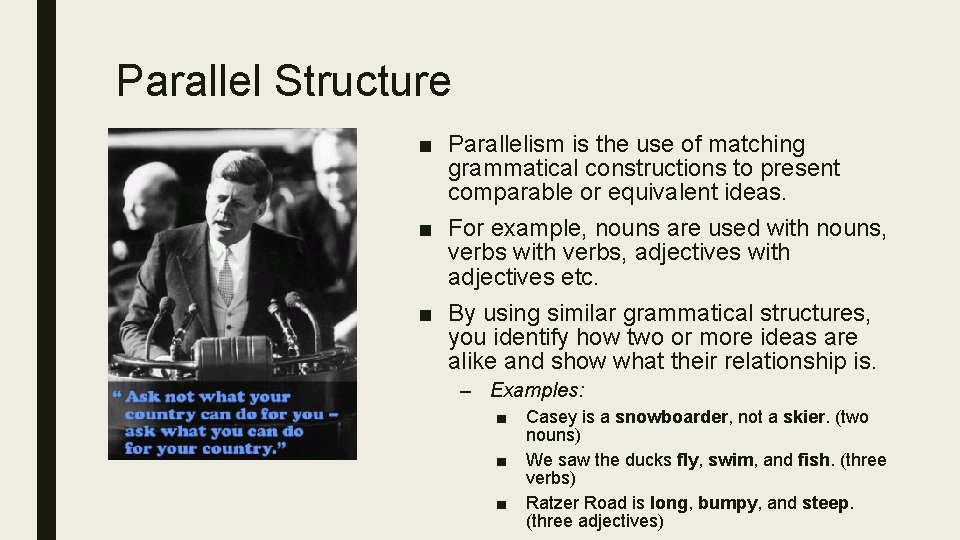
Parallel Structure ■ Parallelism is the use of matching grammatical constructions to present comparable or equivalent ideas. ■ For example, nouns are used with nouns, verbs with verbs, adjectives with adjectives etc. ■ By using similar grammatical structures, you identify how two or more ideas are alike and show what their relationship is. – Examples: ■ ■ ■ Casey is a snowboarder, not a skier. (two nouns) We saw the ducks fly, swim, and fish. (three verbs) Ratzer Road is long, bumpy, and steep. (three adjectives)
Parallel Structure ■ Single words should be balanced with single words, phrases with phrases, clauses with clauses. ■ EXAMPLE: In matters of principle, stand like a rock; in matters of taste, swim with the current.
Balance Parallel Ideas ■ Items in a series should be balanced. When one or more items is unbalanced, the sentence becomes awkward. ■ EXAMPLE: Children who study music also learn confidence, discipline, and they are creative. ■ The final idea above is not parallel. A single idea is required so it balances with the first two. ■ REVISION: Children who study music also learn confidence, discipline, and creativity.
Faulty Parallelism ■ This occurs when different grammatical constructions are used to present comparable or equivalent ideas. ■ The following examples are not parallel… – Casey is a snowboarder, but skiing is not something that interests him. – We saw ducks fly, and some swam, and we saw others fishing. – Ratzer Road is long, and a lot of bumps are found on it, and it climbs steeply.
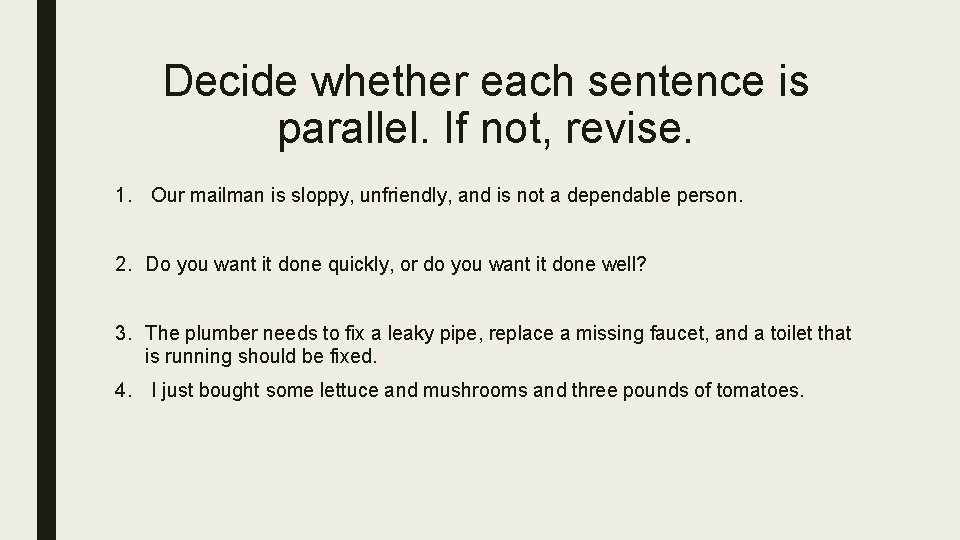
Decide whether each sentence is parallel. If not, revise. 1. Our mailman is sloppy, unfriendly, and is not a dependable person. 2. Do you want it done quickly, or do you want it done well? 3. The plumber needs to fix a leaky pipe, replace a missing faucet, and a toilet that is running should be fixed. 4. I just bought some lettuce and mushrooms and three pounds of tomatoes.
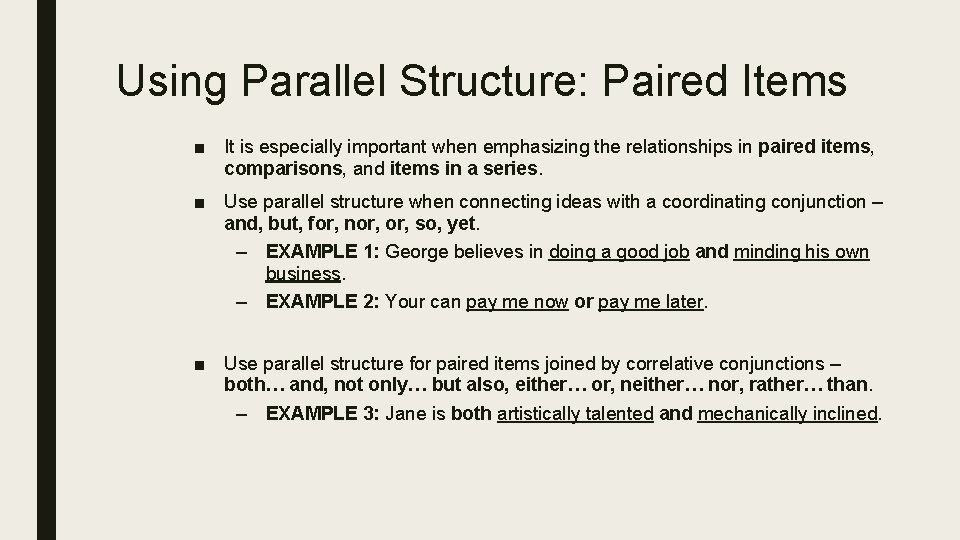
Using Parallel Structure: Paired Items ■ It is especially important when emphasizing the relationships in paired items, comparisons, and items in a series. ■ Use parallel structure when connecting ideas with a coordinating conjunction – and, but, for, nor, so, yet. – EXAMPLE 1: George believes in doing a good job and minding his own business. – EXAMPLE 2: Your can pay me now or pay me later. ■ Use parallel structure for paired items joined by correlative conjunctions – both… and, not only… but also, either… or, neither… nor, rather… than. – EXAMPLE 3: Jane is both artistically talented and mechanically inclined.
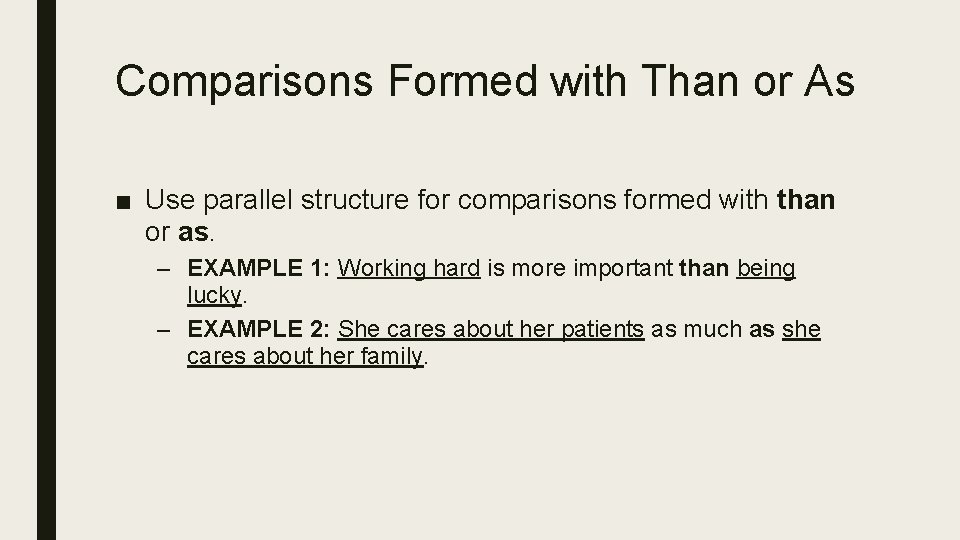
Comparisons Formed with Than or As ■ Use parallel structure for comparisons formed with than or as. – EXAMPLE 1: Working hard is more important than being lucky. – EXAMPLE 2: She cares about her patients as much as she cares about her family.
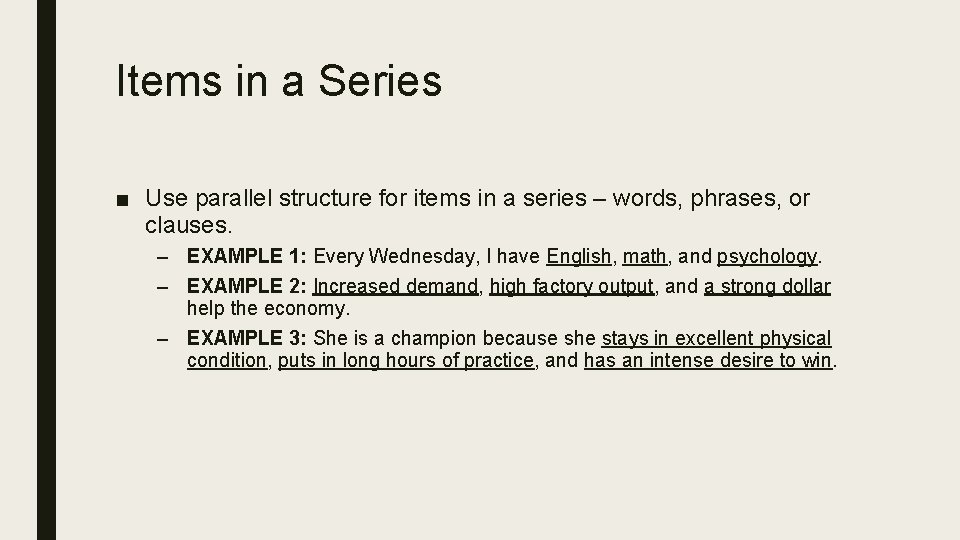
Items in a Series ■ Use parallel structure for items in a series – words, phrases, or clauses. – EXAMPLE 1: Every Wednesday, I have English, math, and psychology. – EXAMPLE 2: Increased demand, high factory output, and a strong dollar help the economy. – EXAMPLE 3: She is a champion because she stays in excellent physical condition, puts in long hours of practice, and has an intense desire to win.
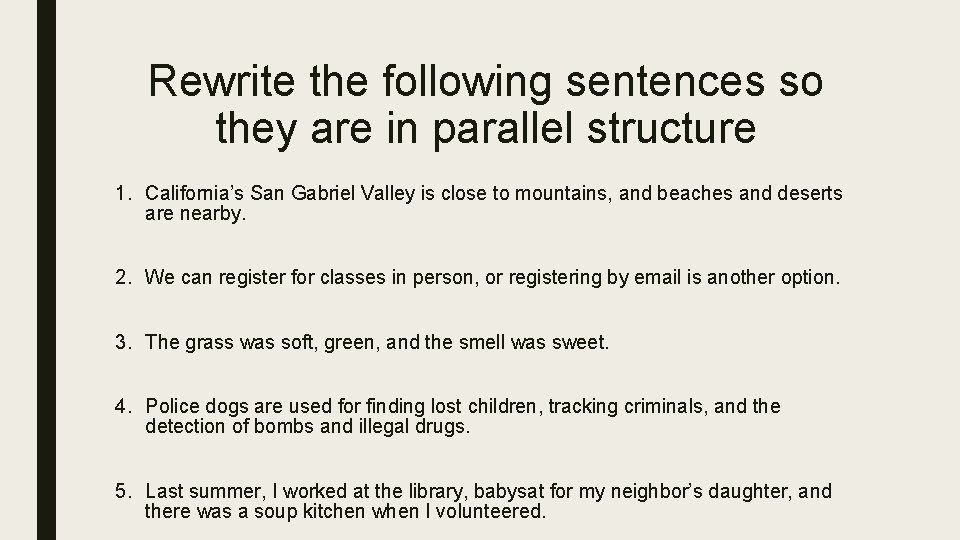
Rewrite the following sentences so they are in parallel structure 1. California’s San Gabriel Valley is close to mountains, and beaches and deserts are nearby. 2. We can register for classes in person, or registering by email is another option. 3. The grass was soft, green, and the smell was sweet. 4. Police dogs are used for finding lost children, tracking criminals, and the detection of bombs and illegal drugs. 5. Last summer, I worked at the library, babysat for my neighbor’s daughter, and there was a soup kitchen when I volunteered.