
Parallel Web Browser Layout and Animation Language Ras
Parallel Web Browser: Layout and Animation Language Ras Bodik, Thibaud Hottelier, James Ide, Doug Kimelman (IBM), Kimmo Kuusilinna (Nokia), Per Ljung (Nokia) #
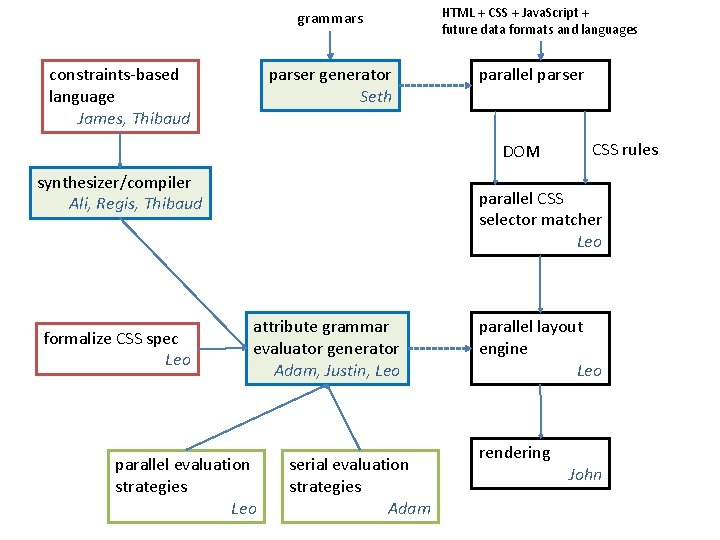
grammars constraints-based language James, Thibaud parser generator Seth HTML + CSS + Java. Script + future data formats and languages parallel parser DOM synthesizer/compiler Ali, Regis, Thibaud formalize CSS spec Leo CSS rules parallel CSS selector matcher Leo attribute grammar evaluator generator Adam, Justin, Leo parallel evaluation strategies Leo serial evaluation strategies Adam parallel layout engine Leo rendering John
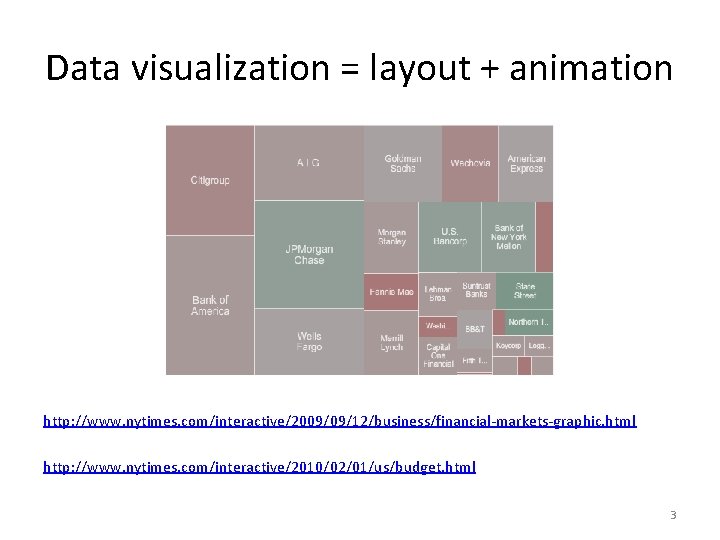
Data visualization = layout + animation http: //www. nytimes. com/interactive/2009/09/12/business/financial-markets-graphic. html http: //www. nytimes. com/interactive/2010/02/01/us/budget. html 3
How Data Layouts Are Created Today Pick a canned layout from Proto. Viz (DSL for vis. ) – Limited to the library. – Non-programmers cannot define their own. If programmer, could write own layout engine. – May take days => can’t quickly try layout ideas. – ~10 x more code if using Python/Java. Script 4
Mud; our layout language We choose declarative programming because • for designers, who know “what” but not “how” • seeks to naturally maps to designer’s thought process • Long-term goal, programming by demonstration Our compiler does synthesis. Why not use an off-theshelf constraint solver? Ex: Cassowary[Badros], SMT, Prolog. • Performance – We compile down to tree passes. Linear Time. In parallel. – No search and backtrack. 5
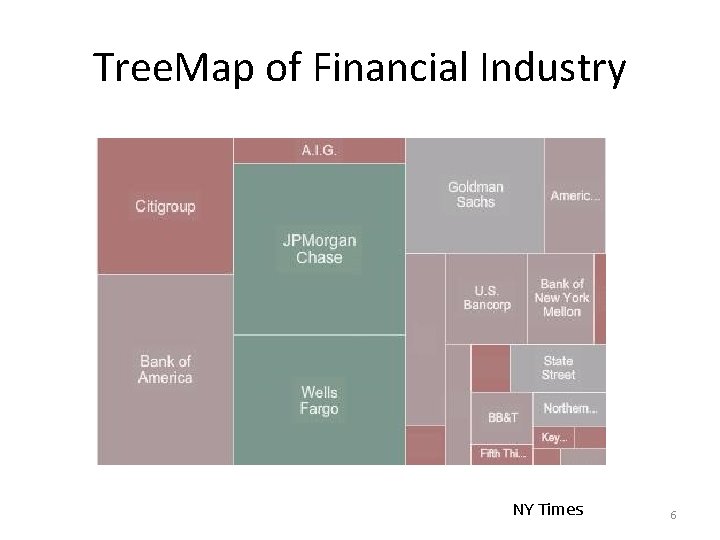
Tree. Map of Financial Industry NY Times 6
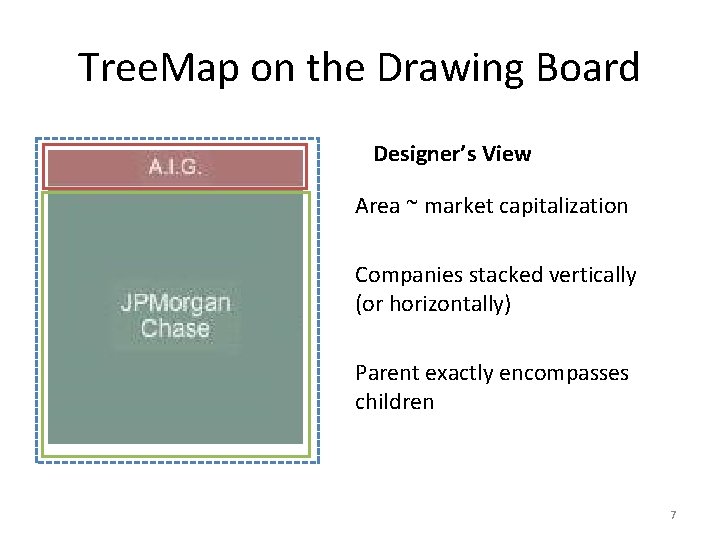
Tree. Map on the Drawing Board Designer’s View Area ~ market capitalization Companies stacked vertically (or horizontally) Parent exactly encompasses children 7
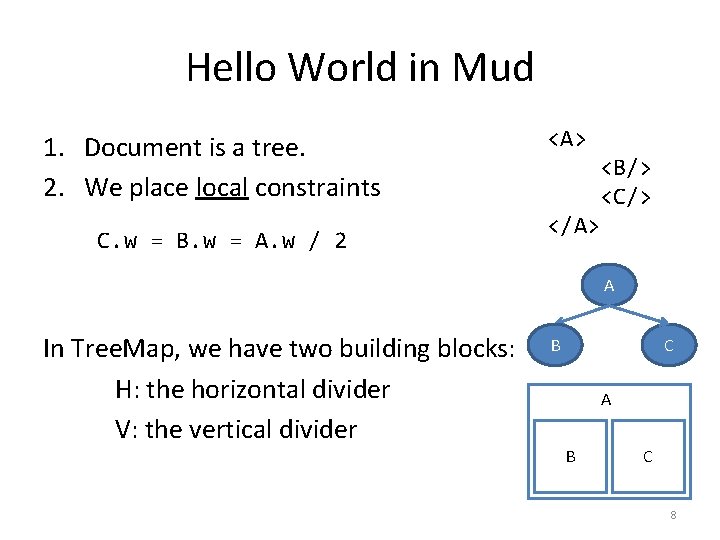
Hello World in Mud 1. Document is a tree. 2. We place local constraints C. w = B. w = A. w / 2 <A> <B/> <C/> </A> A In Tree. Map, we have two building blocks: H: the horizontal divider V: the vertical divider B C A B C 8
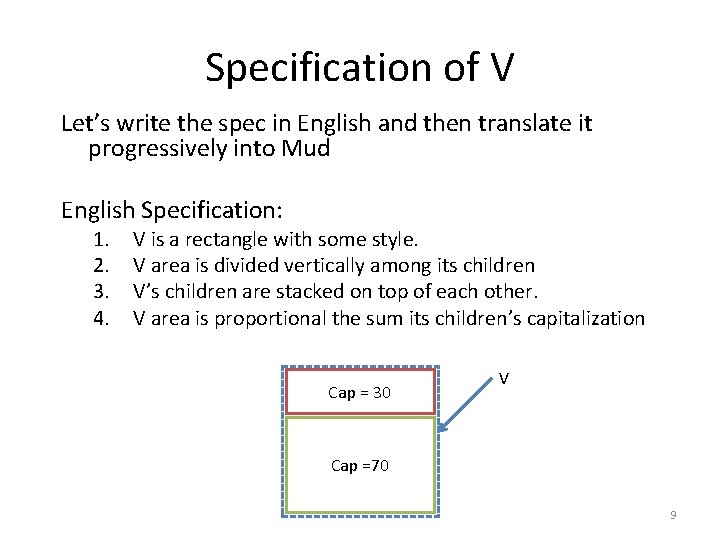
Specification of V Let’s write the spec in English and then translate it progressively into Mud English Specification: 1. 2. 3. 4. V is a rectangle with some style. V area is divided vertically among its children V’s children are stacked on top of each other. V area is proportional the sum its children’s capitalization Cap = 30 V Cap =70 9
![The Three Constraints trait VDiv(h, w) { // vertical division h = children[0]. h](http://slidetodoc.com/presentation_image_h2/1804dc77a58253ee64c0e339fe22438e/image-10.jpg "The Three Constraints trait VDiv(h, w) { // vertical division h = children[0]. h")
The Three Constraints trait VDiv(h, w) { // vertical division h = children[0]. h + children[1]. h w = children[0]. w = children[1]. w } trait VStack() { // vertical stacking children. left = 0 children[0]. top = 0 children[0]. h = children[1]. top } trait Tree. Map(h, w, cap) { // area =~ cap SCALE * cap = h * w cap = children[0]. cap + children[1]. cap } 10
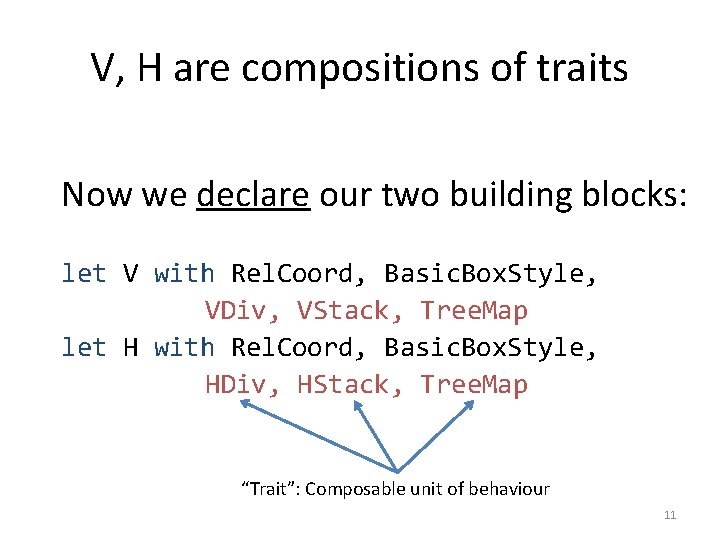
V, H are compositions of traits Now we declare our two building blocks: let V with Rel. Coord, Basic. Box. Style, VDiv, VStack, Tree. Map let H with Rel. Coord, Basic. Box. Style, HDiv, HStack, Tree. Map “Trait”: Composable unit of behaviour 11
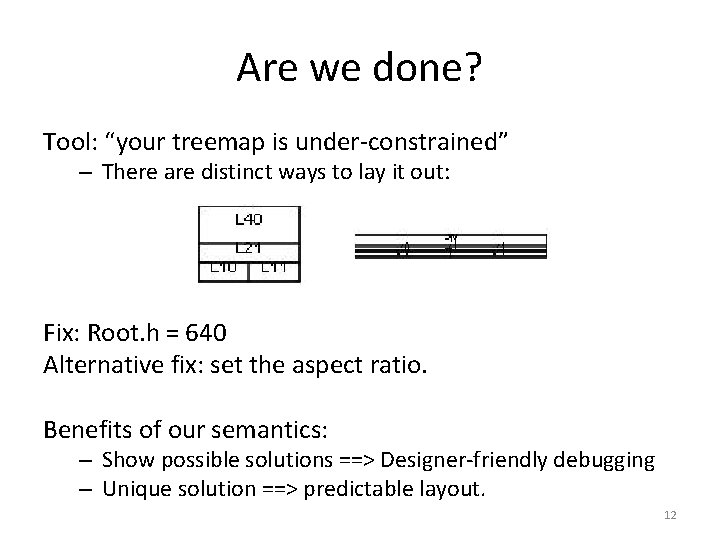
Are we done? Tool: “your treemap is under-constrained” – There are distinct ways to lay it out: Fix: Root. h = 640 Alternative fix: set the aspect ratio. Benefits of our semantics: – Show possible solutions ==> Designer-friendly debugging – Unique solution ==> predictable layout. 12
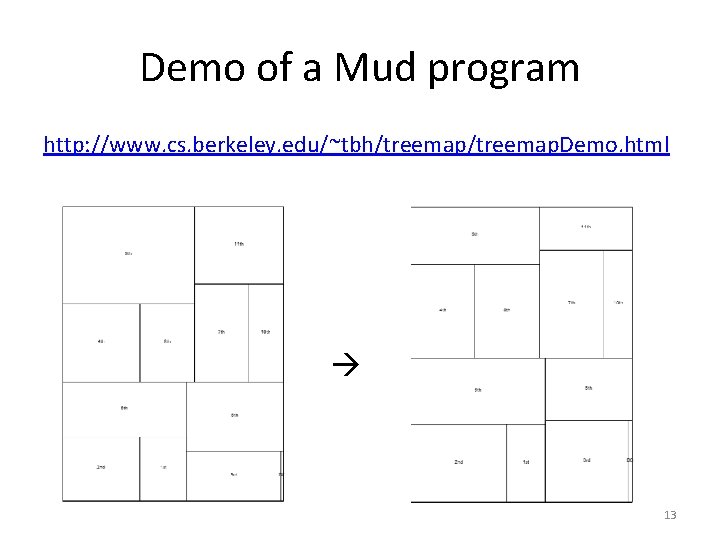
Demo of a Mud program http: //www. cs. berkeley. edu/~tbh/treemap. Demo. html 13
Prototyping with Mud flexibility allows designers to experiment. Example: Let’s make treemap fixed size! – At Root node: h = 640, w = 320 – Tool tells us to make the scaling factor a variable Mud compiler produces the new layout engine – New engine requires four, rather than three passes – The extra pass computes the right scaling factor. 14
Animations How to add animation? ie, transform the tilemap from Jan to Feb layout? 1. Interpolate Jan-to-Feb capitalization data, obtaining new capitalization for each frame 2. Update the document tree with this data 3. Rerun the layout engine (recompute layout) 15
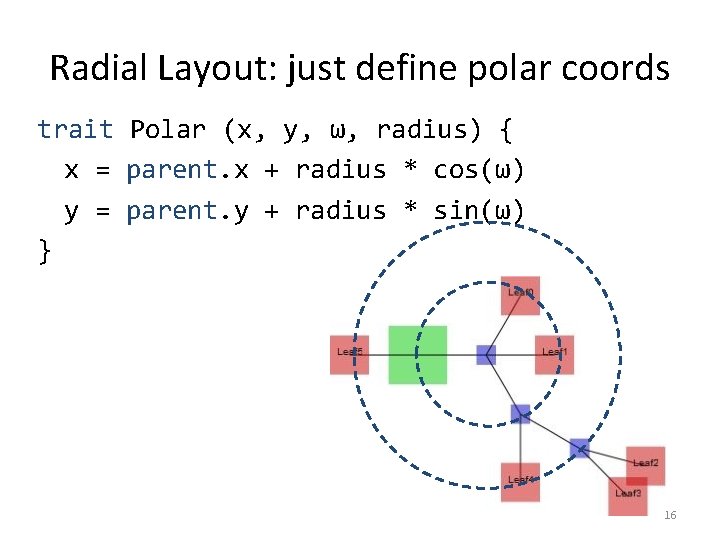
Radial Layout: just define polar coords trait Polar (x, y, ω, radius) { x = parent. x + radius * cos(ω) y = parent. y + radius * sin(ω) } 16
Summary Declarative programming for designers data visualization, GUIs, documents Fast layout for big data and small battery. No search, no fixed-point. Instead, linear time, parallel. Constraints compiler based on two-step synthesis. Local constraints to functions. Functions to global solver. 17
- Slides: 17