
Parallel Prefix Adders A Case Study Muhammad Shoaib
Parallel Prefix Adders A Case Study Muhammad Shoaib Bin Altaf CS/ECE 755
Outline • • • Motivation Introduction Various Tree adders Comparison Layout of Kogge-Stone Conclusion
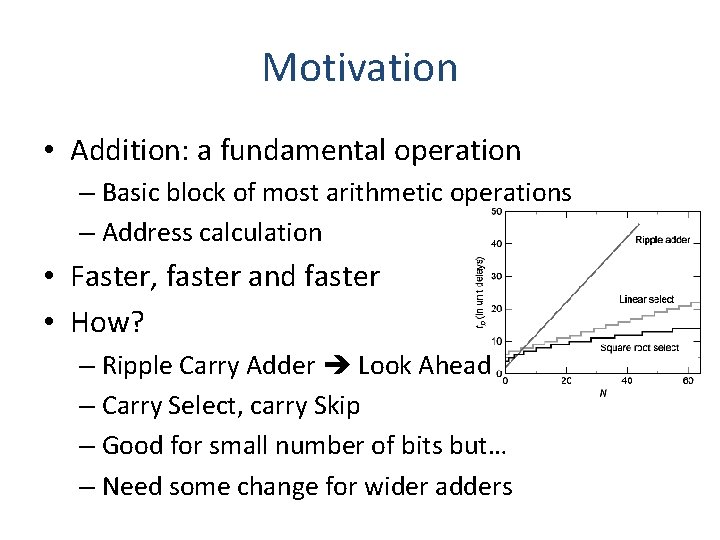
Motivation • Addition: a fundamental operation – Basic block of most arithmetic operations – Address calculation • Faster, faster and faster • How? – Ripple Carry Adder Look Ahead – Carry Select, carry Skip – Good for small number of bits but… – Need some change for wider adders
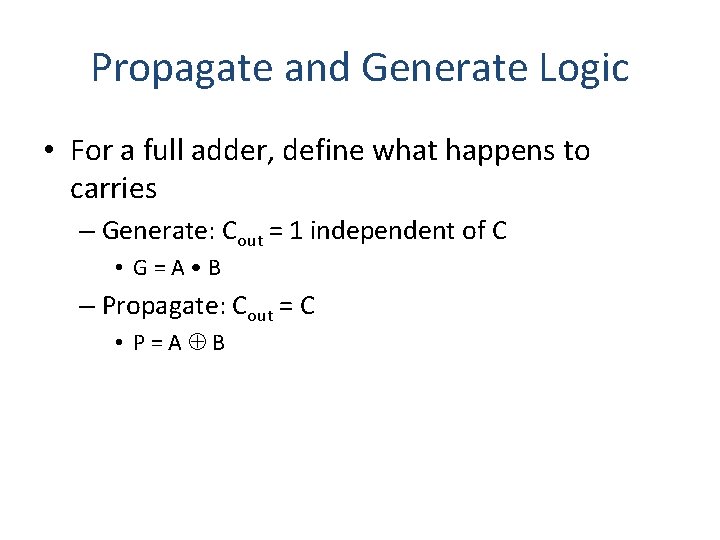
Propagate and Generate Logic • For a full adder, define what happens to carries – Generate: Cout = 1 independent of C • G=A • B – Propagate: Cout = C • P=A B
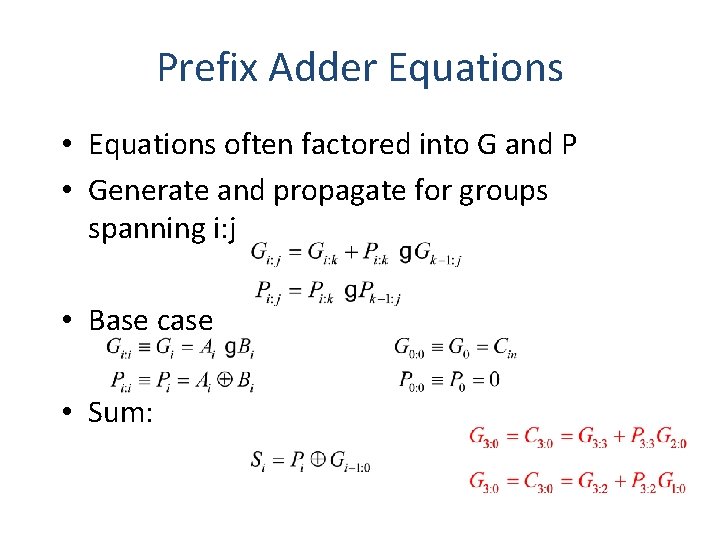
Prefix Adder Equations • Equations often factored into G and P • Generate and propagate for groups spanning i: j • Base case • Sum:
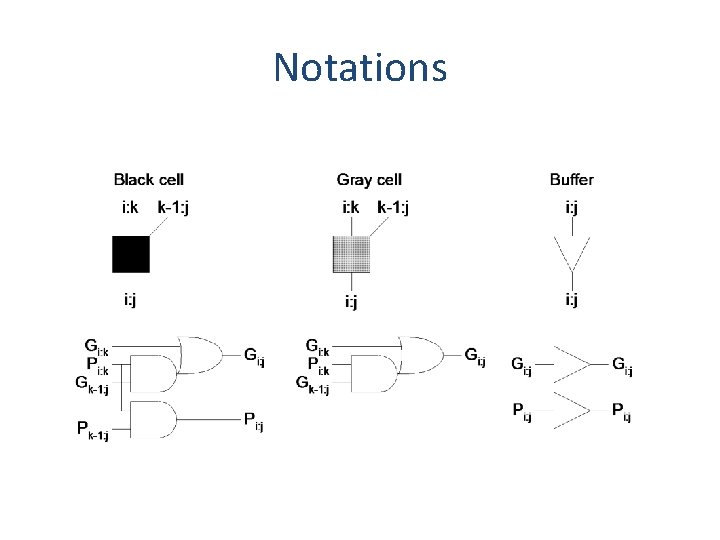
Notations
Ripple Carry Adder

Ripple Carry Adder
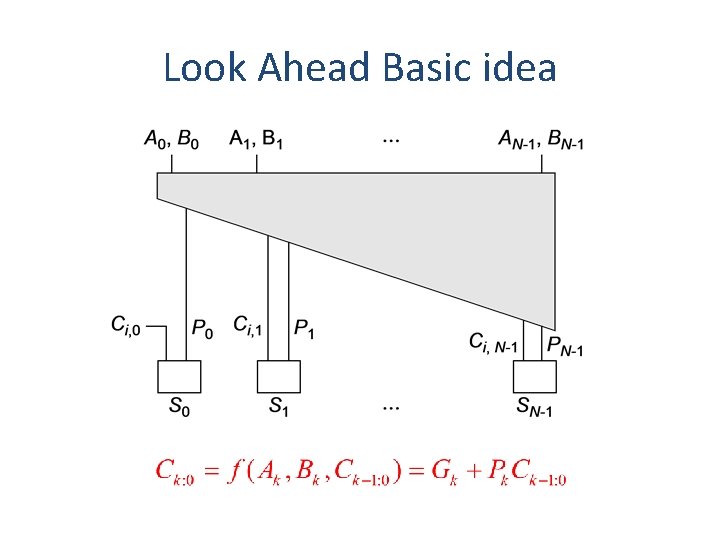
Look Ahead Basic idea
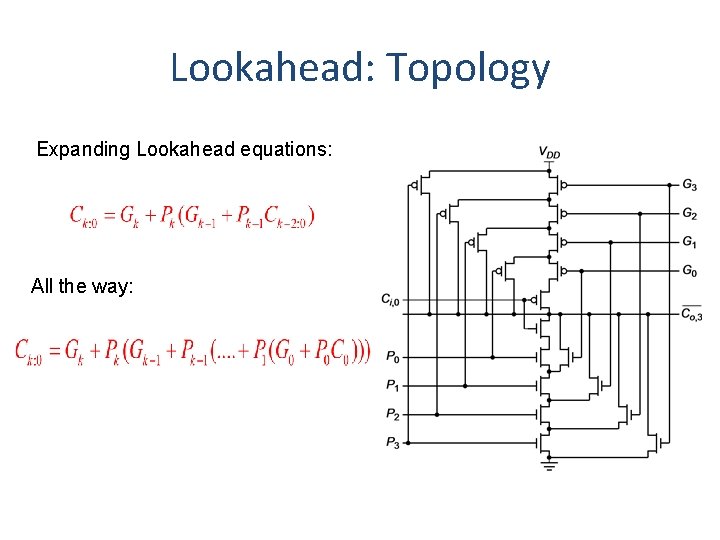
Lookahead: Topology Expanding Lookahead equations: All the way:
Logarithmic Lookahead Adder
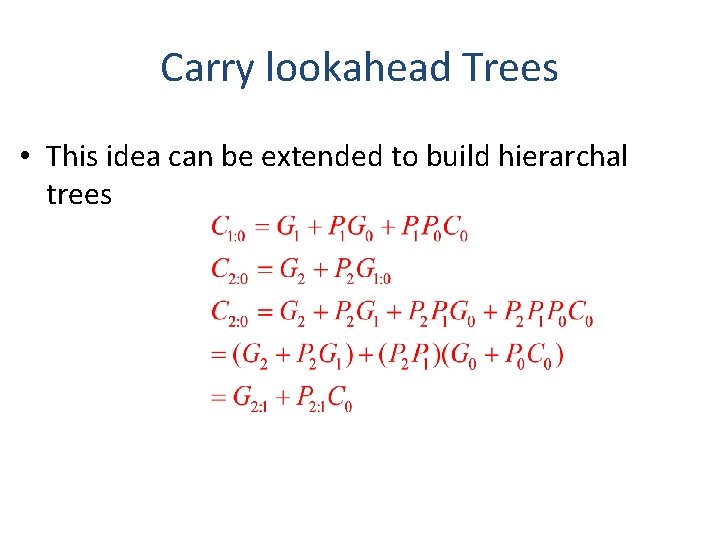
Carry lookahead Trees • This idea can be extended to build hierarchal trees
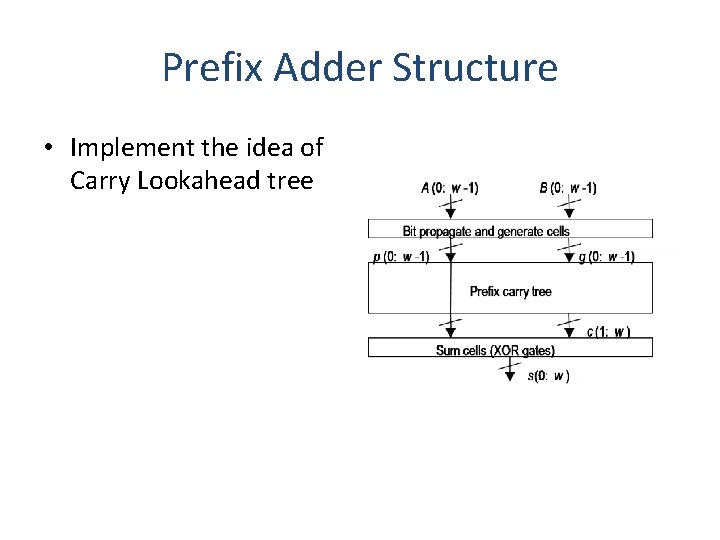
Prefix Adder Structure • Implement the idea of Carry Lookahead tree
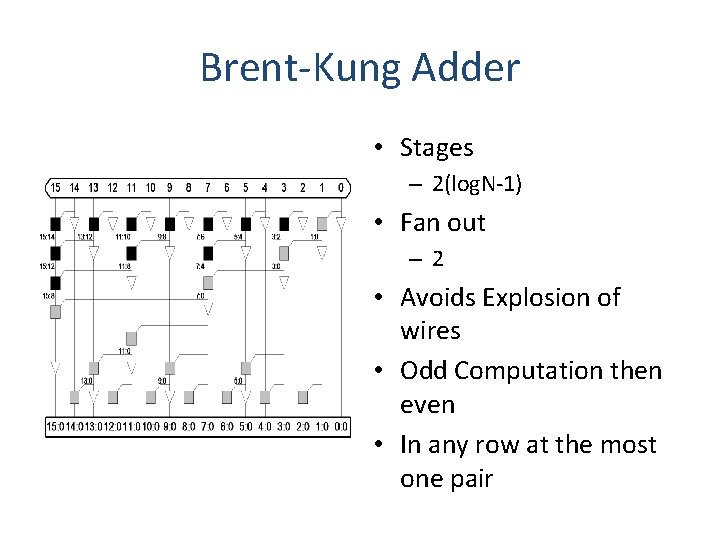
Brent-Kung Adder • Stages – 2(log. N-1) • Fan out – 2 • Avoids Explosion of wires • Odd Computation then even • In any row at the most one pair
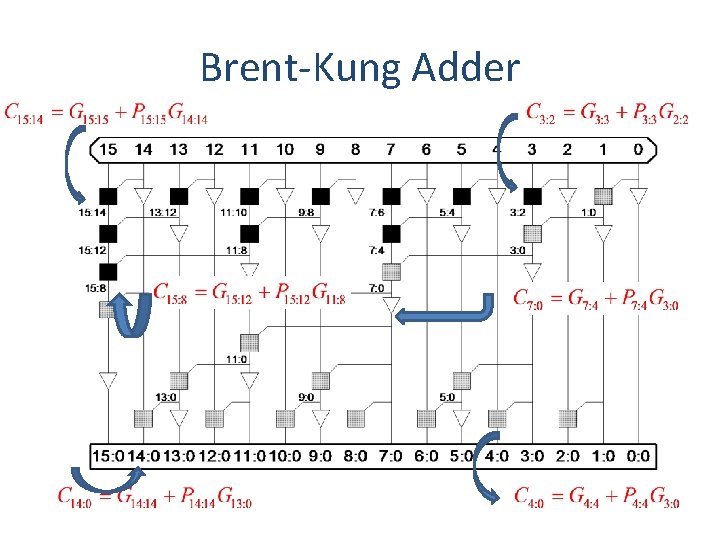
Brent-Kung Adder
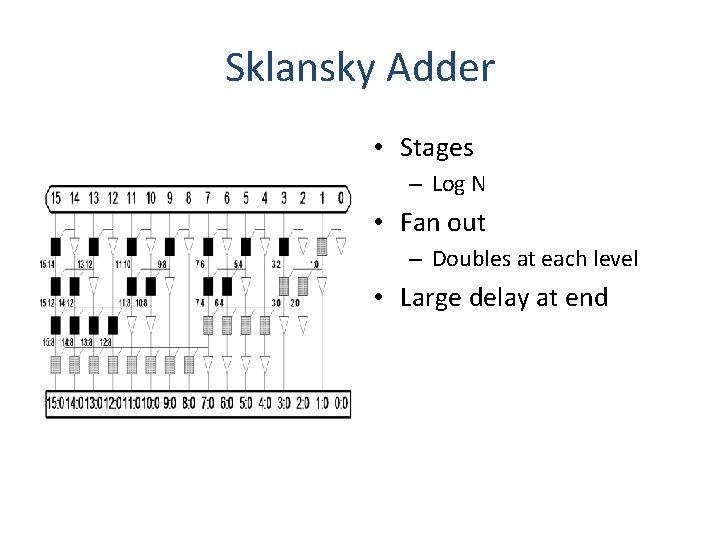
Sklansky Adder • Stages – Log N • Fan out – Doubles at each level • Large delay at end

Sklansky Adder
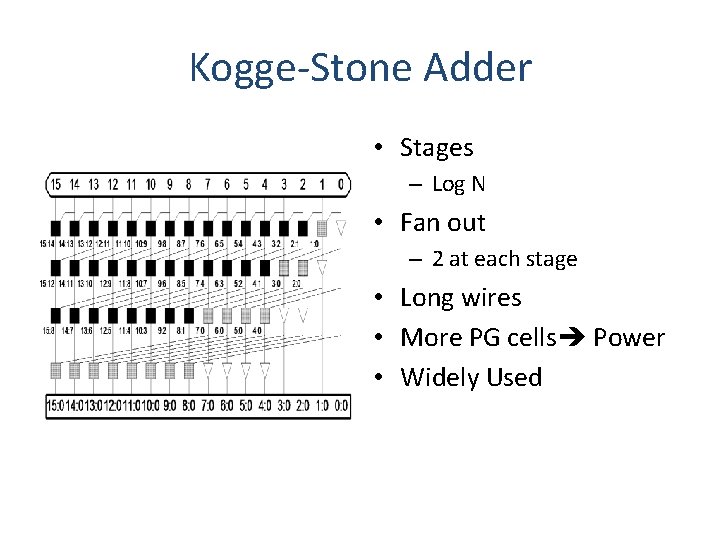
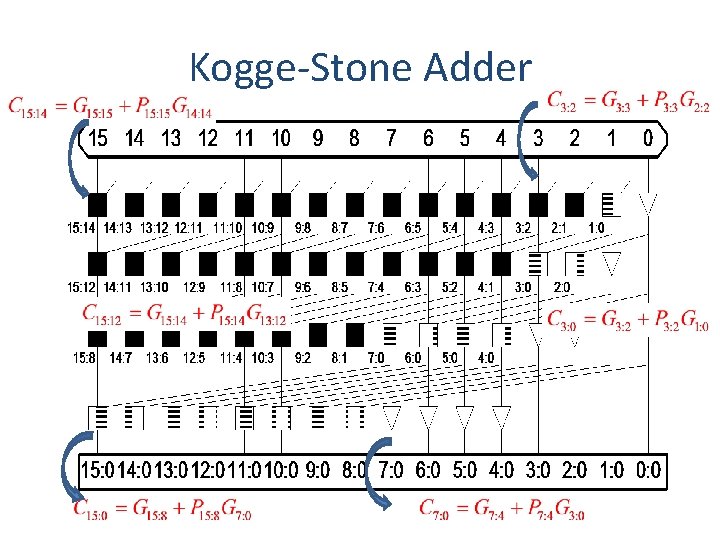
Kogge-Stone Adder • Stages – Log N • Fan out – 2 at each stage • Long wires • More PG cells Power • Widely Used
Kogge-Stone Adder
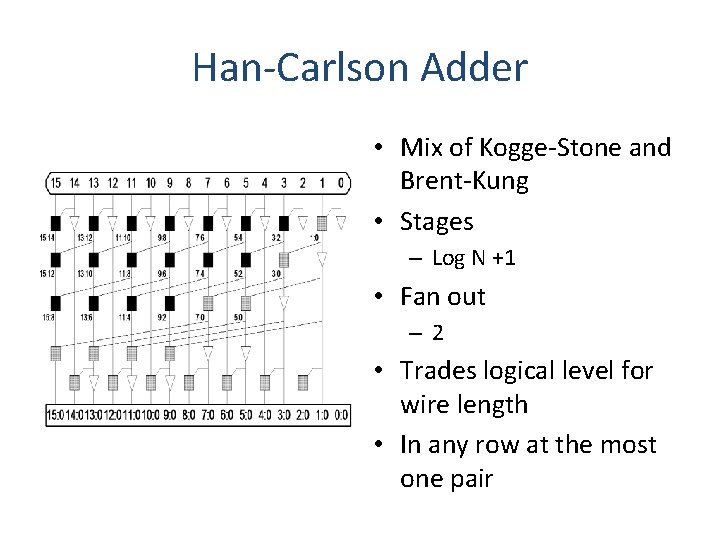
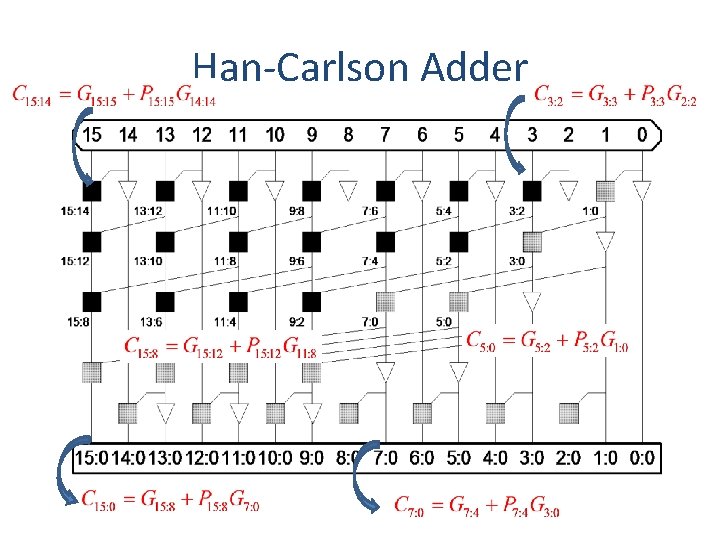
Han-Carlson Adder • Mix of Kogge-Stone and Brent-Kung • Stages – Log N +1 • Fan out – 2 • Trades logical level for wire length • In any row at the most one pair
Han-Carlson Adder
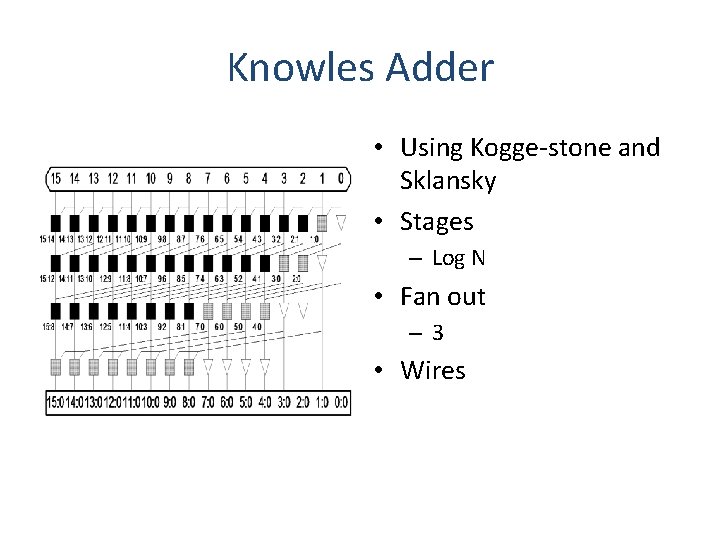
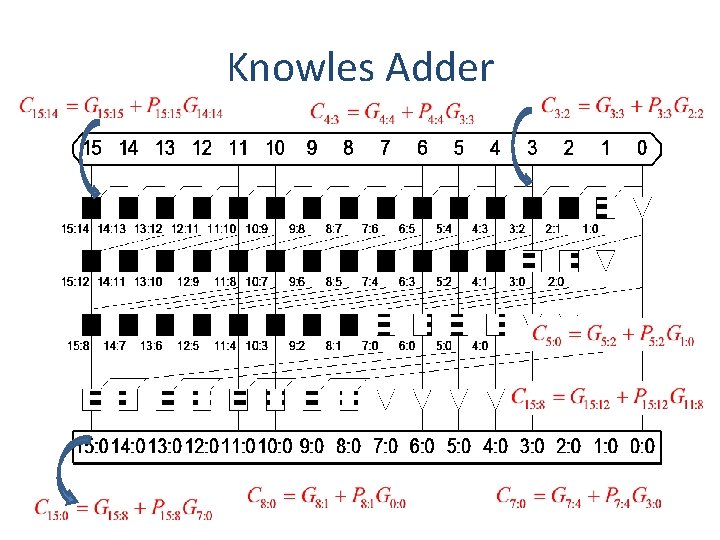
Knowles Adder • Using Kogge-stone and Sklansky • Stages – Log N • Fan out – 3 • Wires
Knowles Adder
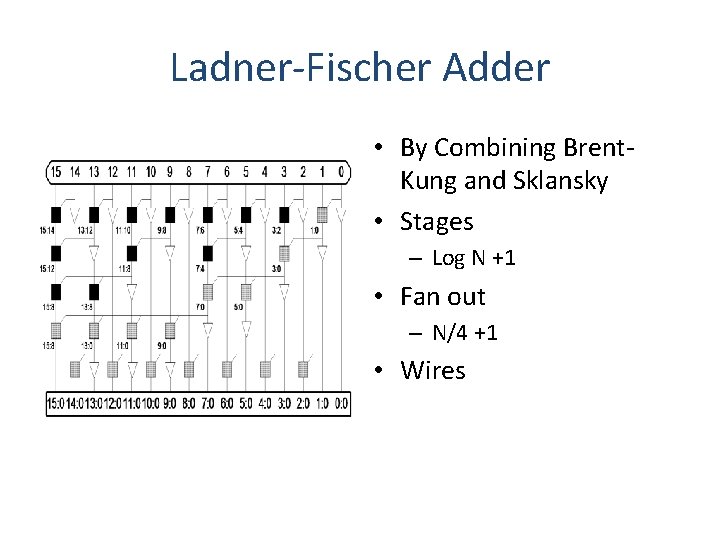
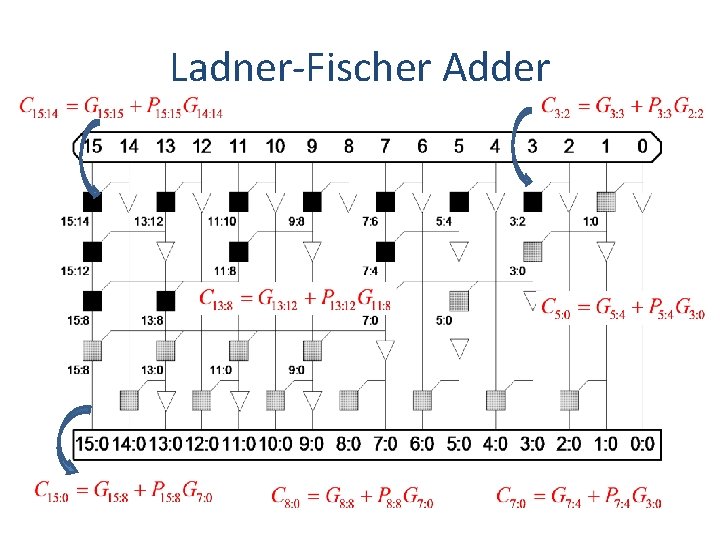
Ladner-Fischer Adder • By Combining Brent. Kung and Sklansky • Stages – Log N +1 • Fan out – N/4 +1 • Wires
Ladner-Fischer Adder
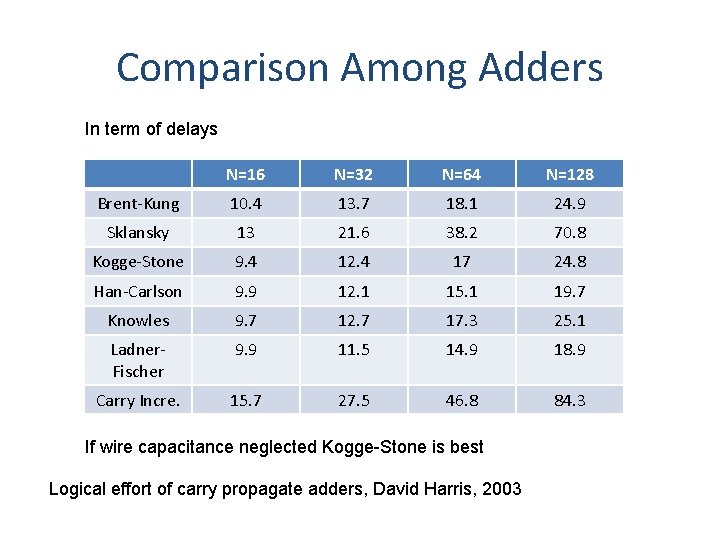
Comparison Among Adders In term of delays N=16 N=32 N=64 N=128 Brent-Kung 10. 4 13. 7 18. 1 24. 9 Sklansky 13 21. 6 38. 2 70. 8 Kogge-Stone 9. 4 12. 4 17 24. 8 Han-Carlson 9. 9 12. 1 15. 1 19. 7 Knowles 9. 7 12. 7 17. 3 25. 1 Ladner. Fischer 9. 9 11. 5 14. 9 18. 9 Carry Incre. 15. 7 27. 5 46. 8 84. 3 If wire capacitance neglected Kogge-Stone is best Logical effort of carry propagate adders, David Harris, 2003
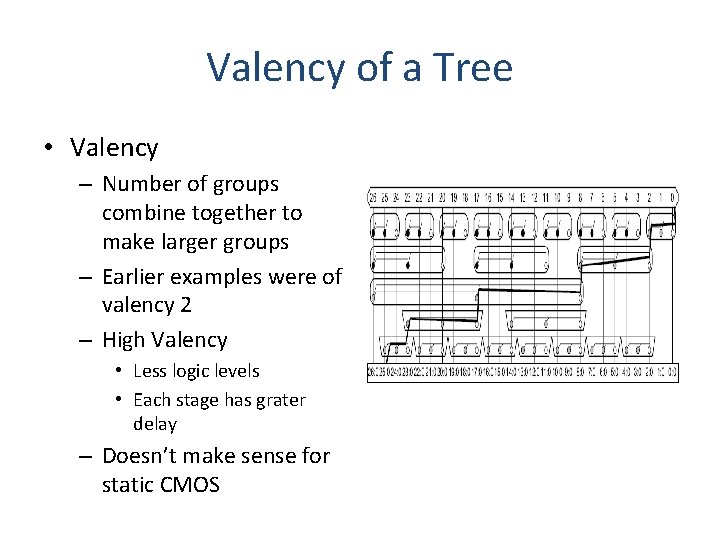
Valency of a Tree • Valency – Number of groups combine together to make larger groups – Earlier examples were of valency 2 – High Valency • Less logic levels • Each stage has grater delay – Doesn’t make sense for static CMOS
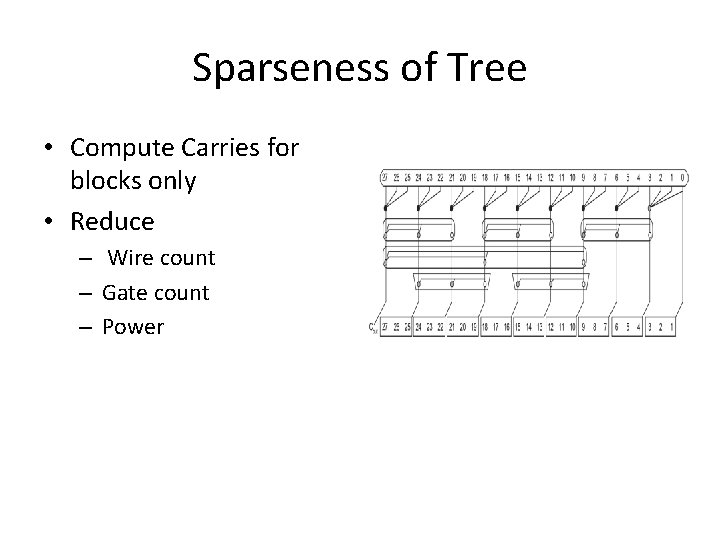
Sparseness of Tree • Compute Carries for blocks only • Reduce – Wire count – Gate count – Power
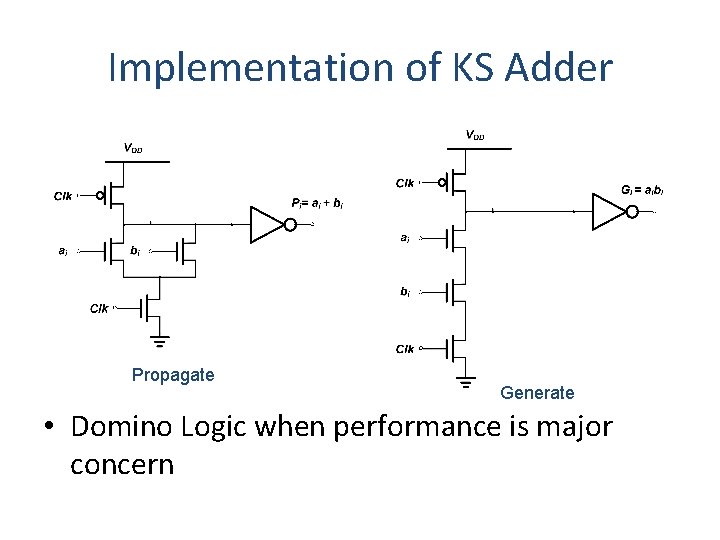
Implementation of KS Adder Propagate Generate • Domino Logic when performance is major concern
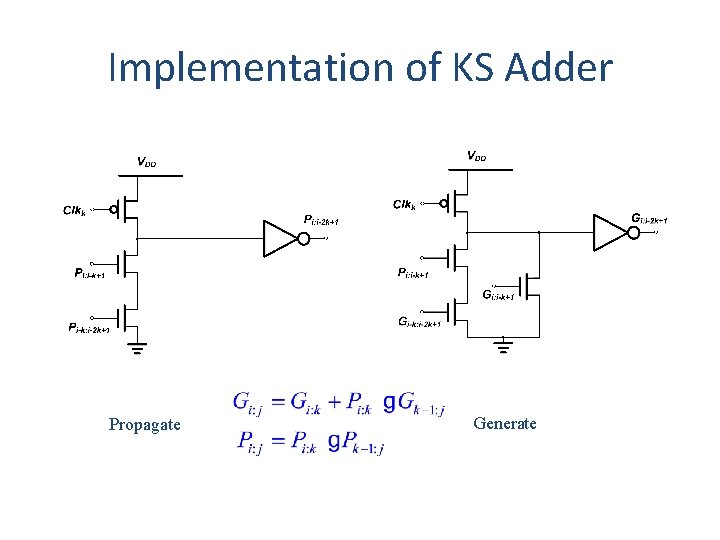
Implementation of KS Adder Propagate Generate
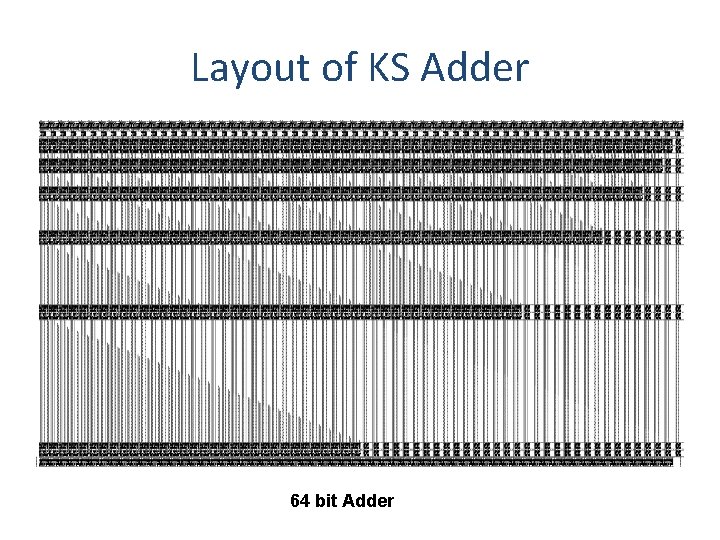
Layout of KS Adder 64 bit Adder
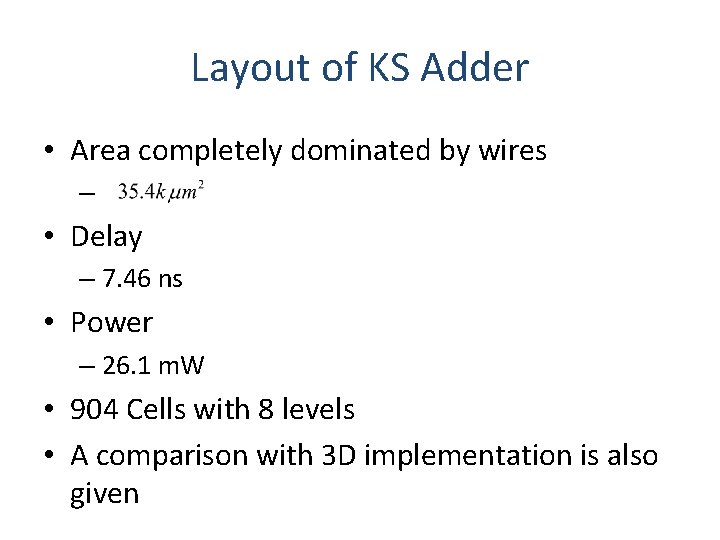
Layout of KS Adder • Area completely dominated by wires – • Delay – 7. 46 ns • Power – 26. 1 m. W • 904 Cells with 8 levels • A comparison with 3 D implementation is also given
Few Observations • • Wire delay exceeds logic delay in many cases The wire delay increases with width of adder Effect of feature size 3 D stacking can help in decreasing area, power and delay
Conclusion • Fast Adders required for N>32 • Irregular hybrid schemes are possible • Kogge-Stone, Knowels require large number of parallel wiring tracks • Large wires will increase wiring capacitances • Choice is yours…. • Trade off between delays and Area • 3 D integration can help in reducing the delays further

- Slides: 35