
Parallel Gibbs Sampling From Colored Fields to Thin
Parallel Gibbs Sampling From Colored Fields to Thin Junction Trees Joseph Gonzalez Yucheng Low Arthur Gretton Carlos Guestrin
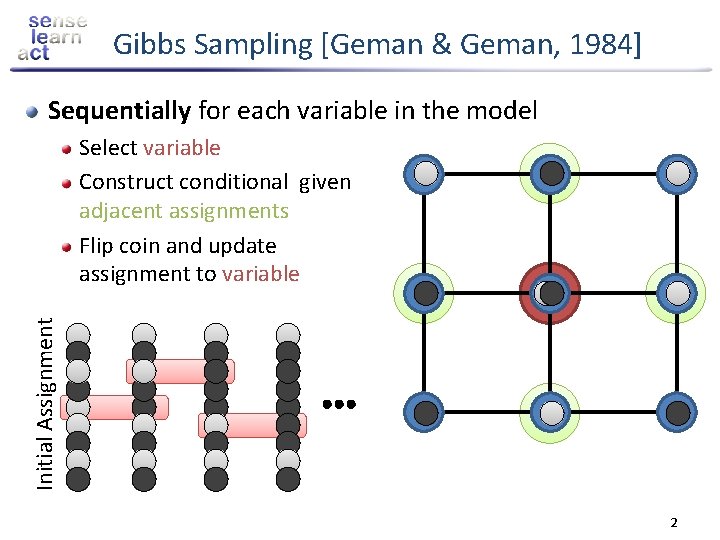
Gibbs Sampling [Geman & Geman, 1984] Sequentially for each variable in the model Initial Assignment Select variable Construct conditional given adjacent assignments Flip coin and update assignment to variable 2
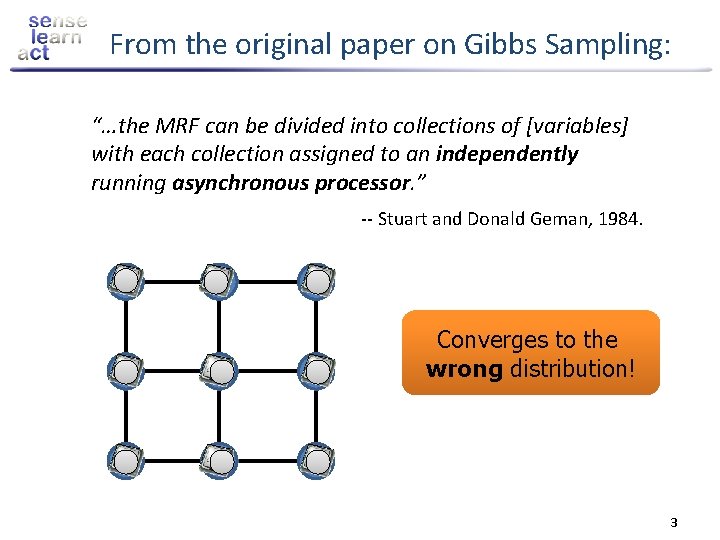
From the original paper on Gibbs Sampling: “…the MRF can be divided into collections of [variables] with each collection assigned to an independently running asynchronous processor. ” -- Stuart and Donald Geman, 1984. Converges to the wrong distribution! 3
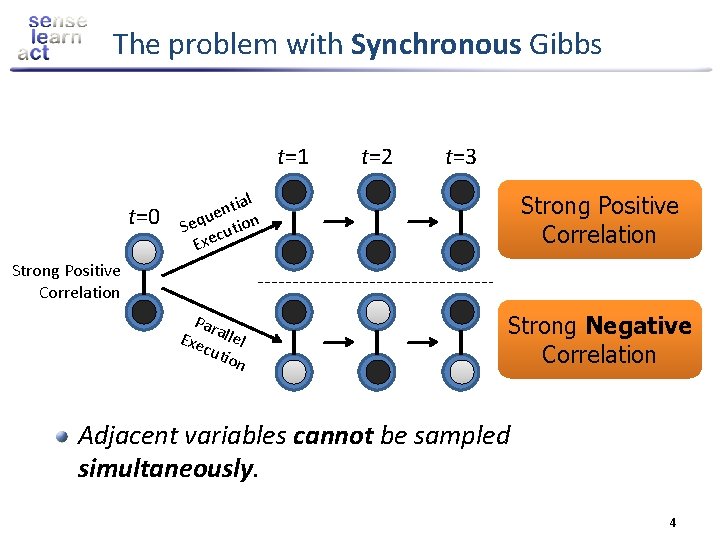
The problem with Synchronous Gibbs t=1 t=0 t=2 t=3 tial n e u Seq cution Exe Strong Positive Correlation Par Exe allel cut ion Strong Negative Correlation Adjacent variables cannot be sampled simultaneously. 4
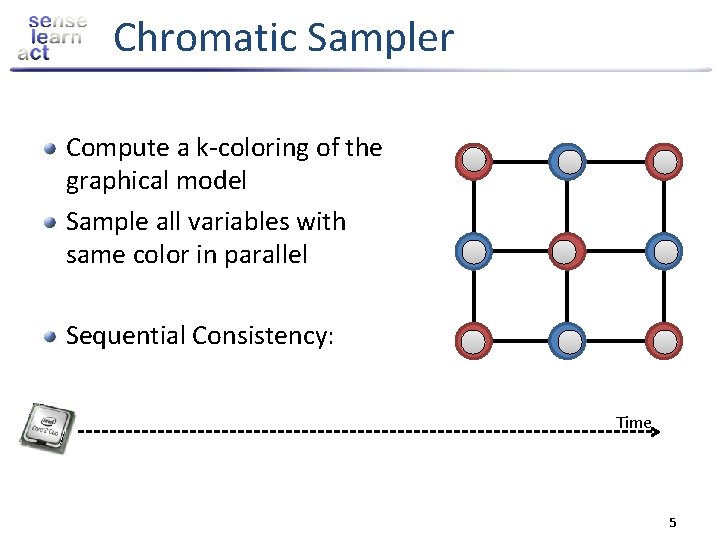
Chromatic Sampler Compute a k-coloring of the graphical model Sample all variables with same color in parallel Sequential Consistency: Time 5
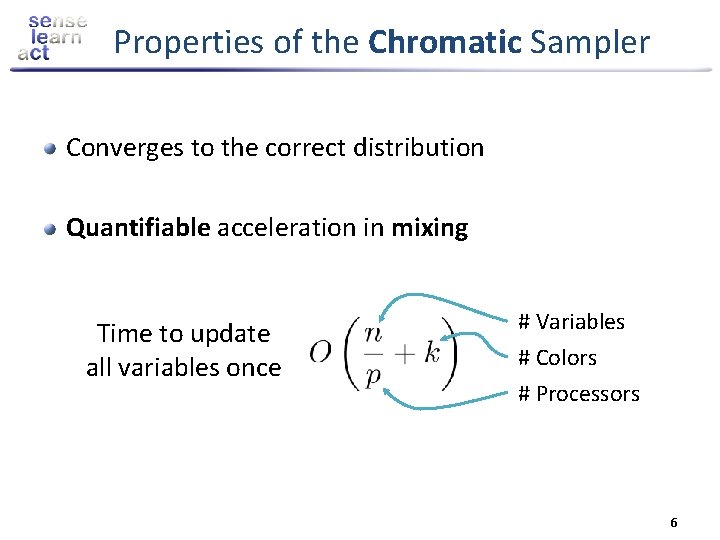
Properties of the Chromatic Sampler Converges to the correct distribution Quantifiable acceleration in mixing Time to update all variables once # Variables # Colors # Processors 6
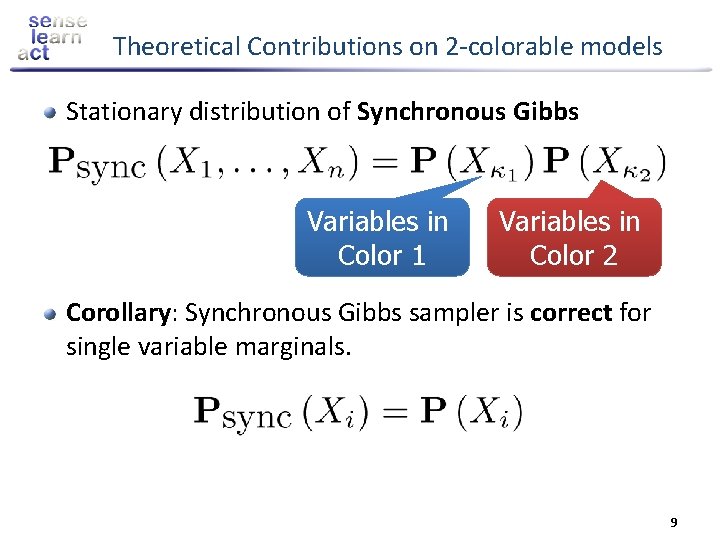
Theoretical Contributions on 2 -colorable models Stationary distribution of Synchronous Gibbs Variables in Color 1 Variables in Color 2 Corollary: Synchronous Gibbs sampler is correct for single variable marginals. 9
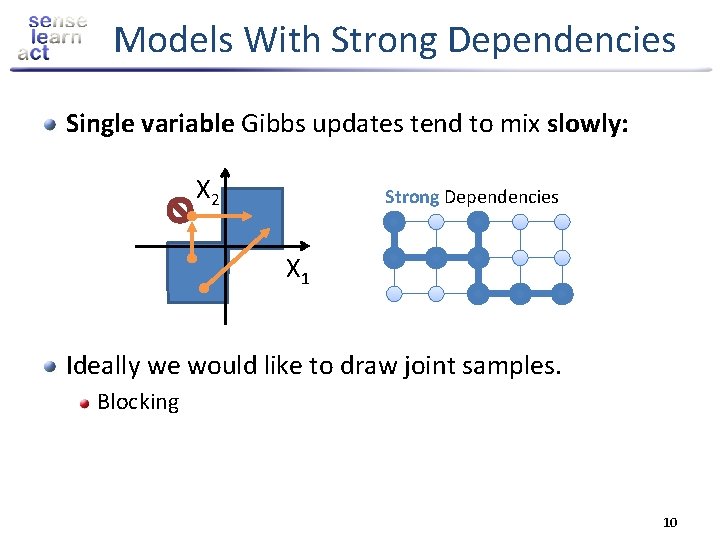
Models With Strong Dependencies Single variable Gibbs updates tend to mix slowly: X 2 Strong Dependencies X 1 Ideally we would like to draw joint samples. Blocking 10
Splash Gibbs Sampler An asynchronous Gibbs Sampler that adaptively addresses strong dependencies. Carnegie Mellon 11
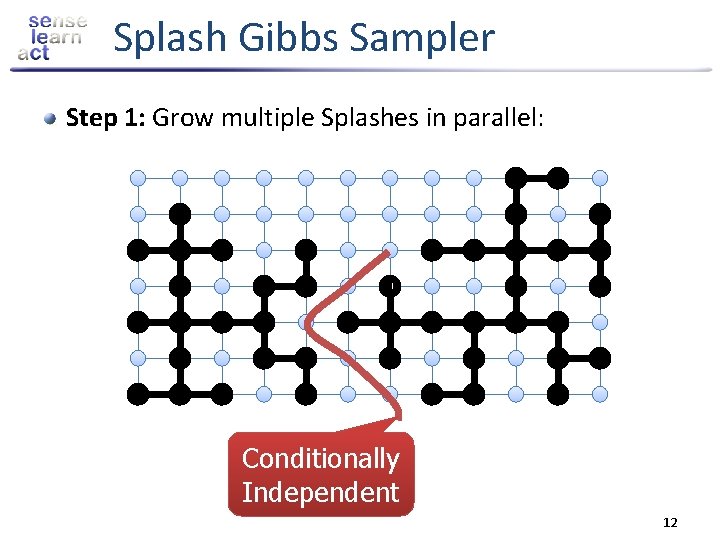
Splash Gibbs Sampler Step 1: Grow multiple Splashes in parallel: Conditionally Independent 12
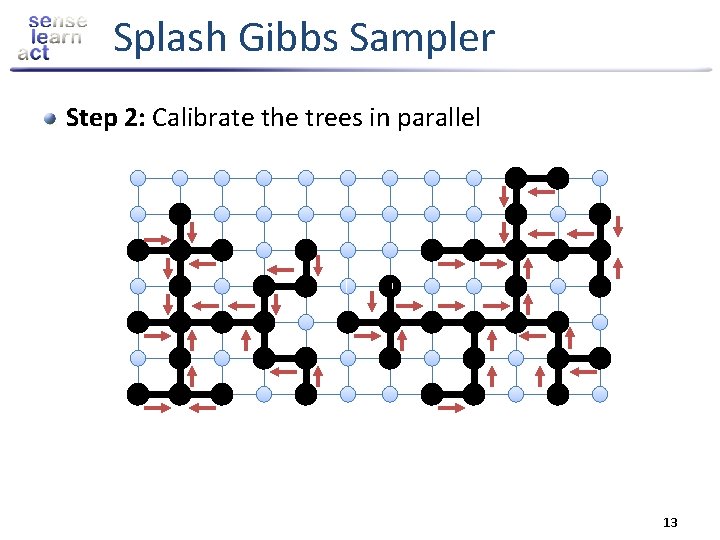
Splash Gibbs Sampler Step 2: Calibrate the trees in parallel 13
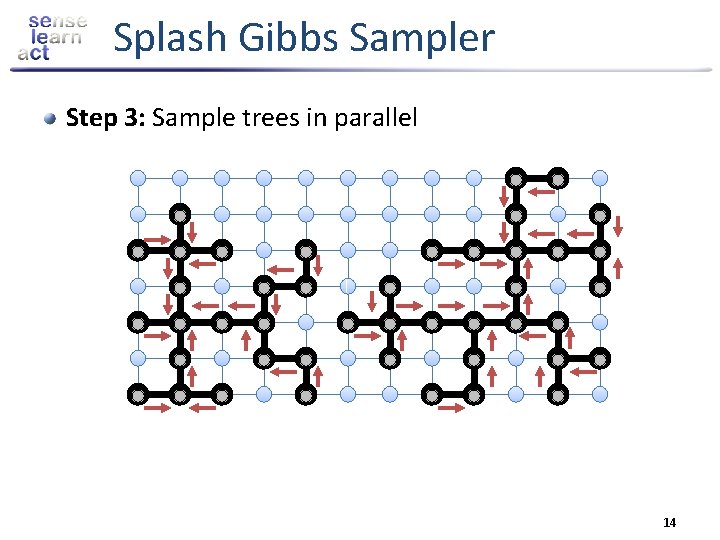
Splash Gibbs Sampler Step 3: Sample trees in parallel 14
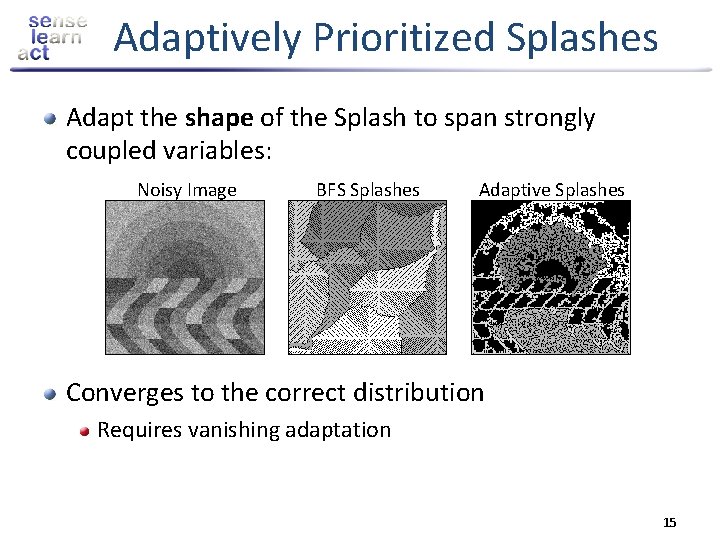
Adaptively Prioritized Splashes Adapt the shape of the Splash to span strongly coupled variables: Noisy Image BFS Splashes Adaptive Splashes Converges to the correct distribution Requires vanishing adaptation 15
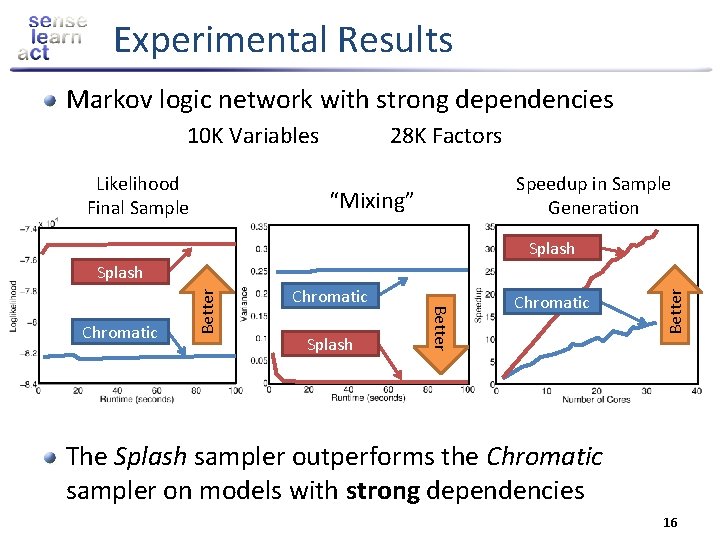
Experimental Results Markov logic network with strong dependencies 10 K Variables Likelihood Final Sample 28 K Factors Speedup in Sample Generation “Mixing” Splash Chromatic Better Splash The Splash sampler outperforms the Chromatic sampler on models with strong dependencies 16
Conclusions Chromatic Gibbs sampler for models with weak dependencies Converges to the correct distribution Quantifiable improvement in mixing Theoretical analysis of the Synchronous Gibbs sampler on 2 -colorable models Proved marginal convergence on 2 -colorable models Splash Gibbs sampler for models with strong dependencies Adaptive asynchronous tree construction Experimental evaluation demonstrates an improvement in mixing 17
- Slides: 15