
PARAKERATOSIS Zinc Deficiency Dr Ranveer Kumar Sinha Assistant

- Slides: 14
PARAKERATOSIS (Zinc Deficiency) Dr. Ranveer Kumar Sinha Assistant Professor cum Junior Scientist Department of Veterinary Medicine Bihar Veterinary College, Patna – 800 014 (Bihar Animal Sciences University, Patna)
INTRODUCTION • Skin, hair & wool are rich in Zn content • Def. of Zn produces: 1. Retarted growth: - reduced appetite & poor food utilization 2. Skeletal disorders: • Disturbed bone growth & remain fragile. • Deformity due to decreased osteoblastic activity. • Also produces stiffness of joint & lesions around the hoofs.
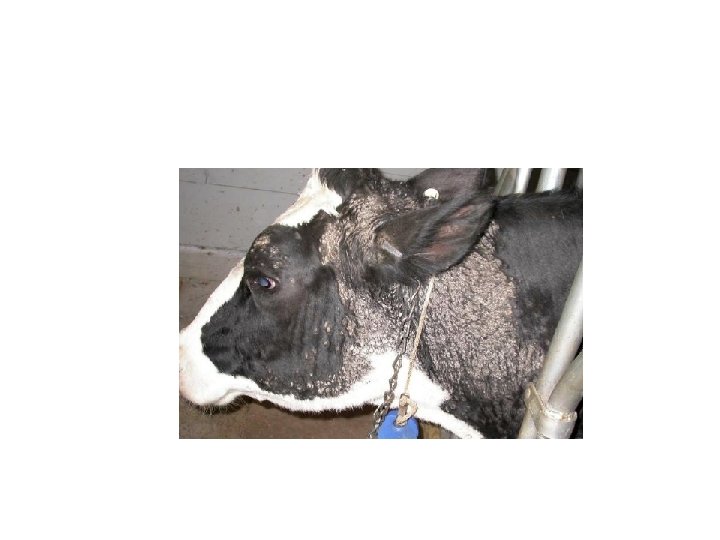
INTRODUCTION 3. Abnormal keratogenesis: • Produces rough, dry, scaly hair coats & alopecia. • Parakeratosis in pig(imperfect keratinisation of epithelial cell) • Alopecia & general dermatitis around the head & neck is observed in cattle. 4. Reproductive disorder: Delay in sexual maturity due to Zn def. Bull & cow remain infertile.
ETIOLOGY • Parakeratosis is a zinc-responsive dermatosis usually observed in 2 - to 4 month-old swine. The deficiency is usually caused by feeding • Excessive calcium; excessive phytic acid (sometimes present in soybean protein) or a low concentration of essential fatty acids. • Enteric pathogens or changes in intestinal flora can adversely influence zinc absorption.
PATHOGENESIS • Zn is component of certain enzyme like carbonic anhydrase required for removal of Co 2. • Alkaline phosphatase required for phosphorylation, concerning lipid metabolism & lactic dehydrogenase for the interconversion of pyruvic acid & lactic acid
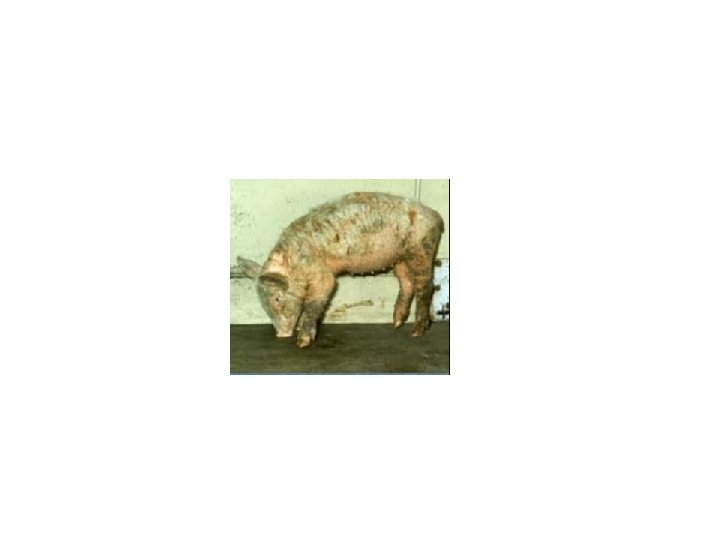
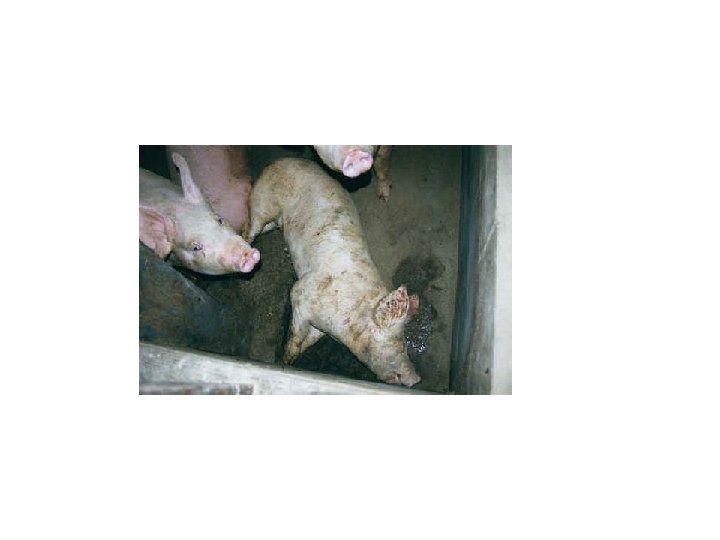
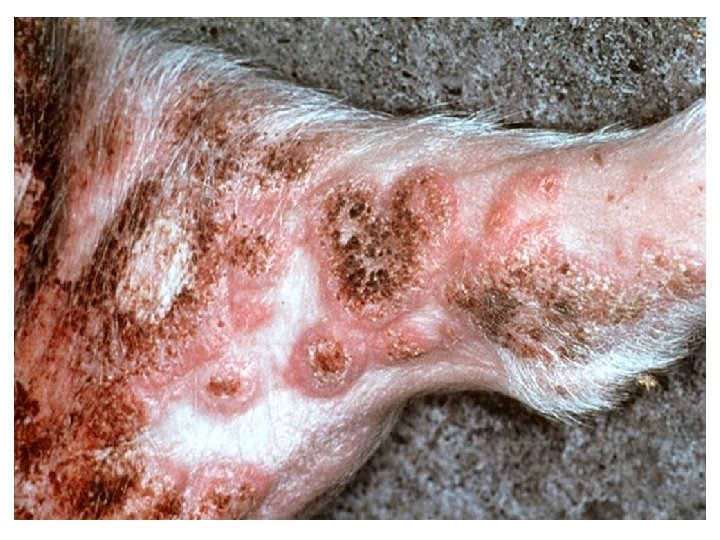
SYMPTOMS/SIGNS • Skin lesions and reduced growth rate. • Reddened macules and papules on the ventrolateral abdomen and medial surface of the thighs • The lesions are slowly covered by thick, roughened scales and crusts. • More obvious lesions soon become apparent on the lower legs and on the dorsum. • Lesions sometimes can be seen around the eyes, ears, snout and tail and eventually may become generalized. • Skin are hyperkeratotic and there may be fissuring of the epidermis with secondary infection of the fissures.
DIAGNOSIS • • Clinical finding History of diet Estimation of Zn level(N. 20 -120 mg/dl) Reduced alkaline phosphatase & Carbonic anhydrase level in serum
DIFFERENTIAL DIAGNOSIS • Differentiated from sarcoptic mange • Parakeratosis is non pruritic whereas sarcoptic mange is pruritic. • Pigs with Parakeratosis will recover if excessive calcium is removed from the ration and it is properly supplemented with zinc.
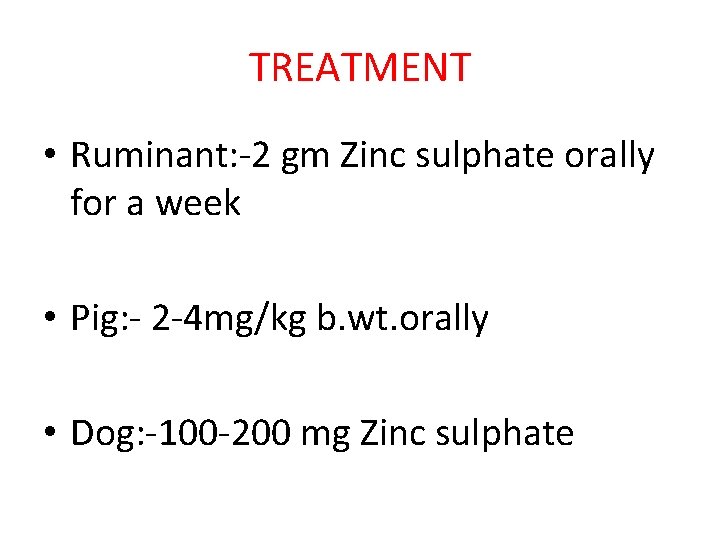
TREATMENT • Ruminant: -2 gm Zinc sulphate orally for a week • Pig: - 2 -4 mg/kg b. wt. orally • Dog: -100 -200 mg Zinc sulphate
THANK YOU FOR LISTENING