
Paradigm A set of assumptions concepts values and
- Slides: 26
Paradigm A set of assumptions, concepts, values, and practices that constitutes a way of viewing reality for the community that shares them.
Paradigm • Preparing • A Pathway to • Recovery from • Alcohol and • Drug Addiction • In hopes of a crime free life and a life with • Greater • Meaning
Goal of our Therapeutic Community (TC) The goal of the Therapeutic Community is to help the individual gain the ability to return to society and live a productive life.
Therapeutic Community (T C ) herapeutic ommunity • In general, TCs are drugfree community settings that include different stages of responsibility.
8 Basic TC Concepts 1. 2. 3. 4. 5. 6. 7. Member Roles Continual Feedback from peers and staff Role Models Friendships and healthy family like relationships Collective learning Internalization of the TC Culture and Language Hierarchal work structure and communication system 8. Open communication and personal disclosure
TC Components • History – Where have we been in supporting TC Concepts? • Separated living quarters (? ) • Community environment • Community activities • Jobs, meals, daily living activities • Structured Day • Stages of the program/Phases of treatment • Planned duration of treatment
TC Components MORE! • • Conflict Resolution Teams Group Leaders Phase III Work assignments/responsibilities Community groups – A. A. , N. A. Wellbriety Graduation Ceremonies Community meetings CD Communication Log
• Therapeutic Community, rather than a single therapist or counselor, is the healing force that facilitates individual change. (SAMHSA DHHS publication No. (SMA) 06 -4122 - 2006
TC • Developing social skills & tools –Anger Management –Problem Solving –Assertiveness –Working together
ANGER Offenders are beginning to solve problems in healthy ways and are encouraged to deal with conflict for the first time.
Problem Solving • Clients are encouraged to work through issues and problems themselves. • Process
Assertiveness • Selfishness? • Encourage development of skills • Modeling • Be my friend?
Working Together • We want to encourage the client’s to develop relationships with both staff and other treatment participants. • The clients need to be responsible and respectful to one another. • Swearing and inappropriate behavior should be confronted • “Cops” and “Snitch” promote Criminal Thinking and should not be part of the community vocabulary • Cooperation – Staff and Clients • If this is not happening, we want to address it in treatment
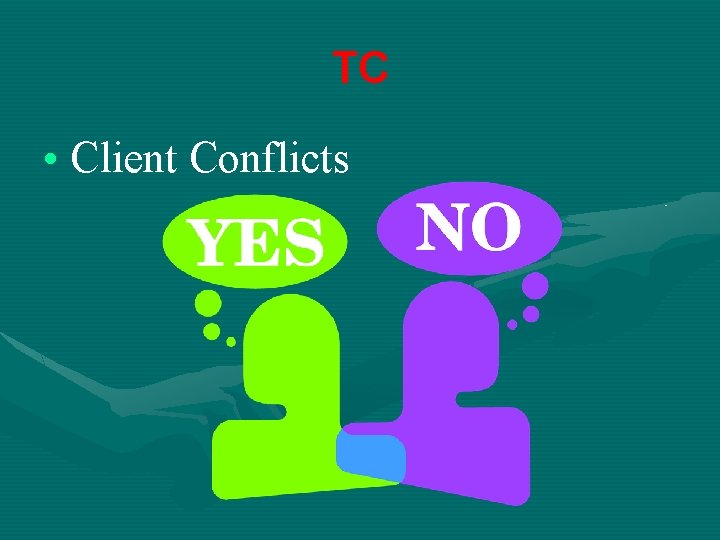
TC • Client Conflicts
Line Staff - Difficult Balance? • When emotions get stirred, we want THEM to work through these problems. • Knowing the process is important. • Giving advice? - To the process, not necessarily the solution. • Being understanding while not being overly lenient. • INSURING SAFETY AND SECURITY
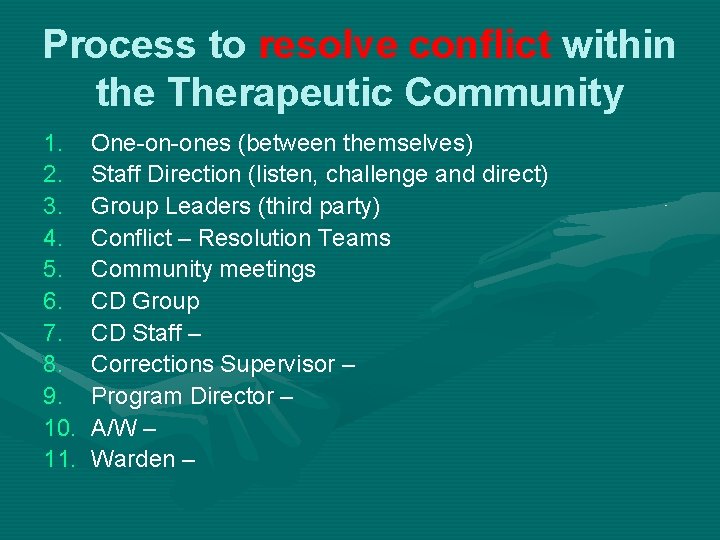
Process to resolve conflict within the Therapeutic Community 1. 2. 3. 4. 5. 6. 7. 8. 9. 10. 11. One-on-ones (between themselves) Staff Direction (listen, challenge and direct) Group Leaders (third party) Conflict – Resolution Teams Community meetings CD Group CD Staff – Corrections Supervisor – Program Director – A/W – Warden –
2 GOALS OF YOUR CHEMICAL DEPENDENCY TREATMENT 1. Commitment to abstinence from mood altering chemicals is critical. 2. Commitment to a crime free life-style is imperative.
Expectations • SHOULD BE HIGH – Supporting these expectations when met and confronting them when there are violations is an important part of our jobs. • • • NO SWEARING NO GAMBLING Completing work on time No disciplinary reports Completing work thoroughly Giving your full attention to the group, line staff and counselor Actively developing his treatment plan Listening and accepting others feedback without argument Actively participating in the group and in the Therapeutic Community • Attending Sober support groups like A. A. • Developing a sense of Spirituality
How do they learn? • Insight to one’s problems is gained through group and individual interaction. Learning by experience not only through succeeding, but through failing and experiencing the consequences will be critical.
Some more basic expectations • Participants in this program are always expected to attend to CD treatment program schedule. They do not decide whether to come or not. • Yard time, Gym time – Sign In/Out • They get paid for these times and need to be active. – – – Playing cards Puzzles Exercising Working Writing letters • Watching TV in rooms or laying in bunks during programming time is not acceptable unless approved/communicated by CD Staff.
CD Basic Discipline Progression All rules and discipline apply. Treatment has a set of rules for change as well. 1. Verbal Warnings 2. Team Meetings/Staffings 3. Program Restriction Status 4. Behavioral Resolution Plan 5. Program Probation 6. Suspension 7. Termination
Confidentiality • Security • Trust • Safety
How officers can support the TC • • Recognize positive work/behavior Confront negative behavior (i. e. swearing) Room checks – clean rooms, active offenders Monitoring sign-in sheets Accountability for cleaning assignments Direction and support when conflict arises Challenging their thinking
Examples/Lingo • Thinking Reports – Primary Treatment Learning tool • “Have you examined other options? ” • “Does this behavior support your recovery? ” • “Is your group leader aware of this conflict? ” • “Have you considered the Conflict Resolution process? ” • “Have you ran this through the problem solving process? ” • “Have you done a thinking report on this? ” • “Who have you processed this with? ”
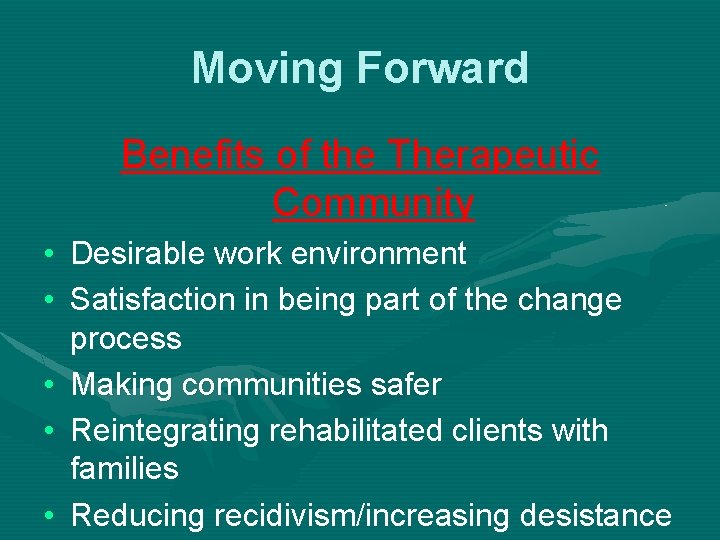
Moving Forward Benefits of the Therapeutic Community • Desirable work environment • Satisfaction in being part of the change process • Making communities safer • Reintegrating rehabilitated clients with families • Reducing recidivism/increasing desistance
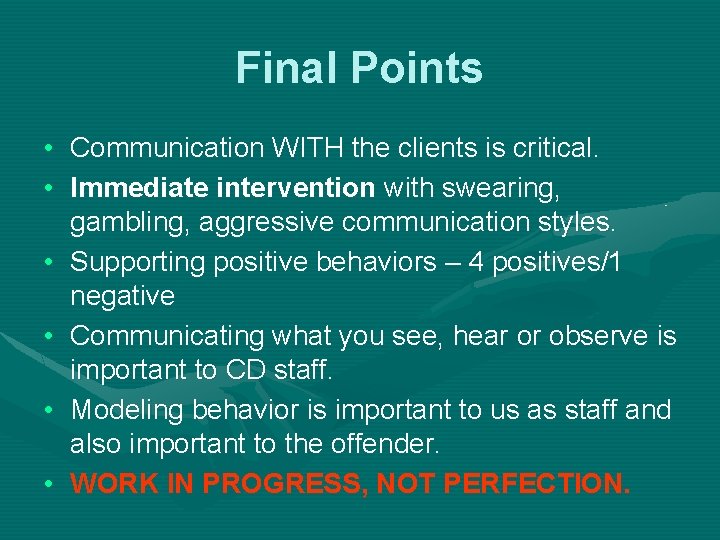
Final Points • Communication WITH the clients is critical. • Immediate intervention with swearing, gambling, aggressive communication styles. • Supporting positive behaviors – 4 positives/1 negative • Communicating what you see, hear or observe is important to CD staff. • Modeling behavior is important to us as staff and also important to the offender. • WORK IN PROGRESS, NOT PERFECTION.