
Para Empezar Hay errores Identify and correct the

- Slides: 21
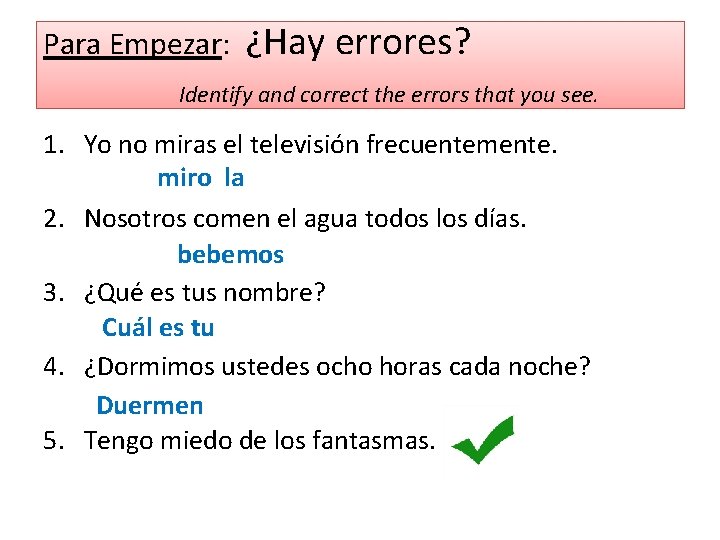
Para Empezar: ¿Hay errores? Identify and correct the errors that you see. 1. Yo no miras el televisión frecuentemente. miro la 2. Nosotros comen el agua todos los días. bebemos 3. ¿Qué es tus nombre? Cuál es tu 4. ¿Dormimos ustedes ocho horas cada noche? Duermen 5. Tengo miedo de los fantasmas.
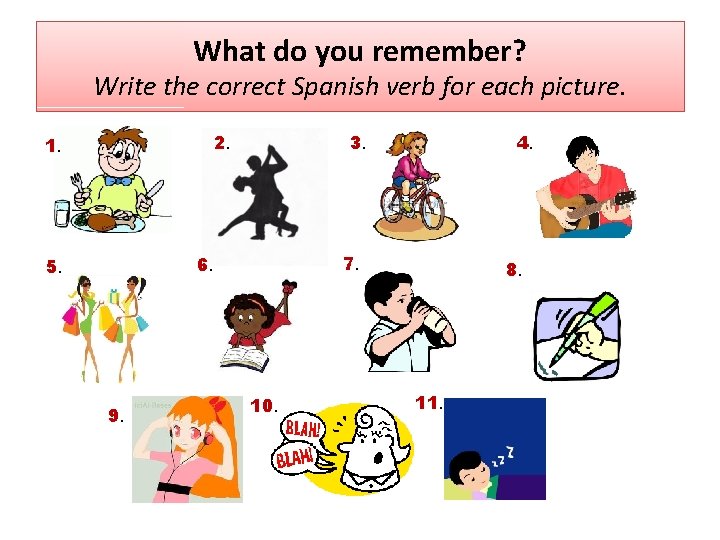
What do you remember? Write the correct Spanish verb for each picture. 2. 1. 3. 7. 6. 5. 9. 4. 10. 8. 11.
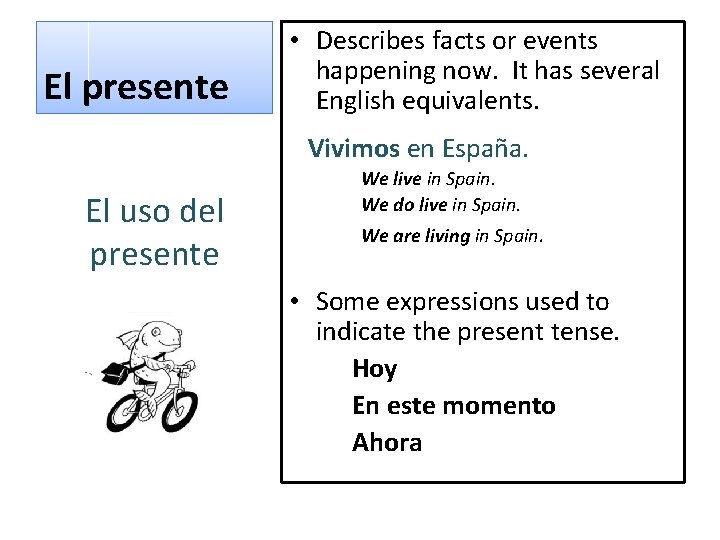
El presente • Describes facts or events happening now. It has several English equivalents. Vivimos en España. El uso del presente We live in Spain. We do live in Spain. We are living in Spain. • Some expressions used to indicate the present tense. Hoy En este momento Ahora
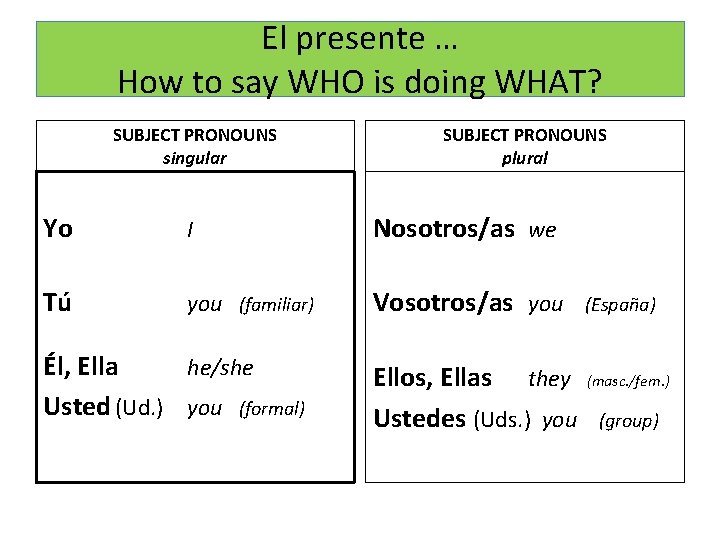
El presente … How to say WHO is doing WHAT? SUBJECT PRONOUNS singular SUBJECT PRONOUNS plural Yo I Nosotros/as we Tú you (familiar) Vosotros/as you Él, Ella he/she Usted (Ud. ) you (formal) Ellos, Ellas they Ustedes (Uds. ) you (España) (masc. /fem. ) (group)
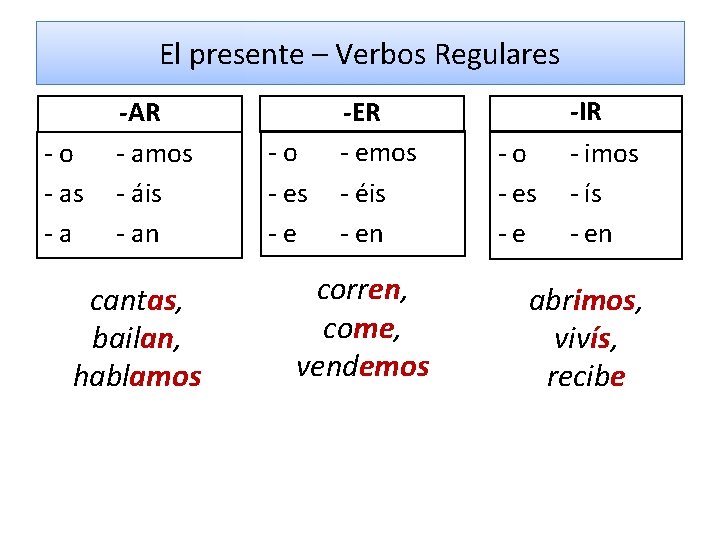
El presente – Verbos Regulares -o - as -a -AR - amos - áis - an cantas, bailan, hablamos -o - es -e -ER - emos - éis - en corren, come, vendemos -o - es -e -IR - imos - ís - en abrimos, vivís, recibe
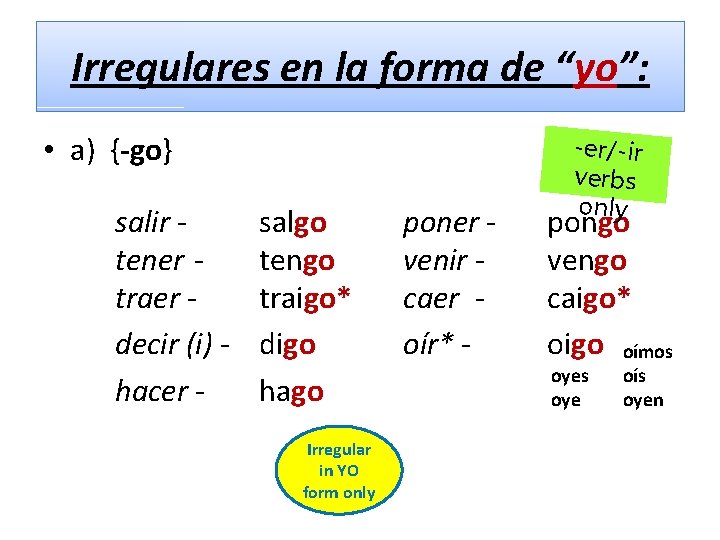
Irregulares en la forma de “yo”: • a) {-go} salir tener traer decir (i) hacer - salgo tengo traigo* digo hago Irregular in YO form only poner venir caer oír* - -er/-ir verbs only pongo vengo caigo* oigo oímos oye oís oyen
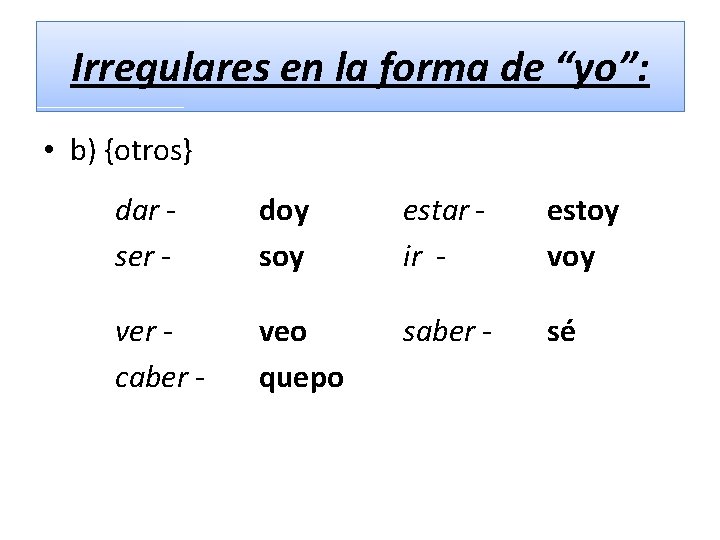
Irregulares en la forma de “yo”: • b) {otros} dar ser - doy soy estar ir - estoy ver caber - veo quepo saber - sé
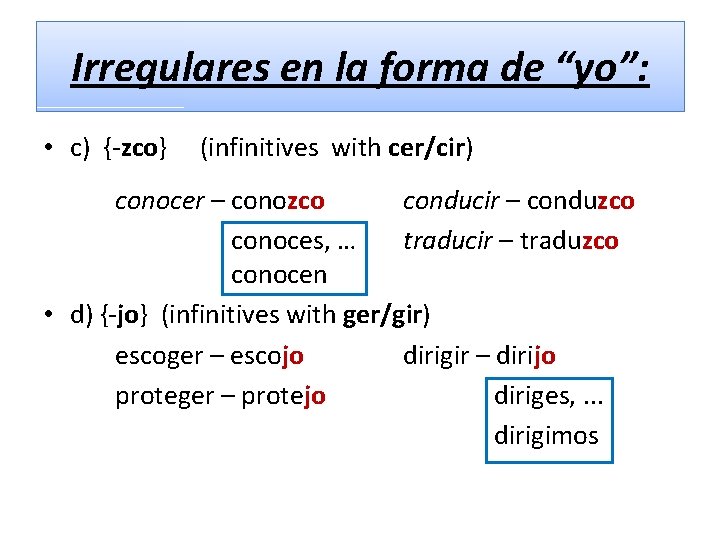
Irregulares en la forma de “yo”: • c) {-zco} (infinitives with cer/cir) conocer – conozco conducir – conduzco conoces, … traducir – traduzco conocen • d) {-jo} (infinitives with ger/gir) escoger – escojo dirigir – dirijo proteger – protejo diriges, . . . dirigimos
Cambios en radical: Stem-changing verbs a) 1 ra clase {-ar & -er} e ie /o ue excepto: nosotros & vosotros pensar comenzar querer defender pienso comienza quieren defiende mostrar almorzar volver mover muestras almuerzo vuelvo muevo Ellos comienzan su trabajo, pero nosotros no comenzamos. Elena vuelve temprano y nosotros volvemos tarde.
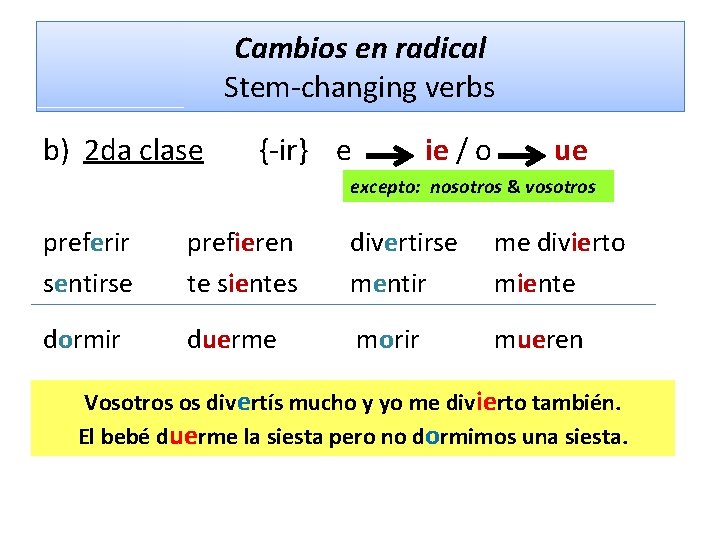
Cambios en radical Stem-changing verbs b) 2 da clase {-ir} e ie / o ue excepto: nosotros & vosotros preferir sentirse prefieren te sientes divertirse mentir me divierto miente dormir duerme morir mueren Vosotros os divertís mucho y yo me divierto también. El bebé duerme la siesta pero no dormimos una siesta.
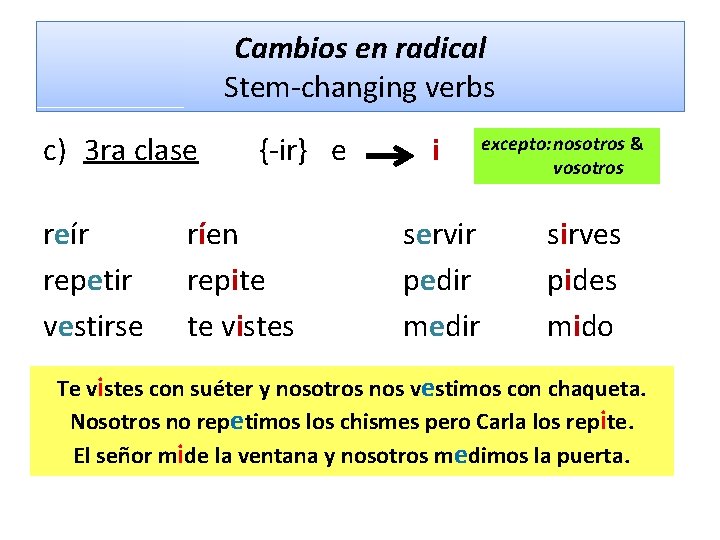
Cambios en radical Stem-changing verbs c) 3 ra clase reír repetir vestirse {-ir} e ríen repite te vistes i servir pedir medir excepto: nosotros & vosotros sirves pides mido Te vistes con suéter y nosotros nos vestimos con chaqueta. Nosotros no repetimos los chismes pero Carla los repite. El señor mide la ventana y nosotros medimos la puerta.
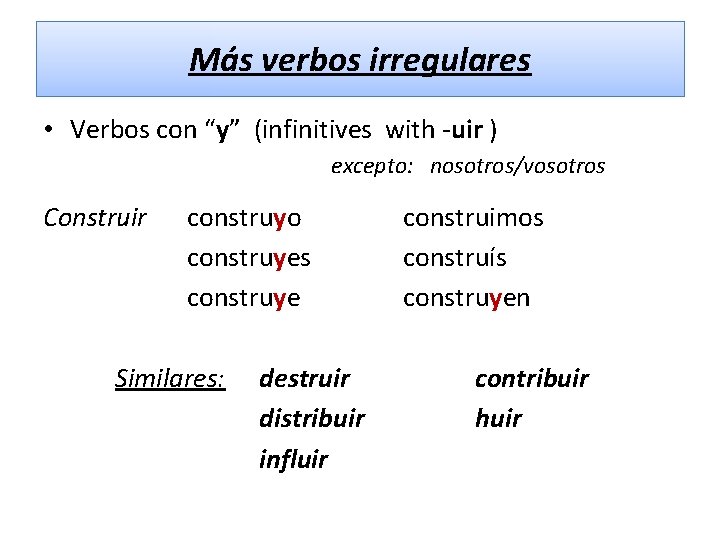
Más verbos irregulares • Verbos con “y” (infinitives with -uir ) excepto: nosotros/vosotros Construir construyo construyes construye Similares: destruir distribuir influir construimos construís construyen contribuir huir
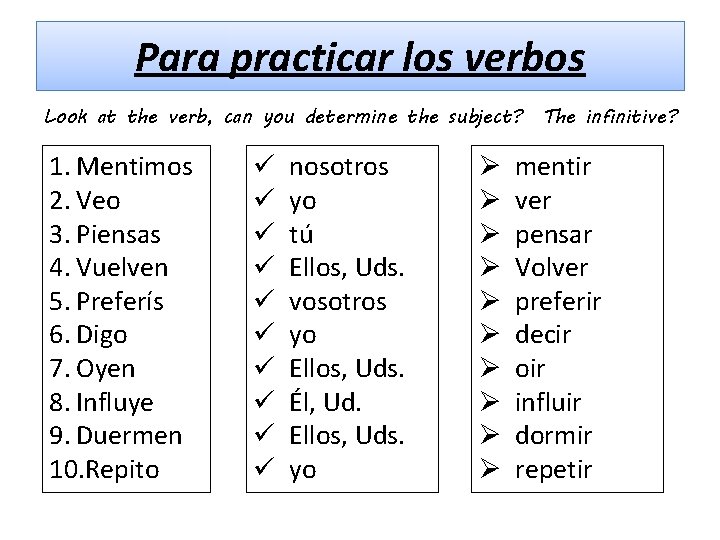
Para practicar los verbos Look at the verb, can you determine the subject? The infinitive? 1. Mentimos 2. Veo 3. Piensas 4. Vuelven 5. Preferís 6. Digo 7. Oyen 8. Influye 9. Duermen 10. Repito ü ü ü ü ü nosotros yo tú Ellos, Uds. vosotros yo Ellos, Uds. Él, Ud. Ellos, Uds. yo Ø Ø Ø Ø Ø mentir ver pensar Volver preferir decir oir influir dormir repetir
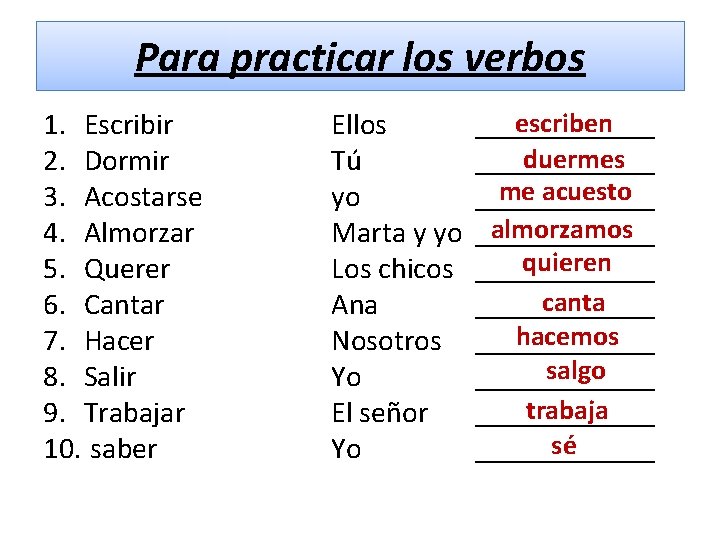
Para practicar los verbos 1. Escribir 2. Dormir 3. Acostarse 4. Almorzar 5. Querer 6. Cantar 7. Hacer 8. Salir 9. Trabajar 10. saber Ellos Tú yo Marta y yo Los chicos Ana Nosotros Yo El señor Yo escriben ______ duermes ______ me acuesto ______ almorzamos ______ quieren ______ canta ______ hacemos ______ salgo ______ trabaja ______ sé ______
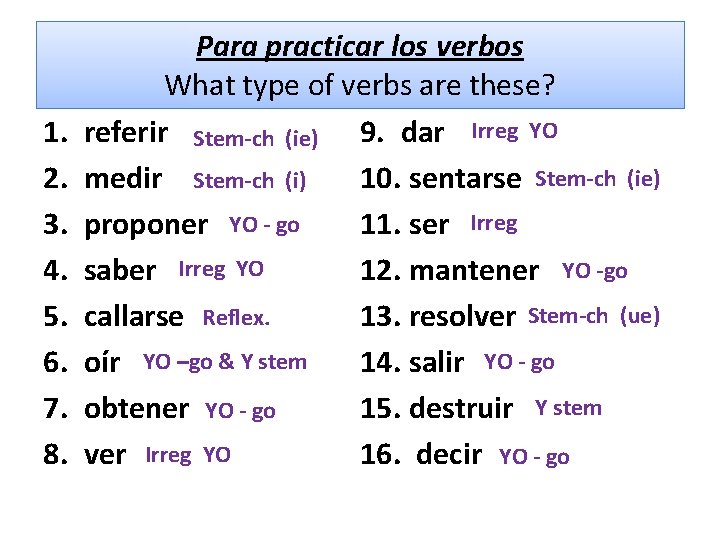
1. 2. 3. 4. 5. 6. 7. 8. Para practicar los verbos What type of verbs are these? referir Stem-ch (ie) 9. dar Irreg YO 10. sentarse Stem-ch (ie) medir Stem-ch (i) 11. ser Irreg proponer YO - go 12. mantener YO -go saber Irreg YO 13. resolver Stem-ch (ue) callarse Reflex. oír YO –go & Y stem 14. salir YO - go obtener YO - go 15. destruir Y stem ver Irreg YO 16. decir YO - go
Usando el presente en Las preguntas • We have learned how to express what someone does or does not do. • Communication also involves asking and answering questions. • Let´s review how to answer – Sí/no questions. – Tag questions
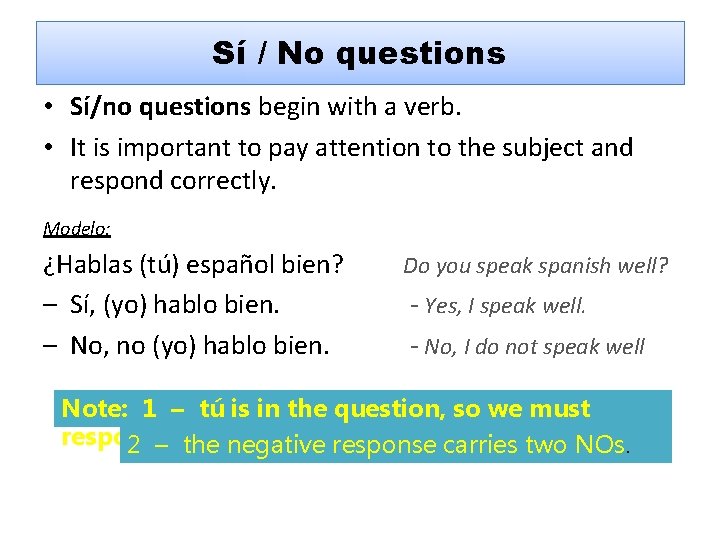
Sí / No questions • Sí/no questions begin with a verb. • It is important to pay attention to the subject and respond correctly. Modelo: ¿Hablas (tú) español bien? – Sí, (yo) hablo bien. – No, no (yo) hablo bien. Do you speak spanish well? - Yes, I speak well. - No, I do not speak well Note: 1 – tú is in the question, so we must respond 2 –YO. the negative response carries two NOs.
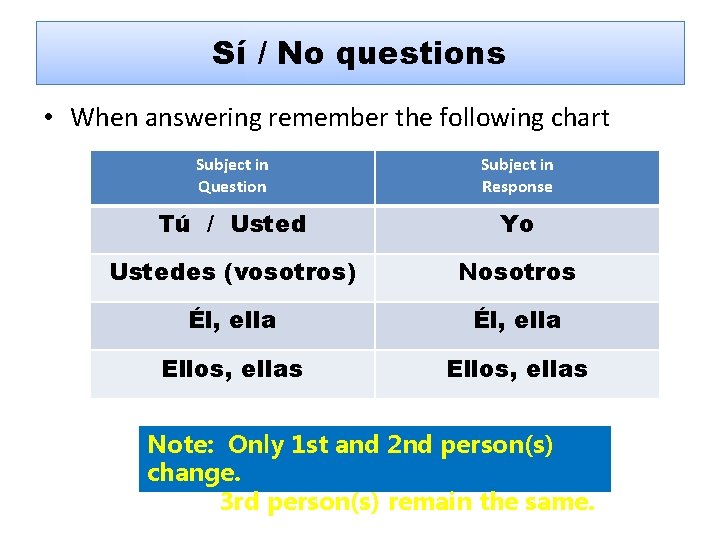
Sí / No questions • When answering remember the following chart Subject in Question Subject in Response Tú / Usted Yo Ustedes (vosotros) Nosotros Él, ella Ellos, ellas Note: Only 1 st and 2 nd person(s) change. 3 rd person(s) remain the same.
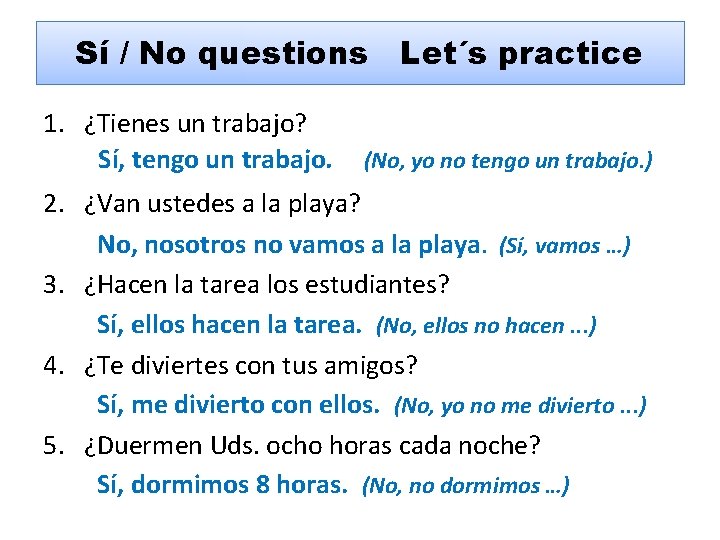
Sí / No questions Let´s practice 1. ¿Tienes un trabajo? Sí, tengo un trabajo. (No, yo no tengo un trabajo. ) 2. ¿Van ustedes a la playa? No, nosotros no vamos a la playa. (Sí, vamos …) 3. ¿Hacen la tarea los estudiantes? Sí, ellos hacen la tarea. (No, ellos no hacen. . . ) 4. ¿Te diviertes con tus amigos? Sí, me divierto con ellos. (No, yo no me divierto. . . ) 5. ¿Duermen Uds. ocho horas cada noche? Sí, dormimos 8 horas. (No, no dormimos …)
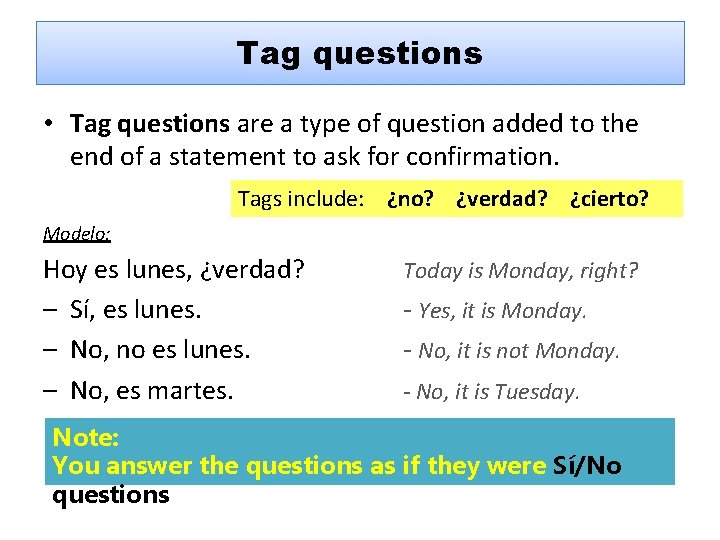
Tag questions • Tag questions are a type of question added to the end of a statement to ask for confirmation. Tags include: ¿no? ¿verdad? ¿cierto? Modelo: Hoy es lunes, ¿verdad? – Sí, es lunes. – No, no es lunes. – No, es martes. Today is Monday, right? - Yes, it is Monday. - No, it is not Monday. - No, it is Tuesday. Note: You answer the questions as if they were Sí/No questions
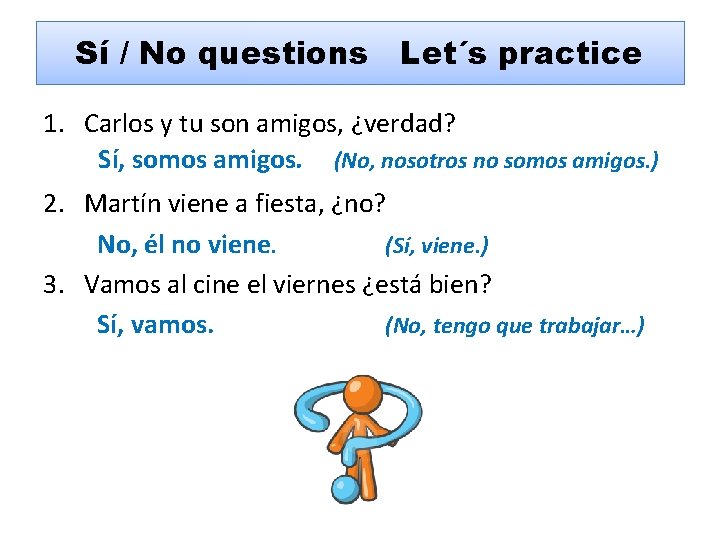
Sí / No questions Let´s practice 1. Carlos y tu son amigos, ¿verdad? Sí, somos amigos. (No, nosotros no somos amigos. ) 2. Martín viene a fiesta, ¿no? No, él no viene. (Sí, viene. ) 3. Vamos al cine el viernes ¿está bien? Sí, vamos. (No, tengo que trabajar…)