
PAPRSB IHS UBD Peri Operative Nursing 18 th
PAPRSB IHS UBD Peri. Operative Nursing 18 th Jan 2011 SAFETY IN THE OPERATING THEATRE - ISSUES
Objectives Describe the issues that effect safety in the OR Discuss the process for creating an OR safety program Identify barriers to the implementation of a safety program
What Are Adverse Events? Pt incidents such as: Patient falls Medication errors Surgical / Medical errors Close calls (intercepted or resulted in no harm)
What Is A Sentinel Event? -Death or permanent loss of function resulting from a medication or other Rx error -Surgery on the wrong patient or body part -Unintended retained surgical object -Hemolytic transfusion reaction -Unanticipated death resulting from an health care-acquired infection
What Is An Intentional Unsafe Act? An adverse event that results from: criminal act purposefully unsafe act alcohol or substance abuse impaired provider/staff alleged patient abuse Intentional unsafe acts should be reported to the In Charge & Management immediately Intentional Unsafe Acts are investigated by administration
Safe Site Surgery Performance of: The correct procedure; On the correct patient; On the correct side; At the correct site
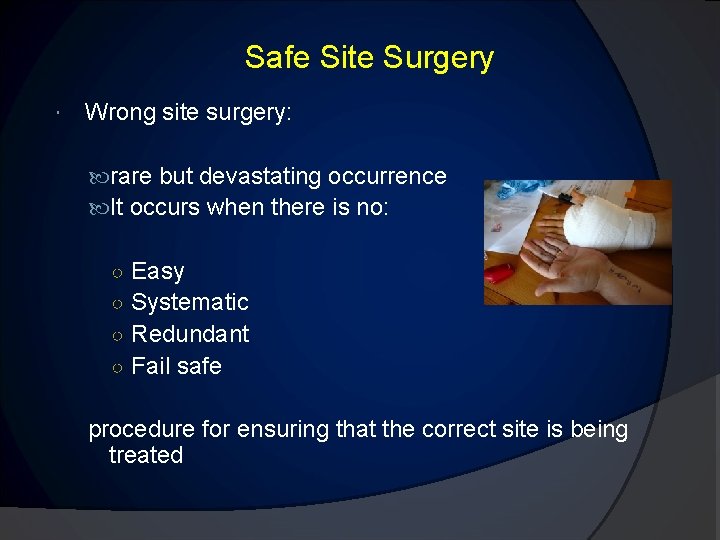
Safe Site Surgery Wrong site surgery: rare but devastating occurrence It occurs when there is no: ○ Easy ○ Systematic ○ Redundant ○ Fail safe procedure for ensuring that the correct site is being treated
Wrong Side Surgery: Contributing Factors 8 Inadequate pt assessment Incomplete medical record review Poor handwriting Reliance on surgeon alone to identify site Poor communication among OR team Multiple procedures performed on same patient Time pressure Lack of clear policies Vincent C, et al. BMJ. 2000; 320: 777 -81.
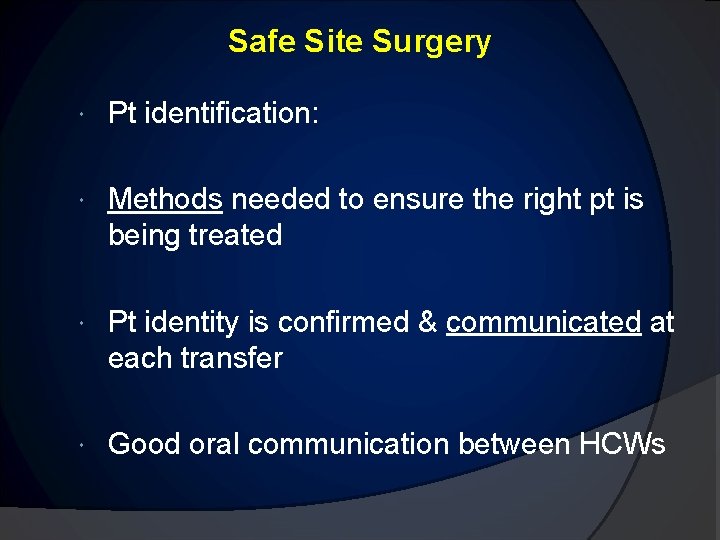
Safe Site Surgery Pt identification: Methods needed to ensure the right pt is being treated Pt identity is confirmed & communicated at each transfer Good oral communication between HCWs
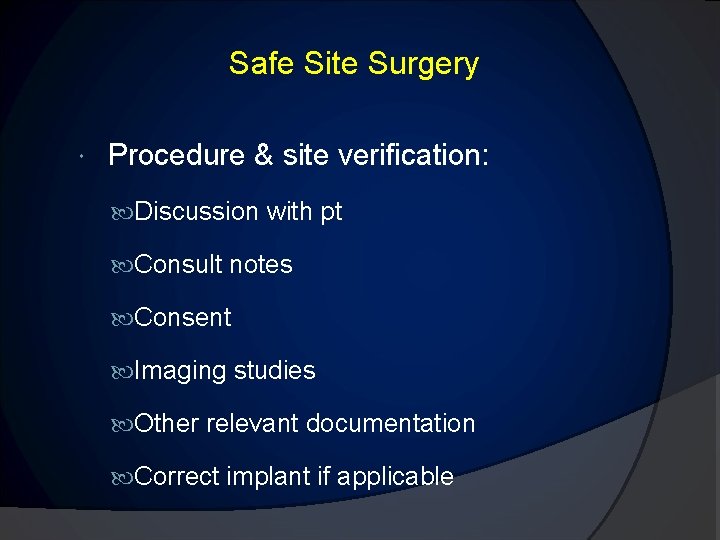
Safe Site Surgery Procedure & site verification: Discussion with pt Consult notes Consent Imaging studies Other relevant documentation Correct implant if applicable

Safe Site Surgery Site Marking: Universal process Involves a member of the surgical team who will be operating Occurs generally prior to transfer to Operating room Exceptions

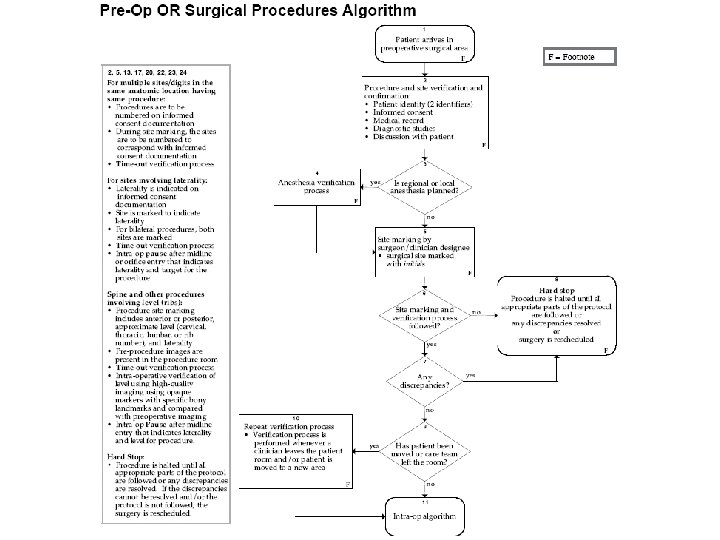
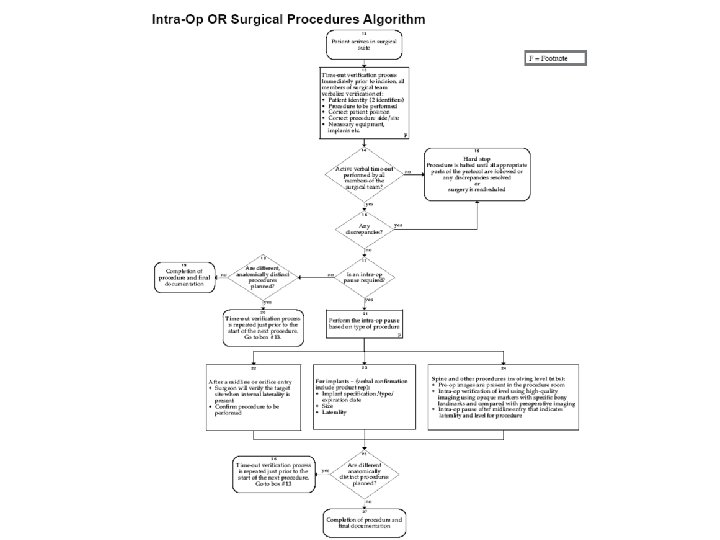
Safe Site Surgery The “Surgical Pause” or “Time Out” ALL members in the room verbally agree to the procedure being done Anyone can challenge prior to the procedure starting Method in place to review case if there is not consensus
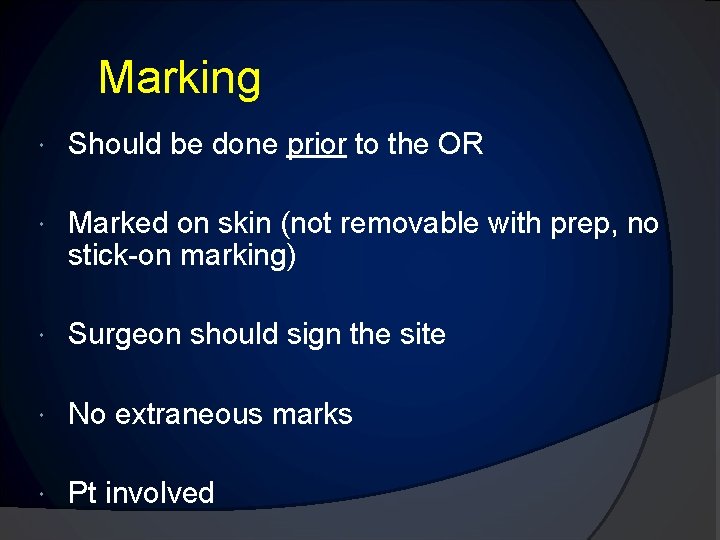
Marking Should be done prior to the OR Marked on skin (not removable with prep, no stick-on marking) Surgeon should sign the site No extraneous marks Pt involved
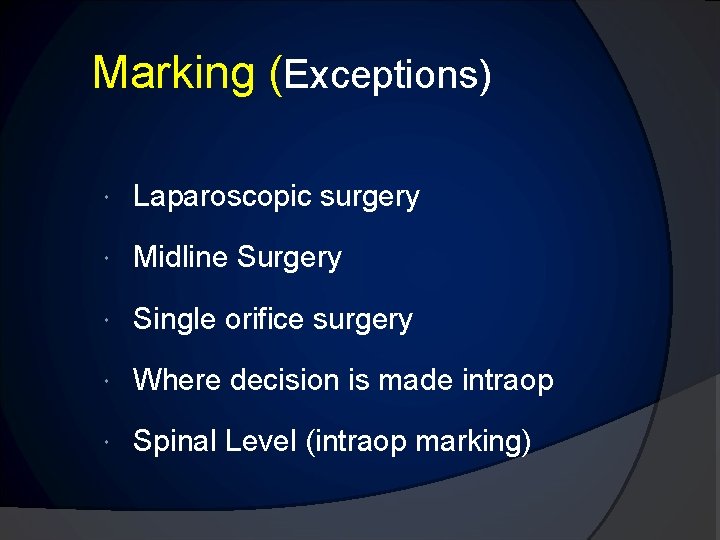
Marking (Exceptions) Laparoscopic surgery Midline Surgery Single orifice surgery Where decision is made intraop Spinal Level (intraop marking)

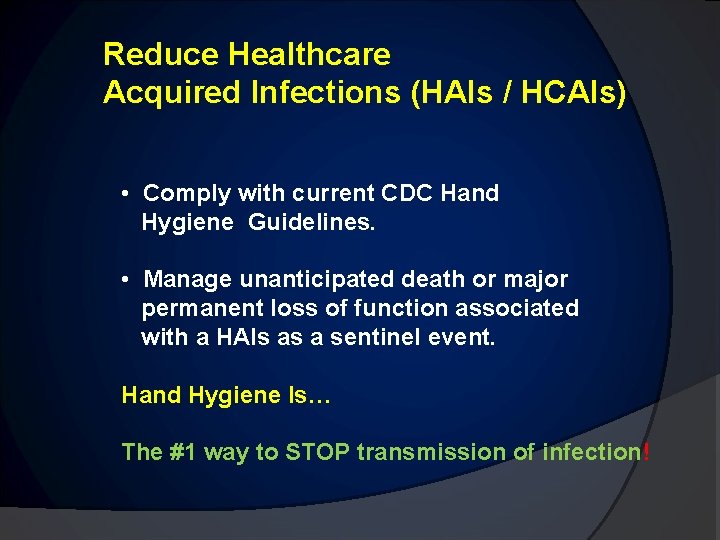
Reduce Healthcare Acquired Infections (HAIs / HCAIs) • Comply with current CDC Hand Hygiene Guidelines. • Manage unanticipated death or major permanent loss of function associated with a HAIs as a sentinel event. Hand Hygiene Is… The #1 way to STOP transmission of infection!
Prevent Flu & Pneumonia ? me y h W Protect yourself…. . get immunized! Protect your patients…. DID YOU KNOW…. . With flu you are contagious 24 hours before you even know you are sick! DID YOU KNOW…. Hospitals with high employee flu vaccination rates have lower patient mortality! Protect home! your families… don’t take germs
Reduce Risk of Harm From Falls Assess Fall Risk on admission, each reassessment, & after a fall Use a Falling Leaf to indicate a patient is a high fall risk Implement fall prevention devices, alarms & equipment Correct spills or wet surfaces Dispose of trash appropriately Remove or report any trip hazards & environmental hazards immediately Examine for injury before moving the pt after a fall Complete incidence report & notify next of kin Implement additional fall precautions as indicated
Points to Remember about Aseptic Technique Adherence to the Principles of Aseptic Technique Reflects One's Surgical Conscience. 1. The patient is the center of the sterile field. 2. Only sterile items are used within the sterile field. A. Examples of items used. B. How do we know they are sterile? (Wrapping, label, storage)
3. Sterile persons are gowned & gloved. • A. Keep hands at waist level & in sight at all times. B. Keep hands away from the face. C. Never fold hands under arms. D. Gowns are considered sterile in front from chest to level of sterile field, & the sleeves from above the elbow to cuffs. Gloves are sterile. E. Sit only if sitting for entire procedure.
4. Tables are sterile only at table level. A. Anything over the edge is considered unsterile, such as a suture or the table drape. B. Use non-perforating device to secure tubing & cords to prevent them from sliding to the floor.
5. Sterile persons touch only sterile items or areas; unsterile persons touch only unsterile items or areas. A. Sterile team members maintain contact with sterile field by wearing gloves & gowns. B. Supplies are brought to sterile team members by the circulator, who opens wrappers on sterile packages. The circulator ensures a sterile transfer to the sterile field. Only sterile items touch sterile surfaces.
6. Unsterile persons avoid reaching over sterile field; sterile persons avoid leaning over unsterile area. • A. Scrub person sets basins to be filled at edge of table to fill them. B. Circulator pours with lip only over basin edge. C. Scrub person drapes an unsterile table toward self first to avoid leaning over an unsterile area. Cuff drapes over gloved h&s. D. Scrub person st&s back from the unsterile table when draping it to avoid leaning over an unsterile area.
7. Edges of anything that encloses sterile contents are considered unsterile. A. When opening sterile packages, open away from you first. Secure flaps so they do not dangle. B. The wrapper is considered sterile to within one inch of the wrapper. C. In peel-open packages, the edges where glued, are not considered sterile.
8. Sterile field is created as close as possible to time of use. A. Covering sterile tables is not recommended. 9. Sterile areas are continuously kept in view. A. Sterility cannot be ensured without direct observation. An unguarded sterile field should be considered contaminated.
10. Sterile persons keep well within sterile area. A. Sterile persons pass each other back to back or front to front. B. Sterile person faces a sterile area to pass it. C. Sterile persons stay within the sterile field. They do not walk around or go outside the room. D. Movement is kept to a minimum to avoid contamination of sterile items or persons.
11. Unsterile persons avoid sterile areas. • A. Unsterile persons maintain a distance of at least 1 foot from the sterile field. • B. Unsterile persons face & observe a sterile area when passing it to be sure they do not touch it. • C. Unsterile persons never walk between two sterile fields. • D. Circulator restricts to a minimum all activity near the sterile field.
12. Destruction of integrity of microbial barriers results in contamination. • A. Strike through is the soaking through of barrier from sterile to nonsterile or vice versa. • B. Sterility is event related. • 13. Microorganisms must be kept to irreducible minimum. • A. Perfect asepsis is an idea. All microorganisms cannot be eliminated. Skin cannot be sterilized. Air is contaminated by droplets.
HAZARDS IN THE SURGICAL SUITE • Electrical • Cautery Units, Defibrillators, OR Beds, numerous pieces of equipment All equipment must be checked for electrical safety before use!! • Anesthetic Waste • Radiation • Leaded aprons & shields available for use during procedures.
Laser Safety • Protective eyewear for pt & OR team. • Doors remain closed with sign - "Danger, Laser in Use. " • Sterile water available in the room & on sterile field. • Smoke evacuation system is to be employed when applicable. • Surgery high filtration masks should be worn during procedures that produce a plume.
General Safety • Apply good body mechanics at all times when transferring pts. • OR beds & gurneys will be locked before pt transfer. Operating safety belts will be used for all pts. • Never disconnect or connect electrical equipment with wet or moist hands. • Discard all needles, razors, scalpel blades & broken glass into special identified containers.
UNIVERSAL PRECAUTIONS SUMMARY • Although the risk of contracting HIV in the healthcare setting is extremely low, there are other bloodborne pathogens which pose a much more significant risk. • Precautions should be followed to reduce the risk of exposure to bloodborne pathogens. • Each healthcare worker should assess their possible risks & take precautions to reduce these risks. • Universal Precautions are designed to protect healthcare workers from occupational exposure & should be followed when potential for exposure might occur.
Universal blood & or body fluid precautions should be consistently used for ALL pts. Fundamental to the concept of Universal Precautions is treating all blood & or body fluids as if they were infected with bloodborne pathogens & taking appropriate protective measures, including the following:
• 1) Gloves should be worn for touching blood & or body fluids, mucous membranes, nonintact skin, or items/surfaces soiled with blood & or body fluids. • Gloves should be changed after contact with each pt & h&s washed after glove removal. • Though gloves reduce the incidence of contamination, they cannot prevent penetrating injuries from needles & other sharp instruments.
• 2) Gowns or aprons should be worn during procedures that are likely to generate splashes of blood & or body fluids onto clothing or exposed skin. • 3) Masks & protective eyewear should be worn during procedures that are likely to generate droplets of blood & or body fluids into the mucous membranes of the mouth, nose, or eyes.
• 4) Needles & sharps should be placed directly into a puncture-resistant leakproof container which should be as close as possible to the point of use. Needles should not be recapped, bent, broken, or manipulated by hand. • 5) Hands & skin surfaces should be washed after contact with blood &/or body fluids, after removing gloves, & between pt contact.
• 6) Gloves should be worn to cleanup blood spills. Blood spills should be wiped up & then an EPA registered tuberculocidal disinfectant applied to the area. The disinfectant should have a one minute contact time & the area rinsed with tap water. If glass is involved, wear double gloves or heavy gloves. Pick up the glass with broom & dust pan, tongs, or a mechanical device. • 7) Healthcare workers with exudative lesions or weeping dermatitis should not perform direct patient care until the condition resolves.
8) Disposable resuscitation devices should be used in an emergency. 9) Occupational Exposures: Definition - Puncture wounds - Needlesticks/Cuts - Splashes into the eyes, mouth, or nose - Contamination of an open wound
10) Occupational Exposures: - Wash the area immediately with soap & water - If splashed in the eyes mouth or nose have them properly flooded or irrigated with water - Notify supervisor as soon as possible - Call infection control unit for information regarding blood &/or body fluid exposure management
General safety – cuts & sticks, lifting, falls, radiation, burns, hand/foot injuries Biohazards Fire Hazards Laser Hazards
Compressed Gases Trace Gases Electrical Hazards Substances Operational hazards
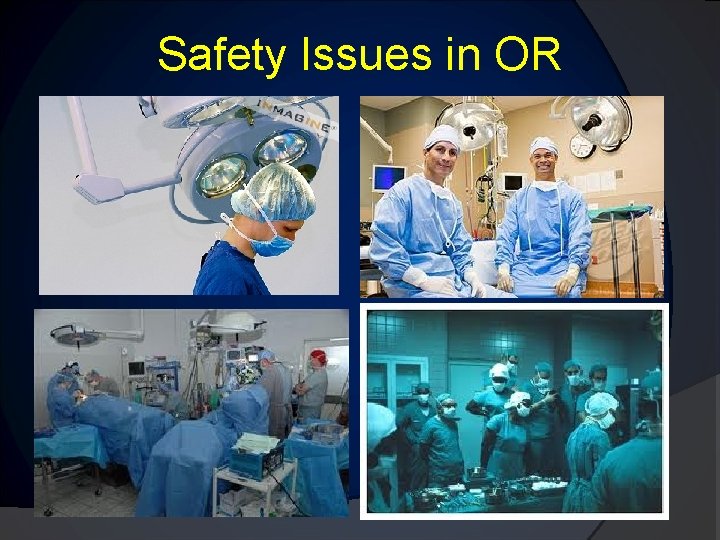
Safety Issues in OR
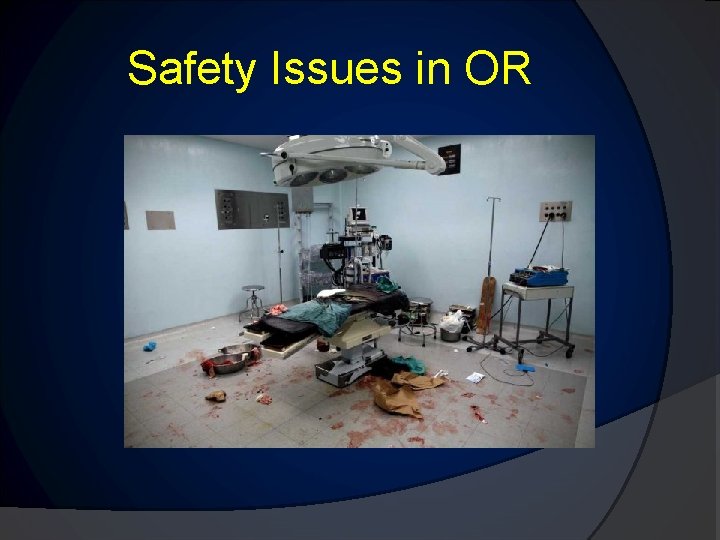
Safety Issues in OR
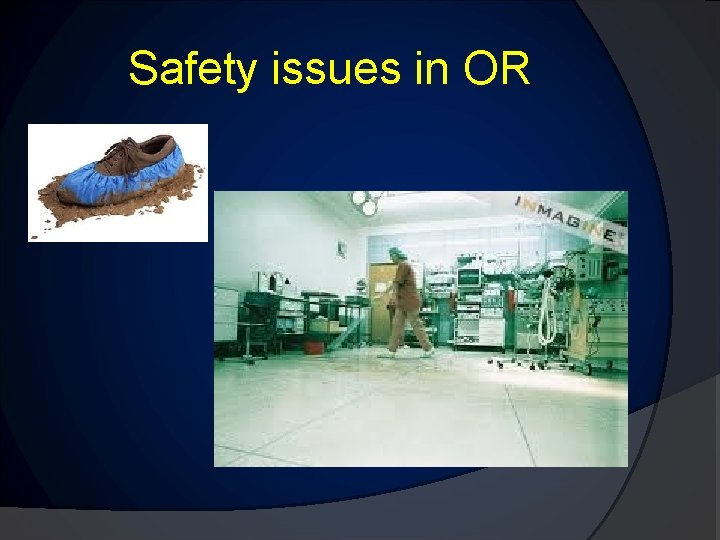
Safety issues in OR
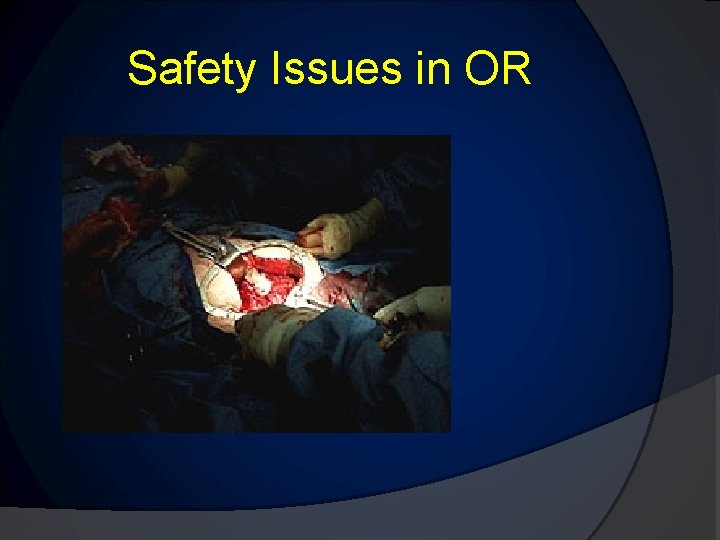
Safety Issues in OR
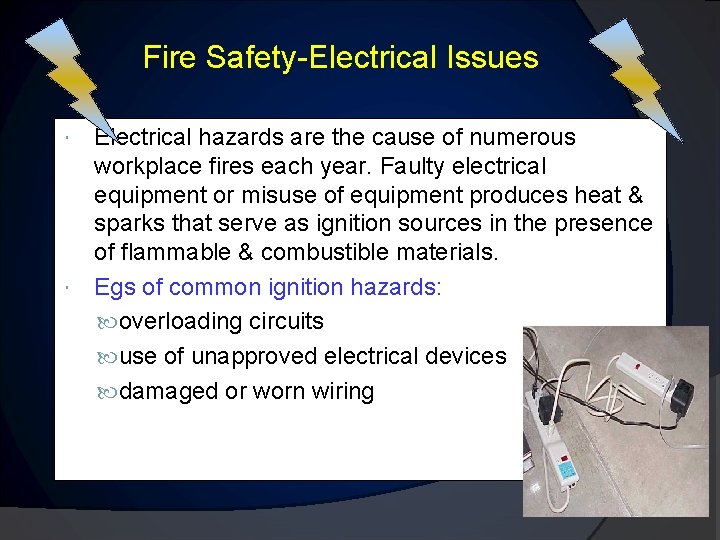
Fire Safety-Electrical Issues Electrical hazards are the cause of numerous workplace fires each year. Faulty electrical equipment or misuse of equipment produces heat & sparks that serve as ignition sources in the presence of flammable & combustible materials. Egs of common ignition hazards: overloading circuits use of unapproved electrical devices damaged or worn wiring
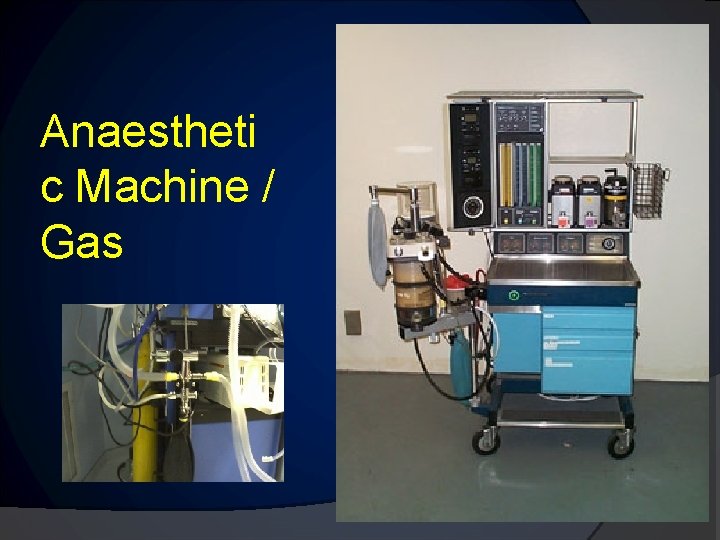
Anaestheti c Machine / Gas
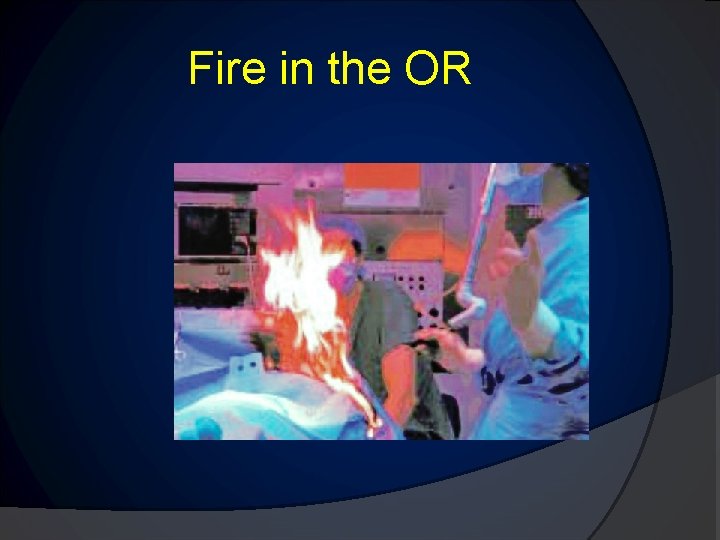
Fire in the OR
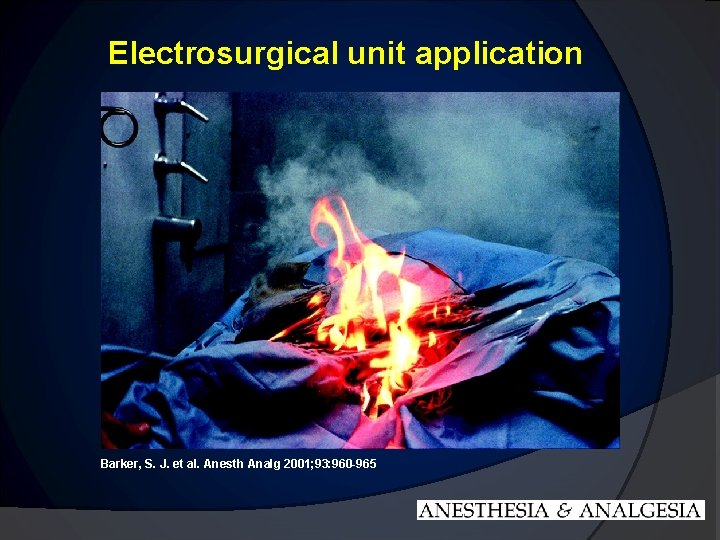
Electrosurgical unit application Barker, S. J. et al. Anesth Analg 2001; 93: 960 -965
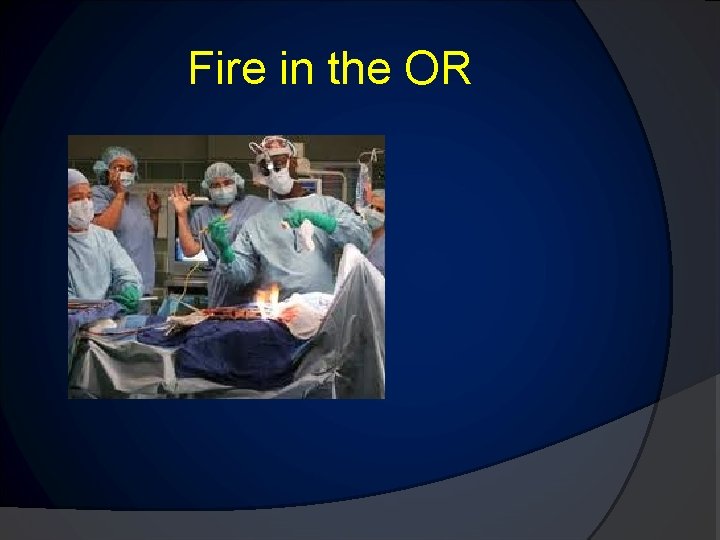
Fire in the OR
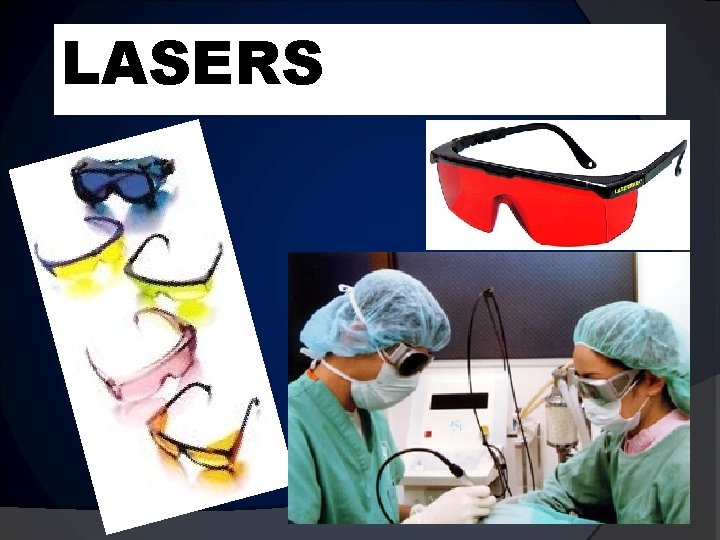
LASERS
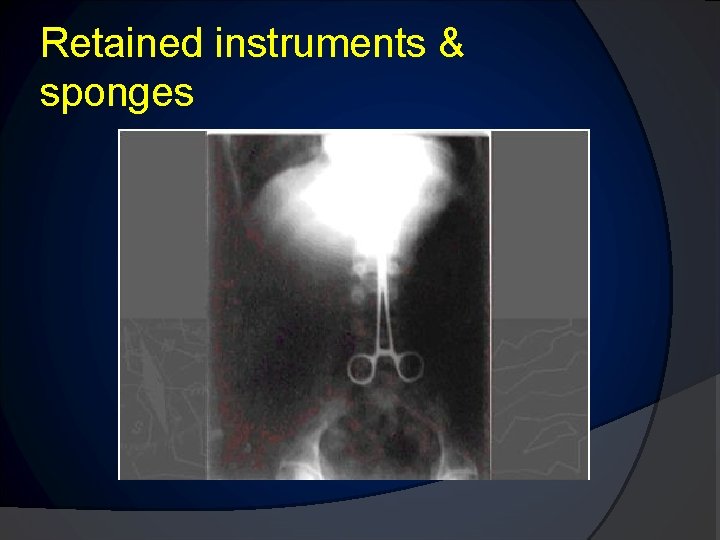
Retained instruments & sponges
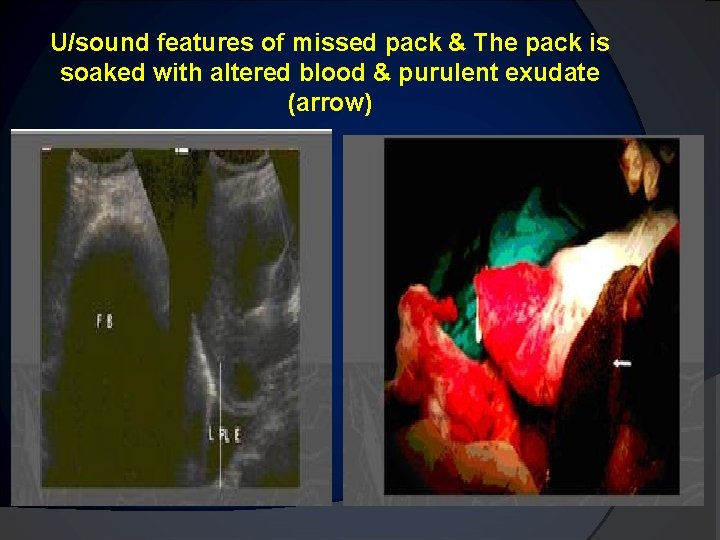
U/sound features of missed pack & The pack is soaked with altered blood & purulent exudate (arrow)
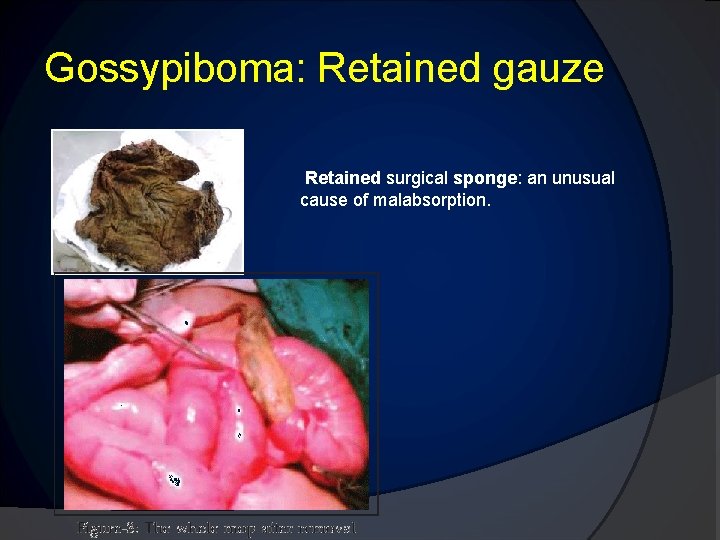
Gossypiboma: Retained gauze Retained surgical sponge: an unusual cause of malabsorption.
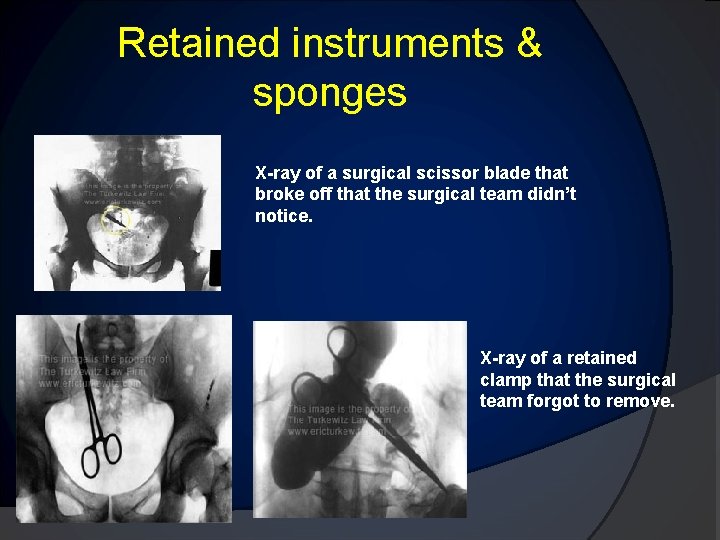
Retained instruments & sponges X-ray of a surgical scissor blade that broke off that the surgical team didn’t notice. X-ray of a retained clamp that the surgical team forgot to remove.
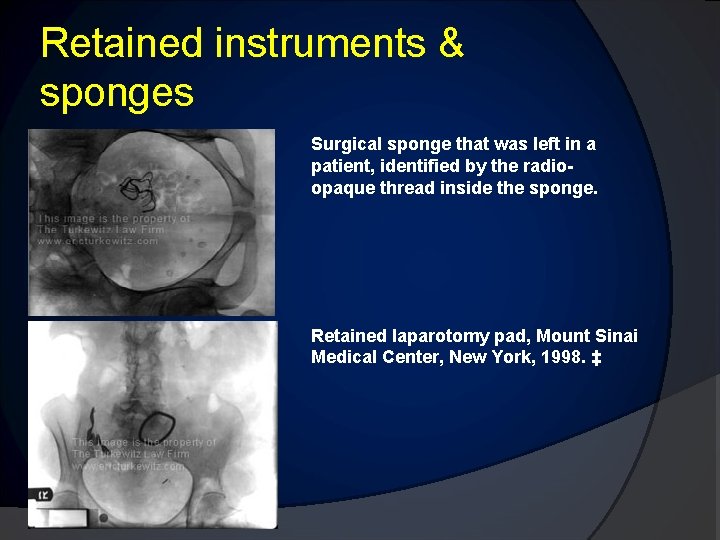
Retained instruments & sponges Surgical sponge that was left in a patient, identified by the radioopaque thread inside the sponge. Retained laparotomy pad, Mount Sinai Medical Center, New York, 1998. ‡
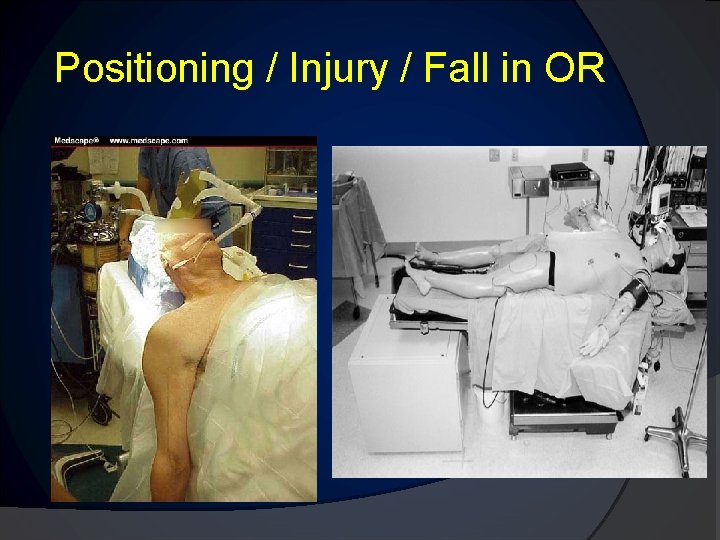
Positioning / Injury / Fall in OR
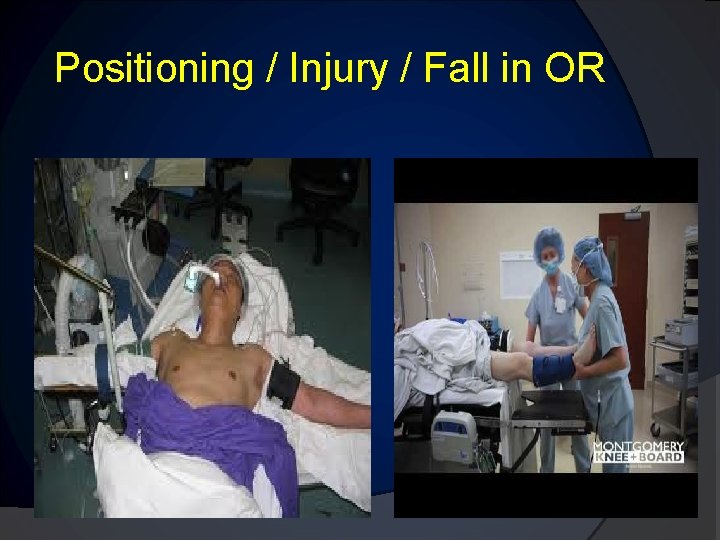
Positioning / Injury / Fall in OR
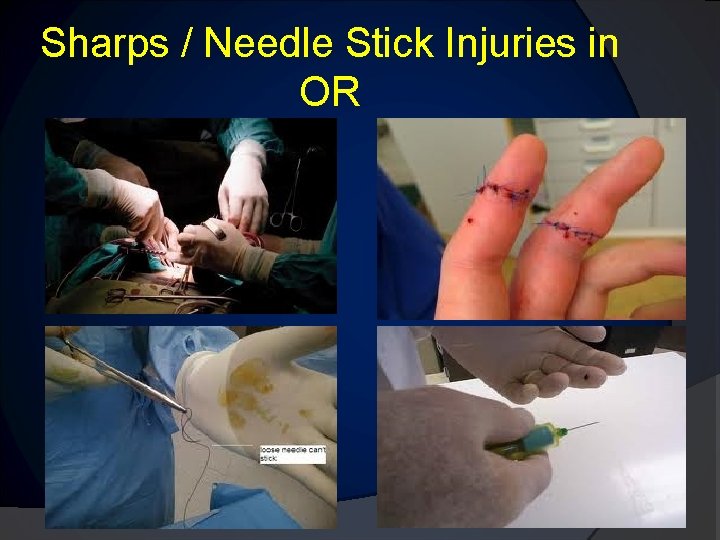
Sharps / Needle Stick Injuries in OR
AANA Position Statement 2. 13 Safe Practices for Needle and Syringe Use www. aana. com
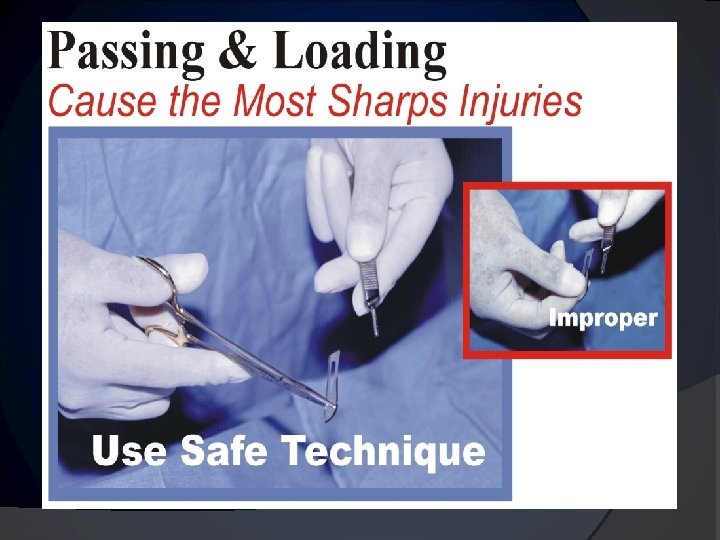
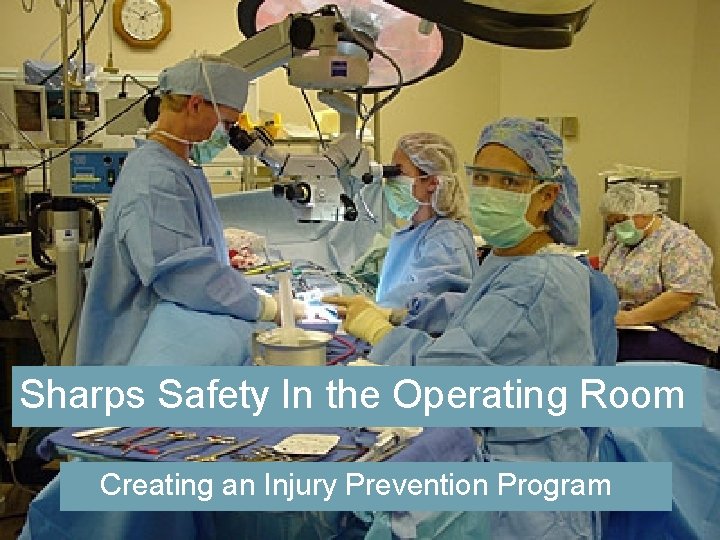
Sharps Safety In the Operating Room Creating an Injury Prevention Program
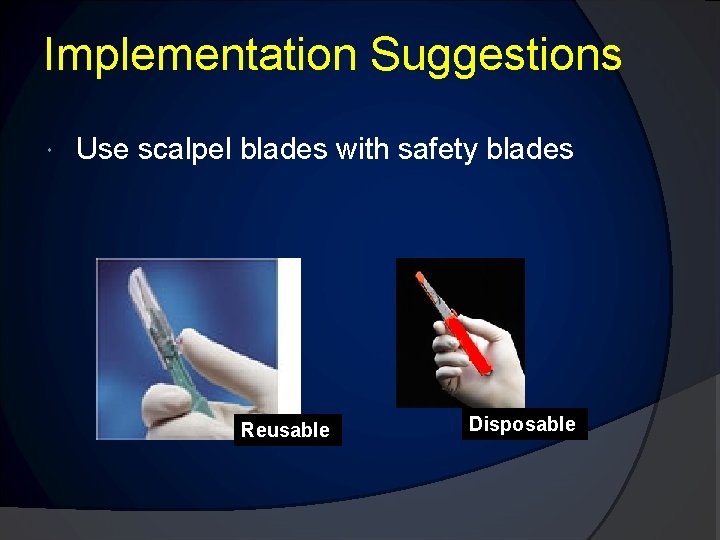
Implementation Suggestions Use scalpel blades with safety blades Reusable Disposable
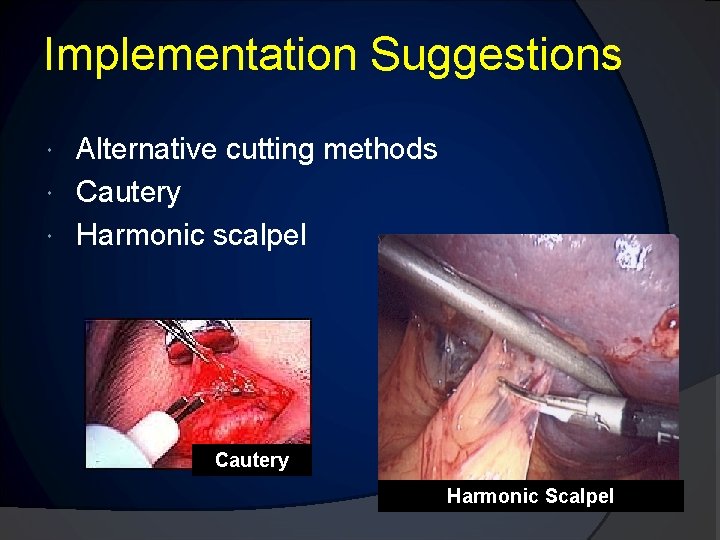
Implementation Suggestions Alternative cutting methods Cautery Harmonic scalpel Cautery Harmonic Scalpel
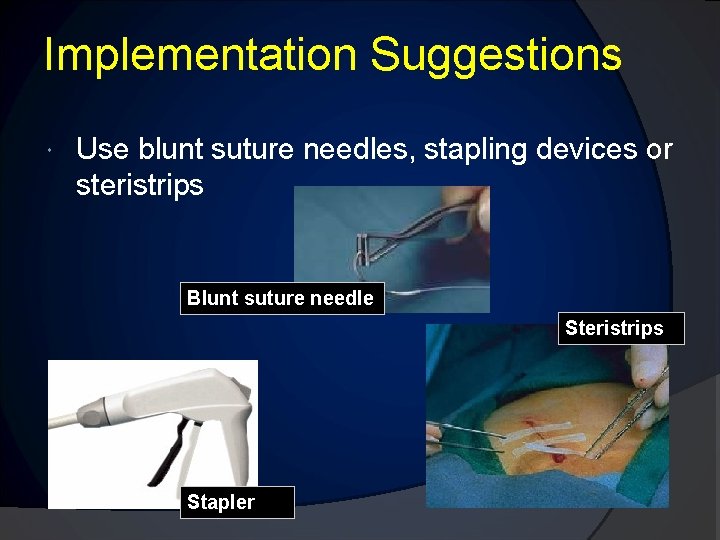
Implementation Suggestions Use blunt suture needles, stapling devices or steristrips Blunt suture needle Steristrips Stapler
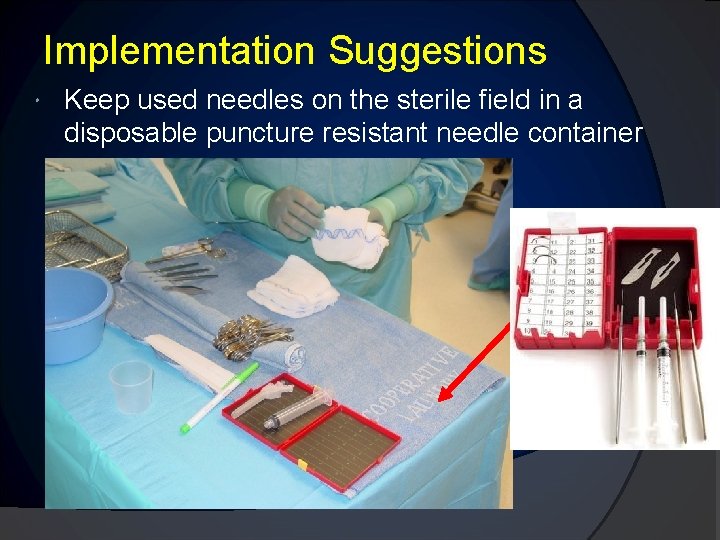
Implementation Suggestions Keep used needles on the sterile field in a disposable puncture resistant needle container
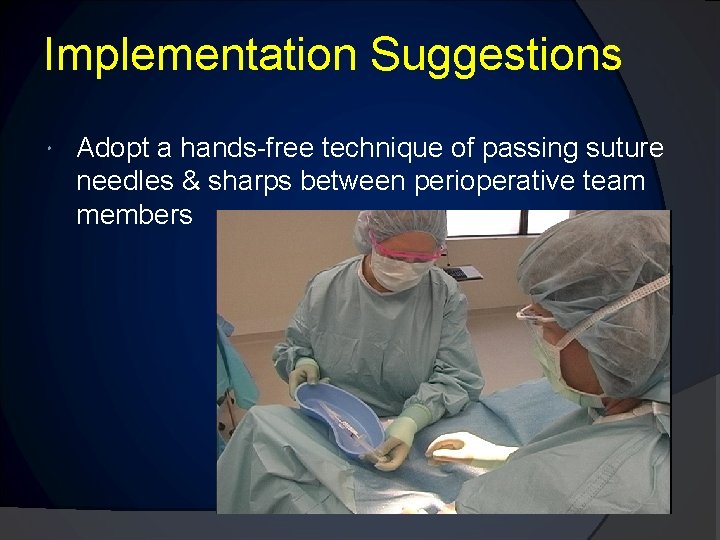
Implementation Suggestions Adopt a hands-free technique of passing suture needles & sharps between perioperative team members
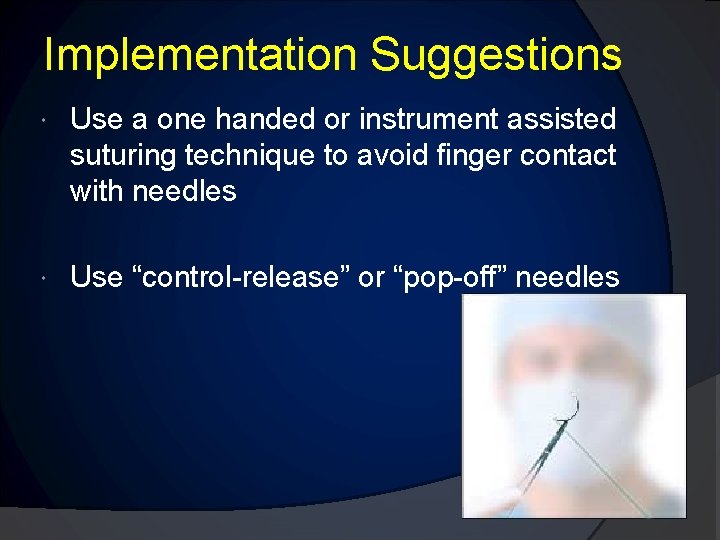
Implementation Suggestions Use a one handed or instrument assisted suturing technique to avoid finger contact with needles Use “control-release” or “pop-off” needles
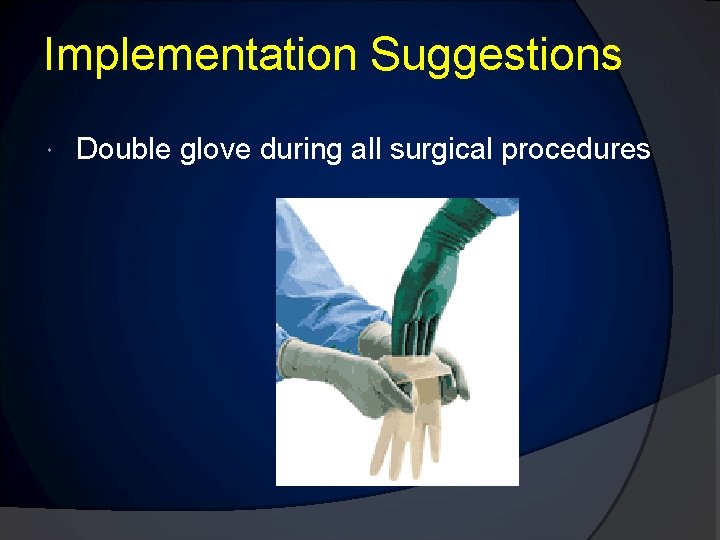
Implementation Suggestions Double glove during all surgical procedures
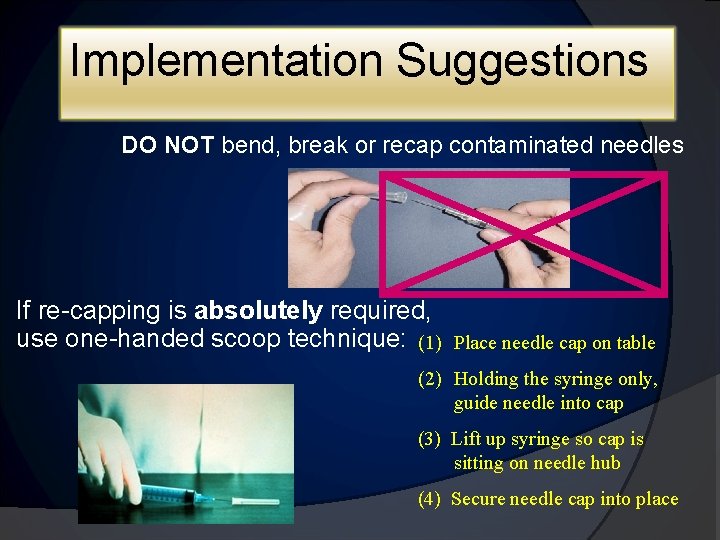
Implementation Suggestions DO NOT bend, break or recap contaminated needles If re-capping is absolutely required, use one-handed scoop technique: (1) Place needle cap on table (2) Holding the syringe only, guide needle into cap (3) Lift up syringe so cap is sitting on needle hub (4) Secure needle cap into place
Sharps Disposal Closable orange or red, leak-proof puncture resistant containers Located close to the point of use maintained upright Replaced routinely and not allowed to overfill Wall / Floor mounted
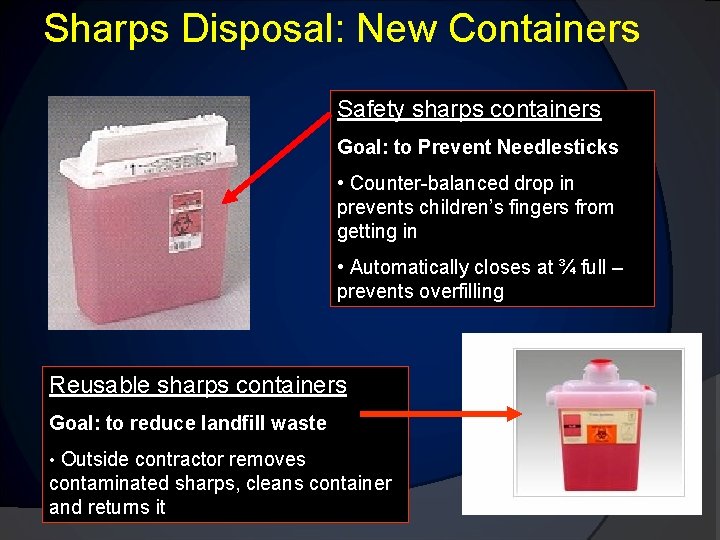
Sharps Disposal: New Containers Safety sharps containers Goal: to Prevent Needlesticks • Counter-balanced drop in prevents children’s fingers from getting in • Automatically closes at ¾ full – prevents overfilling Reusable sharps containers Goal: to reduce landfill waste • Outside contractor removes contaminated sharps, cleans container and returns it
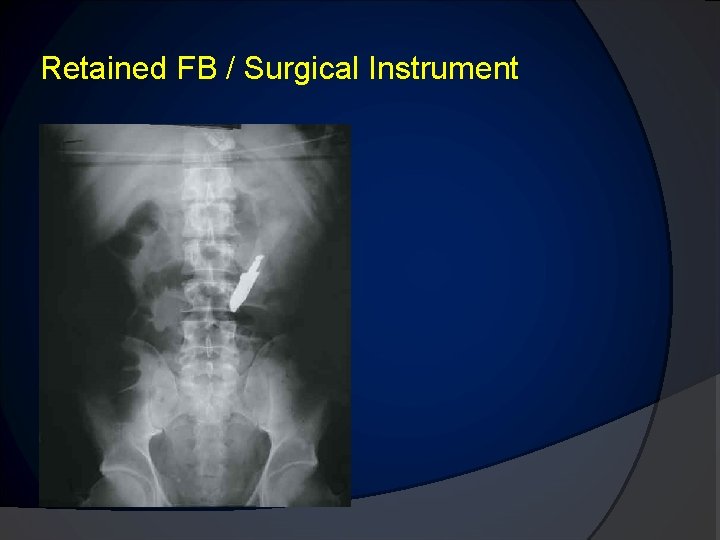
Retained FB / Surgical Instrument
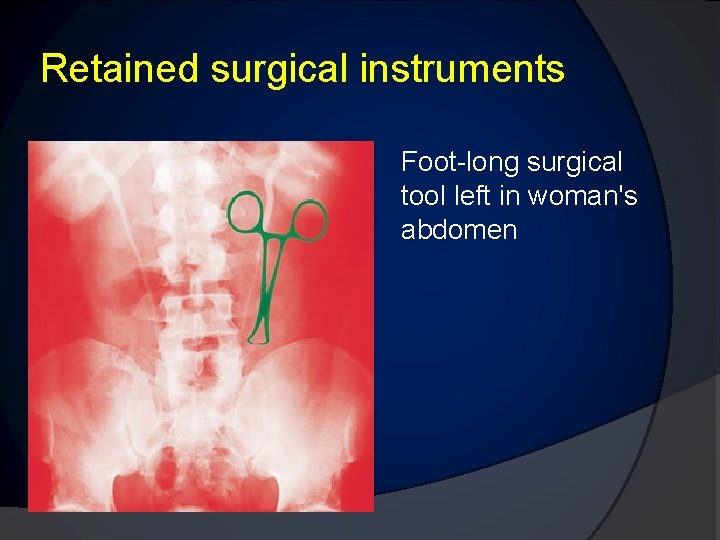
Retained surgical instruments Foot-long surgical tool left in woman's abdomen
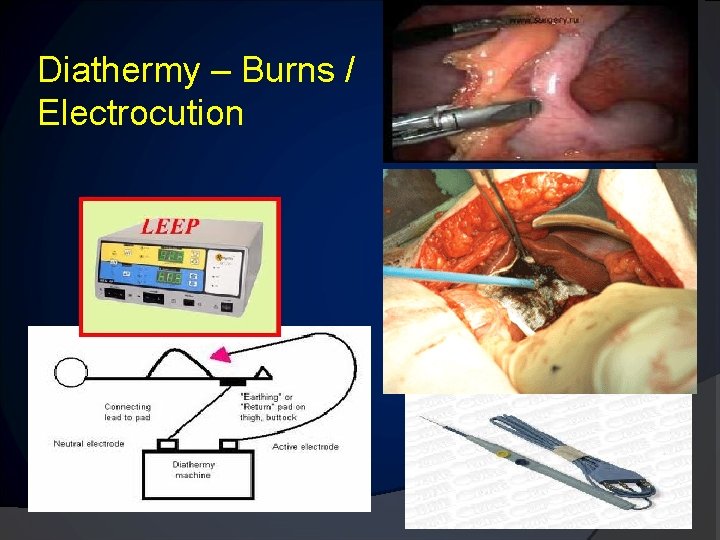
Diathermy – Burns / Electrocution
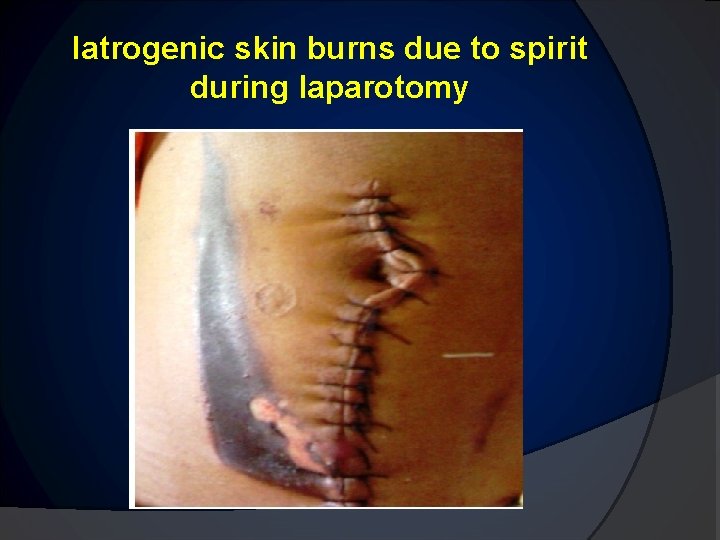
Iatrogenic skin burns due to spirit during laparotomy
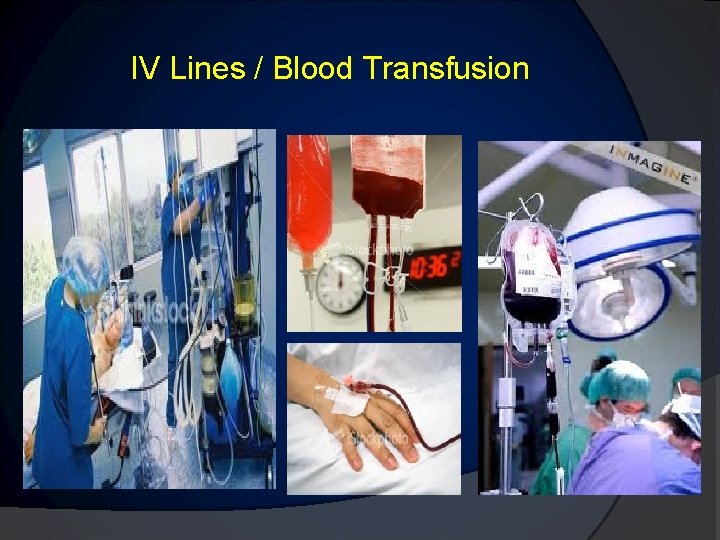
IV Lines / Blood Transfusion
Employer Responsibilities Comply with regulations Create a safety-oriented culture Encourage reporting Analyze data Provide training Evaluate devices Establish safe staffing patterns
Worker Responsibilities Observe regulations Comply with methods available Use & Practice using safety devices Actively participate in evaluation & safety conversion process
Worker Responsibilities Use appropriate PPE Use appropriate sharps containers Participate in education and follow recommendations Support others to follow the recommendations Follow hospital exposure control policy
Worker Responsibilities Report Exposures Employers required by OSHA to document all staff exposures to blood / body fluids anonymously ○ Sharps Injury incidence report Location, job title, description of incident, type & brand of sharps involved Source testing, risk analysis & post-exposure prophylaxis if indicated
BARRIERS TO IMPLEMENTATION Psychosocial & organizational factors Attitude/Resistance to Change Shortcomings associated with safety devices Perceived cost associated with engineered devices Inadequate training Time limitations
Overcoming Obstacles to Compliance Frequent & multiple training methods Multidisciplinary sharps injury prevention plan Educate new employees & all HCWs Multidisciplinary sharps safety committee Network with other facilities Involve front-line workers in evaluation & selection of safety devices
Other Issues? Drugs Preparation & Administration. Substance Abuse (Drugs).
- Slides: 87