
Paper Identification 101 Nic Butler Ph D Charleston
Paper Identification 101 Nic Butler, Ph. D. Charleston County Public Library Special Collections

What is Paper?
What is Paper? • Paper = a thin mat of intertwining fibers
What is Paper? • Paper = a thin mat of intertwining fibers • Typically made from vegetable fibers composed of cellulose

What is Paper? • Paper = a thin mat of intertwining fibers • Typically made from vegetable fibers composed of cellulose • Paper begins as a fibrous pulp separated from wood, cotton, grass, etc. , by a mechanical or chemical or process
What is Paper? • Paper = a thin mat of intertwining fibers • Typically made from vegetable fibers composed of cellulose • Paper begins as a fibrous pulp separated from wood, cotton, grass, etc. , by a mechanical or chemical process • Paper is an organic substance that breaks down over time and can become weak, brittle, and discolored
Outline • Handmade Paper • Machine-made Paper • Blue Paper • Newspaper • “Acidic” Paper • Kraft Paper • Ph Testing • Shameless Self-Promotion
Handmade Paper

Screening Pulp from a Vat
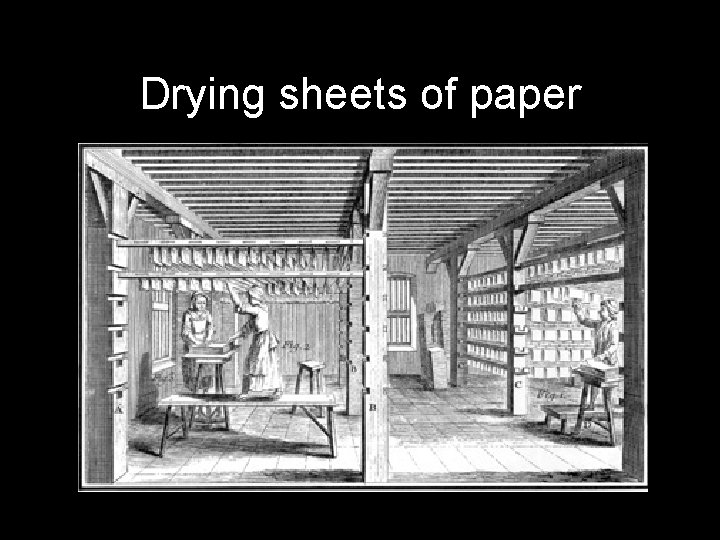
Drying sheets of paper
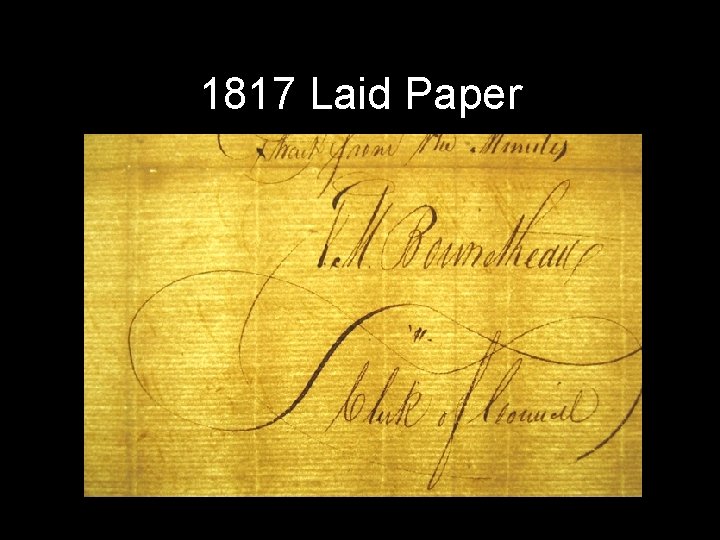
Laid Paper
Laid Paper • Made one sheet at a time in a frame or mould
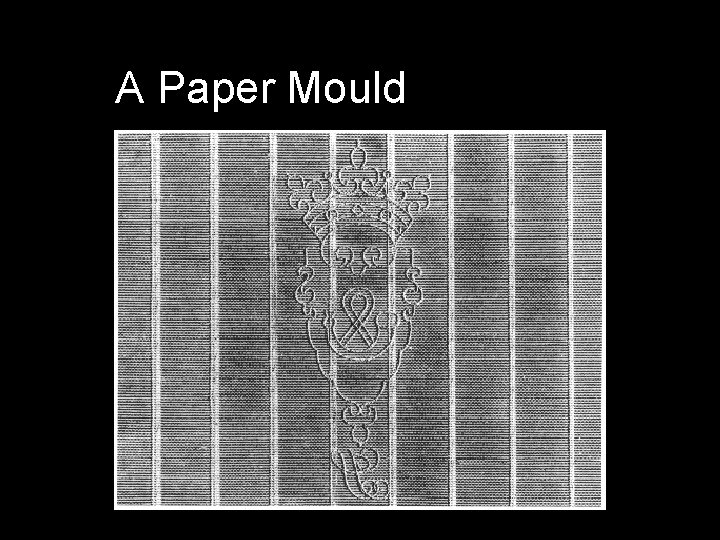
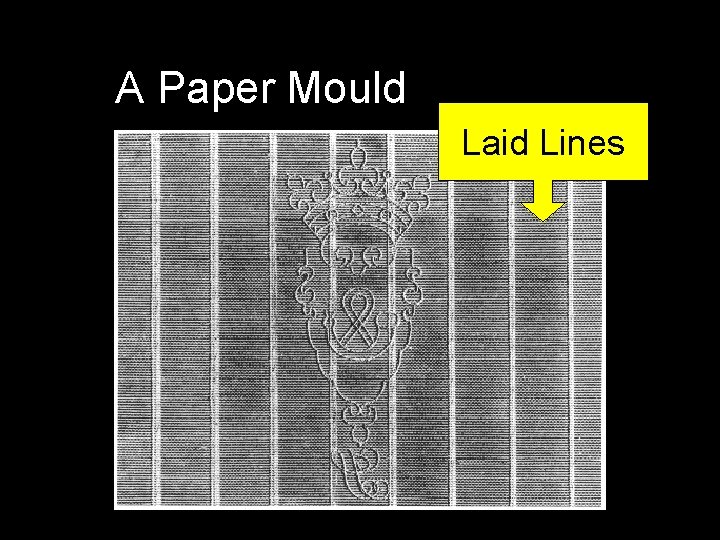
Laid Paper • Made one sheet at a time in a frame or mould • Laid lines = Closely-spaced parallel lines formed by rows of metal wires in the mould
Laid Paper • Made one sheet at a time in a frame or mould • Laid lines = Closely-spaced parallel lines formed by rows of metal wires in the mould • Chain lines = Bolder parallel lines about one to two inches apart formed by thicker wires that secure the laid wires to the mould
Laid Paper • Made one sheet at a time in a frame or mould • Laid lines = Closely-spaced parallel lines formed by rows of metal wires in the mould • Chain lines = Bolder parallel lines about one to two inches apart formed by thicker wires that secure the laid wires to the mould • Watermark = Distinguishable letter, image, or symbol incorporated into paper during the manufacturing process
Laid Paper • Made one sheet at a time in a frame or mould • Laid lines = Closely-spaced parallel lines formed by rows of metal wires in the mould • Chain lines = Bolder parallel lines about one to two inches apart formed by thicker wires that secure the laid wires to the mould • Watermark = Distinguishable letter, image, or symbol incorporated into paper during the manufacturing process • Grain is parallel to the chain lines
A Paper Mould
A Paper Mould Laid Lines

A Paper Mould Laid Lines Chain Line

A Paper Mould Laid Lines Water Mark Chain Line

Viewing a watermark

Watermark designs
1742 English Book
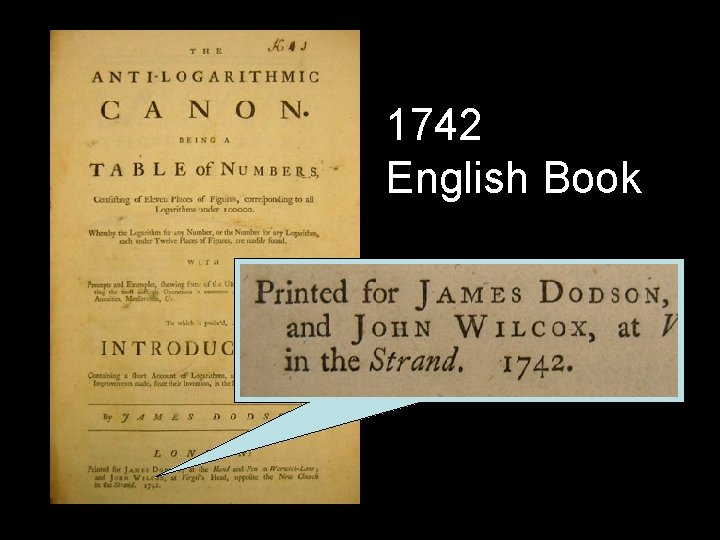
1742 English Book
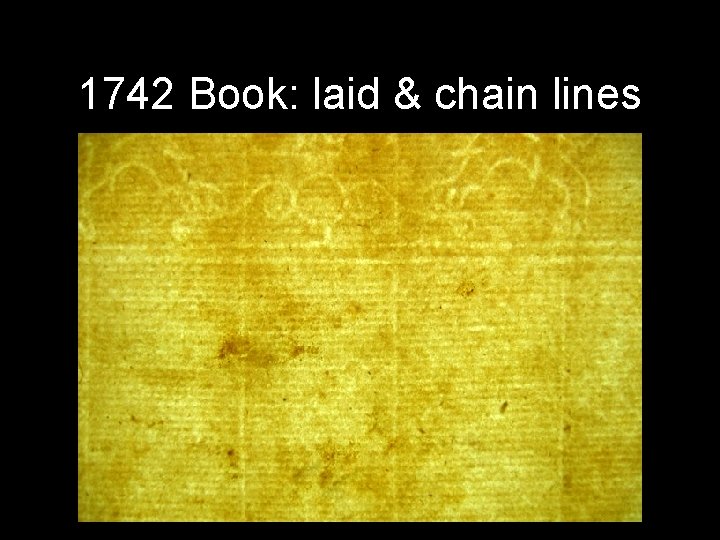
1742 Book: laid & chain lines
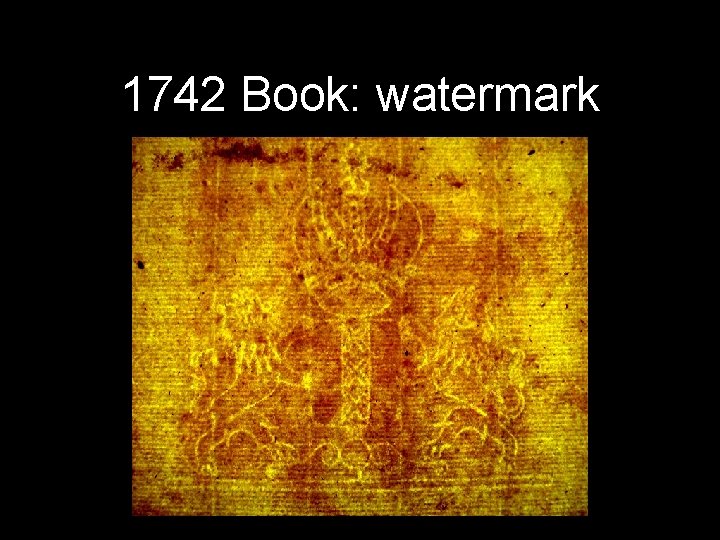
1742 Book: watermark
Machine-Made Paper
Fourdrinier Machine
Fourdrinier Machine • 1798: continuous paper-making machine developed in France
Fourdrinier Machine • 1798: continuous paper-making machine developed in France • 1804– 7: first machines built in England
Fourdrinier Machine • 1798: continuous paper-making machine developed in France • 1804– 7: first machines built in England • 1817: machine imitated in U. S.

Fourdrinier Machine • 1798: continuous paper-making machine developed in France • 1804– 7: first machines built in England • 1817: machine imitated in U. S. • 1827: first true Fourdrinier machine in U. S.
Fourdrinier Machine • 1798: continuous paper-making machine developed in France • 1804– 7: first machines built in England • 1817: machine imitated in U. S. • 1827: first true Fourdrinier machine in U. S. • Basis of modern papermaking machines
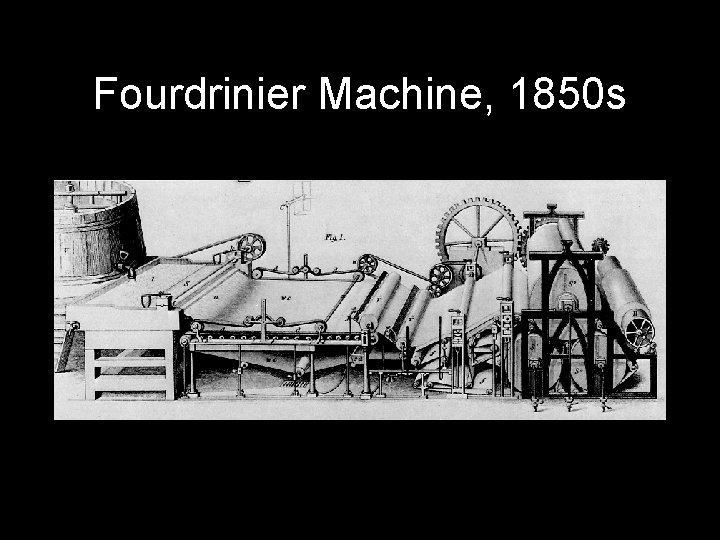
Fourdrinier Machine, 1850 s

Fourdrinier Machine, early 1900 s
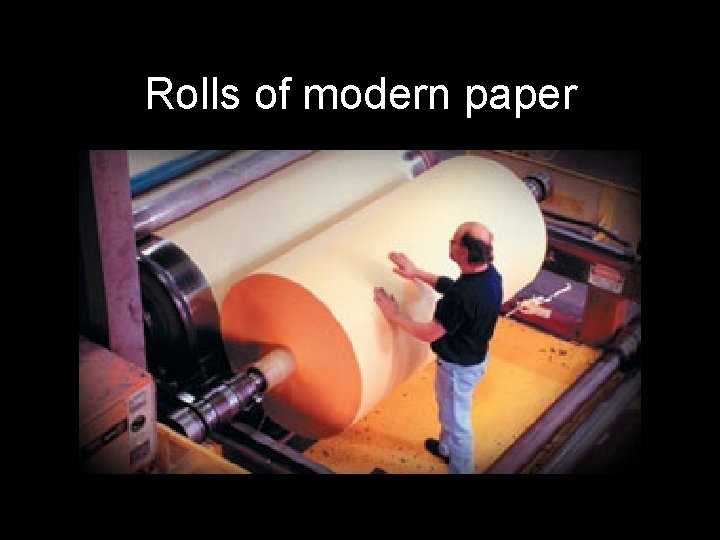
Rolls of modern paper
Wove Paper
Wove Paper • All machine-made paper is wove paper

Wove Paper • All machine-made paper is wove paper • Pulp is poured or sprayed onto a continuous wire mesh conveyor mounted on rollers

Wove Paper • All machine-made paper is wove paper • Pulp is poured or sprayed onto a continuous wire mesh conveyor mounted on rollers • Uniform wire mesh creates even density
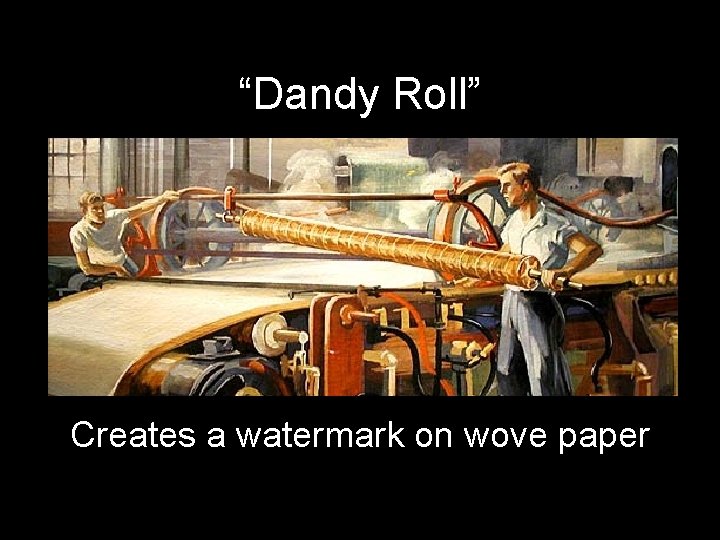
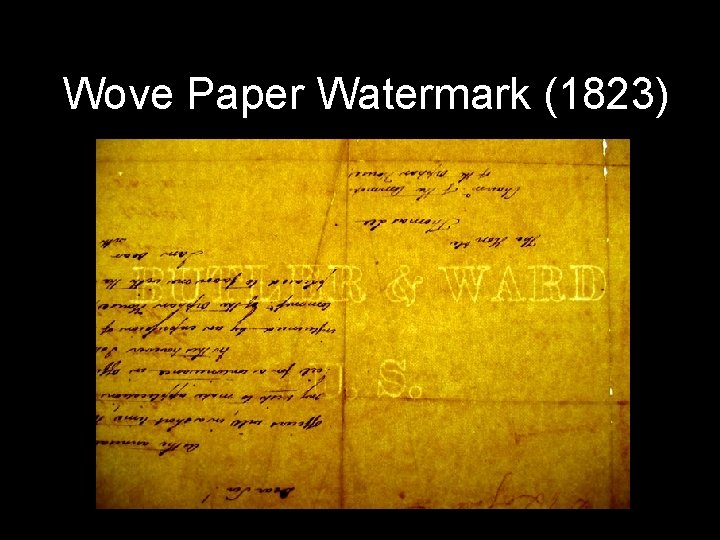
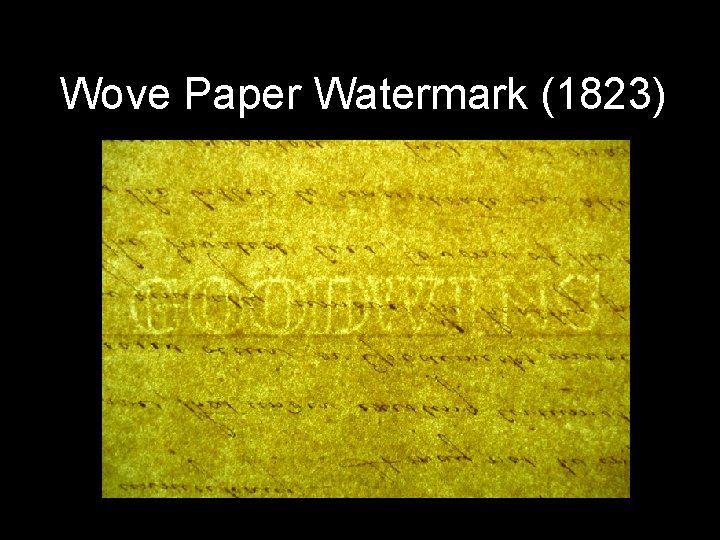
Wove Paper • All machine-made paper is wove paper • Pulp is poured or sprayed onto a continuous wire mesh conveyor mounted on rollers • Uniform wire mesh creates even density • Watermark can be created by using a “dandy roll” (with a soldered wire pattern)
Wove Paper • All machine-made paper is wove paper • Pulp is poured or sprayed onto a continuous wire mesh conveyor mounted on rollers • Uniform wire mesh creates even density • Watermark can be created by using a “dandy roll” (with a soldered wire pattern) • Grain is harder to determine, but is usually parallel to the length of the sheet
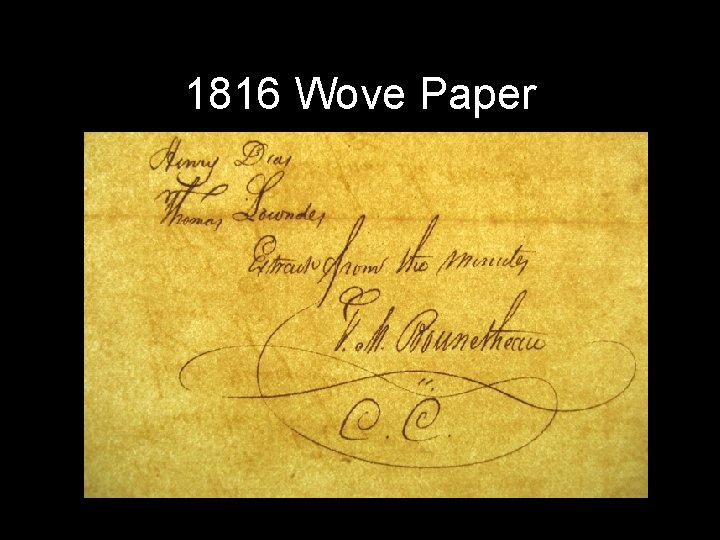
1816 Wove Paper
1817 Laid Paper
“Dandy Roll” Creates a watermark on wove paper

Wove Paper Watermark (1823)
Wove Paper Watermark (1823)
Wove Paper Watermark (1823)

Blue Paper

Early Blue Paper
Early Blue Paper • Venetian Blue (15 th– 16 th centuries)
Early Blue Paper • Venetian Blue (15 th– 16 th centuries) • Bleue Hollande (17 th– 18 th centuries)
Early Blue Paper • Venetian Blue (15 th– 16 th centuries) • Bleue Hollande (17 th– 18 th centuries) • Prussian Blue dye introduced in early 1700 s
Early Blue Paper • Venetian Blue (15 th– 16 th centuries) • Bleue Hollande (17 th– 18 th centuries) • Prussian Blue dye introduced in early 1700 s • Indigo: most widespread dye in textile and paper production
Early Blue Paper • Venetian Blue (15 th– 16 th centuries) • Bleue Hollande (17 th– 18 th centuries) • Prussian Blue dye introduced in early 1700 s • Indigo: most widespread dye in textile and paper production – Insoluble in water, so it requires chemical additives like urine to break down – Indigo dye not suited to mass production of textiles
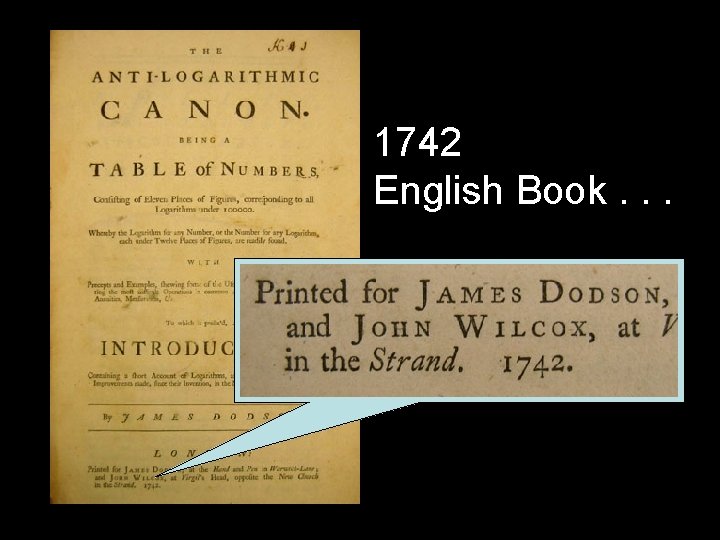
1742 English Book. . .
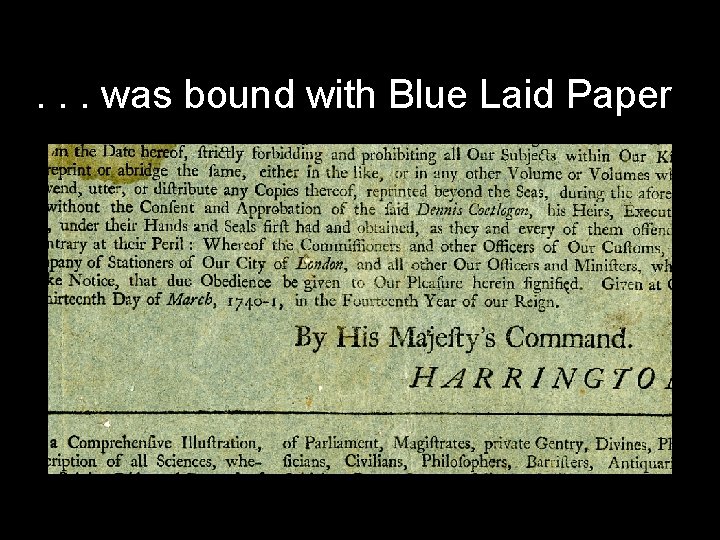
. . . was bound with Blue Laid Paper
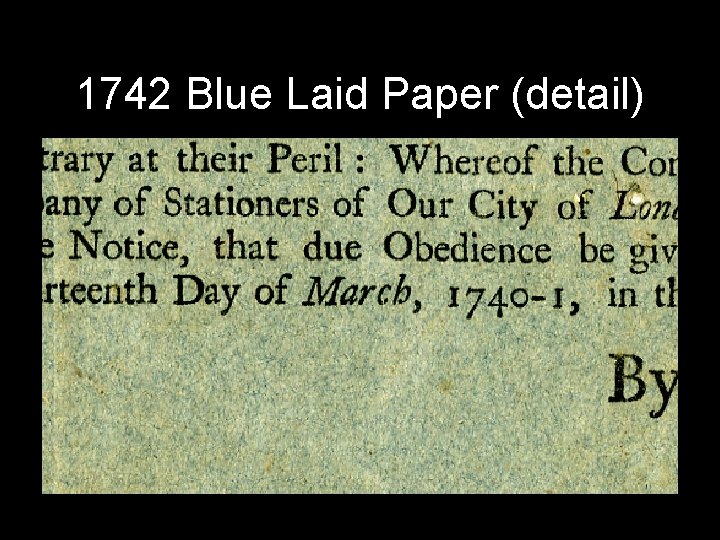
1742 Blue Laid Paper (detail)
19 th Century Blue Paper
19 th Century Blue Paper • Spike in U. S. production, 1840 s– 1860 s
19 th Century Blue Paper • Spike in U. S. production, 1840 s– 1860 s • Recycling of Levi Strauss’s denim jeans?
19 th Century Blue Paper • Spike in U. S. production, 1840 s– 1860 s • Recycling of Levi Strauss’s denim jeans? – No, Levi’s denim introduced in the 1870 s
19 th Century Blue Paper • Spike in U. S. production, 1840 s– 1860 s • Recycling of Levi Strauss’s denim jeans? – No, Levi’s denim introduced in the 1870 s • 1828: Discovery of synthetic urea in Germany
19 th Century Blue Paper • Spike in U. S. production, 1840 s– 1860 s • Recycling of Levi Strauss’s denim jeans? – No, Levi’s denim introduced in the 1870 s • 1828: Discovery of synthetic urea in Germany • 1830 s: Use of indigo in the textile industry expands rapidly
19 th Century Blue Paper • Spike in U. S. production, 1840 s– 1860 s • Recycling of Levi Strauss’s denim jeans? – No, Levi’s denim introduced in the 1870 s • 1828: Discovery of synthetic urea in Germany • 1830 s: Use of indigo in the textile industry expands rapidly • 1840 s: Recycled indigo rags become paper
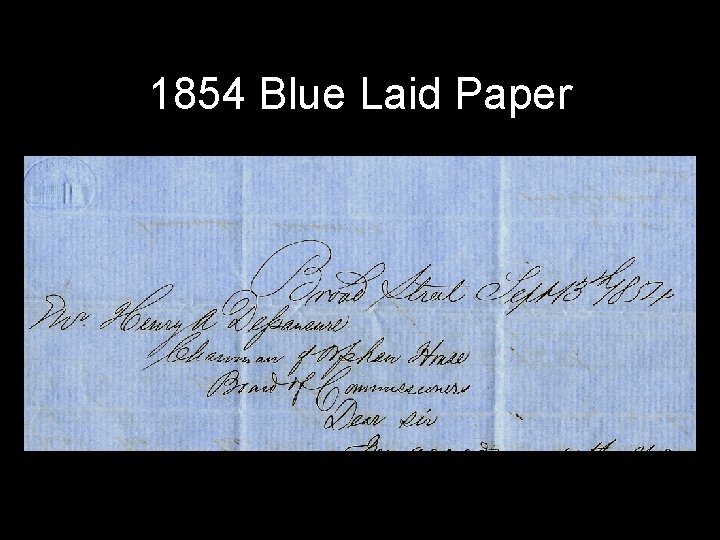
1854 Blue Laid Paper
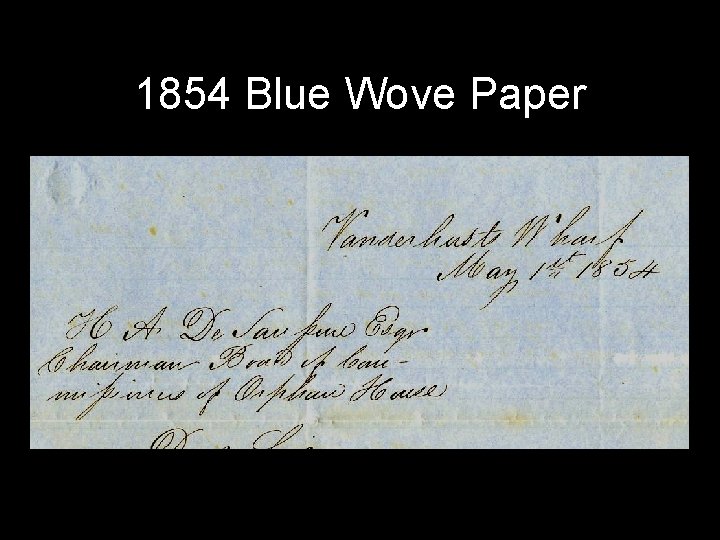
1854 Blue Wove Paper

Newspaper

Newspaper
Newspaper • 17 th & 18 th century: Newspapers printed in limited numbers on hand-made laid paper
Newspaper • 17 th & 18 th century: Newspapers printed in limited numbers on hand-made laid paper • 1810 s: European machine-made paper enables newspapers to be printed cheaply in larger quantities
Newspaper • 17 th & 18 th century: Newspapers printed in limited numbers on hand-made laid paper • 1810 s: European machine-made paper enables newspapers to be printed cheaply in larger quantities • 1850 s: newspapers still +-100% rag content
Newspaper • 17 th & 18 th century: Newspapers printed in limited numbers on hand-made laid paper • 1810 s: European machine-made paper enables newspapers to be printed cheaply in larger quantities • 1850 s: newspapers still +-100% rag content • 1880 s: wood pulp largely replaces cotton pulp
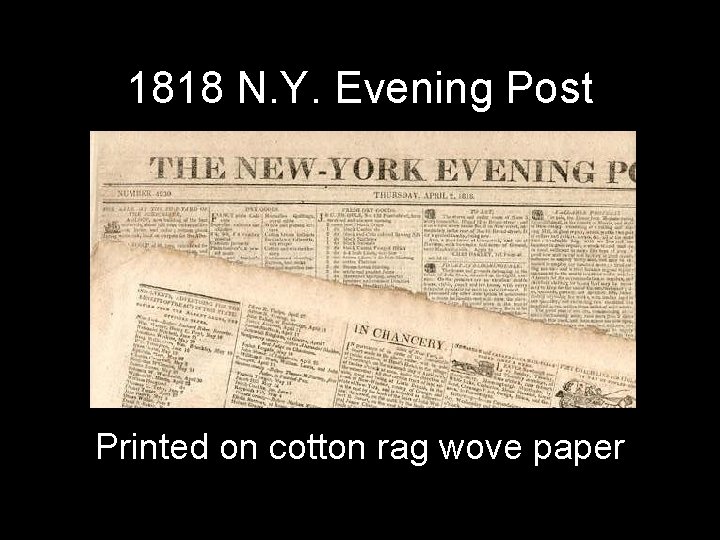
1818 N. Y. Evening Post Printed on cotton rag wove paper
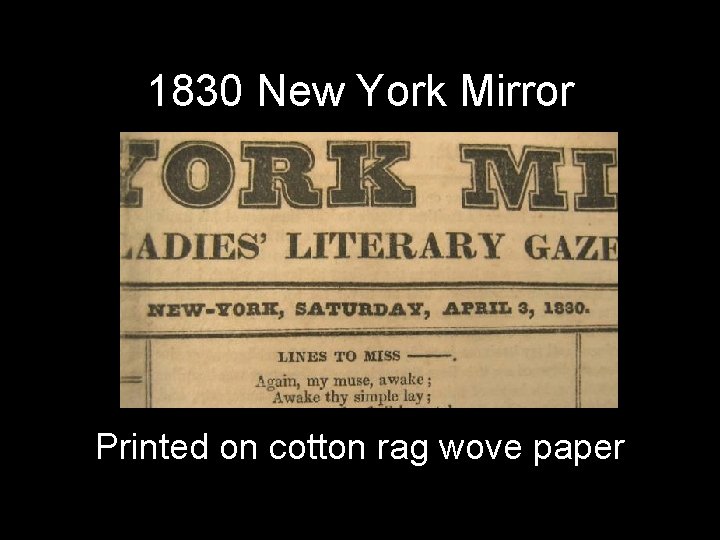
1830 New York Mirror Printed on cotton rag wove paper
“Acidic” Paper

Increasing Acidity of Paper
Increasing Acidity of Paper • 1840 s: Mechanical wood pulping machines developed in Germany
Increasing Acidity of Paper • 1840 s: Mechanical wood pulping machines developed in Germany • 1867: Use of calcium bisulfite to chemically pulp wood patented in the U. S.
Increasing Acidity of Paper • 1840 s: Mechanical wood pulping machines developed in Germany • 1867: Use of calcium bisulfite to chemically pulp wood patented in the U. S. • 1874: First commercial sulfite pulping mill built in Sweden
Increasing Acidity of Paper • 1840 s: Mechanical wood pulping machines developed in Germany • 1867: Use of calcium bisulfite to chemically pulp wood patented in the U. S. • 1874: First commercial sulfite pulping mill built in Sweden – Dominant method of pulping wood into the 1930 s – Results in a paper with high acid content
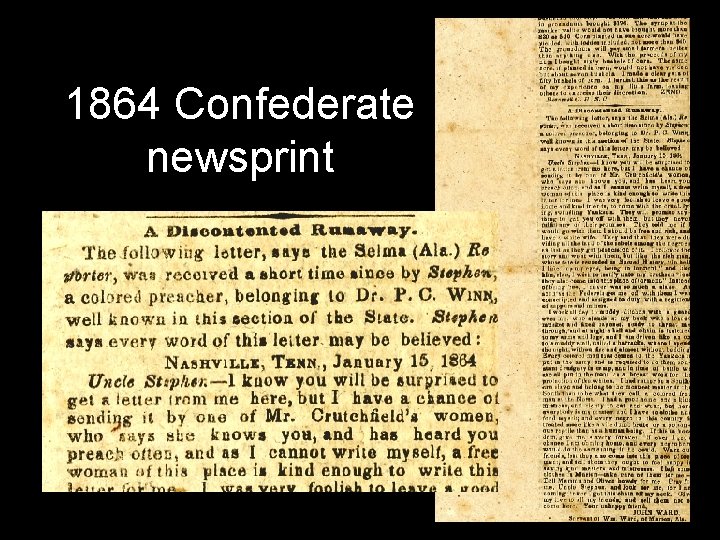
1864 Confederate newsprint
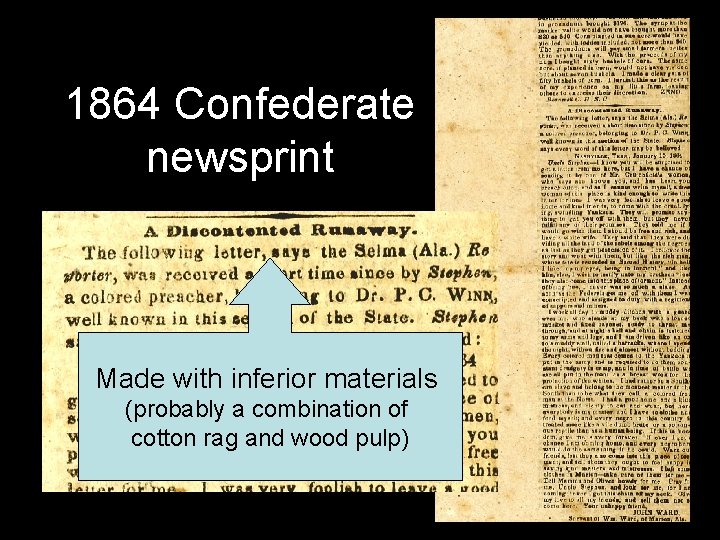
1864 Confederate newsprint Made with inferior materials (probably a combination of cotton rag and wood pulp)
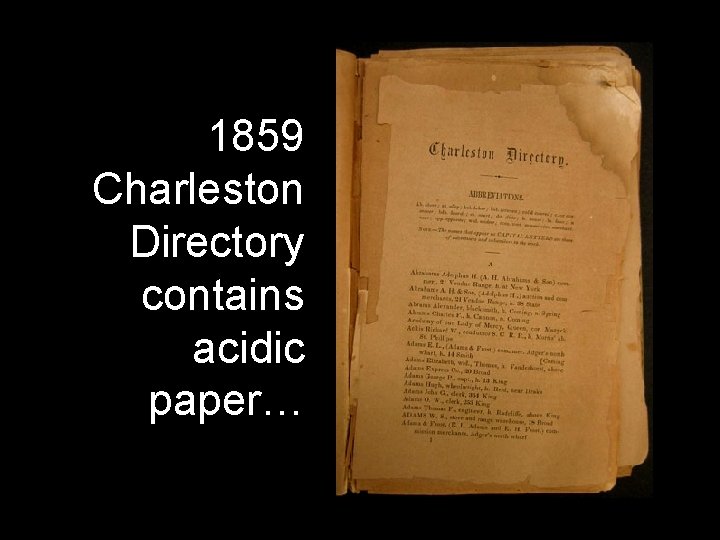
1859 Charleston Directory contains acidic paper…
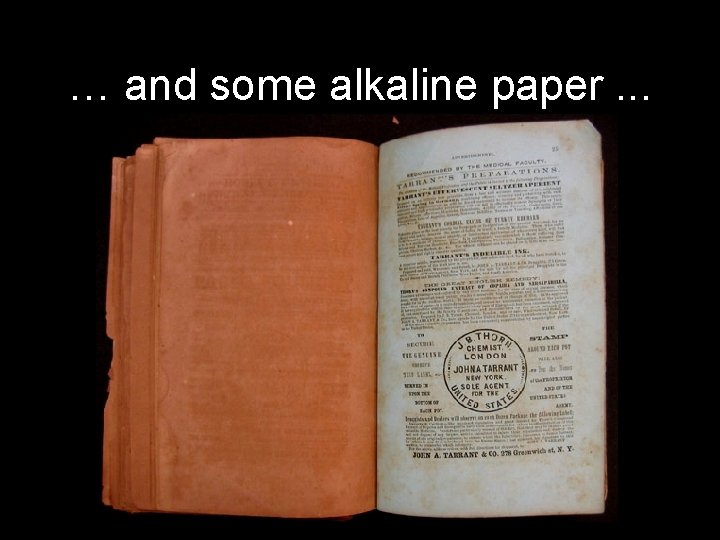
… and some alkaline paper. . .
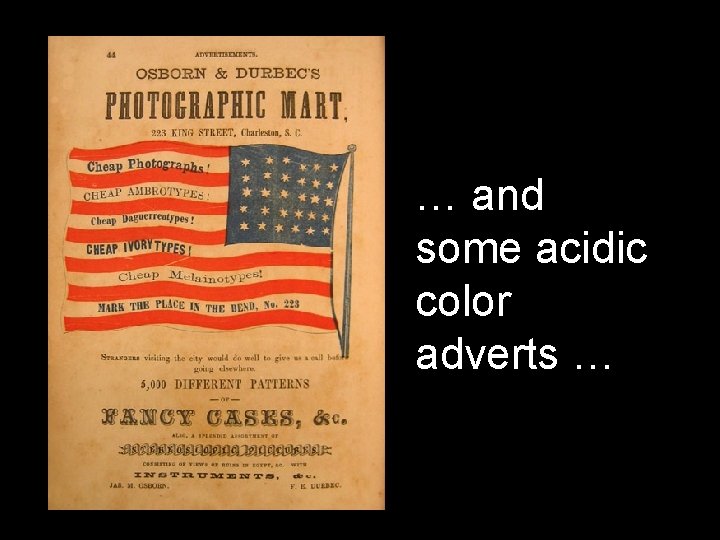
… and some acidic color adverts …
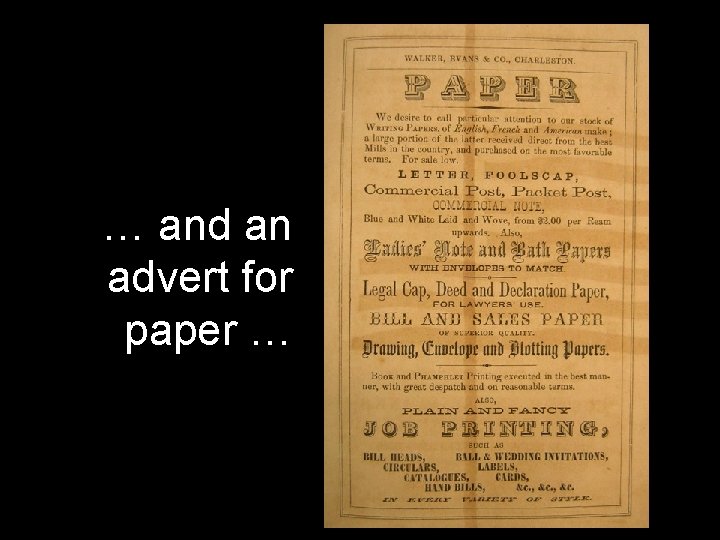
… and an advert for paper …
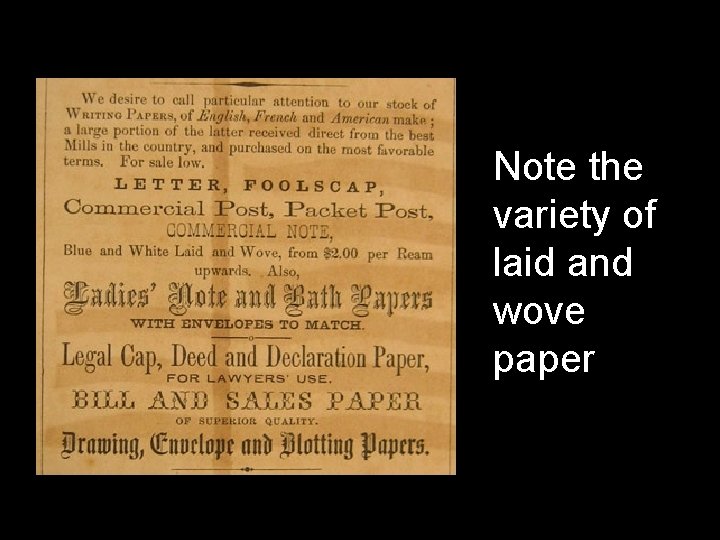
Note the variety of laid and wove paper
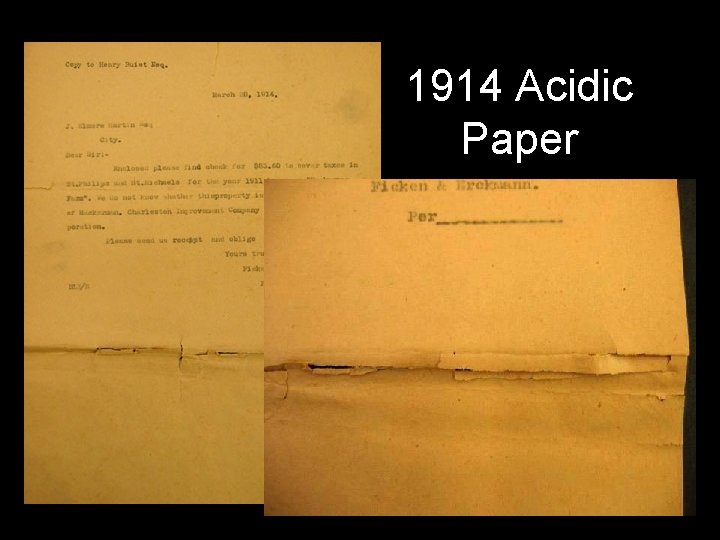
1914 Acidic Paper
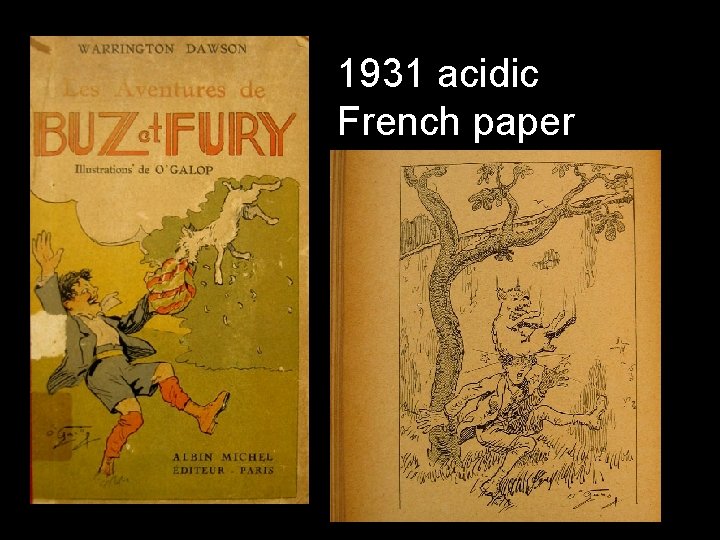
1931 acidic French paper
Kraft Paper

Kraft Process
Kraft Process • 1879: Invented in Germany (Kraft = strength)
Kraft Process • 1879: Invented in Germany (Kraft = strength) • 1890: First Kraft pulp mill built in Sweden
Kraft Process • 1879: Invented in Germany (Kraft = strength) • 1890: First Kraft pulp mill built in Sweden • Uses sodium sulfide to chemically break down wood chips into paper pulp
Kraft Process • 1879: Invented in Germany (Kraft = strength) • 1890: First Kraft pulp mill built in Sweden • Uses sodium sulfide to chemically break down wood chips into paper pulp • Produces stronger paper with less lignin than the sulfite process--less likely to discolor
Kraft Process • 1879: Invented in Germany (Kraft = strength) • 1890: First Kraft pulp mill built in Sweden • Uses sodium sulfide to chemically break down wood chips into paper pulp • Produces stronger paper with less lignin than the sulfite process--less likely to discolor • By 1940 is dominant method of pulping wood
Kraft Process • 1879: Invented in Germany (Kraft = strength) • 1890: First Kraft pulp mill built in Sweden • Uses sodium sulfide to chemically break down wood chips into paper pulp • Produces stronger paper with less lignin than the sulfite process--less likely to discolor • By 1940 is dominant method of pulping wood • Well suited to pulping resinous wood like pine

Ph Testing
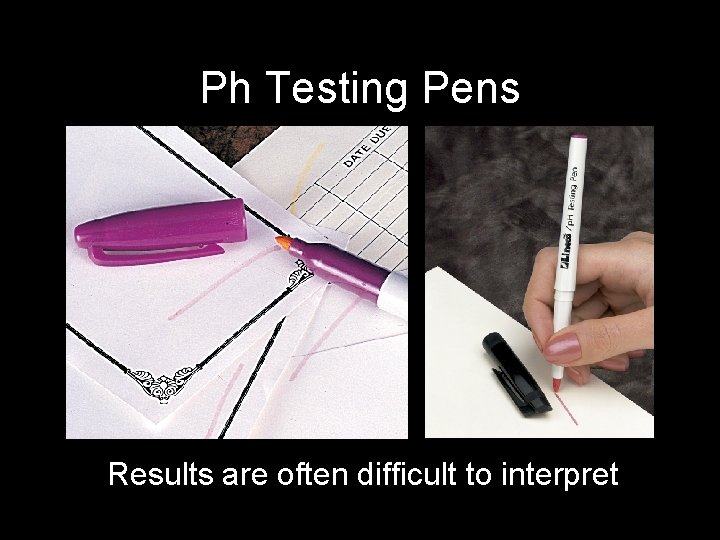
Ph Testing Pens Results are often difficult to interpret

Ph Testing Kit Use with clean, Ph neutral, distilled water
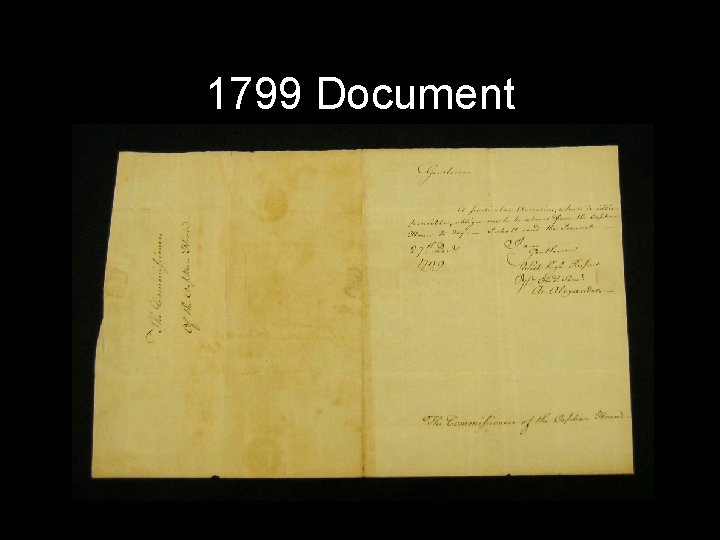
1799 Document
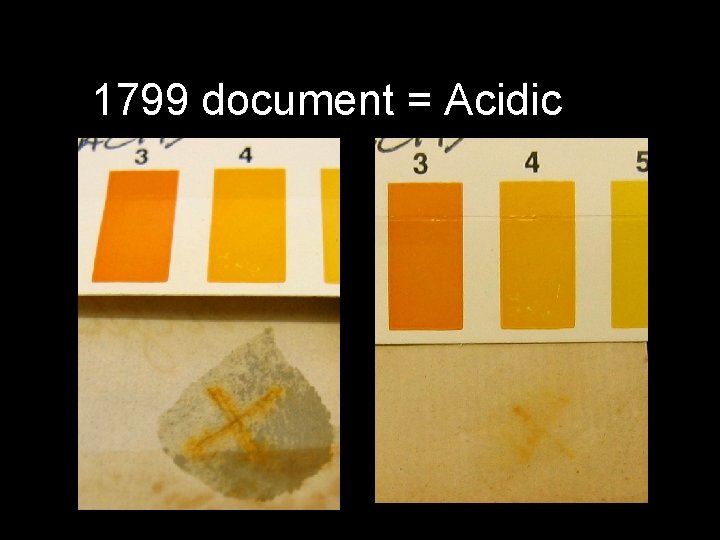
1799 document = Acidic
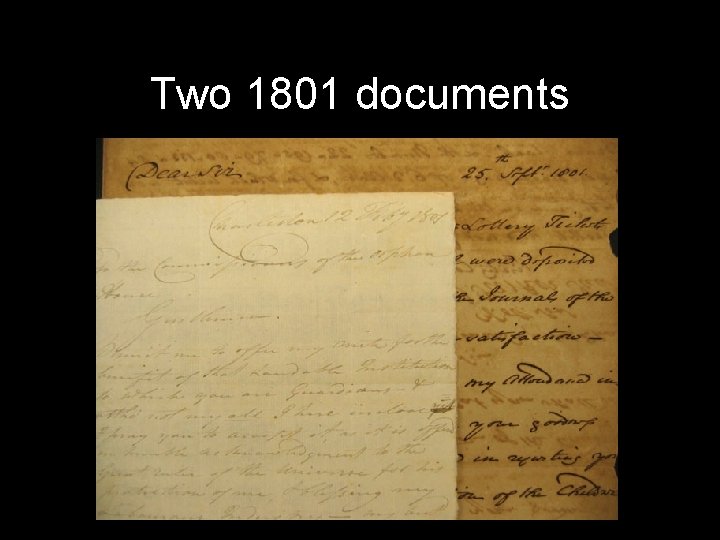
Two 1801 documents
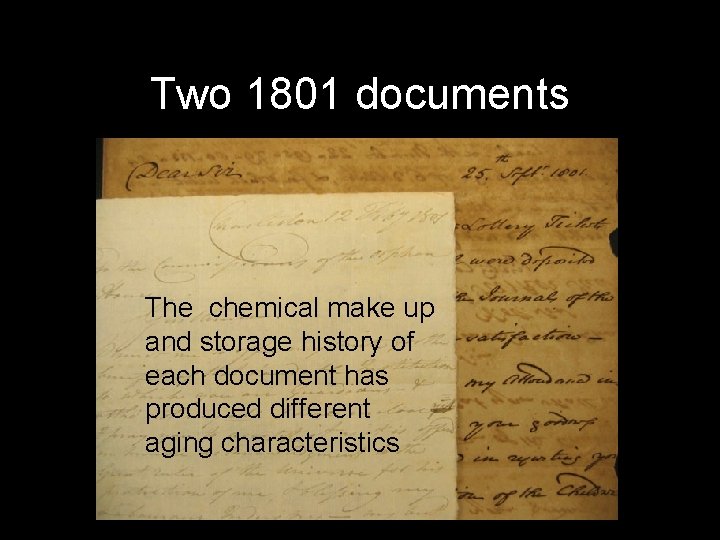
Two 1801 documents The chemical make up and storage history of each document has produced different aging characteristics
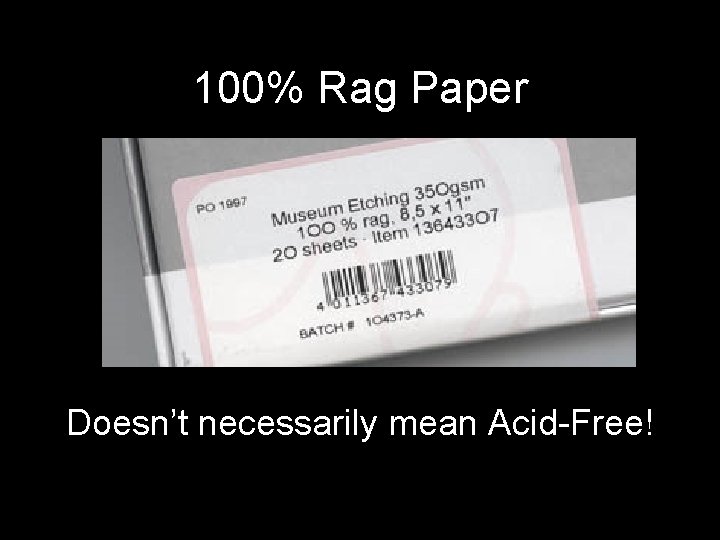
100% Rag Paper Doesn’t necessarily mean Acid-Free!
Why Does Paper Break Down?
Why Does Paper Break Down? • Acids present in 18 th century paper, too
Why Does Paper Break Down? • Acids present in 18 th century paper, too • Lignin (an organic polymer) present in old papers, too, but more common in wood pulp paper
Why Does Paper Break Down? • Acids present in 18 th century paper, too • Lignin (an organic polymer) present in old papers, too, but more common in wood pulp paper • Conservators now think it’s the sizing

Sizing Agents
Sizing Agents • Size: substance applied to paper to control its absorbency and/or to smooth its finish
Sizing Agents • Size: substance applied to paper to control its absorbency and/or to smooth its finish – Hard sized paper = writing paper – Weak sized paper = newsprint – Unsized paper = blotter paper
Sizing Agents • Size: substance applied to paper to control its absorbency and/or to smooth its finish – Hard sized paper = writing paper – Weak sized paper = newsprint – Unsized paper = blotter paper • Gelatin (animal) sizing used for centuries
Sizing Agents • Size: substance applied to paper to control its absorbency and/or to smooth its finish – Hard sized paper = writing paper – Weak sized paper = newsprint; – Unsized paper = blotter paper • Gelatin (animal) sizing used for centuries • Rosin sizing introduced in 1820 s
Sizing Agents • Size: substance applied to paper to control its absorbency and/or to smooth its finish – Hard sized paper = writing paper – Weak sized paper = newsprint; – Unsized paper = blotter paper • Gelatin (animal) sizing used for centuries • Rosin sizing introduced in 1820 s • Alum (acidic) sizing introduced in 1870 s
Thank You!

Now Available!
- Slides: 118