
PAP Physics Chapter 1 Math Measurement Main Topics

- Slides: 44
PAP Physics Chapter 1 Math & Measurement
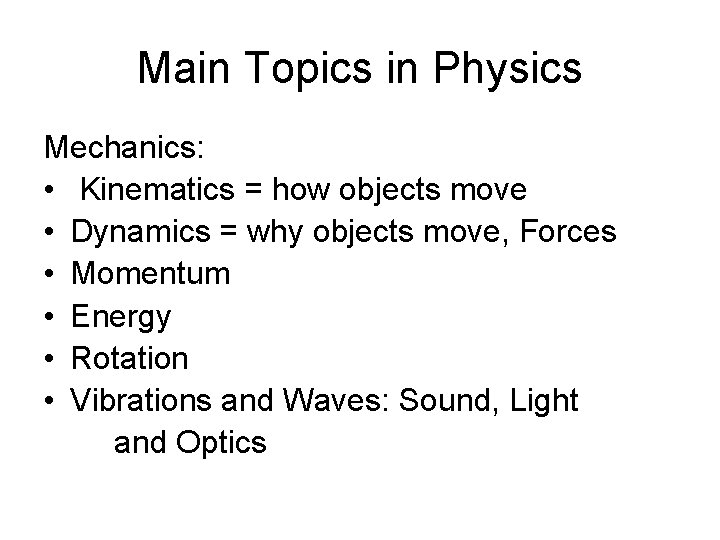
Main Topics in Physics Mechanics: • Kinematics = how objects move • Dynamics = why objects move, Forces • Momentum • Energy • Rotation • Vibrations and Waves: Sound, Light and Optics
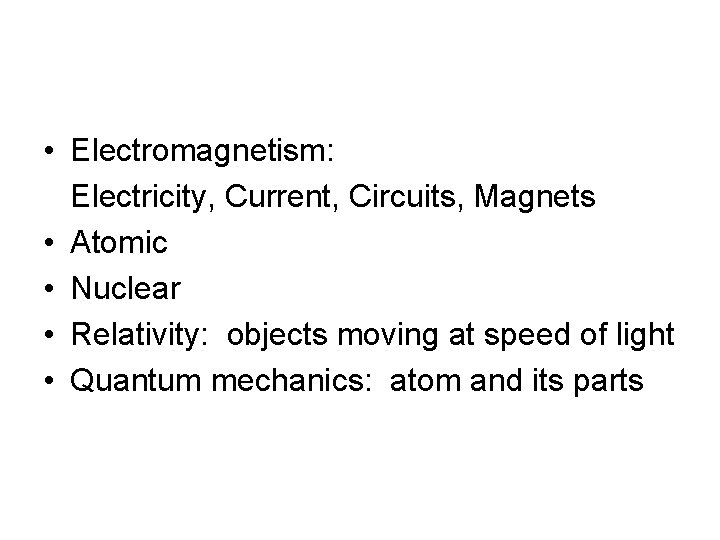
• Electromagnetism: Electricity, Current, Circuits, Magnets • Atomic • Nuclear • Relativity: objects moving at speed of light • Quantum mechanics: atom and its parts
The Power of Physics • Physics predicts how nature will behave in one situation based on the results of experimental data obtained in another situation.
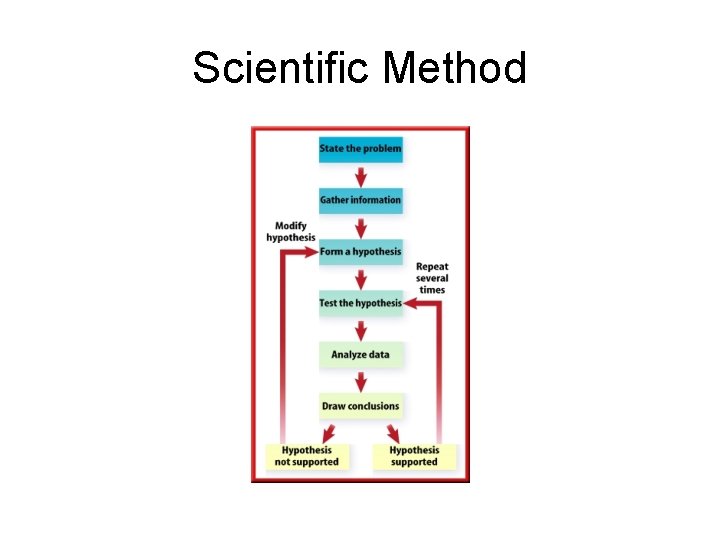
Scientific Method
• Physics uses models to simplify a physical phenomenon • They explain the most fundamental features of a phenomenon. • Focus is usually on a single object and the things that immediately affect it. This is called the system
Modeling • identify relevant variables and a hypothesis worth testing • guide experimental design (controlled experiment) • make predictions for new situations • Today, many scientists use computers to build models
Language of Physics • Algebra !
What is physics? • A way of describing the physical world. • Physics comes from the Greek “physis” meaning “nature” and the Latin “physica” meaning natural things • Physics is understanding the behavior and structure of matter • It deals with how and why matter and energy act as they do
• Energy is the conceptual system for explaining how the universe works and accounting for changes in matter • The word energy comes from the Greek “en”, meaning “in” and “ergon”, meaning “work”. Energy is thus the power to do work. Sounds weird!!
Although energy is not a “thing” three ideas about energy are important 1. It is changed from one form to another (transformed) by physical events 2. It cannot be created nor destroyed (conservation) 3. When it is transformed some of it usually goes into heat
Measurements in physics - SI Standards (fundamental units) - Accuracy and Precision - Significant Figures - Uncertainties and Mistakes
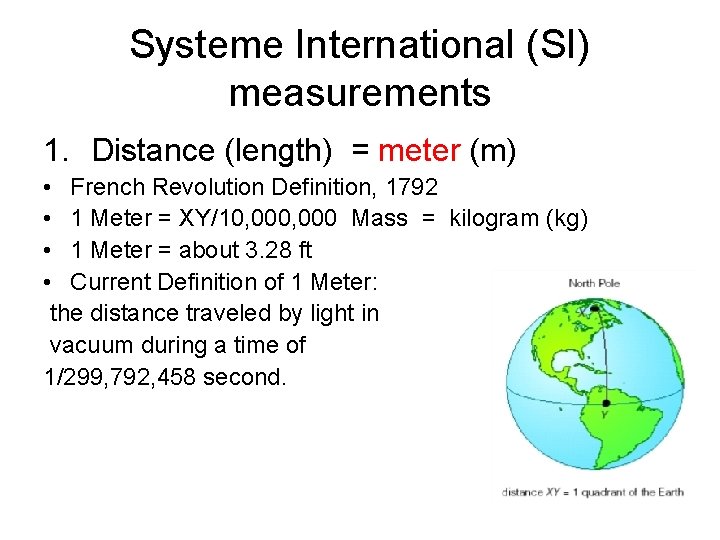
Systeme International (SI) measurements 1. Distance (length) = meter (m) • French Revolution Definition, 1792 • 1 Meter = XY/10, 000 Mass = kilogram (kg) • 1 Meter = about 3. 28 ft • Current Definition of 1 Meter: the distance traveled by light in vacuum during a time of 1/299, 792, 458 second.
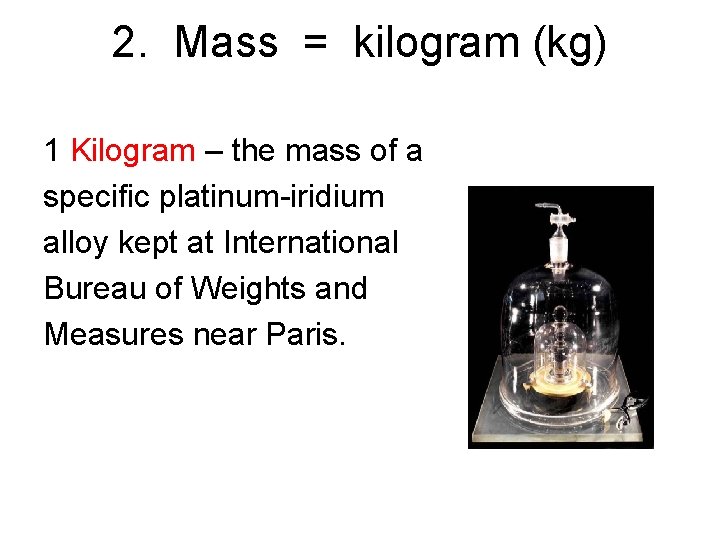
2. Mass = kilogram (kg) 1 Kilogram – the mass of a specific platinum-iridium alloy kept at International Bureau of Weights and Measures near Paris.
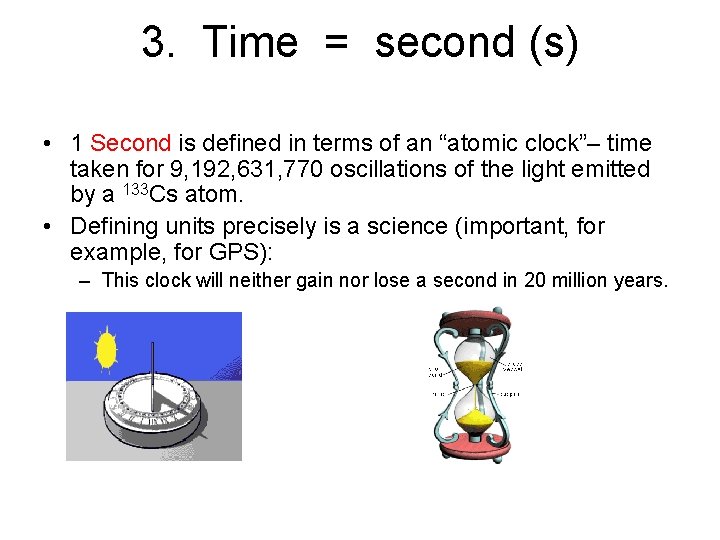
3. Time = second (s) • 1 Second is defined in terms of an “atomic clock”– time taken for 9, 192, 631, 770 oscillations of the light emitted by a 133 Cs atom. • Defining units precisely is a science (important, for example, for GPS): – This clock will neither gain nor lose a second in 20 million years.
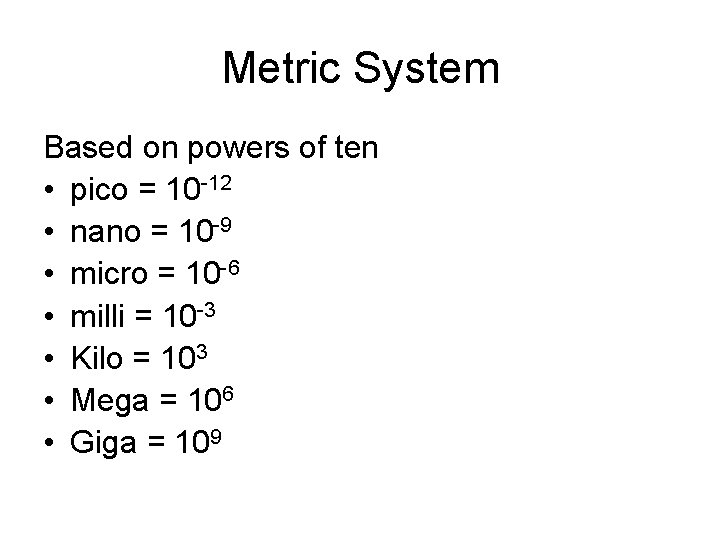
Metric System Based on powers of ten • pico = 10 -12 • nano = 10 -9 • micro = 10 -6 • milli = 10 -3 • Kilo = 103 • Mega = 106 • Giga = 109
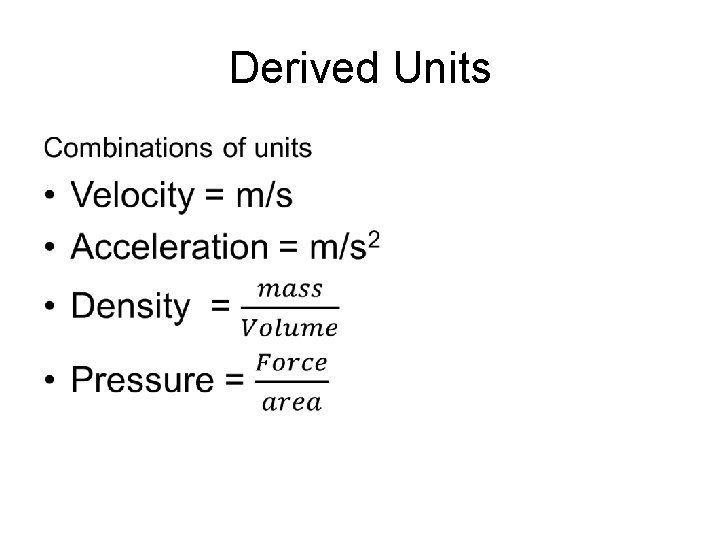
Derived Units •
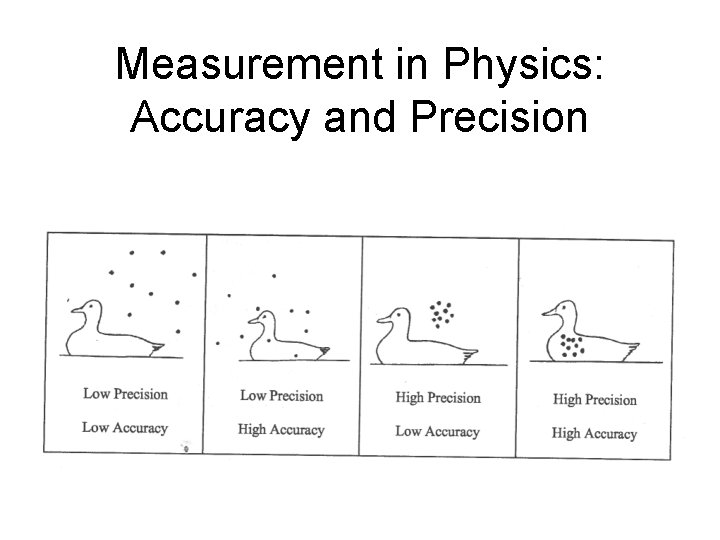
Measurement in Physics: Accuracy and Precision
Precision • Refers to the degree of exactness with which a measurement is made and stated. • Limited by the smallest division of your scale. • Estimate the next digit. • Repeatable? ?
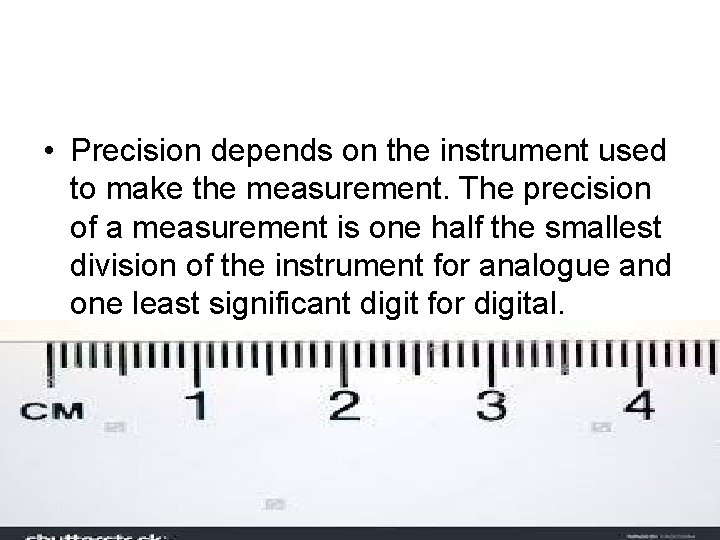
• Precision depends on the instrument used to make the measurement. The precision of a measurement is one half the smallest division of the instrument for analogue and one least significant digit for digital.
Accuracy • Describes how close a measured value is to the true value of the quantity measured, or how well your results agree with the accepted value • A common source of systematic error is not zeroing your measuring instrument correctly so that all data is constantly shifted away from the true value. This can give high precision but poor accuracy.
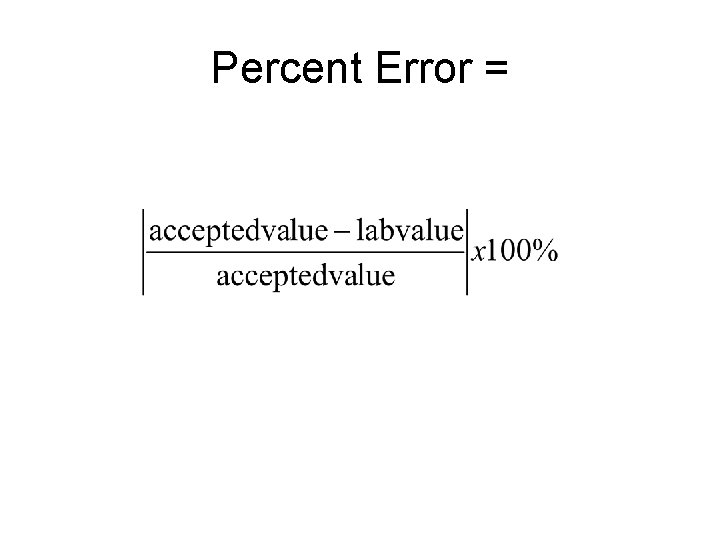
Percent Error =
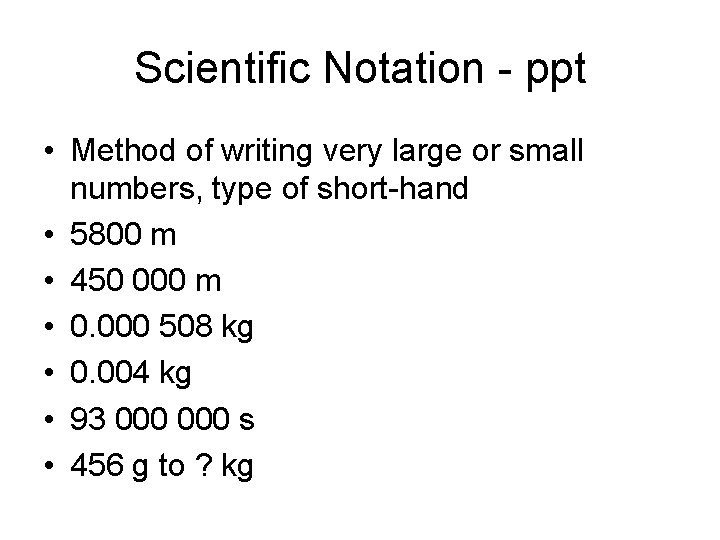
Scientific Notation - ppt • Method of writing very large or small numbers, type of short-hand • 5800 m • 450 000 m • 0. 000 508 kg • 0. 004 kg • 93 000 s • 456 g to ? kg
Prefixes: • • • pico nano micro milli centi deci • • • deka hecto kilo Mega Giga Tera
Parallax = error • Apparent shift in position of an object when it is viewed from various angles
Significant Digits or Figures: • • Defined as valid digits in a measurement Rules for Sig Fig’s
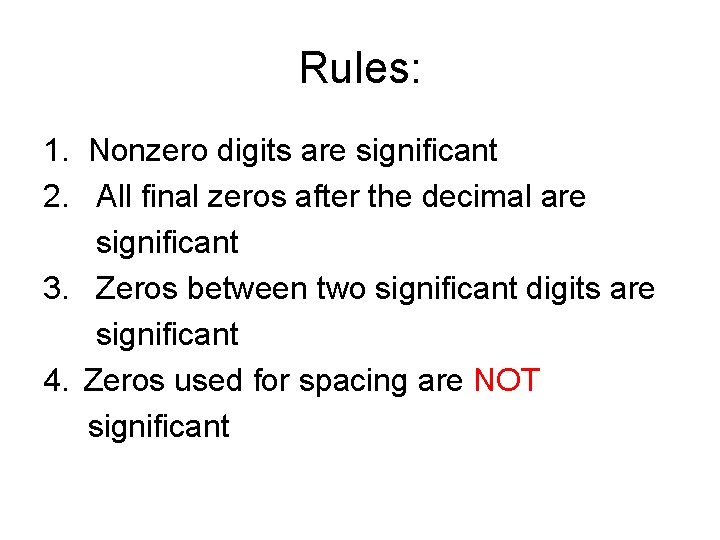
Rules: 1. Nonzero digits are significant 2. All final zeros after the decimal are significant 3. Zeros between two significant digits are significant 4. Zeros used for spacing are NOT significant
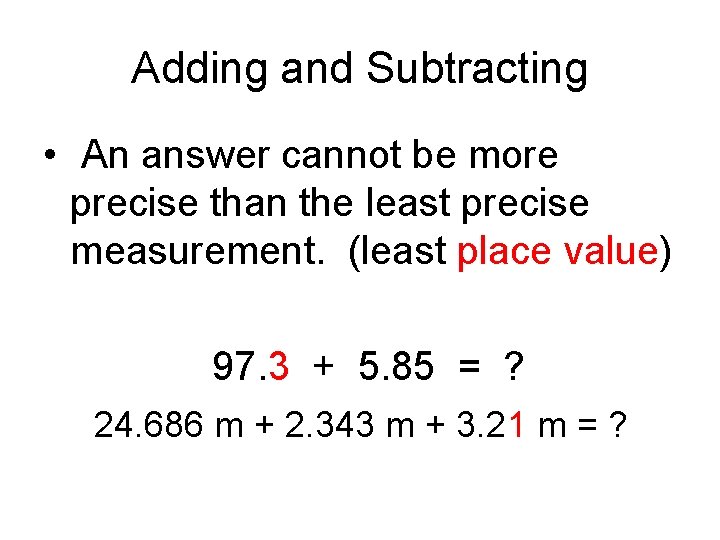
Adding and Subtracting • An answer cannot be more precise than the least precise measurement. (least place value) 97. 3 + 5. 85 = ? 24. 686 m + 2. 343 m + 3. 21 m = ?
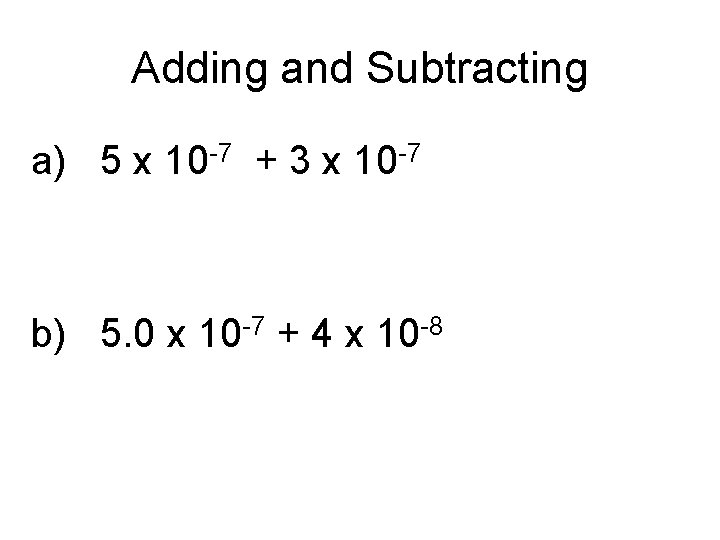
Adding and Subtracting a) 5 x 10 -7 + 3 x 10 -7 b) 5. 0 x 10 -7 + 4 x 10 -8
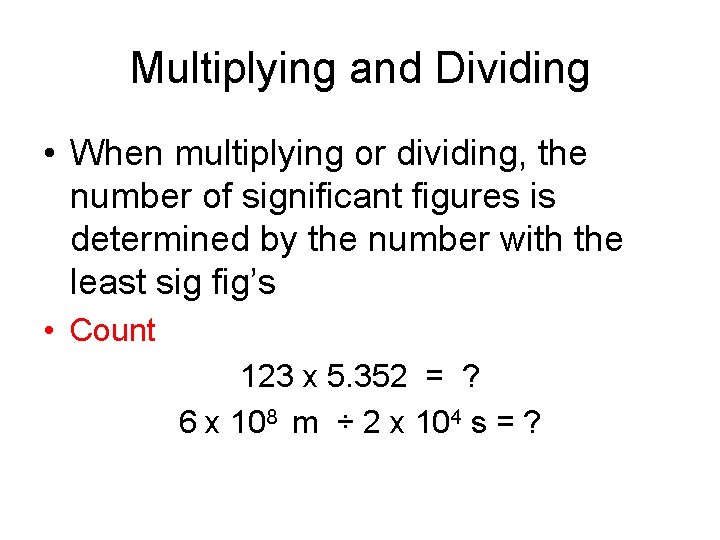
Multiplying and Dividing • When multiplying or dividing, the number of significant figures is determined by the number with the least sig fig’s • Count 123 x 5. 352 = ? 6 x 10⁸ m ÷ 2 x 10⁴ s = ?
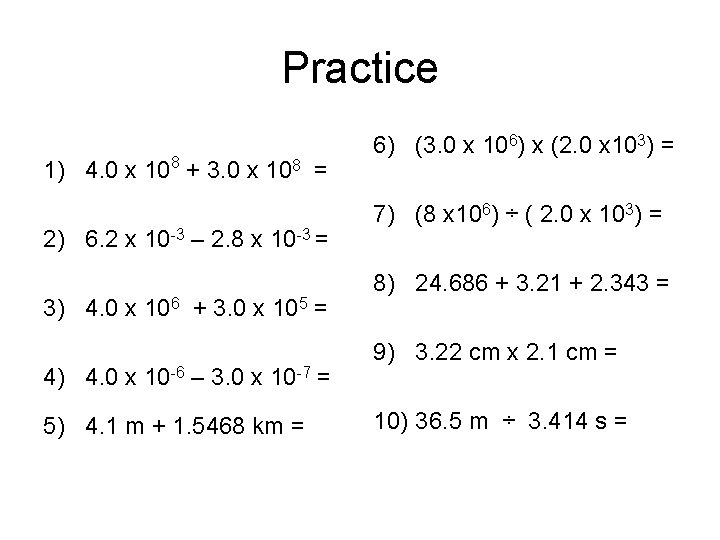
Practice 1) 4. 0 x 108 + 3. 0 x 108 = 2) 6. 2 x 10 -3 – 2. 8 x 10 -3 = 3) 4. 0 x 106 + 3. 0 x 105 = 4) 4. 0 x 10 -6 – 3. 0 x 10 -7 = 5) 4. 1 m + 1. 5468 km = 6) (3. 0 x 106) x (2. 0 x 103) = 7) (8 x 10⁶) ÷ ( 2. 0 x 103) = 8) 24. 686 + 3. 21 + 2. 343 = 9) 3. 22 cm x 2. 1 cm = 10) 36. 5 m ÷ 3. 414 s =
Algebra Review • PEMDAS = order of operations Parenthesis Exponents Multiply (Associative) Divide (Associative) Add and subtract left to right
Laws of Exponents • When multiplying • When dividing • Power raised to a power
The two most important words in physics: 1. Change 2. Relationship
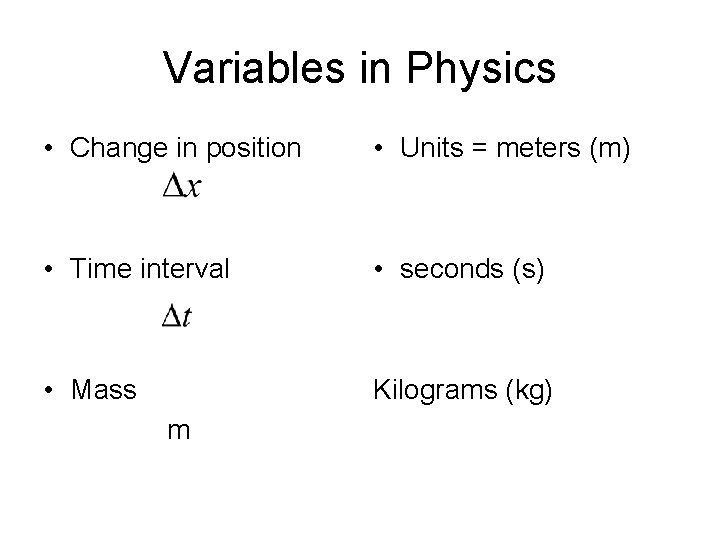
Variables in Physics • Change in position • Units = meters (m) • Time interval • seconds (s) • Mass Kilograms (kg) m
Graphing Data • Independent variable is graphed on the x axis • It is the manipulated variable • Time is almost always the independent variable • Dependent variable is the responding variable • It is graphed on the y axis
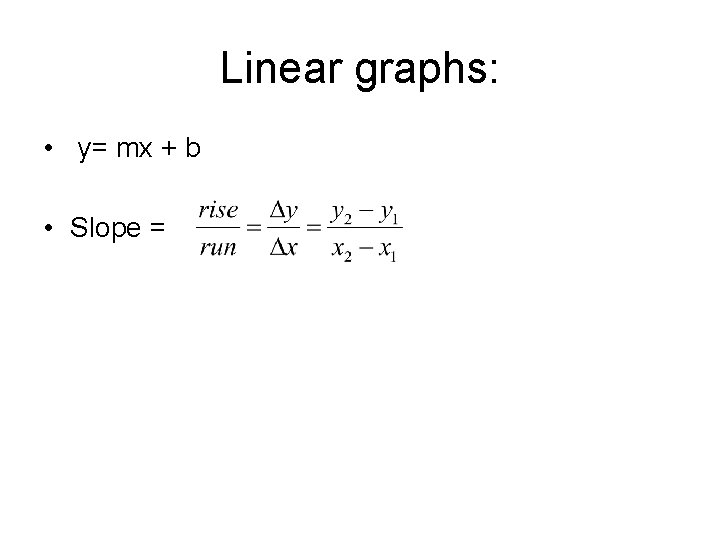
Linear graphs: • y= mx + b • Slope =
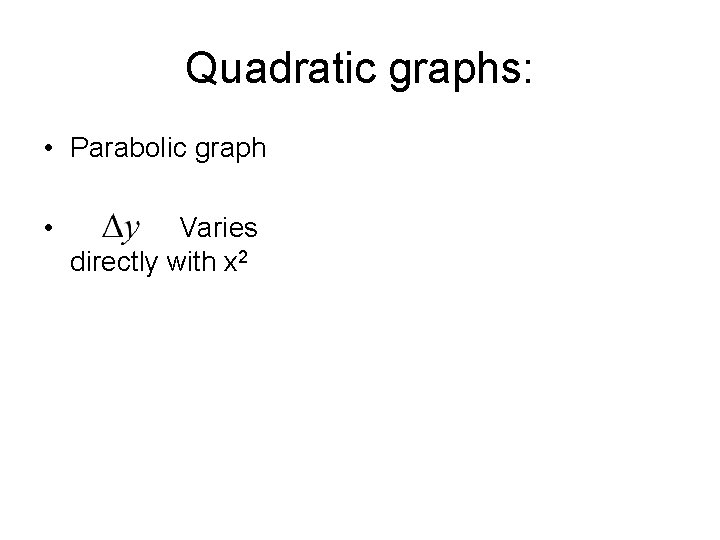
Quadratic graphs: • Parabolic graph • Varies directly with x 2
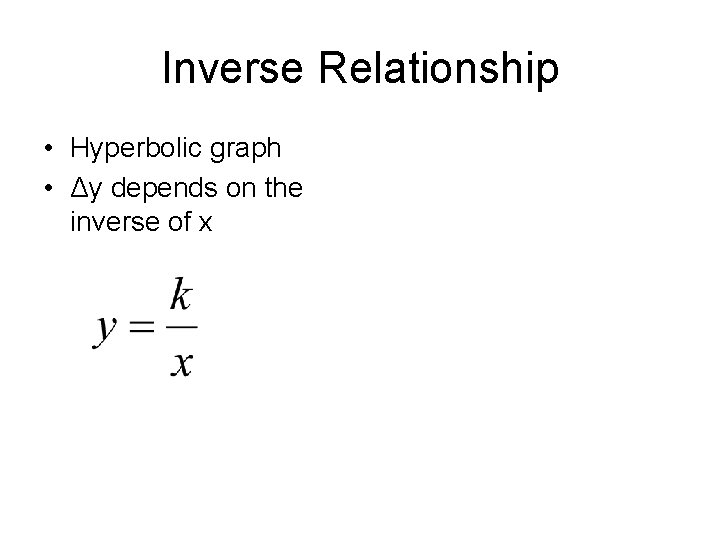
Inverse Relationship • Hyperbolic graph • Δy depends on the inverse of x
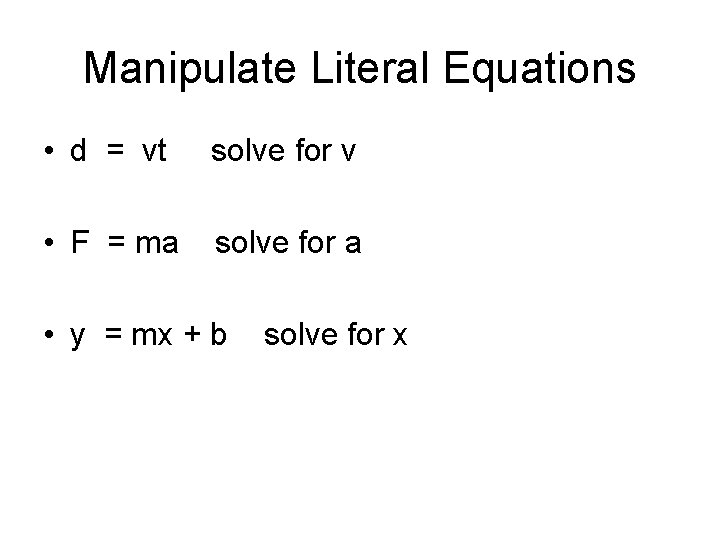
Manipulate Literal Equations • d = vt solve for v • F = ma solve for a • y = mx + b solve for x
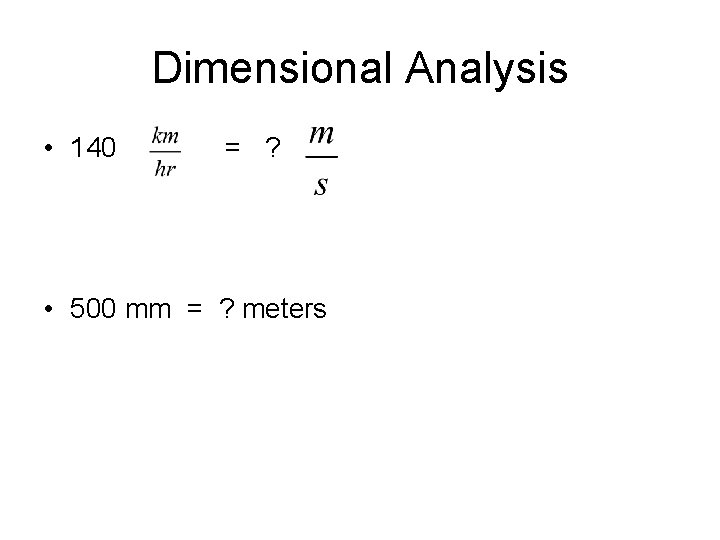
Dimensional Analysis • 140 = ? • 500 mm = ? meters
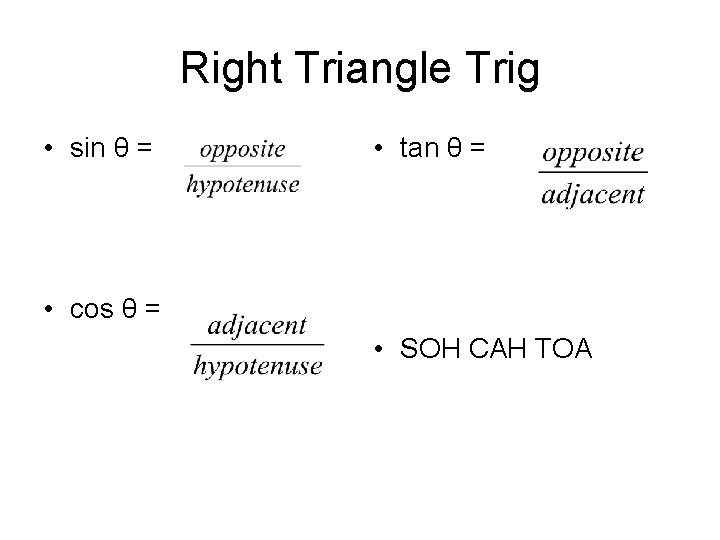
Right Triangle Trig • sin θ = • tan θ = • cos θ = • SOH CAH TOA