
Paolo Veronese Cephalus and Procris 1580 1582 Bernardino
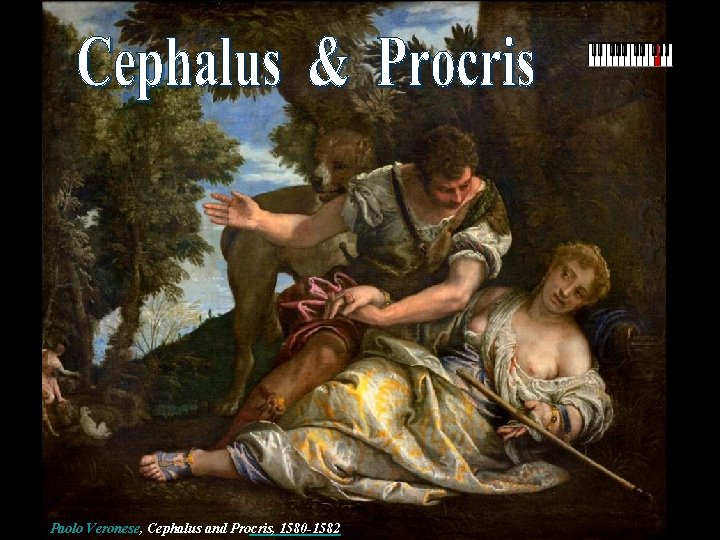
Paolo Veronese, Cephalus and Procris, 1580 -1582
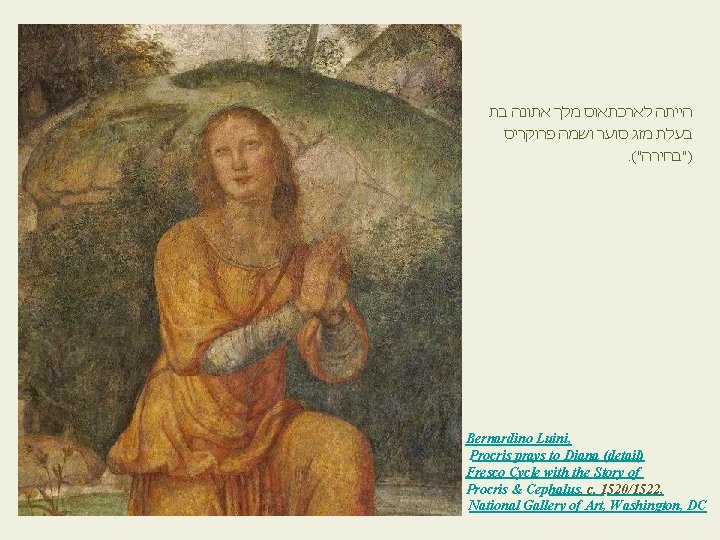
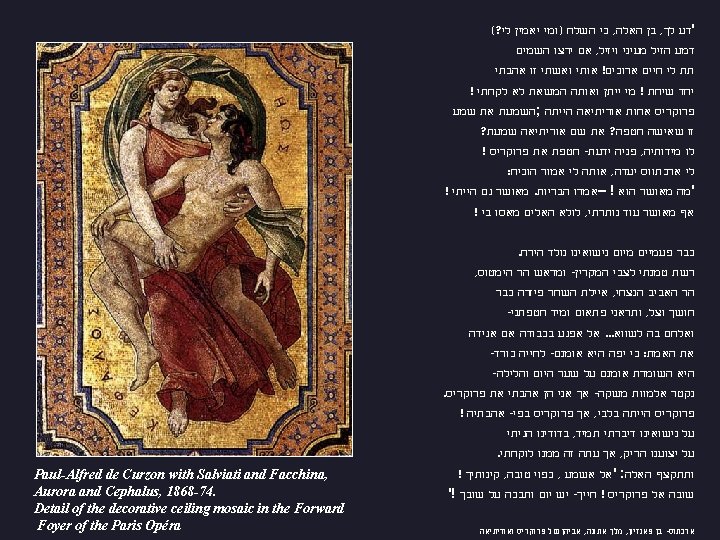
הייתה לארכתאוס מלך אתונה בת בעלת מזג סוער ושמה פרוקריס . (" )"בחירה Bernardino Luini, Procris prays to Diana (detail) Fresco Cycle with the Story of Procris & Cephalus, c. 1520/1522, National Gallery of Art, Washington, DC
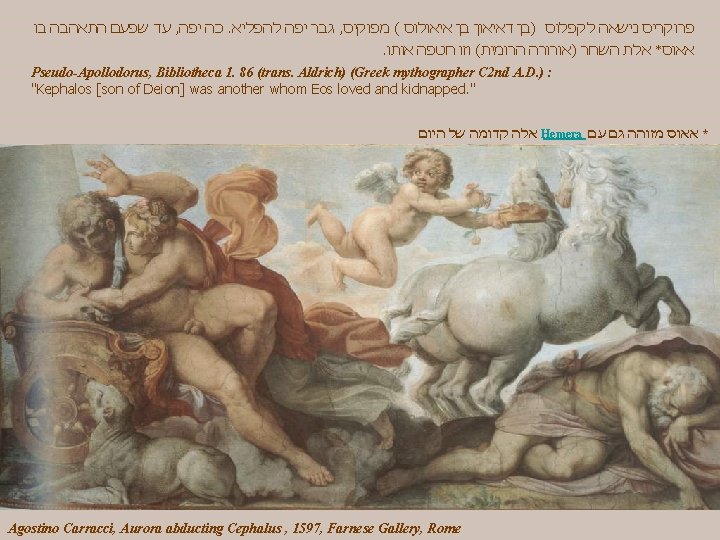
עד שפעם התאהבה בו , כה יפה. גבר יפה להפליא , פרוקריס נישאה לקפלוס )בן דאיאון בן איאולוס ( מפוקיס . אאוס* אלת השחר )אורורה הרומית( וזו חטפה אותו Pseudo-Apollodorus, Bibliotheca 1. 86 (trans. Aldrich) (Greek mythographer C 2 nd A. D. ) : "Kephalos [son of Deion] was another whom Eos loved and kidnapped. " אלה קדומה של היום Hemera * אאוס מזוהה גם עם Agostino Carracci, Aurora abducting Cephalus , 1597, Farnese Gallery, Rome
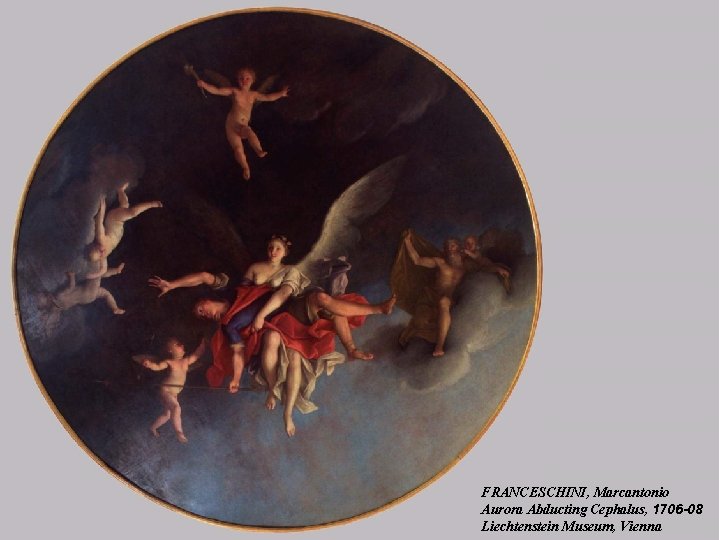
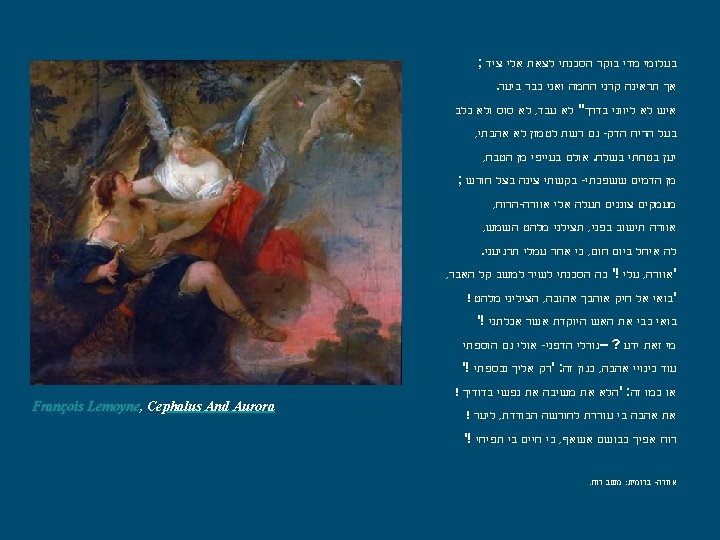
FRANCESCHINI, Marcantonio Aurora Abducting Cephalus, 1706 -08 Liechtenstein Museum, Vienna
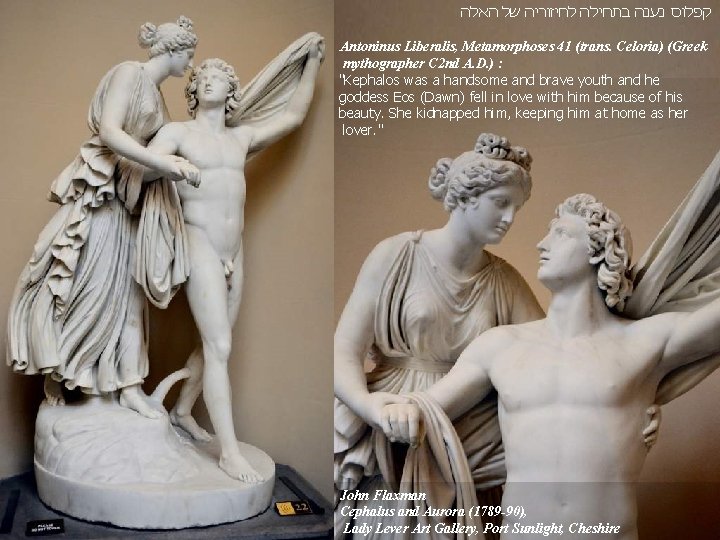
קפלוס נענה בתחילה לחיזוריה של האלה Antoninus Liberalis, Metamorphoses 41 (trans. Celoria) (Greek mythographer C 2 nd A. D. ) : "Kephalos was a handsome and brave youth and he goddess Eos (Dawn) fell in love with him because of his beauty. She kidnapped him, keeping him at home as her lover. " John Flaxman Cephalus and Aurora (1789 -90), Lady Lever Art Gallery, Port Sunlight, Cheshire
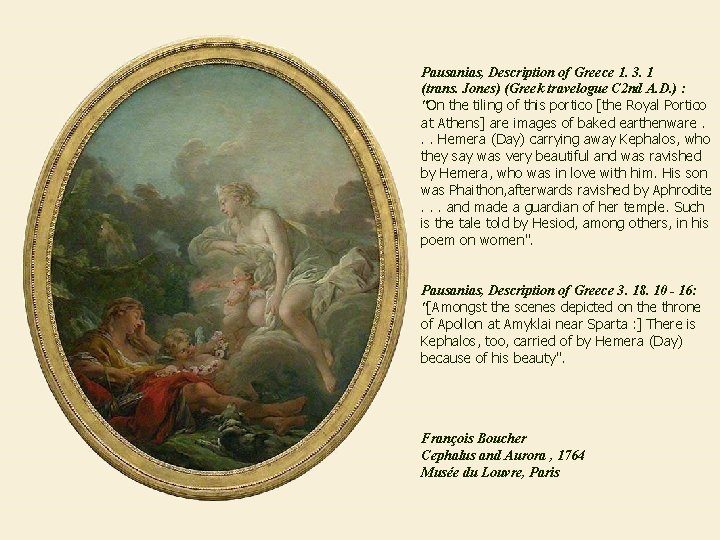
Pausanias, Description of Greece 1. 3. 1 (trans. Jones) (Greek travelogue C 2 nd A. D. ) : "On the tiling of this portico [the Royal Portico at Athens] are images of baked earthenware. . . Hemera (Day) carrying away Kephalos, who they say was very beautiful and was ravished by Hemera, who was in love with him. His son was Phaithon, afterwards ravished by Aphrodite. . . and made a guardian of her temple. Such is the tale told by Hesiod, among others, in his poem on women". Pausanias, Description of Greece 3. 18. 10 - 16: "[Amongst the scenes depicted on the throne of Apollon at Amyklai near Sparta : ] There is Kephalos, too, carried of by Hemera (Day) because of his beauty". François Boucher Cephalus and Aurora , 1764 Musée du Louvre, Paris
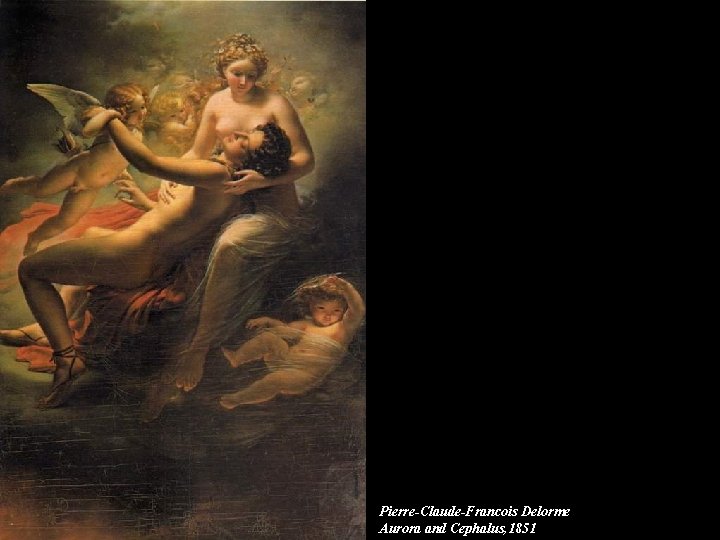
Pierre-Claude-Francois Delorme Aurora and Cephalus, 1851
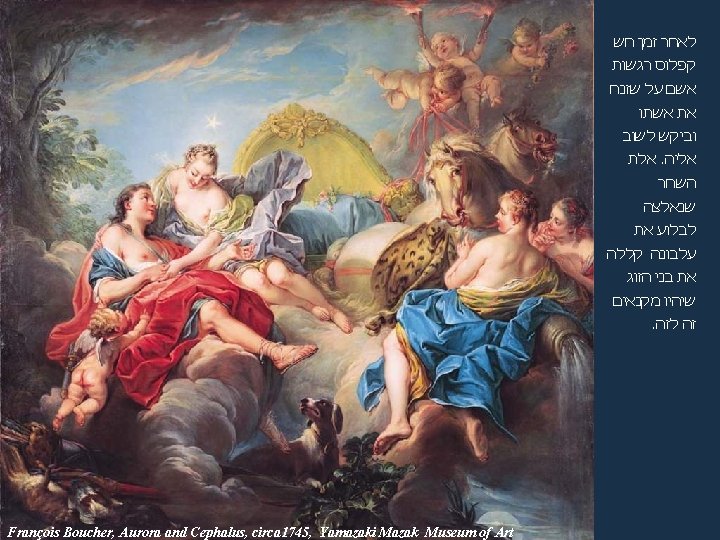
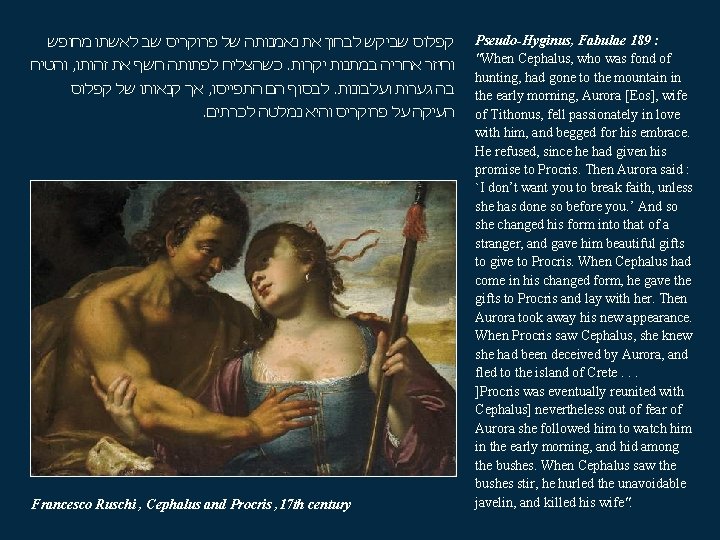
קפלוס שביקש לבחון את נאמנותה של פרוקריס שב לאשתו מחופש והטיח , כשהצליח לפתותה חשף את זהותו. וחיזר אחריה במתנות יקרות אך קנאותו של קפלוס , לבסוף הם התפייסו. בה גערות ועלבונות . העיקה על פרוקריס והיא נמלטה לכרתים Francesco Ruschi , Cephalus and Procris , 17 th century Pseudo-Hyginus, Fabulae 189 : "When Cephalus, who was fond of hunting, had gone to the mountain in the early morning, Aurora [Eos], wife of Tithonus, fell passionately in love with him, and begged for his embrace. He refused, since he had given his promise to Procris. Then Aurora said : `I don’t want you to break faith, unless she has done so before you. ’ And so she changed his form into that of a stranger, and gave him beautiful gifts to give to Procris. When Cephalus had come in his changed form, he gave the gifts to Procris and lay with her. Then Aurora took away his new appearance. When Procris saw Cephalus, she knew she had been deceived by Aurora, and fled to the island of Crete. . . ]Procris was eventually reunited with Cephalus] nevertheless out of fear of Aurora she followed him to watch him in the early morning, and hid among the bushes. When Cephalus saw the bushes stir, he hurled the unavoidable javelin, and killed his wife".
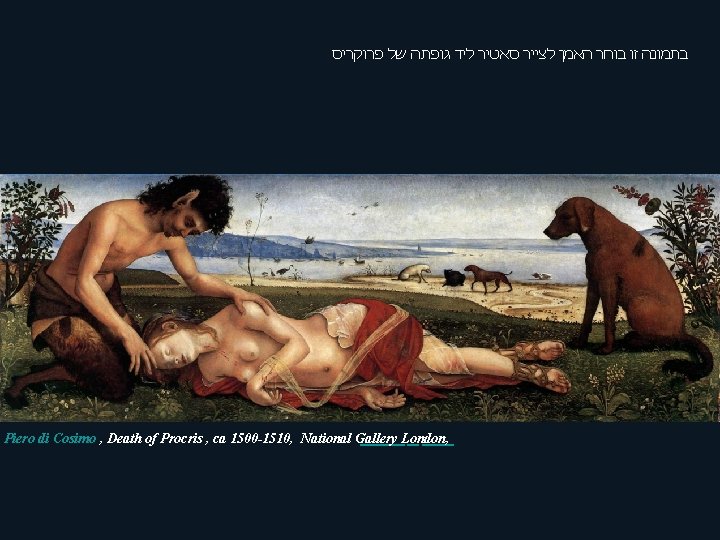
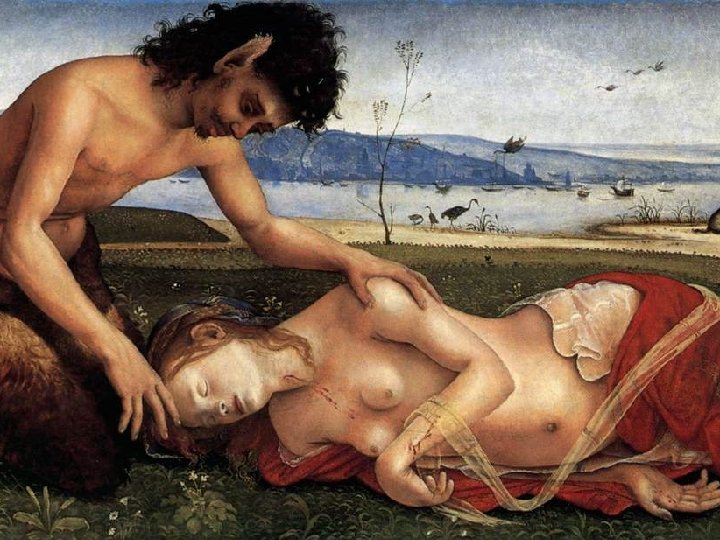
בתמונה זו בוחר האמן לצייר סאטיר ליד גופתה של פרוקריס Piero di Cosimo , Death of Procris , ca 1500 -1510, National Gallery London,
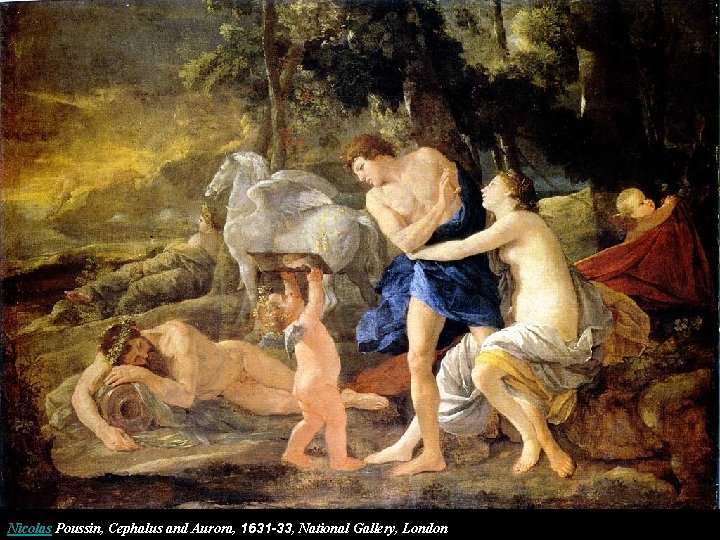
Nicolas Poussin, Cephalus and Aurora, 1631 -33, National Gallery, London
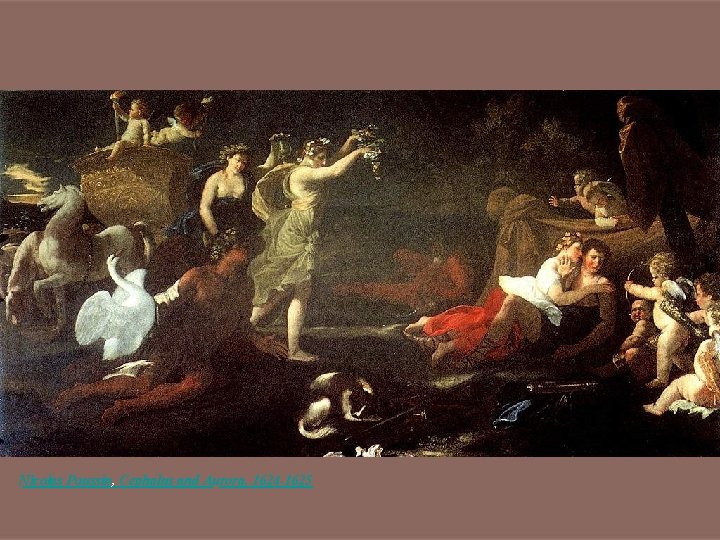
Nicolas Poussin, Cephalus and Aurora, 1624 -1625
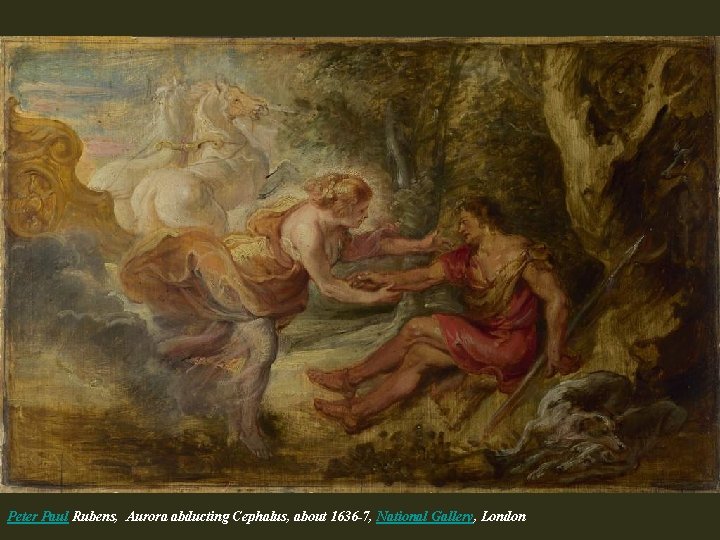
Peter Paul Rubens, Aurora abducting Cephalus, about 1636 -7, National Gallery, London
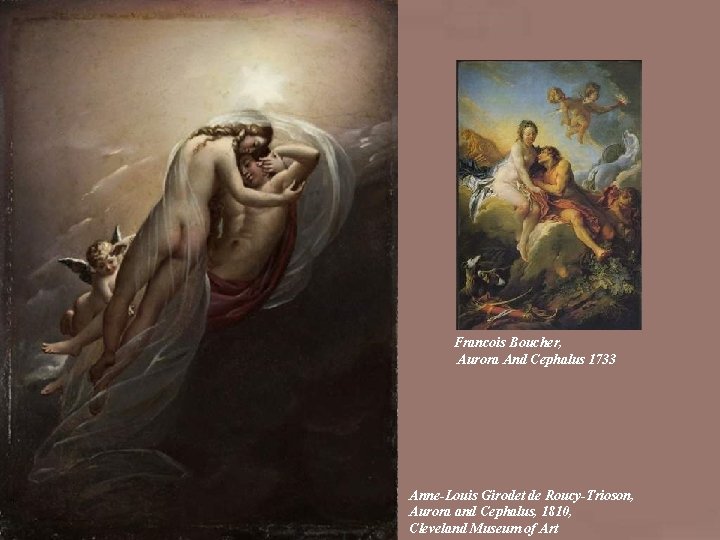
Francois Boucher, Aurora And Cephalus 1733 Anne-Louis Girodet de Roucy-Trioson, Aurora and Cephalus, 1810, Cleveland Museum of Art
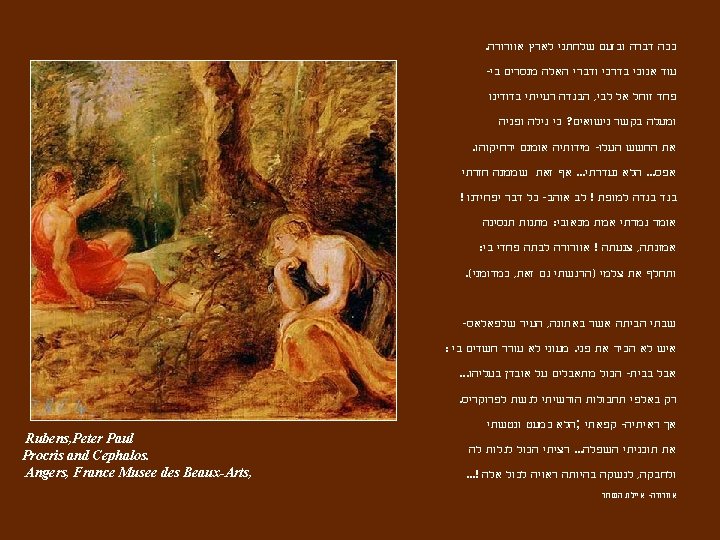
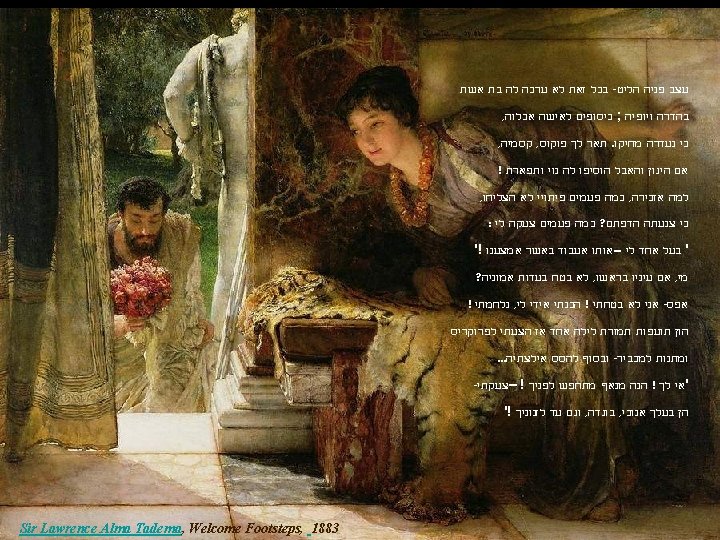
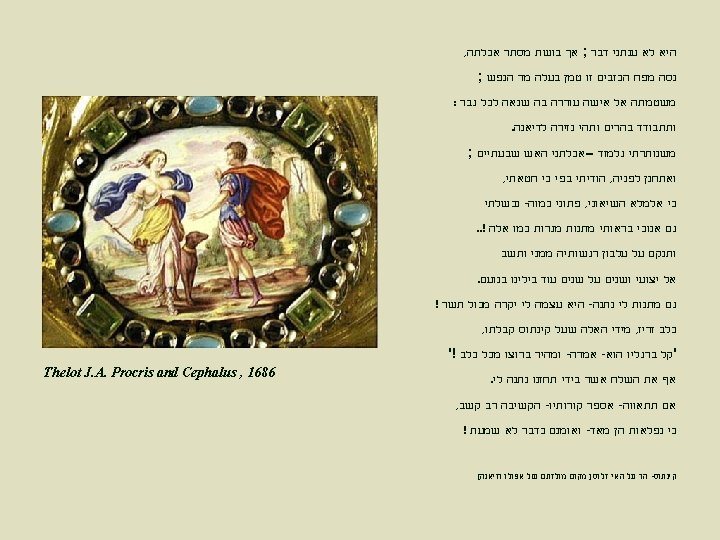
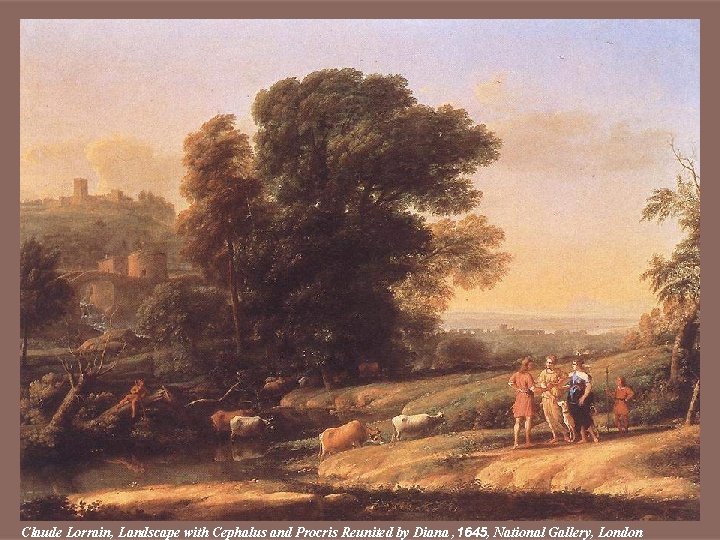
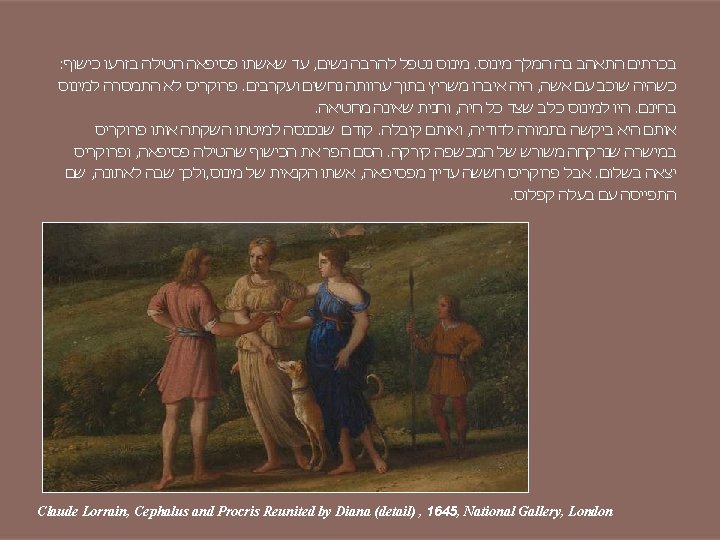
Claude Lorrain, Landscape with Cephalus and Procris Reunited by Diana , 1645, National Gallery, London
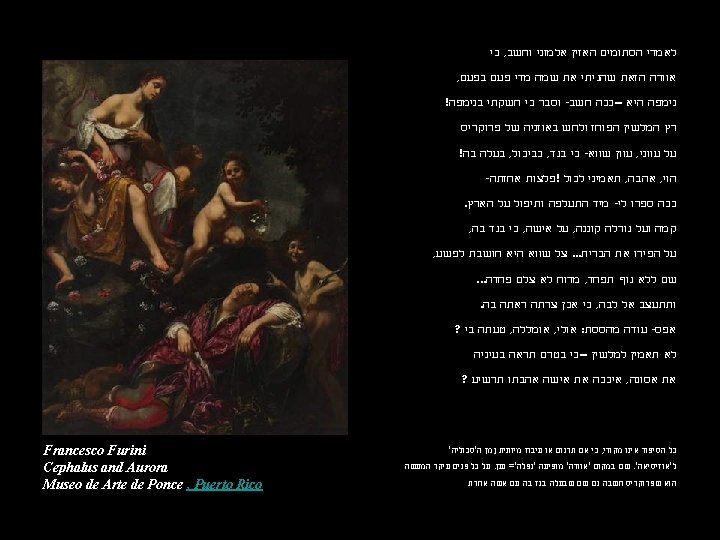
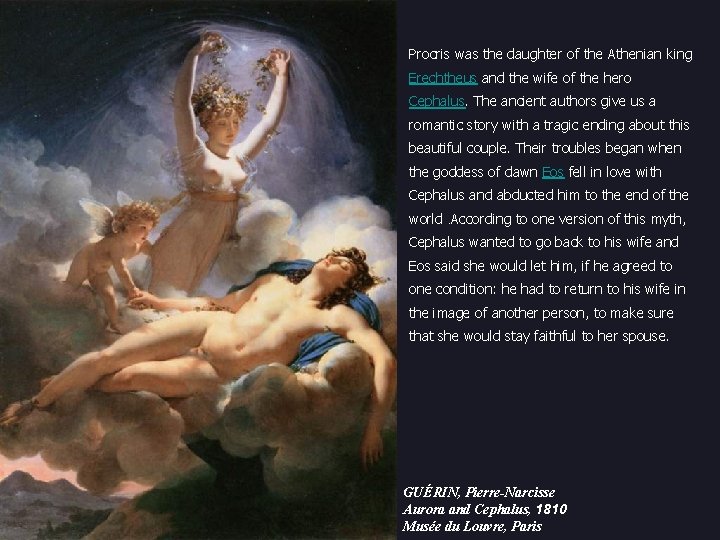
Procris was the daughter of the Athenian king Erechtheus and the wife of the hero Cephalus. The ancient authors give us a romantic story with a tragic ending about this beautiful couple. Their troubles began when the goddess of dawn Eos fell in love with Cephalus and abducted him to the end of the world. According to one version of this myth, Cephalus wanted to go back to his wife and Eos said she would let him, if he agreed to one condition: he had to return to his wife in the image of another person, to make sure that she would stay faithful to her spouse. GUÉRIN, Pierre-Narcisse Aurora and Cephalus, 1810 Musée du Louvre, Paris
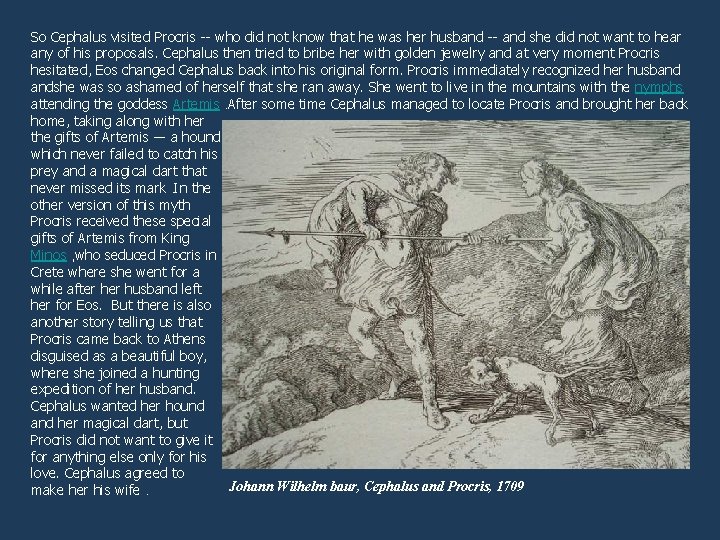
So Cephalus visited Procris -- who did not know that he was her husband -- and she did not want to hear any of his proposals. Cephalus then tried to bribe her with golden jewelry and at very moment Procris hesitated, Eos changed Cephalus back into his original form. Procris immediately recognized her husband andshe was so ashamed of herself that she ran away. She went to live in the mountains with the nymphs attending the goddess Artemis. After some time Cephalus managed to locate Procris and brought her back home, taking along with her the gifts of Artemis –- a hound which never failed to catch his prey and a magical dart that never missed its mark. In the other version of this myth Procris received these special gifts of Artemis from King Minos , who seduced Procris in Crete where she went for a while after husband left her for Eos. But there is also another story telling us that Procris came back to Athens disguised as a beautiful boy, where she joined a hunting expedition of her husband. Cephalus wanted her hound and her magical dart, but Procris did not want to give it for anything else only for his love. Cephalus agreed to Johann Wilhelm baur, Cephalus and Procris, 1709 make her his wife.
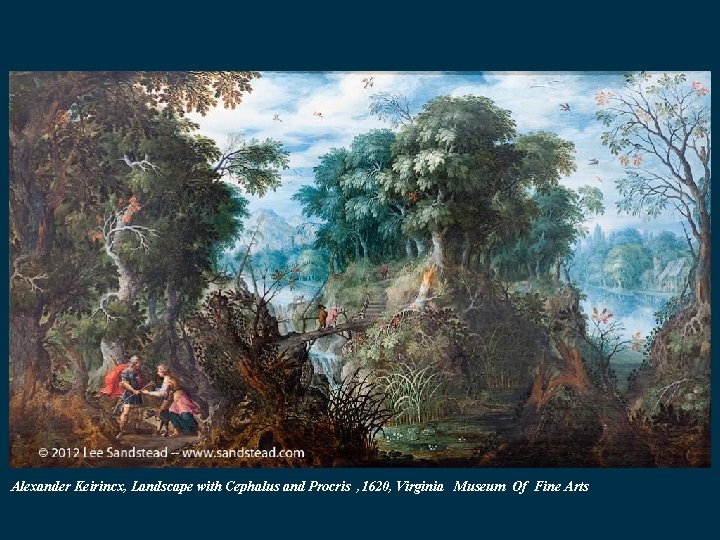
Alexander Keirincx, Landscape with Cephalus and Procris , 1620, Virginia Museum Of Fine Arts
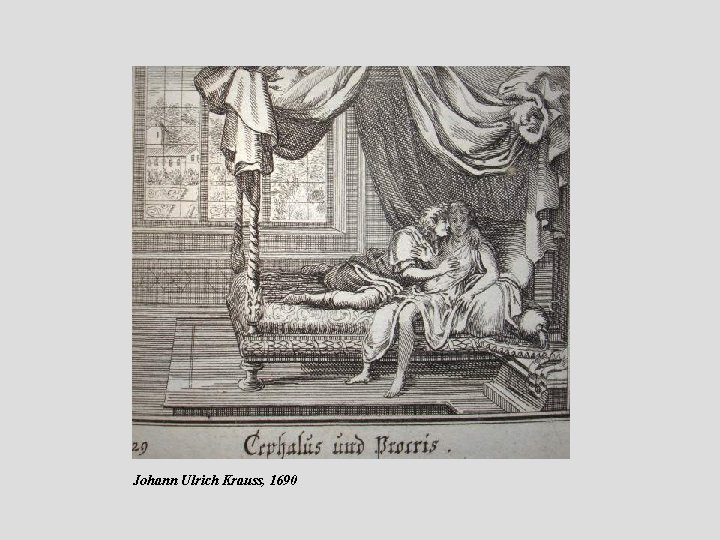
Johann Ulrich Krauss, 1690
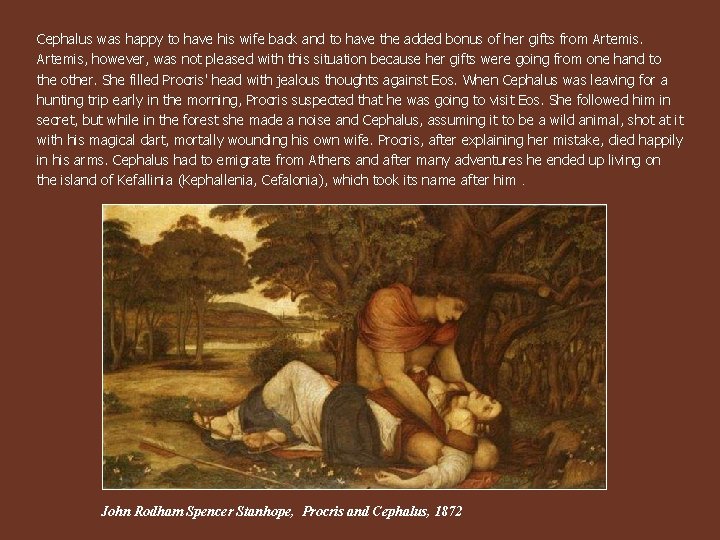
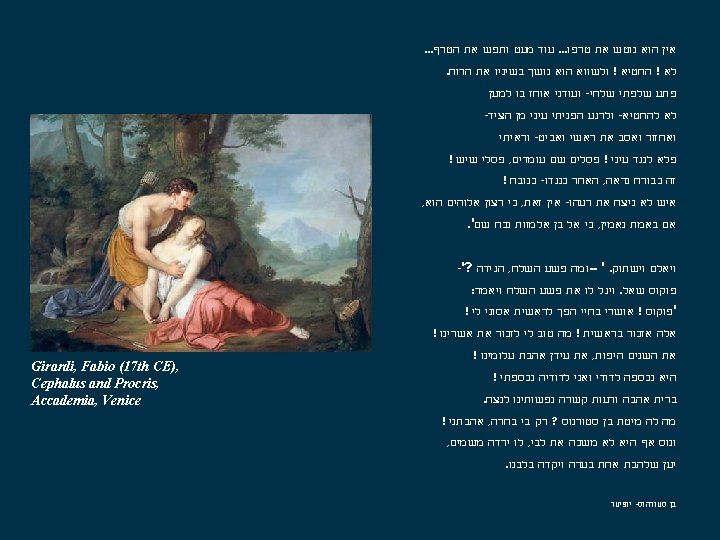
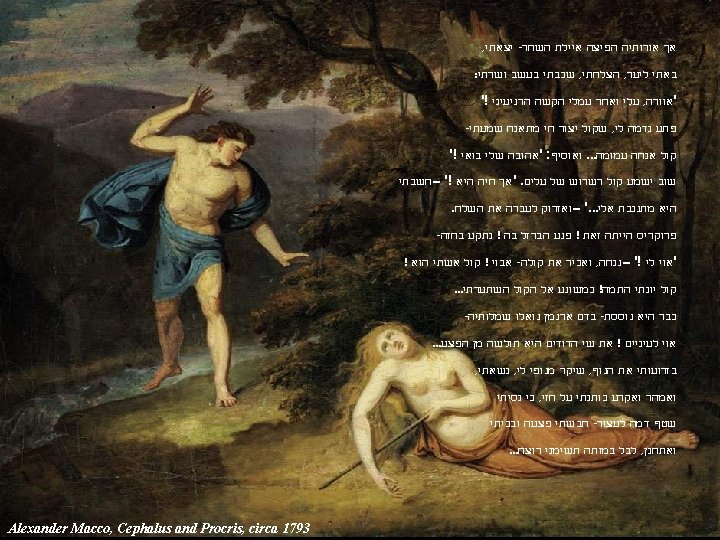
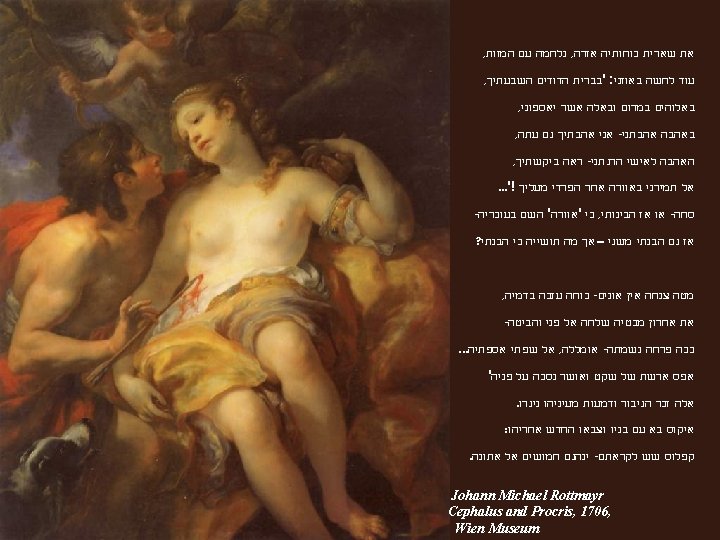
Cephalus was happy to have his wife back and to have the added bonus of her gifts from Artemis, however, was not pleased with this situation because her gifts were going from one hand to the other. She filled Procris' head with jealous thoughts against Eos. When Cephalus was leaving for a hunting trip early in the morning, Procris suspected that he was going to visit Eos. She followed him in secret, but while in the forest she made a noise and Cephalus, assuming it to be a wild animal, shot at it with his magical dart, mortally wounding his own wife. Procris, after explaining her mistake, died happily in his arms. Cephalus had to emigrate from Athens and after many adventures he ended up living on the island of Kefallinia (Kephallenia, Cefalonia), which took its name after him. John Rodham Spencer Stanhope, Procris and Cephalus, 1872
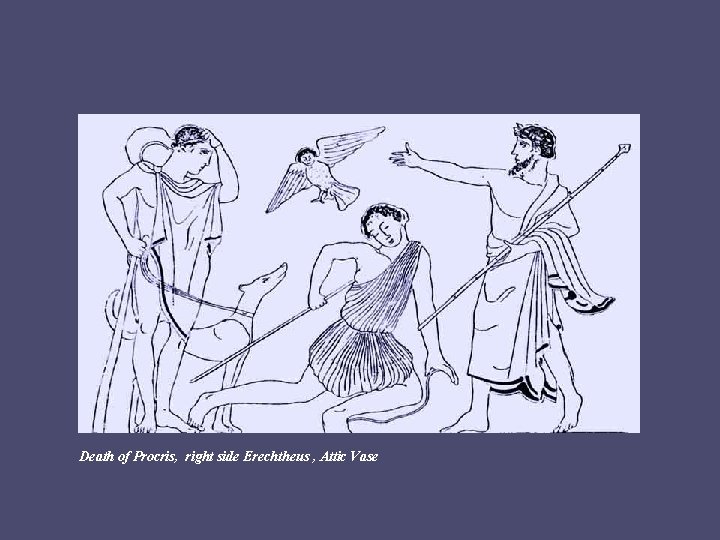
Death of Procris, right side Erechtheus , Attic Vase
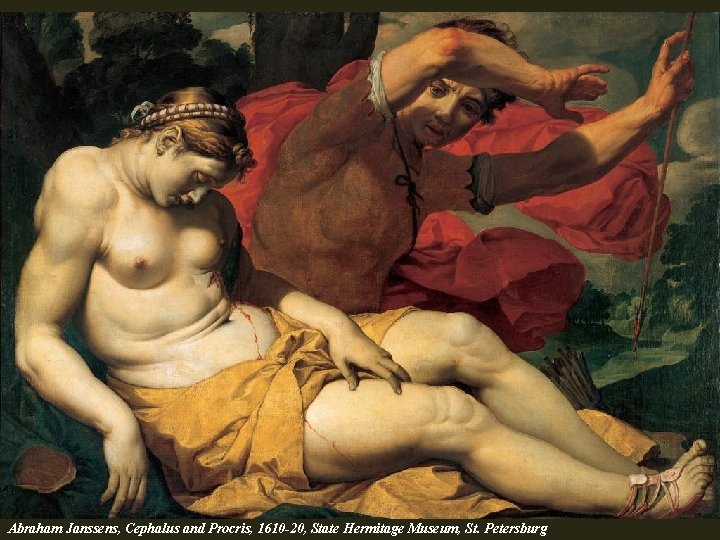
Abraham Janssens, Cephalus and Procris, 1610 -20, State Hermitage Museum, St. Petersburg
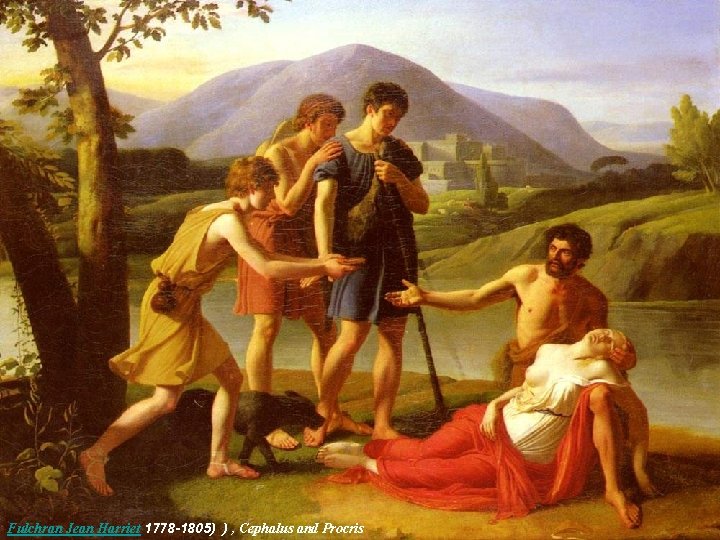
Fulchran Jean Harriet 1778 -1805) ) , Cephalus and Procris
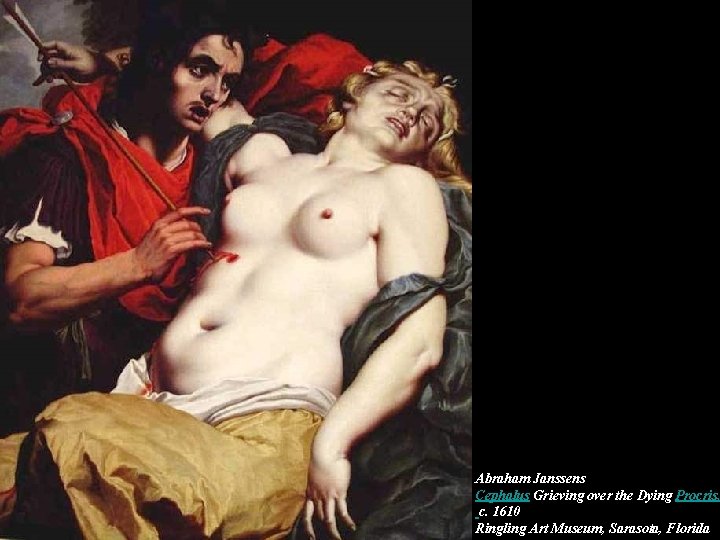
Abraham Janssens Cephalus Grieving over the Dying Procris, c. 1610 Ringling Art Museum, Sarasota, Florida
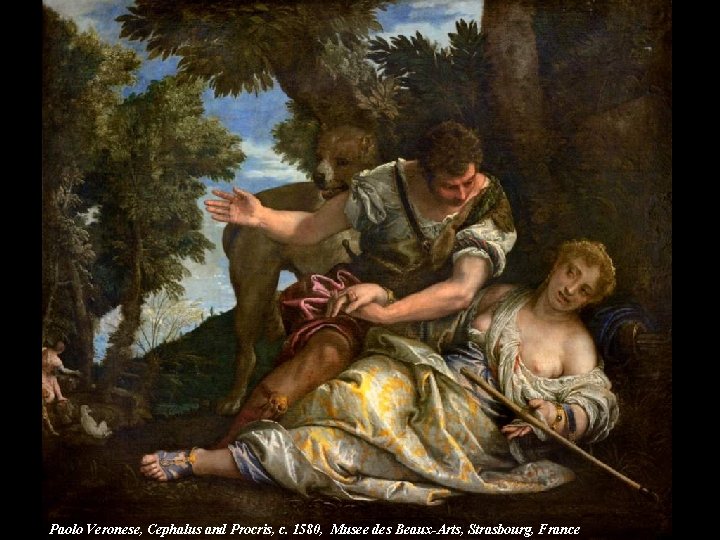
Paolo Veronese, Cephalus and Procris, c. 1580, Musee des Beaux-Arts, Strasbourg, France
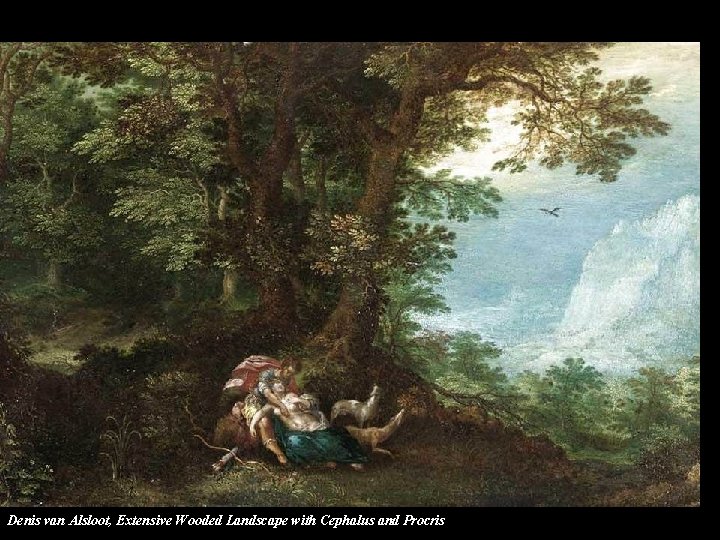
Denis van Alsloot, Extensive Wooded Landscape with Cephalus and Procris
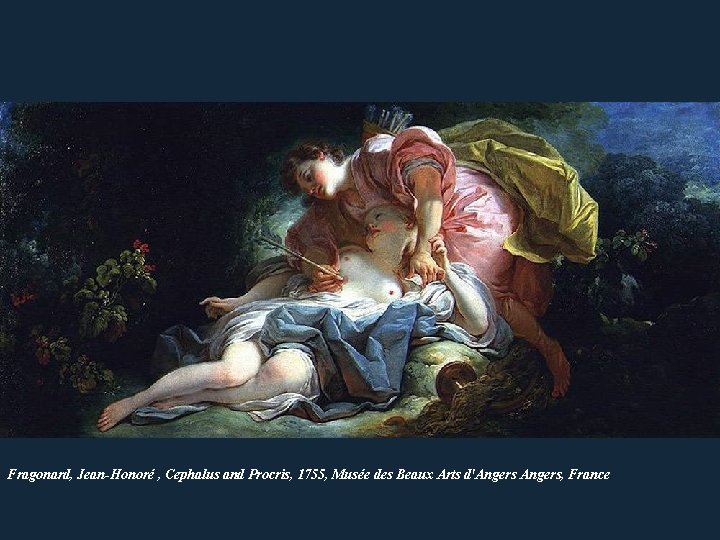
Fragonard, Jean-Honoré , Cephalus and Procris, 1755, Musée des Beaux Arts d'Angers, France
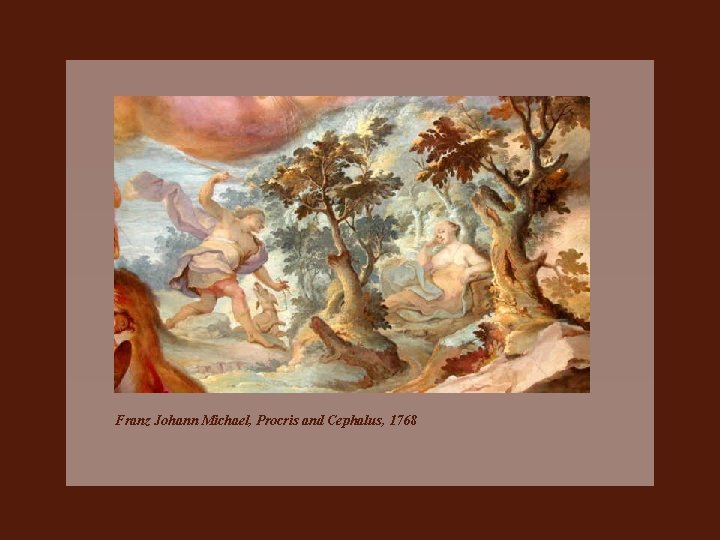
Franz Johann Michael, Procris and Cephalus, 1768
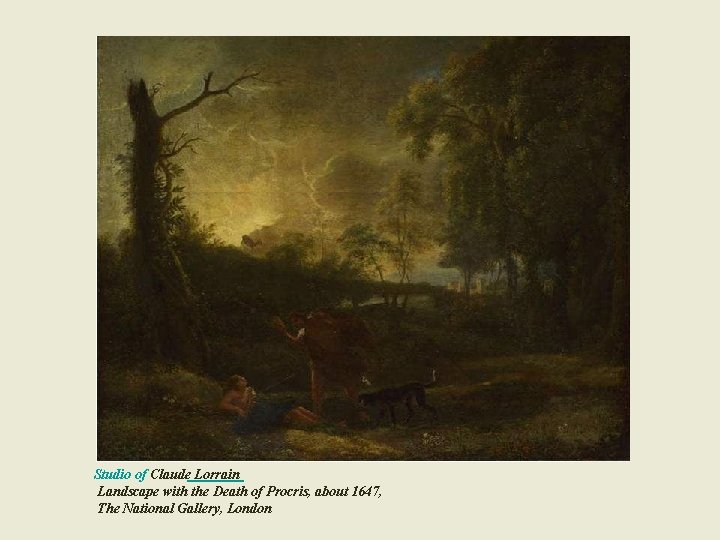
Studio of Claude Lorrain Landscape with the Death of Procris, about 1647, The National Gallery, London
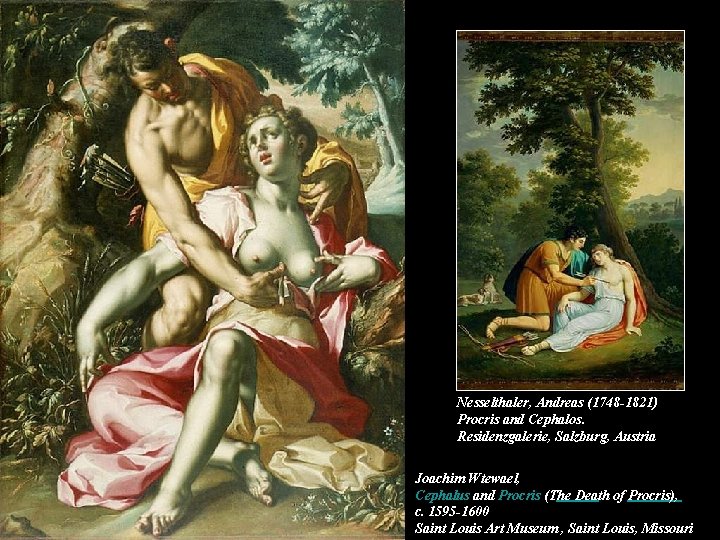
Nesselthaler, Andreas (1748 -1821) Procris and Cephalos. Residenzgalerie, Salzburg, Austria Joachim Wtewael, Cephalus and Procris (The Death of Procris), c. 1595 -1600 Saint Louis Art Museum , Saint Louis, Missouri
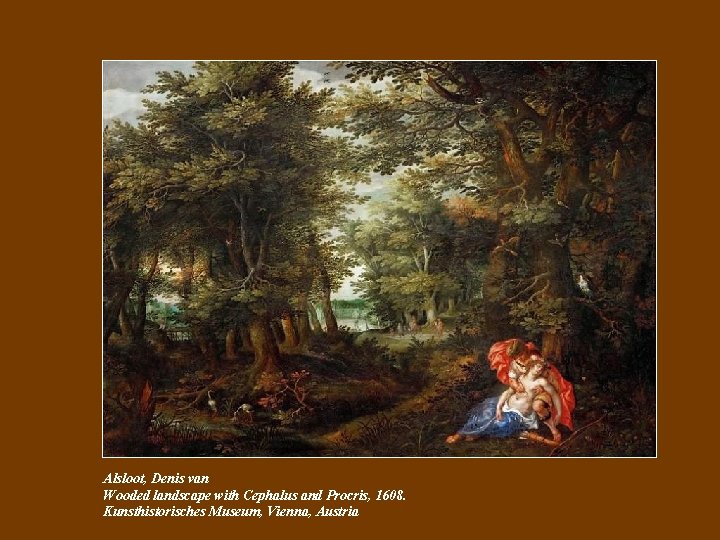
Alsloot, Denis van Wooded landscape with Cephalus and Procris, 1608. Kunsthistorisches Museum, Vienna, Austria
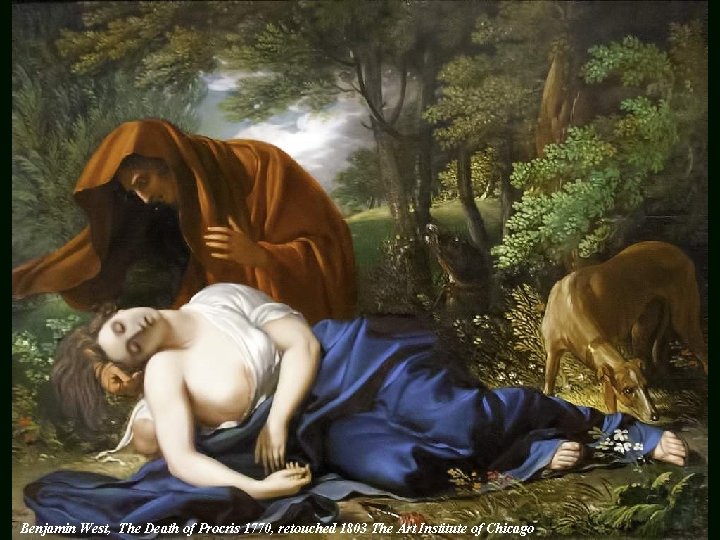
Benjamin West, The Death of Procris 1770, retouched 1803 The Art Institute of Chicago
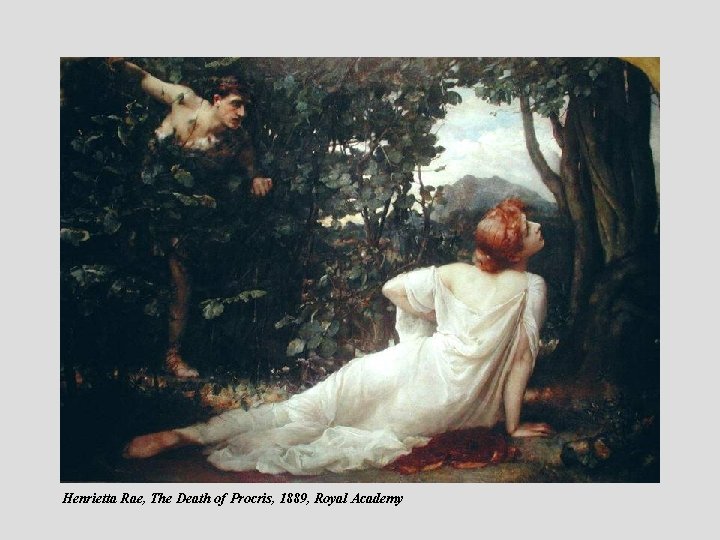
Henrietta Rae, The Death of Procris, 1889, Royal Academy
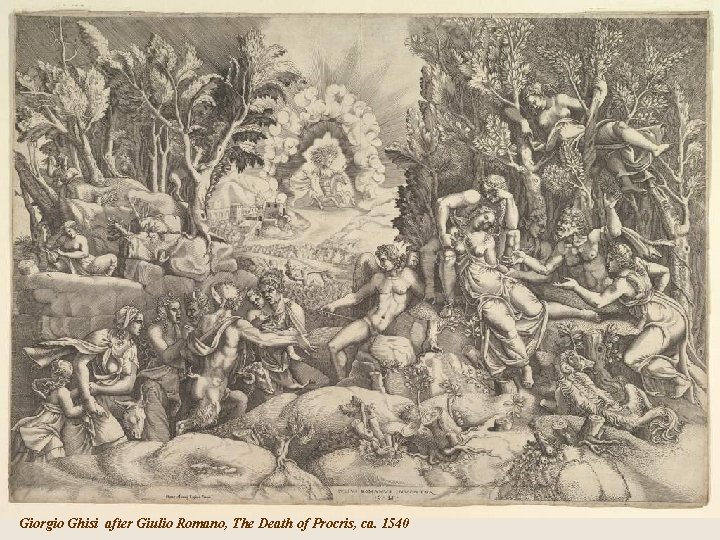
Giorgio Ghisi after Giulio Romano, The Death of Procris, ca. 1540
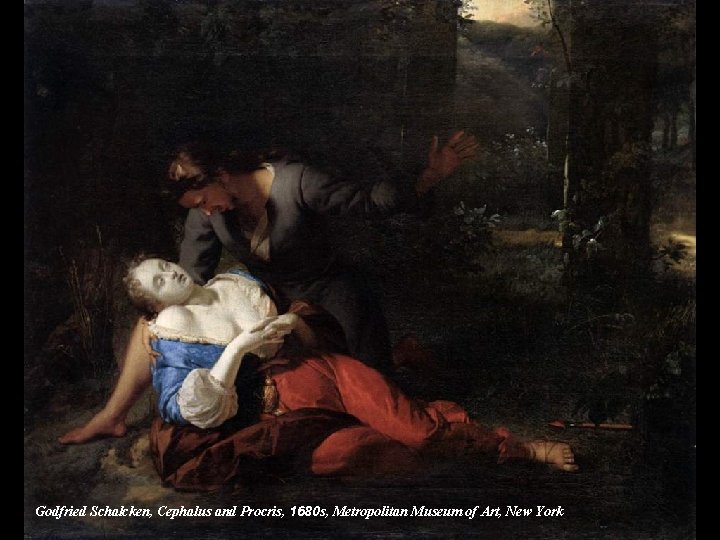
Godfried Schalcken, Cephalus and Procris, 1680 s, Metropolitan Museum of Art, New York
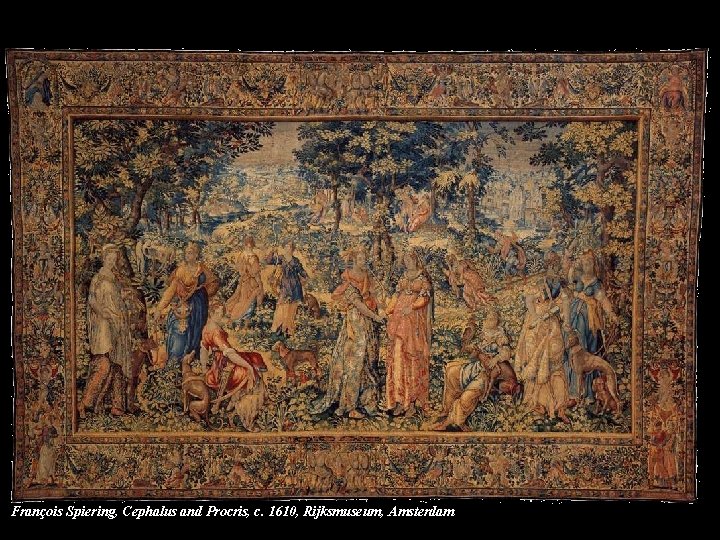
François Spiering, Cephalus and Procris, c. 1610, Rijksmuseum, Amsterdam
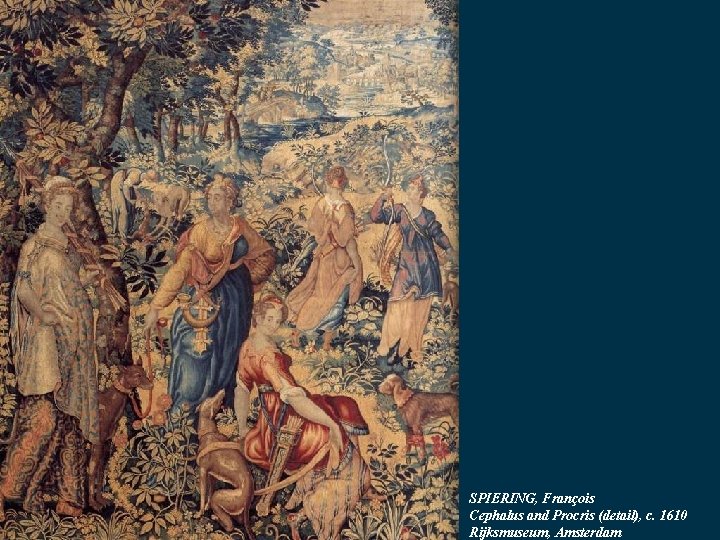
SPIERING, François Cephalus and Procris (detail), c. 1610 Rijksmuseum, Amsterdam
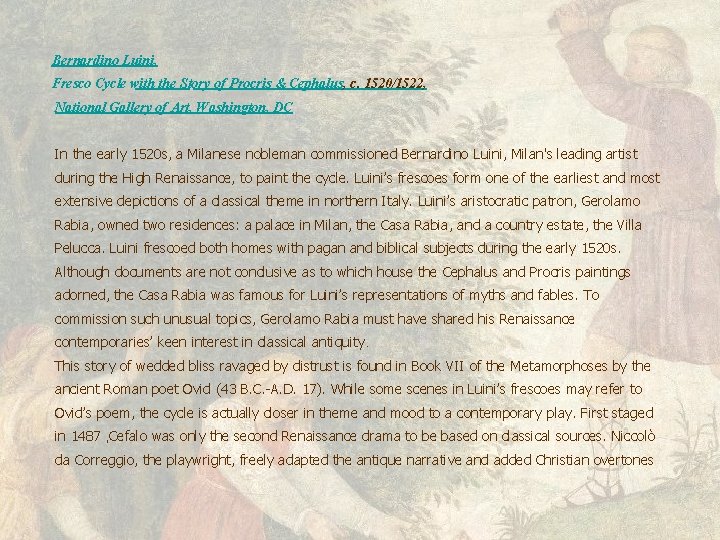
Bernardino Luini, Fresco Cycle with the Story of Procris & Cephalus, c. 1520/1522, National Gallery of Art, Washington, DC In the early 1520 s, a Milanese nobleman commissioned Bernardino Luini, Milan's leading artist during the High Renaissance, to paint the cycle. Luini’s frescoes form one of the earliest and most extensive depictions of a classical theme in northern Italy. Luini’s aristocratic patron, Gerolamo Rabia, owned two residences: a palace in Milan, the Casa Rabia, and a country estate, the Villa Pelucca. Luini frescoed both homes with pagan and biblical subjects during the early 1520 s. Although documents are not conclusive as to which house the Cephalus and Procris paintings adorned, the Casa Rabia was famous for Luini’s representations of myths and fables. To commission such unusual topics, Gerolamo Rabia must have shared his Renaissance contemporaries’ keen interest in classical antiquity. This story of wedded bliss ravaged by distrust is found in Book VII of the Metamorphoses by the ancient Roman poet Ovid (43 B. C. -A. D. 17). While some scenes in Luini’s frescoes may refer to Ovid’s poem, the cycle is actually closer in theme and mood to a contemporary play. First staged in 1487 , Cefalo was only the second Renaissance drama to be based on classical sources. Niccolò da Correggio, the playwright, freely adapted the antique narrative and added Christian overtones
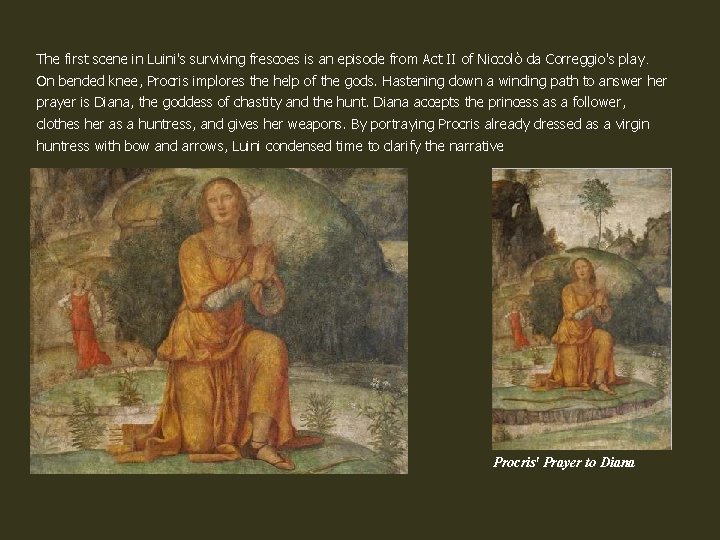
The first scene in Luini's surviving frescoes is an episode from Act II of Niccolò da Correggio's play. On bended knee, Procris implores the help of the gods. Hastening down a winding path to answer her prayer is Diana, the goddess of chastity and the hunt. Diana accepts the princess as a follower, clothes her as a huntress, and gives her weapons. By portraying Procris already dressed as a virgin huntress with bow and arrows, Luini condensed time to clarify the narrative Procris' Prayer to Diana
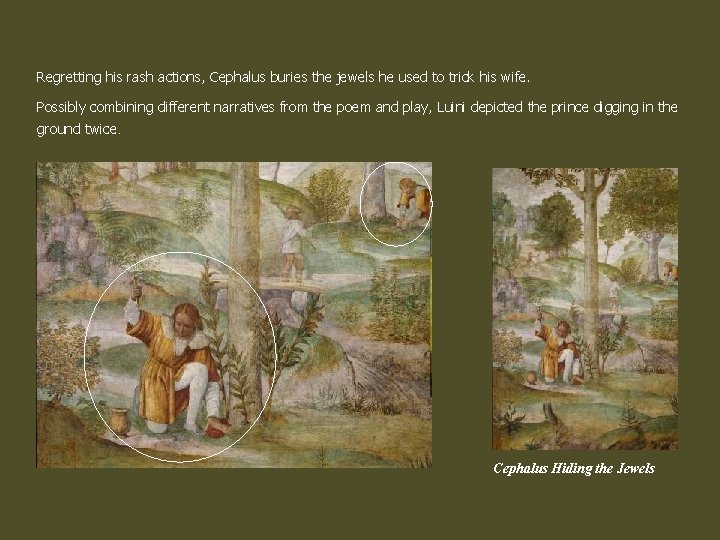
Regretting his rash actions, Cephalus buries the jewels he used to trick his wife. Possibly combining different narratives from the poem and play, Luini depicted the prince digging in the ground twice. Cephalus Hiding the Jewels
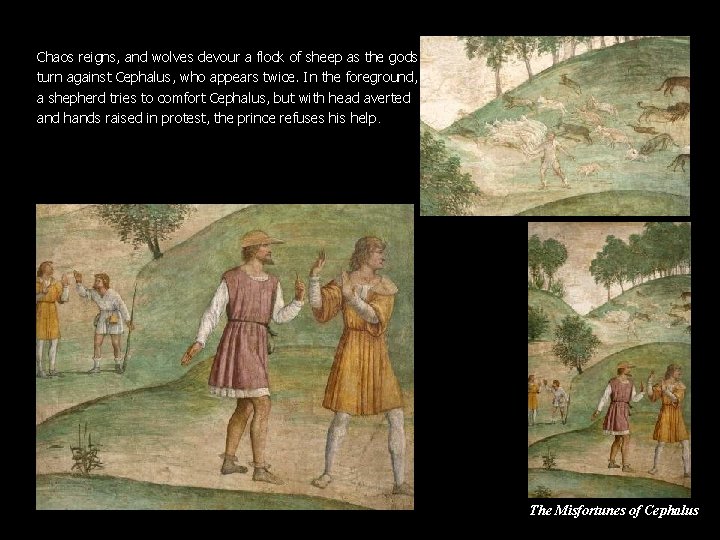
Chaos reigns, and wolves devour a flock of sheep as the gods turn against Cephalus, who appears twice. In the foreground, a shepherd tries to comfort Cephalus, but with head averted and hands raised in protest, the prince refuses his help. The Misfortunes of Cephalus
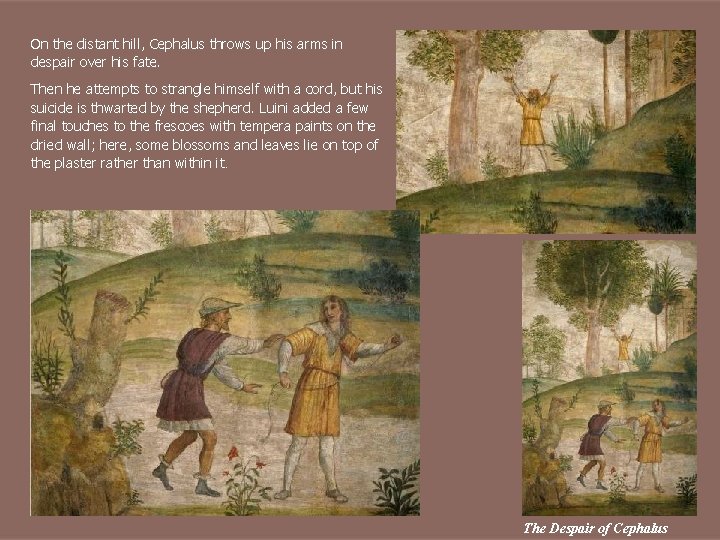
On the distant hill, Cephalus throws up his arms in despair over his fate. Then he attempts to strangle himself with a cord, but his suicide is thwarted by the shepherd. Luini added a few final touches to the frescoes with tempera paints on the dried wall; here, some blossoms and leaves lie on top of the plaster rather than within it. The Despair of Cephalus
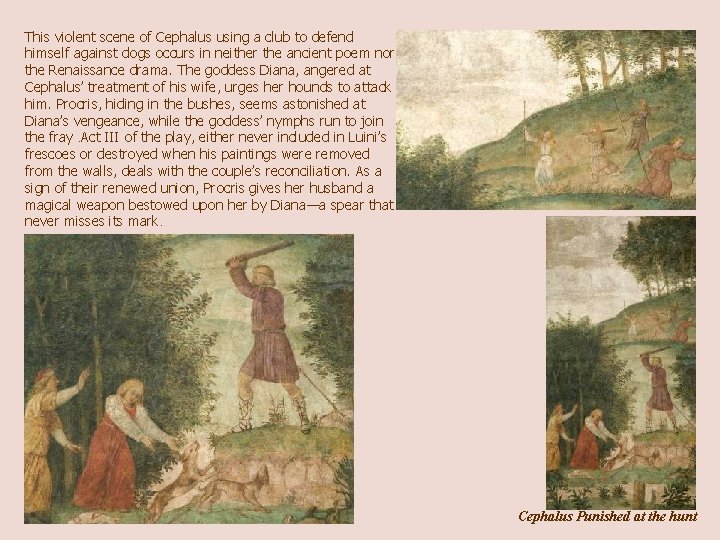
This violent scene of Cephalus using a club to defend himself against dogs occurs in neither the ancient poem nor the Renaissance drama. The goddess Diana, angered at Cephalus’ treatment of his wife, urges her hounds to attack him. Procris, hiding in the bushes, seems astonished at Diana’s vengeance, while the goddess’ nymphs run to join the fray. Act III of the play, either never included in Luini’s frescoes or destroyed when his paintings were removed from the walls, deals with the couple’s reconciliation. As a sign of their renewed union, Procris gives her husband a magical weapon bestowed upon her by Diana—a spear that never misses its mark. Cephalus Punished at the hunt
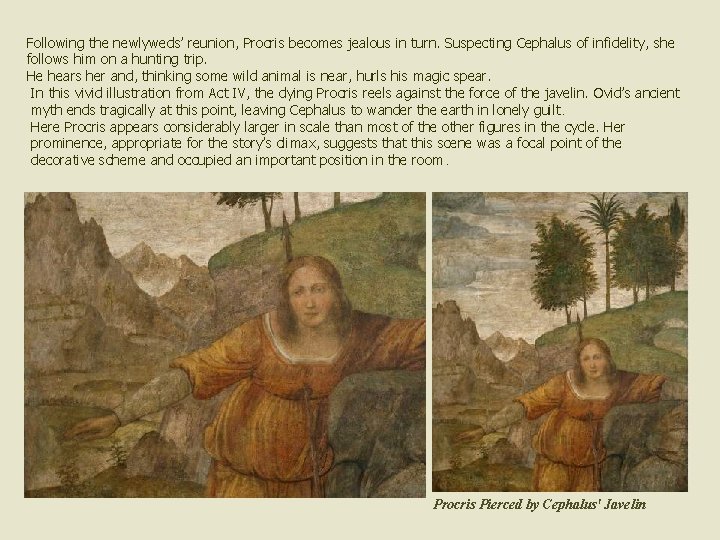
Following the newlyweds’ reunion, Procris becomes jealous in turn. Suspecting Cephalus of infidelity, she follows him on a hunting trip. He hears her and, thinking some wild animal is near, hurls his magic spear. In this vivid illustration from Act IV, the dying Procris reels against the force of the javelin. Ovid’s ancient myth ends tragically at this point, leaving Cephalus to wander the earth in lonely guilt. Here Procris appears considerably larger in scale than most of the other figures in the cycle. Her prominence, appropriate for the story’s climax, suggests that this scene was a focal point of the decorative scheme and occupied an important position in the room. Procris Pierced by Cephalus' Javelin
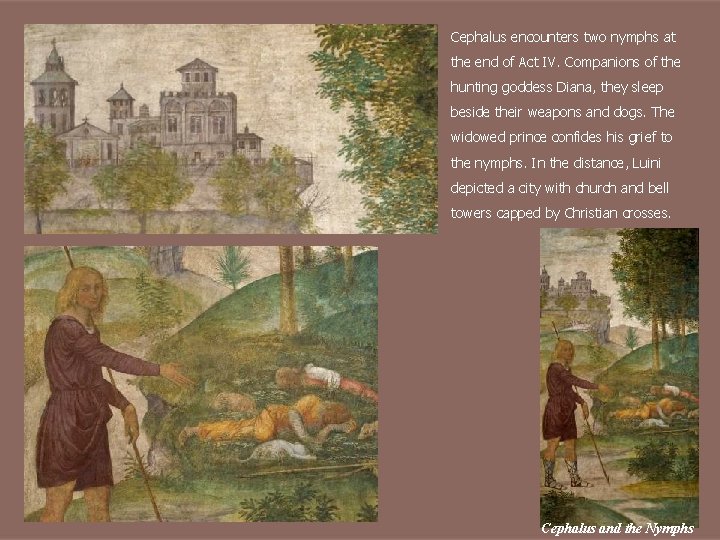
Cephalus encounters two nymphs at the end of Act IV. Companions of the hunting goddess Diana, they sleep beside their weapons and dogs. The widowed prince confides his grief to the nymphs. In the distance, Luini depicted a city with church and bell towers capped by Christian crosses. Cephalus and the Nymphs
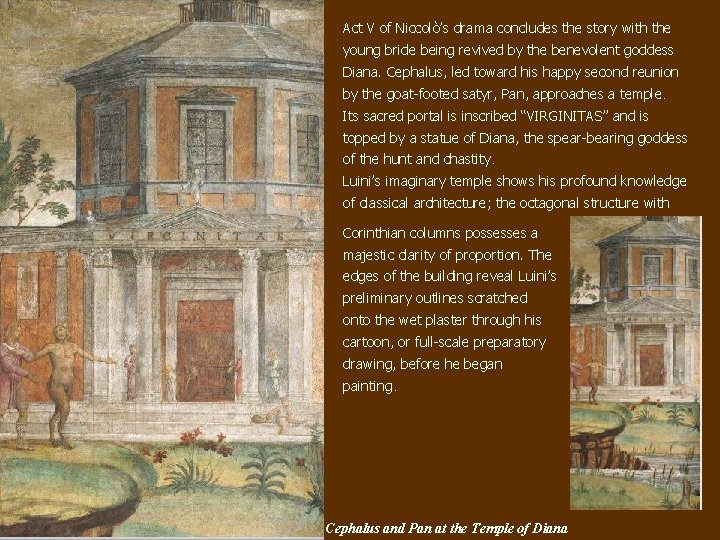
Act V of Niccolò’s drama concludes the story with the young bride being revived by the benevolent goddess Diana. Cephalus, led toward his happy second reunion by the goat-footed satyr, Pan, approaches a temple. Its sacred portal is inscribed “VIRGINITAS” and is topped by a statue of Diana, the spear-bearing goddess of the hunt and chastity. Luini’s imaginary temple shows his profound knowledge of classical architecture; the octagonal structure with Corinthian columns possesses a majestic clarity of proportion. The edges of the building reveal Luini’s preliminary outlines scratched onto the wet plaster through his cartoon, or full-scale preparatory drawing, before he began painting. Cephalus and Pan at the Temple of Diana
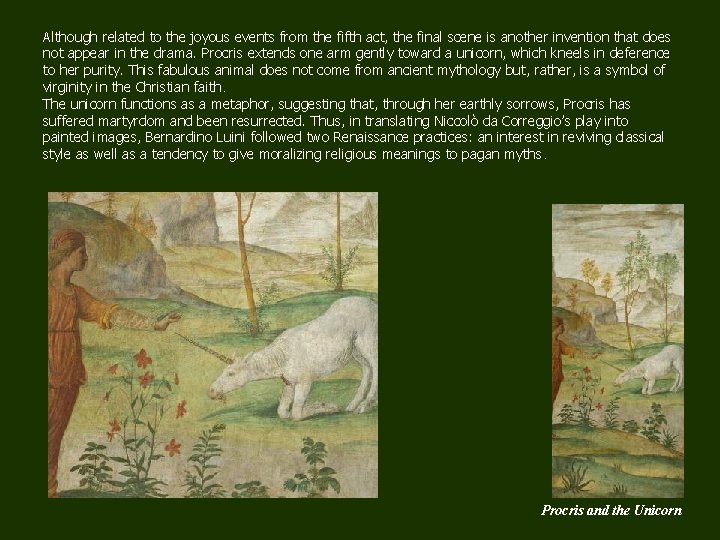
Although related to the joyous events from the fifth act, the final scene is another invention that does not appear in the drama. Procris extends one arm gently toward a unicorn, which kneels in deference to her purity. This fabulous animal does not come from ancient mythology but, rather, is a symbol of virginity in the Christian faith. The unicorn functions as a metaphor, suggesting that, through her earthly sorrows, Procris has suffered martyrdom and been resurrected. Thus, in translating Niccolò da Correggio’s play into painted images, Bernardino Luini followed two Renaissance practices: an interest in reviving classical style as well as a tendency to give moralizing religious meanings to pagan myths. Procris and the Unicorn
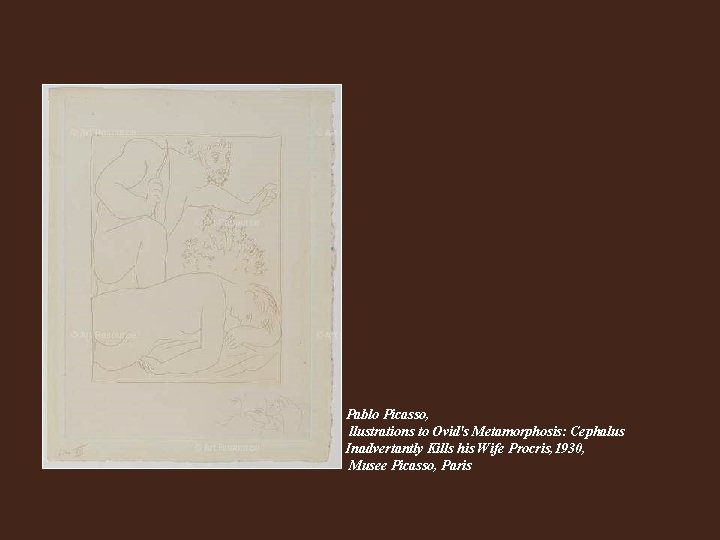
Pablo Picasso, llustrations to Ovid's Metamorphosis: Cephalus Inadvertantly Kills his Wife Procris, 1930, Musee Picasso, Paris
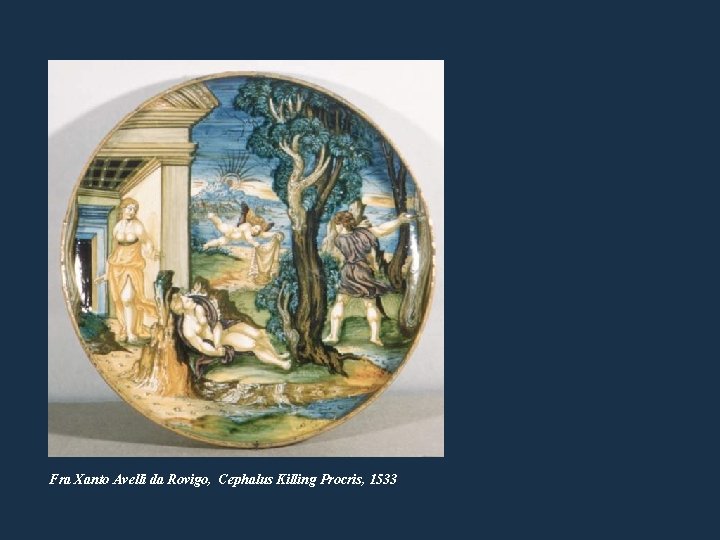
Fra Xanto Avelli da Rovigo, Cephalus Killing Procris, 1533
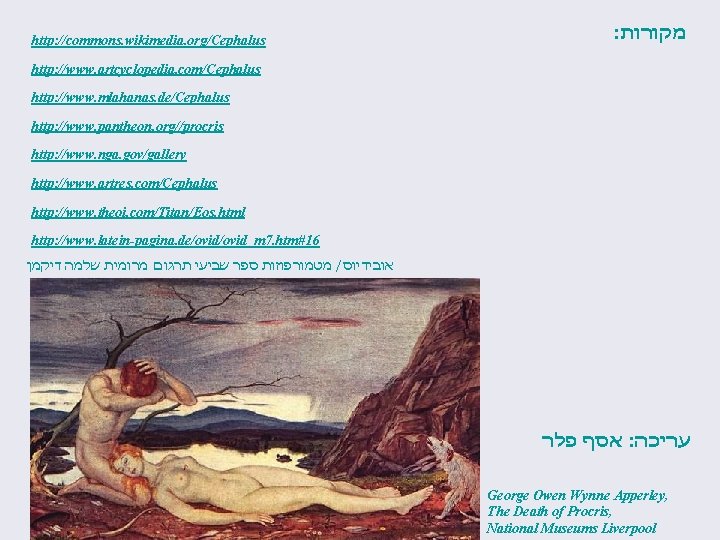
http: //commons. wikimedia. org/Cephalus : מקורות http: //www. artcyclopedia. com/Cephalus http: //www. mlahanas. de/Cephalus http: //www. pantheon. org//procris http: //www. nga. gov/gallery http: //www. artres. com/Cephalus http: //www. theoi. com/Titan/Eos. html http: //www. latein-pagina. de/ovid_m 7. htm#16 מטמורפוזות ספר שביעי תרגום מרומית שלמה דיקמן / אובידיוס אסף פלר : עריכה George Owen Wynne Apperley, The Death of Procris, National Museums Liverpool
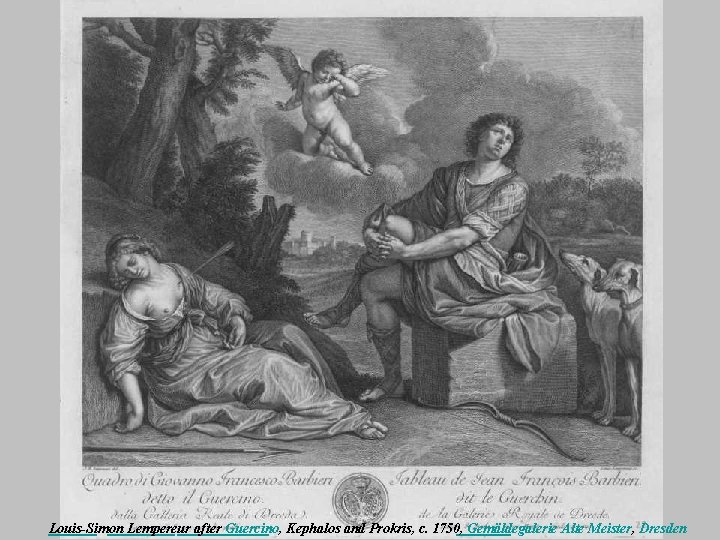
Louis-Simon Lempereur after Guercino, Kephalos and Prokris, c. 1750, Gemäldegalerie Alte Meister, Dresden

- Slides: 69