
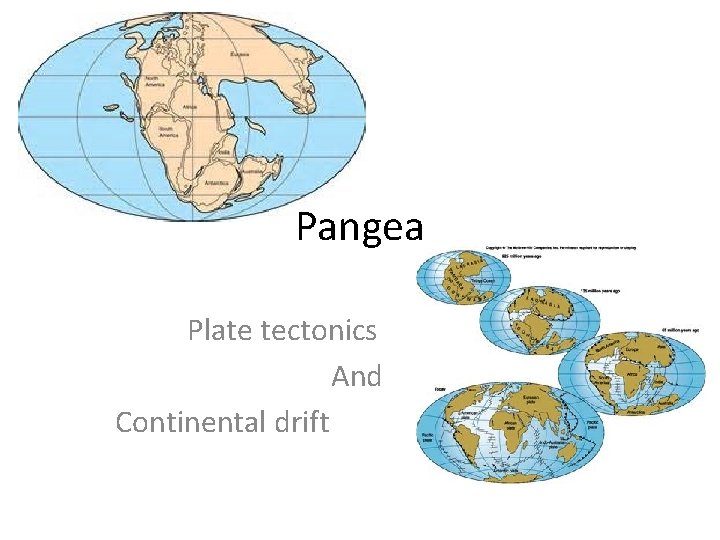
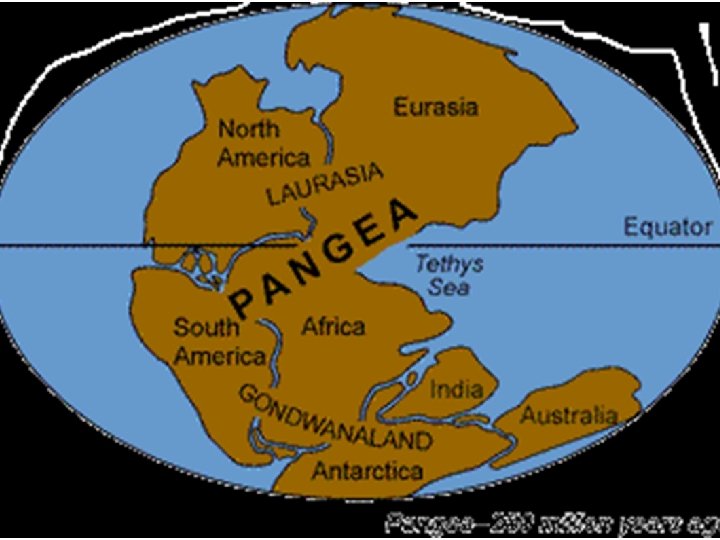
Pangea Plate tectonics And Continental drift Layers of
- Slides: 17
Pangea Plate tectonics And Continental drift
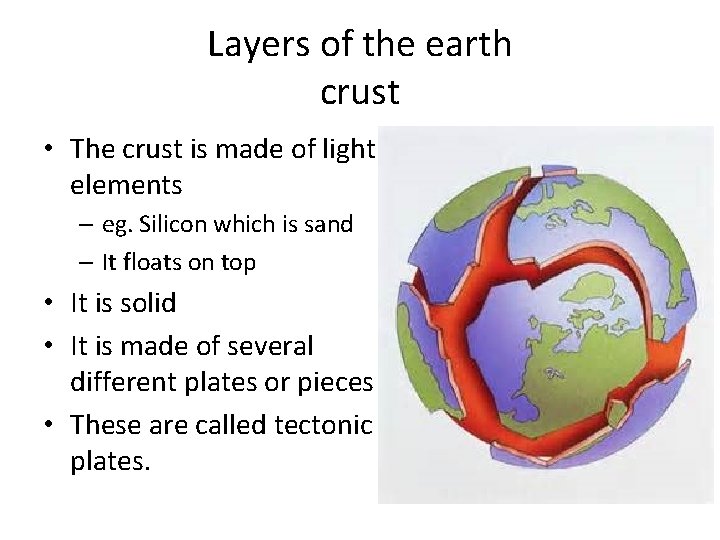
Layers of the earth crust • The crust is made of light elements – eg. Silicon which is sand – It floats on top • It is solid • It is made of several different plates or pieces • These are called tectonic plates.
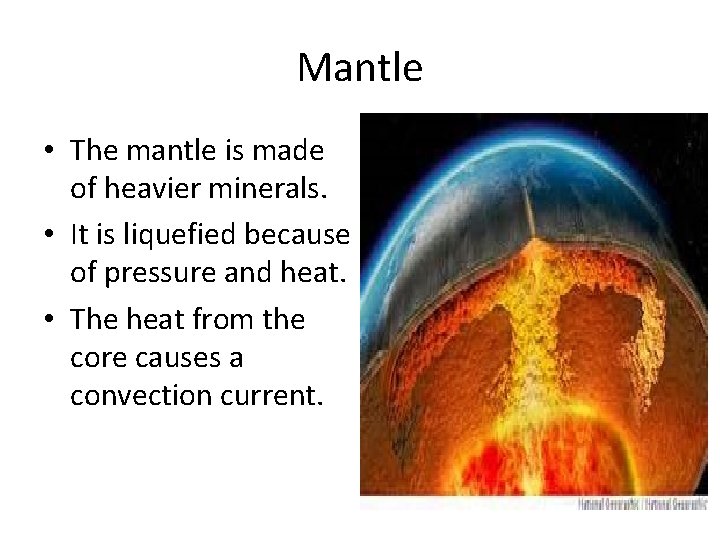
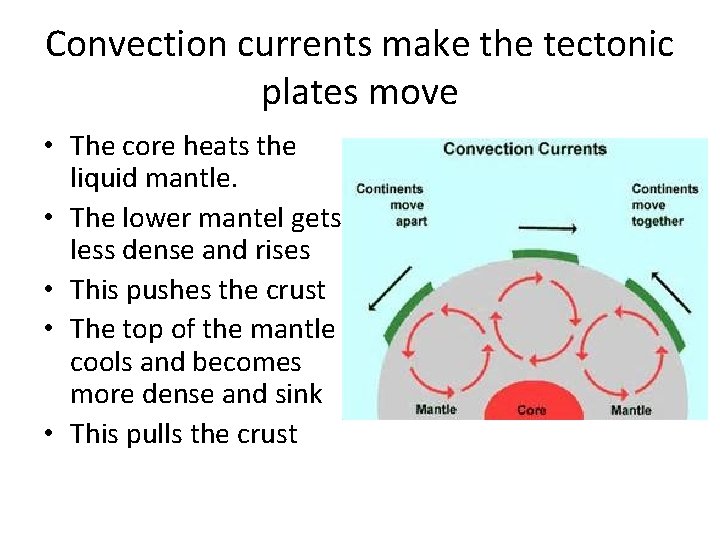
Mantle • The mantle is made of heavier minerals. • It is liquefied because of pressure and heat. • The heat from the core causes a convection current.
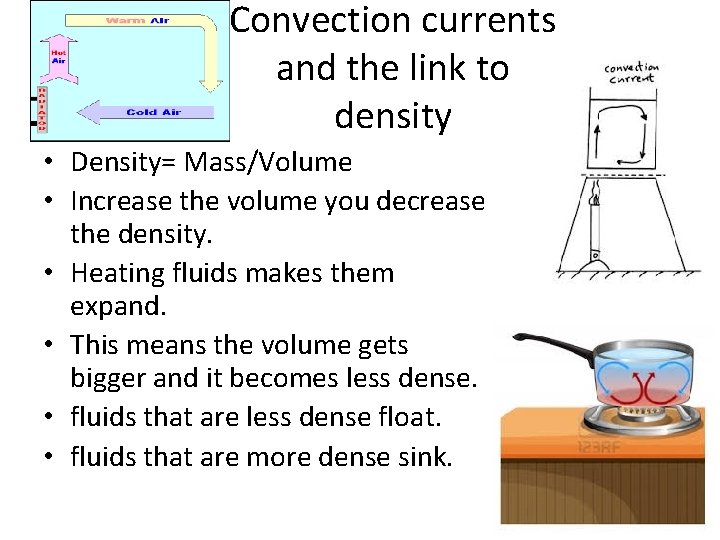
Convection currents and the link to density • Density= Mass/Volume • Increase the volume you decrease the density. • Heating fluids makes them expand. • This means the volume gets bigger and it becomes less dense. • fluids that are less dense float. • fluids that are more dense sink.
Convection currents make the tectonic plates move • The core heats the liquid mantle. • The lower mantel gets less dense and rises • This pushes the crust • The top of the mantle cools and becomes more dense and sink • This pulls the crust
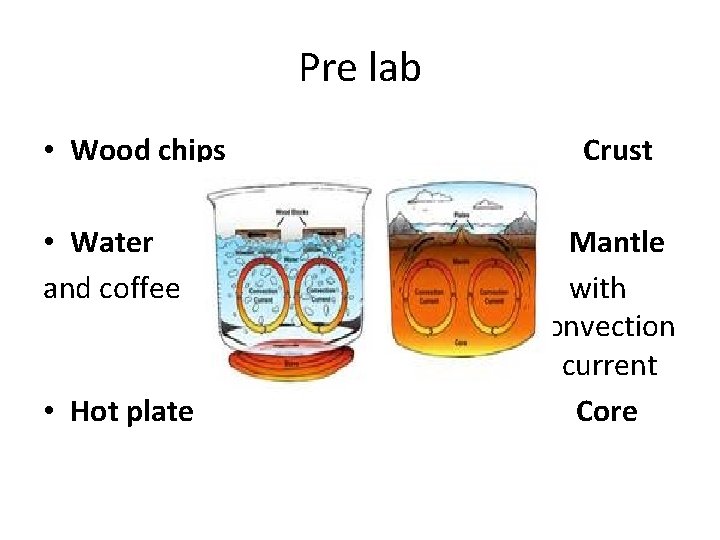
Pre lab • Wood chips • Water and coffee • Hot plate Crust Mantle with convection current Core
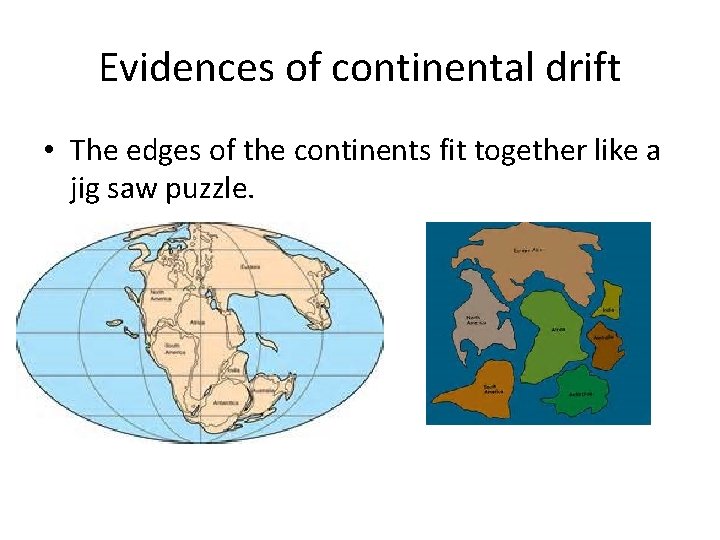
Evidences of continental drift • The edges of the continents fit together like a jig saw puzzle.
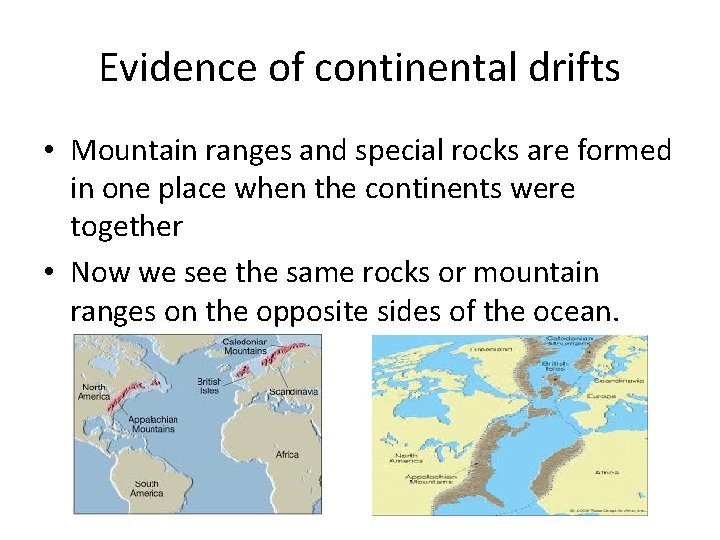
Evidence of continental drifts • Mountain ranges and special rocks are formed in one place when the continents were together • Now we see the same rocks or mountain ranges on the opposite sides of the ocean.
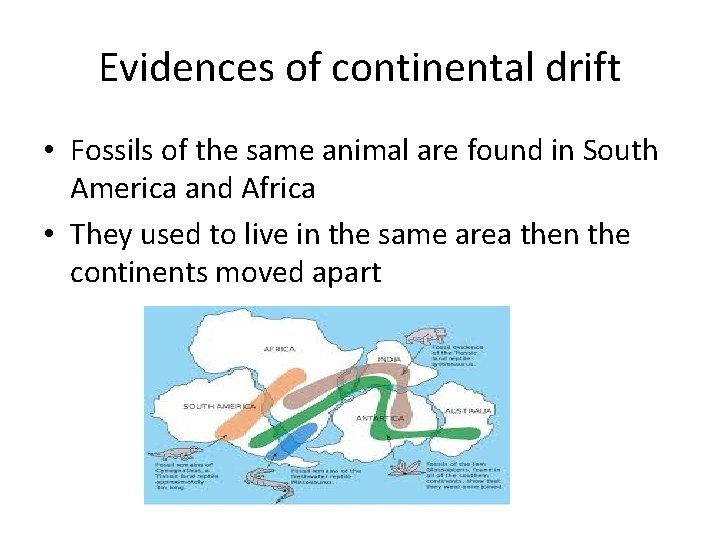
Evidences of continental drift • Fossils of the same animal are found in South America and Africa • They used to live in the same area then the continents moved apart
Evidences of continental drift • Glaciers are made in arctic cold regions • Glacial scratches on the rocks in Africa • Therefore Africa used to be in a cold place • Coal is made in tropical swamps • Arctic regions have coal • Therefore the Arctic used to be in a warm place
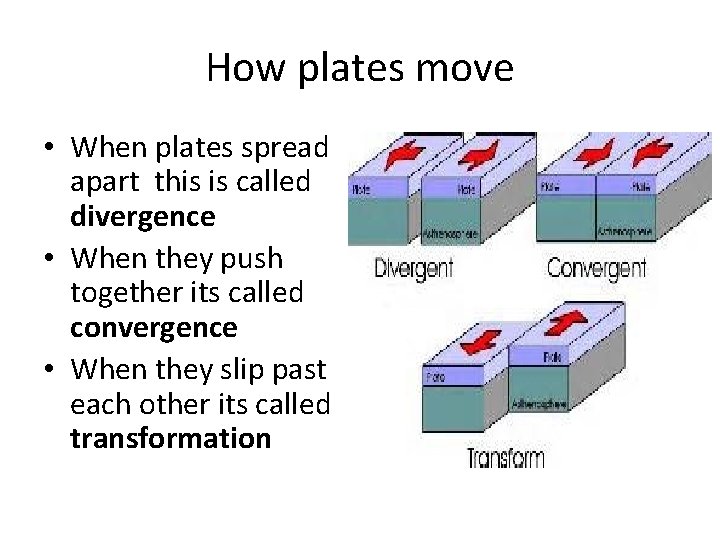
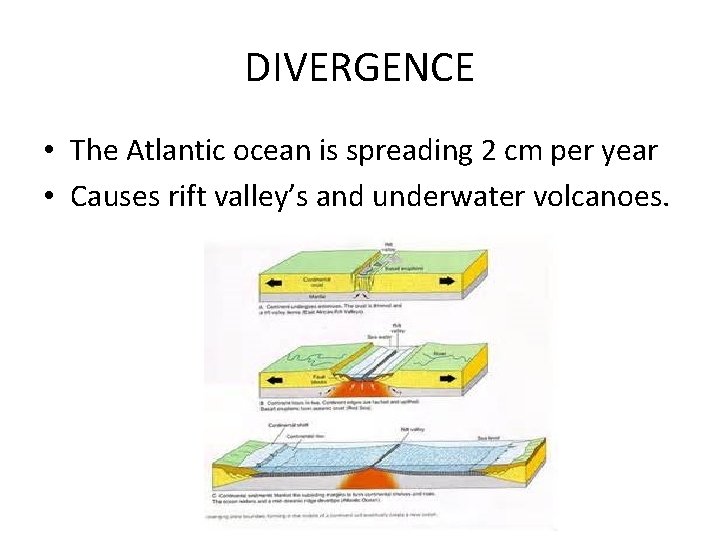
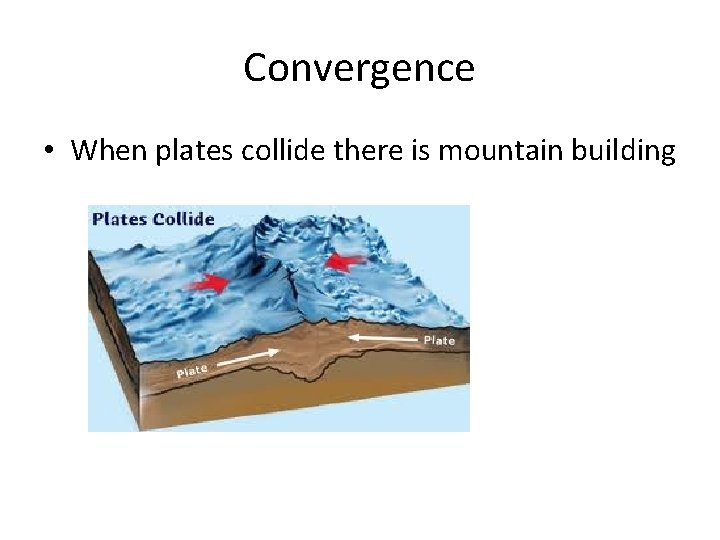
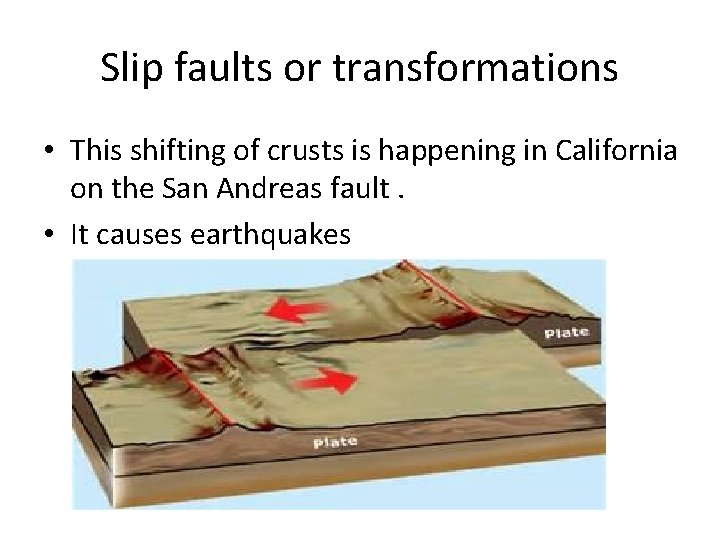
How plates move • When plates spread apart this is called divergence • When they push together its called convergence • When they slip past each other its called transformation
DIVERGENCE • The Atlantic ocean is spreading 2 cm per year • Causes rift valley’s and underwater volcanoes.
Convergence • When plates collide there is mountain building
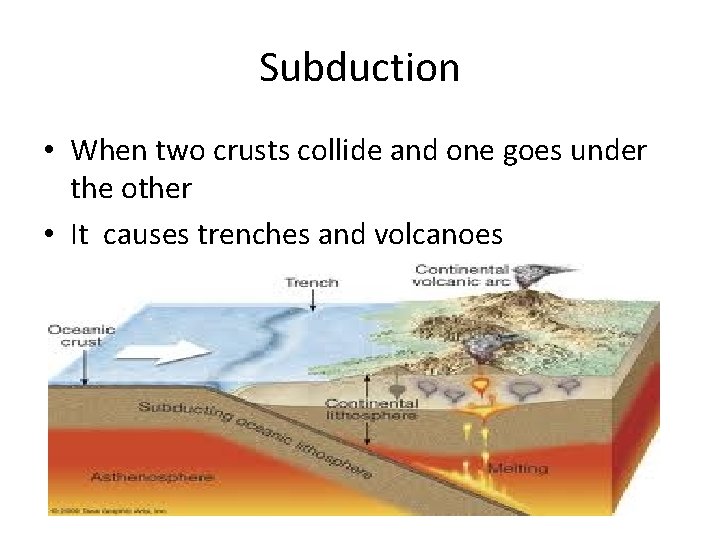
Subduction • When two crusts collide and one goes under the other • It causes trenches and volcanoes
Slip faults or transformations • This shifting of crusts is happening in California on the San Andreas fault. • It causes earthquakes
Read text book • Pages 317 -325 • Answer the Memory check questions P 325 • Question 1 -8