
Panfacial fractures Sequencing of repair Learning objectives Apply
Panfacial fractures Sequencing of repair
Learning objectives • • • Apply the principles of fixation in clinical cases Describe the sequence of repair Prioritize management of injuries in the polytrauma patient
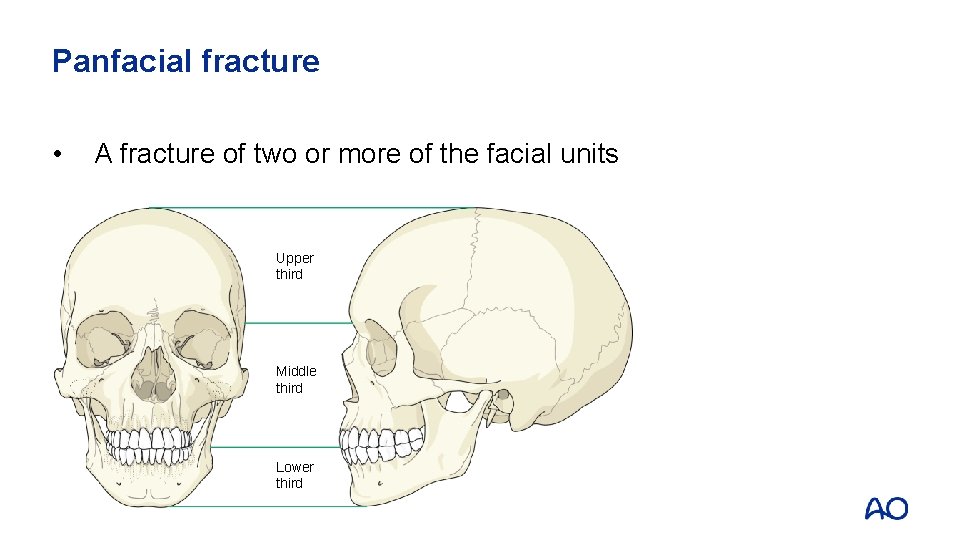
Panfacial fracture • A fracture of two or more of the facial units Upper third Middle third Lower third
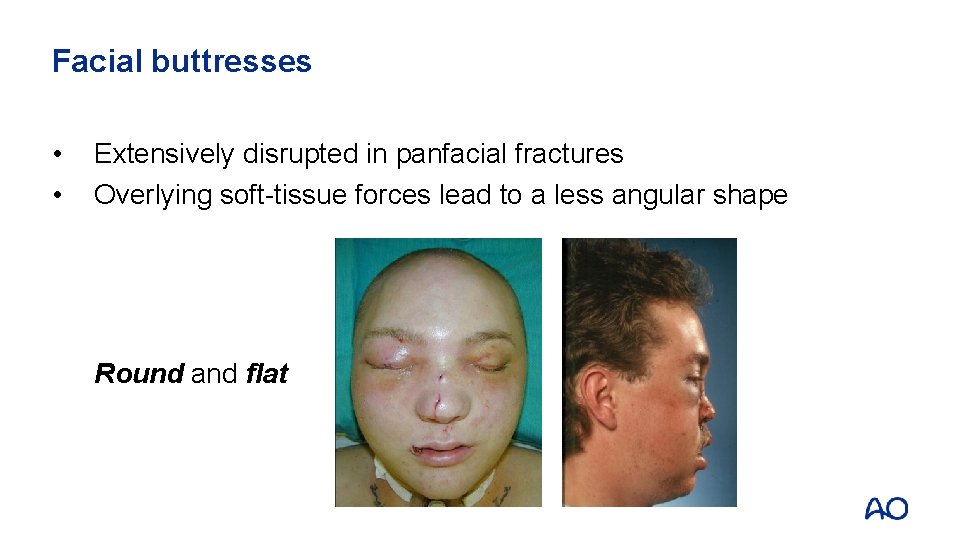
Facial buttresses • • Extensively disrupted in panfacial fractures Overlying soft-tissue forces lead to a less angular shape Round and flat
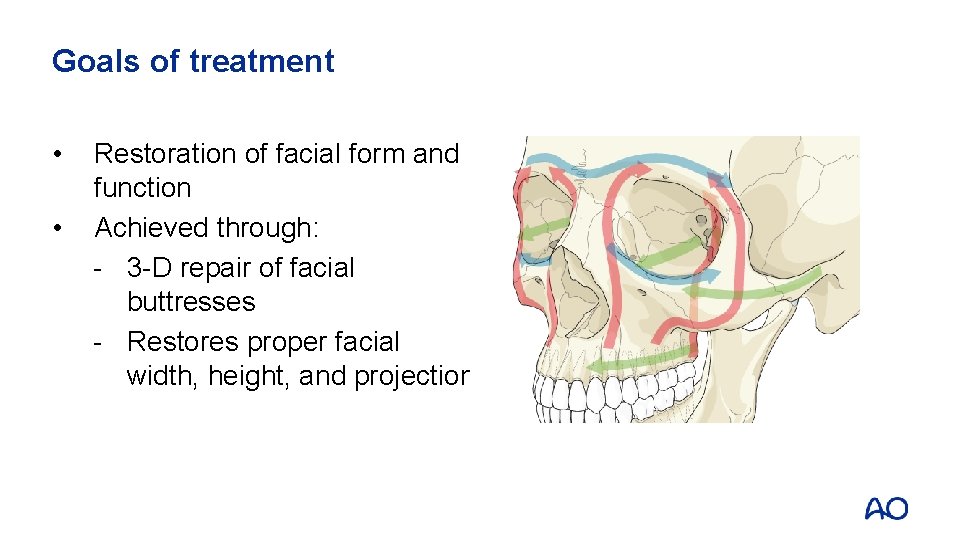
Goals of treatment • • Restoration of facial form and function Achieved through: - 3 -D repair of facial buttresses - Restores proper facial width, height, and projection
Sequence of fracture repair • Repair component fractures as per basic principles for that fracture However • Panfacial fractures characterized by: - Multiple component fractures at multiple levels - Disruption of multiple buttresses - Fracture displacement and comminution Where do you start?
Sequence of fracture repair • • Reduction strategies - Accurate anatomical reduction and stabilization in appropriate sequence is critical - “Bottom-to-top” ? “Top-to-bottom” ? - “Inside-out”? “Outside-in”? Subunit principle
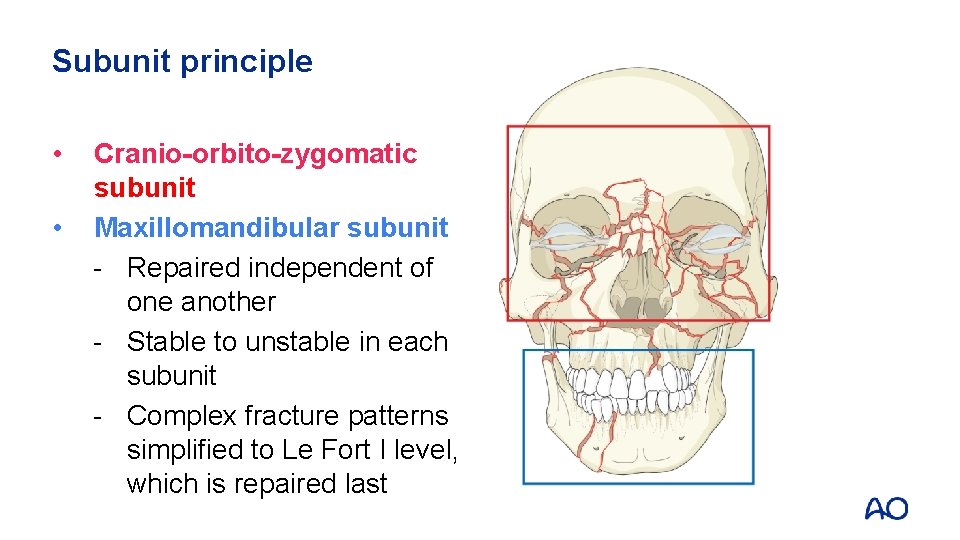
Subunit principle • • Cranio-orbito-zygomatic subunit Maxillomandibular subunit - Repaired independent of one another - Stable to unstable in each subunit - Complex fracture patterns simplified to Le Fort I level, which is repaired last
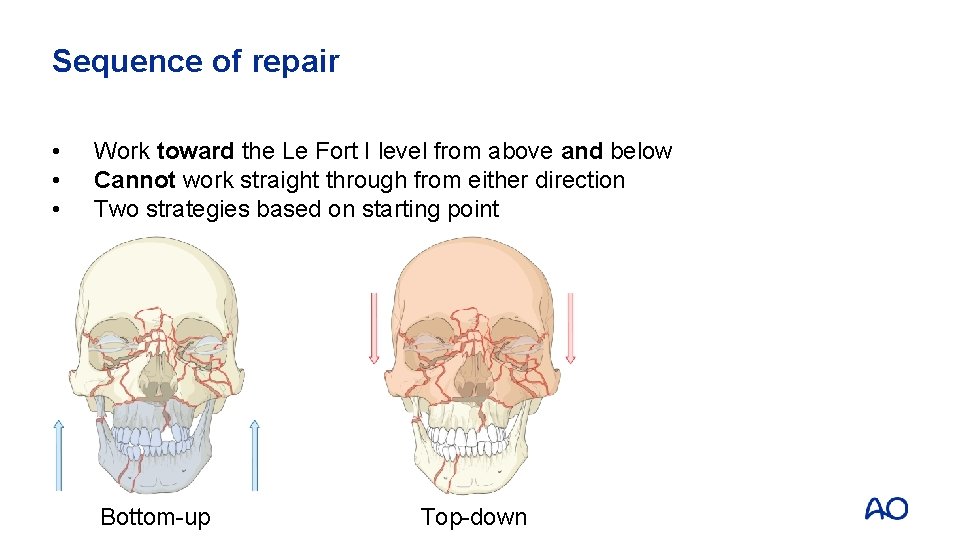
Sequence of repair • • • Work toward the Le Fort I level from above and below Cannot work straight through from either direction Two strategies based on starting point Bottom-up Top-down
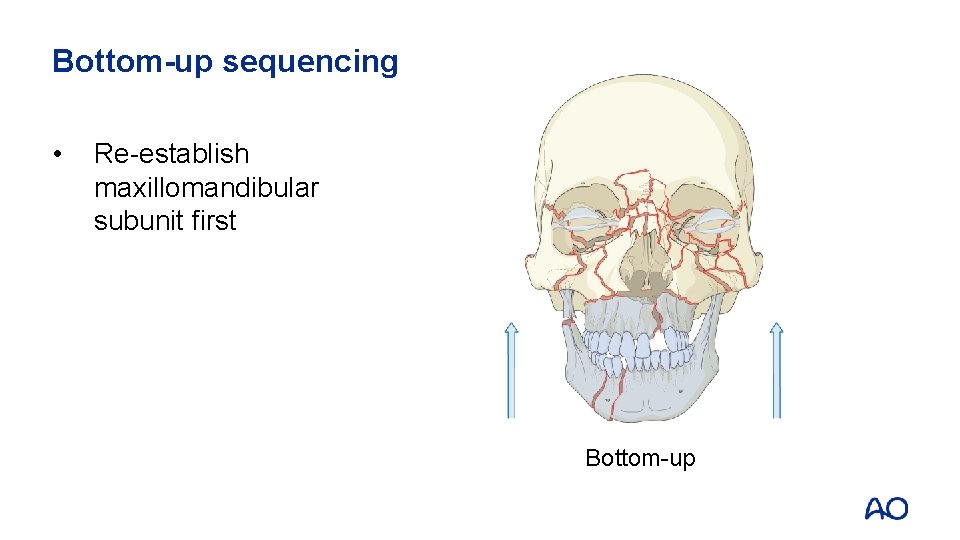
Bottom-up sequencing • Re-establish maxillomandibular subunit first Bottom-up
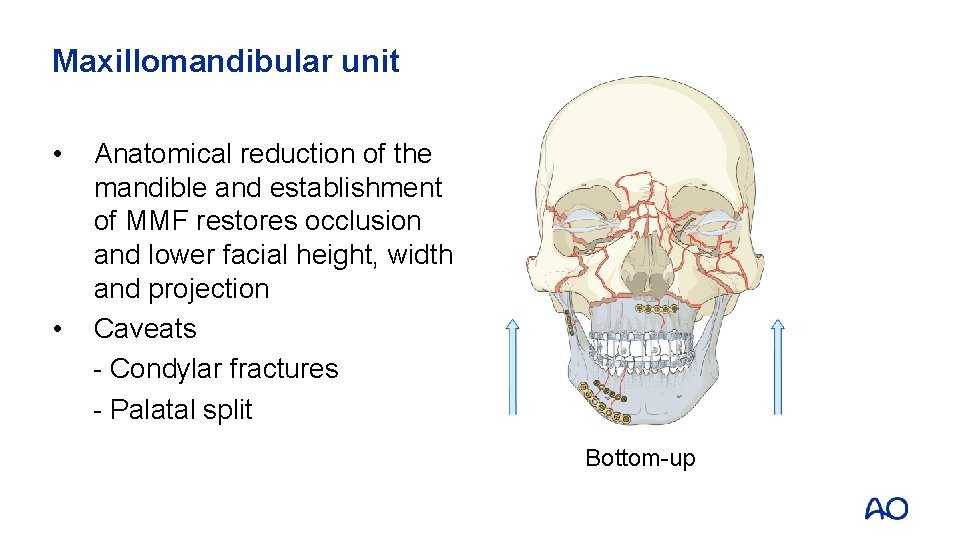
Maxillomandibular unit • • Anatomical reduction of the mandible and establishment of MMF restores occlusion and lower facial height, width and projection Caveats - Condylar fractures - Palatal split Bottom-up
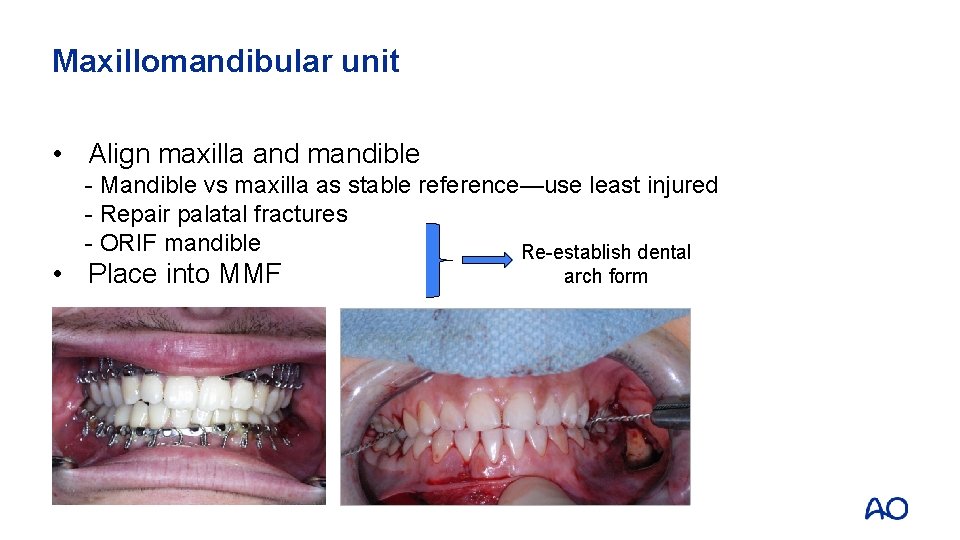
Maxillomandibular unit • Align maxilla and mandible - Mandible vs maxilla as stable reference—use least injured - Repair palatal fractures - ORIF mandible Re-establish dental • Place into MMF arch form
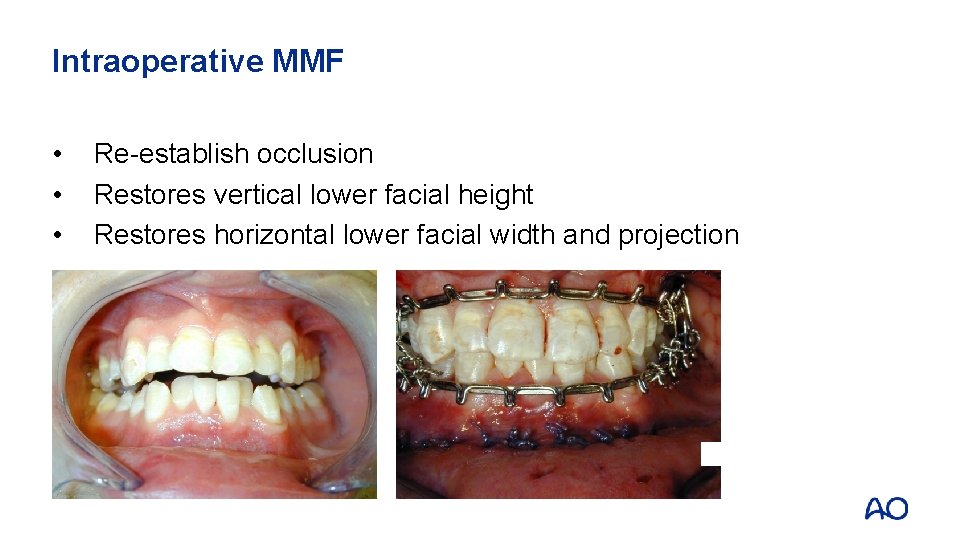
Intraoperative MMF • • • Re-establish occlusion Restores vertical lower facial height Restores horizontal lower facial width and projection
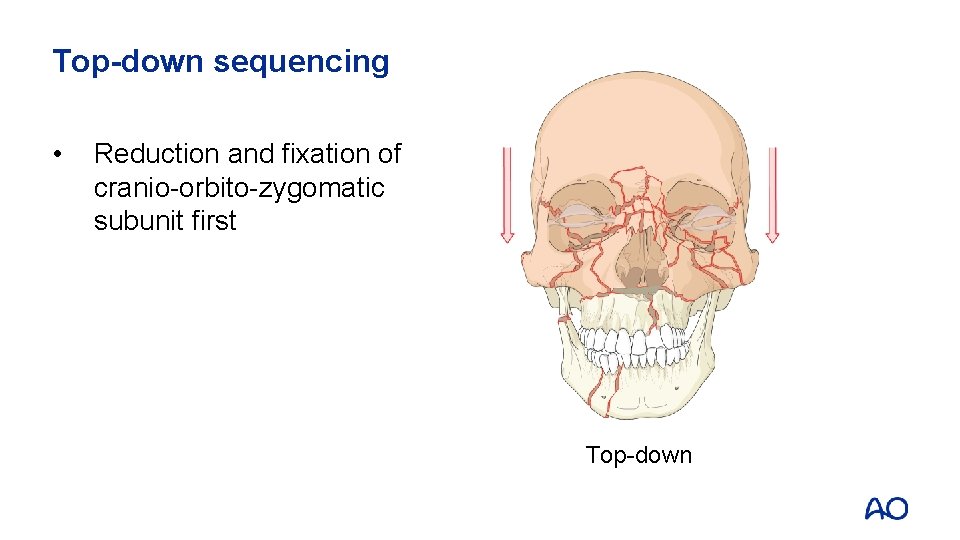
Top-down sequencing • Reduction and fixation of cranio-orbito-zygomatic subunit first Top-down
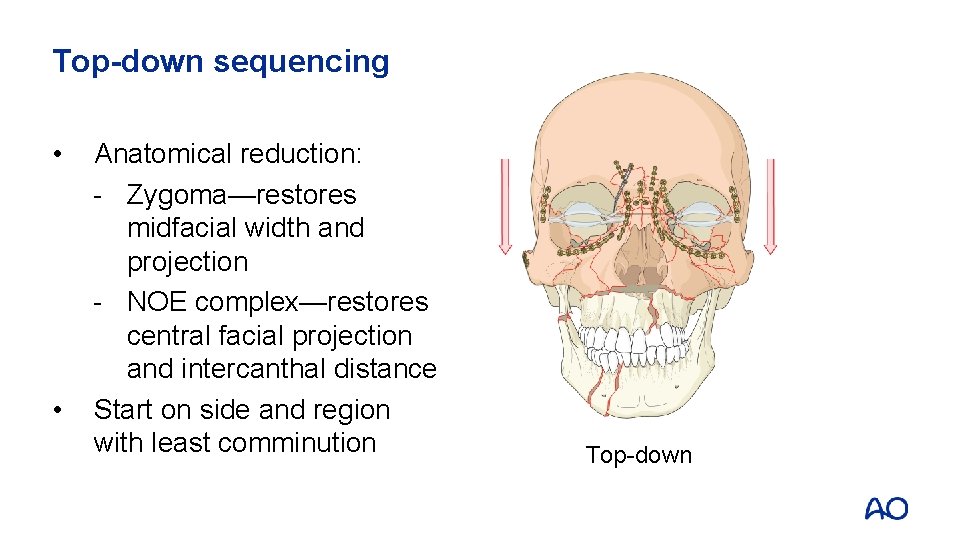
Top-down sequencing • • Anatomical reduction: - Zygoma—restores midfacial width and projection - NOE complex—restores central facial projection and intercanthal distance Start on side and region with least comminution Top-down
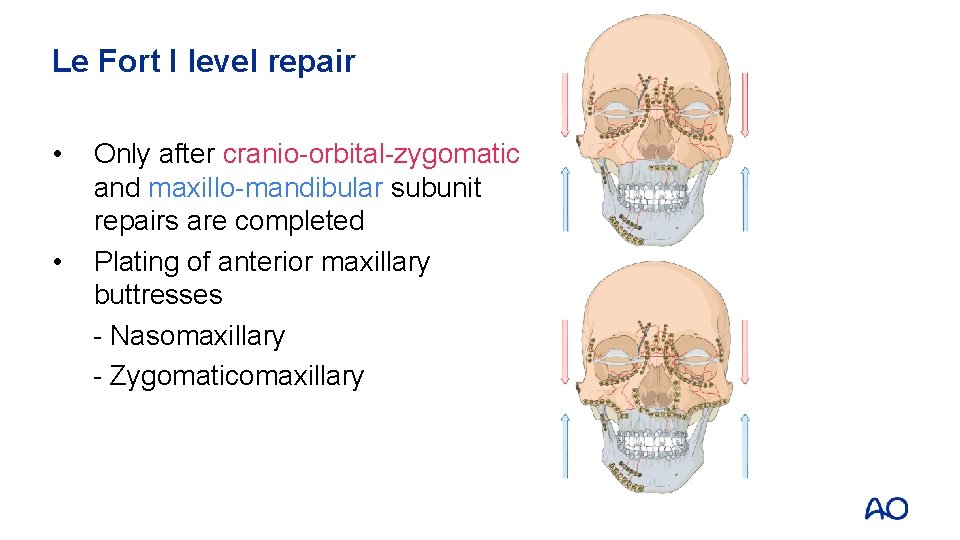
Le Fort I level repair • • Only after cranio-orbital-zygomatic and maxillo-mandibular subunit repairs are completed Plating of anterior maxillary buttresses - Nasomaxillary - Zygomaticomaxillary
Bone grafting • • • Consider with bone loss or gross comminution of buttresses Calvarial graft preferred Plates are not meant to replace midface buttresses but to support them
Take-home messages • • • Complex injuries involving fractures at multiple facial levels Goal of repair is to restore anatomical facial proportions and occlusion Correct sequence of repair critical to successful outcome Subunit principle Bottom-up or top-down approach Regardless of approach, Le Fort I level repair is last
- Slides: 18