
Palynology of Mo SU Ridge a new exposure

- Slides: 11
Palynology of Mo. SU Ridge, a new exposure of coal and associated sediments in the Hooper Formation, Wilcox Group, Texas A Senior Thesis in Geology by: Alexander Reese Newman
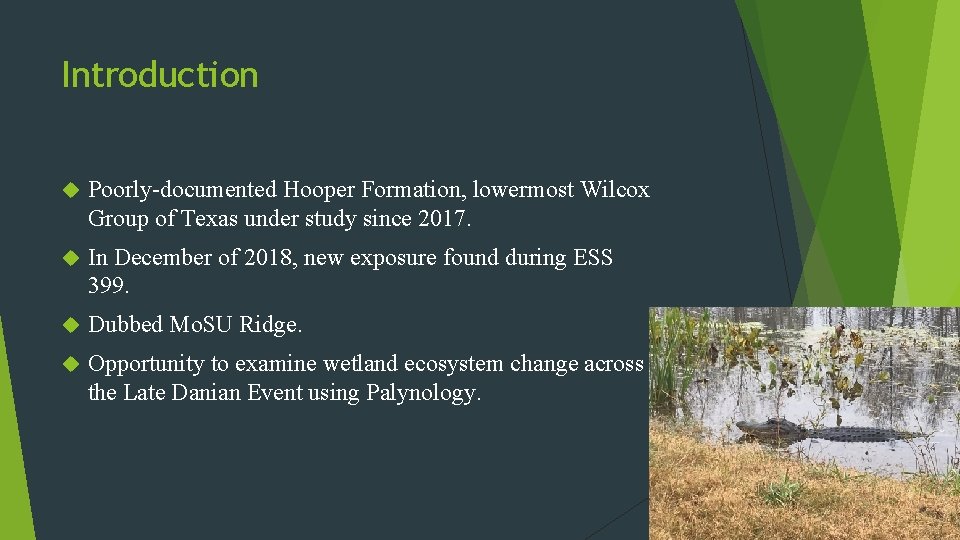
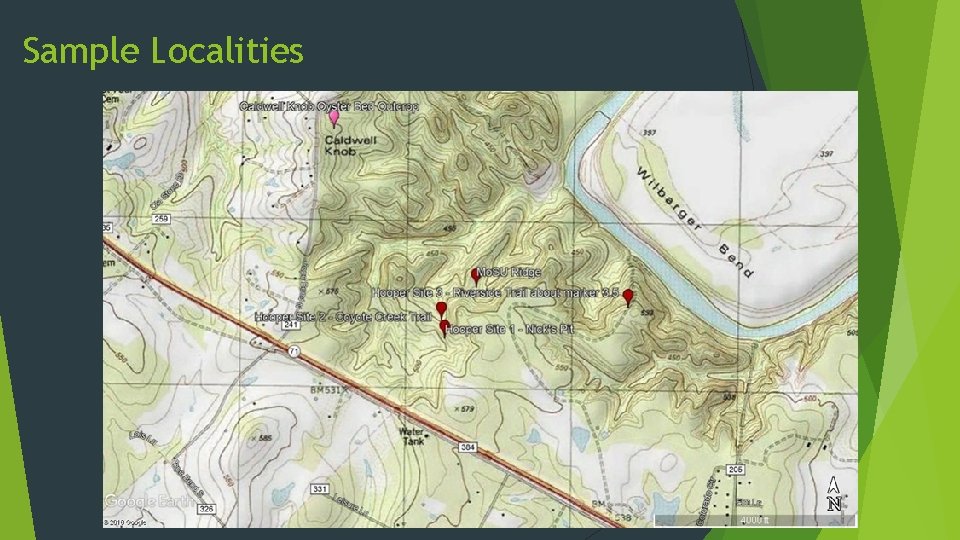
Introduction Poorly-documented Hooper Formation, lowermost Wilcox Group of Texas under study since 2017. In December of 2018, new exposure found during ESS 399. Dubbed Mo. SU Ridge. Opportunity to examine wetland ecosystem change across the Late Danian Event using Palynology.
Sample Localities
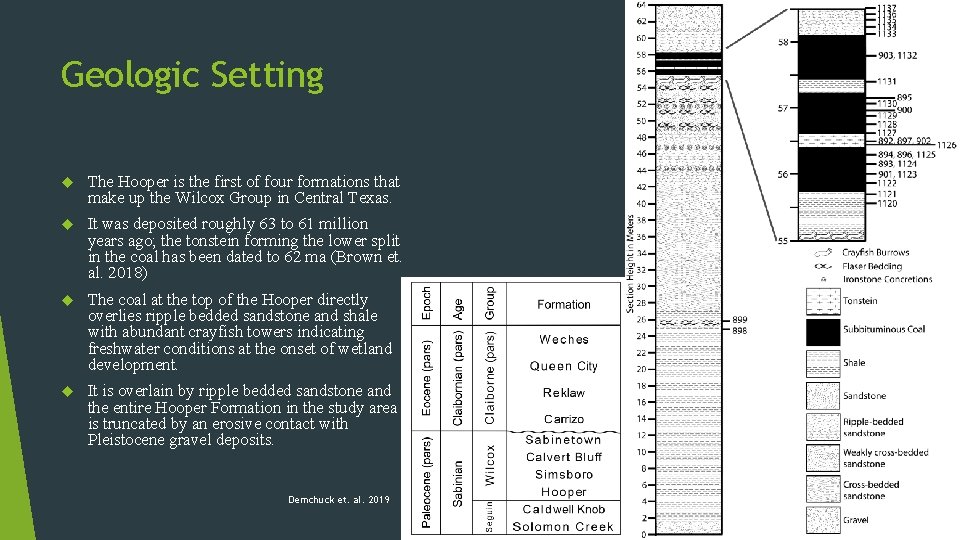
Geologic Setting The Hooper is the first of four formations that make up the Wilcox Group in Central Texas. It was deposited roughly 63 to 61 million years ago; the tonstein forming the lower split in the coal has been dated to 62 ma (Brown et. al. 2018) The coal at the top of the Hooper directly overlies ripple bedded sandstone and shale with abundant crayfish towers indicating freshwater conditions at the onset of wetland development. It is overlain by ripple bedded sandstone and the entire Hooper Formation in the study area is truncated by an erosive contact with Pleistocene gravel deposits. Demchuck et. al. 2019
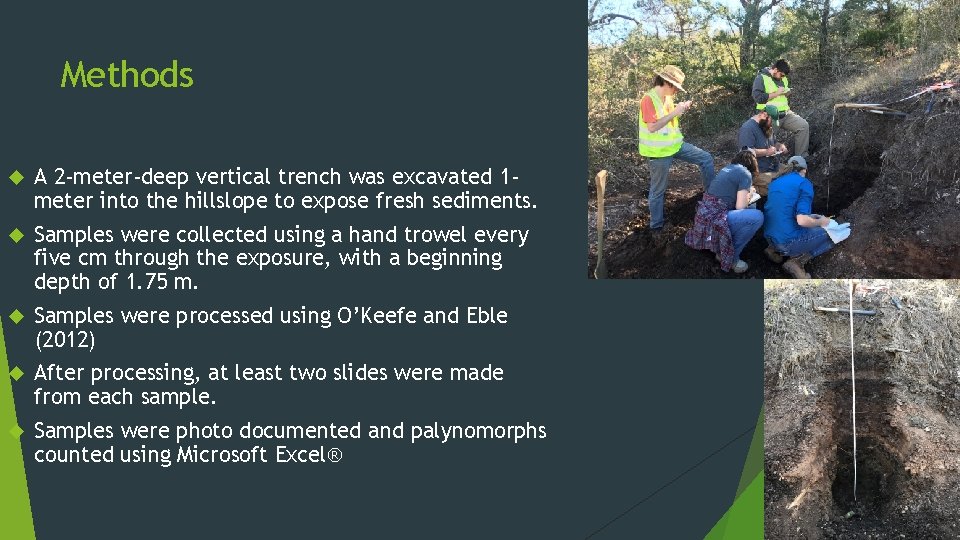
Methods A 2 -meter-deep vertical trench was excavated 1 meter into the hillslope to expose fresh sediments. Samples were collected using a hand trowel every five cm through the exposure, with a beginning depth of 1. 75 m. Samples were processed using O’Keefe and Eble (2012) After processing, at least two slides were made from each sample. Samples were photo documented and palynomorphs counted using Microsoft Excel®
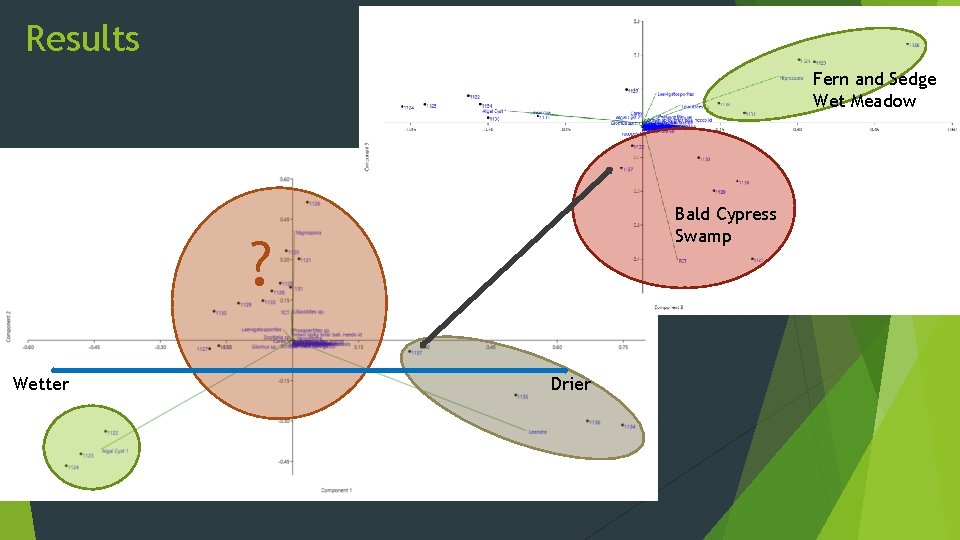
Results Fern and Sedge Wet Meadow Bald Cypress Swamp ? Wetter Drier
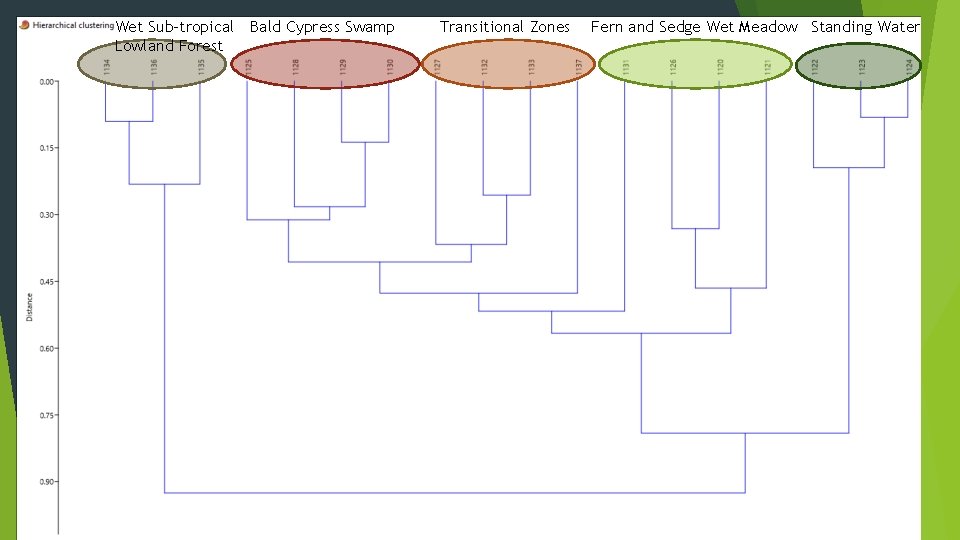
Wet Sub-tropical Bald Cypress Swamp Lowland Forest Transitional Zones Fern and Sedge Wet Meadow Standing Water
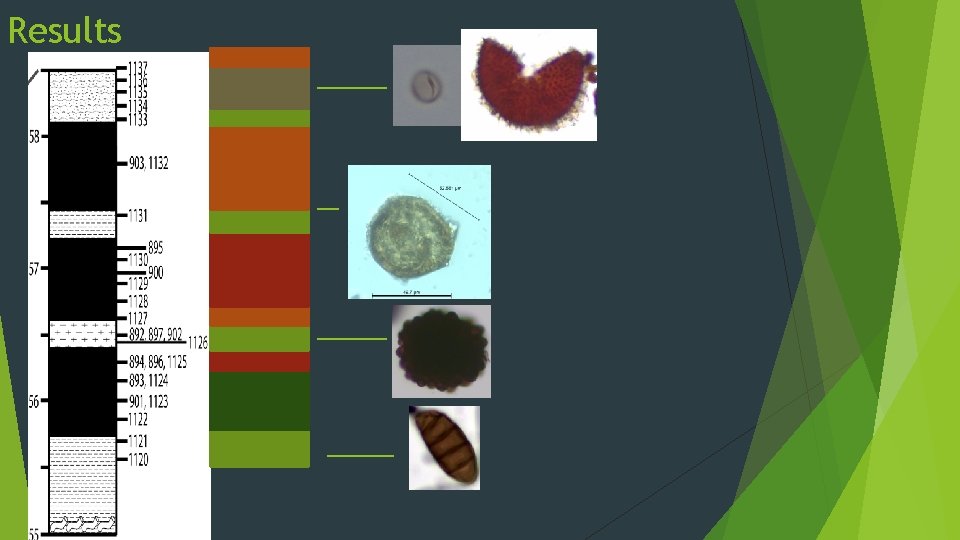
Results
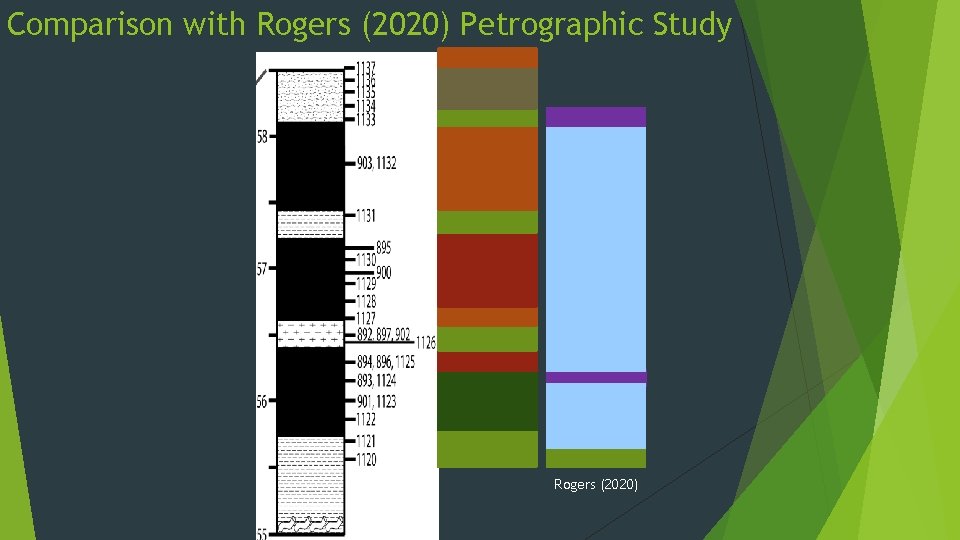
Comparison with Rogers (2020) Petrographic Study Rogers (2020)
Conclusions Overall poor palynomorph preservation Many unique taxa, including fungi, testate amoebae, and pollen Five clear environments indicated by palynology: standing water, fern and sedge wet meadow, cypress swamps, transitional zones, and sub-tropical lowland forest. No clear evidence for warming across the LDE – all taxa are consistent with sub-tropical conditions. LDE is coeval with onset of peat preservation – it may have been more of a moisture event here. Continued study of the palynology and isotope stratigraphy of this coal are needed to fully explain the impact of the LDE on plant and fungal ecosystems.
Acknowledgments Field team: Maggie Stephenson (‘ 20), Ashton Killen, Eli Martin, Russel Rogers (‘ 20), Chris Denison (Astra Stratigraphic, Bastrop, TX) Site Access: Nicholas Cowey, Mc. Kinney Roughs Nature Park, Lower Colorado River Authority Area Lodging: Chris & Kathy Denison (Astra Stratigraphic and MADU Hives Field Station, Bastrop, TX)