
PALMAR DIGITAL NEURECTOMY PREOPERATION INDICATIONS FOR PERFOMRING THE
- Slides: 10
PALMAR DIGITAL NEURECTOMY: PRE-OPERATION
INDICATIONS FOR PERFOMRING THE PALMAR (POSTERIOR) DIGITAL NEURECTOMY Neurectomy of the palmar digital nerves is occasionally required to allow horses with chronic heel pain the opportunity to remain athletically sound. A variety of diseases or syndromes can contribute to chronic heel pain, the most common of which is pain associated with structures in the region of the navicular bone. Other indications of this surgery include: Selected lateral-wing fractures of the distal phalanx Calcification of the collateral cartilages of the distal phalanx Despite aggressive treatment with intra-articular or intrabursal injections, therapeutic shoeing, and systemic anti-inflammatory agents, a significant number of horses either fail to respond to treatment or respond temporarily, necessitating consideration of palmar digital neurectomy as a final treatment option.
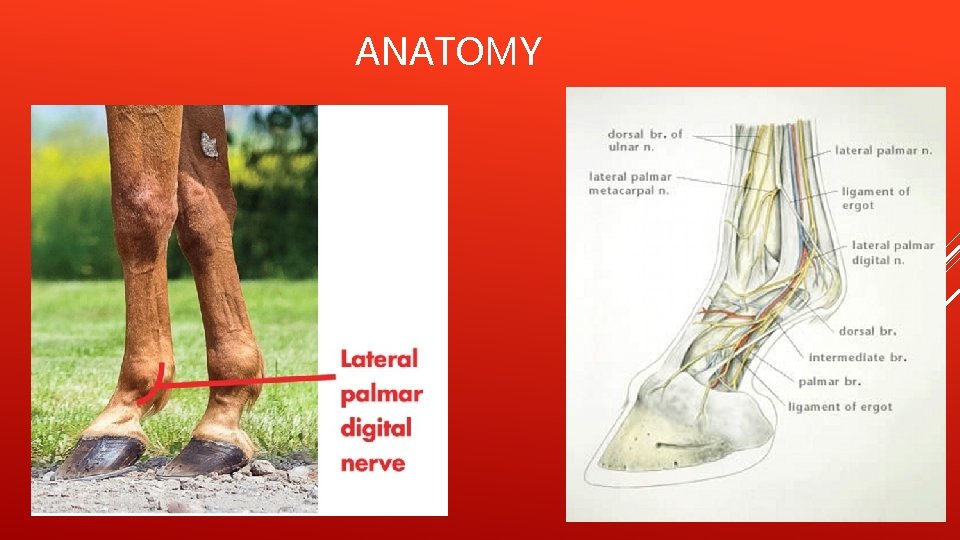
ANATOMY The lateral and medial palmar digital nerves are continuous of the lateral and medial palmar nerves. The palmar digital nerve is identified just palmar to the digital artery, approximately 0. 5 cm below the skin surface and deep to the ligament of the ergot. At the fetlock, the medial and lateral palmar nerves each give rise to dorsal branches.
ANATOMY
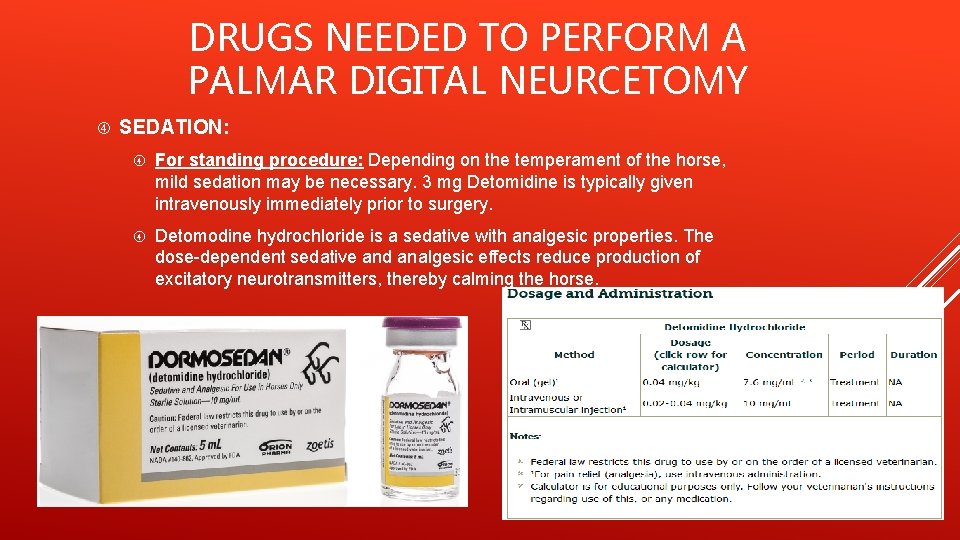
DRUGS NEEDED TO PERFORM A PALMAR DIGITAL NEURCETOMY SEDATION: For standing procedure: Depending on the temperament of the horse, mild sedation may be necessary. 3 mg Detomidine is typically given intravenously immediately prior to surgery. Detomodine hydrochloride is a sedative with analgesic properties. The dose-dependent sedative and analgesic effects reduce production of excitatory neurotransmitters, thereby calming the horse.
DRUGS NEEDED TO PERFORM A PALMAR DIGITAL NEURCETOMY SEDATION: Intended lateral recumbency procedure: Sedation is achieved by using Xylazine 2% at a dose of 1 mg/kg IV as well as Ketamine 10% at a dose of 2 mg/kg IV.
DRUGS NEEDED TO PERFORM A PALMAR DIGITAL NEURCETOMY MEDIAL AND LATERAL PALMAR DIGITAL NERVE ANALGESIA: Usually performed bilaterally at the mid-pastern level using 3 m. L lignocaine.
SITE PREPARATION Optimally, the standing neurectomy should be performed on a concrete slab in a dust-free environment. A standing surgery can be performed with the horse restrained in a stocks or held by an assistant. It is preferred to do surgery with the horse outside the stocks and held by an assistant so clinicians are not encumbered by the horizontal bar of the stocks. The horse is groomed to remove loose hair and dander and the feet are picked and cleaned with a wire brush. Regional anesthesia of the foot is provided by blocking the palmar digital nerves at the abaxial level of the proximal sesamoid bones. Blocking the foot prior to clipping the hair facilitates clipping as the horse is not as sensitive to the vibration generated by the clippers. The feet to be denerved are clipped circumferentially from the coronary band at the level of the fetlock joint with a #40 clipper blade. The entire circumferential distal limb extending from the hoof wall to fetlock joint is prepared for aseptic surgery using standard techniques. Plastic adhesive drapes are useful to exclude the hoof as a source of contamination.
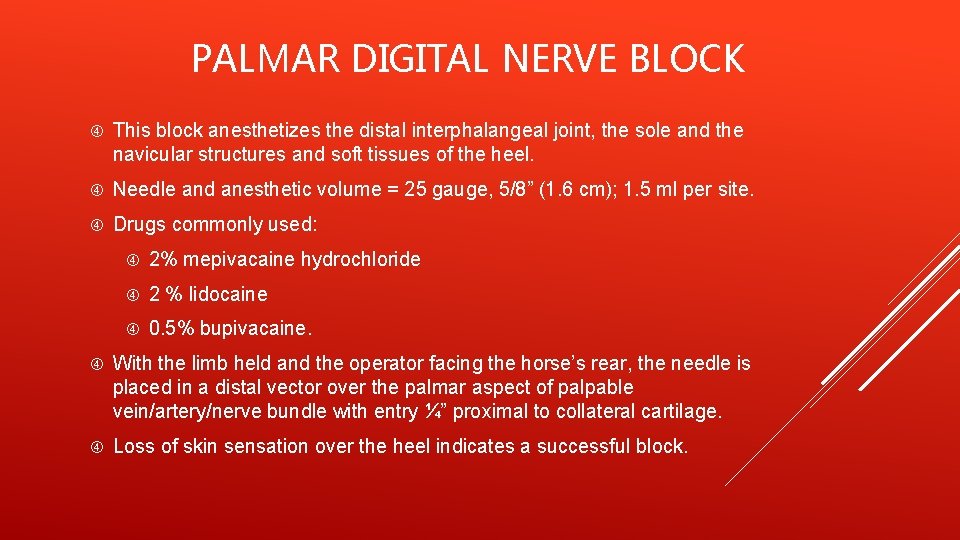
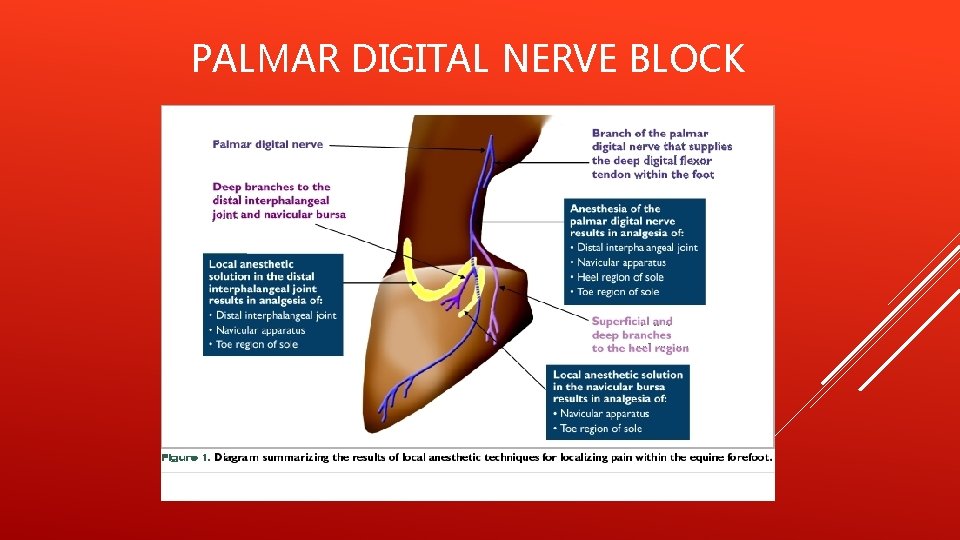
PALMAR DIGITAL NERVE BLOCK This block anesthetizes the distal interphalangeal joint, the sole and the navicular structures and soft tissues of the heel. Needle and anesthetic volume = 25 gauge, 5/8” (1. 6 cm); 1. 5 ml per site. Drugs commonly used: 2% mepivacaine hydrochloride 2 % lidocaine 0. 5% bupivacaine. With the limb held and the operator facing the horse’s rear, the needle is placed in a distal vector over the palmar aspect of palpable vein/artery/nerve bundle with entry ¼” proximal to collateral cartilage. Loss of skin sensation over the heel indicates a successful block.
PALMAR DIGITAL NERVE BLOCK