
Paleontology and Paleoecology Principles of Paleoecology Fossils Remains
- Slides: 7
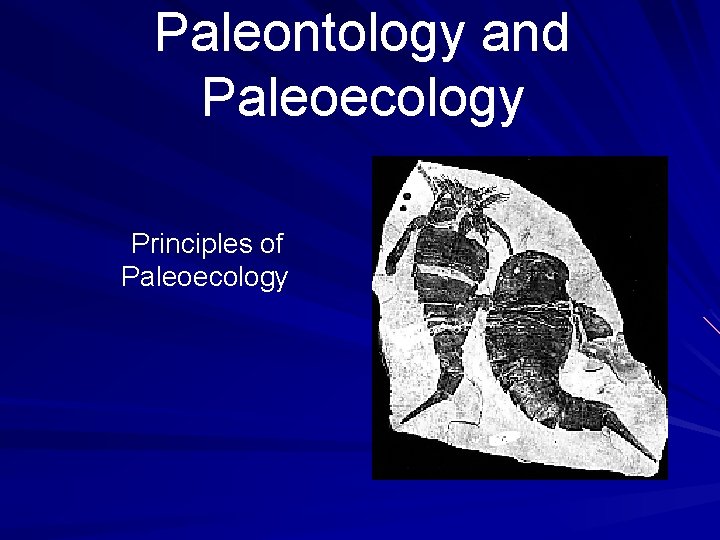
Paleontology and Paleoecology Principles of Paleoecology
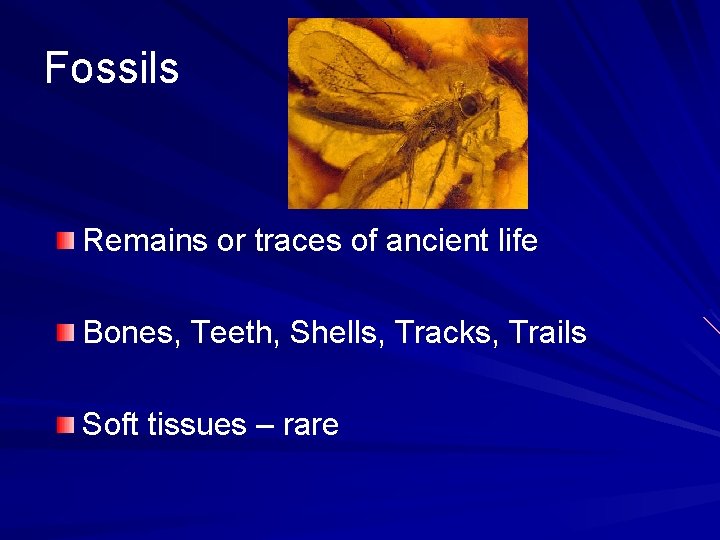
Fossils Remains or traces of ancient life Bones, Teeth, Shells, Tracks, Trails Soft tissues – rare
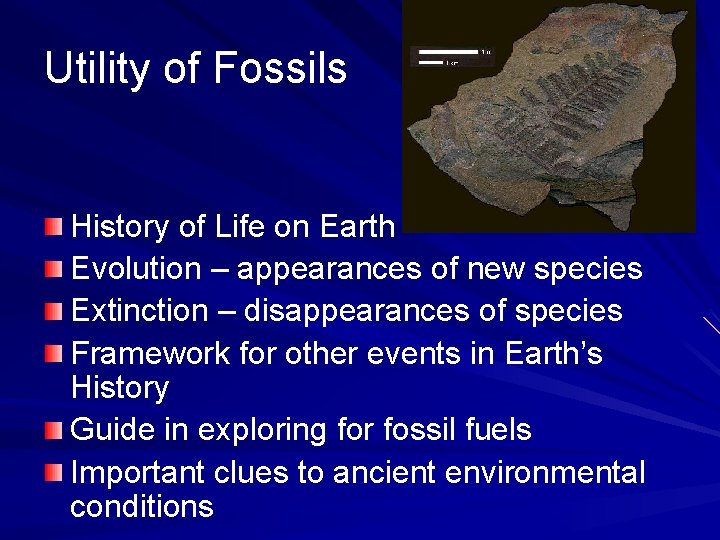
Utility of Fossils History of Life on Earth Evolution – appearances of new species Extinction – disappearances of species Framework for other events in Earth’s History Guide in exploring for fossil fuels Important clues to ancient environmental conditions
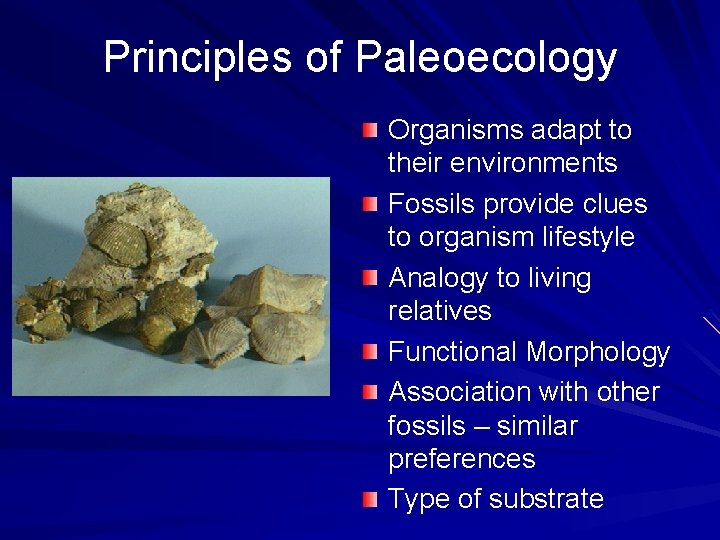
Principles of Paleoecology Organisms adapt to their environments Fossils provide clues to organism lifestyle Analogy to living relatives Functional Morphology Association with other fossils – similar preferences Type of substrate
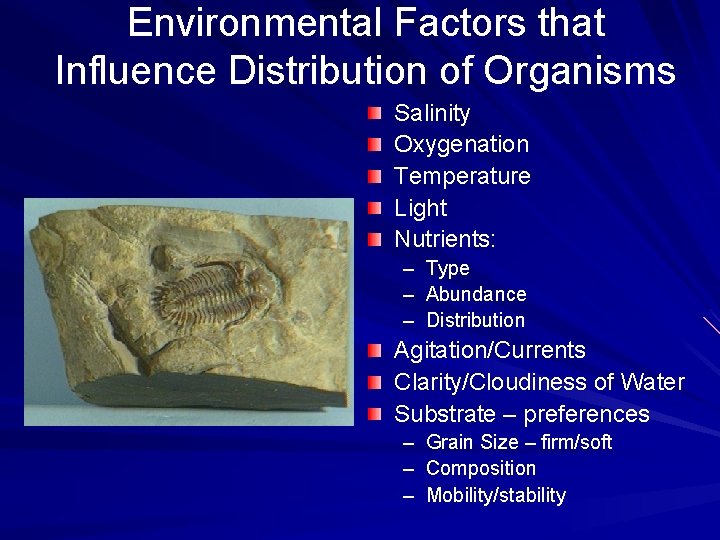
Environmental Factors that Influence Distribution of Organisms Salinity Oxygenation Temperature Light Nutrients: – – – Type Abundance Distribution Agitation/Currents Clarity/Cloudiness of Water Substrate – preferences – Grain Size – firm/soft – Composition – Mobility/stability
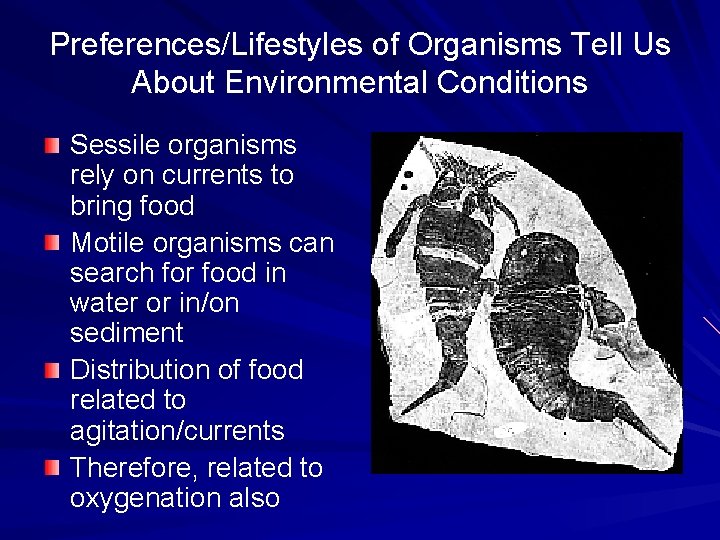
Preferences/Lifestyles of Organisms Tell Us About Environmental Conditions Sessile organisms rely on currents to bring food Motile organisms can search for food in water or in/on sediment Distribution of food related to agitation/currents Therefore, related to oxygenation also
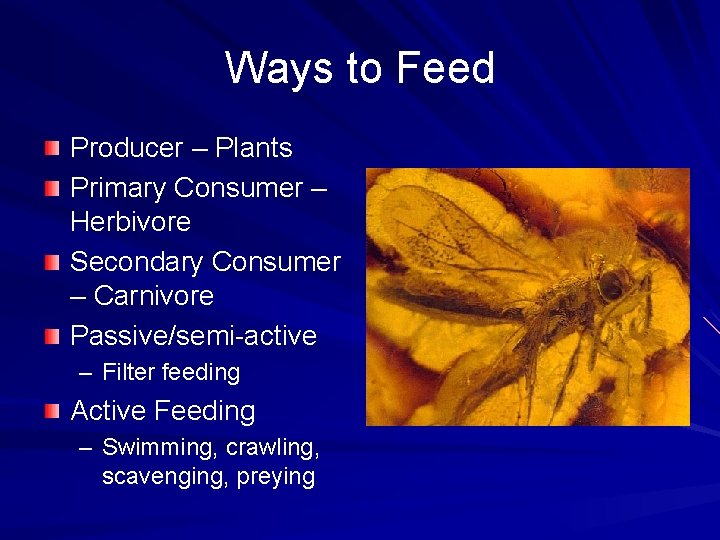
Ways to Feed Producer – Plants Primary Consumer – Herbivore Secondary Consumer – Carnivore Passive/semi-active – Filter feeding Active Feeding – Swimming, crawling, scavenging, preying