
Paleoecology Lab 2 Versions James R Ebert Earth
Paleoecology Lab: 2 Versions James R. Ebert Earth Sciences Department SUNY College at Oneonta
Paleoecology Lab: Context • Earth History and the Fossil Record • Commonly second geoscience course taken • Majors in – Geology – Water Resources – Earth Science – Adolescence Education Earth Science – Childhood Education (K-6)
Paleoecology Lab: Objectives • Practice observation • Recognize fossils in matrix • Deduce paleoecological requirements of – Individual species – Assemblages of species • Interpret environment based on paleoecological factors • Support interpretations with specific observations and associated inferences
Paleoecology Lab – Lab Version • Follows first lab on fossils – Taphonomy – focus on mode of preservation – Identification – major Paleozoic invertebrate groups • First experience with assemblages • First real experience with fossils in matrix • First lab that requires interpretation of their own observations • Materials: 4 assemblages
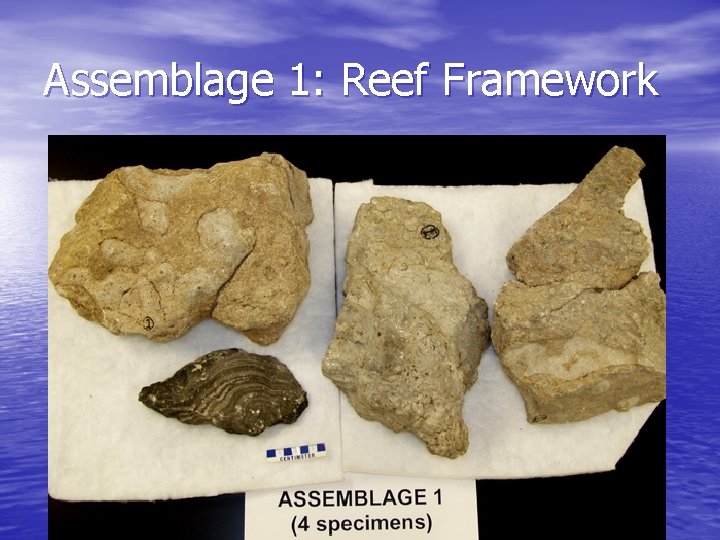
Assemblage 1: Reef Framework
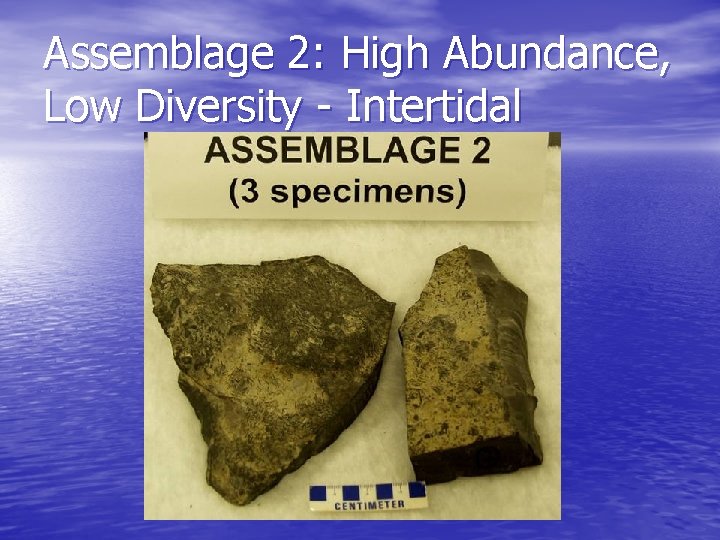
Assemblage 2: High Abundance, Low Diversity - Intertidal
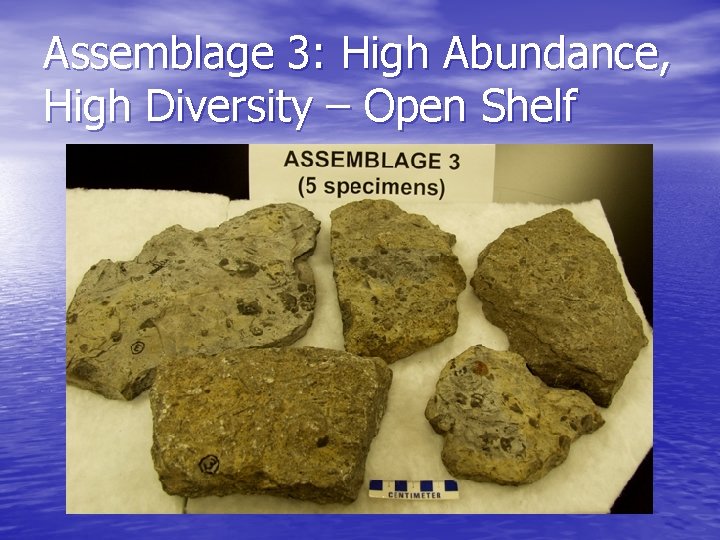
Assemblage 3: High Abundance, High Diversity – Open Shelf
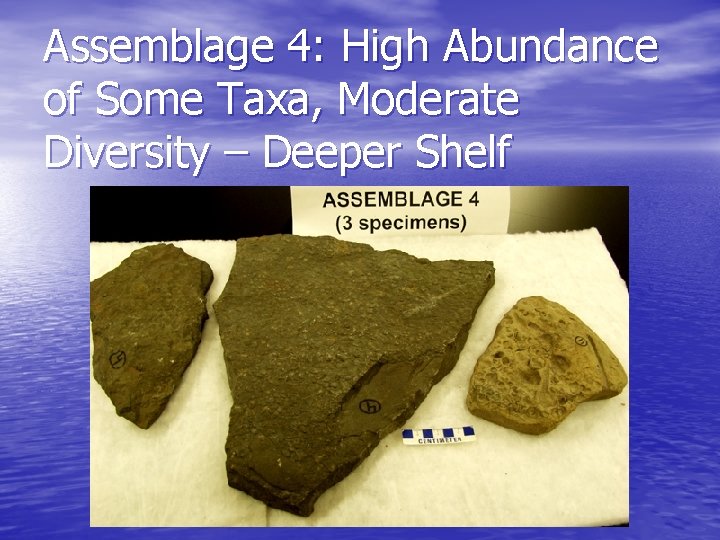
Assemblage 4: High Abundance of Some Taxa, Moderate Diversity – Deeper Shelf
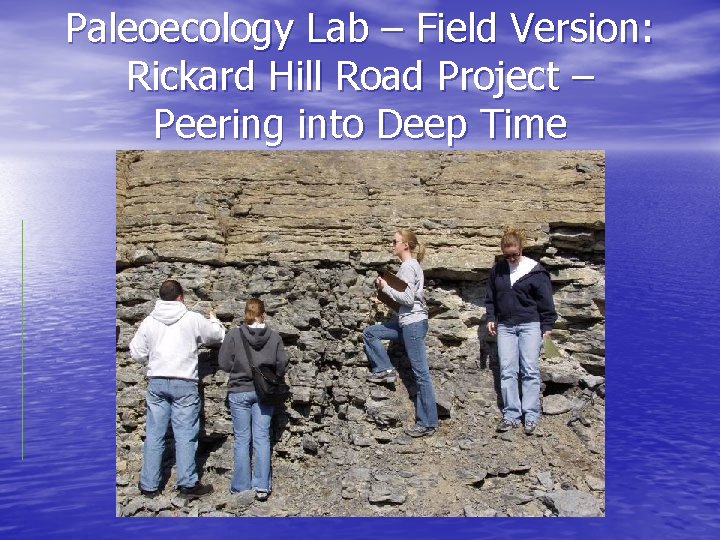
Paleoecology Lab – Field Version: Rickard Hill Road Project – Peering into Deep Time
Paleoecology Lab – Field Version • Fall Semester: Replaces Lab version • Spring Semester Done late in spring semester as one of two culminating field projects • Combines paleontological observations with lithology and sedimentary structures • First experience with fossils in the field • Requires interpretation of their own observations • Overall Objective: Reconstruct Environments of Deposition and Interpret Changes in Environment
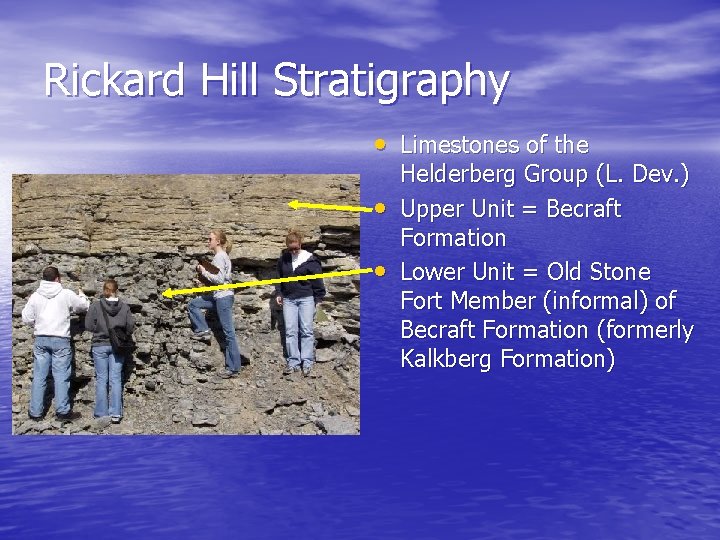
Rickard Hill Stratigraphy • Limestones of the • • Helderberg Group (L. Dev. ) Upper Unit = Becraft Formation Lower Unit = Old Stone Fort Member (informal) of Becraft Formation (formerly Kalkberg Formation)
Old Stone Fort Member • Rich and diverse fauna - 300+ species – – – • • • Brachiopods – minimum of 65 different species Bryozoans Sponges Crinoids Trilobites Rare Cephalopods, Tabulate corals, Pelecypods, Gastropods Some fossils are articulated and in life position Skeletal Wackestones to Grainstones Sedimentary Structures: – Burrows – Remnant ripples – Cross stratification (small scale) • Storm-Influenced Shelf
Becraft Formation • Fauna is abundant, but disarticulated and abraded • Diverse fauna, but less so than OSF – Echinoderms predominate • Aspidocrinus scutelliformis holdfasts in lower part • Root-like holdfasts of Clonocrinus sp. in upper part – Brachiopods – Bryozoa – Rare Tabulate Corals, Stromatoporoids, large Gastropods, Cephalopods, Trilobites • Sedimentary Structures: – Cross Stratification – Alternations of coarse and finer beds/laminae • Coarse Skeletal Grainstone • Shallow, Tide-Dominated Shelf
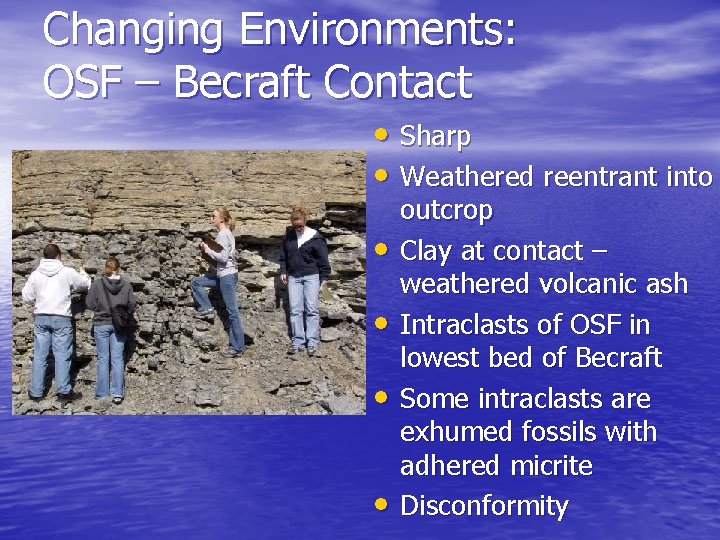
Changing Environments: OSF – Becraft Contact • Sharp • Weathered reentrant into • • outcrop Clay at contact – weathered volcanic ash Intraclasts of OSF in lowest bed of Becraft Some intraclasts are exhumed fossils with adhered micrite Disconformity
- Slides: 14