
PALAYCHECK SYSTEM FOR IRRIGATED LOWLAND RICE As of


- Slides: 17
PALAYCHECK SYSTEM FOR IRRIGATED LOWLAND RICE As of June 2020 Harvest Management KEY CHECK 8: Harvested the crop at the right time 1
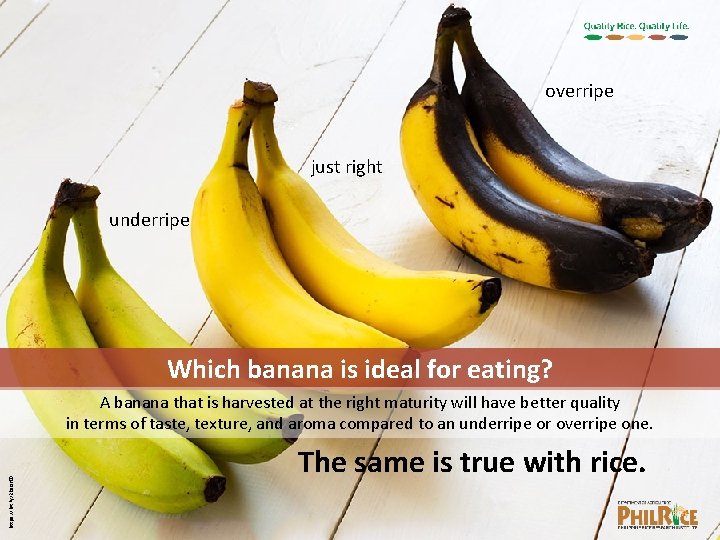
overripe just right underripe Which banana is ideal for eating? https: //bit. ly/2 Reo. HZI A banana that is harvested at the right maturity will have better quality in terms of taste, texture, and aroma compared to an underripe or overripe one. The same is true with rice. 2
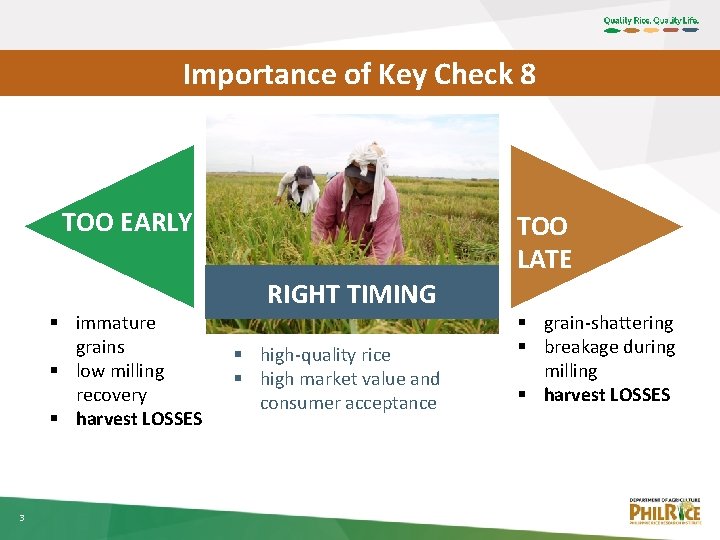
Importance of Key Check 8 TOO EARLY TOO LATE RIGHT TIMING § immature grains § low milling recovery § harvest LOSSES 3 § high-quality rice § high market value and consumer acceptance § grain-shattering § breakage during milling § harvest LOSSES
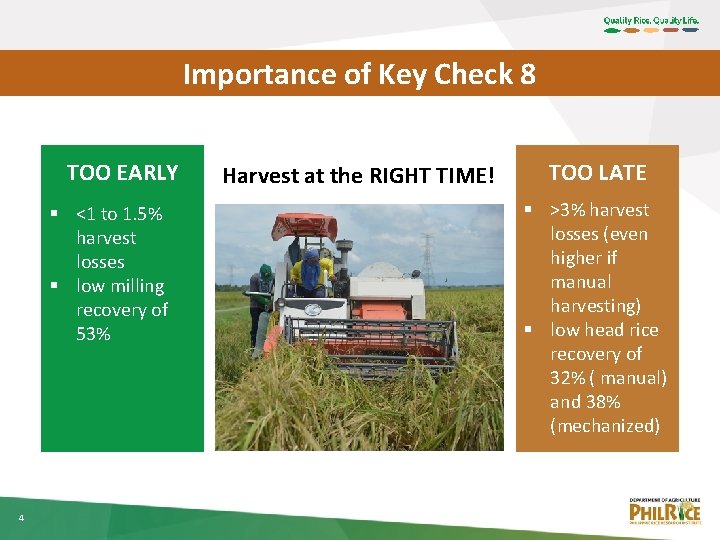
Importance of Key Check 8 TOO EARLY § <1 to 1. 5% harvest losses § low milling recovery of 53% 4 Harvest at the RIGHT TIME! TOO LATE § >3% harvest losses (even higher if manual harvesting) § low head rice recovery of 32% ( manual) and 38% (mechanized)
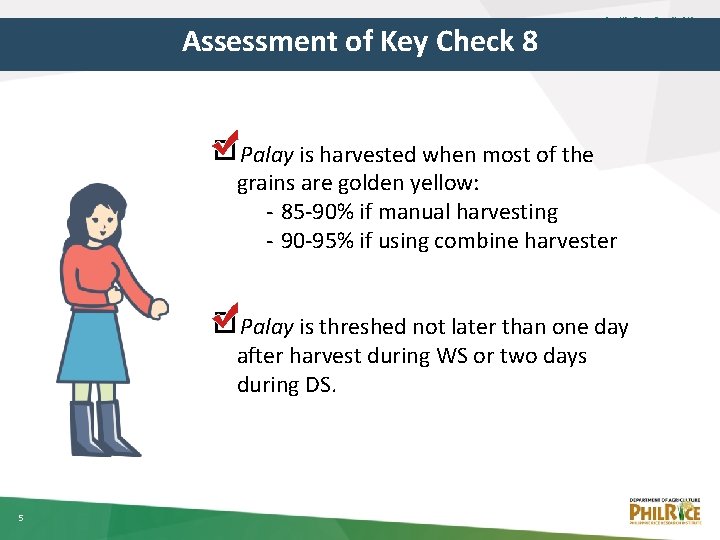
Assessment of Key Check 8 Palay is harvested when most of the grains are golden yellow: - 85 -90% if manual harvesting - 90 -95% if using combine harvester Palay is threshed not later than one day after harvest during WS or two days during DS. 5
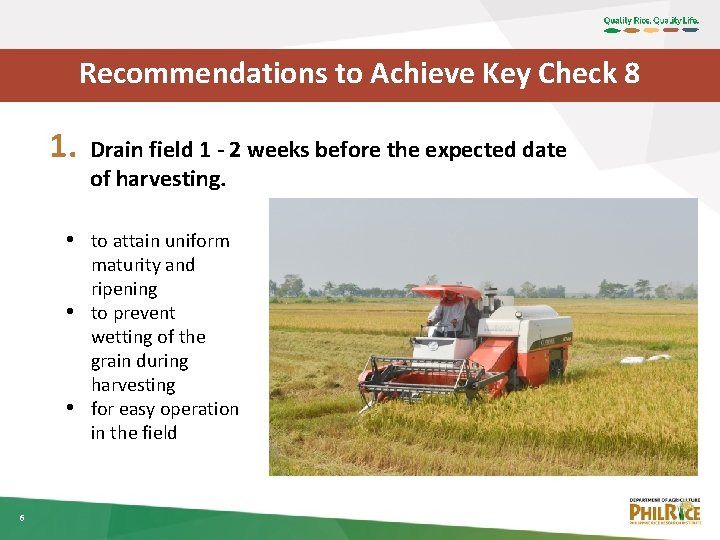
Recommendations to Achieve Key Check 8 1. Drain field 1 - 2 weeks before the expected date of harvesting. • to attain uniform • • 6 maturity and ripening to prevent wetting of the grain during harvesting for easy operation in the field
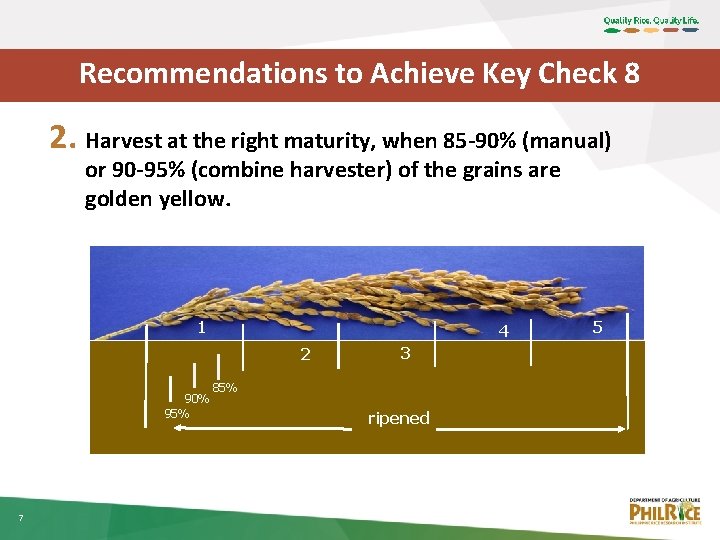
Recommendations to Achieve Key Check 8 2. Harvest at the right maturity, when 85 -90% (manual) or 90 -95% (combine harvester) of the grains are golden yellow. 1 4 2 90% 95% 7 3 85% ripened 5
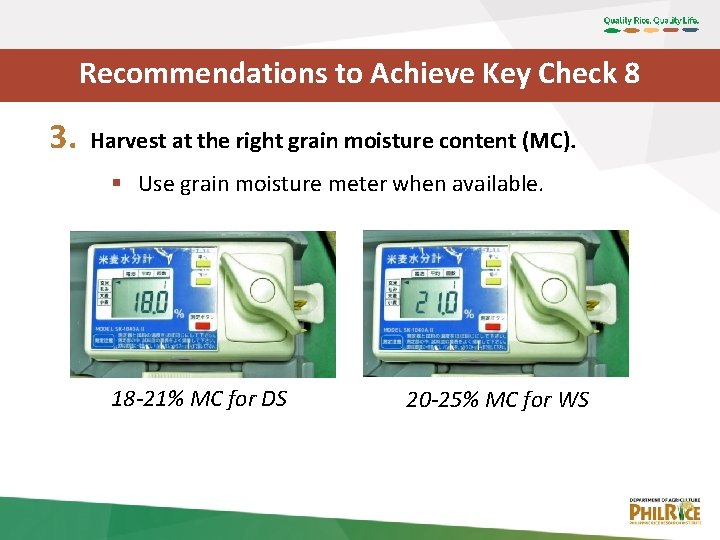
Recommendations to Achieve Key Check 8 3. Harvest at the right grain moisture content (MC). § Use grain moisture meter when available. 18 -21% MC for DS 20 -25% MC for WS
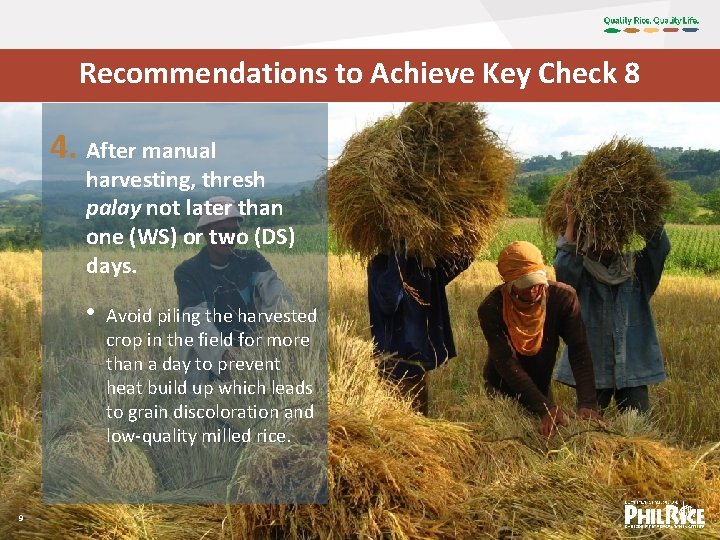
Recommendations to Achieve Key Check 8 4. After manual harvesting, thresh palay not later than one (WS) or two (DS) days. • 9 Avoid piling the harvested crop in the field for more than a day to prevent heat build up which leads to grain discoloration and low-quality milled rice.
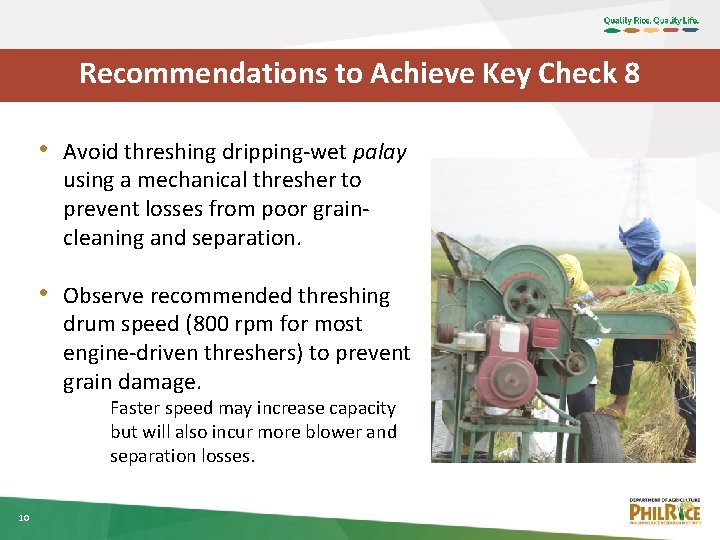
Recommendations to Achieve Key Check 8 • Avoid threshing dripping-wet palay using a mechanical thresher to prevent losses from poor graincleaning and separation. • Observe recommended threshing drum speed (800 rpm for most engine-driven threshers) to prevent grain damage. Faster speed may increase capacity but will also incur more blower and separation losses. 10
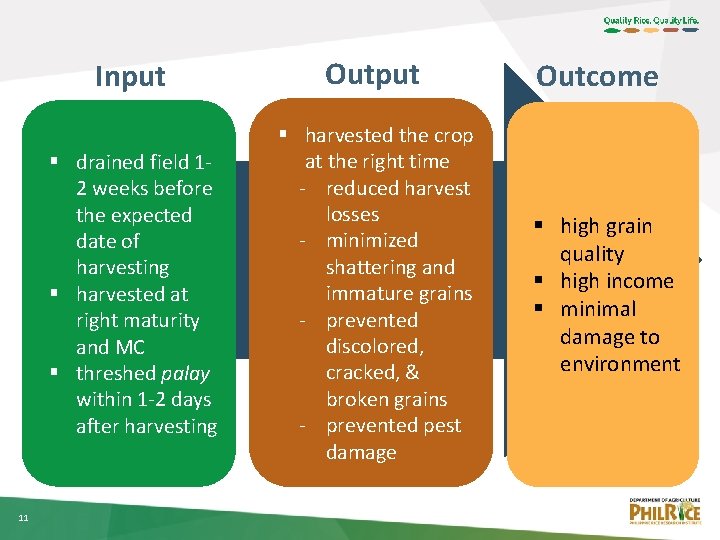
11 Input Output § drained field 12 weeks before the expected date of harvesting § harvested at right maturity and MC § threshed palay within 1 -2 days after harvesting § harvested the crop at the right time - reduced harvest losses - minimized shattering and immature grains - prevented discolored, cracked, & broken grains - prevented pest damage Outcome § high grain quality § high income § minimal damage to environment
PALAYCHECK SYSTEM FOR IRRIGATED LOWLAND RICE As of June 2020 Harvest Management KEY CHECK 8: Harvested the crop at the right time 1
Production Assistant: Mr. Jan Adriel Daligdig Technical Reviewers: Dr. Aurora Corales; Dr. Ricardo Orge; Dr. Manuel Jose Regalado Courseware Reviewers: Ms. Lea d. R. Abaoag; Ms. Ev Angeles Note: Presentation produced in 2019 based on results of a series of consultation workshops with Phil. Rice R&D staff; adapted from instructional presentation produced by Phil. Rice in 2011. You may use, remix, tweak, & build upon this presentation non-commercially. However, always use with acknowledgment. Unless otherwise stated, the names listed are Phil. Rice staffers.
Review!
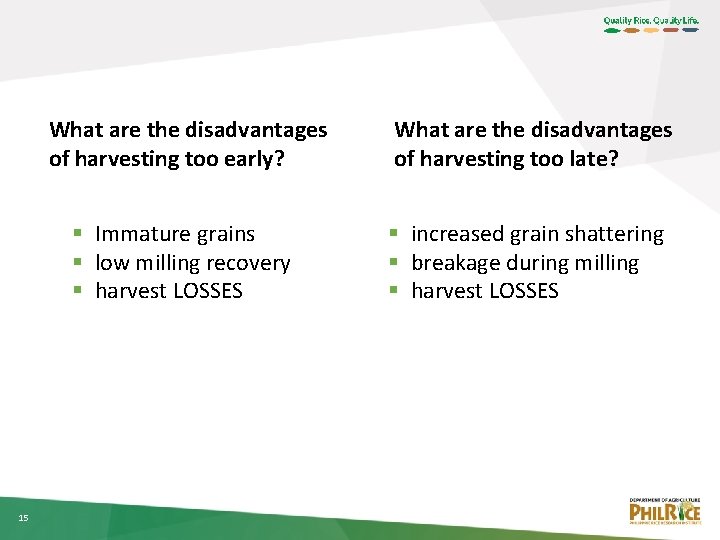
What are the disadvantages of harvesting too early? § Immature grains § low milling recovery § harvest LOSSES 15 What are the disadvantages of harvesting too late? § increased grain shattering § breakage during milling § harvest LOSSES
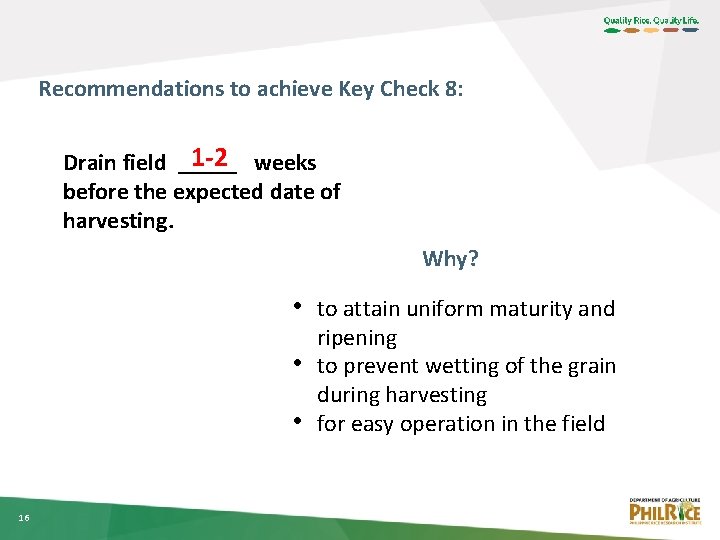
Recommendations to achieve Key Check 8: 1 -2 weeks Drain field _____ before the expected date of harvesting. Why? • to attain uniform maturity and • • 16 ripening to prevent wetting of the grain during harvesting for easy operation in the field
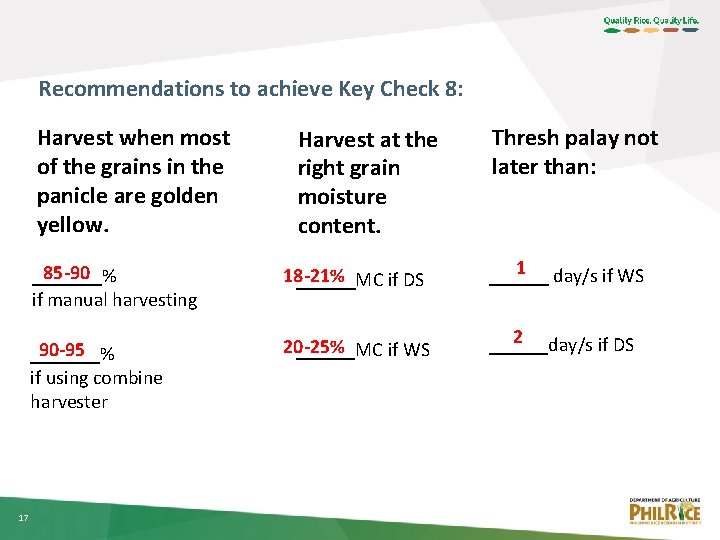
Recommendations to achieve Key Check 8: Harvest when most of the grains in the panicle are golden yellow. 17 Harvest at the right grain moisture content. Thresh palay not later than: 85 -90 _______% if manual harvesting 18 -21% ______MC if DS 1 day/s if WS ______ 90 -95 _______% if using combine harvester 20 -25% ______MC if WS 2 ______day/s if DS