
Pakistans foreign Policy Cold war between Eastern and
Pakistan’s foreign Policy
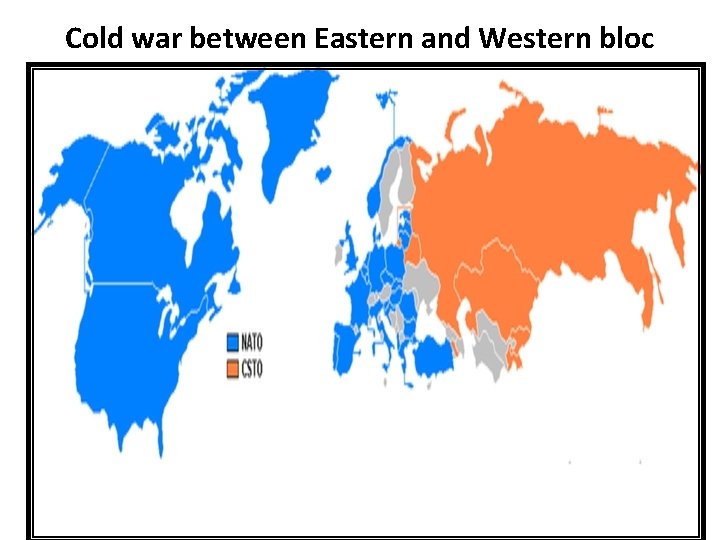
Cold war between Eastern and Western bloc
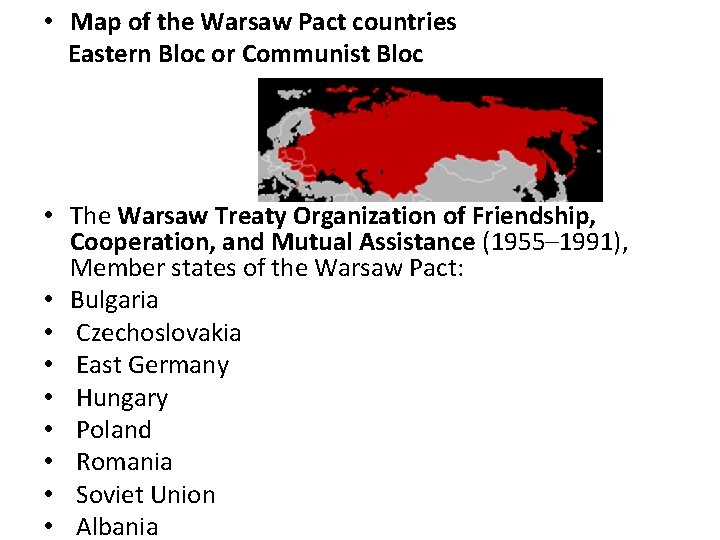
• Map of the Warsaw Pact countries Eastern Bloc or Communist Bloc • The Warsaw Treaty Organization of Friendship, Cooperation, and Mutual Assistance (1955– 1991), Member states of the Warsaw Pact: • Bulgaria • Czechoslovakia • East Germany • Hungary • Poland • Romania • Soviet Union • Albania
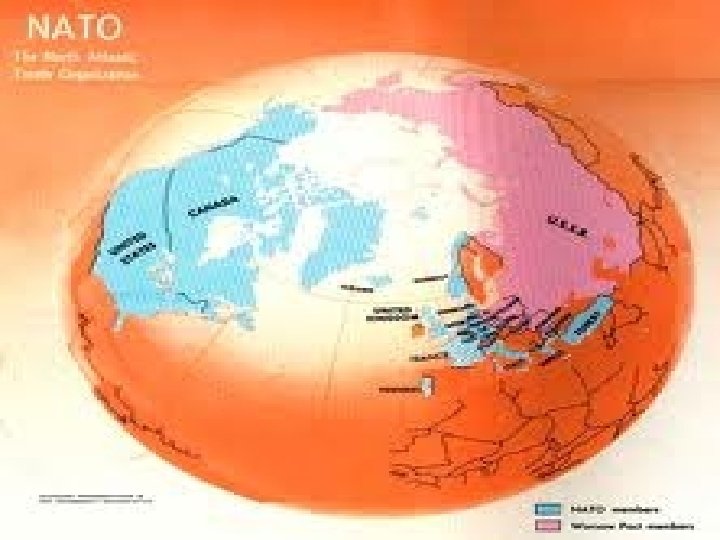
Western Bloc • The Western Bloc or Capitalist Bloc during the Cold War refers to the countries allied with the United States and NATO against the Soviet Union and its Allies (WARSA pact) • The Western Alliance: NATO 1. The United Kingdom and its Commonwealth of Nations, including Australia, India and Canada. The United States, France, Denmark, Portugal, Norway, Belgium, Iceland, Luxembourg, Italy, and the Netherlands in 1949 to form the North Atlantic Treaty Organization (NATO), the United States' first "entangling" European alliance in 170 years. West Germany, Spain, Greece, and Turkey would later join this alliance.
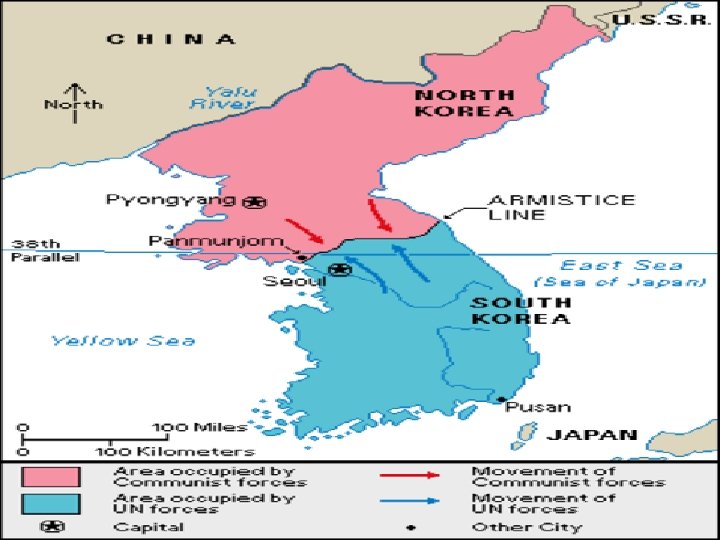
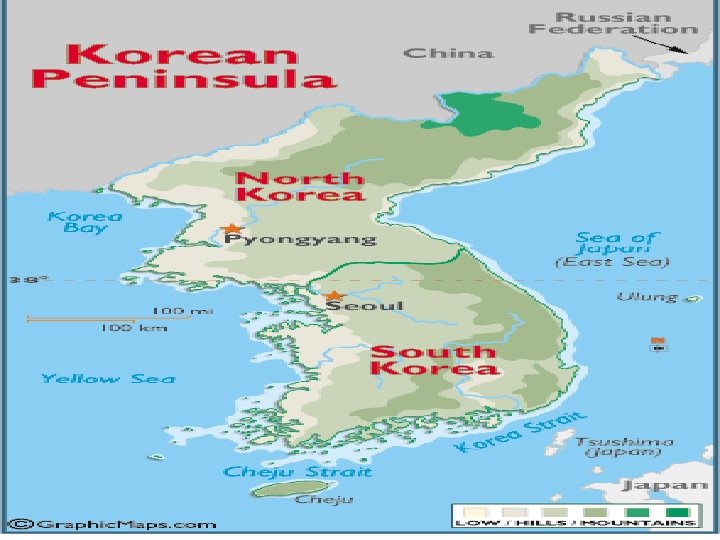
Korean war • The Korean War began on 25 June 1950, when North Korean forces launched an invasion of South Korea. • In 1950 the Korea Peninsula was divided between a Soviet-backed government in the north and an American-backed government in the south. • The division of Korea into two halves had come at the end of World War II. In August of 1945 the Soviet Union invaded Korea, which had been under Japan's control since 1910.
Korean war 1950 -53 North Korea • Supporting by USSR • Soviet troops remained in North Korea after the end of the war to rebuild the country. • Second World War meant that the 'new' states of China and North Korea were dependent on Soviet help in this area. South Korea • Supporting by USA, • UNO
Peninsula
1 st Phase: 1947 -53: Exploration and Friendship with All • • • 1 - Foundations of the Foreign Policy 2 - Relations with Afghanistan 3 -Relations with India 4 - Security Imperatives 5 - Relations with U. S. A. and U. S. S. R. 6 - Relations with Muslim Countries
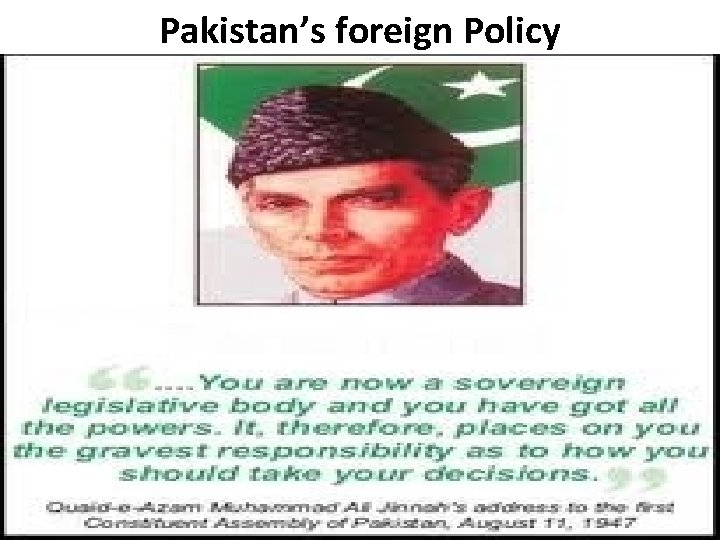
1. Foundations of the Foreign Policy Vision of Quaid about Pakistan’s Foreign policy • Quaid-i-Azam at a press conference in Delhi on 14 July 1947 define the strategic parameters of Pakistan’s foreign policy according to his own predilections; He remarked that “the new state will be most friendly to all nations. We stand for the peace of the world. We will make our contribution whatever we can. ”
• Prefiguring the doctrine of nonalignment, the Quaid-i-Azam, in his broadcast talk to the people of the USA in February 1948 said: “Our foreign policy is one of the friendliness and goodwill towards all the nation of the world. We do not cherish aggressive designs against any country or nation. We believe in the principle of honesty and fairplay in national and international dealings, and are prepared to make our contribution to the promotion of peace and prosperity among the nations of the world. Pakistan will never be found lacking in extending its material and moral support to the oppressed and suppressed peoples of the world and in upholding the principles of the United Nations Charter. ”
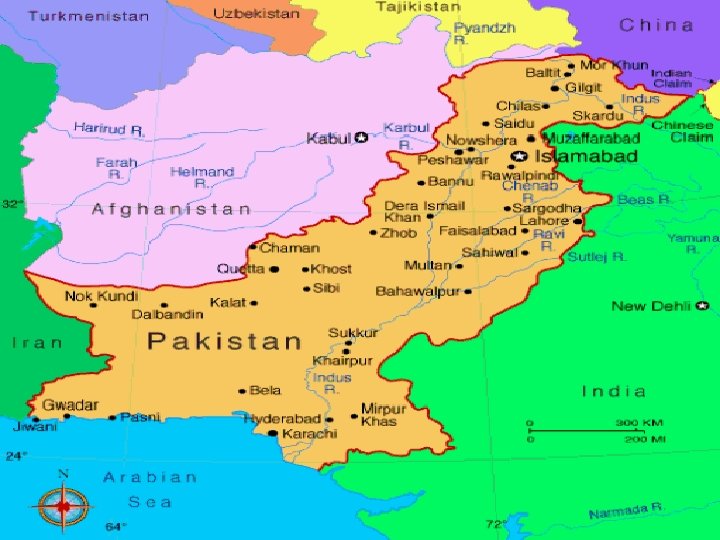
Strategic Importance OF Pakistan • The political importance of any country depends upon its geographical locations. Pakistan is a classic example of such country. • Pakistan is the land of Indus river in the same way the Egypt is the gift of Nile. • Indus land is the link between Central Asia and South Asia. • Due to strategic location, Pakistan became a focal point of the world. • Super power vying for establishing influence in the newly born country. • Pakistan is located at a region which has great political, economic and strategic location. It has been hub of activities of great powers for last 20 years. It has witnessed intervention of three great powers i-e • Britain, USSR, and USA. • Its significance was further enhanced during cold war when it becomes ally of US policy of containment of USSR and now the post cold war era has witnessed its significance particularly after the events of 9/11.
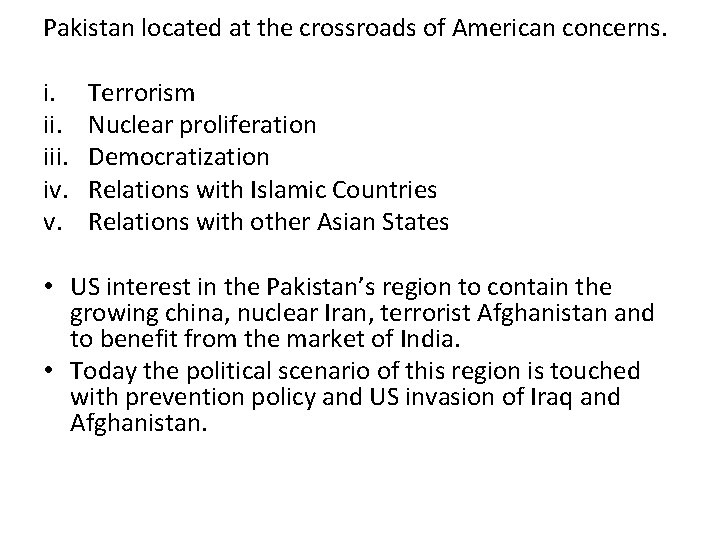
Pakistan located at the crossroads of American concerns. i. iii. iv. v. Terrorism Nuclear proliferation Democratization Relations with Islamic Countries Relations with other Asian States • US interest in the Pakistan’s region to contain the growing china, nuclear Iran, terrorist Afghanistan and to benefit from the market of India. • Today the political scenario of this region is touched with prevention policy and US invasion of Iraq and Afghanistan.
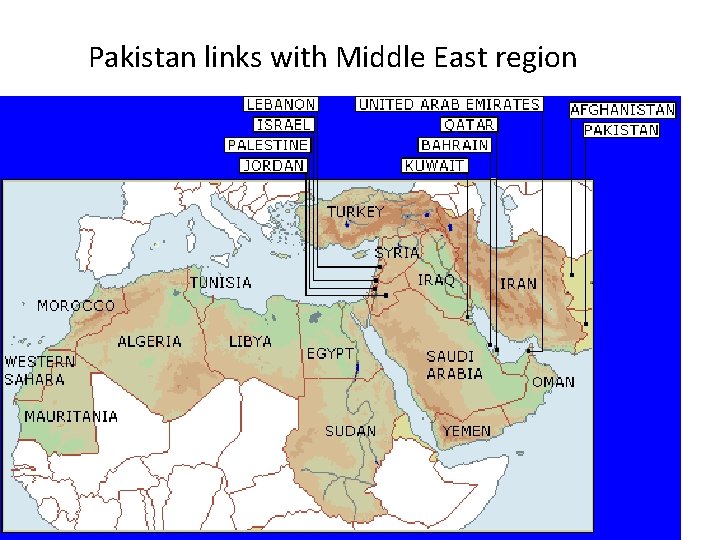
Pakistan links with Middle East region
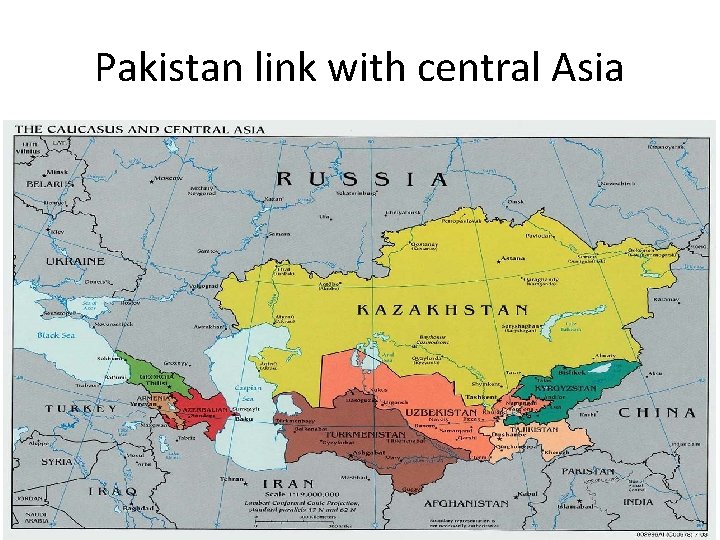
Pakistan link with central Asia
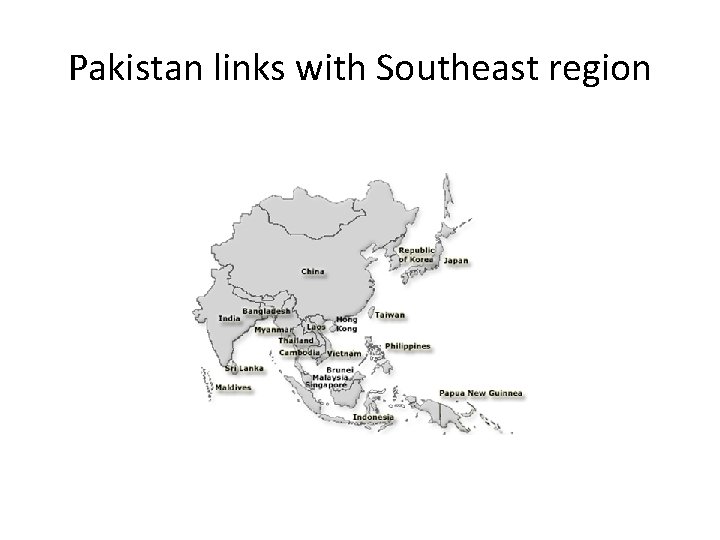
Pakistan links with Southeast region
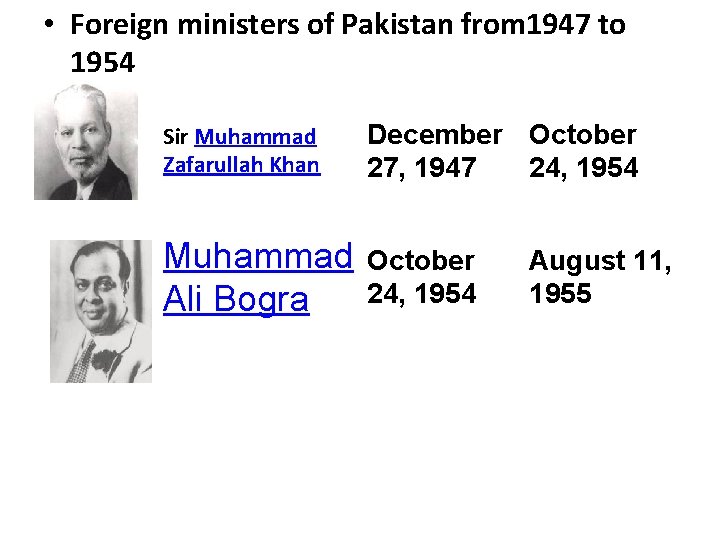
• Foreign ministers of Pakistan from 1947 to 1954 Sir Muhammad Zafarullah Khan December October 27, 1947 24, 1954 Muhammad Ali Bogra October 24, 1954 August 11, 1955
Major determinants of Pakistan’s Foreign Policy 1. Defense capability 2. Education 3. trade 4. Economic compulsions 5. National Security 6. Ideology 7. National Interests 8. Diplomacy 9. Public Opinion 10. Demography 11. Historical Legacy 12. Geographical location
2. Pak-Afghan Relations • Afghanistan is a neighboring state of Pakistan. The people of Pakistan have close historical, ethnic and cultural tie with people of Afghanistan. • We have always maintained mutual solidarity and would continue to do so in conformity with our policy of support for the State of Afghanistan and well beings of its people. A peaceful and united Afghanistan is in the strategic interest of Pakistan. • The Pakistan-Afghan boundary was drawn in 1893 by Sir Mortimer Durand was accepted by the king of Afghanistan in a treaty that same year. The definition of this boundary, called the Durud Line, was not in doubt when Pakistan became independent in 1947.
• In initial era Pak-Afghan relations were in critical phase , Afghanistan was first Muslim State in the World whose against the membership of Pakistan in UNO. • Afghanistan put forwarded the anti Pakistan resolution in UNO. • Pakistan joined the United Nations on September 30 1947, • Afghanistan didn’t consider Pakistan an independent state, He considered Pakistan is a colony of British. • Irredentist claim of Afghanistan on Pakistani territory (N. W. F. P+ Baluchistan)
• In mids 1950 s Afghanistan supported by USSR because Pakistan signed Aid, defence alliances with USA. • Spectre of Soviet Union backed Indo-Afghan military pressure from Western and Eastern border against Pakistan. • Pakistan’s Security threat: 1. primarily from India eastern border 2. secondary from Afghanistan Western border
Pak-Iran Relations • Iran is a giant in energy sector with one feet in the Persian Gulf (rich in oil+gas) and other feet in the newly emerged huge • Pak-Iran border agreement signed in 1893. • There is no any border Dispute between both states. • Pakistan wants Iran provide him railway link towards Europe Market. • Iran enhancing rail network • Kirman Zahidan Taftan • This rail way link connect Pakistan with Europe. • It will be less expensive for businessman of Pakistan . • Iran railway network help the Asian people can move towards Persian Gulf, central Asia and Turkey. ECO is the close and warm ties between two states.
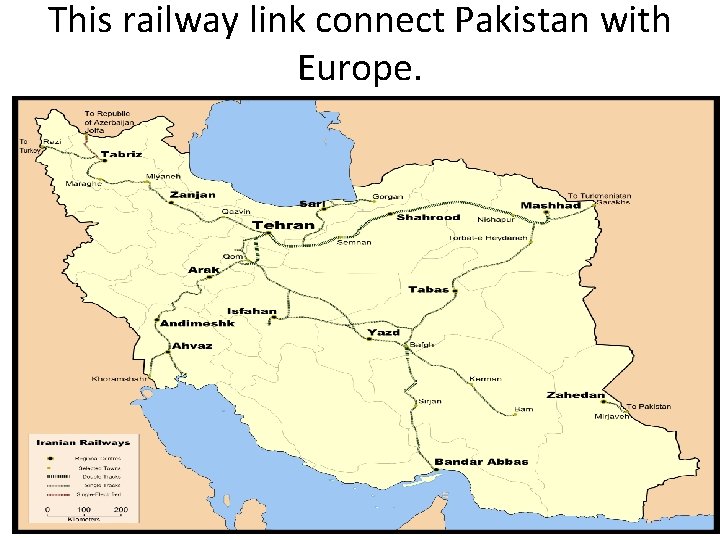
This railway link connect Pakistan with Europe.
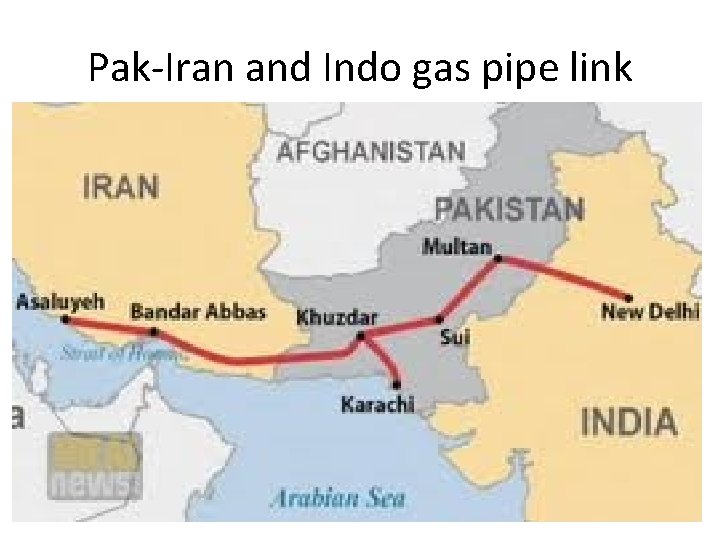
Pak-Iran and Indo gas pipe link
3. Pak-Indo Relations • Eastern neighboring state of Pakistan • Foreign policy built hostility and distrust into Pakistan-India relations. Most of these problems were the product of the partition process, the river-water dispute; and bilateral trade. • First Kashmir war (1947 -48) the outbreak due to controversies about the accession of the princely states of Junagadh, Hyderabad, and Jammu and Kashmir.
• Indian troops on the border in the Punjab in 195051, when Indian ruling leaders, Congress party, regretting the establishment of Pakistan; some even talked about the reunification of India and Pakistan. Ø 4. Security imperatives • The security imperatives led the policy makers to pay special attention to the reorganization of the armed forces • Pakistan purchased some weapons and military equipment from a number of Western states for modernization of the three services of the armed forces. British officers were retained and some • Pakistani officers were sent to Great Britain and other Commonwealth states for training. However, the pace of modernization was rather slow until Pakistan joined the West-sponsored security pacts in 1954 -55.
5 - Relations with U. S. A. and U. S. S. R. • in first phase Pakistan’s foreign policy was labelled as the non-aligned. Pakistan was essentially trying to maintain neutrality in the on going cold war era. Both USA and USSR were inviting Pakistan for supporting in the cold war alignment. • At that time Pakistan was confronted with all sort of political, economical, religious problems, so it was in position to play important role in the international arena.
• Pakistan received invitation from both superpowers. • In June 1949, when the Soviet Union invited Pakistan's first Prime Minister, Liaquat Ali Khan, for an official visit. The invitation was accepted but the visit did not materialise. • Instead, Liaquat Ali Khan visited the United States in May 1950, and his speeches and statements during this visit manifested a strong pro-West disposition of the Pakistan government. • The Soviet leadership was unhappy over Liaquat Ali Khan's decision not to visit the Soviet Union.
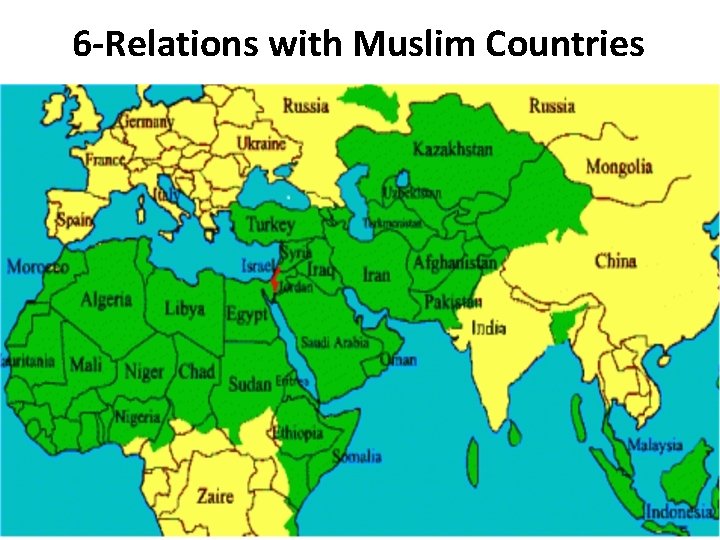
6 -Relations with Muslim Countries
• Pakistan was trying to promote harmony and cooperation amongst the Muslim states. • Pakistan wanted to made a Muslim bloc of all Muslim Countries. • The leaders of most Muslim states did not show interest in establishing an international forum of the Muslim states. Indonesia and Egypt strong opposed this idea of Pakistan's efforts to promote unity in the Muslim world. Egypt said “Pakistan came into being on 14 August not Islam”. • Pakistani leadership was disappointed by the response of the Muslim leaders. • Pakistan was, however, able to cultivate very cordial • relations with Iran, Turkey and Saudi Arabia.
2 nd phase 1953 -62: Alignment with the West • The second phase of Pakistan's foreign policy was characterized by a transition from an independent foreign policy to a multifaceted alignment with the West. Ø Causes of pro-West Alliances • The deepening economic crisis in the early 1950 s also contributed to this decision. • In early 1952, the prices of jute and cotton began to drop in the International market which adversely affected Pakistan's foreign trade. • Pakistan was also faced with a serious shortage of wheat in 1952 -53. The United States came for Pakistan's rescue by offering a gift of wheat in 1953 which helped to overcome food shortages and built a lot of goodwill in Pakistan for the donor.
• Several other factors push Pakistan towards Alignment with USA. 1. Suffered sense of isolation in the world. 2. Muslim Unity were not headway. 3. Its became clear international organizations UNO and Commonwealth would not solve the Pak-indo conflicts. 4. USA was willing to assist those state who were agree on the strategy of “Containment of Communism”.
1953 -62: Alignment with the West 1 - Alignment with the West 2 - Mutual Defence Assistance Agreement - SEATO 3 - The Baghdad Pact / CENTO 4 - Defence and Economic Assistance from the U. S. • 5 - Cost of Alignment with the West • 6 - Relations with China • • •
1 - Alignment with the West 1 st pact Mutual Defence Assistance Agreement • In February 1954, Pakistan agreed on the U. S. initiative to develop close cooperation with Turkey in the political, economic and cultural spheres. A formal Turkey-Pakistan Agreement was signed in April 1954, followed by a Mutual Defence Assistance Agreement between the United States and Pakistan in May. • Condition of USA : “Pakistan was obliged not use this assistance for aggression against any Nation or state. ”
2 nd pact South East Asia Treaty Organisation (SEATO) • In September 1954, Pakistan joined (SEATO) or the Manila Pact. Its members (Australia, France, Great Britain, News Zealand, Pakistan, Philippines, Thailand the U. S. ) undertook to develop capacity “to resist attack and counter subversive communist aggression” and promote cooperation for “economic progress and social well being. ”
• Pakistan's alignment with the United States yielded several advantages. American economic assistance grants, loans, goods and services gave a boost to Pakistan's faltering economy. § Pakistan received grant assistance valued at US $ 650 million, and credit facilities worth US $ 55 The U. S. Military Assistance Advisory Group (USMAAG) was set up in Pakistan to advise and guide the modernisation of the armed forces and the security arrangements. • The military assistance included arms and ammunition, artillery pieces, APCs, and transport for the Army; aircraft F-104, B-57, F-86, and C 130 for the Air Force; naval defence equipment, and communication equipment.
rd 3 pact The Baghdad Pact/CENTO • One year later (September 1955) Pakistan joined the Baghdad Pact (renamed CENTO in 1959 after Iraq's withdrawal). • Pakistan attached greater importance to this pact because it involved three Muslim states, i. e. Iraq (up to 1959), Turkey and Iran. • Great Britain was also its member; the United States maintained close links with it and participated in its military committee. • The members of the Baghdad Pact agreed to cooperate with each other in the field of defence and security.
- Defence and Economic Assistance from the U. S. Pak-USA bilateral agreements • A Bilateral Agreement of Cooperation was signed between Pakistan and the United States in March 1959’ • Article 2 of the Agreement provided that the United States would supply military and economic assistance to Pakistan as may be mutually agreed upon. • Pakistan reciprocated by providing a communication/air base to the United States at Badaber, near Peshawar, for ten years: 1959 -69.
• Soviet Union criticized the Pakistan Alignment with west and threat Pakistan’s boundary would not be used against USSR. • USSR supported Kashmir issue with India and support to Afghanistan against Pakistan. In 1961, the Soviets Union suffered heavily. The Soviet leaders applied two pronged strategy against Pakistan. • First, the Soviet leaders made a blistering criticism of Pakistan's alignment with the U. S. and threatened Pakistan with dire consequences if Pakistan allowed its territory to be used against the Soviet Union. • Second, they extended support to India on the Kashmir question, describing it an integral part of India. • They also supported Afghanistan's irredentist claims on Pakistani territory. • Relations with China • China avoided an open condemnation of Pakistan's participation in these pacts and showed a remarkable understanding of the factors that led Pakistan to join the Western camp.
Cost of Alignment with the West • The alignment with the West was not cost-free. ctricism on Pakistan foreign Policy. • Muslims states also were not in favor of PAK-US pacts. Pakistan's participation in defence pacts came in conflict with its desire to cultivate close and cordial relations with the Muslim states. With the exception of Iran and Turkey which shared the defence arrangements, the Middle • Eastern states responded negatively to Pakistan's security ties with the West.
3 rd phase 1962 -71: Transition • • • 1 - Rethinking about the Alignment Policy 2 - Improving Relations with the Soviet Union 3 - Improving Relations with China 4 - Diminishing Ties with the U. S. 6 - Relations with India 7 - Crisis in East Pakistan and International Response
1 - Rethinking about the Alignment Policy • Pakistan's policy-makers began a review of their alignment with the U. S. in the early 60 s due to their strains Relations with other states. • Two major developments contributed to this. • First, Pakistan was agitated by the Soviet Union, when it downed an American spy plane, U-2, which had taken off from Badaber. • Second, the importance of land bases declined because the United States developed ICBM and nuclear submarines fitted with missiles. Furthermore, the Kennedy administration, installed in January 1961, cultivated India and projected it as a counterweight to China.
• In 1961 Ayub Khan visited USA despite Ayub Khan's pleadings, the U. S. continued with its policy of cultivating India in total disregard to Pakistan's concerns. The U. S. and a number of other Western states rushed weapons and military equipment to India after the • Sino-Indian border war in October 1962. They also conducted joint military exercises with India and offered a nuclear umbrella to India.
2 - Improving Relations with the Soviet Union • Disappointed by the change in the U. S. policy, the Pakistani leaders decided improving ties with the socialist/communist countries. • Pakistan took a number of steps to improve its relations with the Soviet Union and China during 1961 -63. Pakistan and the Soviet Union entered into a number of agreements for economic and technical cooperation.
• In 1961 USSR offer oil exploration for Pakistan. • Z. A Bhuttoo and Ayub Khan visited Moscow in Jan and April 1965. Ayub Khan was first head of state who visit the Soviet Union. • He signed many culture exchange agreement with USSR. The Soviet Union consented to assist Pakistan in implementing 30 development projects during the Third Five Year Plan (1965 -70). • By mid-1960 s the Soviet Union adopted a balanced approach towards Pakistan-India disputes, including the Kashmir problem,
USSR remained neutral in 1965 Pak-Indo war. • President Ayub Khan and Prime Minister Lal Bahadur Shastri met in Tashkent in January 1966 on the invitation of the Soviet Prime Minister and signed a peace agreement, commonly known as the Tashkent Declaration of January 1966 for normalisation of their bilateral relations in the aftermath of the 1965 war.
3. Improving Relations with China • Pakistan's relations with China improved more rapidly. • They signed several agreements in 1963 to expand their bilateral relations. These included an agreement on trade, commerce and shipping • in January 1963, a border agreement for demarcation of Pakistan-China boundary in March 1963, an air services agreement in August, and a barter trade agreement in September. • Pakistan International Airlines (PIA) resumed its regular air service to china on April 29, 1964.
• Zhou Enlai declared Chinese support to the right of self determination for the people of Kashmir during his visit to Pakistan in February 1964. • 4. Diminishing Ties with the U. S. • USA unhappy over Pakistan's efforts to improve its relations with China and Soviet Unions. • President Nixon provided some arms and equipment during 1970 -71 to Pakistan. • Pakistan played role in Sino-American relations in July 1971 Nixon visited Beijing
Relations with India • The Kashmir problem was the major stumbling block in the normalisation of their relations. Six rounds of talks were held between the Foreign Ministers of India and Pakistan on Kashmir during December 1962 and May 1963 on the initiate of the UK and the U. S. These talks proved inconclusive because the two sides refused to show any flexibility in their positions on Kashmir.
4 TH Phase 1972 -79: Bilateralism and Nonalignment 1. 1972 -79: Bilateralism and Nonalignment 2 - Pak-India Relations: towards improvement 3 - Strengthening of Ties with Major Powers 4 - Nuclear Technology and Relations with the U. S. 5 - Pakistan and the Muslim World
1. 1972 -79: Bilateralism and Nonalignment • Pakistan withdraw from SEATO in 1972 that joined in Sep. 1954. Pakistan also with draw from Commonwealth in 1972 that joined in 1947. • Pakistan returned to the Commonwealth in September 1989. • March 1979 Pakistan withdraw from CENTO. • In Sep 1979 Pakistan became the member of non-aligned Summit.
Pak-India Relations: towards improvement • 1971 Indo-Pakistan war, resulting in the break up of East Pakistan and its establishment as an independent state. • India and Pakistan signed a peace agreement at Simla on July 2, 1972 for dealing with the 1971 war. • Pakistan recognised Bangladesh in February 1974 on the eve of the 2 nd Islamic Summit Conference held at Lahore.
3. Strengthening of Ties with Major Powers • Pakistan succeeded in defusing antagonism that marked its relations with the Soviet Union against the backdrop of the Bangladesh crisis. The visits of Zulfikar Ali Bhutto to Moscow in 1972 and 1974 helped the two sides to established bilateral trade and economic cooperation expanded during these years. • Pakistan's relations with China expanded rapidly.
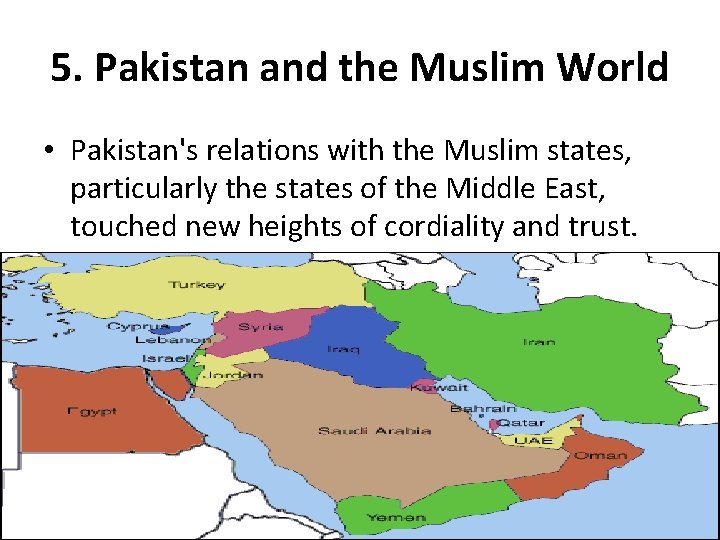
5. Pakistan and the Muslim World • Pakistan's relations with the Muslim states, particularly the states of the Middle East, touched new heights of cordiality and trust.
4. Nuclear Technology and Relations with the U. S. • IN 1976 Pakistan joined agreement with France to acquire Nuclear reprocessing Plant. • When the U. S. discovered that Pakistan was secretly working on setting up uranium enrichment facility at Kahuta, it suspended all economic assistance. • The U. S. took several steps blocking the deal Pak. France deal on Nuclear processing Plant. • In 1978, the U. S. succeeded in convincing France to withdraw from the agreement for supplying a nuclear reprocessing plant to Pakistan.
5 th Phase 1980 -90: Afghanistan and Partnership with the United States • 1 - Soviet Invasion of Afghanistan • 2 - Revival of Pakistan-U. S. Relations • 3 - Pakistan-China Relations • 4 - Pakistan and the OIC
1 - Soviet Invasion of Afghanistan • The Soviet military intervention in Afghanistan on December 27, 1979. • Pak-USSR relations was strained, because it was threat to Pakistan demanded withdraw of USSR’s troops. 3 million Afghanis poured into Pakistan. • 2 - Revival of Pakistan-U. S. Relations. • Pakistan offered of assistance by USA. • Six year package of USA to Pakistan(1981 -87) $3. 2 billion. • 1987 -93 $4. 2 billion.
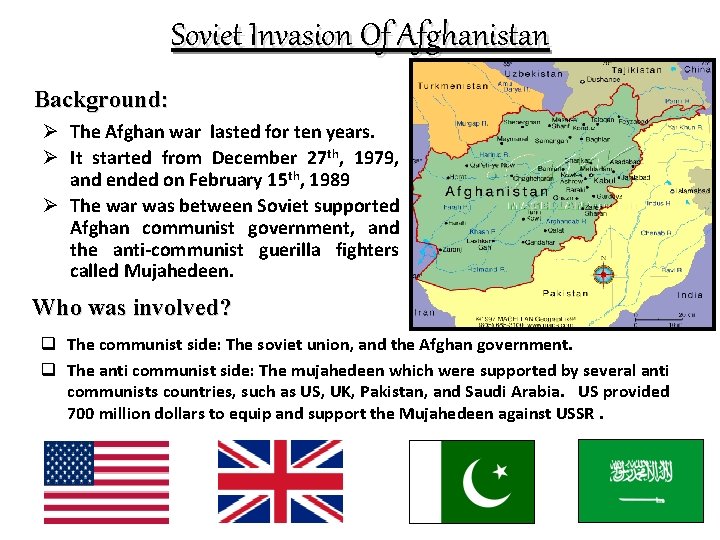
Soviet Invasion Of Afghanistan Background: Ø The Afghan war lasted for ten years. Ø It started from December 27 th, 1979, and ended on February 15 th, 1989 Ø The war was between Soviet supported Afghan communist government, and the anti-communist guerilla fighters called Mujahedeen. Who was involved? q The communist side: The soviet union, and the Afghan government. q The anti communist side: The mujahedeen which were supported by several anti communists countries, such as US, UK, Pakistan, and Saudi Arabia. US provided 700 million dollars to equip and support the Mujahedeen against USSR.
What Happened? q 1979 The Soviet controlled cities, large towns. q 1980 -1981 The Mujahedeen spread out freely throughout the countryside. The Soviet troops tried to crush them by many tactics, but the guerrilla fighters escaped their attacks. q 1982 The war quickly settled down into a stalemate q 1982 – 1983 The Soviets then attempted to eliminate the Mujahedeen's by bombing the rural areas. By 1982 some 2. 8 million Afghans had immigrated a to Pakistan, and another 1. 5 million had immigrated to Iran. q 1984 – 1988 The Mujahedeen had the upper hand by using shipments of weapons from the US through Pakistan, such as shoulderfired antiaircraft missiles. q In early 1989 the United States, Pakistan, Afghanistan, and the Soviet Union signed an agreement called as Geneva agreement to withdraw Soviet troops and return Afghanistan to a status of peace. How did it end/Soviet’s withdrawal v After 10 years of fighting where not really much was accomplished, the Soviets withdraw in 1989. v During the last part of the war, Soviet prepared to withdraw focusing on only defending against the Mujahedeen. v Almost 15000 Soviets soldiers had died in the War. v About one million Afghans had been perished. v The Soviet war in Afghanistan was one of the events that led to the end of the USSR.
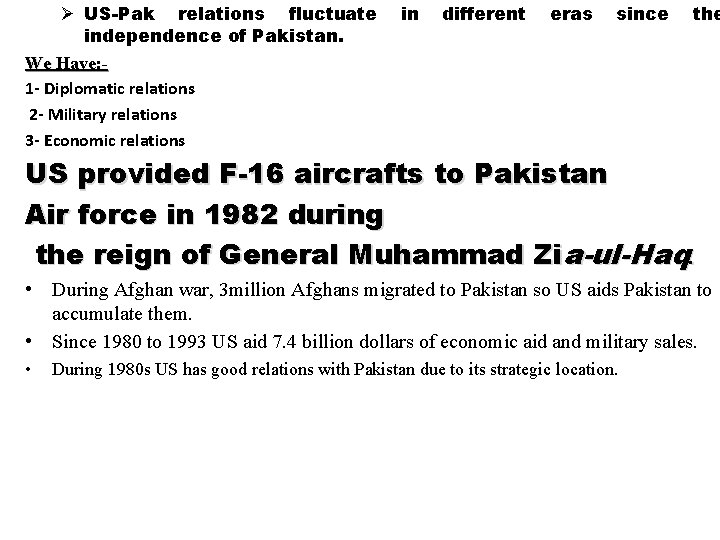
Ø US-Pak relations fluctuate independence of Pakistan. We Have: 1 - Diplomatic relations 2 - Military relations 3 - Economic relations in different eras since the US provided F-16 aircrafts to Pakistan Air force in 1982 during the reign of General Muhammad Zia-ul-Haq. • During Afghan war, 3 million Afghans migrated to Pakistan so US aids Pakistan to accumulate them. • Since 1980 to 1993 US aid 7. 4 billion dollars of economic aid and military sales. • During 1980 s US has good relations with Pakistan due to its strategic location.
• In May 1988 Soviet withdraw from Afghanistan UN negotiated and settled this problem. • April 1988 Geneva agreement signed among Pakistan, Afghanistan, USA and USSR. 3. Pakistan-China Relations • China extended full support to Pakistan in its interaction with India and endorsed Pakistan's position on the Afghanistan crisis. 4. Pakistan and the OIC Pakistan discussed Afghanistan issue with OIC members.
6 th Phase 1990 -2001: Post Cold War Era and Pakistan's Dilemmas • 1 - Another Drift in Pak-US Relations • 2 - Continuation of the Afghanistan Problem • 4 - Going Nuclear
1 - Another Drift in Pak-US Relations • Four major issues dominated Pakistan's foreign Policy in the 1990 s. • 1. Drift pose in Pak-US relations due to nuclear explosions. • 2. Afghan problems continued. • 3. Kashmir insurgency and its impact on Pak. Indo relations. • 4. Nuclear explosion. • U. S. imposed four types sanctions on Pakistan due to Nuclear Explosions.
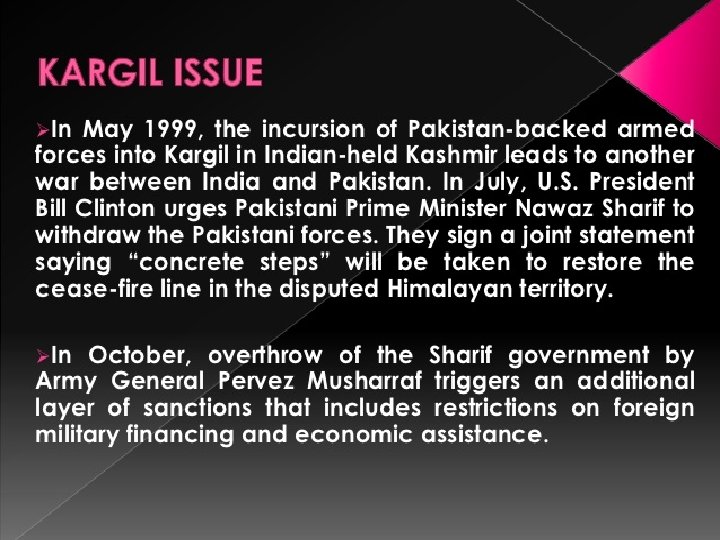
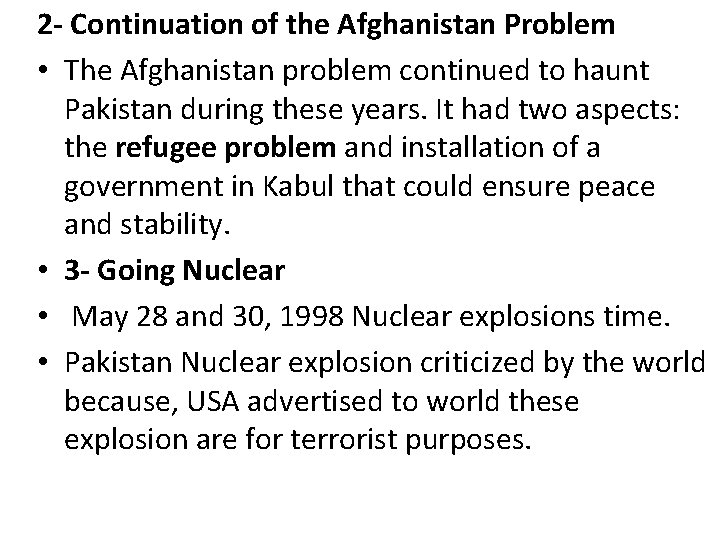
2 - Continuation of the Afghanistan Problem • The Afghanistan problem continued to haunt Pakistan during these years. It had two aspects: the refugee problem and installation of a government in Kabul that could ensure peace and stability. • 3 - Going Nuclear • May 28 and 30, 1998 Nuclear explosions time. • Pakistan Nuclear explosion criticized by the world because, USA advertised to world these explosion are for terrorist purposes.
7 th Phase 2001 Onwards: Counter Terrorism[
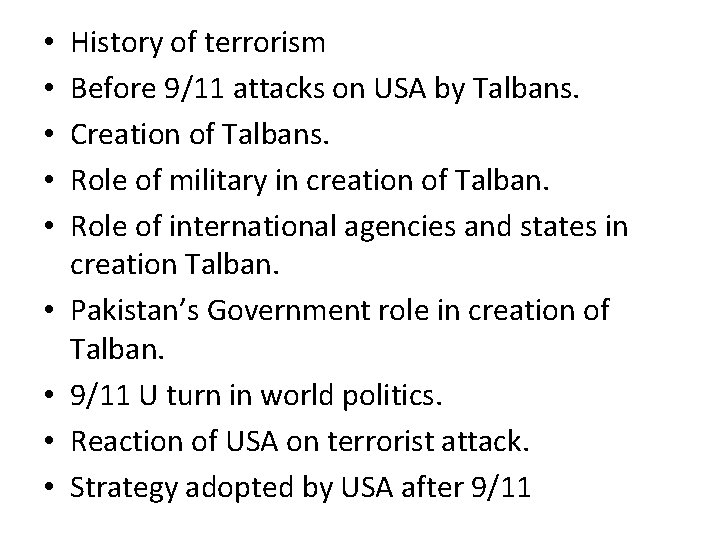
• • • History of terrorism Before 9/11 attacks on USA by Talbans. Creation of Talbans. Role of military in creation of Talban. Role of international agencies and states in creation Talban. Pakistan’s Government role in creation of Talban. 9/11 U turn in world politics. Reaction of USA on terrorist attack. Strategy adopted by USA after 9/11
• Allegations of USA on Afghanistan. • Reaction of world specially China and Russia • USA approach towards Pakistan at the time of 9/11. • Pakistan role in terrorism as Ally of USA. • Impact of terrorism on Pakistan specially on northern areas of Pakistan. • Pak- Afghan strained relation after 9/11. • Drone attack in northern area. • Conclusion. • Suggestions
• Major conflict states and chance of war in this existing Scenario. • USA- Saudi Arabia ties. • Who is emerging as the leader of middle East, Iran or Saudi Arabia?
U turn in World Politics • on 11 September 2001 Four series of suicidal attack that committed on World trade Centre and on Pantagone military training Centre. The U. S. identified the Al-Qaeda movement of Osama bin Laden based in Afghanistan • After 9/11 Security and business are two main US interests in the region while Pakistan is playing a front line role in the war against terrorism. • USA withdraw from three categories of sanctions to counter the terrorism. • Russia and China decided to adopted measures to “counter the terrorism”. • Pakistan became very important alley for USA, because its neighboring state accused with terrorist attack.
• Pakistan open airspace of Sindh and Baluchistan for USA for operation in Afghanistan. • Rival of Pak-USA bilateral relations. • Pakistan debt amount to US $12. 5 billion for 38 years. • Pakistan is under intense international threat as a frontline state in the global fight against terror.
• The events of 9/11 represented a critical edge in Pakistan’s foreign policy. General Musharraf was among the first foreign leaders to have received a clarion (loud)call from Washington. “You are either with us or against us” was the massage. • Pakistan’s political history replete with endemic crises and challenges that perhaps no other country in the world had ever experience, • Pakistan stood there horrified already burdened with a legacy of multiple challenges, both domestic and external, when the tragedy of 9/11 presented it with new critical realities, and also an opportunity to think anew and act anew. • Pakistan faced the worst dilemma of its life. It did not know which way to go and which way not to. Terrorism became world’s foremost and “unifocal” concern transcending all other global challenges.
• US-Pakistan relations in historic perspective: • Over the last six decades relations between Pakistan and US have seen many ups and downs, • Pakistan once viewed, as the most allied ally when suited to US interest in 1950 s, • became the most sectioned ally of the US in 90 s. The intensity of relations varied from one extreme to that of completely ignoring the other as in 1960 -71, to that of urgent action as was seen immediately after the invasion of Afghanistan by the Soviet Union in December 1979 or during the war on terrorism after 9/11 • . A new era of US-Pakistan relations started after the event of 9/11. Pakistan took u-turn towards Afghanistan.
• Anti Americanism in the Muslim world: • Since September 2001 till today, that is, just within nine years the US has lost much of its good will and probably all of its moral foundations essentially because of its foreign policy, its imperialistic attitude of not listening to its allies and its outright disregard for international law, erosion of its moral ground and imposition of its own culture and values upon others. • Botched diplomacy, imperialistic policies and brutal expression of its power have left legacy of resentment, fear and anxiety especially in the Muslim World. • Many Muslims also stressed that Israel’s political and territorial strength has not exactly been domestically resourced. It has developed rather as a rentier state(income invested), depending heavily on outside, specifically American, assistance. From 1949 to 2002 US grants to Israel totaled over $ 87 billion and from 1991 the annual amount registered a dramatic rise, reaching a little more than $4 billion in the fiscal year of 2000. Further Muslims hold that the US has persistently overlooked that its sides with the state that has been progressively taken over by Jewish extremists.
• Brutality of us towards other countries: From 1945 to 2003, the US attempted to overthrow than 40 foreign governments, and to crush more than 30 populistnationalist movements fighting against intolerable regimes. In the process, the US bombed some 25 countries, caused the end of life for several million people, and condemned many million more to a life of agony and despair. • America treats itself above all laws and conventions. Its shameless invasion of Iraq, the merciless massacre of its innocent civilians and horrific torture of suspects swelled the ranks of American-haters and created many a suicide bombers. • When the US indulges in military adventures abroad, it is not free of reaction at home. • Domestic politics: People within the US have been influenced by an increasing appreciation of what their country represents to the outside world.
• Post 9/11 challenges faced by Pakistan: • Pakistan faced worst dilemma of life. It seemed as Pakistani president and officials have become the sole spokesmen for the US in threatening the Taliban and want to convey that our cooperation in the US lead effort is unconditional and we would not even let our national interest and integrity come in way of this cooperation. • In Musharraf own words, 9/11 “came as a thunderbolt” presenting acute challenges as well as opportunities. • The important challenges faced by Pakistan in changed world scenario after 9/11 events are Pakistan nuclear program, • Kashmir issue, anti terrorism movement, and the economy of Pakistan, • indo-US strategic and civil cooperation agreements, a ten years defense pact, a nuclear agreement and agreement on civil nuclear cooperation. • The situation in Pakistan has assumed many alarming proportions as the suicide bombers that once targeted the American soldiers and Western installations in Afghanistan has turned their guns towards Pakistan. • Pakistani forces are fighting against terrorists and insurgents on its own soil. Drone attacks on our people by US led forces have become daily routine. US special operations forces seemed in FATA to provoke Pakistan army to launch full scale attack in North Waziristan. • The latest act of terrorism has ensured that Pakistani living America will again be singled out in their workplace, recreational centers, school, colleges, restaurants, trains, buses, and even on the streets. Pak army are fighting against terrorists and all these thorns will be gradually weeded out from our garden, our Pakistan.
• Conclusion: • A proxy war is being fought on our soil. Pakistan is the only Muslim country with an ongoing military operation against its own people. We have brought the anti-Taliban war into Pakistan which puts our armed forces on the wrong side of the people. • Our sovereignty is being violated. Our freedom of action in our own interest is being questioned and undermined. We are accepting the responsibility for crimes we have not committed. Our problems are further implicated by the complex regional configuration with American sitting in Afghanistan, new Indo-US nexus(links) and Indian increasing influence in Afghanistan. Our domestic failures have seriously constricted our foreign policy options. Our problems are not external but domestic. We need domestic consolidation(unity), politically, economically and socially.
- Slides: 83