
PairShare What is an ecosystem An ecosystem includes

- Slides: 47
Pair-Share What is an ecosystem?
An ecosystem includes: Ø all the organisms in a defined space Ø the physical environment they live in Ø the interactions between the organisms and the environment
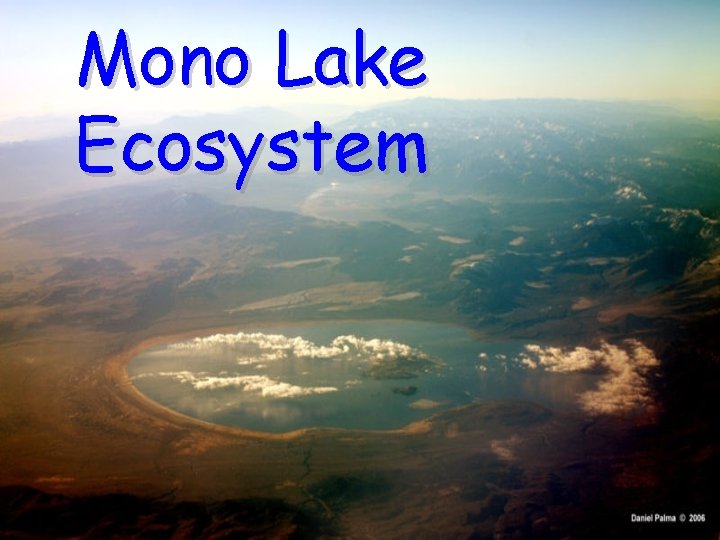
Mono Lake Ecosystem
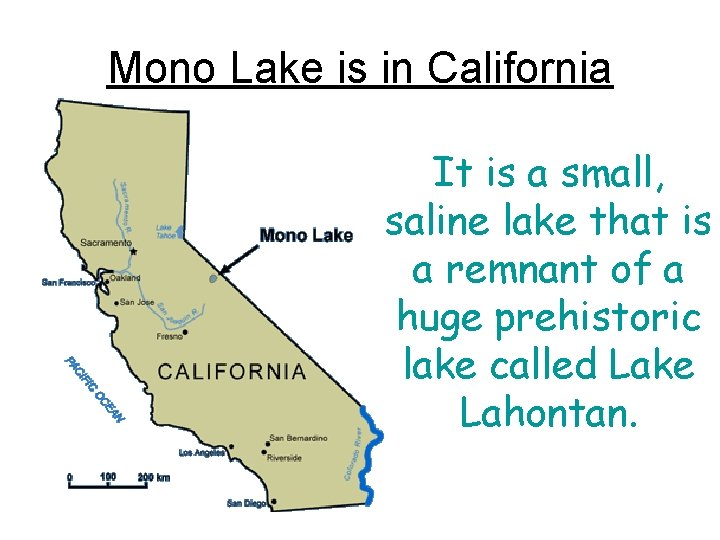
Mono Lake is in California It is a small, saline lake that is a remnant of a huge prehistoric lake called Lake Lahontan.
Pair-Share What does the word saline mean?
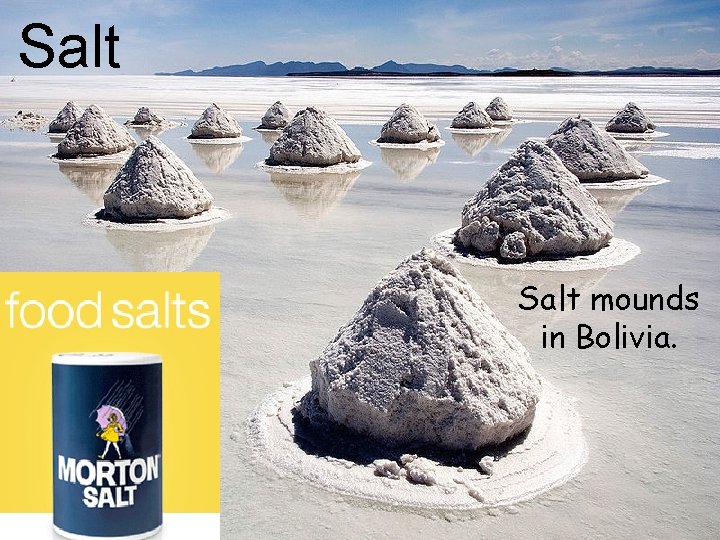
Salt mounds in Bolivia.
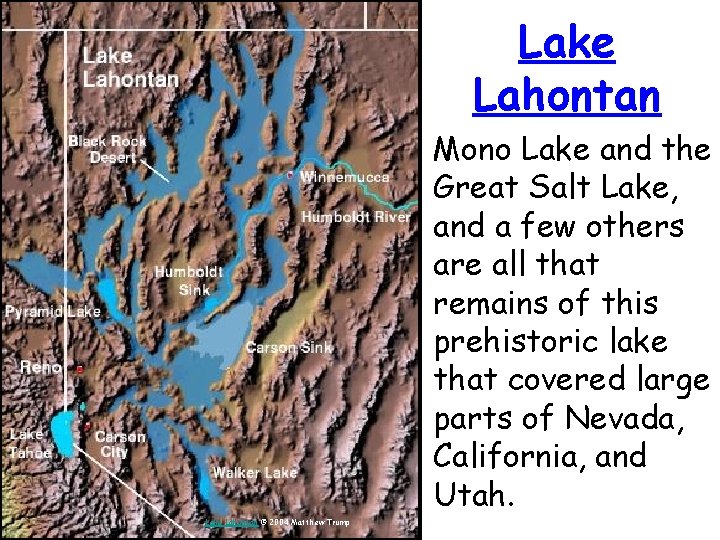
Lake Lahontan Mono Lake and the Great Salt Lake, and a few others are all that remains of this prehistoric lake that covered large parts of Nevada, California, and Utah. Lake Lahontan © 2004 Matthew Trump
The most unusual feature of the 760, 000 year old lake: it is three times saltier than sea water.
Part of the youngest volcanic chain in North America, Negit Island is a 350 year old (or new) cinder cone volcano.
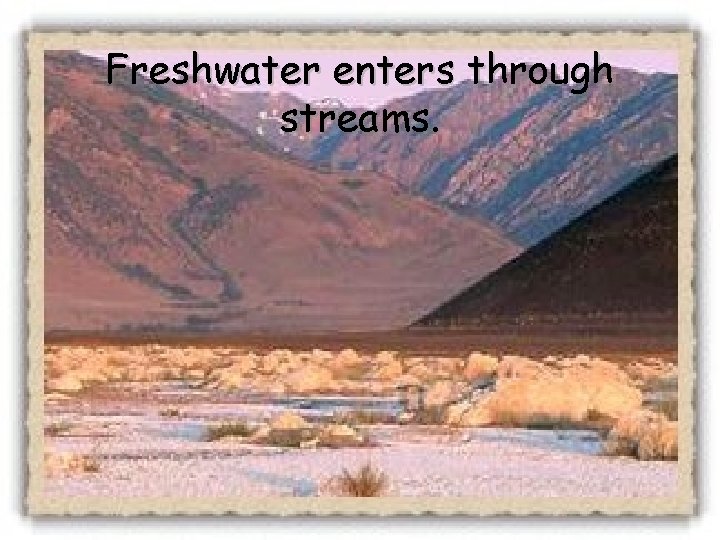
Freshwater enters through streams.
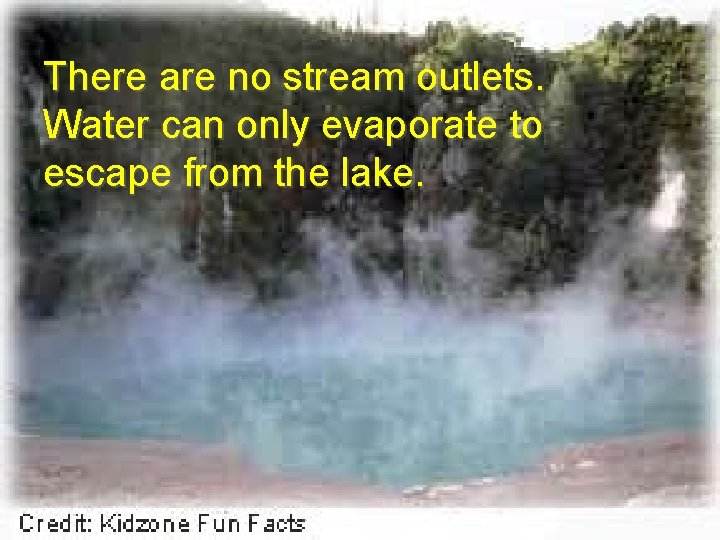
There are no stream outlets. Water can only evaporate to escape from the lake.
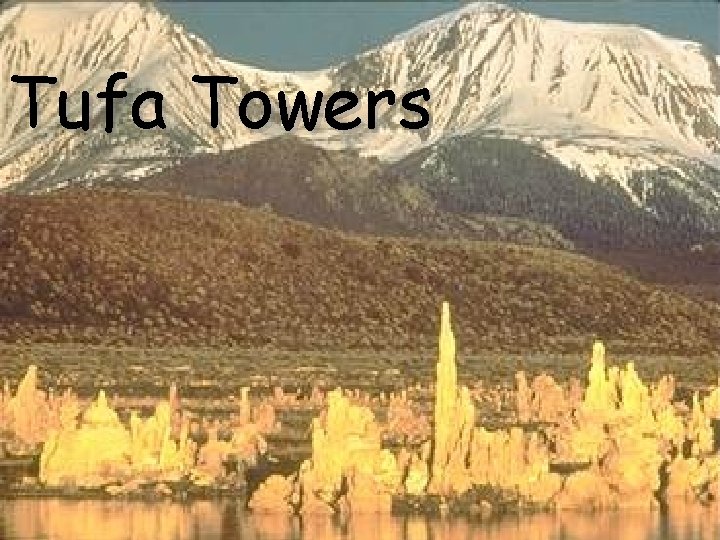
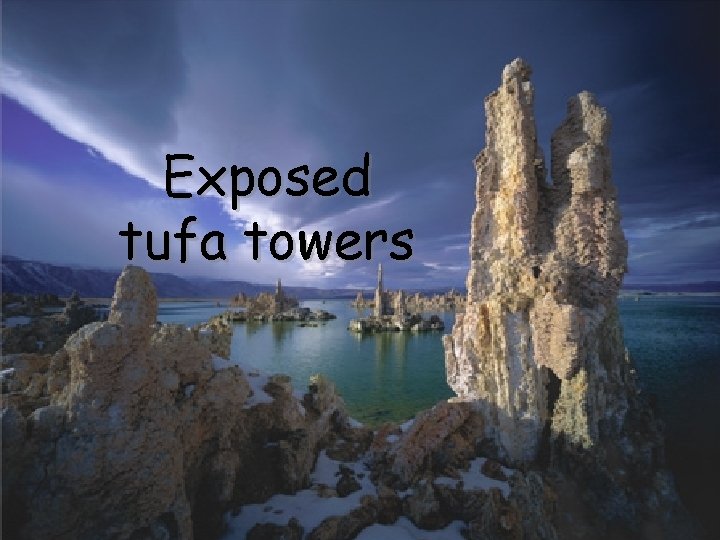
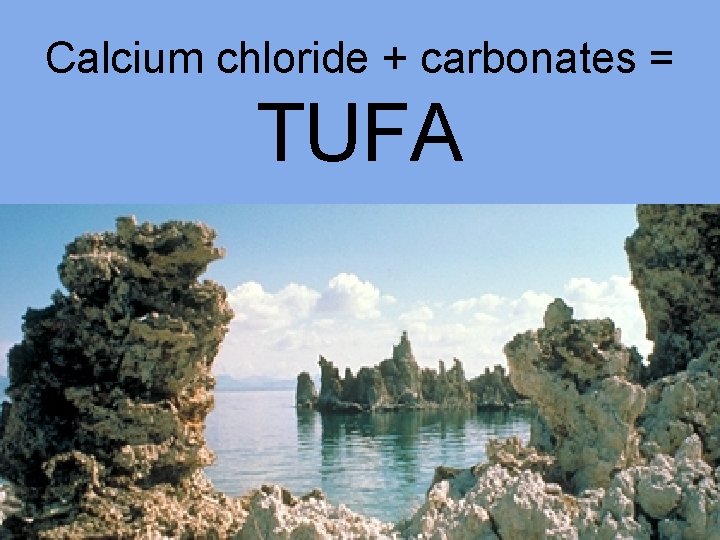
Tufa Towers
How do tufa towers form? • They can only grow in the water • Underwater springs rich in calcium meet lake water rich in carbonates, causing a chemical reaction • Tufa, a solid precipitate, forms • Tufa can grow up to an inch per year
Exposed tufa towers
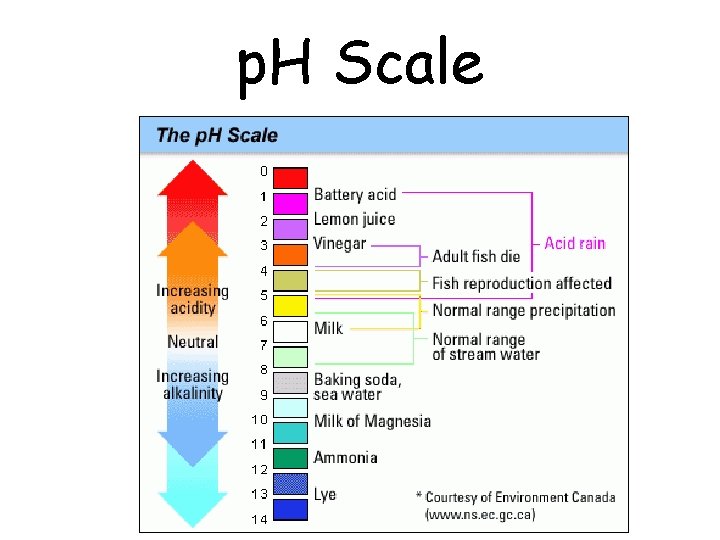
p. H Scale
p. H of Mono Lake • p. H = 10 • Basic • Alkaline • Tastes bitter • Feels slippery • Same p. H as glass cleaner
Making Mono Lake Water
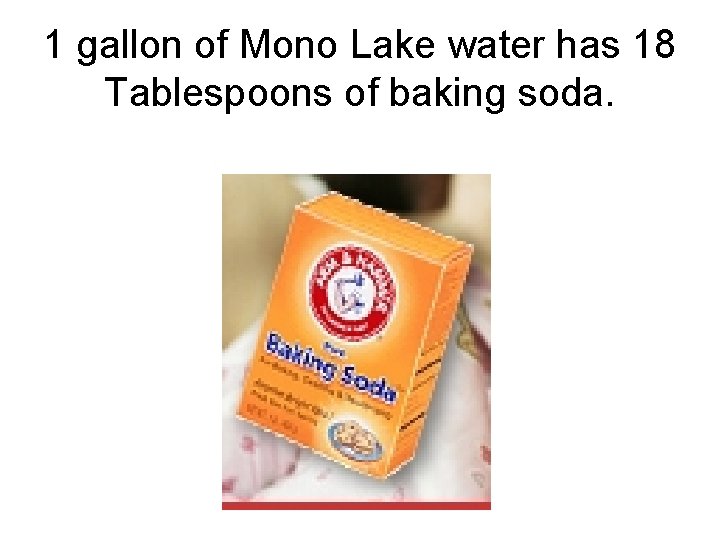
1 gallon of Mono Lake water has 18 Tablespoons of baking soda.
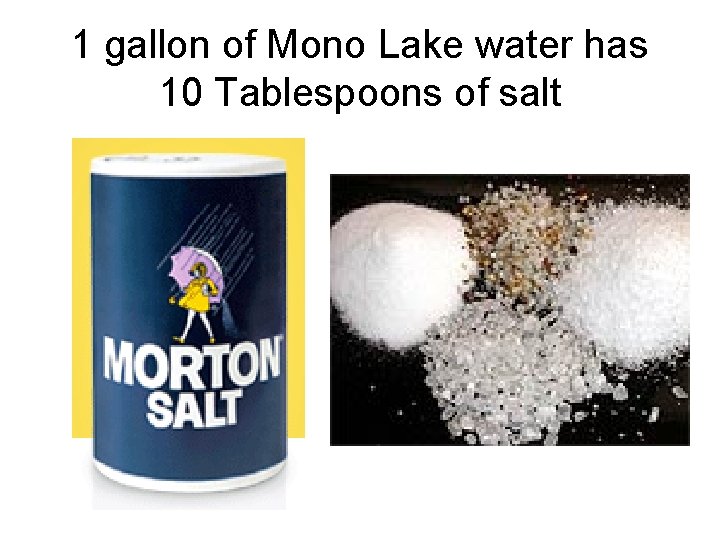
1 gallon of Mono Lake water has 10 Tablespoons of salt
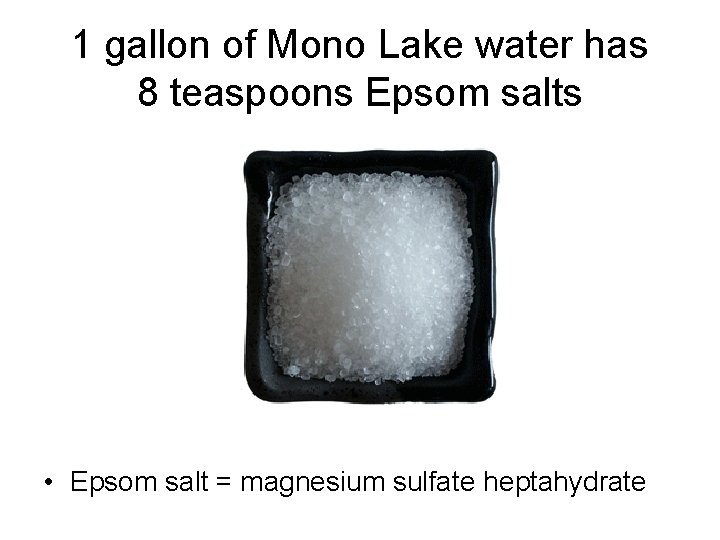
1 gallon of Mono Lake water has 8 teaspoons Epsom salts • Epsom salt = magnesium sulfate heptahydrate
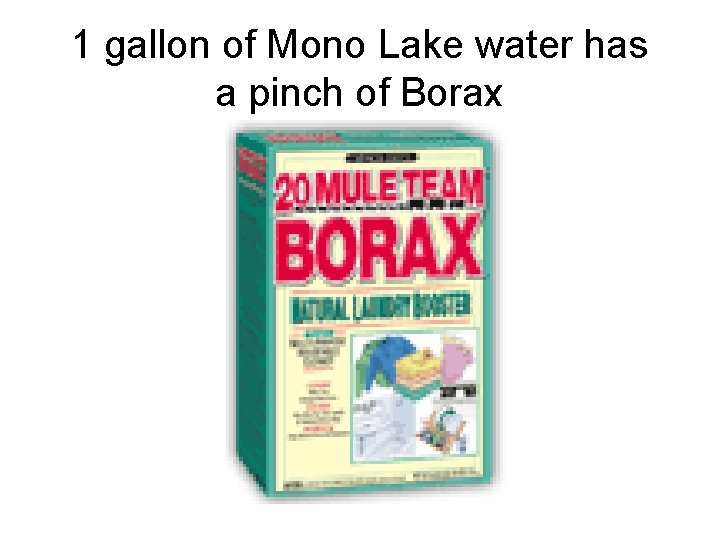
1 gallon of Mono Lake water has a pinch of Borax
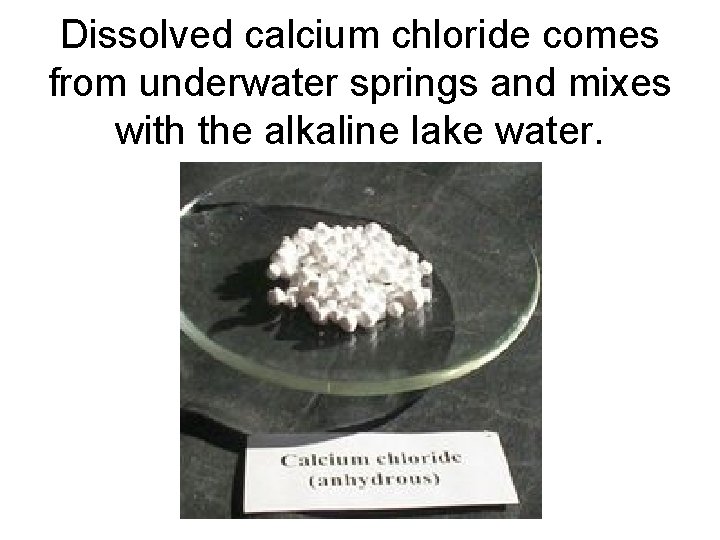
Dissolved calcium chloride comes from underwater springs and mixes with the alkaline lake water.
Calcium chloride + carbonates = TUFA
Table Discussion What abiotic factors might affect the type of organisms that live in Mono Lake?
What lives in Mono Lake?
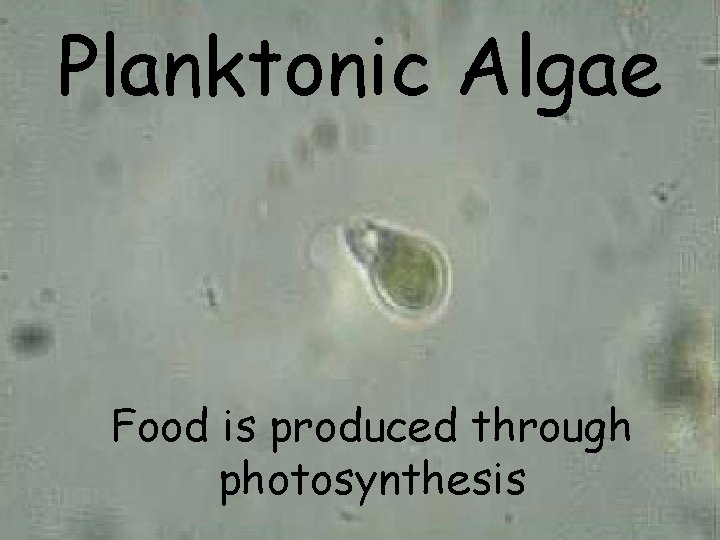
Planktonic Algae Food is produced through photosynthesis
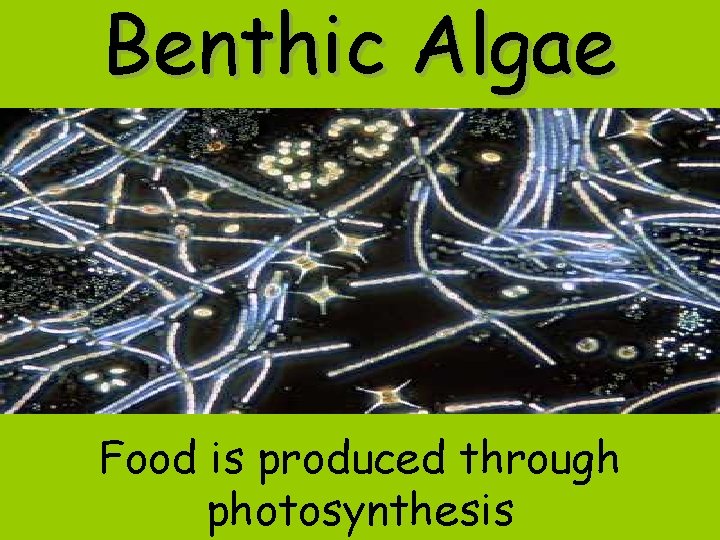
Benthic Algae Food is produced through photosynthesis
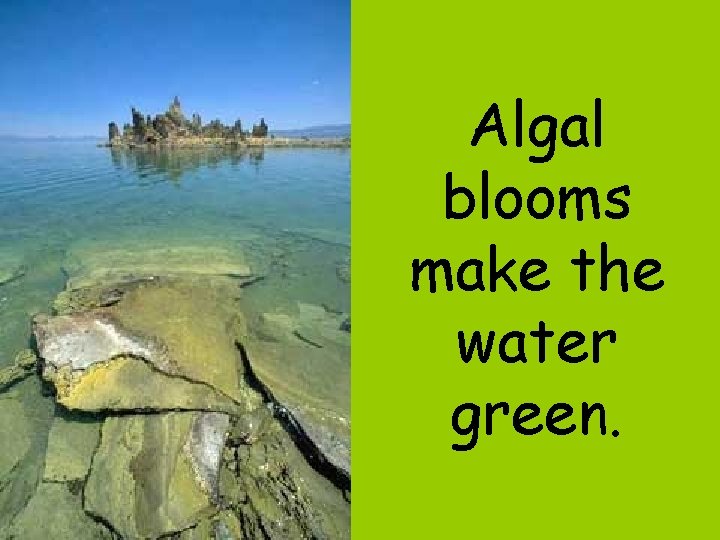
Algal blooms make the water green.
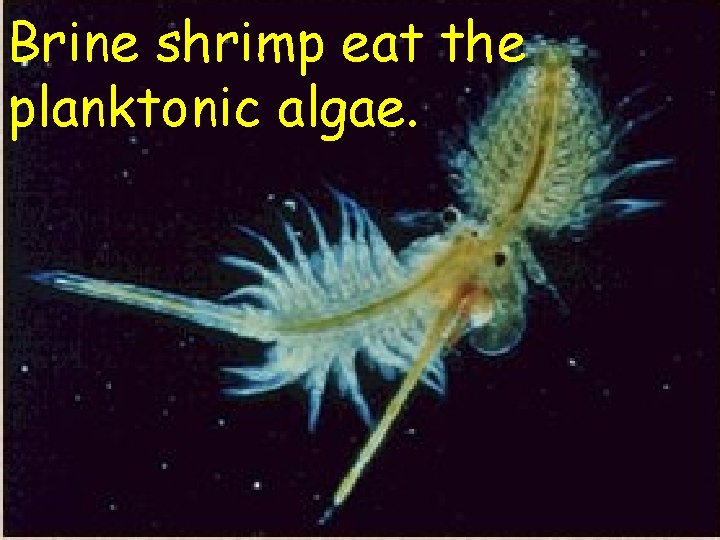
Brine shrimp eat the planktonic algae.
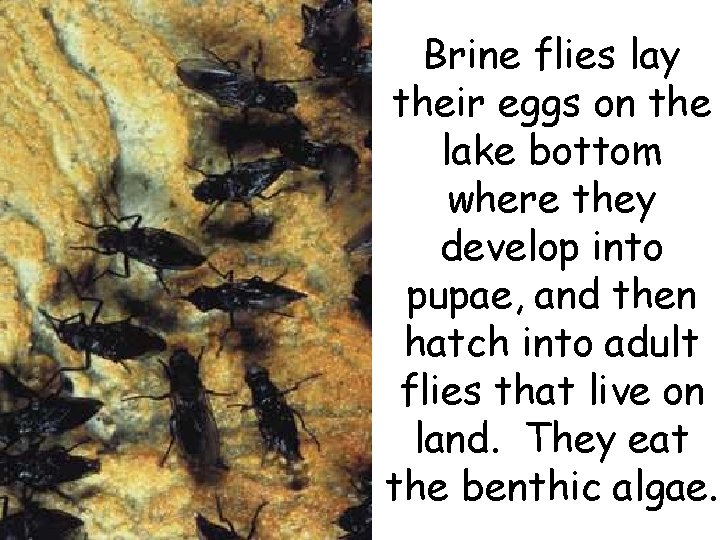
Brine flies lay their eggs on the lake bottom where they develop into pupae, and then hatch into adult flies that live on land. They eat the benthic algae.
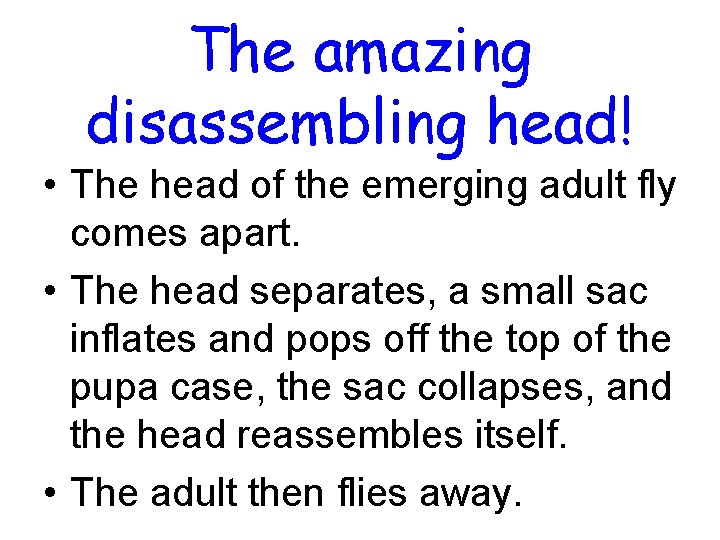
The amazing disassembling head! • The head of the emerging adult fly comes apart. • The head separates, a small sac inflates and pops off the top of the pupa case, the sac collapses, and the head reassembles itself. • The adult then flies away.
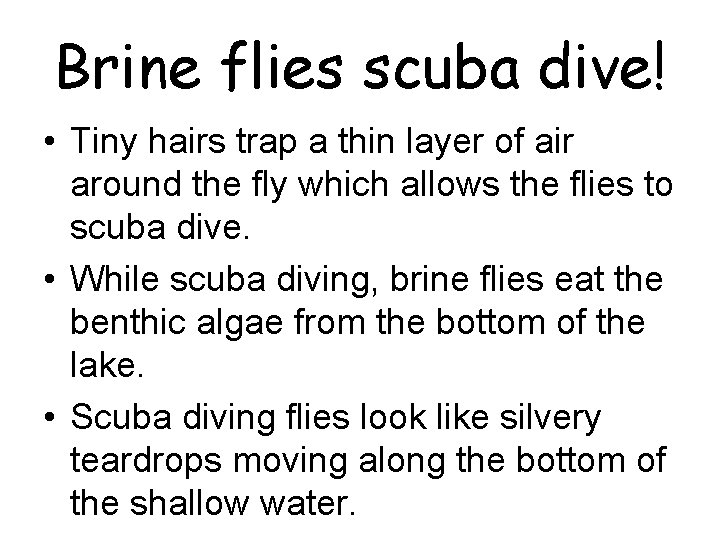
Brine flies scuba dive! • Tiny hairs trap a thin layer of air around the fly which allows the flies to scuba dive. • While scuba diving, brine flies eat the benthic algae from the bottom of the lake. • Scuba diving flies look like silvery teardrops moving along the bottom of the shallow water.
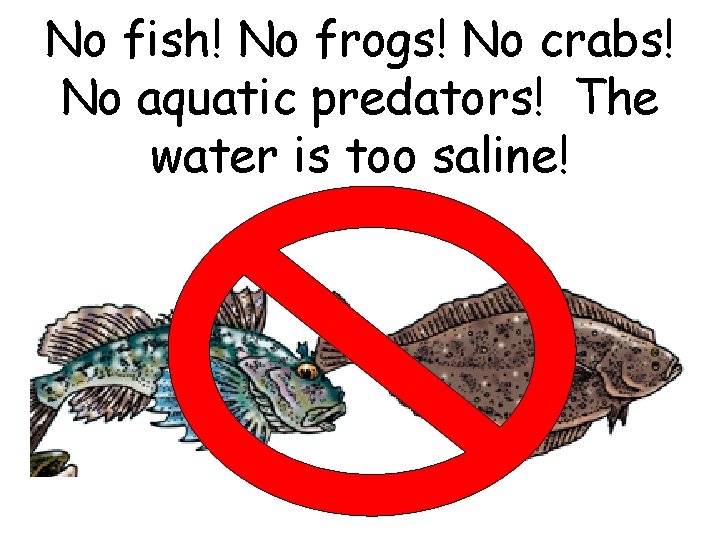
No fish! No frogs! No crabs! No aquatic predators! The water is too saline!
What animals depend on the brine shrimp and brine flies in Mono Lake?
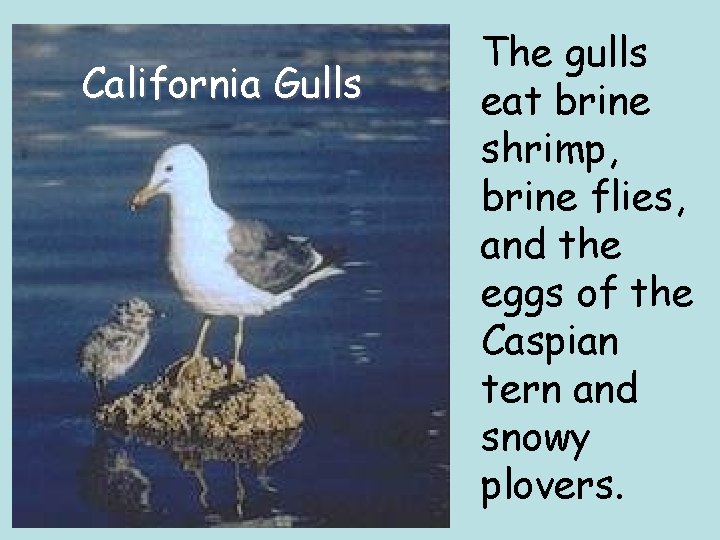
California Gulls The gulls eat brine shrimp, brine flies, and the eggs of the Caspian tern and snowy plovers.
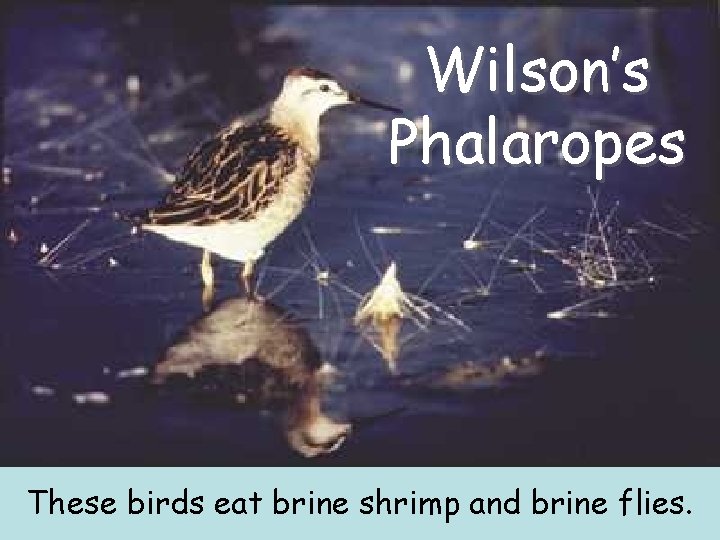
Wilson’s Phalaropes These birds eat brine shrimp and brine flies.
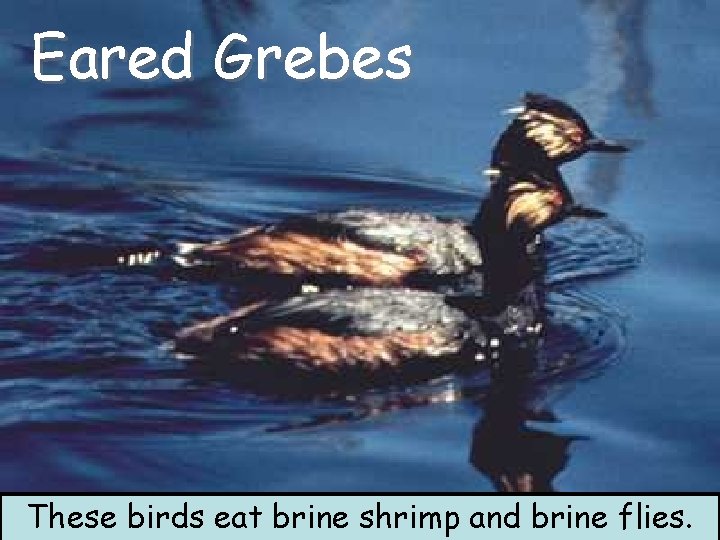
Eared Grebes These birds eat brine shrimp and brine flies.
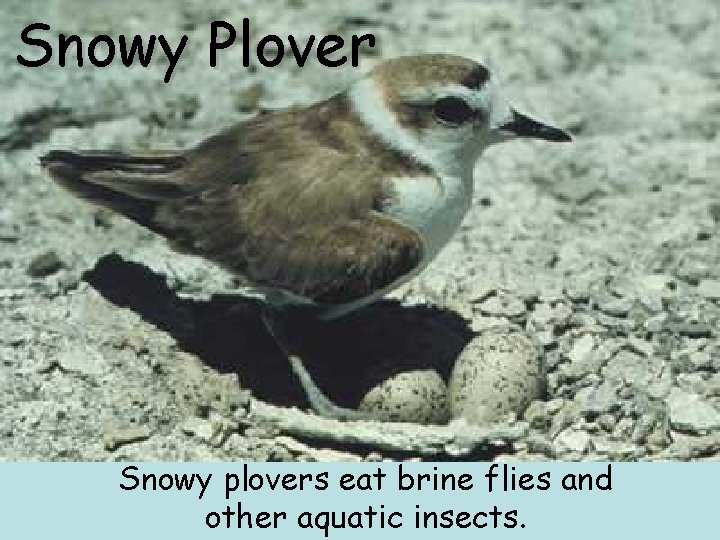
Snowy Plover Snowy plovers eat brine flies and other aquatic insects.
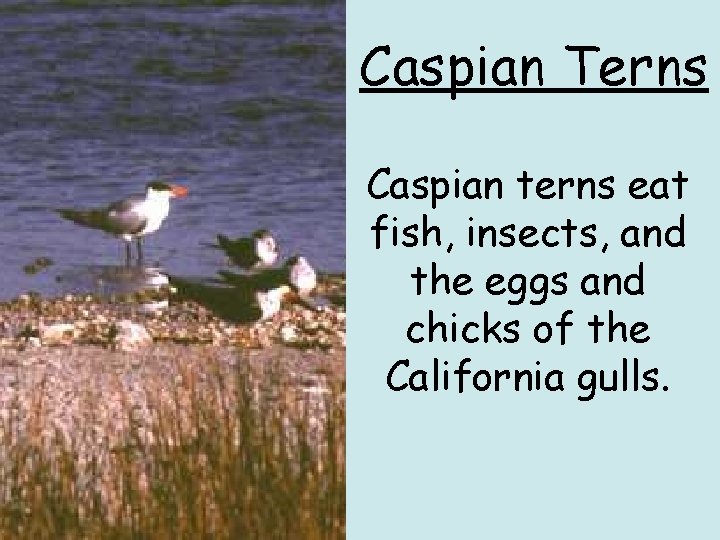
Caspian Terns Caspian terns eat fish, insects, and the eggs and chicks of the California gulls.
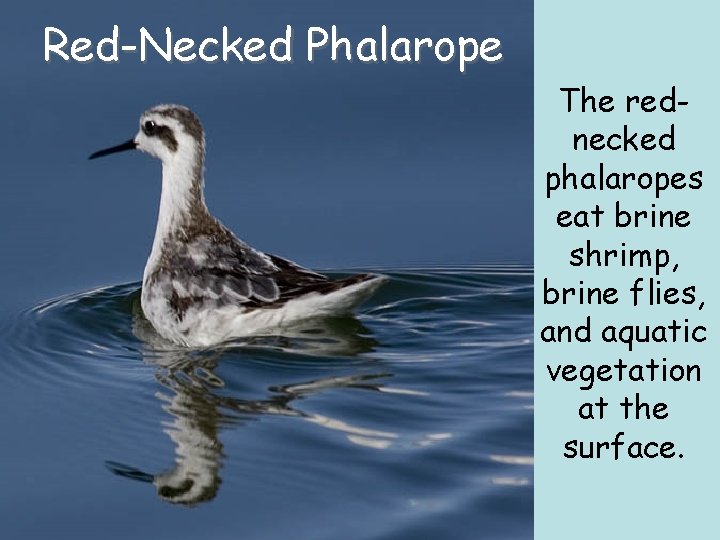
Red-Necked Phalarope The rednecked phalaropes eat brine shrimp, brine flies, and aquatic vegetation at the surface.
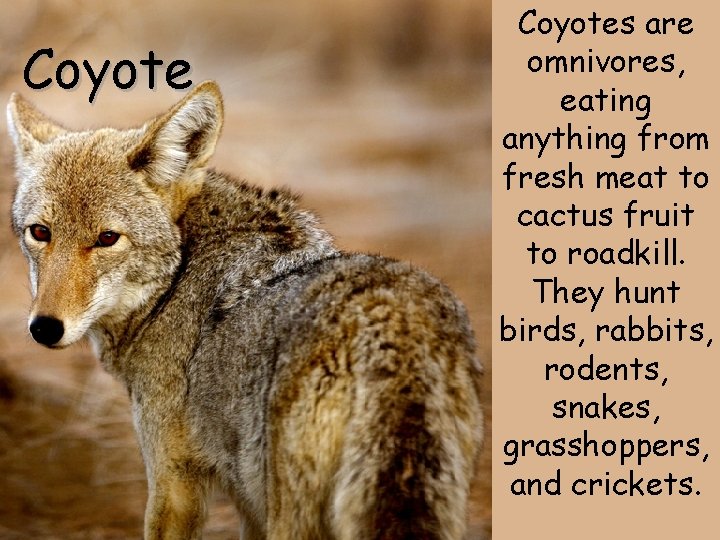
Coyotes are omnivores, eating anything from fresh meat to cactus fruit to roadkill. They hunt birds, rabbits, rodents, snakes, grasshoppers, and crickets.
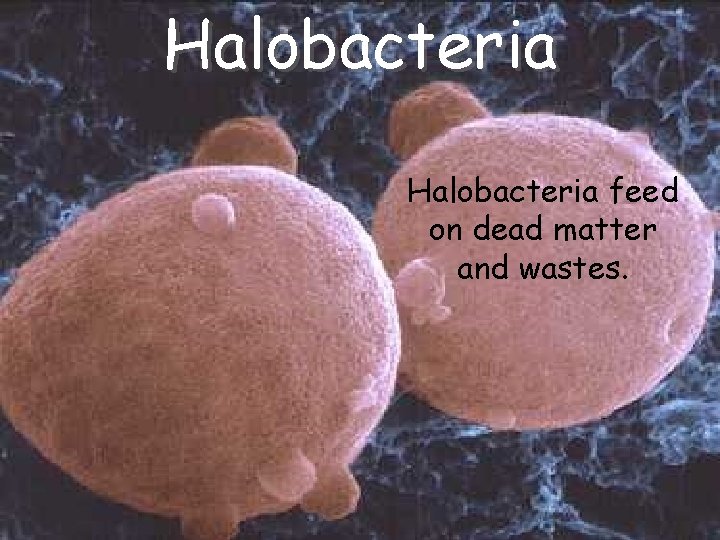
Halobacteria feed on dead matter and wastes.
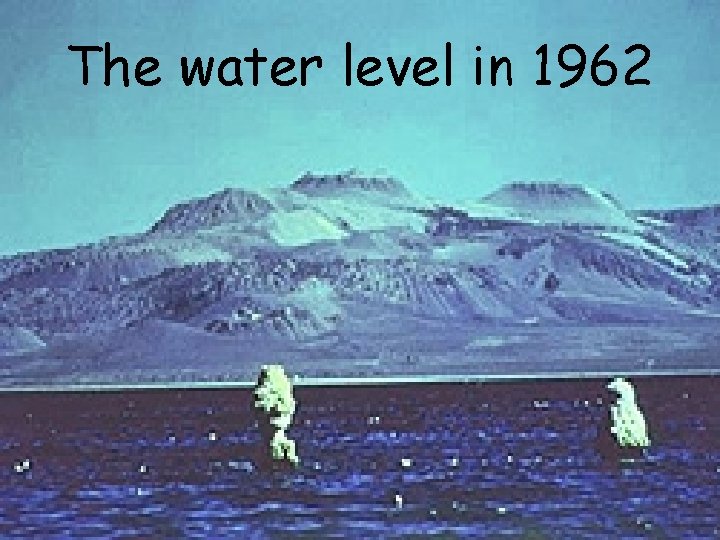
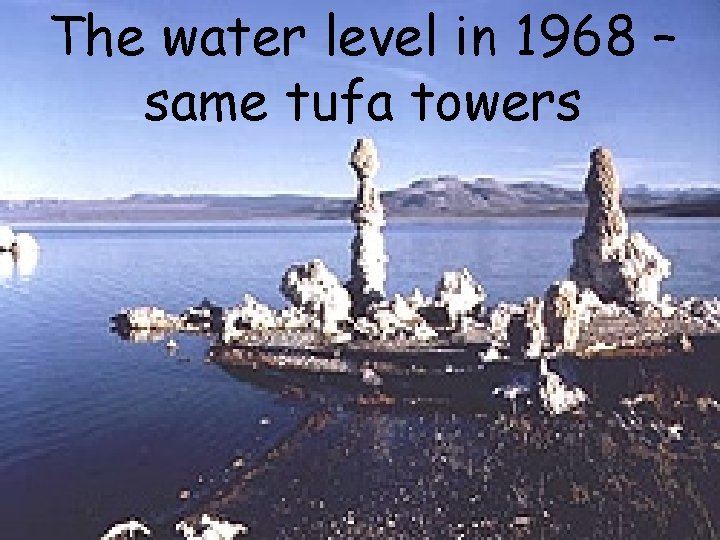
The water level in 1962
The water level in 1968 – same tufa towers
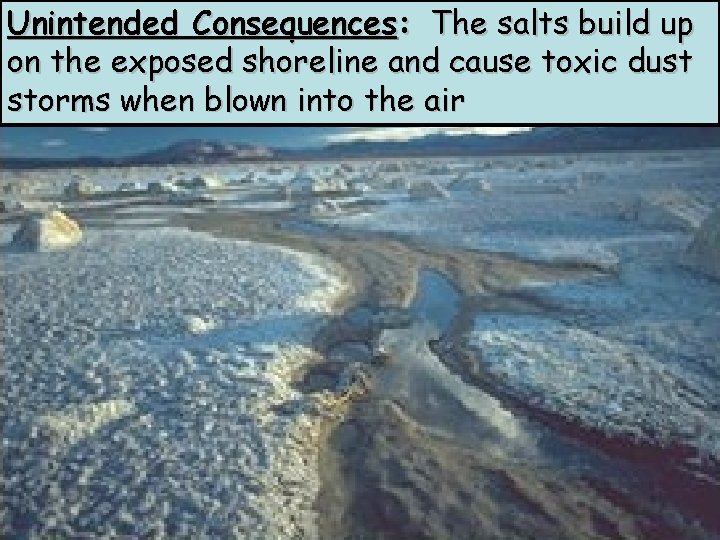
Unintended Consequences: The salts build up on the exposed shoreline and cause toxic dust storms when blown into the air
Where did the water go?
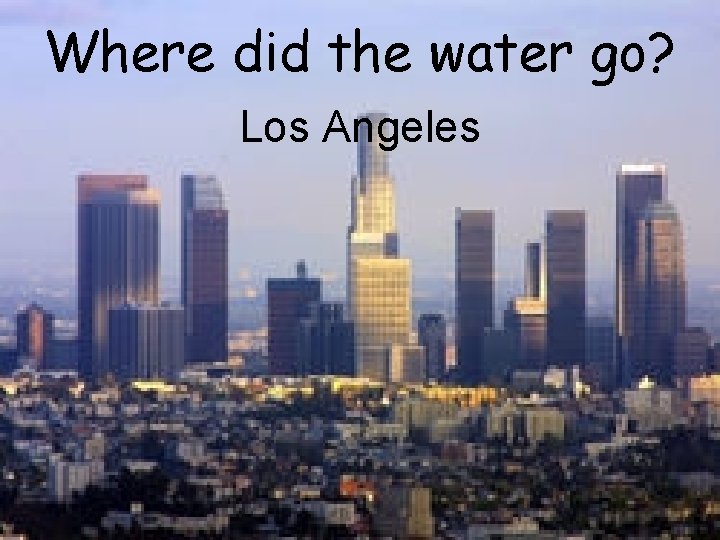
Where did the water go? Los Angeles