
Pain management in palliative care 2 Disclaimer This






- Slides: 63
Pain management in palliative care 2 Disclaimer: This presentation contains information on the general principles of pain management. This presentation cannot account for individual variation among patients and cannot be considered inclusive of all proper methods of care or exclusive of other treatments. It is the responsibility of the treating physician, or health care provider, to determine the best course of treatment for the patient. Treat the Pain and its partners assume no responsibility for any injury or damage to persons or property arising out of or related to any use of these materials, or for any errors or omissions. Last updated on January 12, 2015
Outline 1) Overview of day 1 – 5 mins 2) Prescribing opioid analgesics ---- 5 mins 3) Breakthrough, emergency, and incident pain 4) Side effects and toxicity of analgesics 5) Addiction and dependence 6) Dispelling some myths MKF 2016 2
Overview of palliative care Total Care Continuum of Care
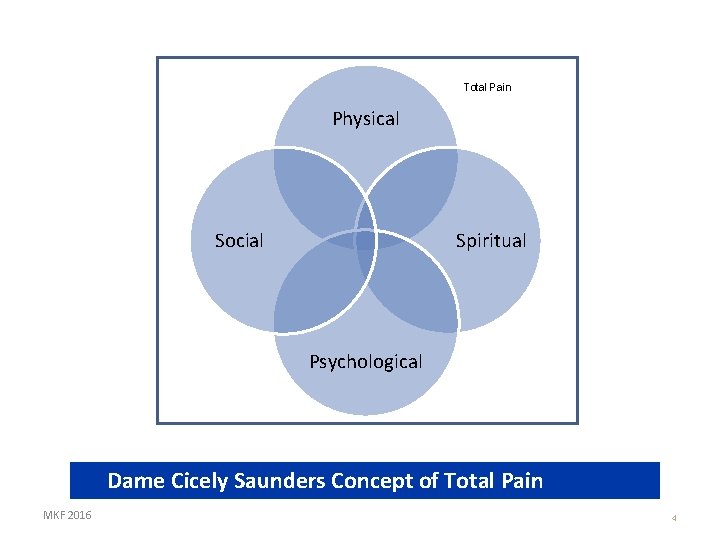
Total Pain Physical Social Spiritual Psychological Dame Cicely Saunders Concept of Total Pain MKF 2016 4
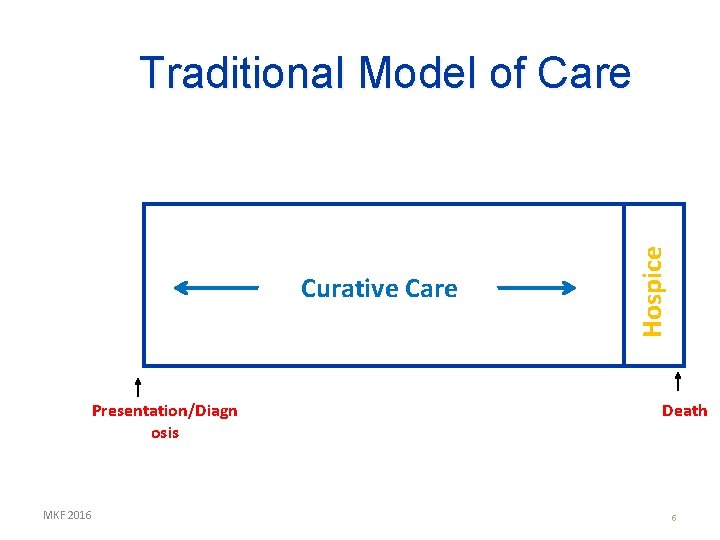
Curative Care Presentation/Diagn osis MKF 2016 Hospice Traditional Model of Care Death 5
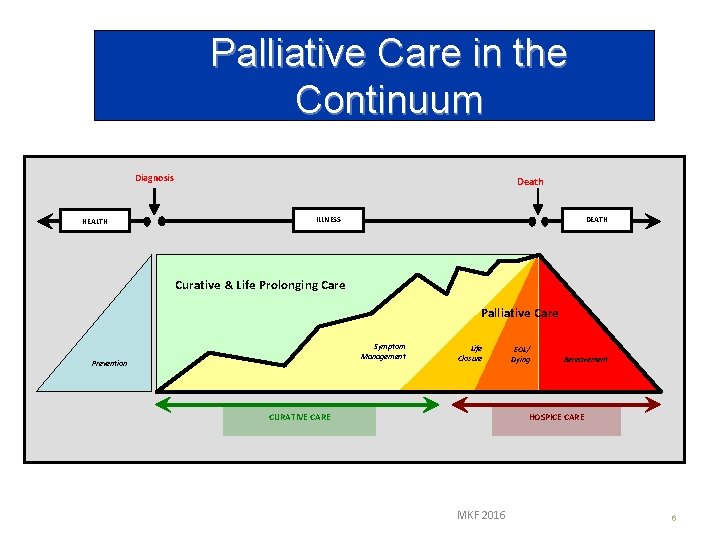
Palliative Care in the Continuum Diagnosis HEALTH Death ILLNESS DEATH Curative & Life Prolonging Care Palliative Care Symptom Management Prevention Life Closure CURATIVE CARE EOL/ Dying Bereavement HOSPICE CARE MKF 2016 6
Overview of pain management – day 1 ECG of pain Mechanism of pain Types of pain WHO analgesic ladder
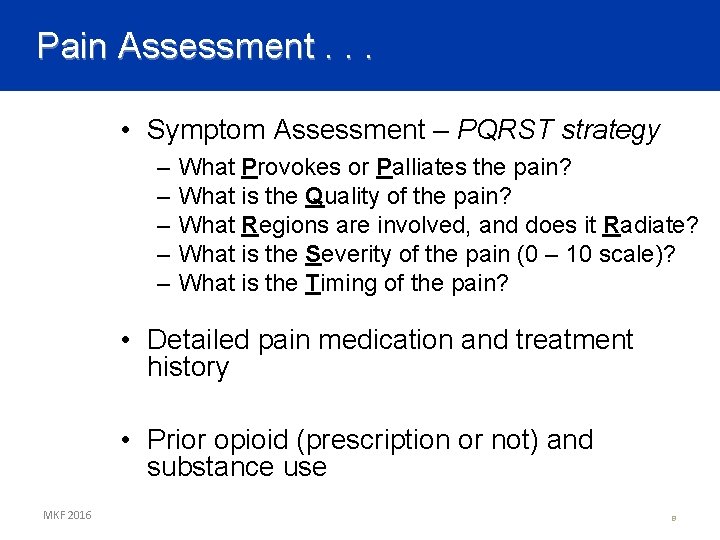
Pain Assessment. . . • Symptom Assessment – PQRST strategy – – – What Provokes or Palliates the pain? What is the Quality of the pain? What Regions are involved, and does it Radiate? What is the Severity of the pain (0 – 10 scale)? What is the Timing of the pain? • Detailed pain medication and treatment history • Prior opioid (prescription or not) and substance use MKF 2016 8
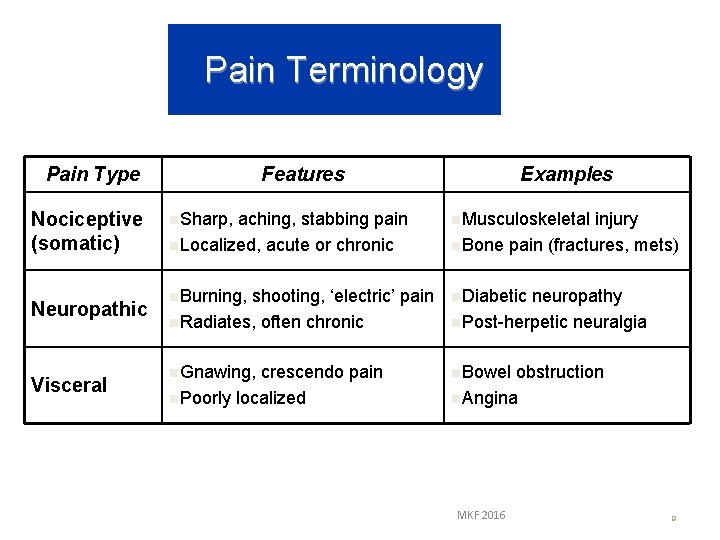
Pain Terminology Pain Type Nociceptive (somatic) Neuropathic Visceral Features Examples n. Sharp, aching, stabbing pain n. Localized, acute or chronic n. Musculoskeletal n. Burning, shooting, ‘electric’ pain n. Radiates, often chronic n. Diabetic n. Gnawing, n. Bowel crescendo pain n. Poorly localized injury n. Bone pain (fractures, mets) neuropathy n. Post-herpetic neuralgia obstruction n. Angina MKF 2016 9
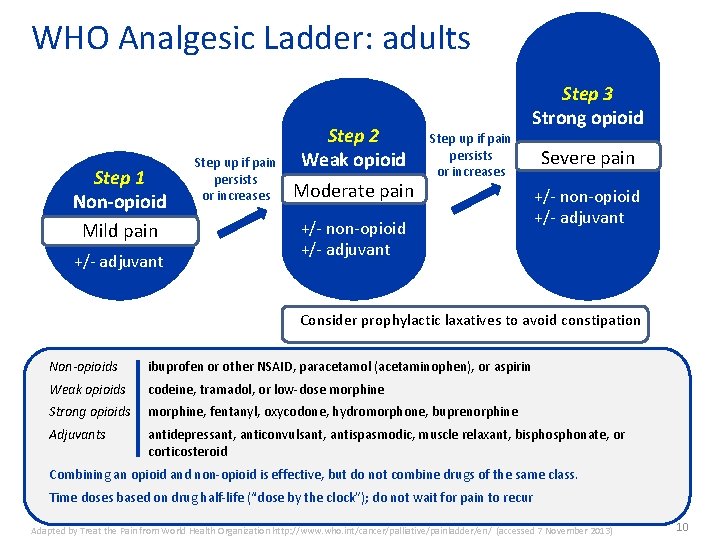
WHO Analgesic Ladder: adults Step 1 Non-opioid Mild pain +/- adjuvant Step up if pain persists or increases Step 2 Weak opioid Moderate pain Step up if pain persists or increases Step 3 Strong opioid +/- non-opioid +/- adjuvant Severe pain +/- non-opioid +/- adjuvant Consider prophylactic laxatives to avoid constipation Non-opioids ibuprofen or other NSAID, paracetamol (acetaminophen), or aspirin Weak opioids codeine, tramadol, or low-dose morphine Strong opioids morphine, fentanyl, oxycodone, hydromorphone, buprenorphine Adjuvants antidepressant, anticonvulsant, antispasmodic, muscle relaxant, bisphonate, or corticosteroid Combining an opioid and non-opioid is effective, but do not combine drugs of the same class. Time doses based on drug half-life (“dose by the clock”); do not wait for pain to recur Adapted by Treat the Pain from World Health Organization http: //www. who. int/cancer/palliative/painladder/en/ (accessed 7 November 2013) 10 10
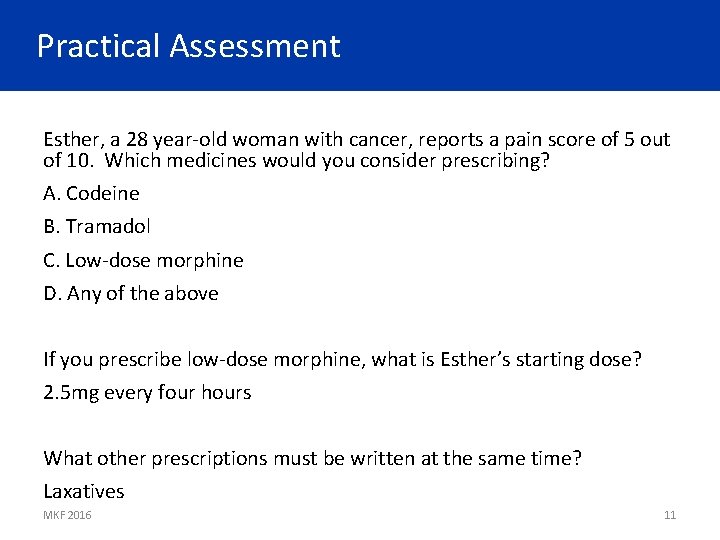
Practical Assessment Esther, a 28 year-old woman with cancer, reports a pain score of 5 out of 10. Which medicines would you consider prescribing? A. Codeine B. Tramadol C. Low-dose morphine D. Any of the above If you prescribe low-dose morphine, what is Esther’s starting dose? 2. 5 mg every four hours What other prescriptions must be written at the same time? Laxatives MKF 2016 11
MKF 2016 12
Prescribing opioid analgesics 1 Practicals
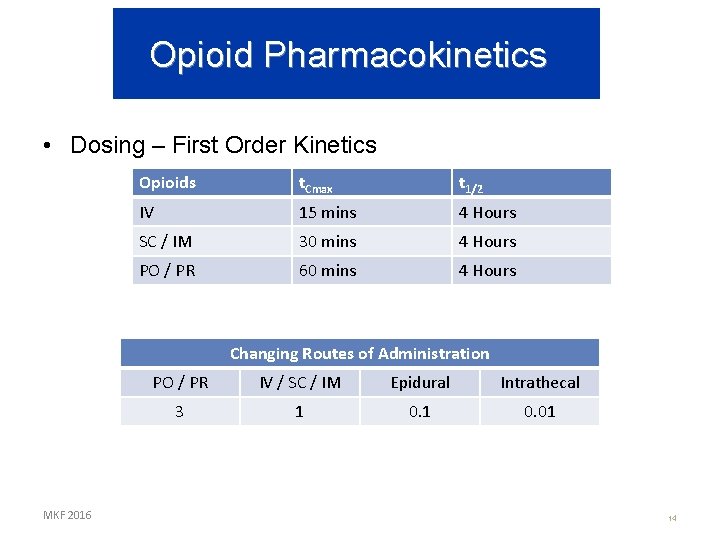
Opioid Pharmacokinetics • Dosing – First Order Kinetics Opioids t. Cmax t 1/2 IV 15 mins 4 Hours SC / IM 30 mins 4 Hours PO / PR 60 mins 4 Hours Changing Routes of Administration MKF 2016 PO / PR IV / SC / IM Epidural Intrathecal 3 1 0. 01 14
MKF 2016 15
Breakthrough, emergency, and incident pain Disclaimer: This presentation contains information on the general principles of pain management. This presentation cannot account for individual variation among patients and cannot be considered inclusive of all proper methods of care or exclusive of other treatments. It is the responsibility of the treating physician, or health care provider, to determine the best course of treatment for the patient. Treat the Pain and its partners assume no responsibility for any injury or damage to persons or property arising out of or related to any use of these materials, or for any errors or omissions. Last updated on January 12, 2015
Objectives • Define breakthrough pain and learn how to use rescue doses to treat it • Learn how to adjust daily doses of opioids based on rescue dose requirements • Learn how to diagnose a pain emergency and how to treat it • Define and outline treatment for incident or procedural pain • Define and outline treatment for end-of-dose failure MKF 2016 17
Breakthrough pain • Breakthrough pain: a sudden, temporary flare of severe pain that occurs on a background of otherwise controlled pain – May be more common during first three days of treatment as morphine dose is titrated from starting dose to effective dose MKF 2016 18
Breakthrough pain • 50 -70% of patients with chronic cancer-related pain also experience episodes of breakthrough pain • Associated with greater pain-related functional impairment, worse mood, and more anxiety • Healthcare providers routinely under-diagnose and undertreat breakthrough pain MKF 2016 19
Diagnostic criteria • Stable analgesic regimen in the previous 48 hours • Presence of controlled background pain in the previous 24 hours (i. e. average pain score <5 out of 10) • Temporary flare of severe or excruciating pain in the previous 24 hours MKF 2016 20
Rescue dose • Rescue dose: a dose of immediate-release morphine that is the same as the dose given every 4 hours and can be given as often as required to treat breakthrough pain – Note these in the patient chart – Write orders that include rescue doses MKF 2016 21
Breakthrough pain and rescue doses • Rescue dose should be administered at the first sign of breakthrough pain – Pain that is allowed to build up is harder to control • When you give a rescue dose of morphine to treat breakthrough pain you should still give the next regular dose on schedule • The rescue dose must be increased whenever the regular dose is increased • Rescue dosing is suitable for all immediate-release opioids, not just morphine MKF 2016 22
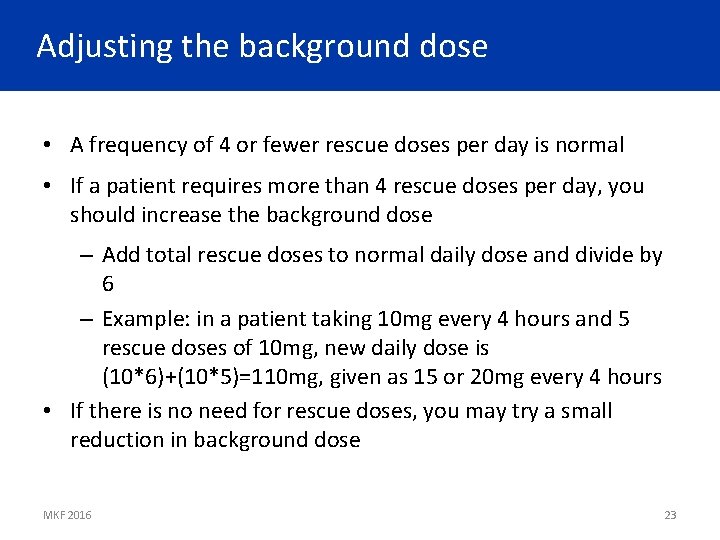
Adjusting the background dose • A frequency of 4 or fewer rescue doses per day is normal • If a patient requires more than 4 rescue doses per day, you should increase the background dose – Add total rescue doses to normal daily dose and divide by 6 – Example: in a patient taking 10 mg every 4 hours and 5 rescue doses of 10 mg, new daily dose is (10*6)+(10*5)=110 mg, given as 15 or 20 mg every 4 hours • If there is no need for rescue doses, you may try a small reduction in background dose MKF 2016 23
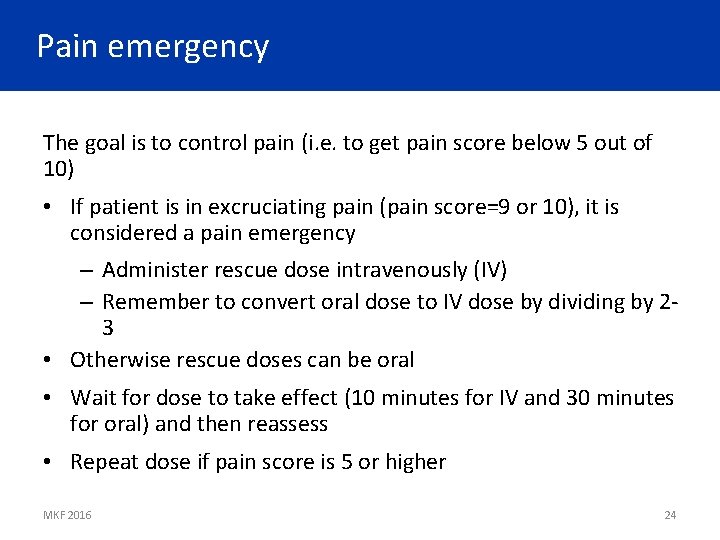
Pain emergency The goal is to control pain (i. e. to get pain score below 5 out of 10) • If patient is in excruciating pain (pain score=9 or 10), it is considered a pain emergency – Administer rescue dose intravenously (IV) – Remember to convert oral dose to IV dose by dividing by 23 • Otherwise rescue doses can be oral • Wait for dose to take effect (10 minutes for IV and 30 minutes for oral) and then reassess • Repeat dose if pain score is 5 or higher MKF 2016 24
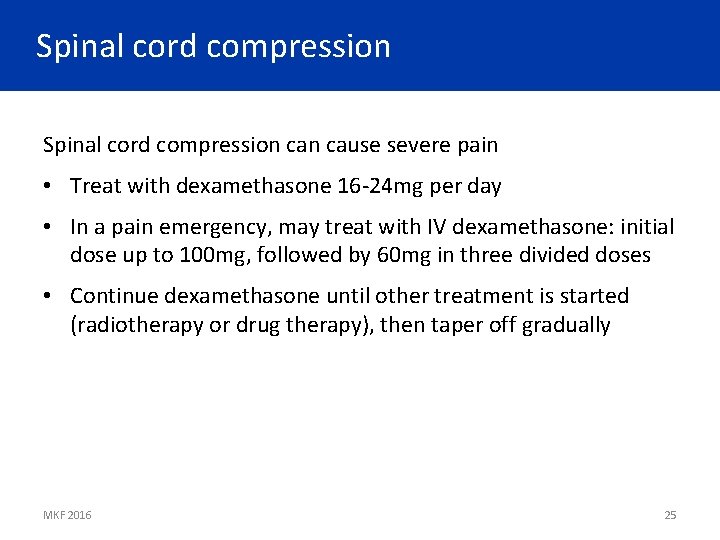
Spinal cord compression can cause severe pain • Treat with dexamethasone 16 -24 mg per day • In a pain emergency, may treat with IV dexamethasone: initial dose up to 100 mg, followed by 60 mg in three divided doses • Continue dexamethasone until other treatment is started (radiotherapy or drug therapy), then taper off gradually MKF 2016 25
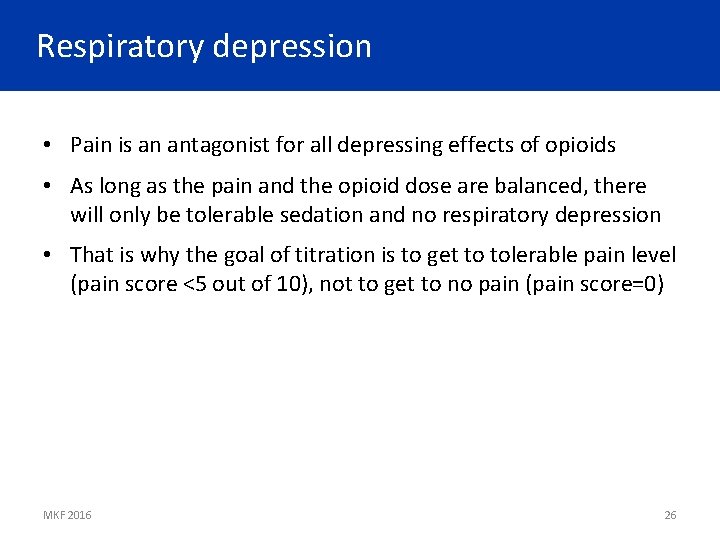
Respiratory depression • Pain is an antagonist for all depressing effects of opioids • As long as the pain and the opioid dose are balanced, there will only be tolerable sedation and no respiratory depression • That is why the goal of titration is to get to tolerable pain level (pain score <5 out of 10), not to get to no pain (pain score=0) MKF 2016 26
Incident pain and end-of-dose failure Types of pain that are similar to breakthrough pain • Incident pain • End-of-dose failure MKF 2016 27
Incident or procedural pain • Incident or procedural pain: Pain precipitated by a particular activity or procedure, such as dressing change, washing, change in position, eating, or disimpaction – Can be anticipated – Supplement regular analgesic regimen with a rescue dose given 20 -30 minutes before the activity MKF 2016 28
End-of-dose failure • End-of-dose failure: Effect of analgesia wears off after a few hours and pain returns • Treatment – Change to a longer-acting medicine – Increase the dose of the current medicine – Reduce the dosing interval MKF 2016 29
Prescribing opioid analgesics 2 Practical
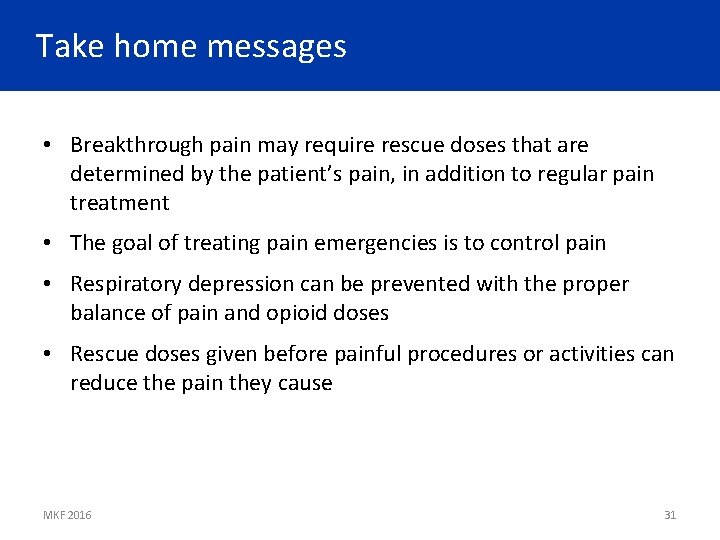
Take home messages • Breakthrough pain may require rescue doses that are determined by the patient’s pain, in addition to regular pain treatment • The goal of treating pain emergencies is to control pain • Respiratory depression can be prevented with the proper balance of pain and opioid doses • Rescue doses given before painful procedures or activities can reduce the pain they cause MKF 2016 31
MKF 2016 32
Side effects and toxicity of analgesics Disclaimer: This presentation contains information on the general principles of pain management. This presentation cannot account for individual variation among patients and cannot be considered inclusive of all proper methods of care or exclusive of other treatments. It is the responsibility of the treating physician, or health care provider, to determine the best course of treatment for the patient. Treat the Pain and its partners assume no responsibility for any injury or damage to persons or property arising out of or related to any use of these materials, or for any errors or omissions. Last updated on January 12, 2015
Objectives • Discuss side effects of Step 1, Step 2, and Step 3 analgesics • Review signs of opioid toxicity • Describe treatment options of opioid toxicity MKF 2016 34
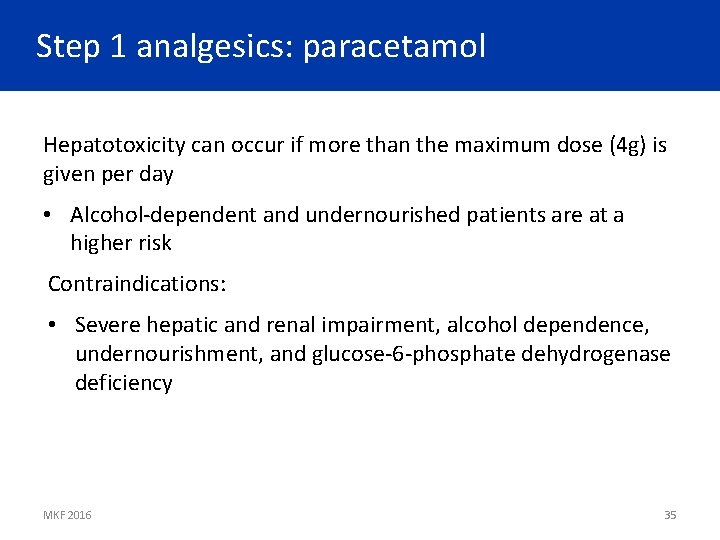
Step 1 analgesics: paracetamol Hepatotoxicity can occur if more than the maximum dose (4 g) is given per day • Alcohol-dependent and undernourished patients are at a higher risk Contraindications: • Severe hepatic and renal impairment, alcohol dependence, undernourishment, and glucose-6 -phosphate dehydrogenase deficiency MKF 2016 35
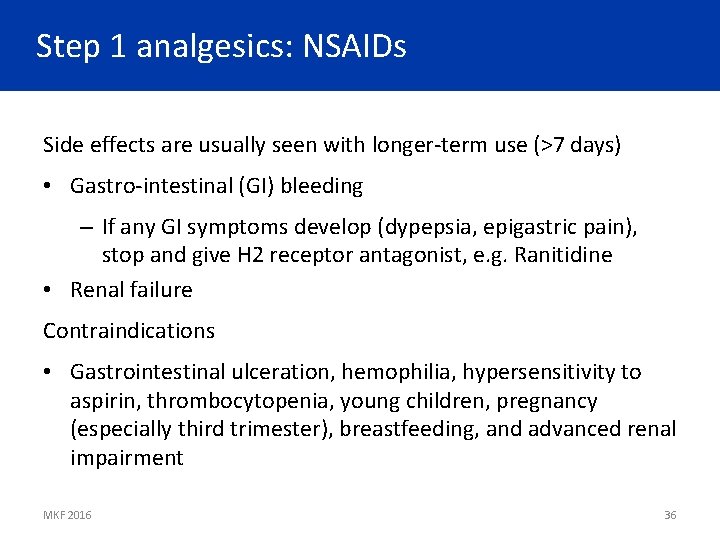
Step 1 analgesics: NSAIDs Side effects are usually seen with longer-term use (>7 days) • Gastro-intestinal (GI) bleeding – If any GI symptoms develop (dypepsia, epigastric pain), stop and give H 2 receptor antagonist, e. g. Ranitidine • Renal failure Contraindications • Gastrointestinal ulceration, hemophilia, hypersensitivity to aspirin, thrombocytopenia, young children, pregnancy (especially third trimester), breastfeeding, and advanced renal impairment MKF 2016 36
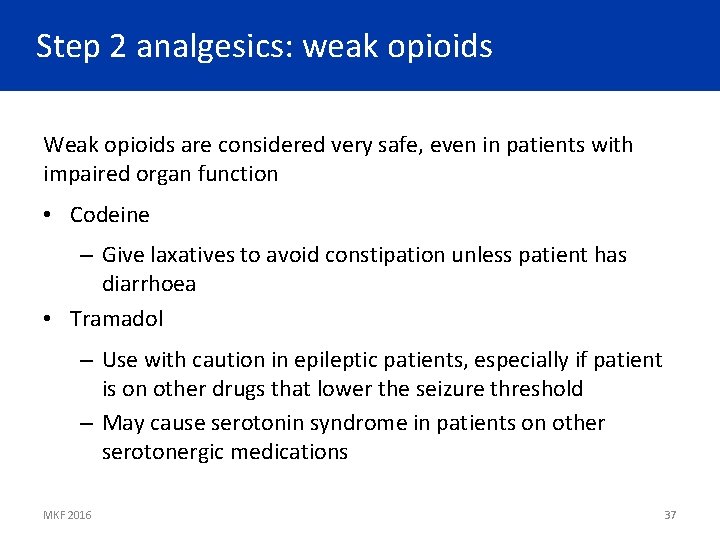
Step 2 analgesics: weak opioids Weak opioids are considered very safe, even in patients with impaired organ function • Codeine – Give laxatives to avoid constipation unless patient has diarrhoea • Tramadol – Use with caution in epileptic patients, especially if patient is on other drugs that lower the seizure threshold – May cause serotonin syndrome in patients on other serotonergic medications MKF 2016 37
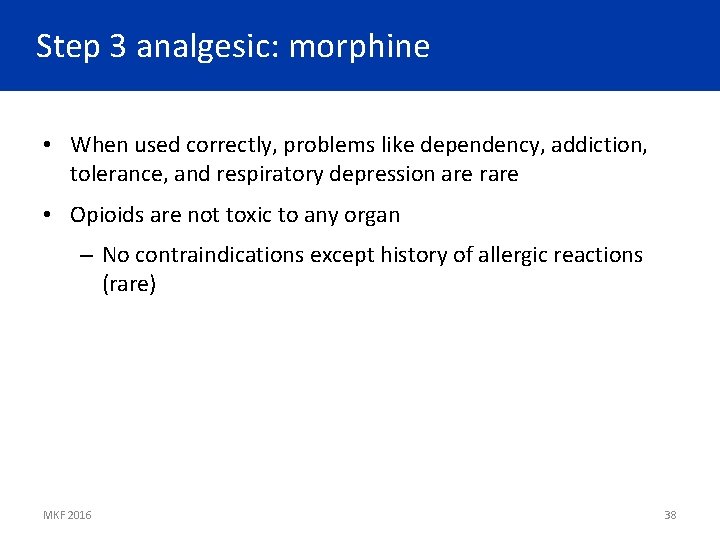
Step 3 analgesic: morphine • When used correctly, problems like dependency, addiction, tolerance, and respiratory depression are rare • Opioids are not toxic to any organ – No contraindications except history of allergic reactions (rare) MKF 2016 38
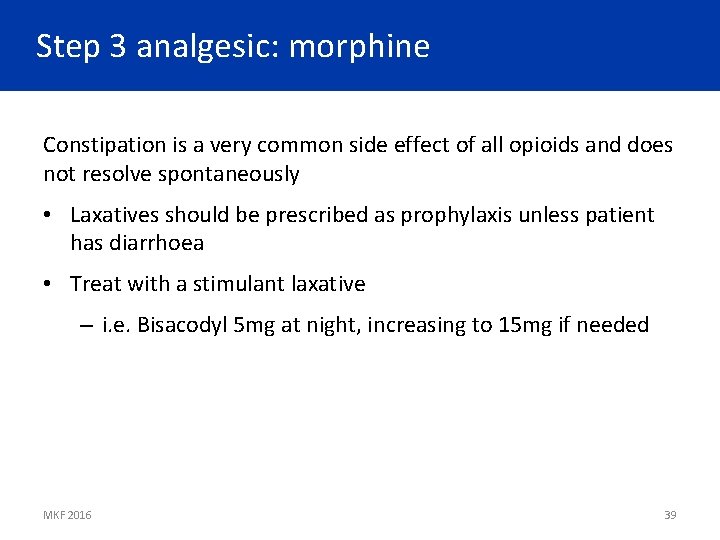
Step 3 analgesic: morphine Constipation is a very common side effect of all opioids and does not resolve spontaneously • Laxatives should be prescribed as prophylaxis unless patient has diarrhoea • Treat with a stimulant laxative – i. e. Bisacodyl 5 mg at night, increasing to 15 mg if needed MKF 2016 39
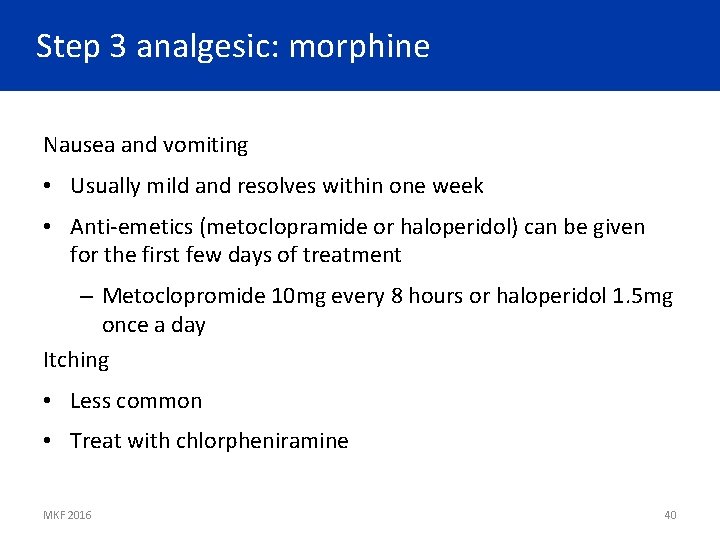
Step 3 analgesic: morphine Nausea and vomiting • Usually mild and resolves within one week • Anti-emetics (metoclopramide or haloperidol) can be given for the first few days of treatment – Metoclopromide 10 mg every 8 hours or haloperidol 1. 5 mg once a day Itching • Less common • Treat with chlorpheniramine MKF 2016 40
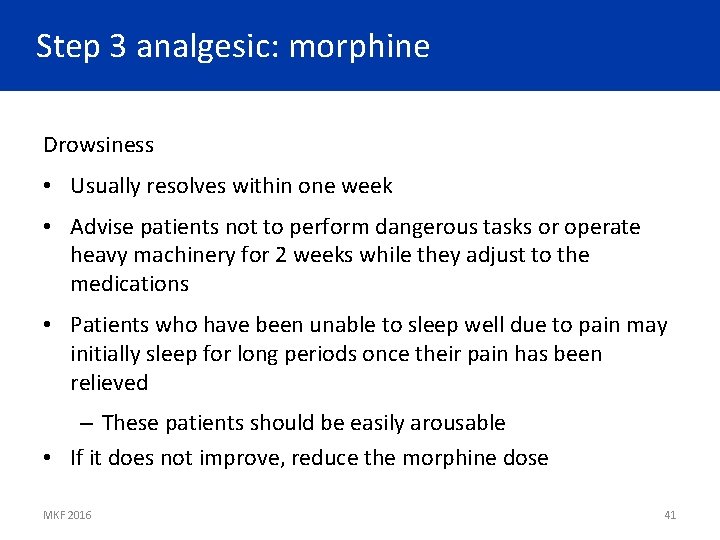
Step 3 analgesic: morphine Drowsiness • Usually resolves within one week • Advise patients not to perform dangerous tasks or operate heavy machinery for 2 weeks while they adjust to the medications • Patients who have been unable to sleep well due to pain may initially sleep for long periods once their pain has been relieved – These patients should be easily arousable • If it does not improve, reduce the morphine dose MKF 2016 41
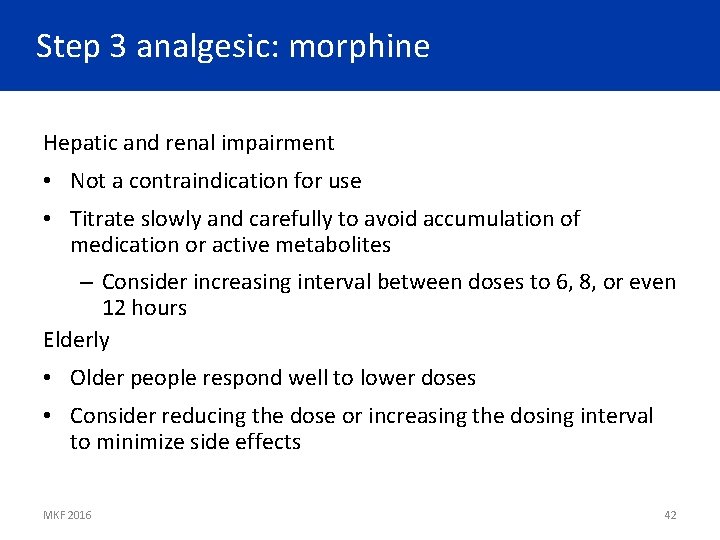
Step 3 analgesic: morphine Hepatic and renal impairment • Not a contraindication for use • Titrate slowly and carefully to avoid accumulation of medication or active metabolites – Consider increasing interval between doses to 6, 8, or even 12 hours Elderly • Older people respond well to lower doses • Consider reducing the dose or increasing the dosing interval to minimize side effects MKF 2016 42
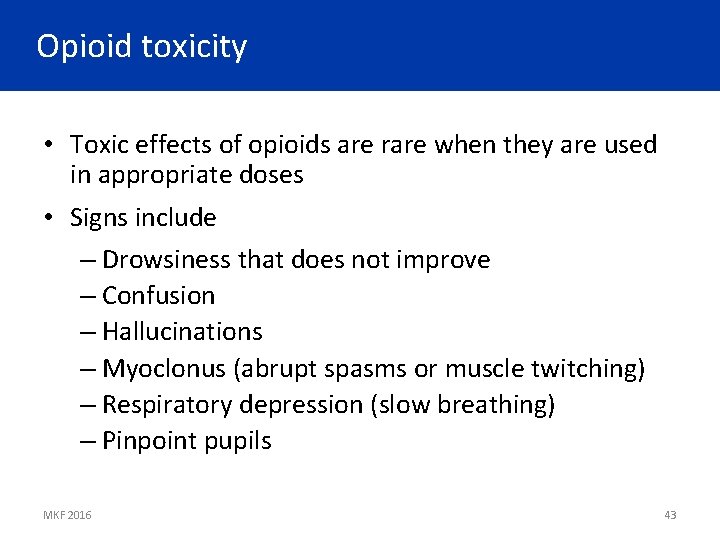
Opioid toxicity • Toxic effects of opioids are rare when they are used in appropriate doses • Signs include – Drowsiness that does not improve – Confusion – Hallucinations – Myoclonus (abrupt spasms or muscle twitching) – Respiratory depression (slow breathing) – Pinpoint pupils MKF 2016 43
Opioid toxicity • If you are concerned that a patient is experiencing toxicity, reduce the dose by 50% and consider giving parenteral fluids to increase excretion • In severe cases, stop the opioid and give Naloxone, an opioid antagonist – Naloxone is rarely used and should be used with caution as it will precipitate pain crisis • Haloperidol 1. 5 -5 mg at night may help with any hallucinations or confusion – Be sure to rule out other causes (such as urinary tract infection, hypoxia, or side effect of another medication) MKF 2016 44
Take home messages • The use of opioids can cause side effects; with proper use these side effects can be mediated • When using opioids, give laxatives to avoid constipation unless patient has diarrhoea • When used correctly, patients don’t become dependent or addicted on morphine • Opioids are not toxic to any organ MKF 2016 45
MKF 2016 46
Addiction and dependence Disclaimer: This presentation contains information on the general principles of pain management. This presentation cannot account for individual variation among patients and cannot be considered inclusive of all proper methods of care or exclusive of other treatments. It is the responsibility of the treating physician, or health care provider, to determine the best course of treatment for the patient. Treat the Pain and its partners assume no responsibility for any injury or damage to persons or property arising out of or related to any use of these materials, or for any errors or omissions.
Objectives • Discuss the difference between addiction and dependence • Review withdrawal, pseudoaddiction, and tolerance MKF 2016 48
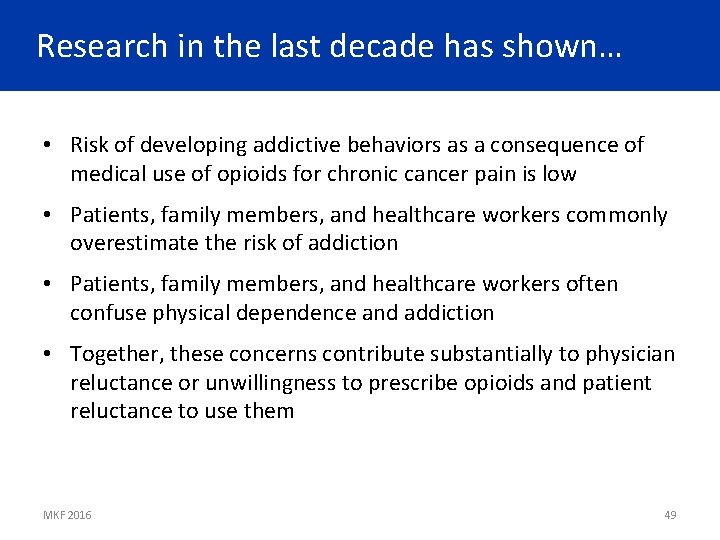
Research in the last decade has shown… • Risk of developing addictive behaviors as a consequence of medical use of opioids for chronic cancer pain is low • Patients, family members, and healthcare workers commonly overestimate the risk of addiction • Patients, family members, and healthcare workers often confuse physical dependence and addiction • Together, these concerns contribute substantially to physician reluctance or unwillingness to prescribe opioids and patient reluctance to use them MKF 2016 49
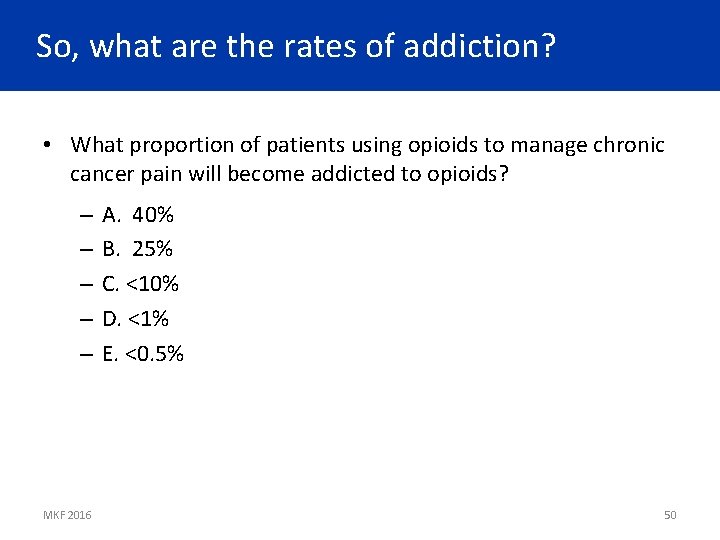
So, what are the rates of addiction? • What proportion of patients using opioids to manage chronic cancer pain will become addicted to opioids? – – – MKF 2016 A. 40% B. 25% C. <10% D. <1% E. <0. 5% 50
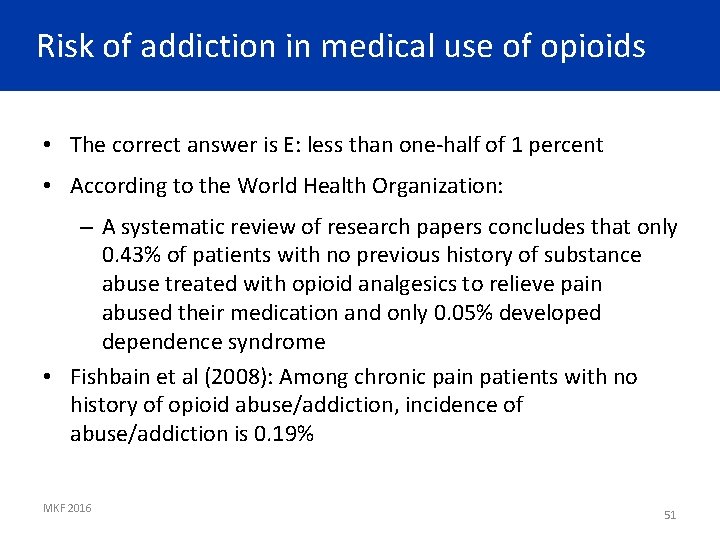
Risk of addiction in medical use of opioids • The correct answer is E: less than one-half of 1 percent • According to the World Health Organization: – A systematic review of research papers concludes that only 0. 43% of patients with no previous history of substance abuse treated with opioid analgesics to relieve pain abused their medication and only 0. 05% developed dependence syndrome • Fishbain et al (2008): Among chronic pain patients with no history of opioid abuse/addiction, incidence of abuse/addiction is 0. 19% MKF 2016 51
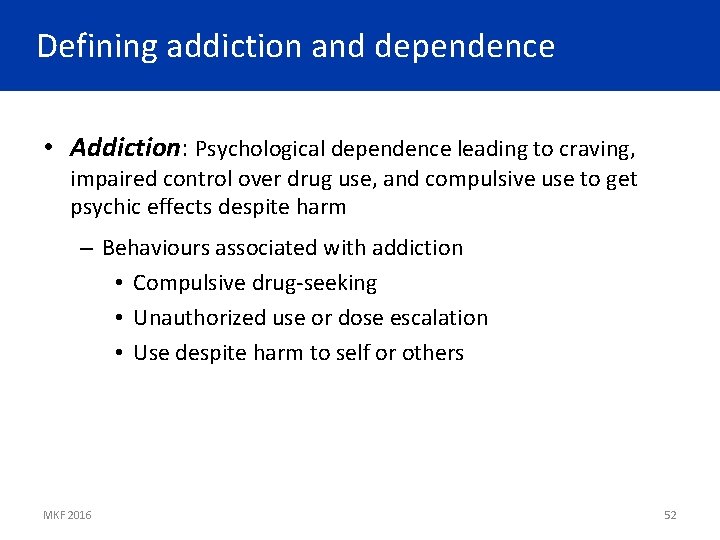
Defining addiction and dependence • Addiction: Psychological dependence leading to craving, impaired control over drug use, and compulsive use to get psychic effects despite harm – Behaviours associated with addiction • Compulsive drug-seeking • Unauthorized use or dose escalation • Use despite harm to self or others MKF 2016 52
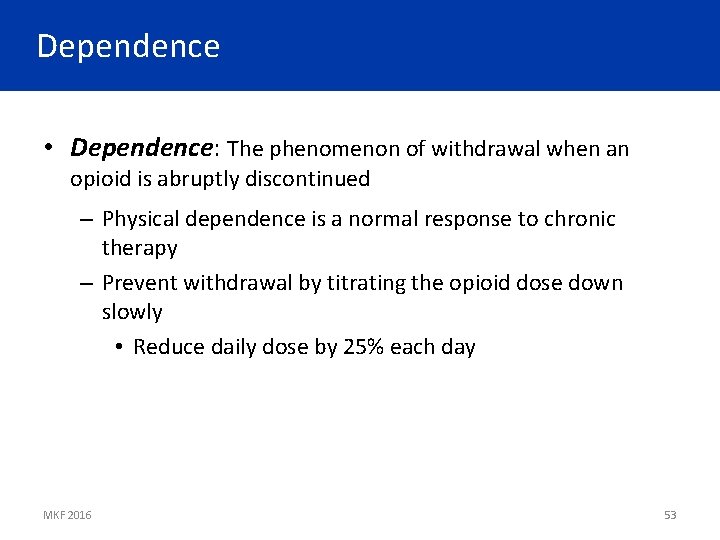
Dependence • Dependence: The phenomenon of withdrawal when an opioid is abruptly discontinued – Physical dependence is a normal response to chronic therapy – Prevent withdrawal by titrating the opioid dose down slowly • Reduce daily dose by 25% each day MKF 2016 53
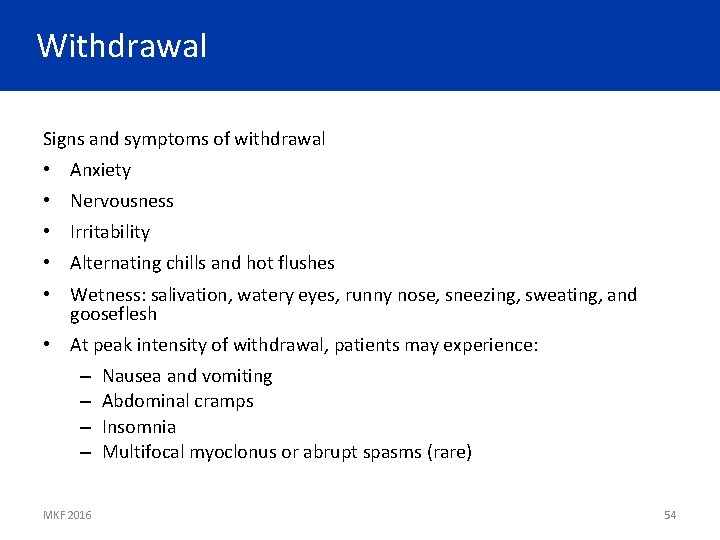
Withdrawal Signs and symptoms of withdrawal • Anxiety • Nervousness • Irritability • Alternating chills and hot flushes • Wetness: salivation, watery eyes, runny nose, sneezing, sweating, and gooseflesh • At peak intensity of withdrawal, patients may experience: – – MKF 2016 Nausea and vomiting Abdominal cramps Insomnia Multifocal myoclonus or abrupt spasms (rare) 54
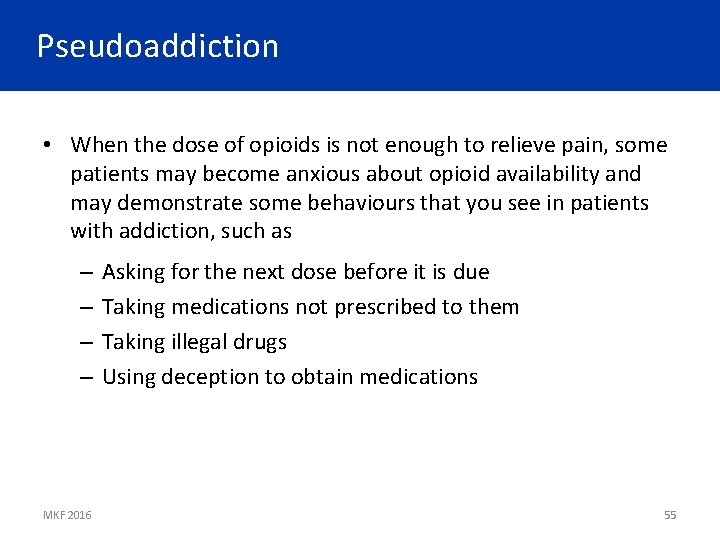
Pseudoaddiction • When the dose of opioids is not enough to relieve pain, some patients may become anxious about opioid availability and may demonstrate some behaviours that you see in patients with addiction, such as – – MKF 2016 Asking for the next dose before it is due Taking medications not prescribed to them Taking illegal drugs Using deception to obtain medications 55
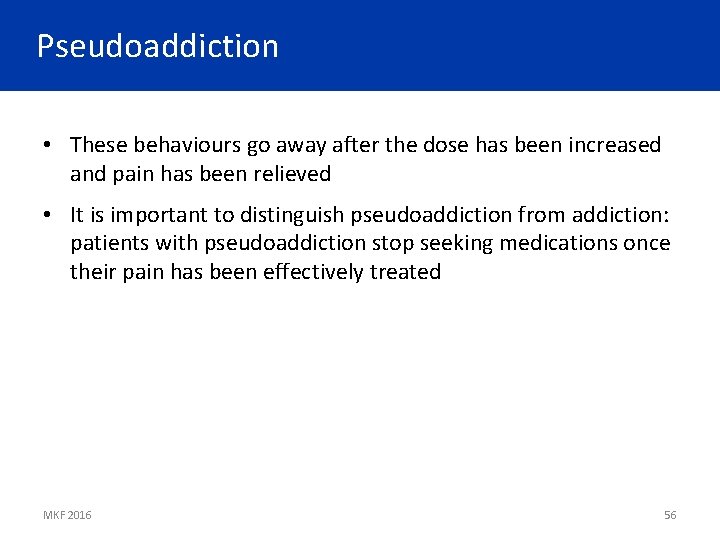
Pseudoaddiction • These behaviours go away after the dose has been increased and pain has been relieved • It is important to distinguish pseudoaddiction from addiction: patients with pseudoaddiction stop seeking medications once their pain has been effectively treated MKF 2016 56
Tolerance • Decreasing response to a drug as a consequence of its continued use • An increased dose is required to achieve a similar effect • Tolerance to opioids is not common – Increases in opioid requirements are usually related to disease progression MKF 2016 57
Take home messages • Risk of developing addictive behaviors as a consequence of medical use of opioids for chronic cancer pain is low • The risk of addiction is commonly overestimated by patients, family and healthcare workers alike • Healthcare workers should be able to distinguish pseudoaddictive behaviors from addictive behaviours • When discontinuing morphine, avoid symptoms of withdrawal by titrating the opioid dose down slowly MKF 2016 58
MKF 2016 59
Dispelling some myths • Myth: Children don’t feel pain – There is no evidence that neonates or young children feel less pain than adults • Myth: Moderate or severe pain is uncommon – Approximately 50% of people with advanced HIV and 80% of people with advanced cancer will experience moderate or severe pain – Other causes of pain include surgery, trauma, burns, myocardial infarction, sickle cell disease, and childbirth MKF 2016 60
Dispelling some myths • Myth: Opioids are dangerous According to the World Health Organization: – “Opioid analgesics, if prescribed in accordance with established dosage regimens, are known to be safe and there is no need to fear accidental death or dependence. ” – “A systematic review of research papers concludes that only 0. 43% of patients with no previous history of substance abuse treated with opioid analgesics to relieve pain abused their medication and only 0. 05% developed dependence syndrome. ” MKF 2016 61
Dispelling some myths • Myth: Pain relief is not affordable – Locally produced oral morphine solution costs just 3. 30 USD per week in Uganda and 5. 00 USD per week in Nigeria – Tablets or injectable opioids may be more expensive • Myth: Morphine is only appropriate for patients at the end of life – Morphine allows many patients who are not dying, but are limited by pain, to live a more active life – Pain treatment should be determined by the level and type of pain, not the stage of disease MKF 2016 62
Thank you Palliative Care Team MKF 2016 63