
Pain in the elderly Assessment Federica Aielli Supportive

- Slides: 40
Pain in the elderly: Assessment Federica Aielli Supportive Care Task Force- Oncologia Medica L’Aquila “L’Aquila per la Vita” ONLUS – Oncologia Domiciliare www. sctf. it Designated Center of Integrated Oncology and Palliative Care
Valutazione del dolore COME? QUANDO? PERCHÉ? www. sctf. it
Valutazione del dolore • La valutazione del dolore è alla base della diagnosi e del trattamento del dolore • La mancata valutazione del dolore è la principale causa di un trattamento inadeguato Dalal S, Bruera E. Curr Pain Headache Rep 2012 www. sctf. it
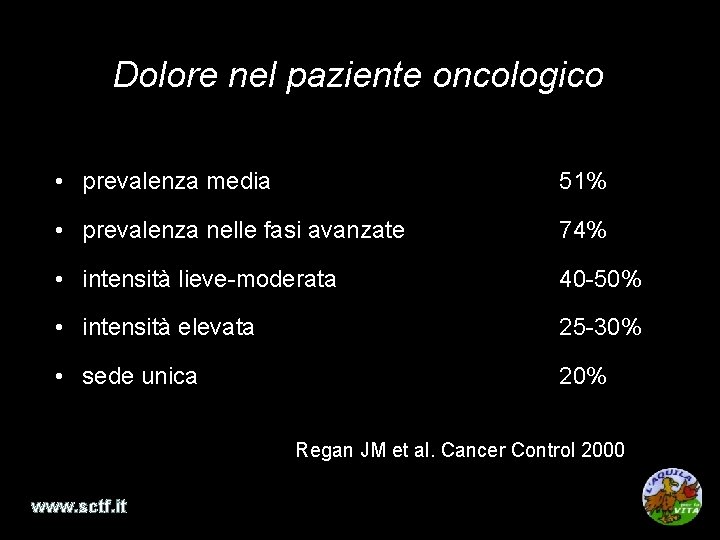
Dolore nel paziente oncologico • prevalenza media 51% • prevalenza nelle fasi avanzate 74% • intensità lieve-moderata 40 -50% • intensità elevata 25 -30% • sede unica 20% Regan JM et al. Cancer Control 2000 www. sctf. it
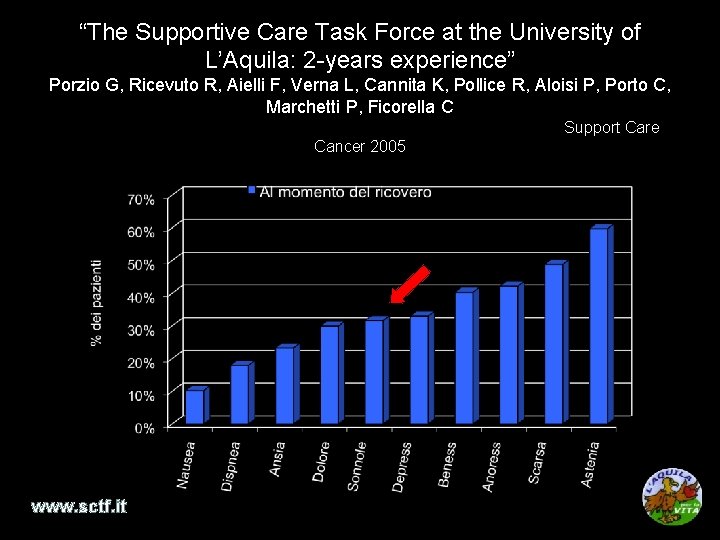
“The Supportive Care Task Force at the University of L’Aquila: 2 -years experience” Porzio G, Ricevuto R, Aielli F, Verna L, Cannita K, Pollice R, Aloisi P, Porto C, Marchetti P, Ficorella C Support Care Cancer 2005 www. sctf. it
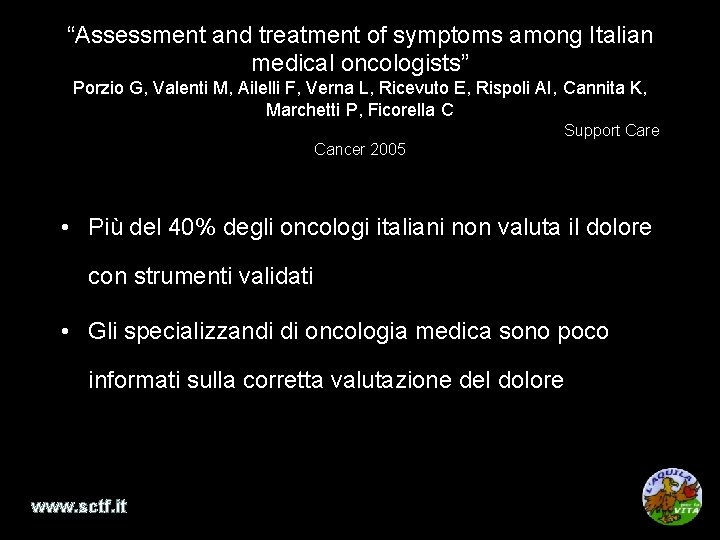
“Assessment and treatment of symptoms among Italian medical oncologists” Porzio G, Valenti M, Ailelli F, Verna L, Ricevuto E, Rispoli AI, Cannita K, Marchetti P, Ficorella C Support Care Cancer 2005 • Più del 40% degli oncologi italiani non valuta il dolore con strumenti validati • Gli specializzandi di oncologia medica sono poco informati sulla corretta valutazione del dolore www. sctf. it
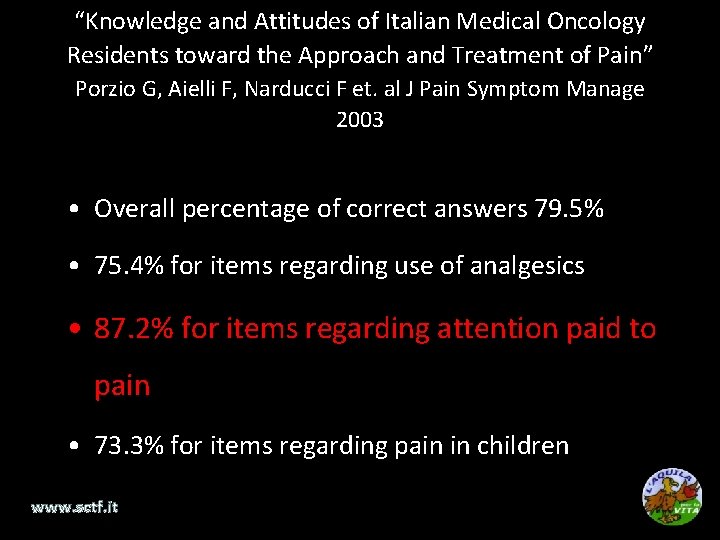
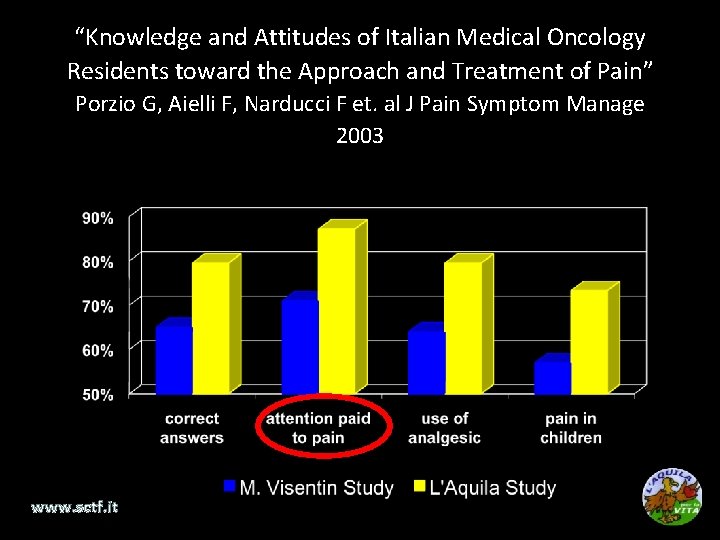
“Knowledge and Attitudes of Italian Medical Oncology Residents toward the Approach and Treatment of Pain” Porzio G, Aielli F, Narducci F et. al J Pain Symptom Manage 2003 • Overall percentage of correct answers 79. 5% • 75. 4% for items regarding use of analgesics • 87. 2% for items regarding attention paid to pain • 73. 3% for items regarding pain in children www. sctf. it
“Knowledge and Attitudes of Italian Medical Oncology Residents toward the Approach and Treatment of Pain” Porzio G, Aielli F, Narducci F et. al J Pain Symptom Manage 2003 www. sctf. it
“Knowledge and Attitudes of Italian Medical Oncology Residents toward the Approach and Treatment of Pain” Porzio G, Aielli F, Narducci F et. al J Pain Symptom Manage 2003 • Knowledge and attitutes on treatment of pain can be considered satisfactory. • The next step is to evaluate how this knowledge is used in clinical practice www. sctf. it
Valutazione del dolore nei pazienti anziani • “La maggioranza degli studi suggerisce che la percezione del dolore - somatico e viscerale - diminuisce con l’età” Studi retrospettivi Difficoltà di comunicazione degli anziani Strumenti di valutazione impiegati www. sctf. it
Valutazione del dolore nei pazienti anziani • “Le differenze nella valutazione del dolore, correlate all’età, potrebbero essere condizionate dallo strumento di valutazione impiegato” Strumenti semplici (preferire scala verbale) Tenere in considerazione: Le manifestazioni “atipiche” del dolore La difficoltà a riconoscere un “nuovo” dolore www. sctf. it
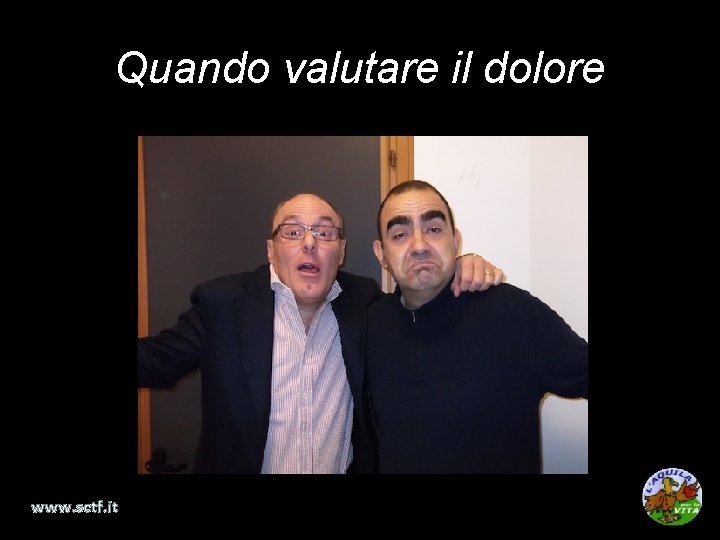
Quando valutare il dolore • Valutazione del dolore • Trattamento del dolore www. sctf. it
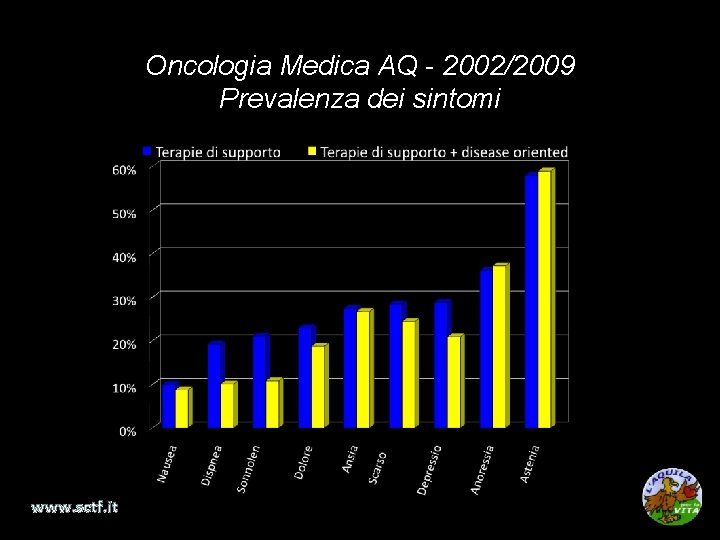
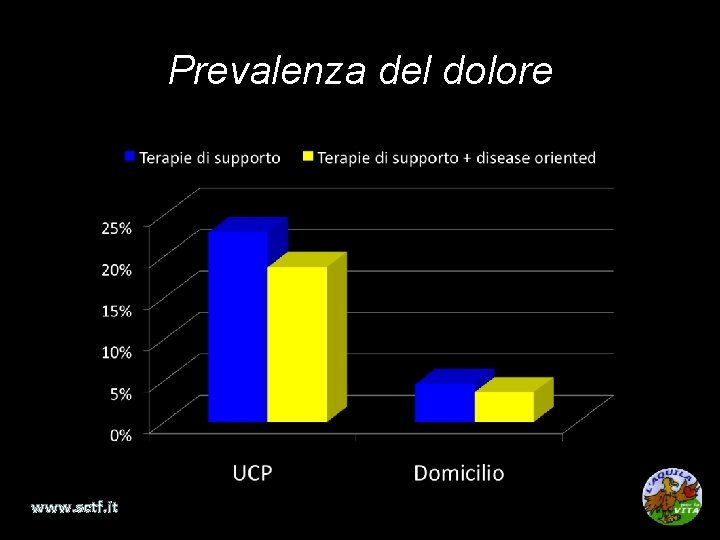
Valutazione del Dolore • Il dolore di entità severa è presente solo in fase avanzata di malattia? www. sctf. it
Oncologia Medica AQ - 2002/2009 Prevalenza dei sintomi www. sctf. it
Prevalenza del dolore www. sctf. it
Valutazione del Dolore • Alla prima visita • Ad ogni accesso del paziente • Riportata nella cartella clinica www. sctf. it
Valutazione del Dolore • Il dolore si modifica durante il decorso della malattia • Fondamentale la valutazione per la definizione del “beneficio clinico” www. sctf. it
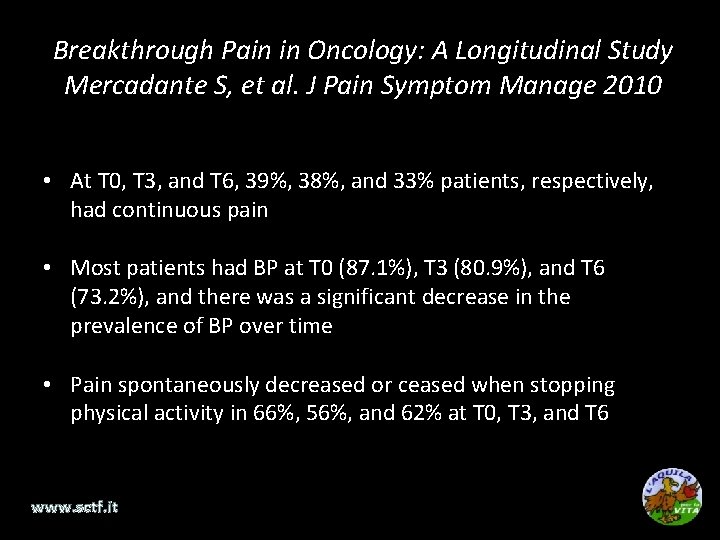
Breakthrough Pain in Oncology: A Longitudinal Study Mercadante S, et al. J Pain Symptom Manage 2010 • At T 0, T 3, and T 6, 39%, 38%, and 33% patients, respectively, had continuous pain • Most patients had BP at T 0 (87. 1%), T 3 (80. 9%), and T 6 (73. 2%), and there was a significant decrease in the prevalence of BP over time • Pain spontaneously decreased or ceased when stopping physical activity in 66%, 56%, and 62% at T 0, T 3, and T 6 www. sctf. it
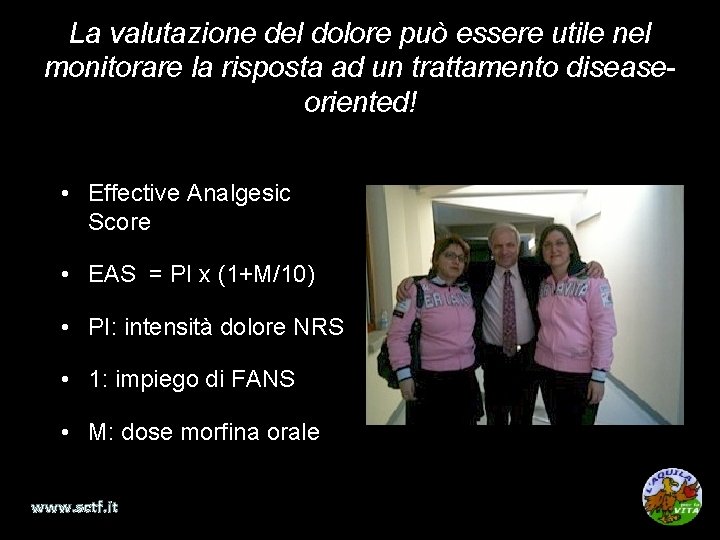
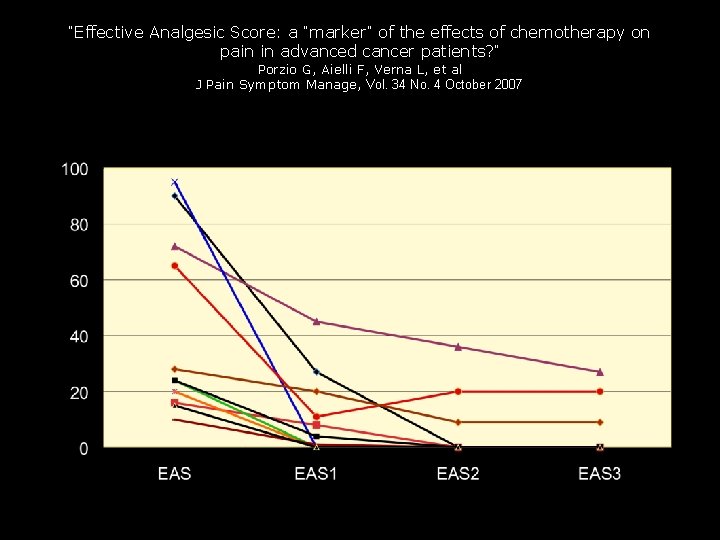
La valutazione del dolore può essere utile nel monitorare la risposta ad un trattamento diseaseoriented! • Effective Analgesic Score • EAS = PI x (1+M/10) • PI: intensità dolore NRS • 1: impiego di FANS • M: dose morfina orale www. sctf. it
“Beneficio clinico” Effective Analgesic Score: a “marker” of the effects of chemotherapy on pain in advanced cancer patients? ” Porzio G, Aielli F, Verna L et al J Pain Symptom Manage 2007; 34: 339 -42 www. sctf. it
“Effective Analgesic Score: a “marker” of the effects of chemotherapy on pain in advanced cancer patients? ” Porzio G, Aielli F, Verna L, et al J Pain Symptom Manage, Vol. 34 No. 4 October 2007
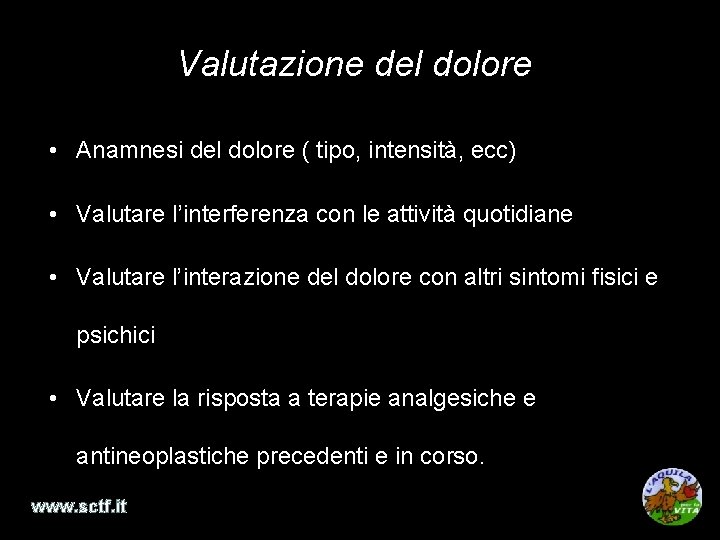
Valutazione del dolore • Anamnesi del dolore ( tipo, intensità, ecc) • Valutare l’interferenza con le attività quotidiane • Valutare l’interazione del dolore con altri sintomi fisici e psichici • Valutare la risposta a terapie analgesiche e antineoplastiche precedenti e in corso. www. sctf. it
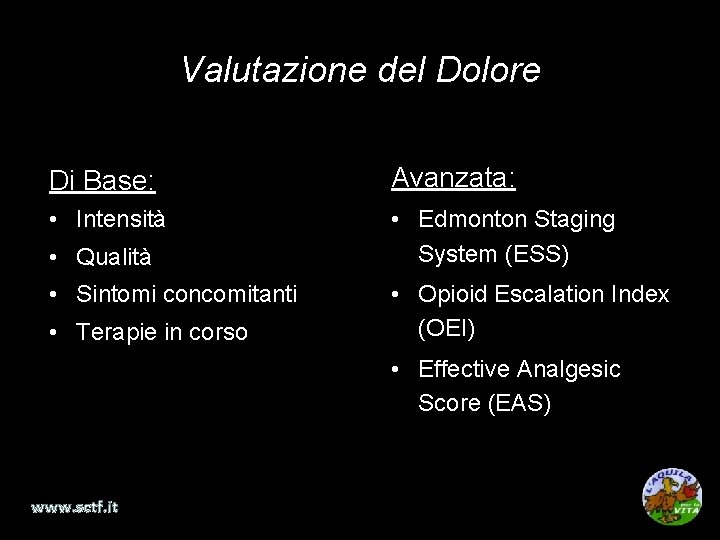
Valutazione del Dolore Di Base: Avanzata: • Intensità • Edmonton Staging System (ESS) • Qualità • Sintomi concomitanti • Terapie in corso • Opioid Escalation Index (OEI) • Effective Analgesic Score (EAS) www. sctf. it
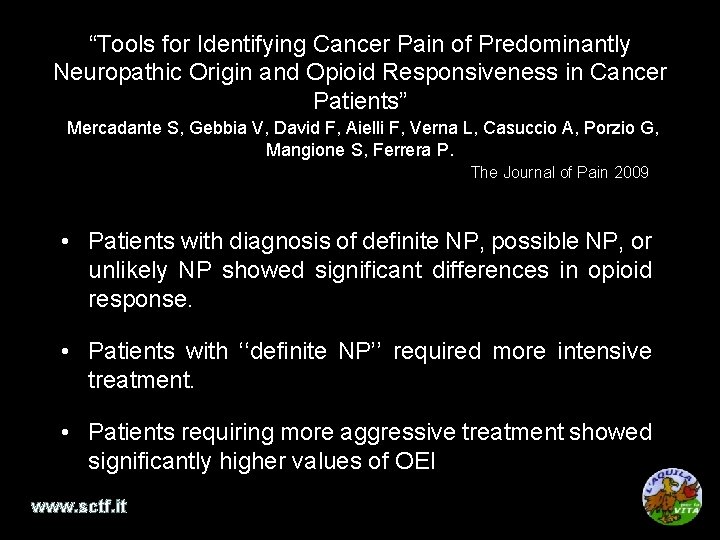
“Tools for Identifying Cancer Pain of Predominantly Neuropathic Origin and Opioid Responsiveness in Cancer Patients” Mercadante S, Gebbia V, David F, Aielli F, Verna L, Casuccio A, Porzio G, Mangione S, Ferrera P. The Journal of Pain 2009 • Patients with diagnosis of definite NP, possible NP, or unlikely NP showed significant differences in opioid response. • Patients with ‘‘definite NP’’ required more intensive treatment. • Patients requiring more aggressive treatment showed significantly higher values of OEI www. sctf. it
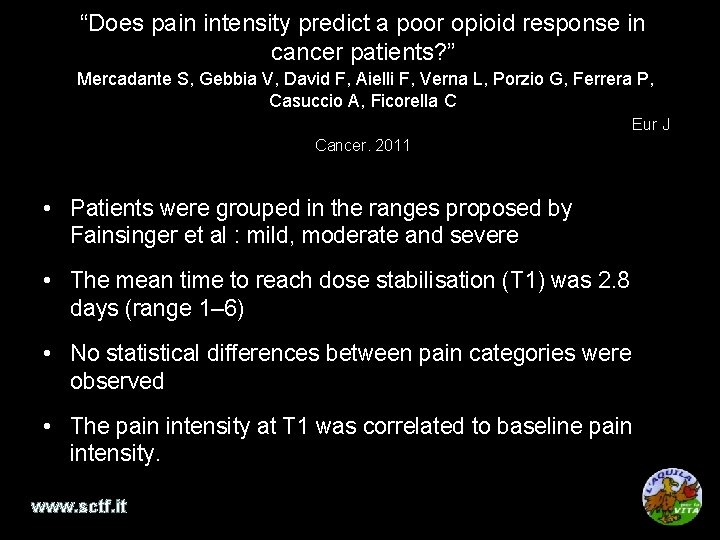
“Does pain intensity predict a poor opioid response in cancer patients? ” Mercadante S, Gebbia V, David F, Aielli F, Verna L, Porzio G, Ferrera P, Casuccio A, Ficorella C Eur J Cancer. 2011 • Patients were grouped in the ranges proposed by Fainsinger et al : mild, moderate and severe • The mean time to reach dose stabilisation (T 1) was 2. 8 days (range 1– 6) • No statistical differences between pain categories were observed • The pain intensity at T 1 was correlated to baseline pain intensity. www. sctf. it
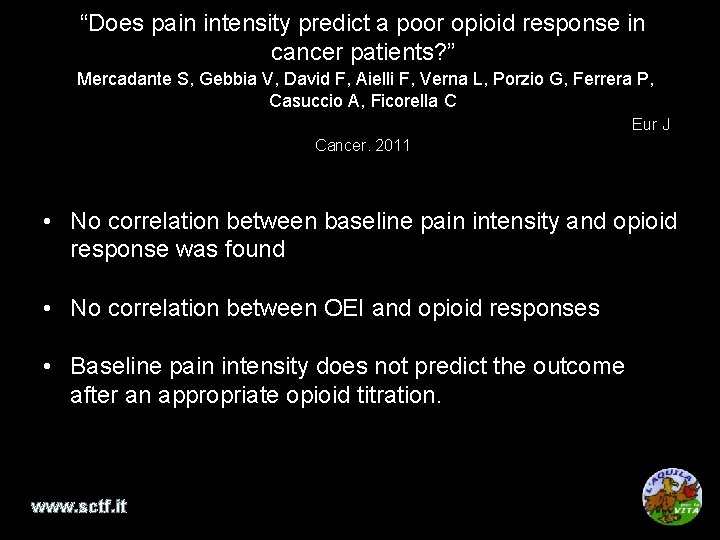
“Does pain intensity predict a poor opioid response in cancer patients? ” Mercadante S, Gebbia V, David F, Aielli F, Verna L, Porzio G, Ferrera P, Casuccio A, Ficorella C Eur J Cancer. 2011 • No correlation between baseline pain intensity and opioid response was found • No correlation between OEI and opioid responses • Baseline pain intensity does not predict the outcome after an appropriate opioid titration. www. sctf. it
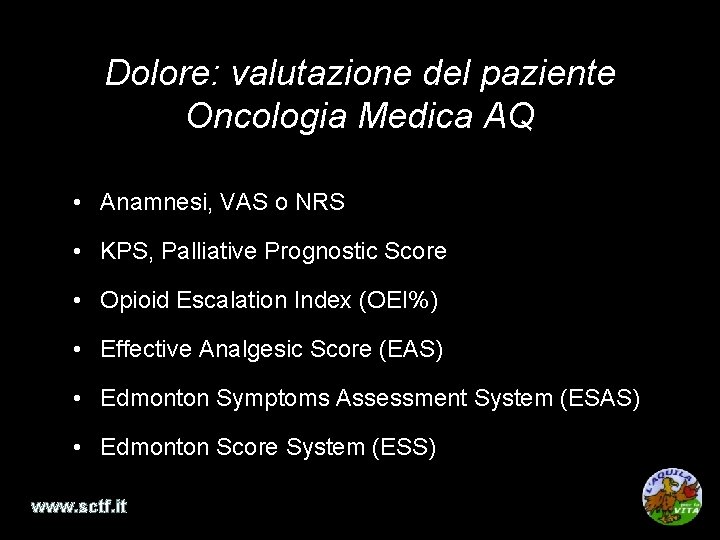
Dolore: valutazione del paziente Oncologia Medica AQ • Anamnesi, VAS o NRS • KPS, Palliative Prognostic Score • Opioid Escalation Index (OEI%) • Effective Analgesic Score (EAS) • Edmonton Symptoms Assessment System (ESAS) • Edmonton Score System (ESS) www. sctf. it
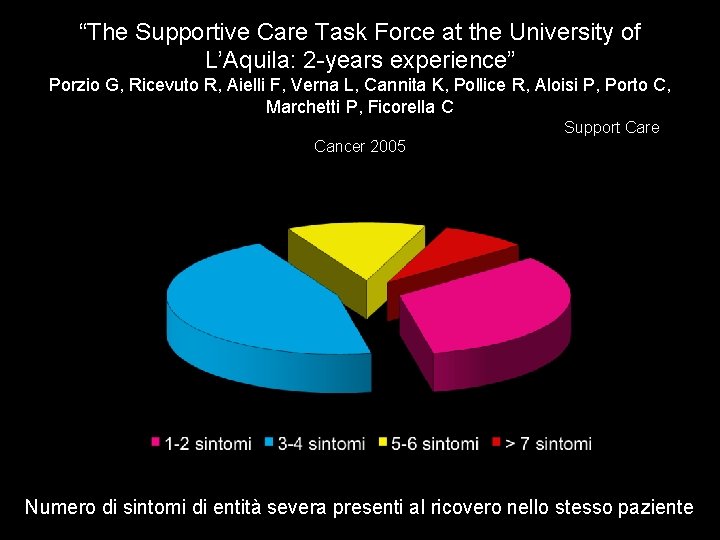
“The Supportive Care Task Force at the University of L’Aquila: 2 -years experience” Porzio G, Ricevuto R, Aielli F, Verna L, Cannita K, Pollice R, Aloisi P, Porto C, Marchetti P, Ficorella C Support Care Cancer 2005 Numero di sintomi di entità severa presenti al ricovero nello stesso paziente
Dolore: valutazione del paziente Oncologia Medica AQ • Comorbidità • Compliance farmacologica • Caratteristiche della famiglia www. sctf. it
Valutazione del dolore: Criticità del paziente anziano • Disturbi cognitivi • Alterato stato di coscienza o Delirio • Depressione ed alterazioni del tono dell’umore • Ridotta attività quotidiana • Comorbidità Pautex S, et al. Crit Rev Oncol Hematol. 2003 Devis MP, et al. Drugs Aging. 2003 www. sctf. it
Valutazione del dolore: Criticità
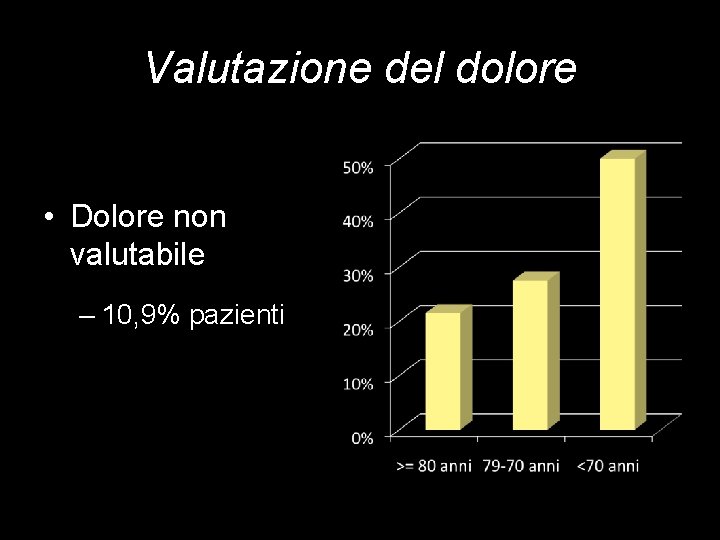
Valutazione del dolore • Dolore non valutabile – 10, 9% pazienti
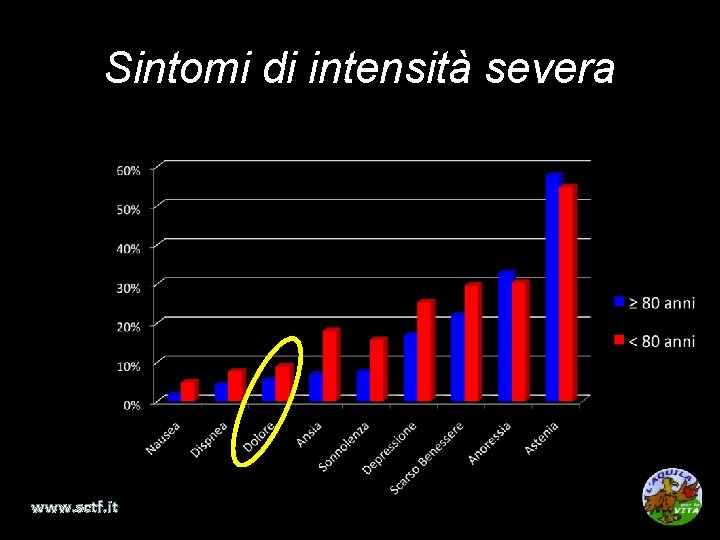
Sintomi di intensità severa www. sctf. it
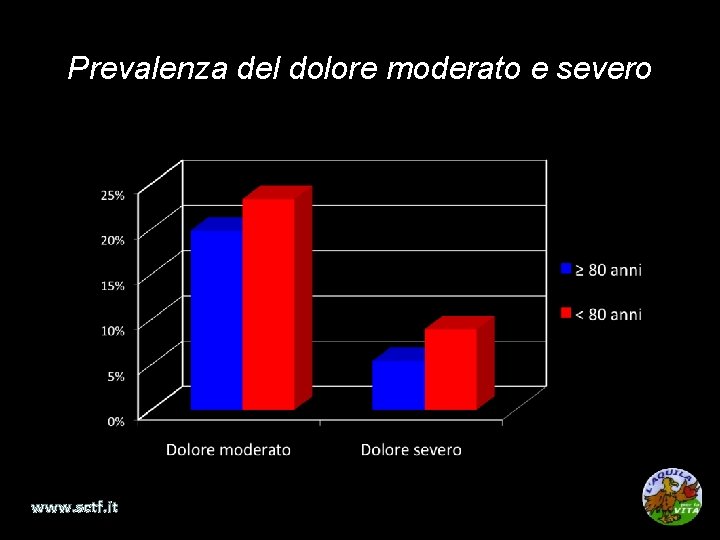
Prevalenza del dolore moderato e severo www. sctf. it
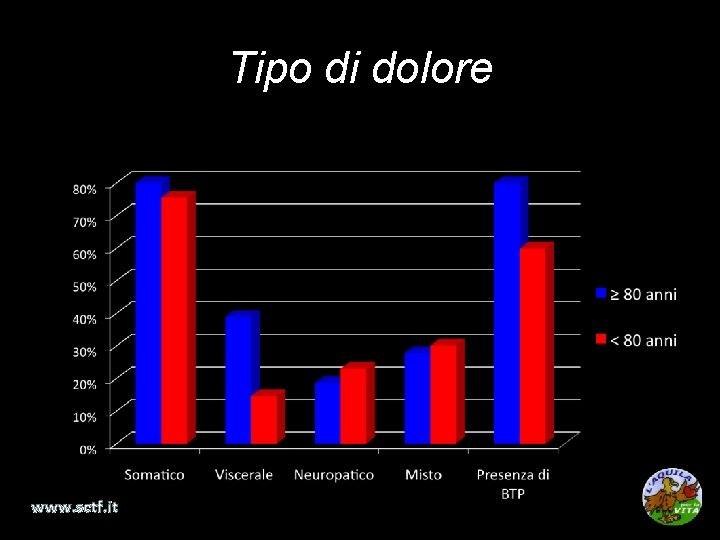
Tipo di dolore www. sctf. it
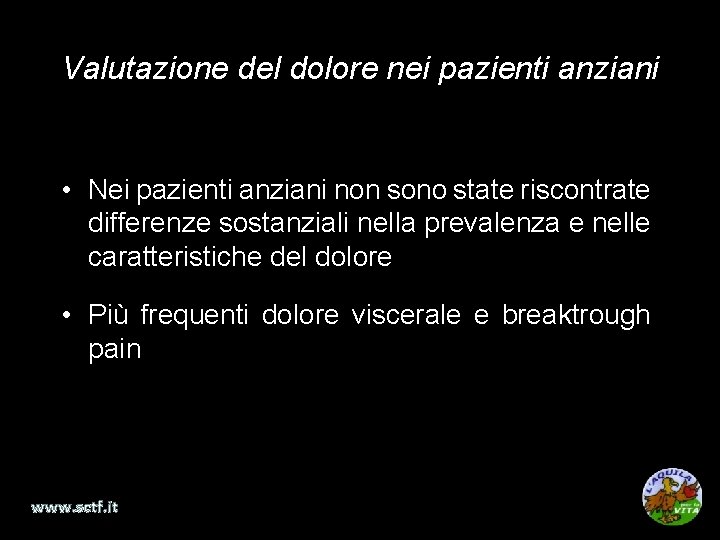
Valutazione del dolore nei pazienti anziani • Nei pazienti anziani non sono state riscontrate differenze sostanziali nella prevalenza e nelle caratteristiche del dolore • Più frequenti dolore viscerale e breaktrough pain www. sctf. it
Terapia del dolore • I pazienti anziani - per ragioni legate alla farmacocinetica ed alla farmacodinamica dei farmaci analgesici - sembrano essere più sensibili agli oppioidi e più esposti al rischio di effetti collaterali • Protocolli di terapia del dolore “specifici”? www. sctf. it
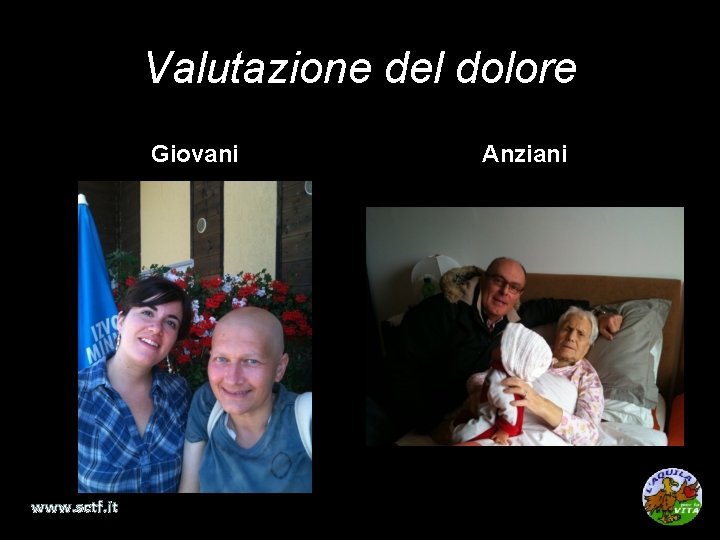
Valutazione del dolore Giovani www. sctf. it Anziani
Questo o quello per noi pari sono!