
Pain Acupuncture What is Pain An unpleasant sensory

- Slides: 43
Pain & Acupuncture
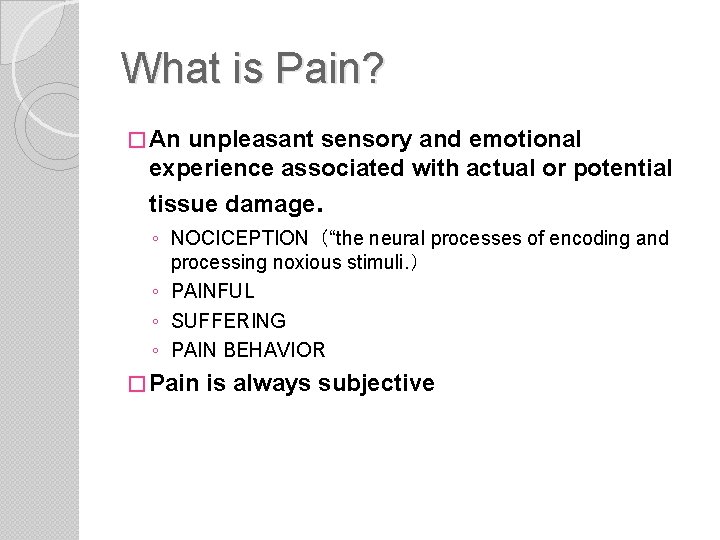
What is Pain? � An unpleasant sensory and emotional experience associated with actual or potential tissue damage. ◦ NOCICEPTION(“the neural processes of encoding and processing noxious stimuli. ) ◦ PAINFUL ◦ SUFFERING ◦ PAIN BEHAVIOR � Pain is always subjective
What is Pain? One of the body’s defense mechanisms warns the brain that its tissues may be in jeopardy May be triggered without any physical damage to tissues. Acute pain is the primary reason people seek medical attention and the major complaint that they describe on initial evaluation Chronic pain can be so emotionally and physically debilitating that it is a leading cause of suicide.
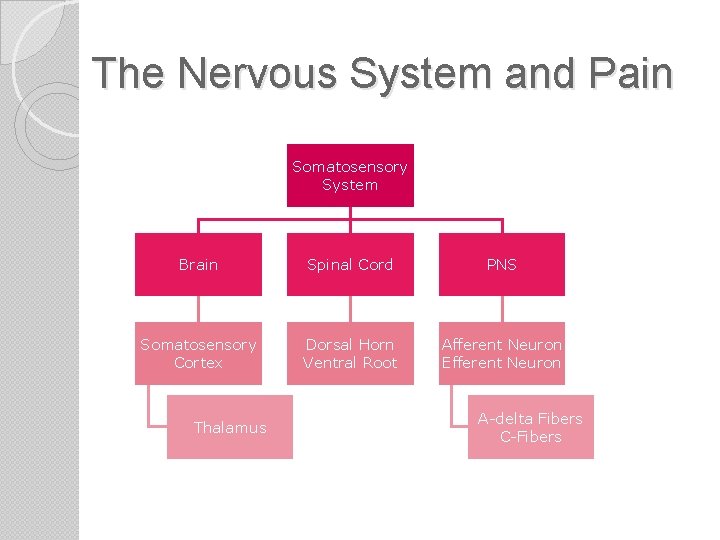
The Nervous System and Pain Somatosensory System Brain Spinal Cord PNS Somatosensory Cortex Dorsal Horn Ventral Root Afferent Neuron Efferent Neuron Thalamus A-delta Fibers C-Fibers
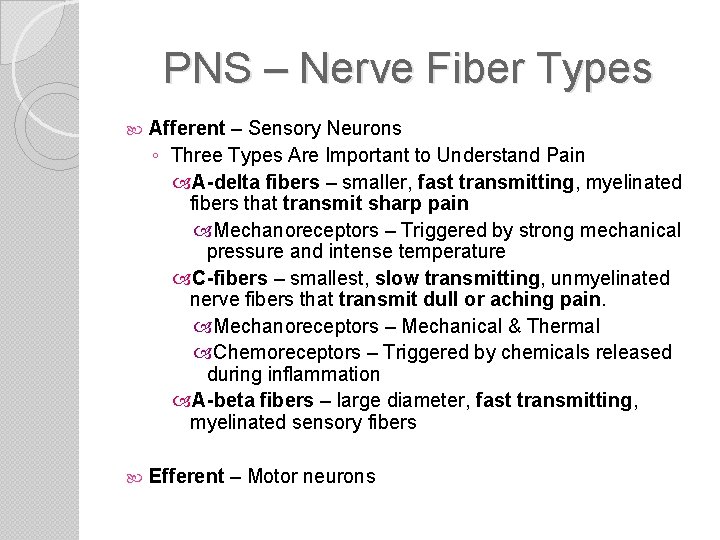
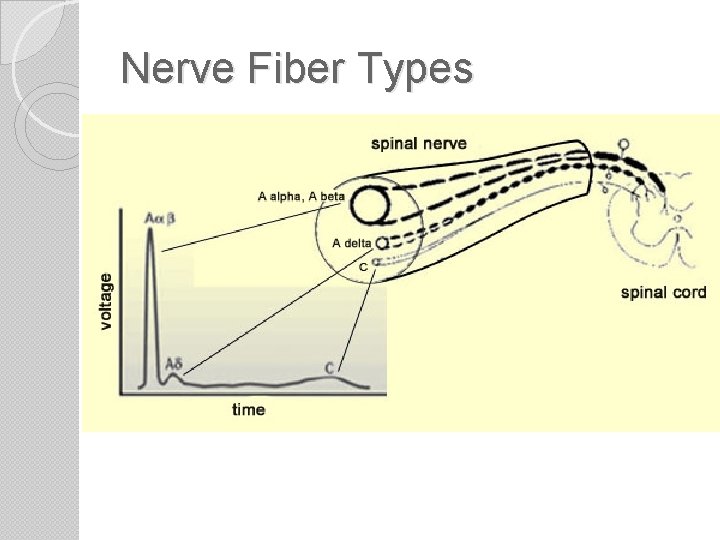
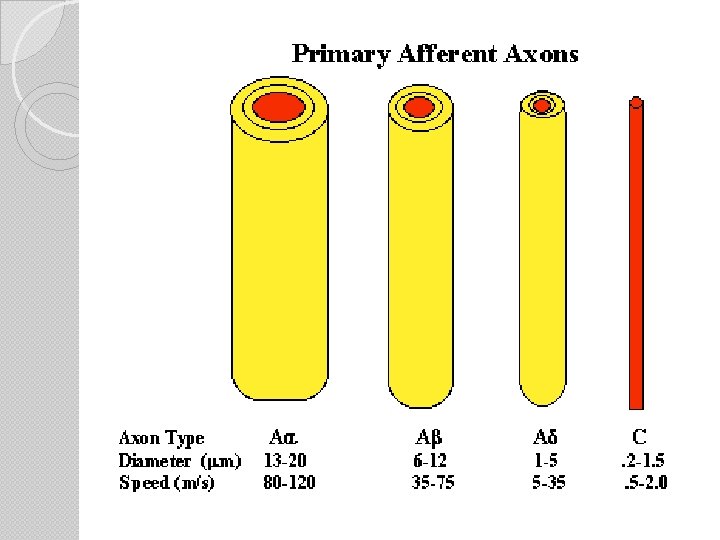
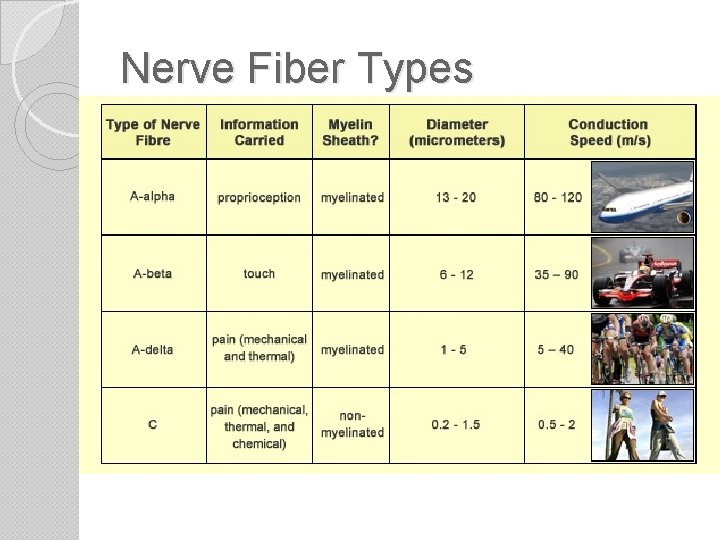
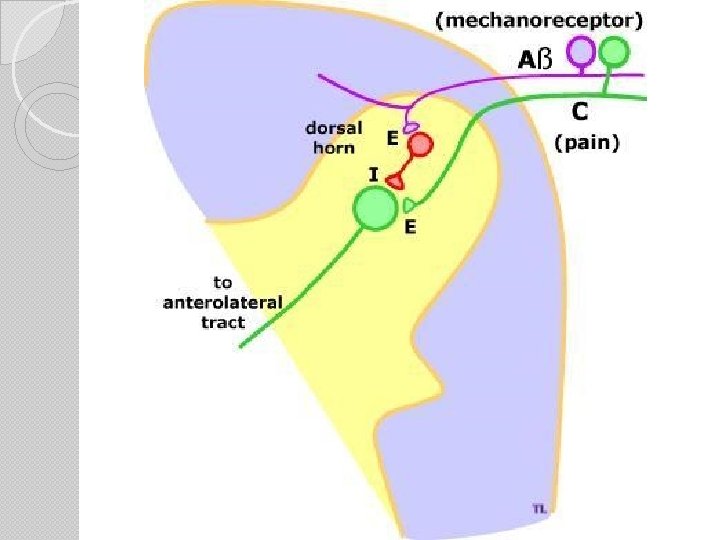
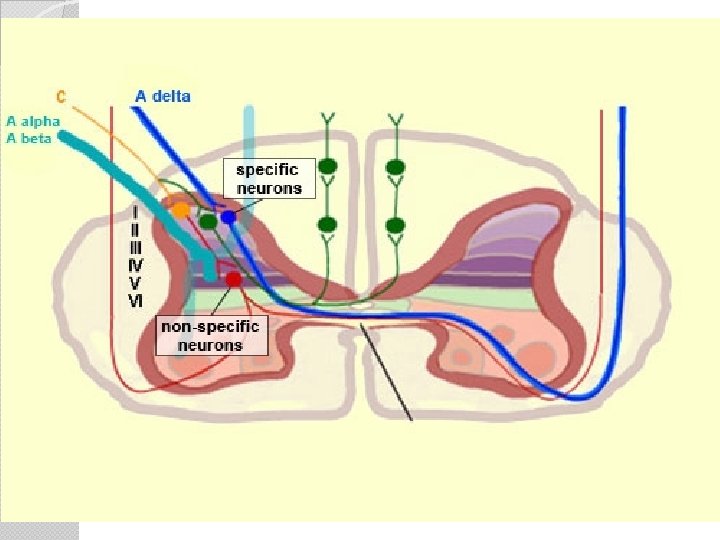
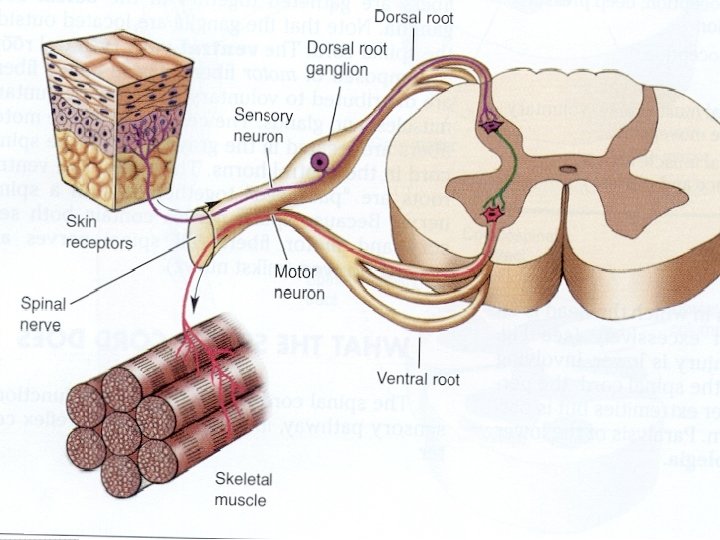
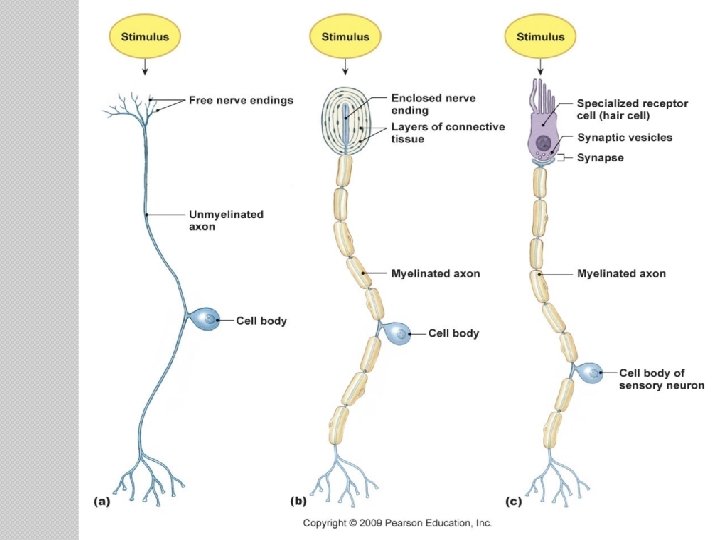
PNS – Nerve Fiber Types Afferent – Sensory Neurons ◦ Three Types Are Important to Understand Pain A-delta fibers – smaller, fast transmitting, myelinated fibers that transmit sharp pain Mechanoreceptors – Triggered by strong mechanical pressure and intense temperature C-fibers – smallest, slow transmitting, unmyelinated nerve fibers that transmit dull or aching pain. Mechanoreceptors – Mechanical & Thermal Chemoreceptors – Triggered by chemicals released during inflammation A-beta fibers – large diameter, fast transmitting, myelinated sensory fibers Efferent – Motor neurons
Nerve Fiber Types
Nerve Fiber Types
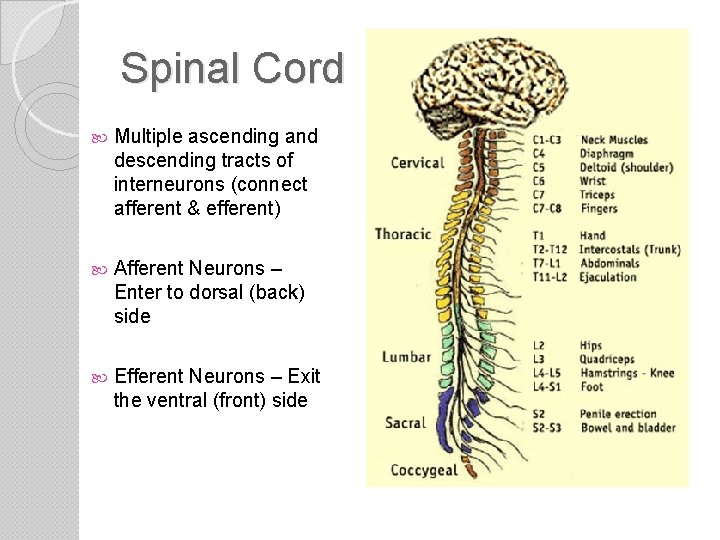
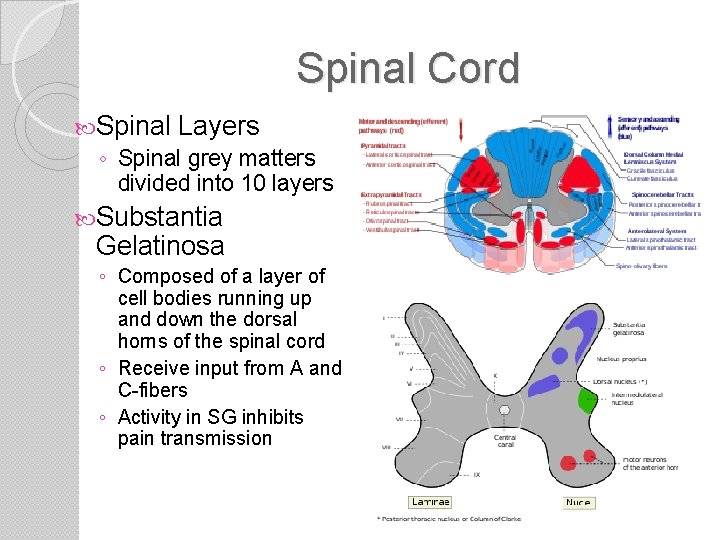
Spinal Cord Multiple ascending and descending tracts of interneurons (connect afferent & efferent) Afferent Neurons – Enter to dorsal (back) side Efferent Neurons – Exit the ventral (front) side
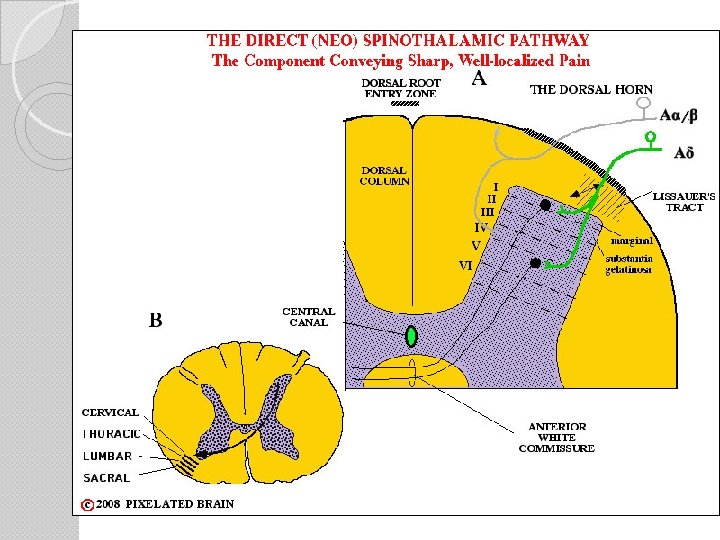
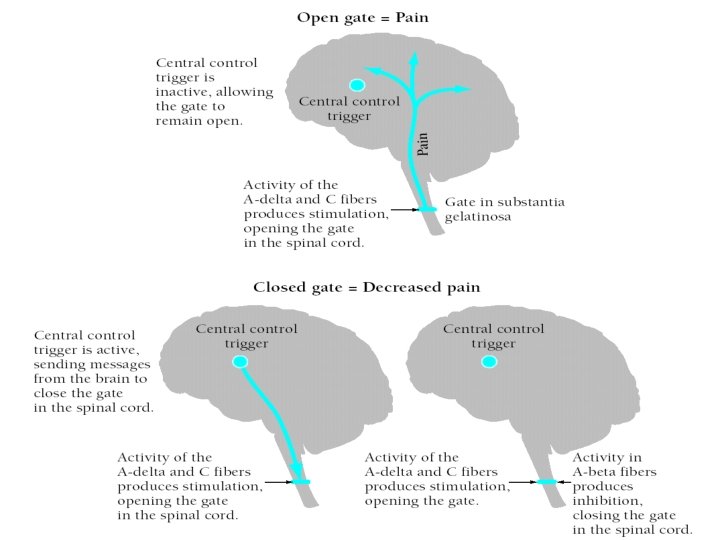
Spinal Cord Spinal Layers ◦ Spinal grey matters divided into 10 layers Substantia Gelatinosa ◦ Composed of a layer of cell bodies running up and down the dorsal horns of the spinal cord ◦ Receive input from A and C-fibers ◦ Activity in SG inhibits pain transmission
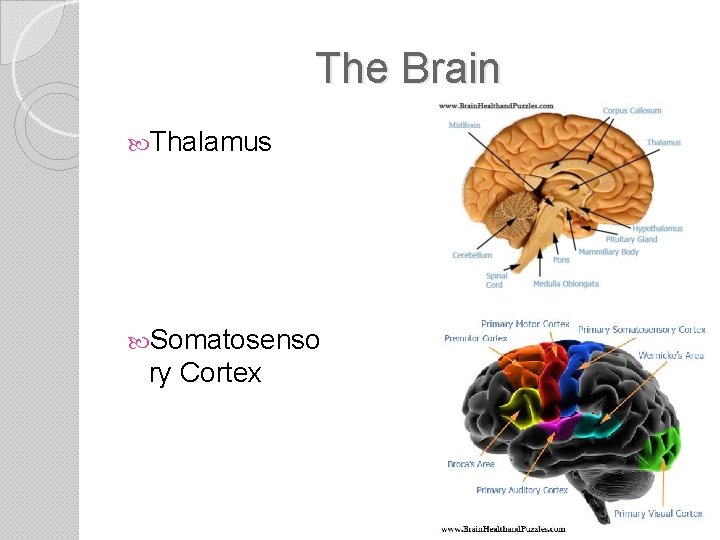
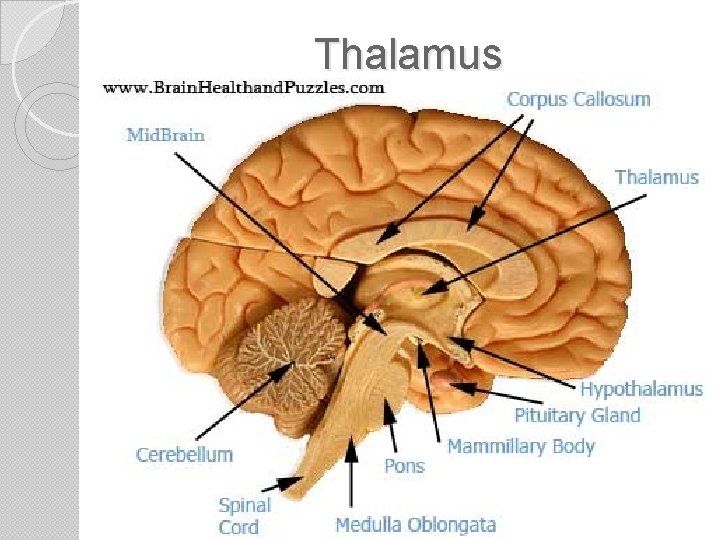
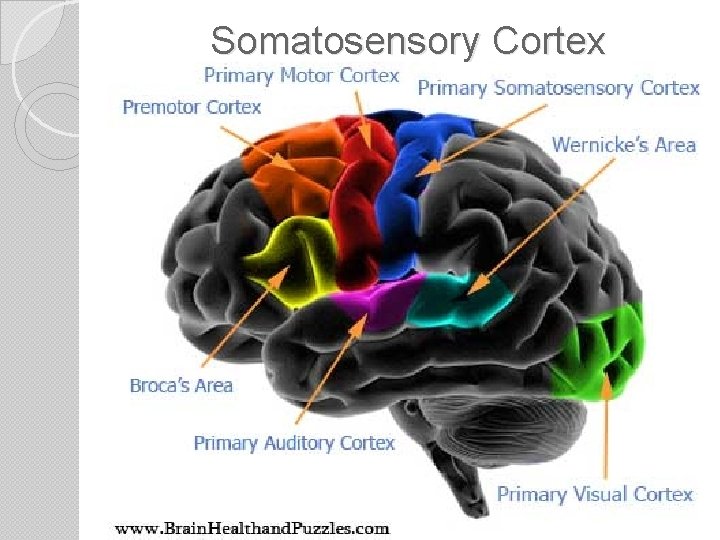
The Brain Thalamus Somatosenso ry Cortex
Thalamus Somatosensory Cortex
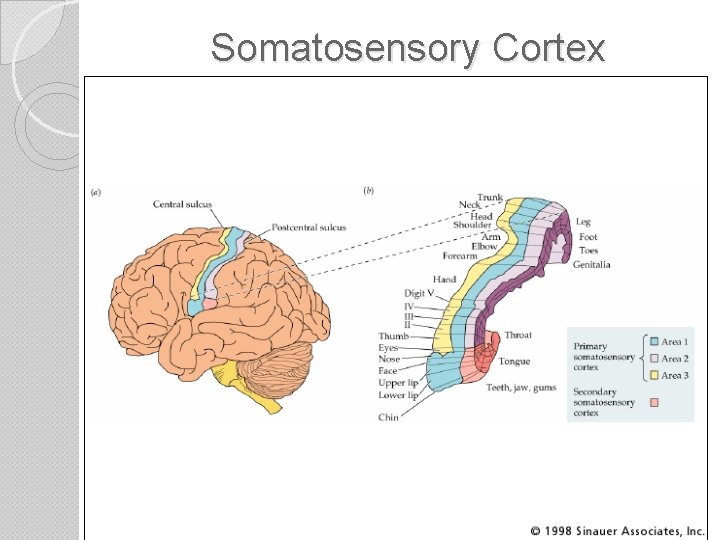
Somatosensory Cortex
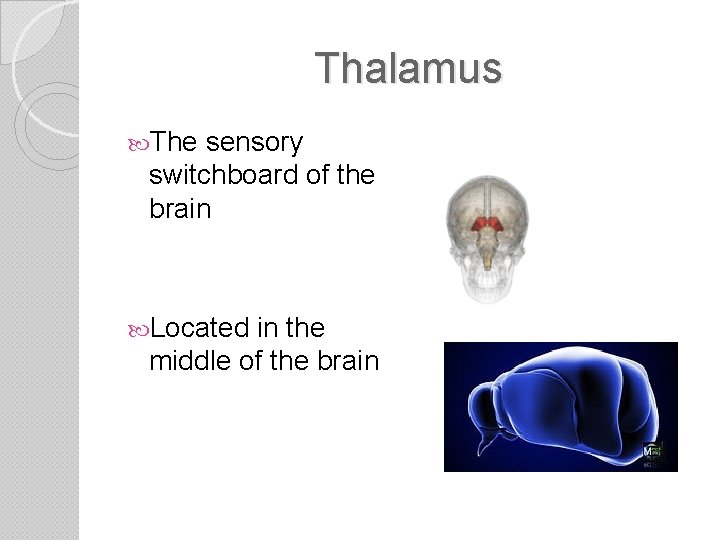
Thalamus The sensory switchboard of the brain Located in the middle of the brain
Somatosensory Cortex • Area of cerebral cortex located in the parietal lobe right behind the frontal lobe • Receives all info on touch and pain.
Somatosensory Cortex
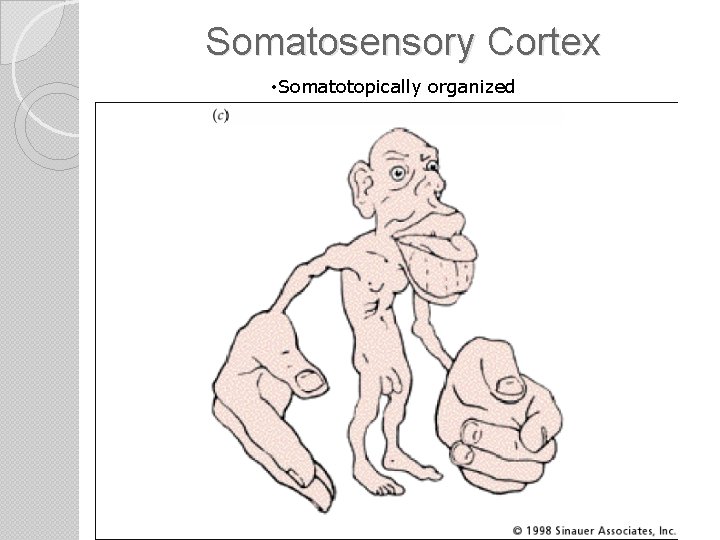
Somatosensory Cortex • Somatotopically organized
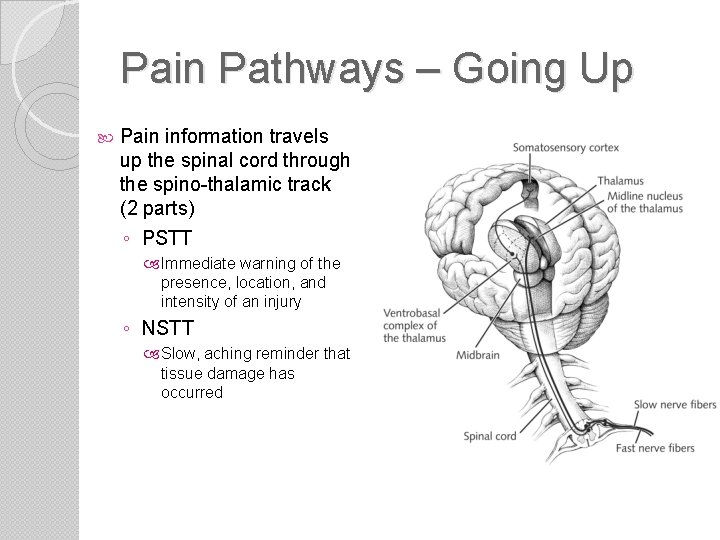
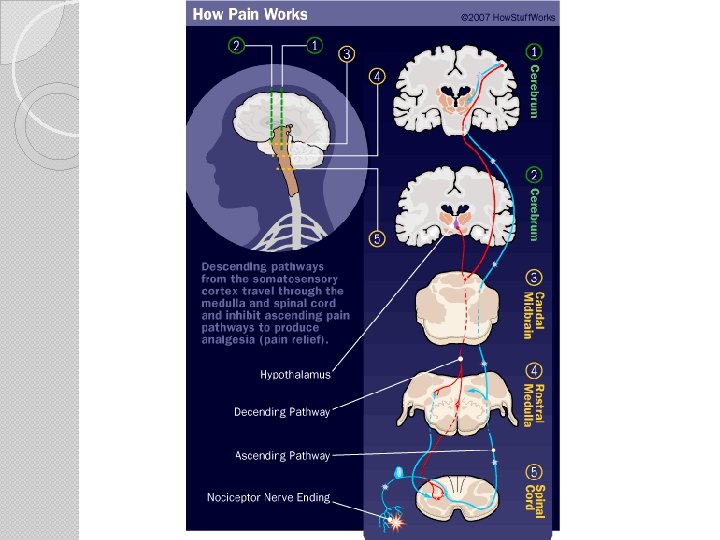
Pain Pathways – Going Up Pain information travels up the spinal cord through the spino-thalamic track (2 parts) ◦ PSTT Immediate warning of the presence, location, and intensity of an injury ◦ NSTT Slow, aching reminder that tissue damage has occurred
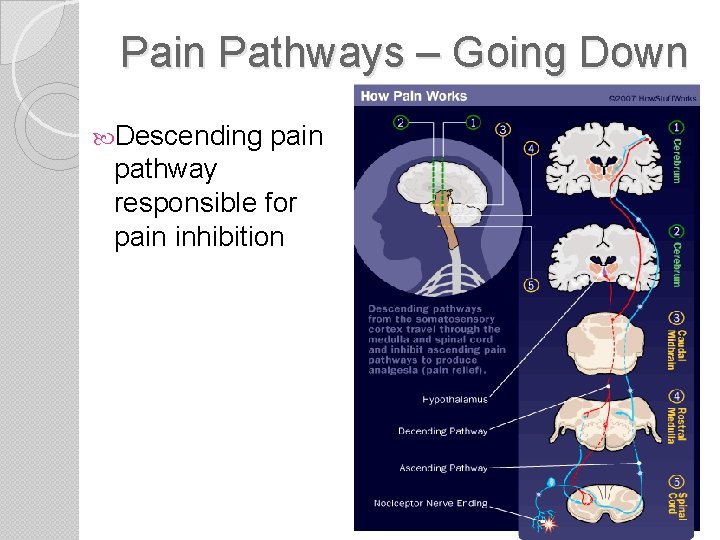
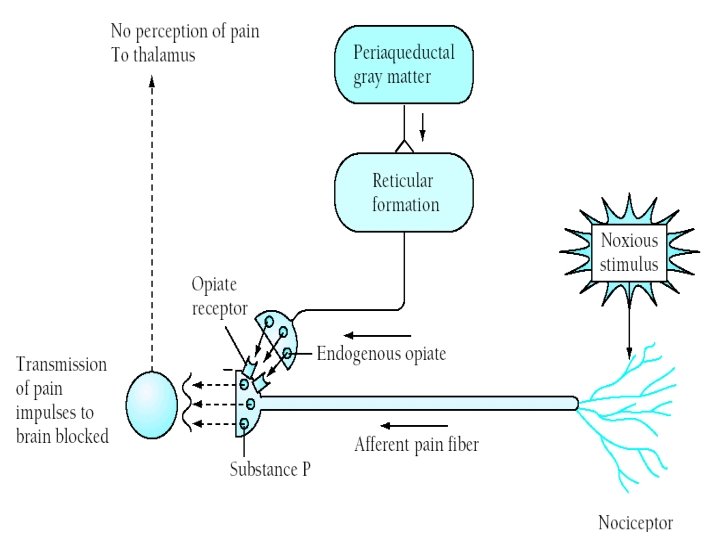
Pain Pathways – Going Down Descending pain pathway responsible for pain inhibition
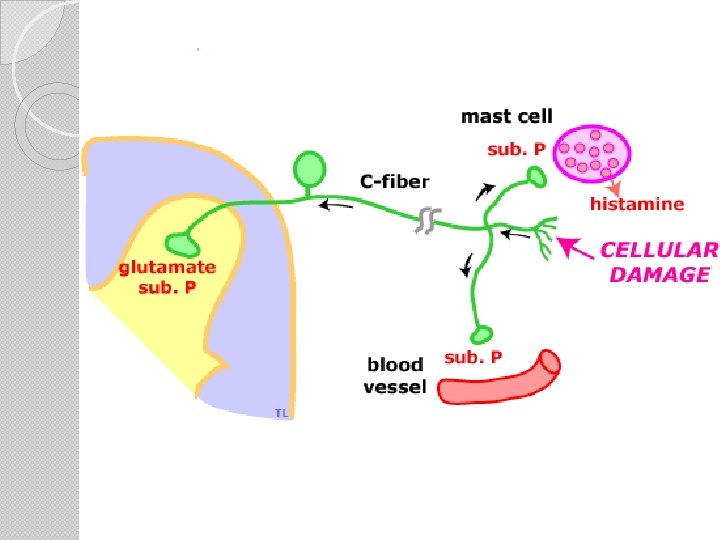
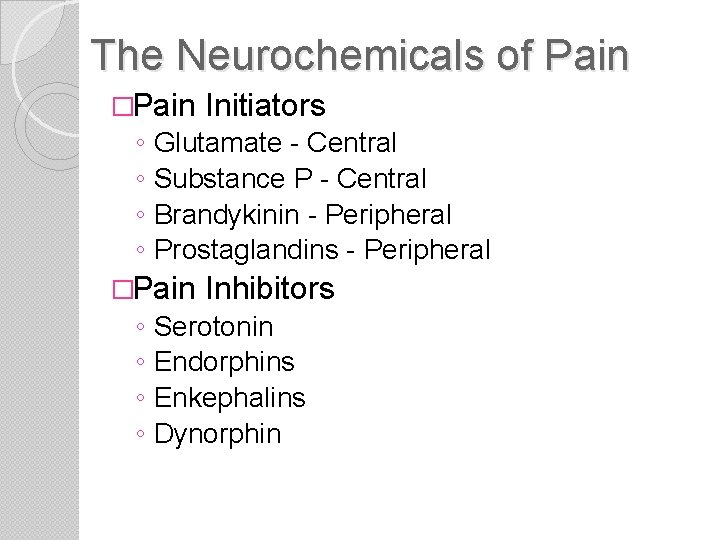
The Neurochemicals of Pain �Pain ◦ ◦ Glutamate - Central Substance P - Central Brandykinin - Peripheral Prostaglandins - Peripheral �Pain ◦ ◦ Initiators Inhibitors Serotonin Endorphins Enkephalins Dynorphin
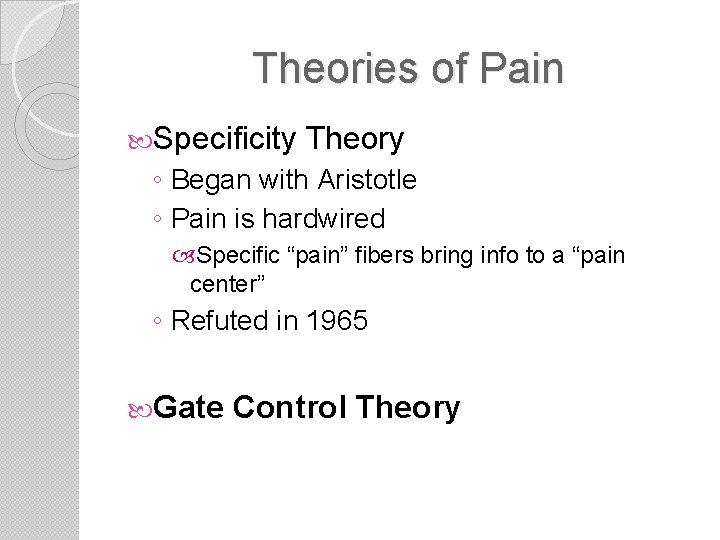
Theories of Pain Specificity Theory ◦ Began with Aristotle ◦ Pain is hardwired Specific “pain” fibers bring info to a “pain center” ◦ Refuted in 1965 Gate Control Theory
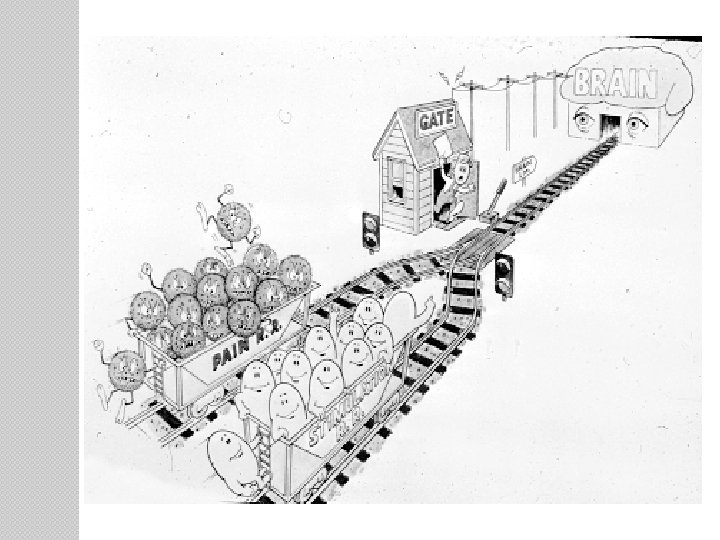
Gate-Control Theory – Ronald Melzack (1960 s) Described physiological mechanism by which psychological factors can affect the experience of pain. Neural gate can open and close thereby modulating pain. Gate is located in the spinal cord. ◦ It is the SG
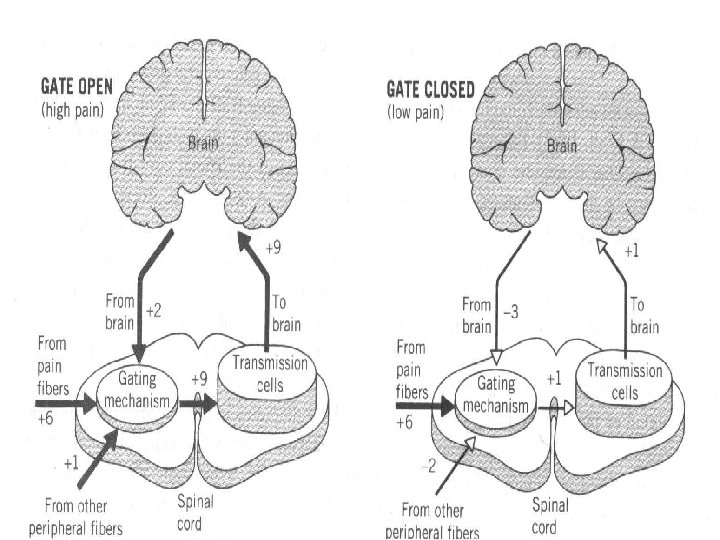
Opening and Closing the Gate When the gate is closed signals from small diameter pain fibres do not excite the dorsal horn transmission neurons. When the gate is open, pain signals excite dorsal horn transmission cells
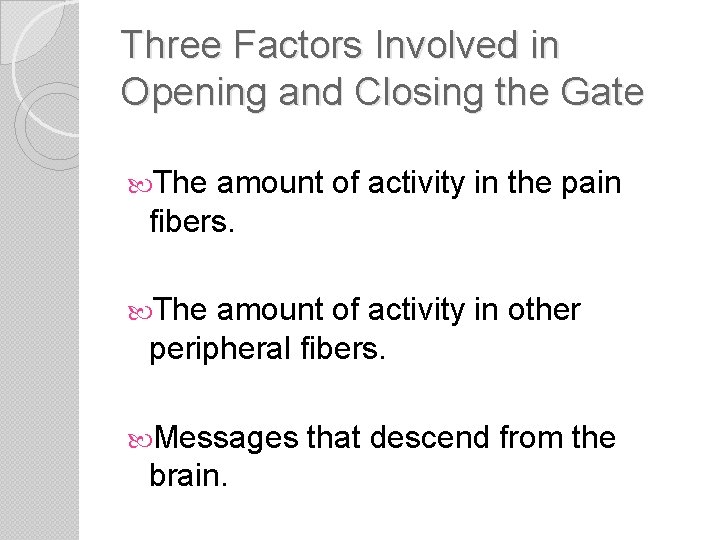
Three Factors Involved in Opening and Closing the Gate The amount of activity in the pain fibers. The amount of activity in other peripheral fibers. Messages brain. that descend from the
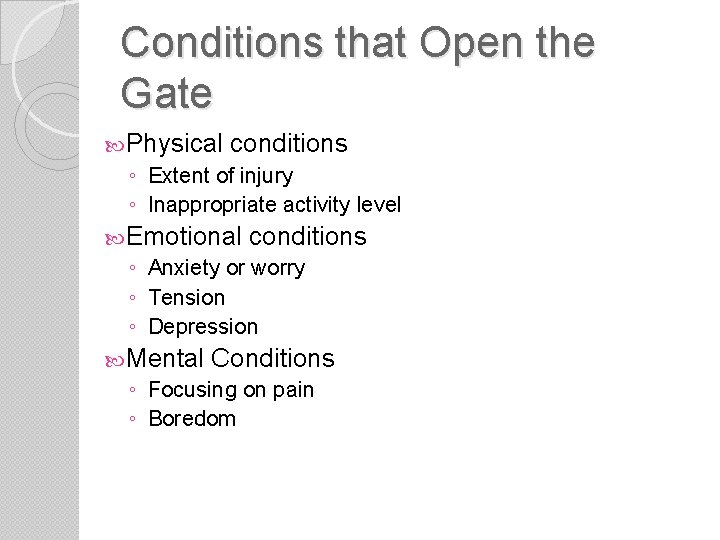
Conditions that Open the Gate Physical conditions ◦ Extent of injury ◦ Inappropriate activity level Emotional conditions ◦ Anxiety or worry ◦ Tension ◦ Depression Mental Conditions ◦ Focusing on pain ◦ Boredom
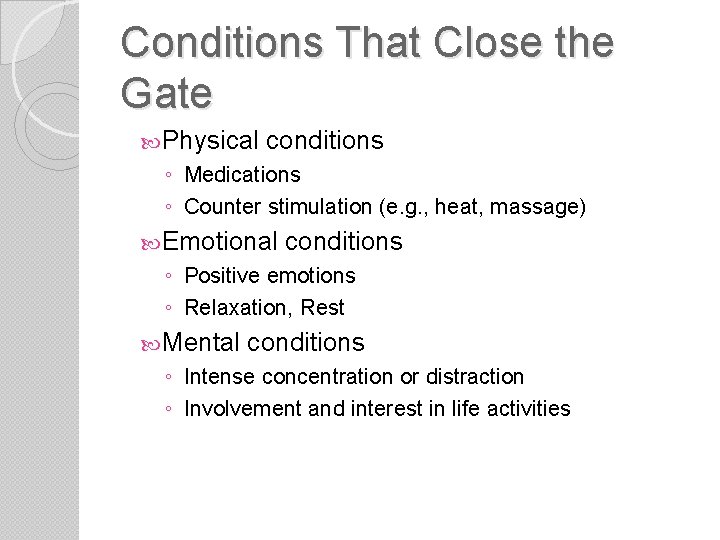
Conditions That Close the Gate Physical conditions ◦ Medications ◦ Counter stimulation (e. g. , heat, massage) Emotional conditions ◦ Positive emotions ◦ Relaxation, Rest Mental conditions ◦ Intense concentration or distraction ◦ Involvement and interest in life activities
Categories of Pain ◦ ◦ can be categorized according to its origin: Cutaneous – Skin, tendons, ligaments Deep somatic - Bone, muscle connective tissue Visceral – Organs, cavity linings Neuropathic – Nerve pain By certain qualities ◦ Radiating ◦ Referred ◦ Intractable
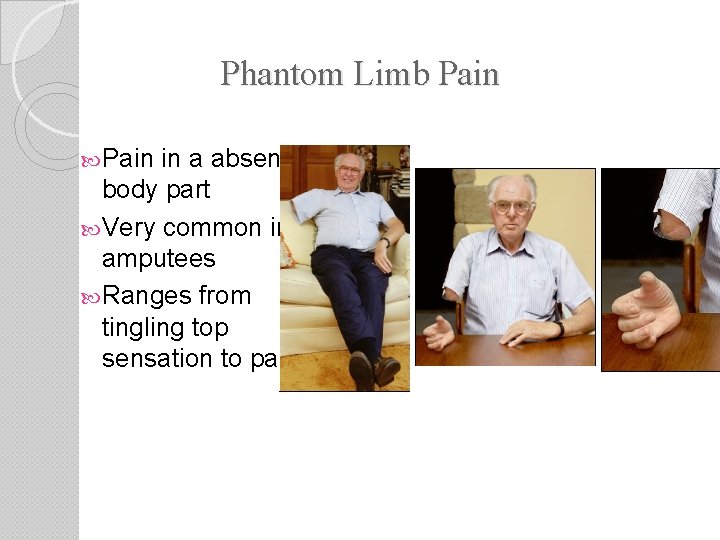
Phantom Limb Pain in a absent body part Very common in amputees Ranges from tingling top sensation to pain
Acute Pain ACUTE – Pain lasting for less than 6 months ◦ Highly correlated to damage ◦ Anxiety abates w/treatment ◦ De-activation often helpful
Chronic Pain ◦ ◦ ◦ ◦ lasting > 6 months Not correlated to tissue damage Learned/Reinforced Often associated w/psychopathology or coping problems More likely to abuse alcohol and drugs Leads to shutting down Typically does not respond to drugs very well Activity is the best medicine
Measuring Pain Physiological ◦ Unreliable Self-report ◦ Behavioral observations ◦ Rankings ◦ Pain questionnaires ◦ Psych tests
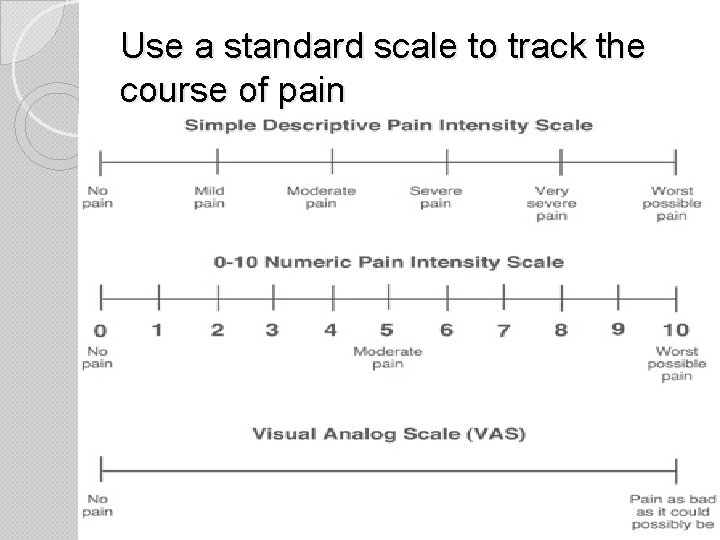
Use a standard scale to track the course of pain