
Pain 2018 SCCM Clinical Practice Guidelines for the








- Slides: 43
Pain 2018 SCCM Clinical Practice Guidelines for the Prevention and Management of Pain, Agitation/Sedation, Delirium, Immobility, and Sleep Disruption in Adult Patients in the ICU
Introduction 2018 pain, agitation/sedation, delirium, immobility, and sleep disruption (PADIS) guidelines • Update of 2013 PAD guidelines by: – Adding 2 new topics: rehabilitation/mobilization and sleep disruption – Including patients as collaborators and coauthors – Adding experts from Europe and Australia • 37 recommendations and two ungraded good practice statements – Only 2 of 37 recommendations rated as “strong” • 32 ungraded statements (nonactionable descriptive questions) Slide development by: R. Nikooie, MD, C. Chessare, MS, D. Needham, MD, Ph. D © Society of Critical Care Medicine. All rights reserved.
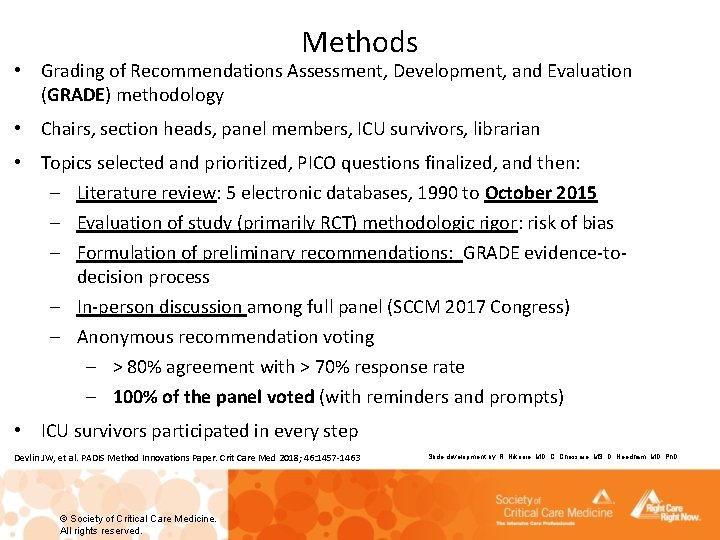
Methods • Grading of Recommendations Assessment, Development, and Evaluation (GRADE) methodology • Chairs, section heads, panel members, ICU survivors, librarian • Topics selected and prioritized, PICO questions finalized, and then: – Literature review: 5 electronic databases, 1990 to October 2015 – Evaluation of study (primarily RCT) methodologic rigor: risk of bias – Formulation of preliminary recommendations: GRADE evidence-todecision process – In-person discussion among full panel (SCCM 2017 Congress) – Anonymous recommendation voting – > 80% agreement with > 70% response rate – 100% of the panel voted (with reminders and prompts) • ICU survivors participated in every step Devlin JW, et al. PADIS Method Innovations Paper. Crit Care Med 2018; 46: 1457 -1463 © Society of Critical Care Medicine. All rights reserved. Slide development by: R. Nikooie, MD, C. Chessare, MS, D. Needham, MD, Ph. D
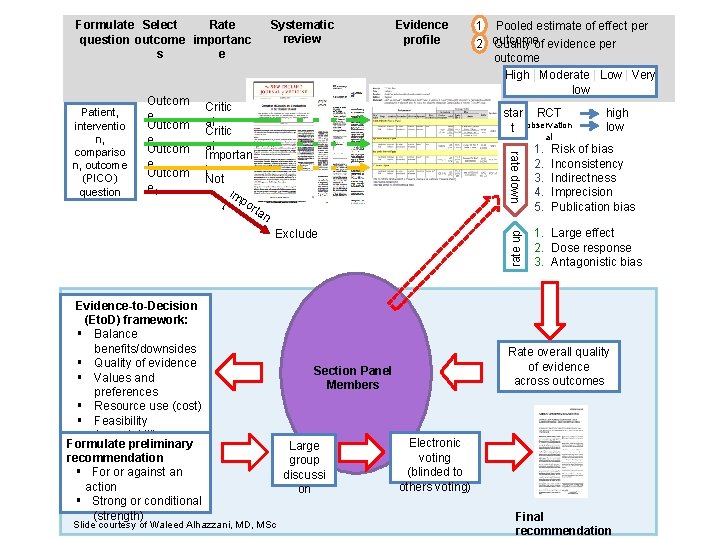
Systematic review Formulate Select Rate question outcome importanc s e Critic al Importan t Not im t port a star RCT t observation 1. 2. 3. 4. 5. 1. Large effect 2. Dose response 3. Antagonistic bias n Exclude al high low rate up Outcom e 1 Outcom e 2 Outcom e 3 Outcom e 4 1 Pooled estimate of effect per Quality of evidence per 2 outcome High | Moderate| Low | Very low Low Very low rate down Patient, interventio n, compariso n, outcome (PICO) question Evidence profile Risk of bias Inconsistency Indirectness Imprecision Publication bias systematic review of evidence Evidence-to-Decision (Eto. D) framework: § Balance benefits/downsides § Quality of evidence § Values and preferences § Resource use (cost) § Feasibility § Acceptability Formulate preliminary recommendation § For or against an action § Strong or conditional (strength) Slide courtesy of Waleed Alhazzani, MD, MSc Rate overall quality of evidence across outcomes Section Panel Members Large group discussi on Electronic voting (blinded to others voting) Final recommendation
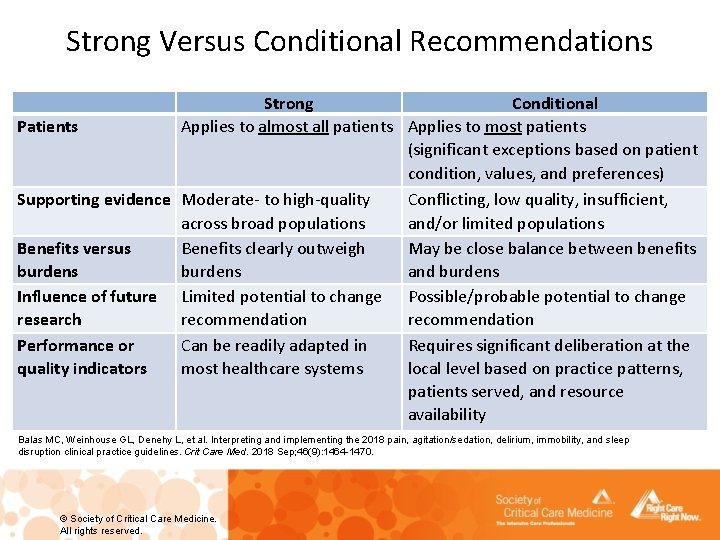
Strong Versus Conditional Recommendations Patients Strong Conditional Applies to almost all patients Applies to most patients (significant exceptions based on patient condition, values, and preferences) Supporting evidence Moderate- to high-quality Conflicting, low quality, insufficient, across broad populations and/or limited populations Benefits versus Benefits clearly outweigh May be close balance between benefits burdens and burdens Influence of future Limited potential to change Possible/probable potential to change research recommendation Performance or Can be readily adapted in Requires significant deliberation at the quality indicators most healthcare systems local level based on practice patterns, patients served, and resource availability Balas MC, Weinhouse GL, Denehy L, et al. Interpreting and implementing the 2018 pain, agitation/sedation, delirium, immobility, and sleep disruption clinical practice guidelines. Crit Care Med. 2018 Sep; 46(9): 1464 -1470. © Society of Critical Care Medicine. All rights reserved.
PICO and Descriptive Questions for PADIS Clinical Practice Guideline Pain Agitation/Sedation Delirium Immobility (Rehab/Mobilization) Sleep Disruption Rehab/mobilization (performed in or out of bed) vs. different rehab/mobilization intervention, placebo, or sham Comparison of sleep in critically ill adults vs. : • Healthy adults • Delirium (vs. no delirium) • MV (vs. no MV) Prevalence of unusual sleep Factors that influence pain Light vs. deep sedation Delirium prediction Assessment • Patient self-report • Behavioral • Proxy reporters • Physiologic measures Prevalence, rationale, and outcomes of physical restraint use • Risk factors • Influence of level of arousal on delirium assessment • Outcomes of delirium Protocol-based assessment and management: • Analgesia first • Analgosedation Daily sedation interruption vs. nurse-protocolized sedation Delirium assessment using valid tool (vs. no assessment) Harm associated with rehab/mobilization (either in or out of bed) Physiologic/nonphysiologic sleep monitoring Multimodal analgesia to reduce opioid use: • Acetaminophen • Nefopam • Ketamine • Neuropathic analgesia • IV lidocaine • NSAID Mechanically ventilated patients after cardiac surgery: • Propofol vs. benzodiazepines Pharmacologic prevention: • Haloperidol • Atypical antipsychotic • Statin • Dexmedetomidine • Ketamine Clinical indicators to safely initiate rehab/mobilization (either in or our of bed) Risk factors affecting ICU sleep quality: • Before critical illness • ICU-acquired Disrupted sleep outcomes: • During ICU admission • After ICU discharge Procedural analgesia: • Opioid vs. none • High- vs. low-dose opioid • Local analgesia • Nitrous oxide • Isoflurane • NSAID (systemic/gel) Mechanically ventilated critically ill adults: • Propofol vs. benzodiazepines • Dexmedetomidine vs. benzodiazepines • Propofol vs. dexmedetomidine Pharmacologic treatment: • Haloperidol • Atypical antipsychotic • Statin • Dexmedetomidine • Ketamine Clinical indicators to stop rehab/mobilization (either in or out of bed) Pharmacologic sleep improvement: • Melatonin • Dexmedetomidine • Propofol Nonpharmacologic analgesic strategies: • Cybertherapy/hypnosis • Massage • Music • Cold therapy • Relaxation techniques Objective sedation monitoring tools Nonpharmacologic delirium reduction interventions: • Single component: Bright light therapy • Multicomponent: ABCDEF bundle © Society of Critical Care Medicine. All rights reserved. Nonpharmacologic sleep improvement: • AV vs. PS mode • Adaptive vs. PS mode • Aromatherapy • Music • Noise and light reduction • Multimodal protocol
“Wheel of PAIN Misfortune” Critical Illness/ Surgery Compromised ICU recovery and rehabilitation Inadequate Pain Assessment and Treatment Increased sedative use Increased coma/delirium Impaired rehabilitation/ mobilization Payen JF et al. Anesth 2009; 111: 1308 -1316 Schelling G, et al. Crit Care Med. 1998 Apr; 26(4): 651 -9. Puntillo KA, et al. Am J Crit Care. 2001 Jul; 10(4): 238 -51. Choi J, et al. J Pain Symptom Manage. 2014 Feb; 47(2): 257 -70. © Society of Critical Care Medicine. All rights reserved. Barr J, et. Al. Crit Care Med. 2013 Jan; 41(1): 263 -306. Macrae WA. Br J Anaesth. 2008 Jul; 101(1): 77 -86. Sinatra R. Pain Med. 2010 Dec; 11(12): 1859 -71. Chanques G, et al. Anesthesiology. 2007; 107: 858 -60 Courtesy of K. Anger, Pharm. D
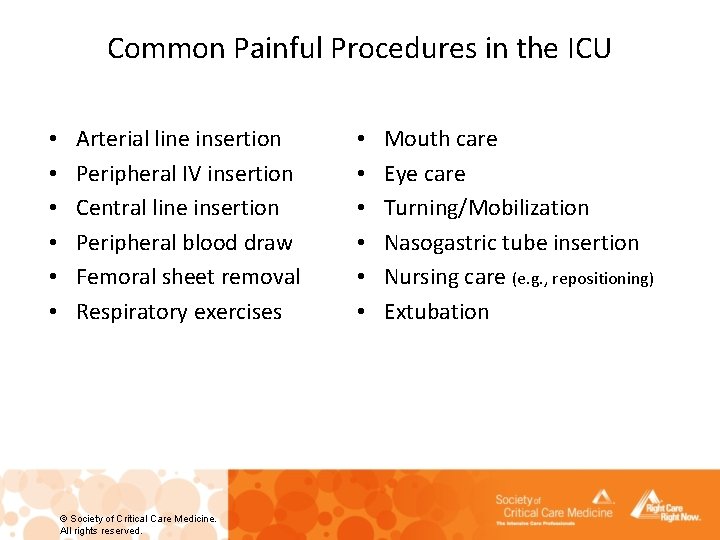
Common Painful Procedures in the ICU • • • Arterial line insertion Peripheral IV insertion Central line insertion Peripheral blood draw Femoral sheet removal Respiratory exercises © Society of Critical Care Medicine. All rights reserved. • • • Mouth care Eye care Turning/Mobilization Nasogastric tube insertion Nursing care (e. g. , repositioning) Extubation
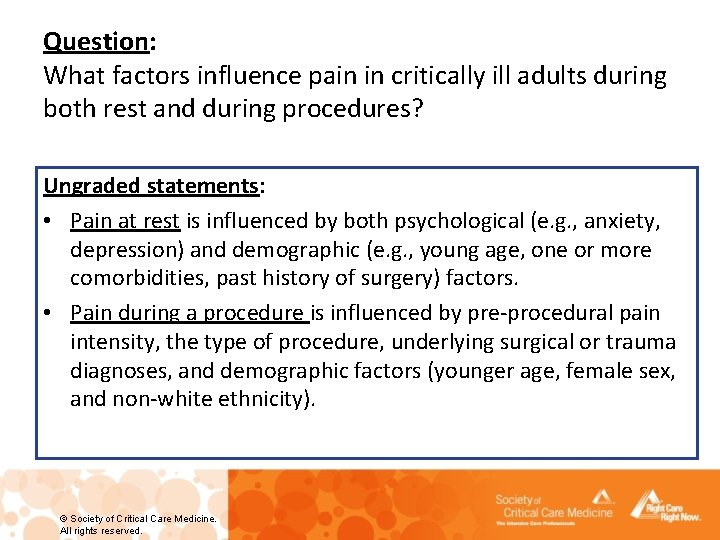
Question: What factors influence pain in critically ill adults during both rest and during procedures? Ungraded statements: • Pain at rest is influenced by both psychological (e. g. , anxiety, depression) and demographic (e. g. , young age, one or more comorbidities, past history of surgery) factors. • Pain during a procedure is influenced by pre-procedural pain intensity, the type of procedure, underlying surgical or trauma diagnoses, and demographic factors (younger age, female sex, and non-white ethnicity). © Society of Critical Care Medicine. All rights reserved.
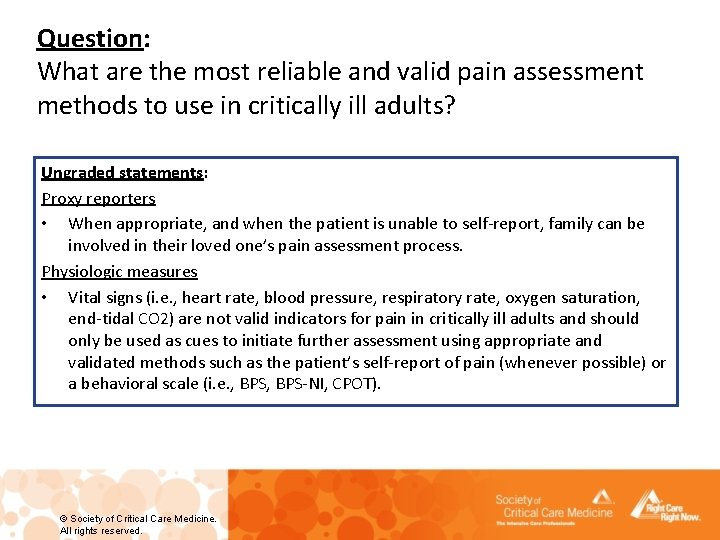
Question: What are the most reliable and valid pain assessment methods to use in critically ill adults? Ungraded statements: Self-report scales • A patient’s self-report of pain is the reference standard for pain assessment in patients who can communicate reliably. • Among critically ill adults who are able to self-report pain, the 0 -10 NRS administered either verbally or visually is a valid and feasible pain scale. Behavioral assessment tools • Among critically ill adults unable to self-report pain and in whom behaviors are observable, the Behavioral Pain Scale in intubated (BPS) and nonintubated (BPS-NI) patients and the Critical-Care Pain Observation Tool (CPOT) demonstrate the greatest validity and reliability for monitoring pain. © Society of Critical Care Medicine. All rights reserved.
Question: What are the most reliable and valid pain assessment methods to use in critically ill adults? Ungraded statements: Proxy reporters • When appropriate, and when the patient is unable to self-report, family can be involved in their loved one’s pain assessment process. Physiologic measures • Vital signs (i. e. , heart rate, blood pressure, respiratory rate, oxygen saturation, end-tidal CO 2) are not valid indicators for pain in critically ill adults and should only be used as cues to initiate further assessment using appropriate and validated methods such as the patient’s self-report of pain (whenever possible) or a behavioral scale (i. e. , BPS-NI, CPOT). © Society of Critical Care Medicine. All rights reserved.
Protocol-Based Pain Assessment/Management PICO Question P Critically ill adult patients in an ICU I Protocol-based (analgesia/analgosedation) pain assessment and management program C Usual care O • • • Pain intensity Medication exposure (opioids and sedatives) Adverse events Duration of mechanical ventilation ICU Length of stay © Society of Critical Care Medicine. All rights reserved.
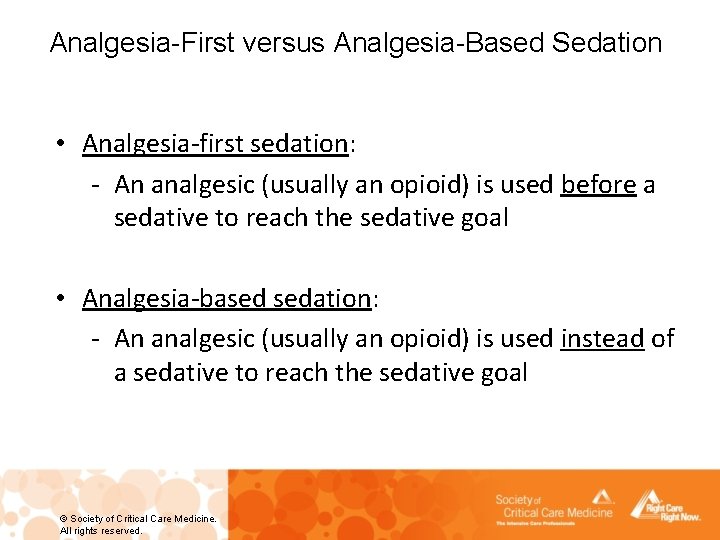
Analgesia-First versus Analgesia-Based Sedation • Analgesia-first sedation: - An analgesic (usually an opioid) is used before a sedative to reach the sedative goal • Analgesia-based sedation: - An analgesic (usually an opioid) is used instead of a sedative to reach the sedative goal © Society of Critical Care Medicine. All rights reserved.
Potential Benefits with Protocolized ICU Pain Assessment A higher degree of pain assessment with a validated tool via protocol (and education) is associated with: Improved pain scores Length of ventilation and ICU stay Mortality Consumption of sedatives Need for opioids in non communicative pts Use of nonopioid analgesics Opioid related adverse drug events (ORADE) Gélinas C, et al. Int J Nurs Stud. 2011 Dec; 48(12): 1495 -504. Erdek M, et al. . Int J Qual Health Care. 2004 Feb; 16(1): 59 -64. van Gulik L, et al. Eur J Anaesthesiol. 2010 Oct; 27(10): 900 -5. © Society of Critical Care Medicine. All rights reserved. Payen JF et al. Anesthesiology. 2009; 111: 1308 -1316 Payen JF, et al. Anesthesiology. 2007; 106: 687 -695. Chanques G, et al. Crit Care Med. 2006; 34(6): 1691– 9.
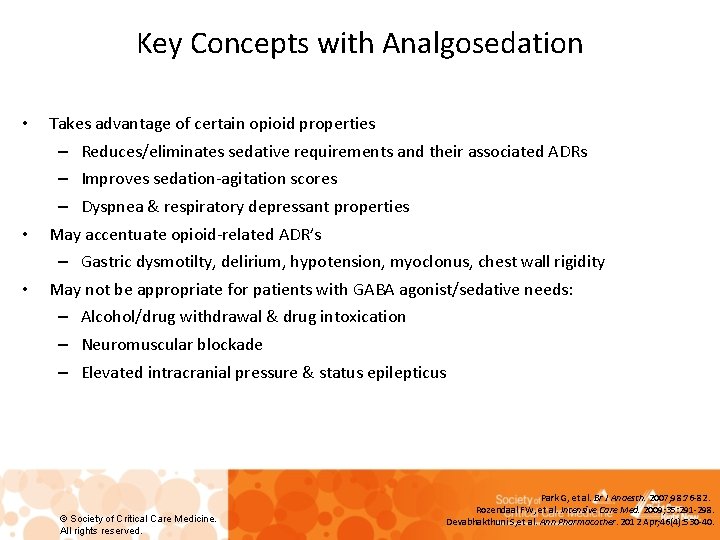
Key Concepts with Analgosedation • • • Takes advantage of certain opioid properties – Reduces/eliminates sedative requirements and their associated ADRs – Improves sedation-agitation scores – Dyspnea & respiratory depressant properties May accentuate opioid-related ADR’s – Gastric dysmotilty, delirium, hypotension, myoclonus, chest wall rigidity May not be appropriate for patients with GABA agonist/sedative needs: – Alcohol/drug withdrawal & drug intoxication – Neuromuscular blockade – Elevated intracranial pressure & status epilepticus © Society of Critical Care Medicine. All rights reserved. Park G, et al. Br J Anaesth. 2007; 98: 76 -82. Rozendaal FW, et al. Intensive Care Med. 2009; 35: 291 -298. Devabhakthuni S, et al. Ann Pharmacother. 2012 Apr; 46(4): 530 -40.
Study Characteristics of Randomized Controlled Trial used for “Standardized and/or Protocol-Based (Analgesia/Analgosedation) Pain Assessment and Management Program” Trial Breen D, Karabinis A, Malbrain M, et al. Crit Care 2005; 9: R 200 -10 Brook AD, Ahrens TS, Schaiff R, et al. Crit Care Med 1999; 27: 2609 -2615 Karabinis A, Mandragos K, Stergiopoulos S, et al: Crit Care 2004; 8: R 26880 Rozendaal FW, Spronk PE, Snellen FF, et al: Intensive Care Med 2009; 35: 291 -298 Strom T, Martinussen T, Toft P: Lancet 2010; 375: 475 -480 Outcomes assessed Study Population Intervention Control MV duration; ICU LOS; Dose of sedatives; dose of opioids Medical/surgical ICU Remifentanil-based sedation (57 patients) Midazolam-based sedation (48 patients) MV duration, ICU LOS Medical ICU Protocolized pain and sedation assessment and treatment (162 patients) Tradition practice (159 patients) MV duration, PIS, opioid exposure, sedative exposure, CV ADR Neurointensive care unit with brain injury Analgesia-based sedation with remifentanil (84 patients) Standard hypnotic-based regimen (77 patients) Pain intensity scores, ICU LOS, MV duration, sedative exposure, opioid exposure, CV ADR Medical/surgical ICU Remifentanil-propofolbased (96 patients) Conventional practice (109 patients) ICU LOS, sedative exposure, opioid exposure, nosocomial infection, MV duration Medical/surgical ICU Analgesia-first, no sedation (55 patients) Conventional sedation with daily sedation interruption (58 patients) © Society of Critical Care Medicine. All rights reserved.
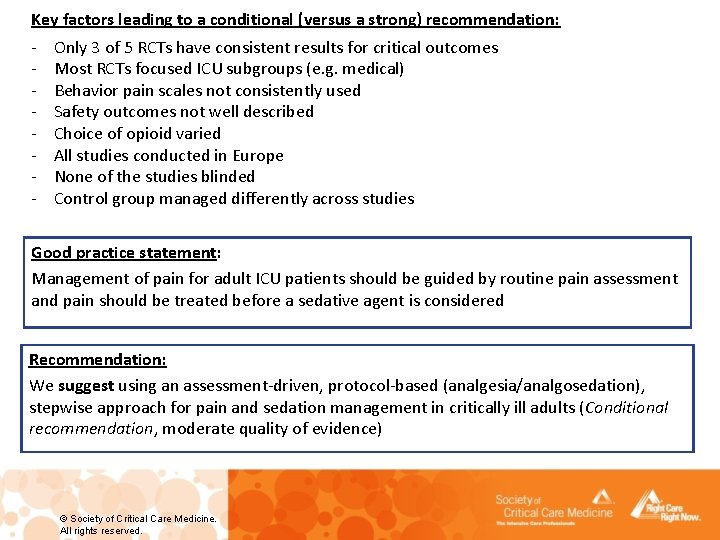
Key factors leading to a conditional (versus a strong) recommendation: - Only 3 of 5 RCTs have consistent results for critical outcomes Most RCTs focused ICU subgroups (e. g. medical) Behavior pain scales not consistently used Safety outcomes not well described Choice of opioid varied All studies conducted in Europe None of the studies blinded Control group managed differently across studies Good practice statement: Management of pain for adult ICU patients should be guided by routine pain assessment and pain should be treated before a sedative agent is considered Recommendation: We suggest using an assessment-driven, protocol-based (analgesia/analgosedation), stepwise approach for pain and sedation management in critically ill adults (Conditional recommendation, moderate quality of evidence) © Society of Critical Care Medicine. All rights reserved.
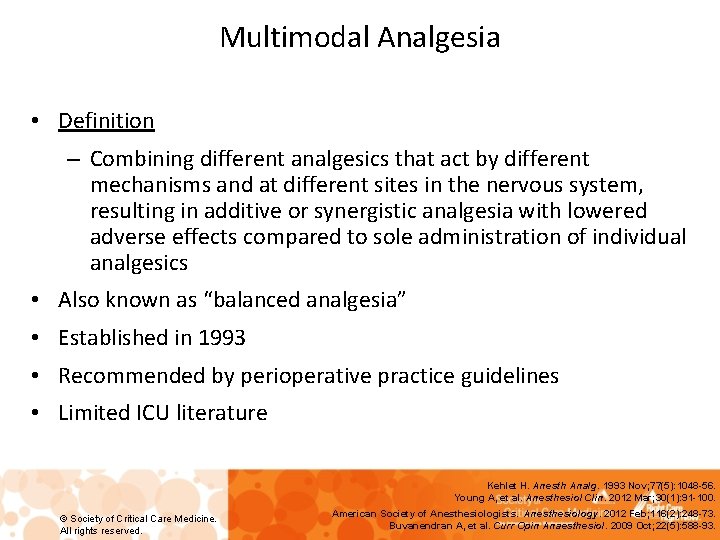
Multimodal Analgesia • Definition – Combining different analgesics that act by different mechanisms and at different sites in the nervous system, resulting in additive or synergistic analgesia with lowered adverse effects compared to sole administration of individual analgesics • Also known as “balanced analgesia” • Established in 1993 • Recommended by perioperative practice guidelines • Limited ICU literature Kehlet H. Anesth Analg. 1993 Nov; 77(5): 1048 -56. Young A, et al. Anesthesiol Clin. 2012 Mar; 30(1): 91 -100. © Society of Critical Care Medicine. All rights reserved. American Society of Anesthesiologists. Anesthesiology. 2012 Feb; 116(2): 248 -73. Buvanendran A, et al. Curr Opin Anaesthesiol. 2009 Oct; 22(5): 588 -93.
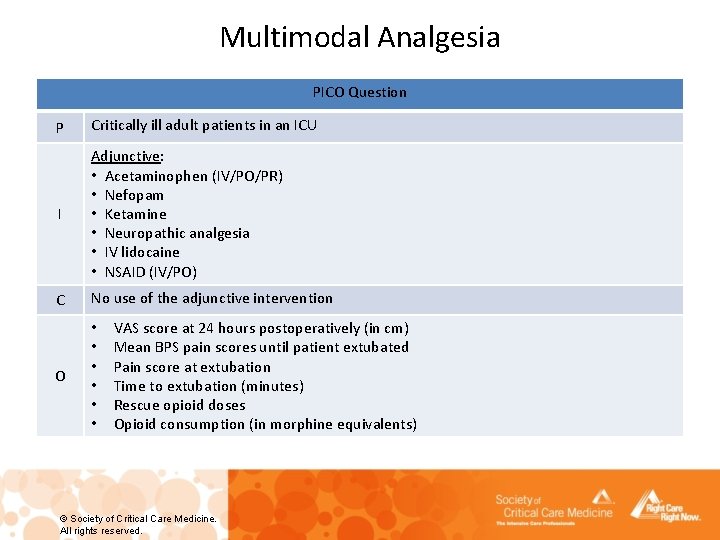
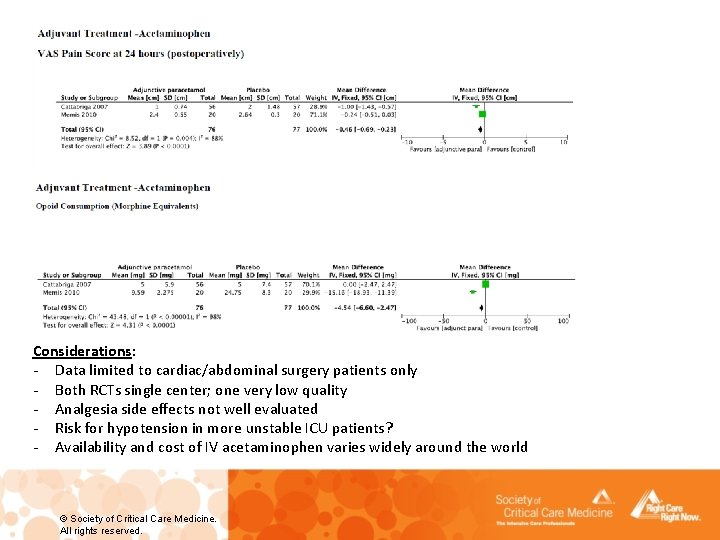
Multimodal Analgesia PICO Question P Critically ill adult patients in an ICU I Adjunctive: • Acetaminophen (IV/PO/PR) • Nefopam • Ketamine • Neuropathic analgesia • IV lidocaine • NSAID (IV/PO) C No use of the adjunctive intervention O • • • VAS score at 24 hours postoperatively (in cm) Mean BPS pain scores until patient extubated Pain score at extubation Time to extubation (minutes) Rescue opioid doses Opioid consumption (in morphine equivalents) © Society of Critical Care Medicine. All rights reserved.
Considerations: - Data limited to cardiac/abdominal surgery patients only - Both RCTs single center; one very low quality - Analgesia side effects not well evaluated - Risk for hypotension in more unstable ICU patients? - Availability and cost of IV acetaminophen varies widely around the world © Society of Critical Care Medicine. All rights reserved.
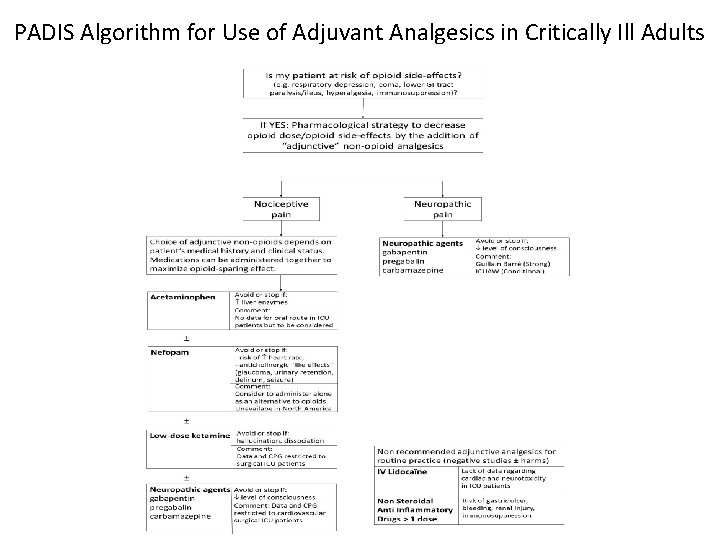
Adjunctive Acetaminophen (IV/PO/PR) Recommendation: We suggest using acetaminophen as an adjunct to an opioid to decrease pain intensity and opioid consumption for pain management in critically ill adults (conditional recommendation, very low quality of evidence) © Society of Critical Care Medicine. All rights reserved.
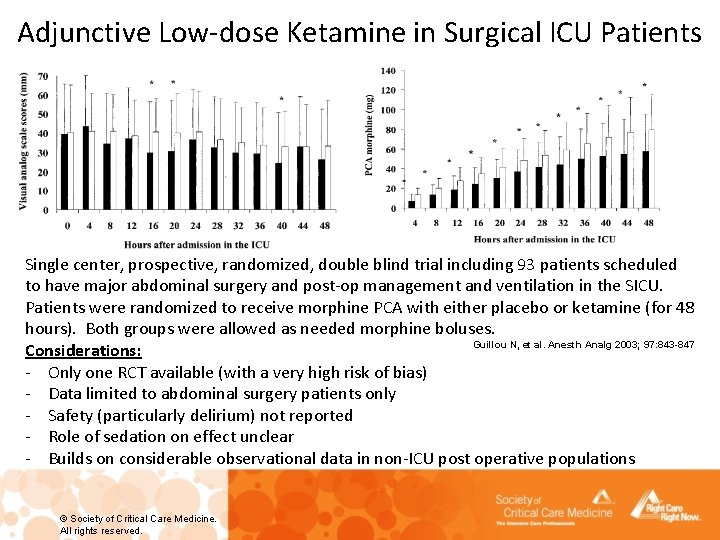
Adjunctive Low-dose Ketamine in Surgical ICU Patients Single center, prospective, randomized, double blind trial including 93 patients scheduled to have major abdominal surgery and post-op management and ventilation in the SICU. Patients were randomized to receive morphine PCA with either placebo or ketamine (for 48 hours). Both groups were allowed as needed morphine boluses. Guillou N, et al. Anesth Analg 2003; 97: 843 -847 Considerations: - Only one RCT available (with a very high risk of bias) - Data limited to abdominal surgery patients only - Safety (particularly delirium) not reported - Role of sedation on effect unclear - Builds on considerable observational data in non-ICU post operative populations © Society of Critical Care Medicine. All rights reserved.
Adjunctive Low-Dose Ketamine Recommendation: We suggest using low-dose ketamine (0. 5 mg/kg IVP x 1; 1 -2 mcg/kg/min) as an adjunct to opioid therapy when seeking to reduce opioid consumption in post-surgical adults admitted to the ICU (Conditional recommendation, Very low quality of evidence) © Society of Critical Care Medicine. All rights reserved.
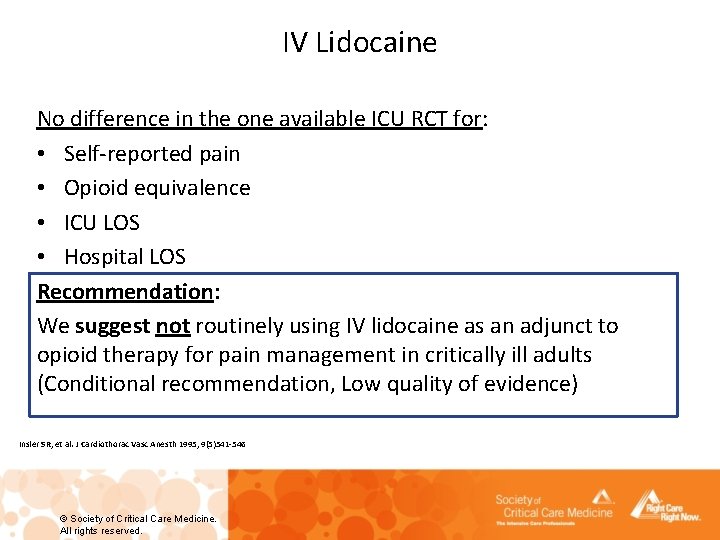
IV Lidocaine No difference in the one available ICU RCT for: • Self-reported pain • Opioid equivalence • ICU LOS • Hospital LOS Recommendation: We suggest not routinely using IV lidocaine as an adjunct to opioid therapy for pain management in critically ill adults (Conditional recommendation, Low quality of evidence) Insler SR, et al. J Cardiothorac Vasc Anesth 1995, 9(5)541 -546 © Society of Critical Care Medicine. All rights reserved.
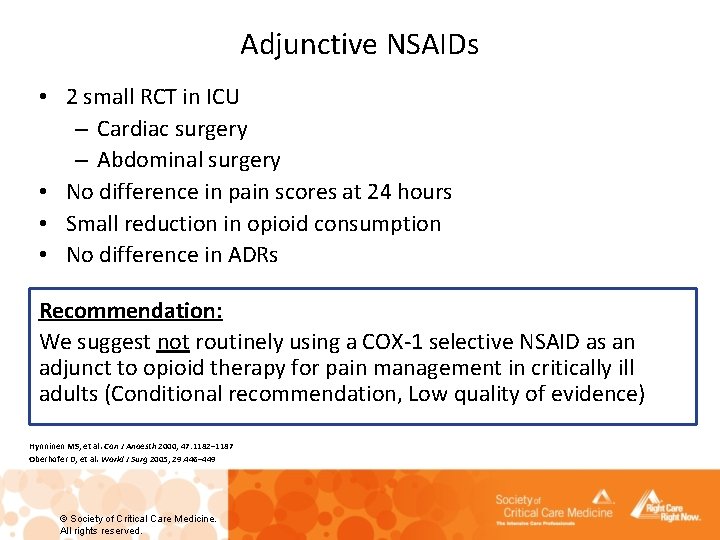
Adjunctive NSAIDs • 2 small RCT in ICU – Cardiac surgery – Abdominal surgery • No difference in pain scores at 24 hours • Small reduction in opioid consumption • No difference in ADRs Recommendation: We suggest not routinely using a COX-1 selective NSAID as an adjunct to opioid therapy for pain management in critically ill adults (Conditional recommendation, Low quality of evidence) Hynninen MS, et al. Can J Anaesth 2000; 47: 1182– 1187 Oberhofer D, et al. World J Surg 2005; 29: 446– 449 © Society of Critical Care Medicine. All rights reserved.
Adjunctive Neuropathic Pain Medications Recommendations: We recommend using a neuropathic pain medication (e. g. , gabapentin, carbamazepine, and pregabalin) with opioids for neuropathic pain management in critically ill adults (Strong recommendation, Moderate quality of evidence) We suggest using a neuropathic pain medication (e. g. , gabapentin, carbamazepine, and pregabalin) with opioids for pain management in ICU adults after cardiovascular surgery (Conditional recommendation, Low quality of evidence) © Society of Critical Care Medicine. All rights reserved.
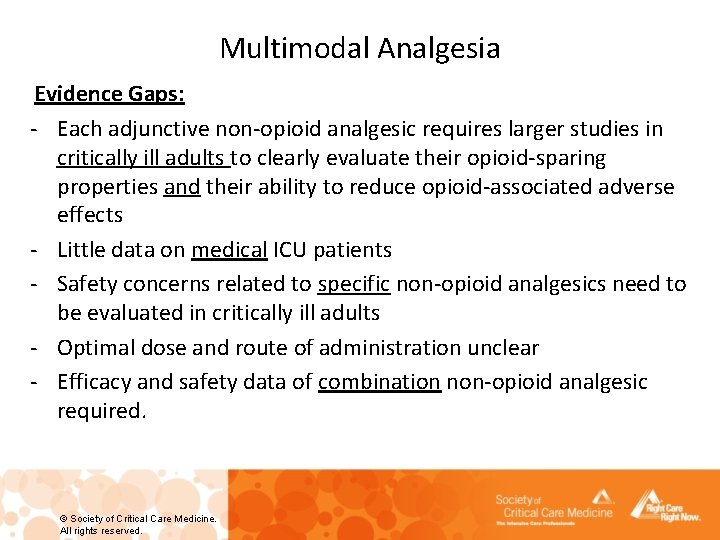
Multimodal Analgesia Evidence Gaps: - Each adjunctive non-opioid analgesic requires larger studies in critically ill adults to clearly evaluate their opioid-sparing properties and their ability to reduce opioid-associated adverse effects - Little data on medical ICU patients - Safety concerns related to specific non-opioid analgesics need to be evaluated in critically ill adults - Optimal dose and route of administration unclear - Efficacy and safety data of combination non-opioid analgesic required. © Society of Critical Care Medicine. All rights reserved.
PADIS Algorithm for Use of Adjuvant Analgesics in Critically Ill Adults
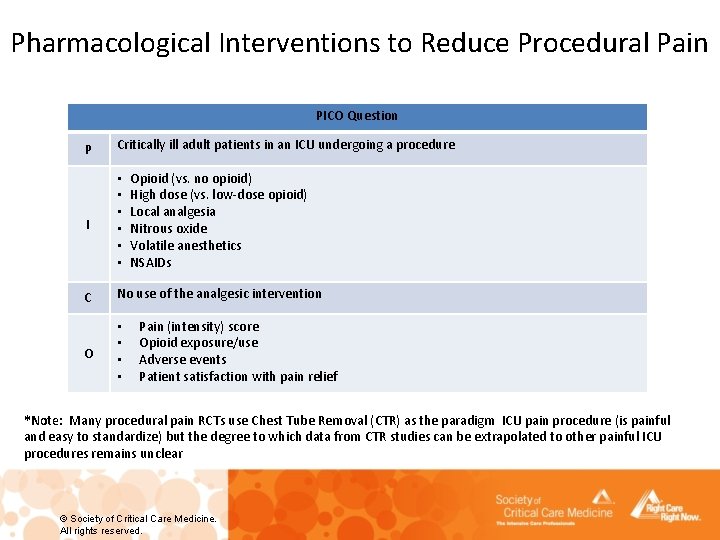
Pharmacological Interventions to Reduce Procedural Pain PICO Question P Critically ill adult patients in an ICU undergoing a procedure I • • • C No use of the analgesic intervention O • • Opioid (vs. no opioid) High dose (vs. low-dose opioid) Local analgesia Nitrous oxide Volatile anesthetics NSAIDs Pain (intensity) score Opioid exposure/use Adverse events Patient satisfaction with pain relief *Note: Many procedural pain RCTs use Chest Tube Removal (CTR) as the paradigm ICU pain procedure (is painful and easy to standardize) but the degree to which data from CTR studies can be extrapolated to other painful ICU procedures remains unclear © Society of Critical Care Medicine. All rights reserved.
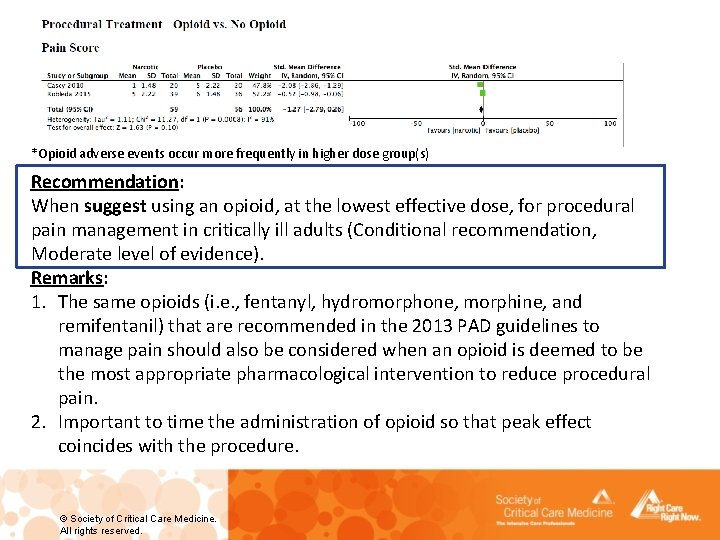
*Opioid adverse events occur more frequently in higher dose group(s) Recommendation: When suggest using an opioid, at the lowest effective dose, for procedural pain management in critically ill adults (Conditional recommendation, Moderate level of evidence). Remarks: 1. The same opioids (i. e. , fentanyl, hydromorphone, morphine, and remifentanil) that are recommended in the 2013 PAD guidelines to manage pain should also be considered when an opioid is deemed to be the most appropriate pharmacological intervention to reduce procedural pain. 2. Important to time the administration of opioid so that peak effect coincides with the procedure. © Society of Critical Care Medicine. All rights reserved.
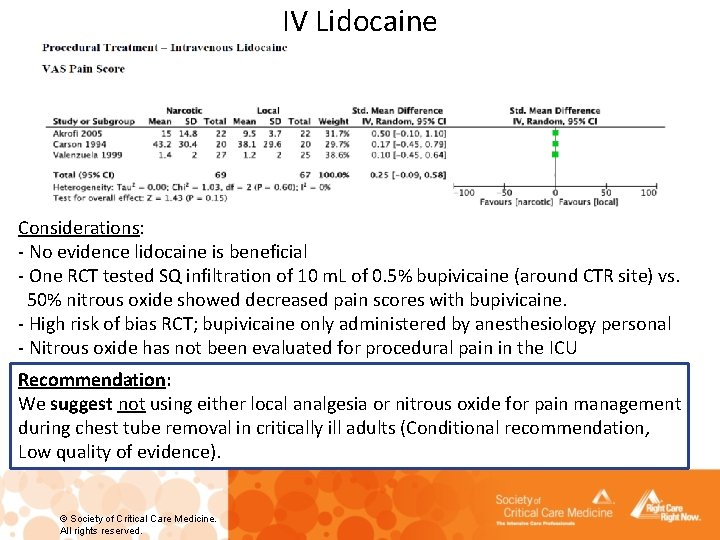
IV Lidocaine Considerations: - No evidence lidocaine is beneficial - One RCT tested SQ infiltration of 10 m. L of 0. 5% bupivicaine (around CTR site) vs. 50% nitrous oxide showed decreased pain scores with bupivicaine. - High risk of bias RCT; bupivicaine only administered by anesthesiology personal - Nitrous oxide has not been evaluated for procedural pain in the ICU Recommendation: We suggest not using either local analgesia or nitrous oxide for pain management during chest tube removal in critically ill adults (Conditional recommendation, Low quality of evidence). © Society of Critical Care Medicine. All rights reserved.
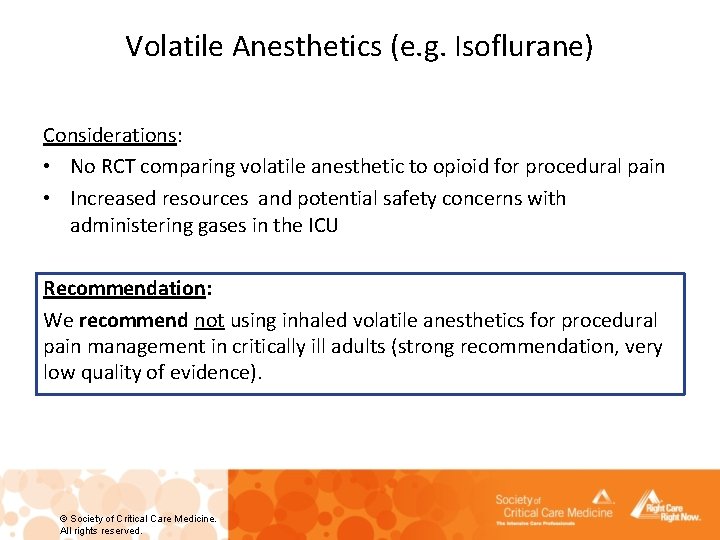
Volatile Anesthetics (e. g. Isoflurane) Considerations: • No RCT comparing volatile anesthetic to opioid for procedural pain • Increased resources and potential safety concerns with administering gases in the ICU Recommendation: We recommend not using inhaled volatile anesthetics for procedural pain management in critically ill adults (strong recommendation, very low quality of evidence). © Society of Critical Care Medicine. All rights reserved.
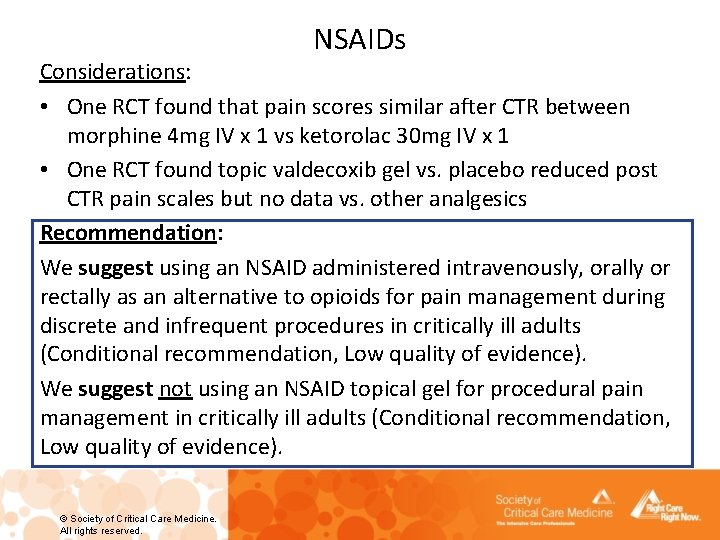
NSAIDs Considerations: • One RCT found that pain scores similar after CTR between morphine 4 mg IV x 1 vs ketorolac 30 mg IV x 1 • One RCT found topic valdecoxib gel vs. placebo reduced post CTR pain scales but no data vs. other analgesics Recommendation: We suggest using an NSAID administered intravenously, orally or rectally as an alternative to opioids for pain management during discrete and infrequent procedures in critically ill adults (Conditional recommendation, Low quality of evidence). We suggest not using an NSAID topical gel for procedural pain management in critically ill adults (Conditional recommendation, Low quality of evidence). © Society of Critical Care Medicine. All rights reserved.
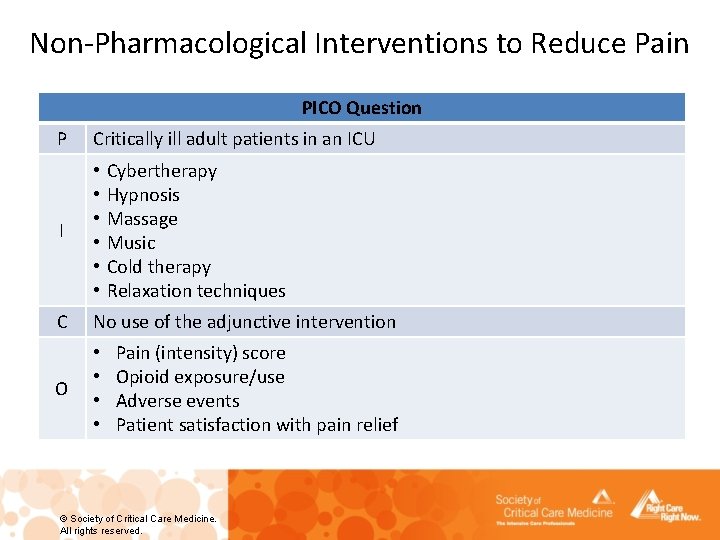
Non-Pharmacological Interventions to Reduce Pain PICO Question P Critically ill adult patients in an ICU I • • • C No use of the adjunctive intervention O • • Cybertherapy Hypnosis Massage Music Cold therapy Relaxation techniques Pain (intensity) score Opioid exposure/use Adverse events Patient satisfaction with pain relief © Society of Critical Care Medicine. All rights reserved.
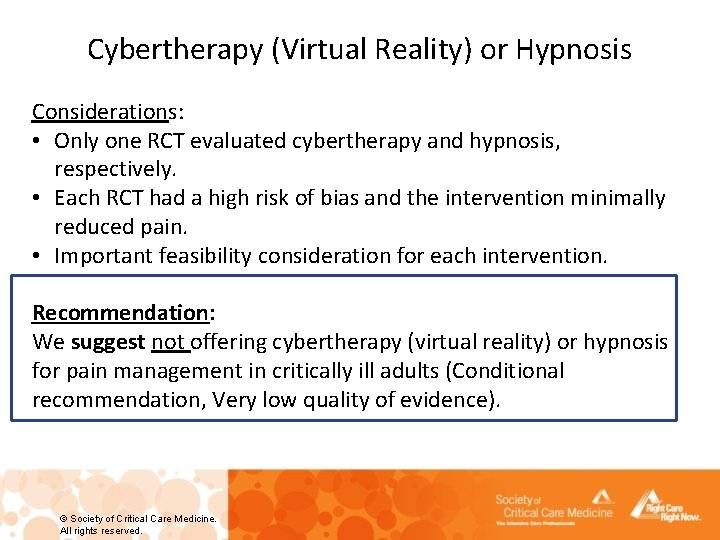
Cybertherapy (Virtual Reality) or Hypnosis Considerations: • Only one RCT evaluated cybertherapy and hypnosis, respectively. • Each RCT had a high risk of bias and the intervention minimally reduced pain. • Important feasibility consideration for each intervention. Recommendation: We suggest not offering cybertherapy (virtual reality) or hypnosis for pain management in critically ill adults (Conditional recommendation, Very low quality of evidence). © Society of Critical Care Medicine. All rights reserved.
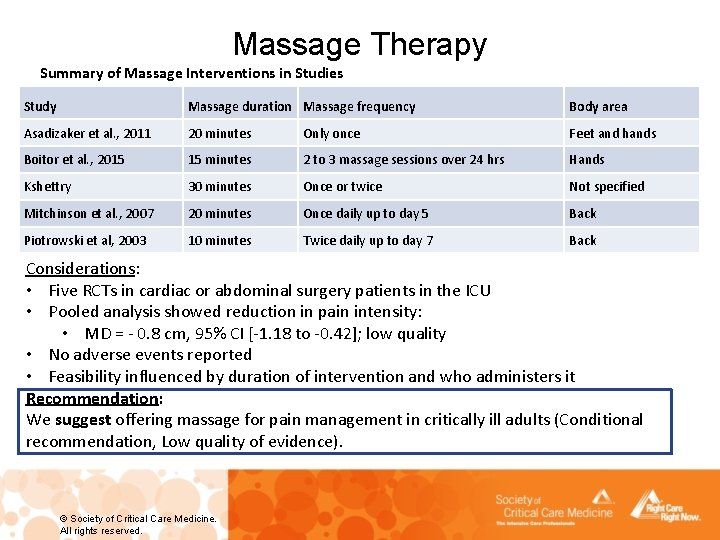
Massage Therapy Summary of Massage Interventions in Studies Study Massage duration Massage frequency Body area Asadizaker et al. , 2011 20 minutes Only once Feet and hands Boitor et al. , 2015 15 minutes 2 to 3 massage sessions over 24 hrs Hands Kshettry 30 minutes Once or twice Not specified Mitchinson et al. , 2007 20 minutes Once daily up to day 5 Back Piotrowski et al, 2003 10 minutes Twice daily up to day 7 Back Considerations: • Five RCTs in cardiac or abdominal surgery patients in the ICU • Pooled analysis showed reduction in pain intensity: • MD = - 0. 8 cm, 95% CI [-1. 18 to -0. 42]; low quality • No adverse events reported • Feasibility influenced by duration of intervention and who administers it Recommendation: We suggest offering massage for pain management in critically ill adults (Conditional recommendation, Low quality of evidence). © Society of Critical Care Medicine. All rights reserved.
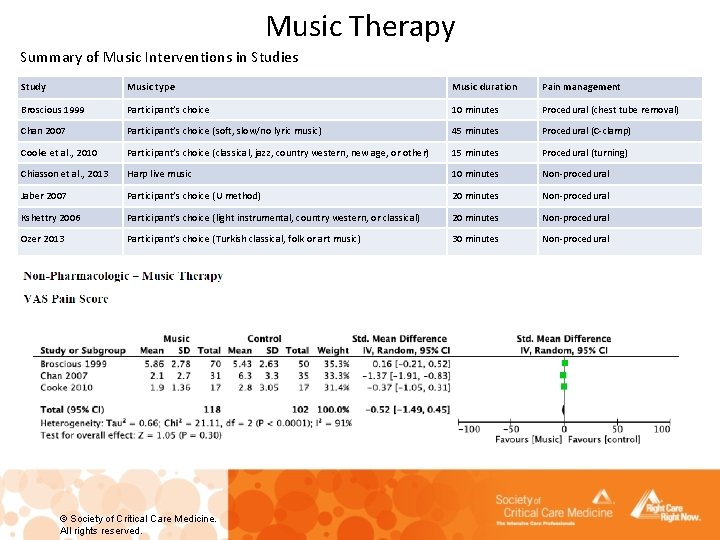
Music Therapy Summary of Music Interventions in Studies Study Music type Music duration Pain management Broscious 1999 Participant’s choice 10 minutes Procedural (chest tube removal) Chan 2007 Participant’s choice (soft, slow/no lyric music) 45 minutes Procedural (C-clamp) Cooke et al. , 2010 Participant’s choice (classical, jazz, country western, new age, or other) 15 minutes Procedural (turning) Chiasson et al. , 2013 Harp live music 10 minutes Non-procedural Jaber 2007 Participant’s choice (U method) 20 minutes Non-procedural Kshettry 2006 Participant’s choice (light instrumental, country western, or classical) 20 minutes Non-procedural Ozer 2013 Participant’s choice (Turkish classical, folk or art music) 30 minutes Non-procedural © Society of Critical Care Medicine. All rights reserved.
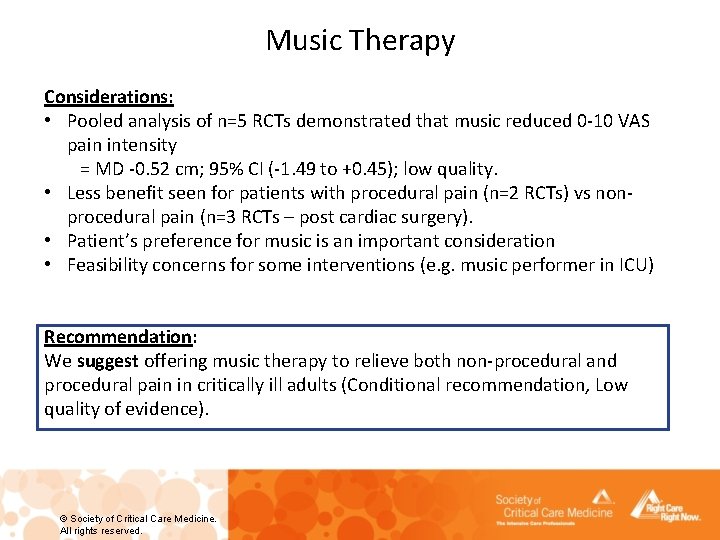
Music Therapy Considerations: • Pooled analysis of n=5 RCTs demonstrated that music reduced 0 -10 VAS pain intensity = MD -0. 52 cm; 95% CI (-1. 49 to +0. 45); low quality. • Less benefit seen for patients with procedural pain (n=2 RCTs) vs nonprocedural pain (n=3 RCTs – post cardiac surgery). • Patient’s preference for music is an important consideration • Feasibility concerns for some interventions (e. g. music performer in ICU) Recommendation: We suggest offering music therapy to relieve both non-procedural and procedural pain in critically ill adults (Conditional recommendation, Low quality of evidence). © Society of Critical Care Medicine. All rights reserved.
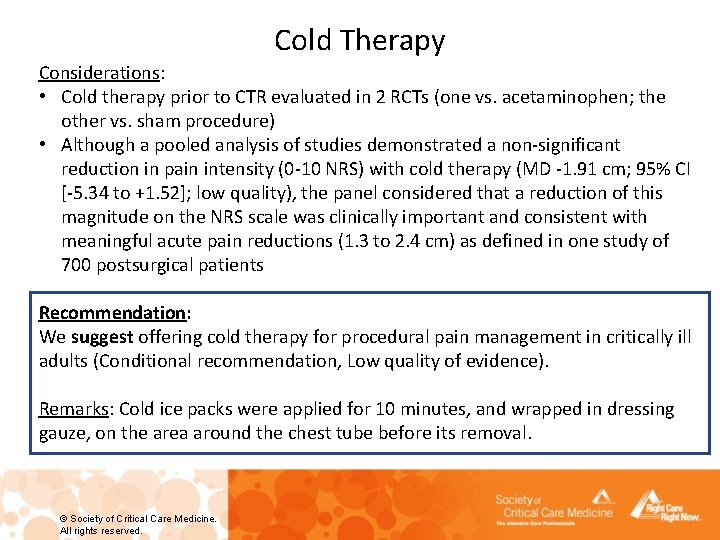
Cold Therapy Considerations: • Cold therapy prior to CTR evaluated in 2 RCTs (one vs. acetaminophen; the other vs. sham procedure) • Although a pooled analysis of studies demonstrated a non-significant reduction in pain intensity (0 -10 NRS) with cold therapy (MD -1. 91 cm; 95% CI [-5. 34 to +1. 52]; low quality), the panel considered that a reduction of this magnitude on the NRS scale was clinically important and consistent with meaningful acute pain reductions (1. 3 to 2. 4 cm) as defined in one study of 700 postsurgical patients Recommendation: We suggest offering cold therapy for procedural pain management in critically ill adults (Conditional recommendation, Low quality of evidence). Remarks: Cold ice packs were applied for 10 minutes, and wrapped in dressing gauze, on the area around the chest tube before its removal. © Society of Critical Care Medicine. All rights reserved.
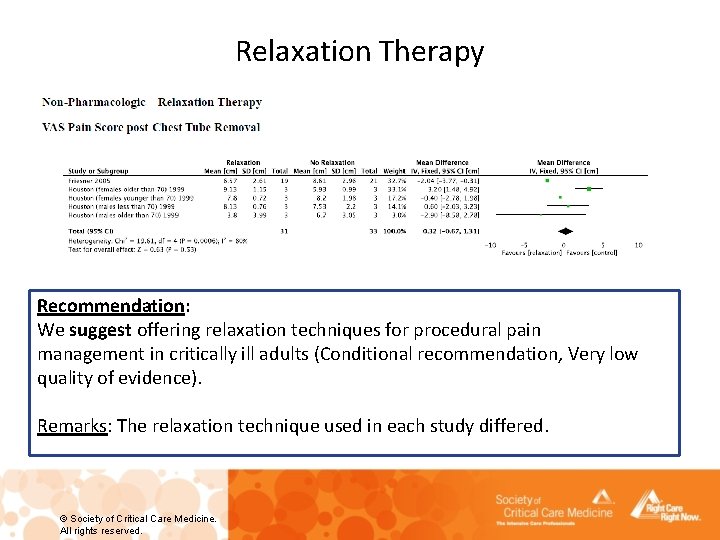
Relaxation Therapy Recommendation: We suggest offering relaxation techniques for procedural pain management in critically ill adults (Conditional recommendation, Very low quality of evidence). Remarks: The relaxation technique used in each study differed. © Society of Critical Care Medicine. All rights reserved.
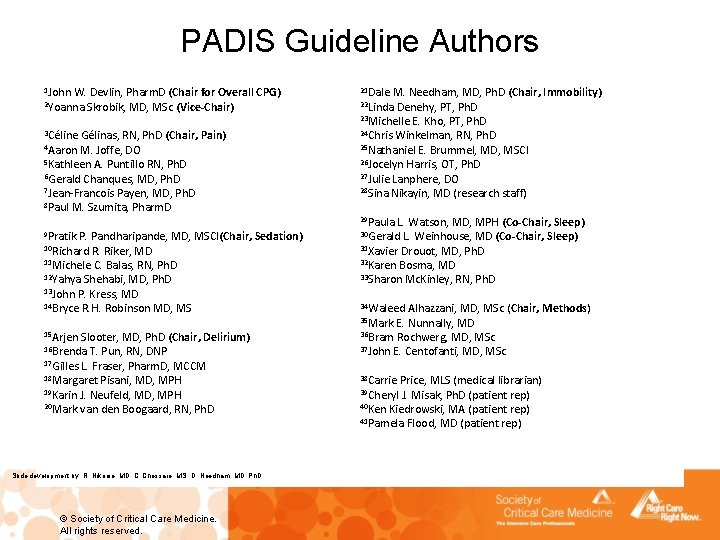
PADIS Guideline Authors 1 John W. Devlin, Pharm. D (Chair for Overall CPG) 21 Dale M. Needham, MD, Ph. D (Chair, Immobility) 23 Michelle E. Kho, PT, Ph. D 2 Yoanna Skrobik, MD, MSc (Vice-Chair) 3 Céline Gélinas, RN, Ph. D (Chair, Pain) 4 Aaron M. Joffe, DO 5 Kathleen A. Puntillo RN, Ph. D 6 Gerald Chanques, MD, Ph. D 7 Jean-Francois Payen, MD, Ph. D 8 Paul M. Szumita, Pharm. D 9 Pratik P. Pandharipande, MD, MSCI(Chair, Sedation) 10 Richard R. Riker, MD 11 Michele C. Balas, RN, Ph. D 12 Yahya Shehabi, MD, Ph. D 13 John P. Kress, MD 22 Linda Denehy, PT, Ph. D 24 Chris Winkelman, RN, Ph. D 25 Nathaniel E. Brummel, MD, MSCI 26 Jocelyn Harris, OT, Ph. D 27 Julie Lanphere, DO 28 Sina Nikayin, MD (research staff) 29 Paula L. Watson, MD, MPH (Co-Chair, Sleep) 30 Gerald L. Weinhouse, MD (Co-Chair, Sleep) 31 Xavier Drouot, MD, Ph. D 32 Karen Bosma, MD 33 Sharon Mc. Kinley, RN, Ph. D 14 Bryce R. H. Robinson MD, MS 34 Waleed Alhazzani, MD, MSc (Chair, Methods) 15 Arjen Slooter, MD, Ph. D (Chair, Delirium) 36 Bram Rochwerg, MD, MSc 16 Brenda T. Pun, RN, DNP 17 Gilles L. Fraser, Pharm. D, MCCM 35 Mark E. Nunnally, MD 37 John E. Centofanti, MD, MSc 18 Margaret Pisani, MD, MPH 38 Carrie Price, MLS (medical librarian) 20 Mark van den Boogaard, RN, Ph. D 40 Ken Kiedrowski, MA (patient rep) 19 Karin J. Neufeld, MD, MPH Slide development by: R. Nikooie, MD, C. Chessare, MS, D. Needham, MD, Ph. D © Society of Critical Care Medicine. All rights reserved. 39 Cheryl J. Misak, Ph. D (patient rep) 41 Pamela Flood, MD (patient rep)
Acknowledgement Slide content has been provided by the PADIS Guideline Leadership. © Society of Critical Care Medicine. All rights reserved.
For more information on how to implement the 2018 PADIS guidelines, please visit the ICU Liberation Campaign website: http: //www. sccm. org/ICULiberation © Society of Critical Care Medicine. All rights reserved.