
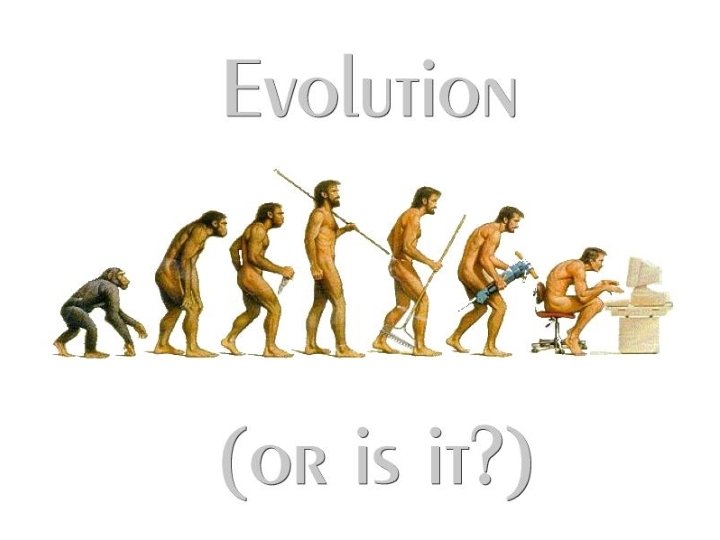
Pages 324 332 Evolution The Role of DNA
- Slides: 34
Pages: 324 - 332 Evolution: The Role of DNA
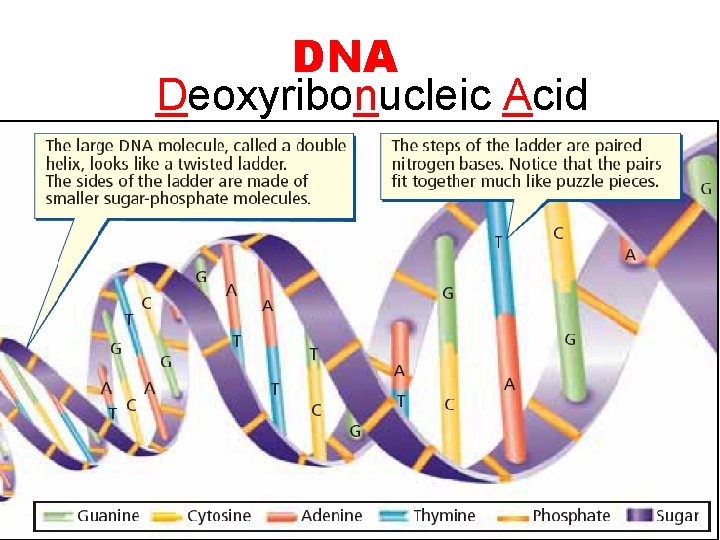
DNA Deoxyribonucleic Acid
Vocabulary DNA Nucleotide DNA strand Double helix Sugar – phosphate backbone Nitrogenous base Complementary Base Pairing A gene A protein
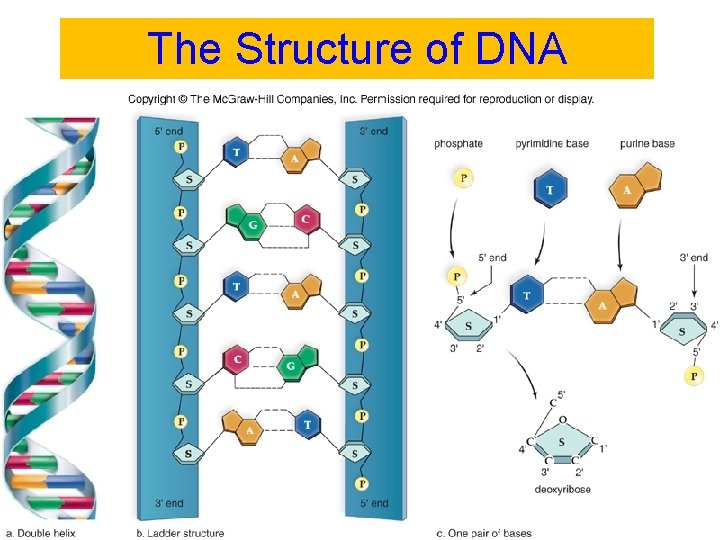
The Structure of DNA
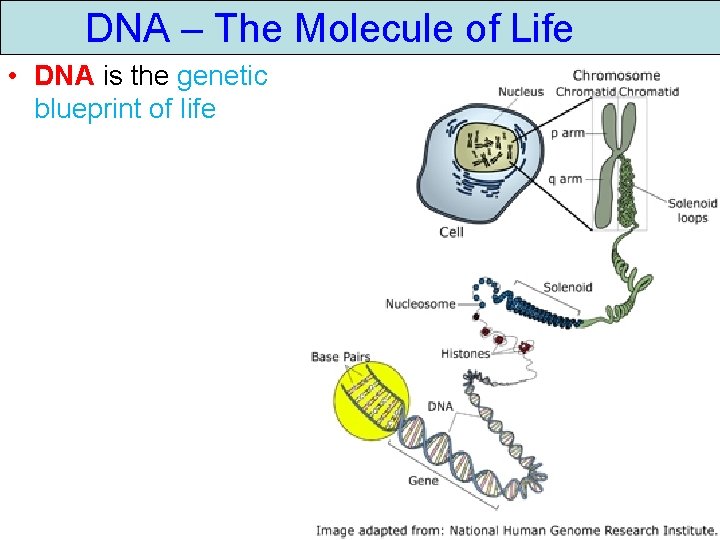
DNA – The Molecule of Life • DNA is the genetic blueprint of life
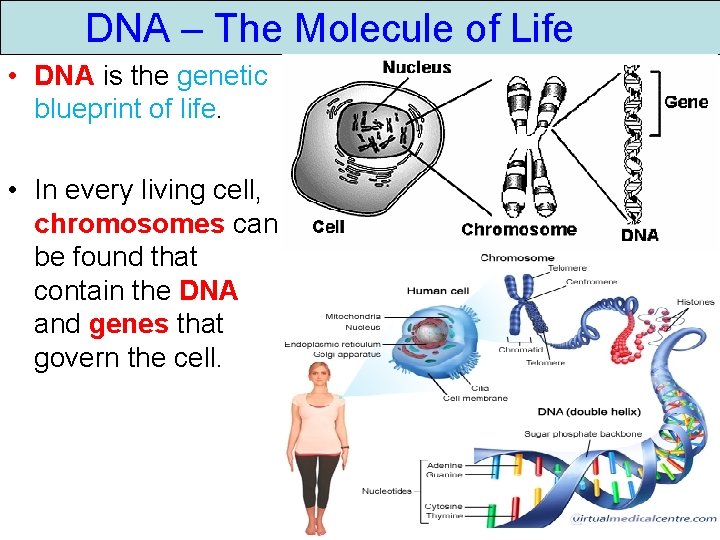
DNA – The Molecule of Life • DNA is the genetic blueprint of life. • In every living cell, chromosomes can be found that contain the DNA and genes that govern the cell.
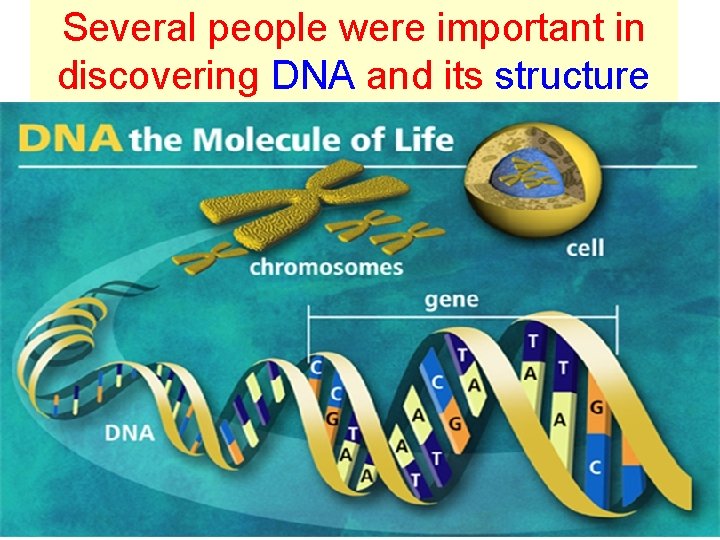
Several people were important in discovering DNA and its structure
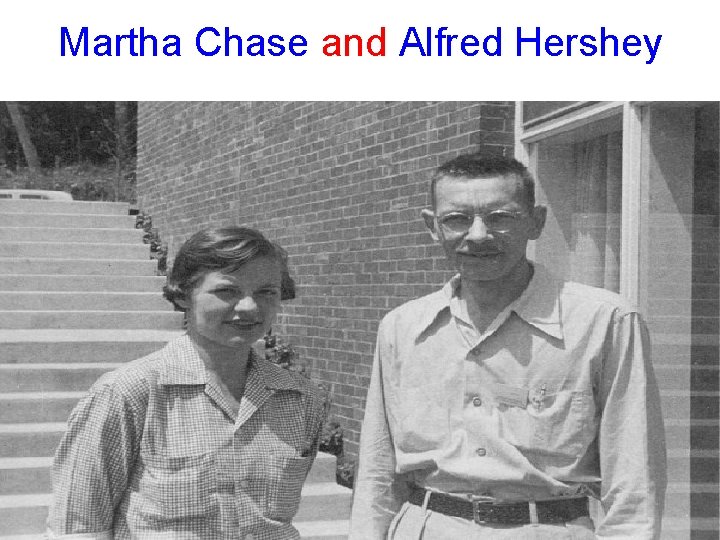
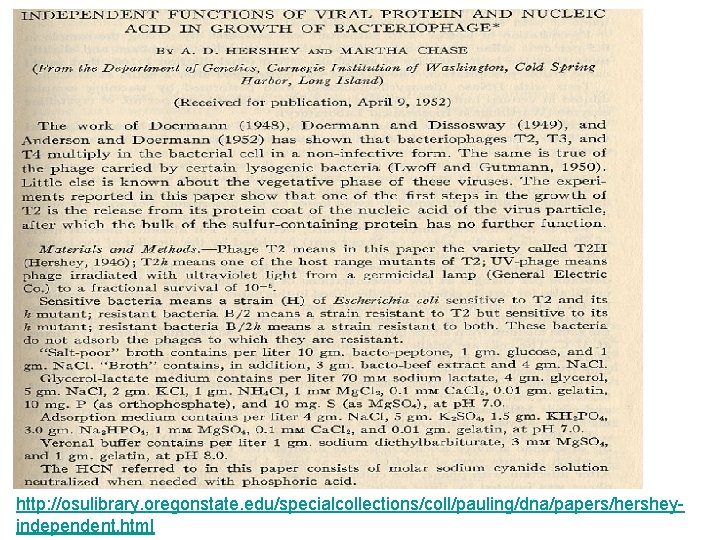
Martha Chase and Alfred Hershey http: //osulibrary. oregonstate. edu/specialcollections/coll/pauling/dna/papers/hersheyindependent. html
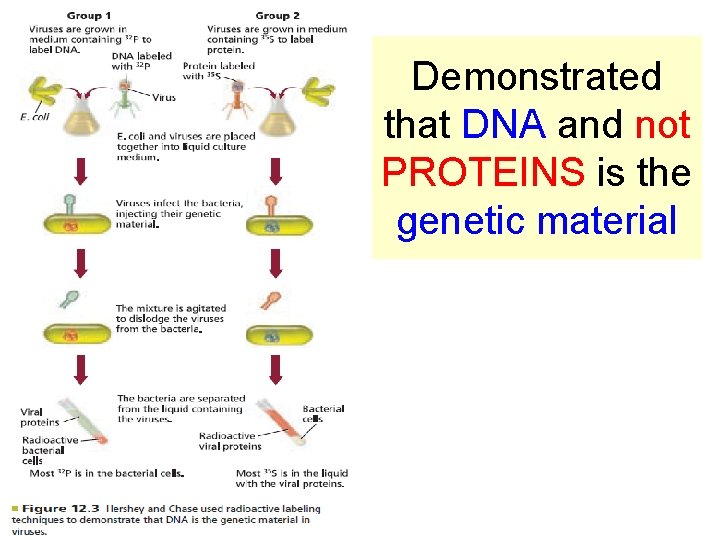
Demonstrated that DNA and not PROTEINS is the genetic material
Hershey-Chase Experiments http: //osulibrary. oregonstate. edu/specialcollections/coll/pauling/dna/papers/hersheyindependent. html
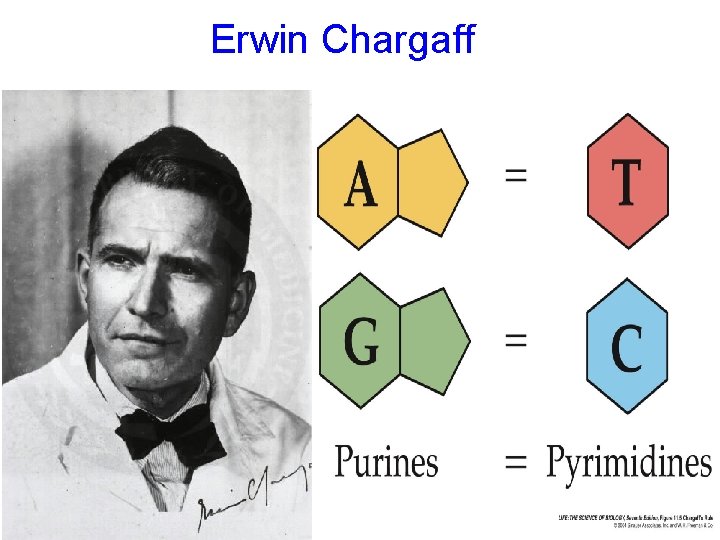
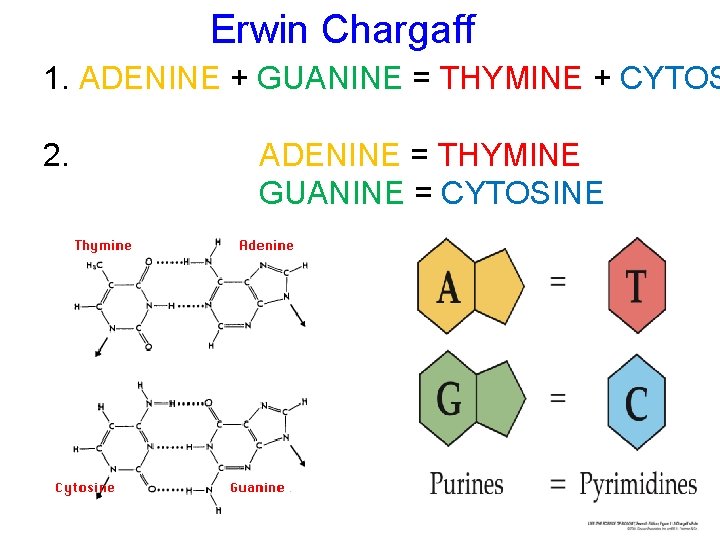
Erwin Chargaff Watson and Crick knew: 3. A chemist, Erwin Chargaff, had determined in the late 1940 s that the number of purines (ADENINE + GUANINE) in DNA always equals the number of pyrimidines (TYROSINE + CYTOSINE). Further, the amount of ADENINE equals the amount of THYMINE (A = T), and the amount of GUANINE equals the amount of CYTOSINE (G = C)
Erwin Chargaff 1. ADENINE + GUANINE = THYMINE + CYTOS 2. ADENINE = THYMINE GUANINE = CYTOSINE
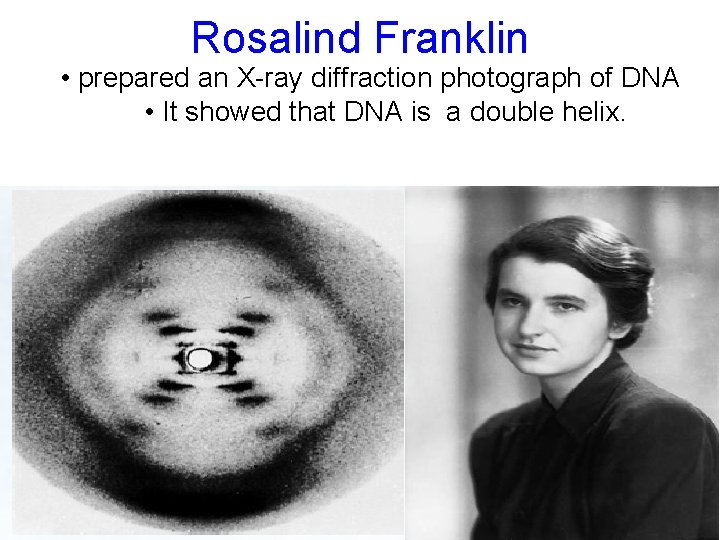
Rosalind Franklin • prepared an X-ray diffraction photograph of DNA • It showed that DNA is a double helix.
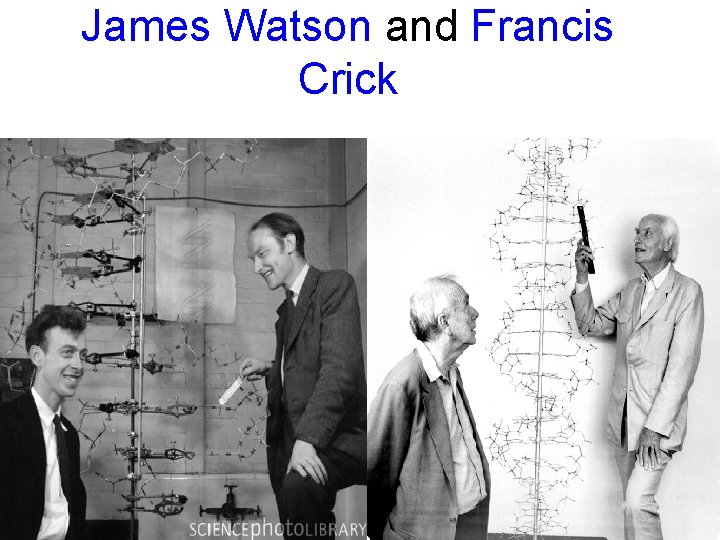
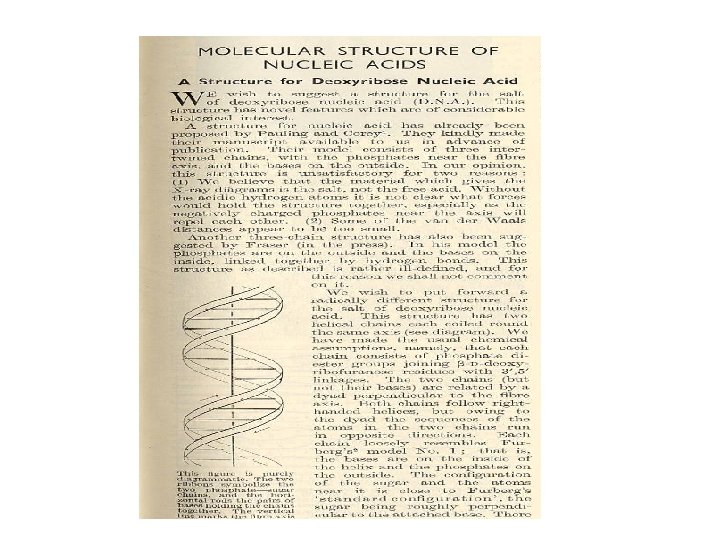
James Watsonand Francis DNA Structure Replication Crick
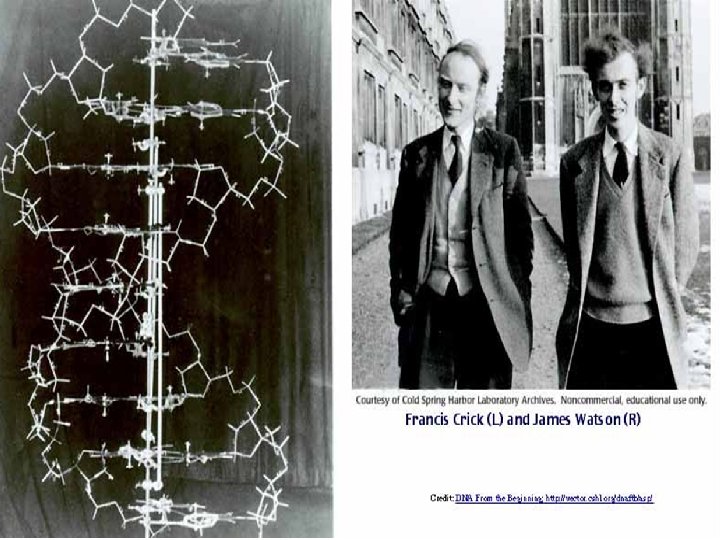
DNA Structure and Replication - Watson and Crick built an actual model of DNA out of wire and tin. - This model does indeed allow for differences in DNA structure between species because the base pairs can be in any order. - Also, the model suggests that complementary base pairing plays a role in the replication of DNA. “It has not escaped our notice that the specific pairing we have postulated immediately suggests a possible copying mechanism for the genetic material. ”
Overview of DNA � James Watson and Francis Crick determined the structure of DNA in 1953 � DNA � The is a long chain of nucleotides chain is called a DNA strand (How many strands are there? ) � The two strands form a spiraling ladder, also known as a double helix. � Nucleotides bond to each other to hold the strands together
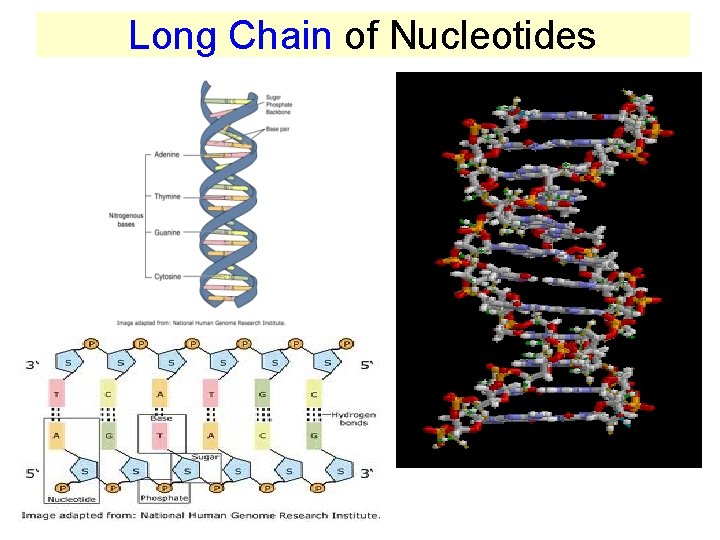
Long Chain of Nucleotides
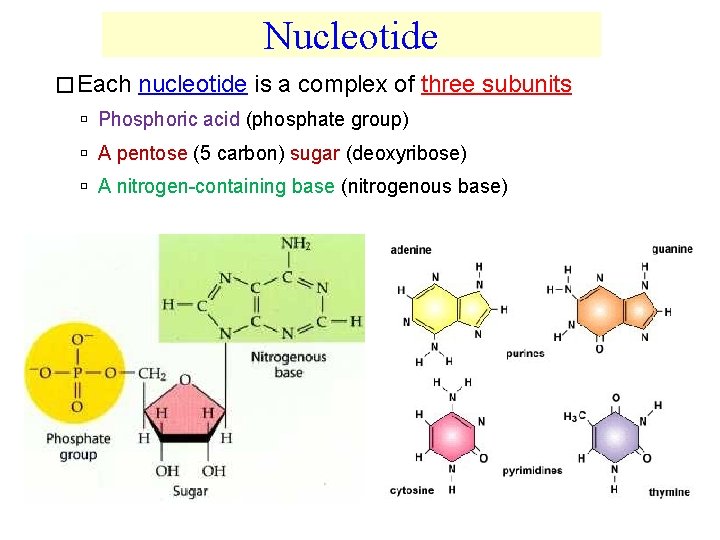
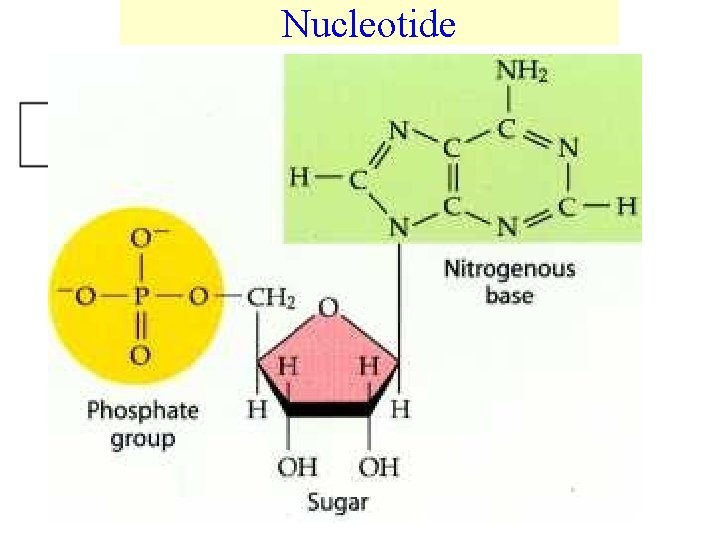
Nucleotide � Each nucleotide is a complex of three subunits Phosphoric acid (phosphate group) A pentose (5 carbon) sugar (deoxyribose) A nitrogen-containing base (nitrogenous base)
Nucleotide DNA Structure and Replication Phosphate group Nitrogenous base Sugar
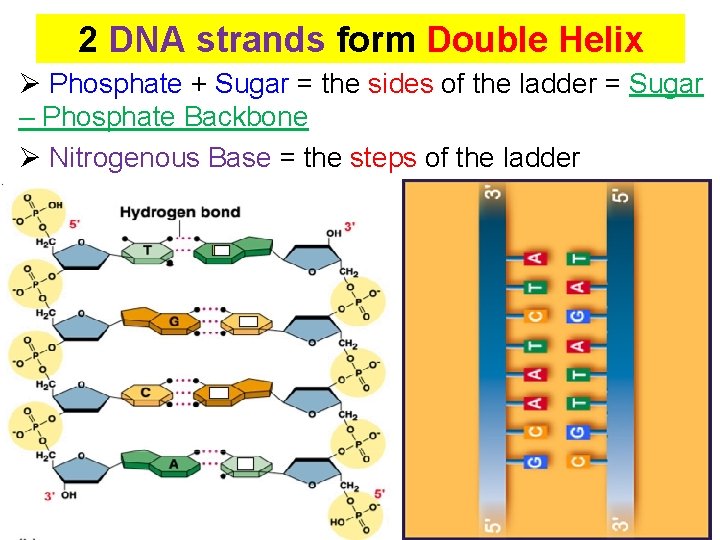
2 DNA strands form Double Helix Ø Phosphate + Sugar = the sides of the ladder = Sugar – Phosphate Backbone Ø Nitrogenous Base = the steps of the ladder
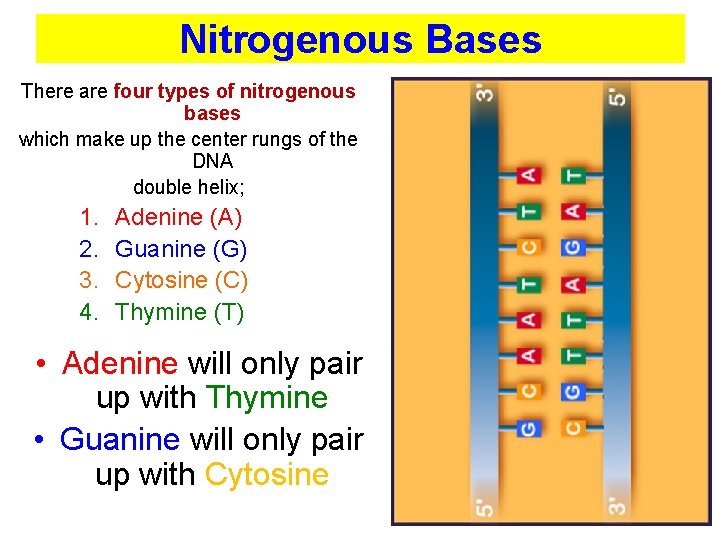
Nitrogenous Bases There are four types of nitrogenous bases which make up the center rungs of the DNA double helix; 1. 2. 3. 4. Adenine (A) Guanine (G) Cytosine (C) Thymine (T) • Adenine will only pair up with Thymine • Guanine will only pair up with Cytosine
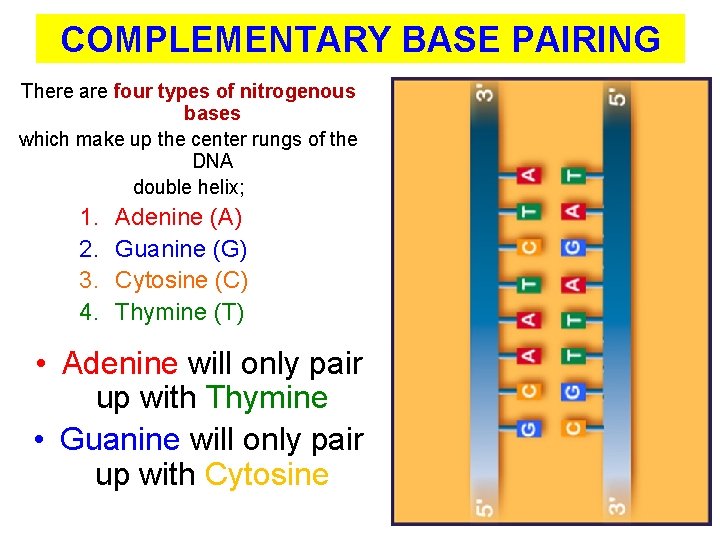
COMPLEMENTARY BASE PAIRING There are four types of nitrogenous bases which make up the center rungs of the DNA double helix; 1. 2. 3. 4. Adenine (A) Guanine (G) Cytosine (C) Thymine (T) • Adenine will only pair up with Thymine • Guanine will only pair up with Cytosine
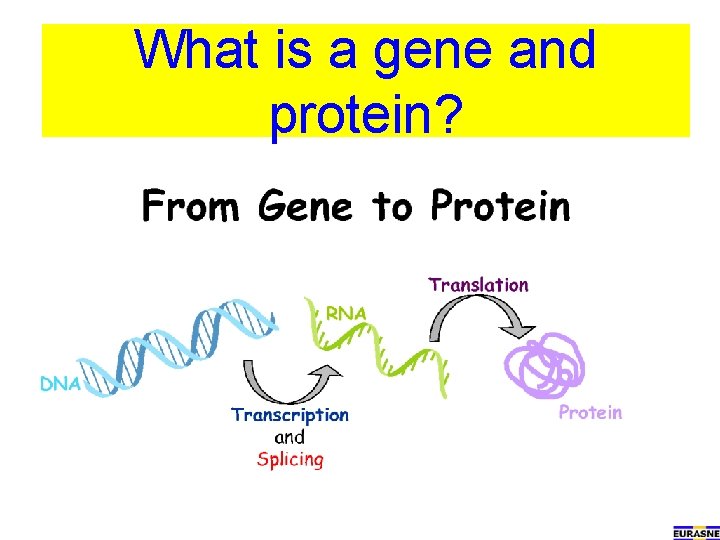
What is a gene? What is a gene and • It is a section or a part of DNA protein? which codes for a particular protein • Proteins are chains of amino acids and they perform most of the functions in your body!
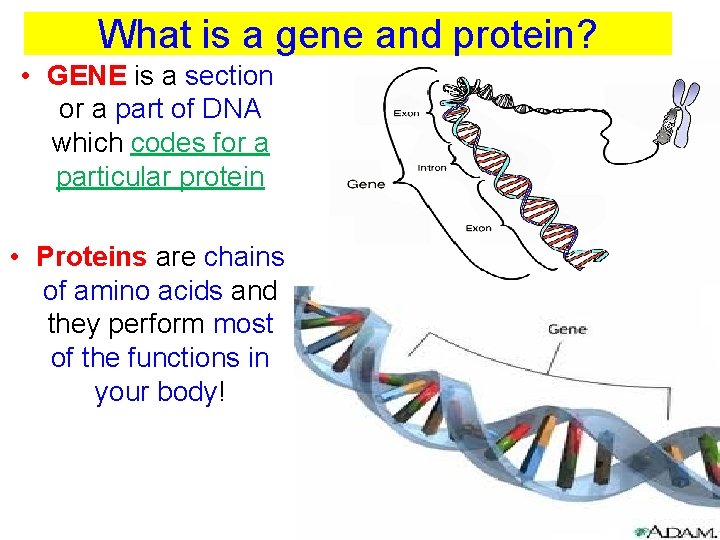
What is a gene and protein? • GENE is a section or a part of DNA which codes for a particular protein • Proteins are chains of amino acids and they perform most of the functions in your body!
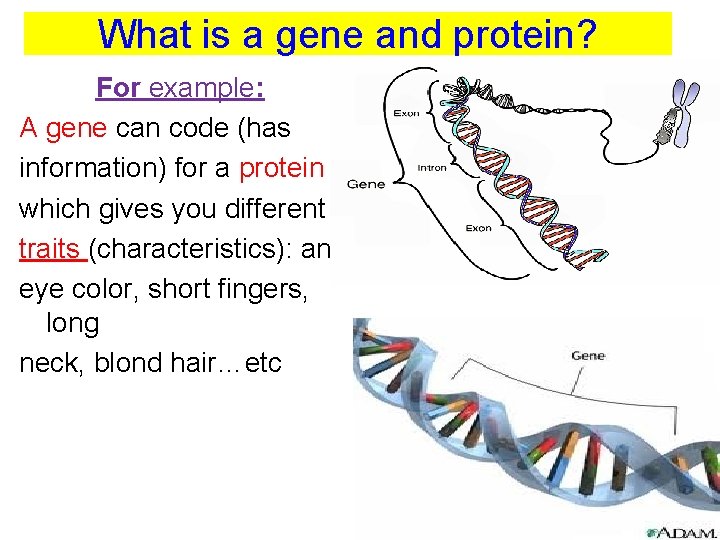
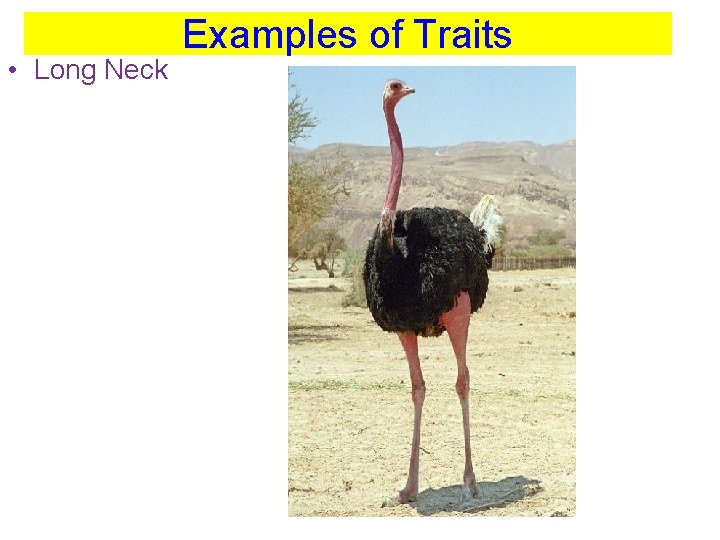
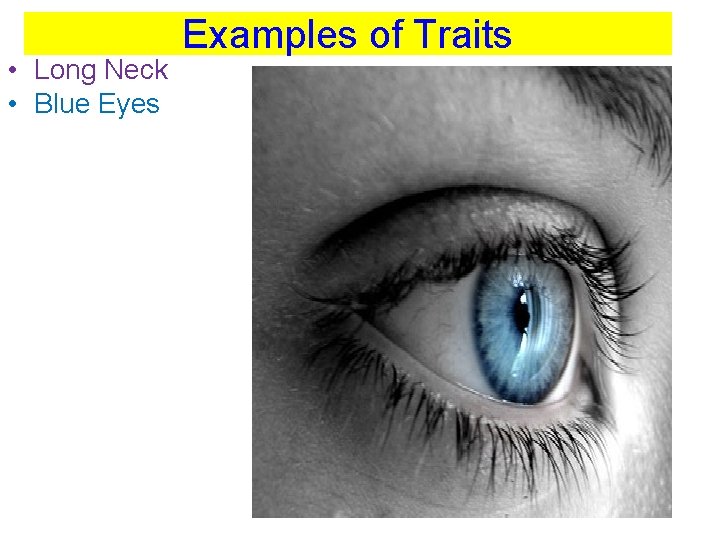
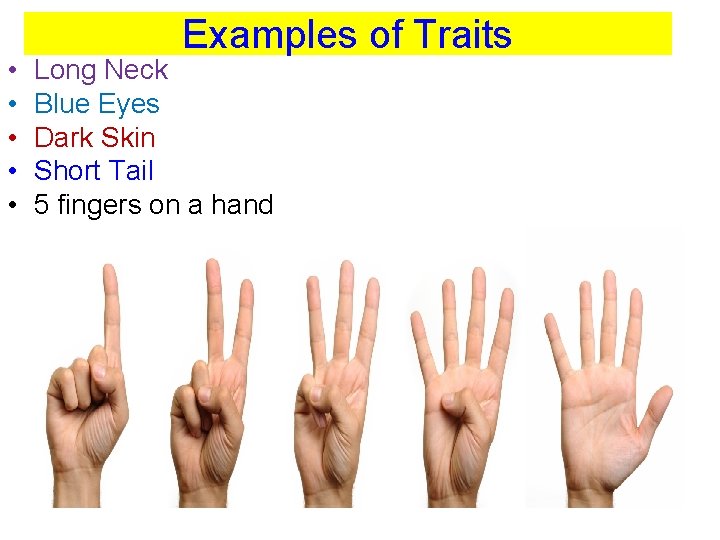
What is a gene and protein? For example: A gene can code (has information) for a protein which gives you different traits (characteristics): an eye color, short fingers, long neck, blond hair…etc
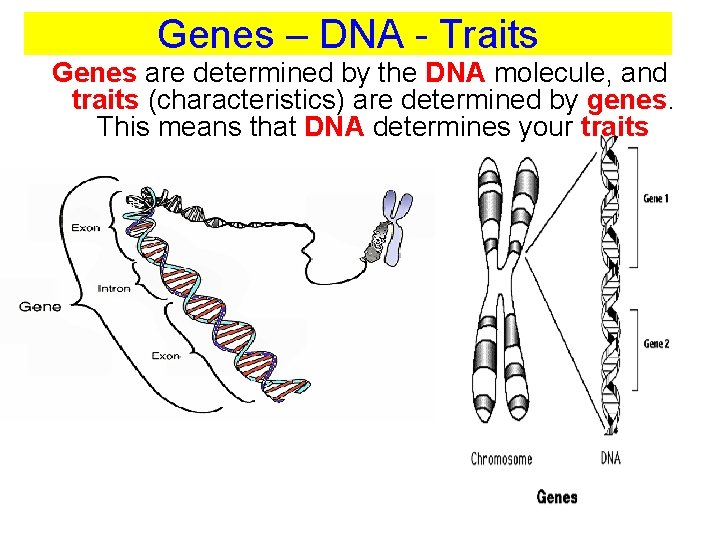
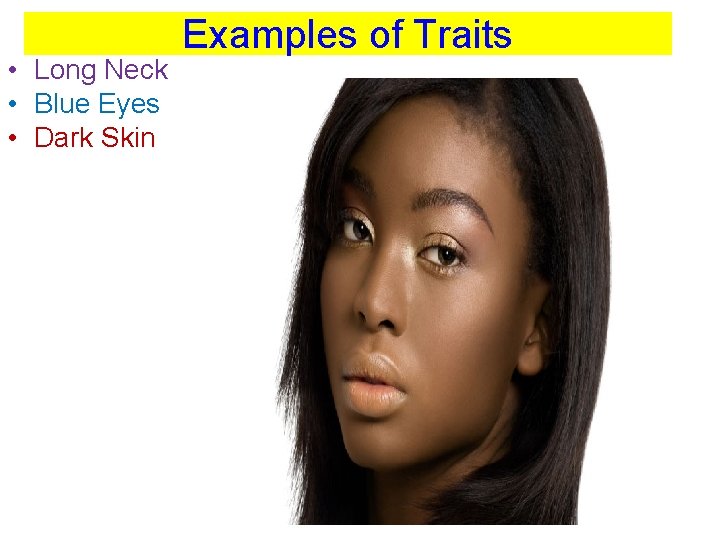
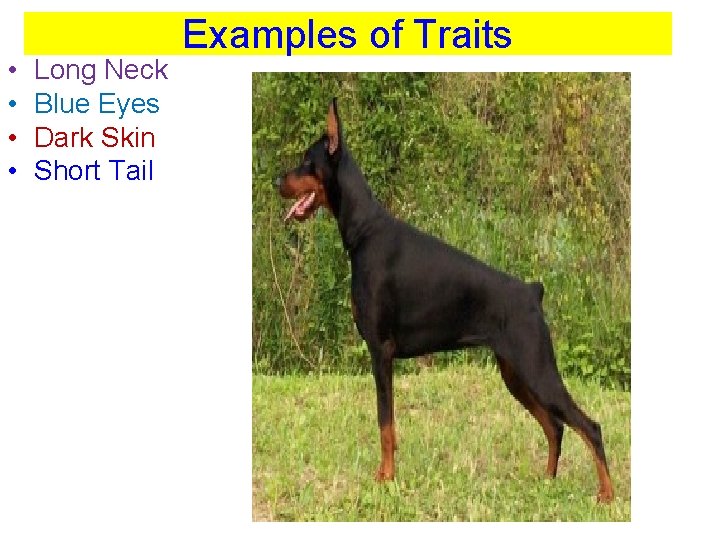
Genes – DNA - Traits Genes are determined by the DNA molecule, and traits (characteristics) are determined by genes. This means that DNA determines your traits
• Long Neck Examples of Traits
• Long Neck • Blue Eyes Examples of Traits
• Long Neck • Blue Eyes • Dark Skin Examples of Traits
• • Long Neck Blue Eyes Dark Skin Short Tail Examples of Traits
• • • Examples of Traits Long Neck Blue Eyes Dark Skin Short Tail 5 fingers on a hand
HOMEWORK 1. Molecular Genetics (Section 1) – reading notes 2. Take Home Quiz