
Pages 24 26 A molecule with opposite charges




- Slides: 12
Pages 24 - 26
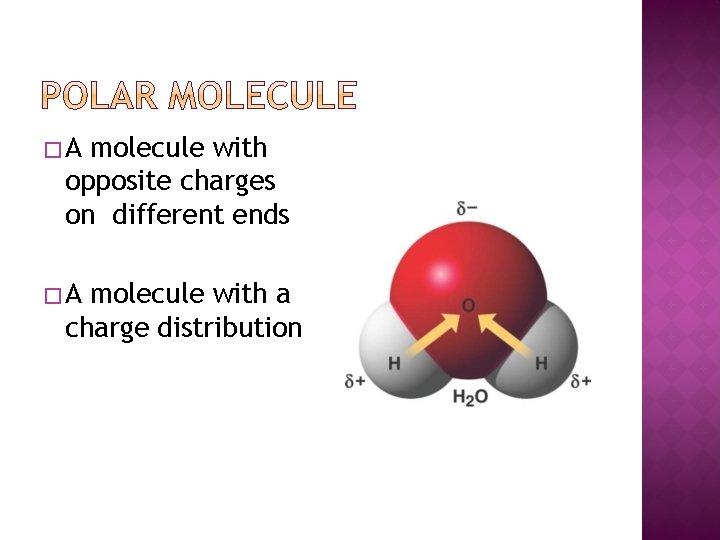
�A molecule with opposite charges on different ends �A molecule with a charge distribution
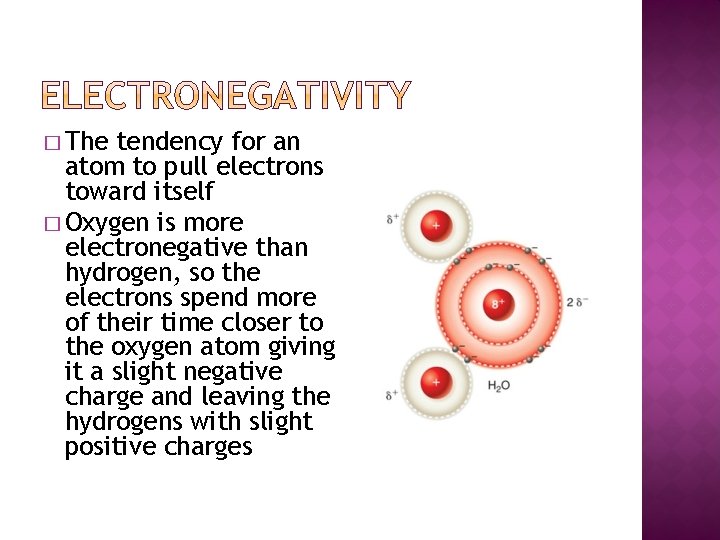
� The tendency for an atom to pull electrons toward itself � Oxygen is more electronegative than hydrogen, so the electrons spend more of their time closer to the oxygen atom giving it a slight negative charge and leaving the hydrogens with slight positive charges
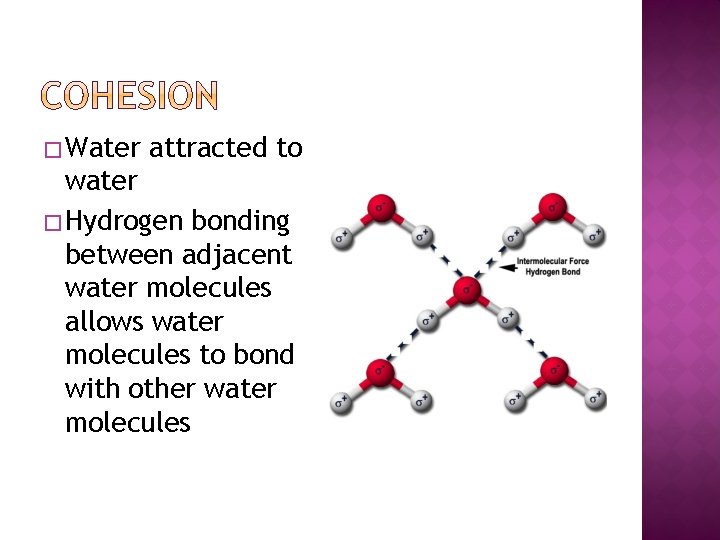
� Water attracted to water � Hydrogen bonding between adjacent water molecules allows water molecules to bond with other water molecules
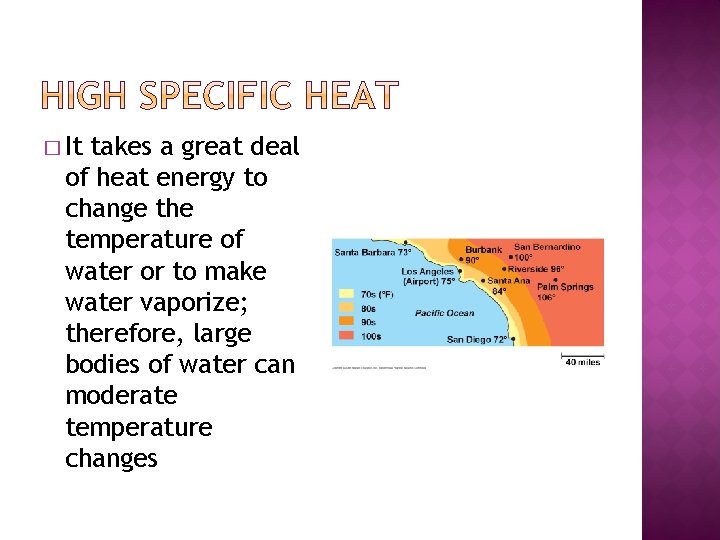
� It takes a great deal of heat energy to change the temperature of water or to make water vaporize; therefore, large bodies of water can moderate temperature changes
� When sweat evaporates from the skin, the water molecules that transition from liquid sweat to gaseous water vapor are the fastest moving molecules. As they shift phases it takes lots of energy and heat is given off. The water that remains is slower moving and much cooler. This results in lowering the body temperature.
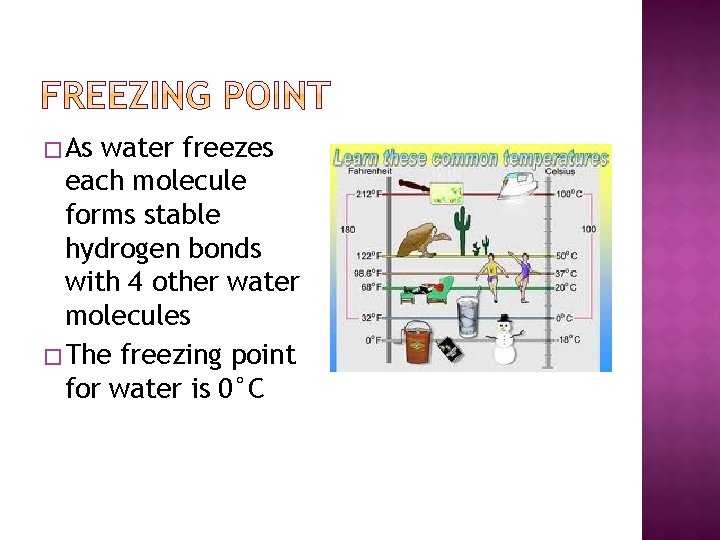
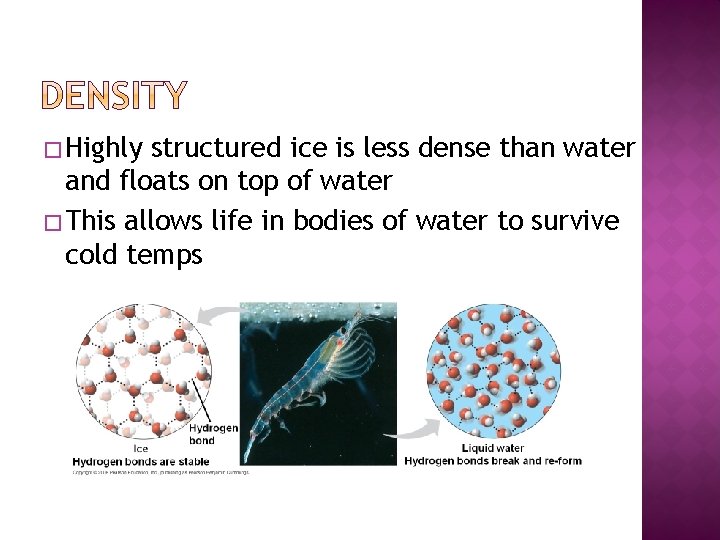
� As water freezes each molecule forms stable hydrogen bonds with 4 other water molecules � The freezing point for water is 0°C
� Highly structured ice is less dense than water and floats on top of water � This allows life in bodies of water to survive cold temps
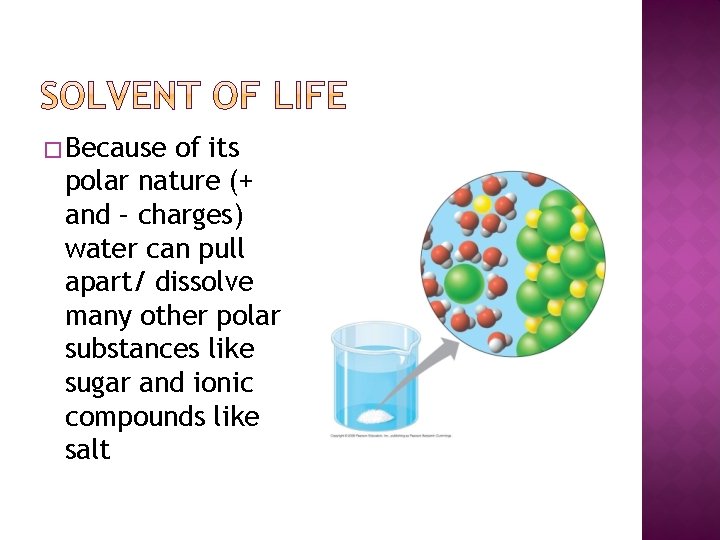
� Because of its polar nature (+ and – charges) water can pull apart/ dissolve many other polar substances like sugar and ionic compounds like salt
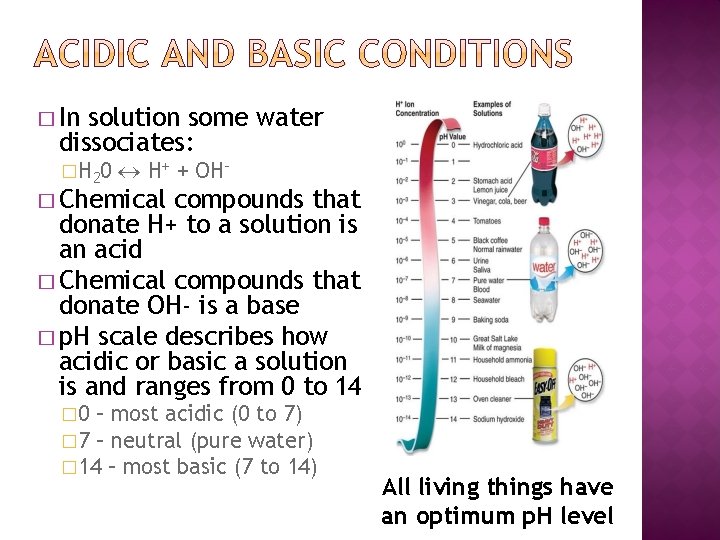
� In solution some water dissociates: �H 20 H+ + OH- � Chemical compounds that donate H+ to a solution is an acid � Chemical compounds that donate OH- is a base � p. H scale describes how acidic or basic a solution is and ranges from 0 to 14 � 0 – most acidic (0 to 7) � 7 – neutral (pure water) � 14 – most basic (7 to 14) All living things have an optimum p. H level