
Page Rank algorithm based on Eigenvectors Some pages
Page. Rank algorithm based on Eigenvectors Some pages are adapted from Bing Liu, UIC
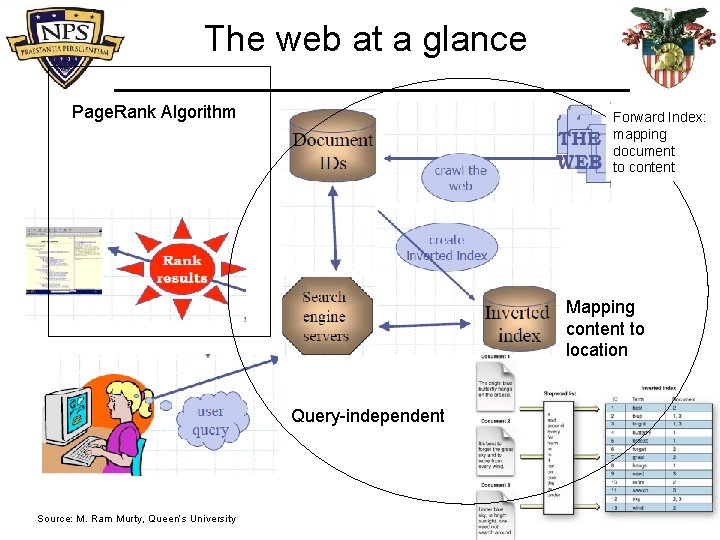
The web at a glance Page. Rank Algorithm Forward Index: mapping document to content Mapping content to location Query-independent Source: M. Ram Murty, Queen’s University
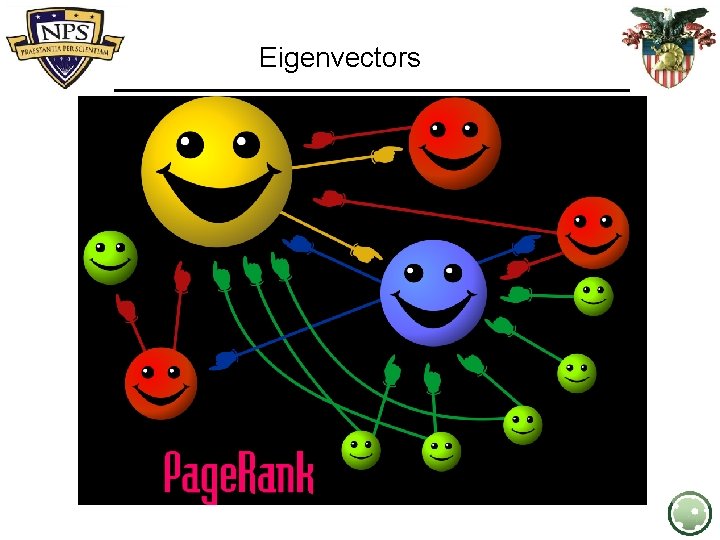
Eigenvectors
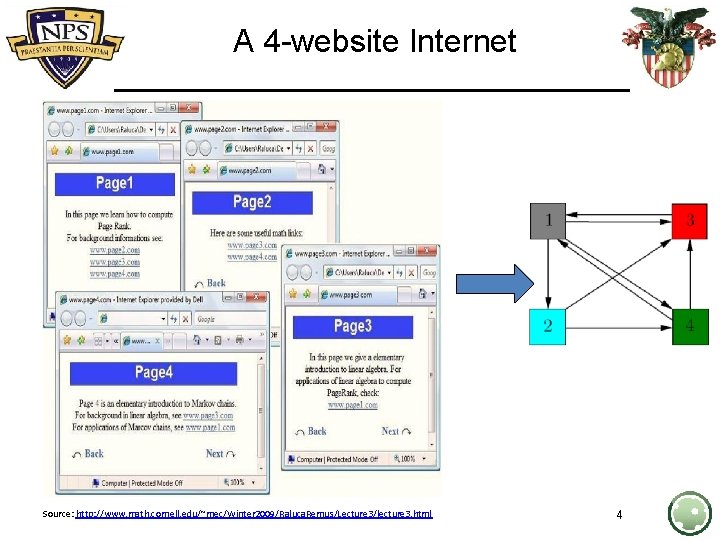
A 4 -website Internet Source: http: //www. math. cornell. edu/~mec/Winter 2009/Raluca. Remus/Lecture 3/lecture 3. html 4
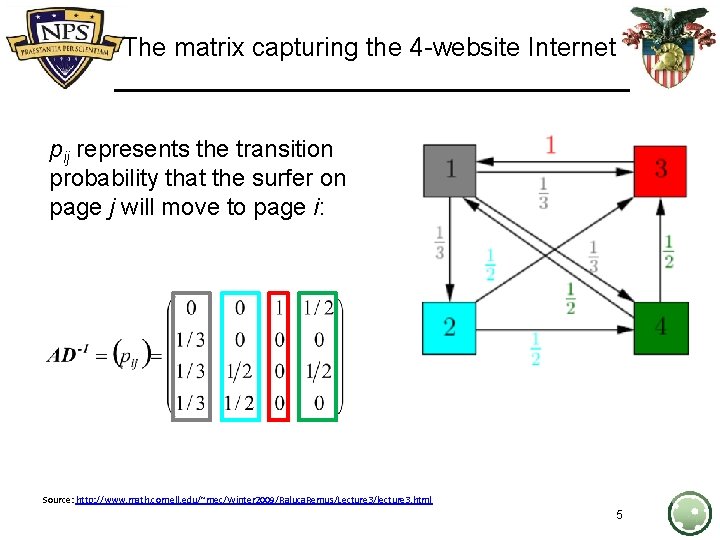
The matrix capturing the 4 -website Internet pij represents the transition probability that the surfer on page j will move to page i: Source: http: //www. math. cornell. edu/~mec/Winter 2009/Raluca. Remus/Lecture 3/lecture 3. html 5
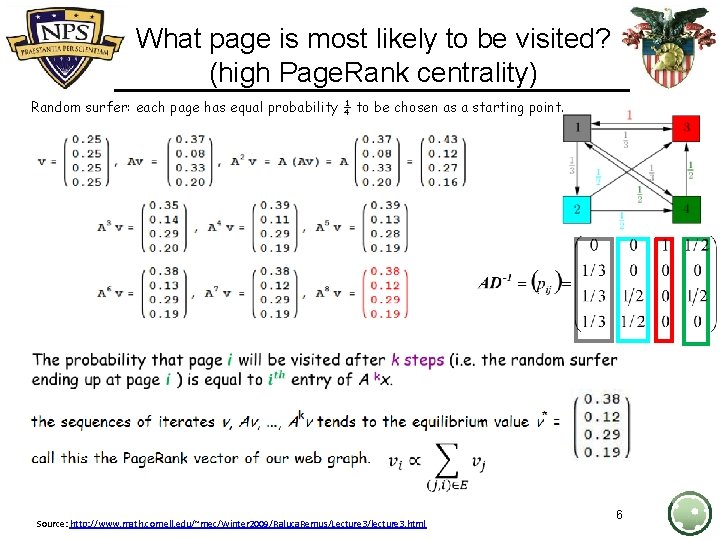
What page is most likely to be visited? (high Page. Rank centrality) Random surfer: each page has equal probability ¼ to be chosen as a starting point. Source: http: //www. math. cornell. edu/~mec/Winter 2009/Raluca. Remus/Lecture 3/lecture 3. html 6
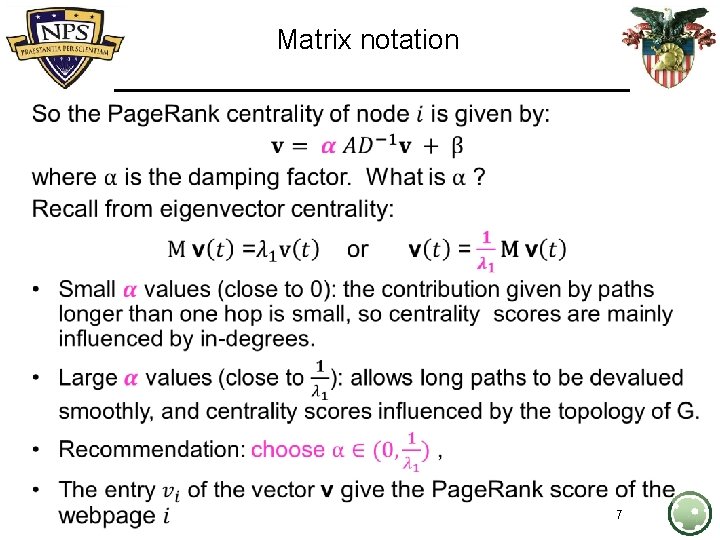
Matrix notation • 7
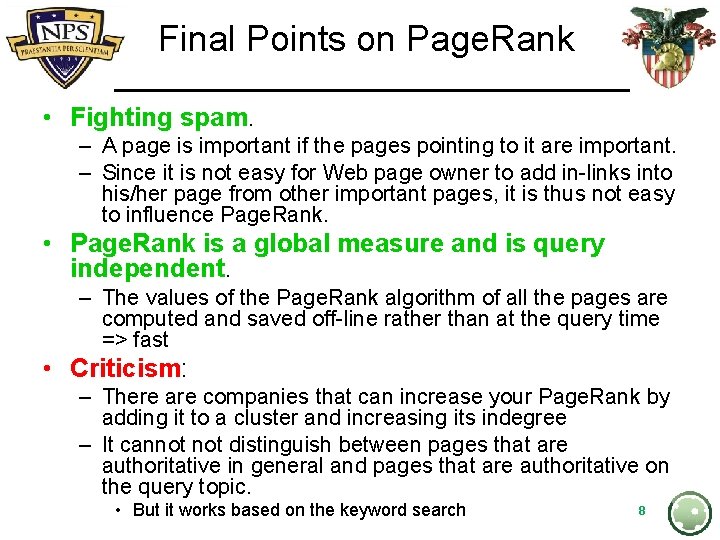
Final Points on Page. Rank • Fighting spam. – A page is important if the pages pointing to it are important. – Since it is not easy for Web page owner to add in-links into his/her page from other important pages, it is thus not easy to influence Page. Rank. • Page. Rank is a global measure and is query independent. – The values of the Page. Rank algorithm of all the pages are computed and saved off-line rather than at the query time => fast • Criticism: – There are companies that can increase your Page. Rank by adding it to a cluster and increasing its indegree – It cannot distinguish between pages that are authoritative in general and pages that are authoritative on the query topic. • But it works based on the keyword search 8
- Slides: 8