
Paediatric ICU Acute Respiratory Distress Aylin Seven Upper


- Slides: 26
Paediatric ICU: Acute Respiratory Distress Aylin Seven
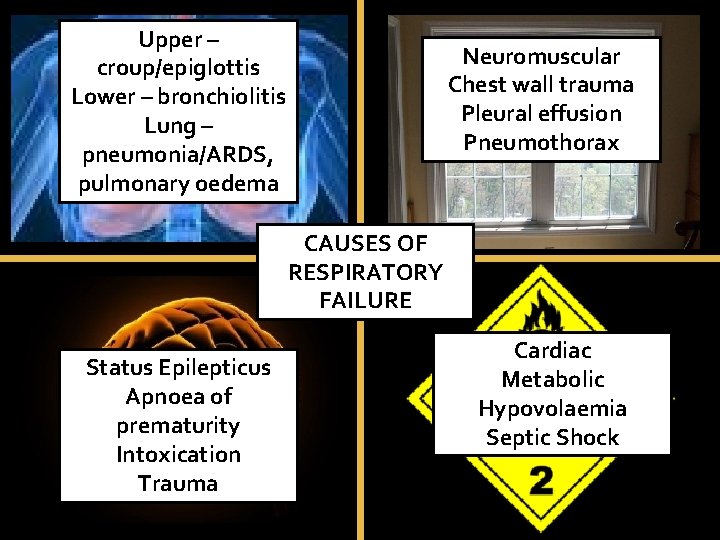
Upper – croup/epiglottis Lower – bronchiolitis Lung – pneumonia/ARDS, pulmonary oedema Neuromuscular Chest wall trauma Pleural effusion Pneumothorax CAUSES OF RESPIRATORY FAILURE Status Epilepticus Apnoea of prematurity Intoxication Trauma Cardiac Metabolic Hypovolaemia Septic Shock
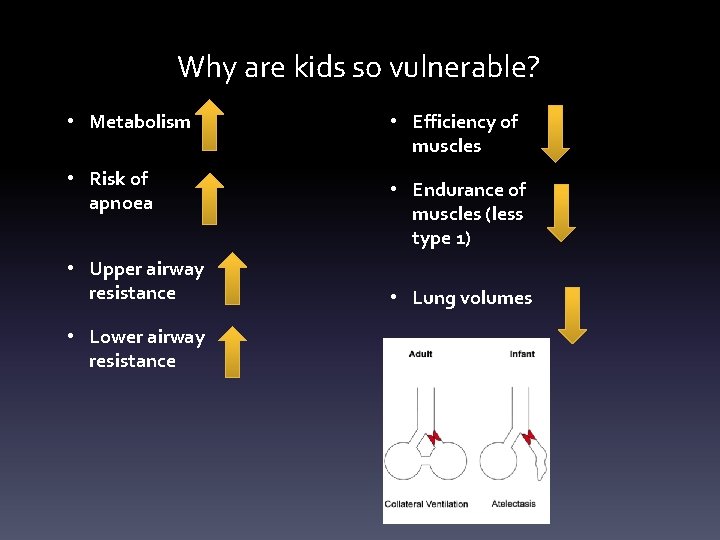
Why are kids so vulnerable? • Metabolism • Risk of apnoea • Upper airway resistance • Lower airway resistance • Efficiency of muscles • Endurance of muscles (less type 1) • Lung volumes
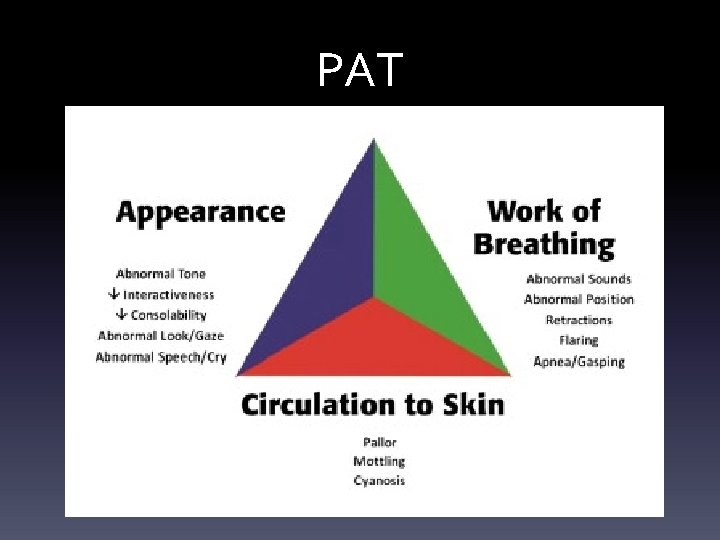
Identifying the deteriorating patient • Respiratory rate • Work of breathing • Bradycardia = BAD
PAT
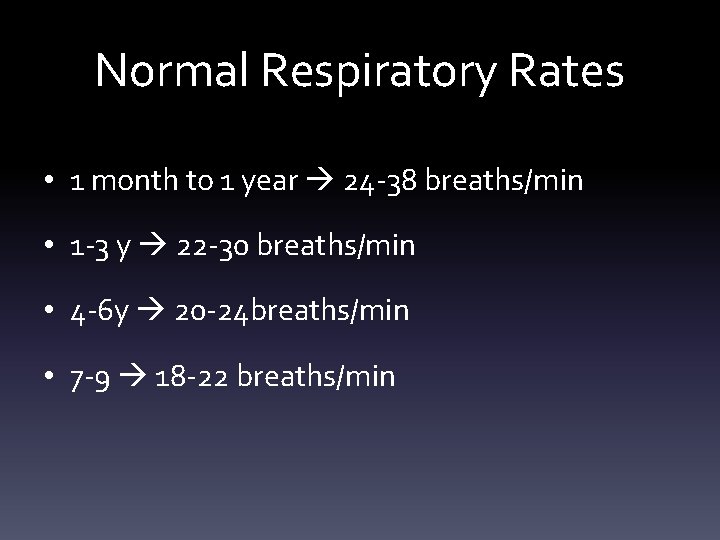
Normal Respiratory Rates • 1 month to 1 year 24 -38 breaths/min • 1 -3 y 22 -30 breaths/min • 4 -6 y 20 -24 breaths/min • 7 -9 18 -22 breaths/min
What to do next? !
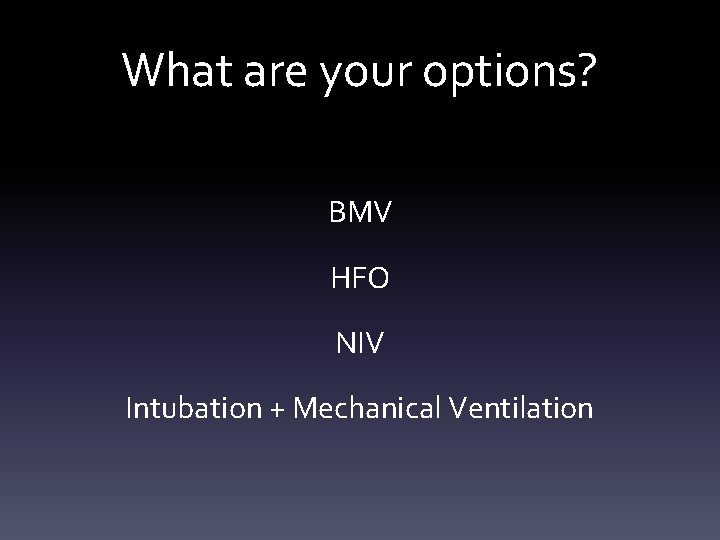
What are your options? BMV HFO NIV Intubation + Mechanical Ventilation
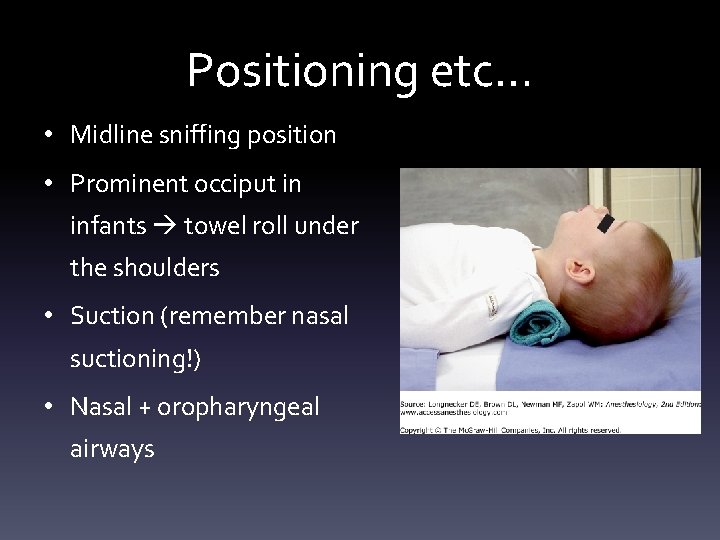
Positioning etc… • Midline sniffing position • Prominent occiput in infants towel roll under the shoulders • Suction (remember nasal suctioning!) • Nasal + oropharyngeal airways
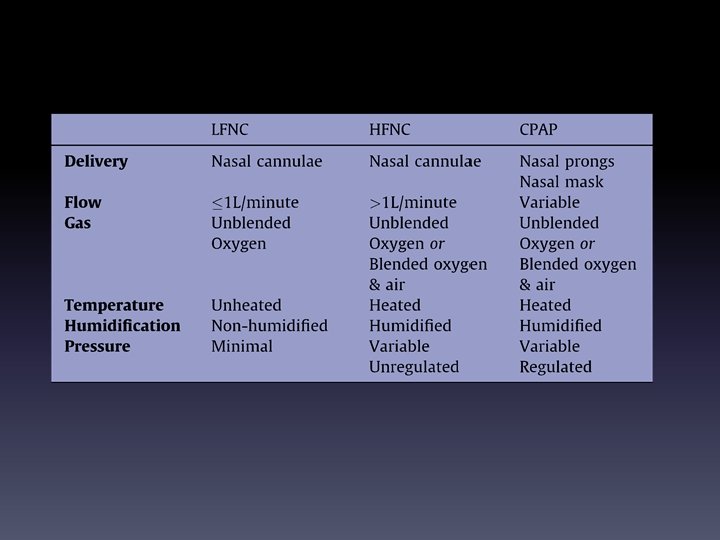
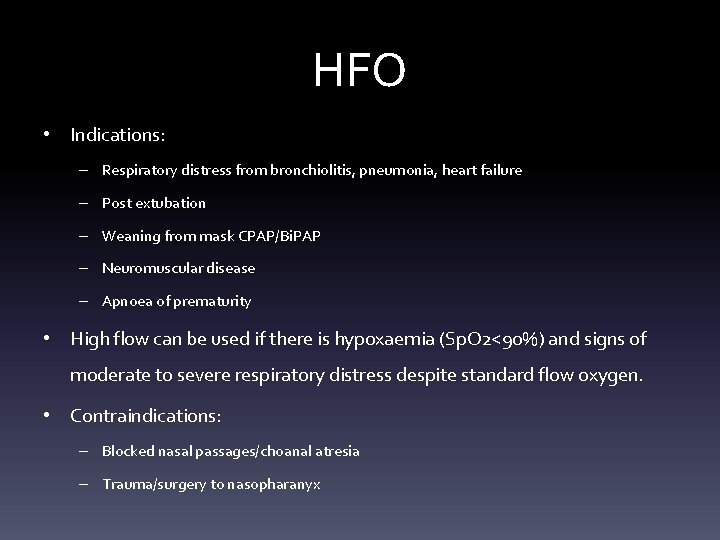
HFO • Indications: – Respiratory distress from bronchiolitis, pneumonia, heart failure – Post extubation – Weaning from mask CPAP/Bi. PAP – Neuromuscular disease – Apnoea of prematurity • High flow can be used if there is hypoxaemia (Sp. O 2<90%) and signs of moderate to severe respiratory distress despite standard flow oxygen. • Contraindications: – Blocked nasal passages/choanal atresia – Trauma/surgery to nasopharanyx
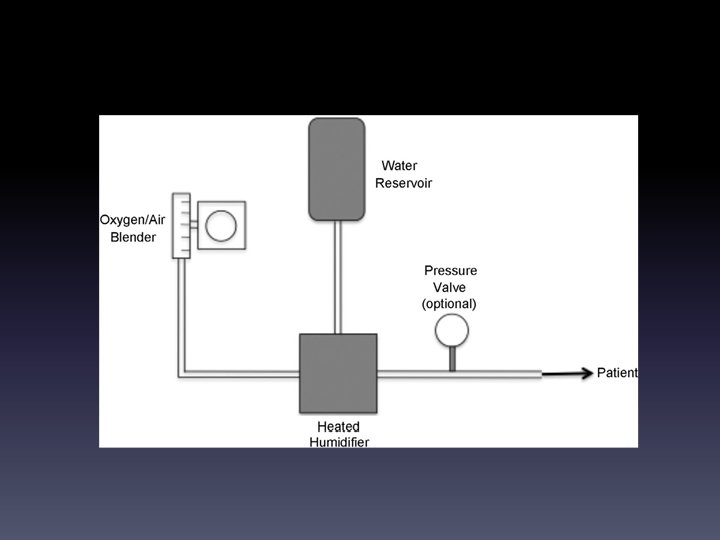
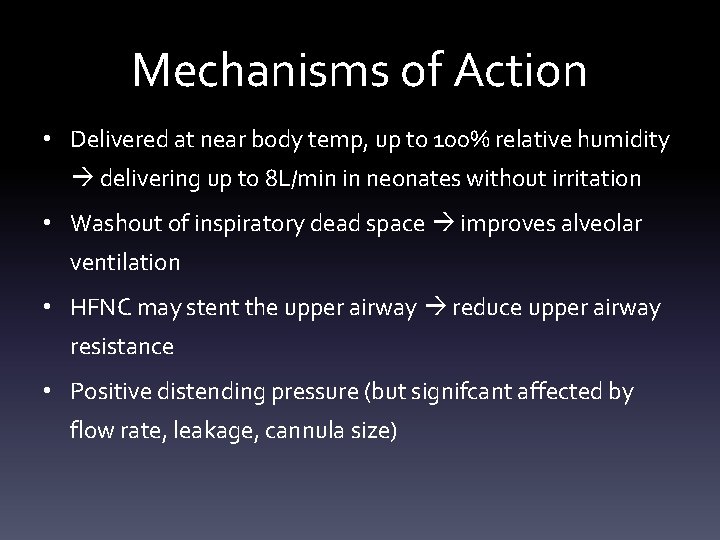
Mechanisms of Action • Delivered at near body temp, up to 100% relative humidity delivering up to 8 L/min in neonates without irritation • Washout of inspiratory dead space improves alveolar ventilation • HFNC may stent the upper airway reduce upper airway resistance • Positive distending pressure (but signifcant affected by flow rate, leakage, cannula size)
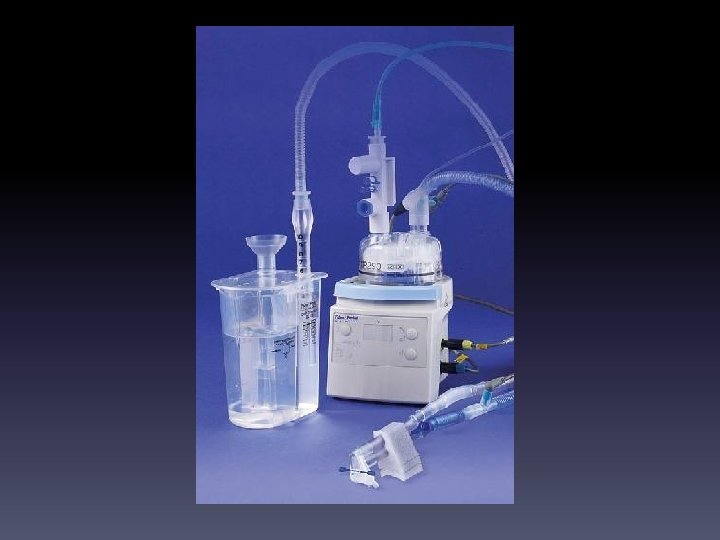
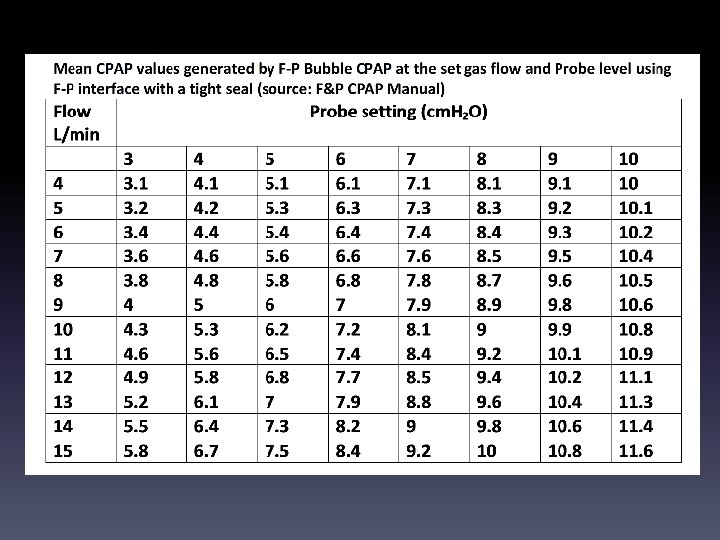
NIV • Bubble CPAP • (Others: Bi. PAP/CPAP)
Bubble CPAP • Indications: – Acute lower airway obstruction – Dynamic upper airway obstruction (laryngomalacia, tracheomalacia) – Parenchymal lung disease (e. g. pneumonia) – Ventilation weaning
Bubble CPAP • Contraindications: – Severe cardiovascular instability – Poor respiratory drive (frequent apnoea/brady) – Congenital malformations of airway – NOTE: relative contraindication in >10 -12 kg
Bubble CPAP • Mechanism: – Expiratory arm is under water generates pressure and oscillations (almost similar to high frequency 15 -30 Hz) – Gentle bubbling = vigorous bubbling – No bubbling = loss of seal (often open mouth)
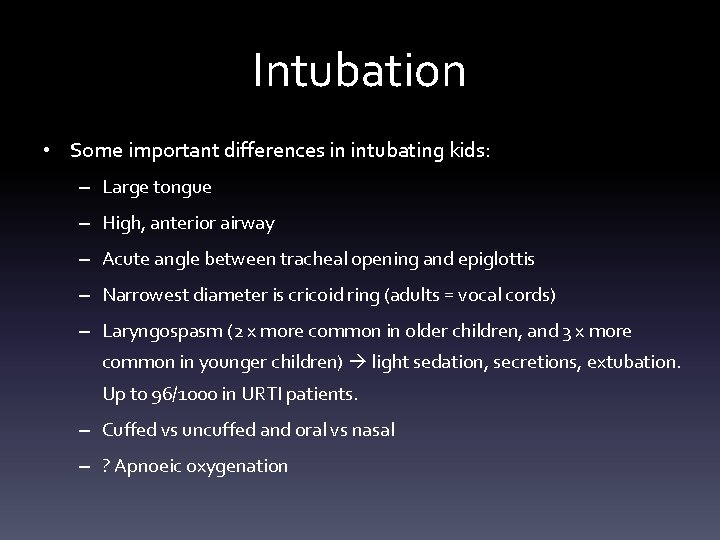
Intubation • Some important differences in intubating kids: – Large tongue – High, anterior airway – Acute angle between tracheal opening and epiglottis – Narrowest diameter is cricoid ring (adults = vocal cords) – Laryngospasm (2 x more common in older children, and 3 x more common in younger children) light sedation, secretions, extubation. Up to 96/1000 in URTI patients. – Cuffed vs uncuffed and oral vs nasal – ? Apnoeic oxygenation
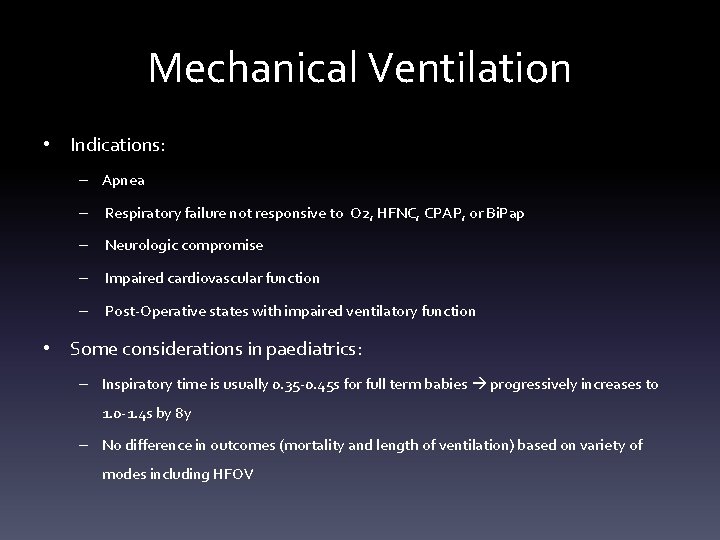
Mechanical Ventilation • Indications: – Apnea – Respiratory failure not responsive to O 2, HFNC, CPAP, or Bi. Pap – Neurologic compromise – Impaired cardiovascular function – Post-Operative states with impaired ventilatory function • Some considerations in paediatrics: – Inspiratory time is usually 0. 35 -0. 45 s for full term babies progressively increases to 1. 0 -1. 4 s by 8 y – No difference in outcomes (mortality and length of ventilation) based on variety of modes including HFOV
Zebras and PICU • Vascular rings/slings from aberrant vessels (pulmonary artery sling – anomalous L pulmonary artery and ductus encircling trachea) • Congenital diaphragmatic hernia • Spinal muscular atrophy • Diaphragmatic palsy (post CTx surgery) • Tick bite paralysis (toxin binds covalently to Ach. R) • Tumours (neuroblastoma and lymphoma)
Case 1 • 10 month old • Admitted to ward with bronchiolitis D 3 • Increased WOB on the ward transferred to PICU • Placed on WHO 2 L/kg/min initially • Ongoing significant work of breathing • What next?
Case 1 • Bubble CPAP no significant improvement • For intubation unsuccessful intubation attempts x 3 • Eventual intubation with sevoflurane induction
References • HNE – ICU guidelines for care of paediatric airway, paediatric bubble CPAP • Paediatric Airway Management, Santillanes and Gausche-Hill (2008) • Ventilatory strategies in the neonatal and paediatrc intensive care units, Mesiano & Davis, Paediatric Respiratory Reviews (2008) • Oh’s Intensive Care Manual 2013 • The evidence for high flow nasal cannula devices in infants, Haq et al, Paediatric Respiratory Reviews (2014) • Acute respiratory failure in children, Hammer, Paediatric Respiratory Reviews (2013)
Questions?