
Packets Frames and Error Detection 1 The Problem
Packets, Frames, and Error Detection 1
The Problem • Cannot afford individual network connection per pair of computers • Reasons – Installing wires consumes time and money – Maintaining wires consumes money (esp. longdistance connections) 2
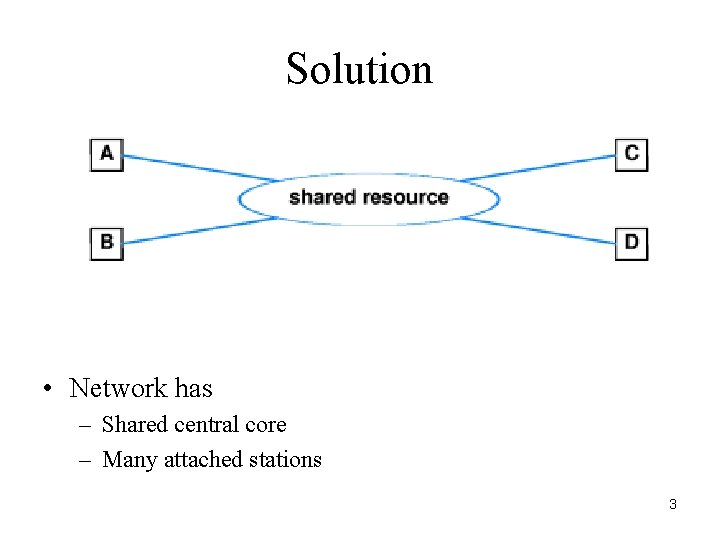
Solution • Network has – Shared central core – Many attached stations 3
The Problem with Sharing • • Demand high Some applications have large transfer Some applications cannot wait Need mechanisms for fairness 4
Packet Switching Principle • Solution for fairness – Divide data into small units called packets – All each station opportunity to send packet before any station sends another • Form of time-division multiplexing 5
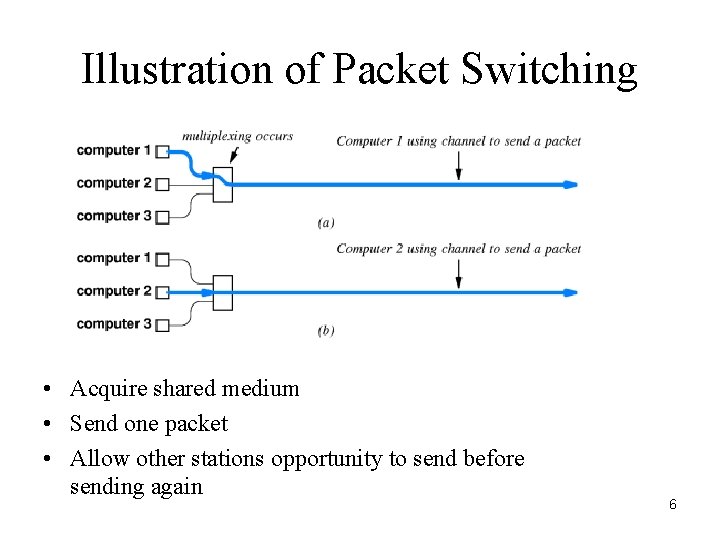
Illustration of Packet Switching • Acquire shared medium • Send one packet • Allow other stations opportunity to send before sending again 6
Packet Details • Depend on underlying networks – Minimum/maximum size – Format • Hardware packet called a frame 7
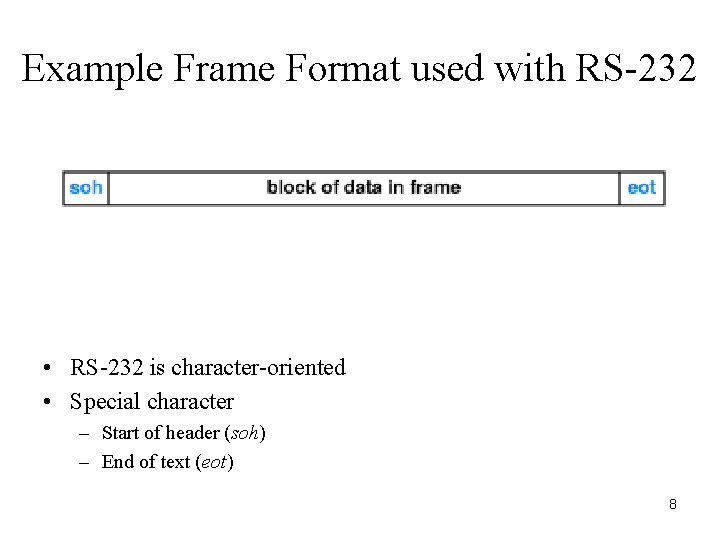
Example Frame Format used with RS-232 • RS-232 is character-oriented • Special character – Start of header (soh) – End of text (eot) 8
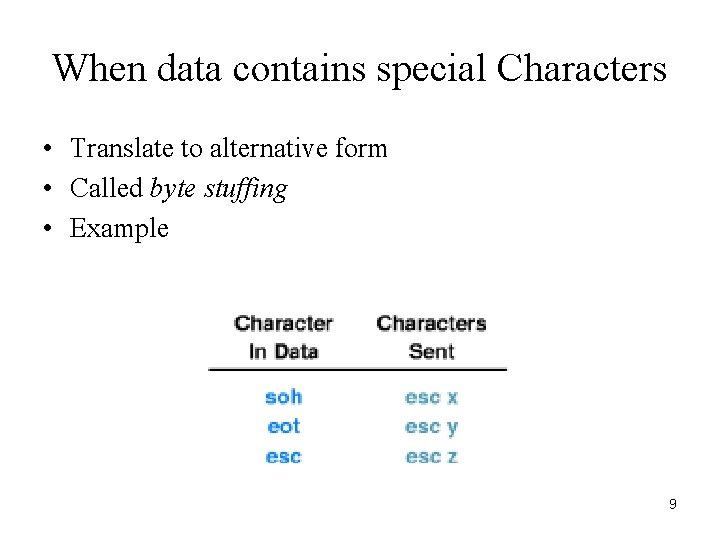
When data contains special Characters • Translate to alternative form • Called byte stuffing • Example 9
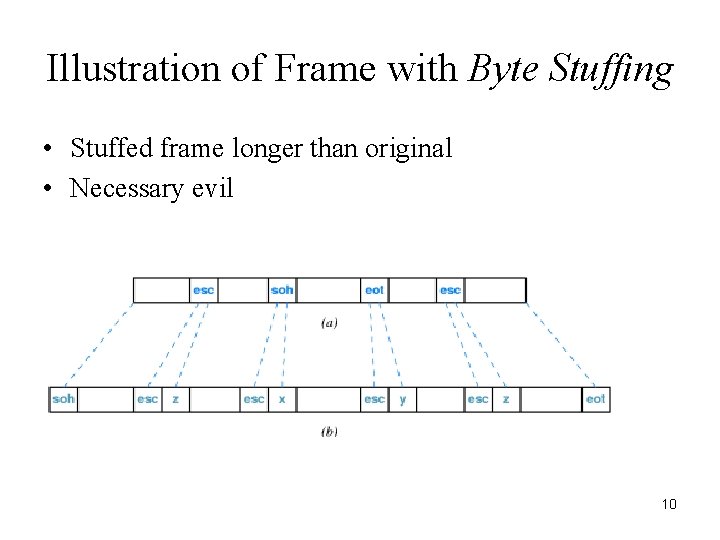
Illustration of Frame with Byte Stuffing • Stuffed frame longer than original • Necessary evil 10
Handling Errors • Data can be corrupted during transmission – Bits lost – Bit values changed • Frame includes additional information to detect/correct error – Set by sender – Checked by receiver • Statistical guarantee 11
Error Detection And Recovery Technique • Parity bit – One additional bit per character – Can use • Even parity • Odd parity – Cannot handle error that changes two bits 12
Error Detection And Recovery Technique – Con’t • Checksum – Treat data as sequence of integers – Compute and send arithmetic sum – Handles multiple bit errors – Cannot handle all errors 13
Error Detection And Recovery Technique – Con’t • Cyclic Redundancy Check (CRC) – Mathematical function for data – More complex to compute – Handles more errors 14
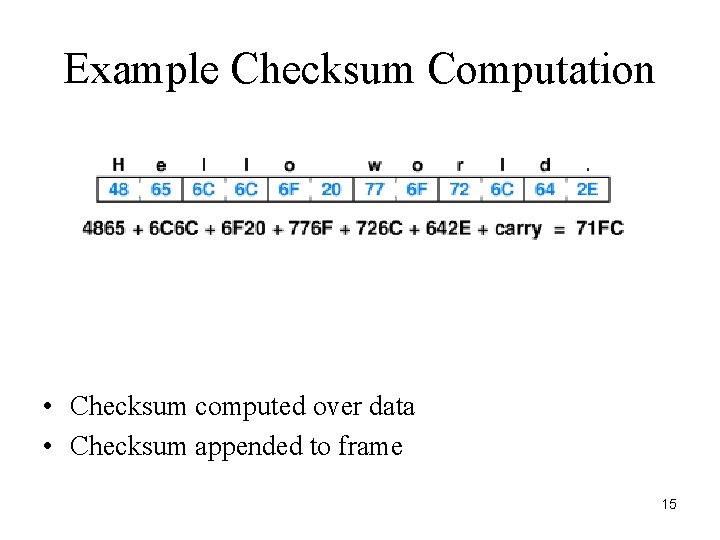
Example Checksum Computation • Checksum computed over data • Checksum appended to frame 15
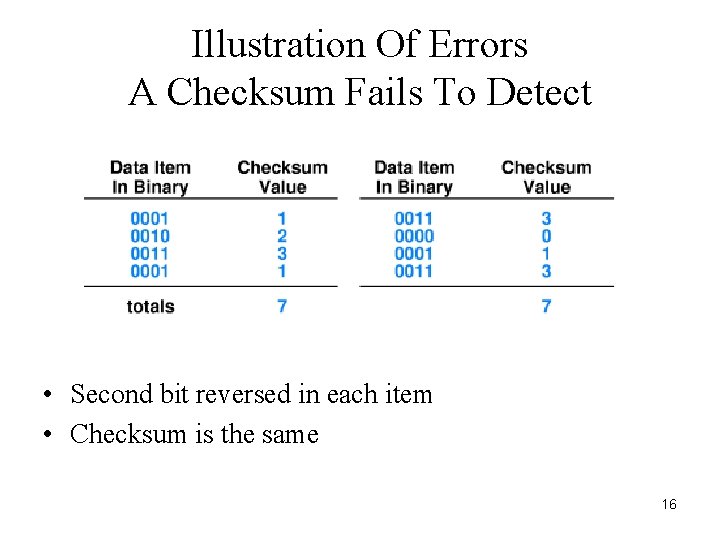
Illustration Of Errors A Checksum Fails To Detect • Second bit reversed in each item • Checksum is the same 16
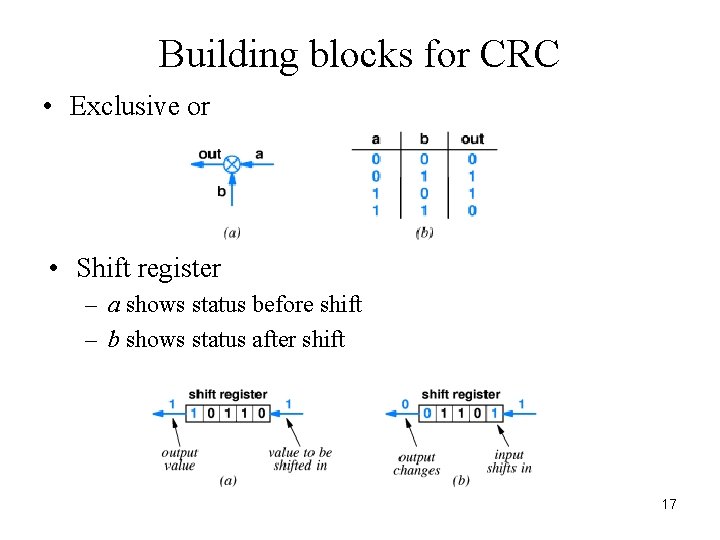
Building blocks for CRC • Exclusive or • Shift register – a shows status before shift – b shows status after shift 17
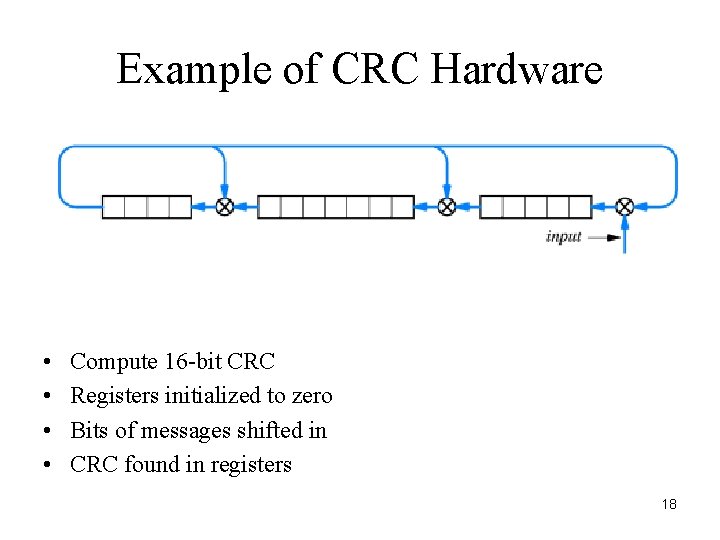
Example of CRC Hardware • • Compute 16 -bit CRC Registers initialized to zero Bits of messages shifted in CRC found in registers 18
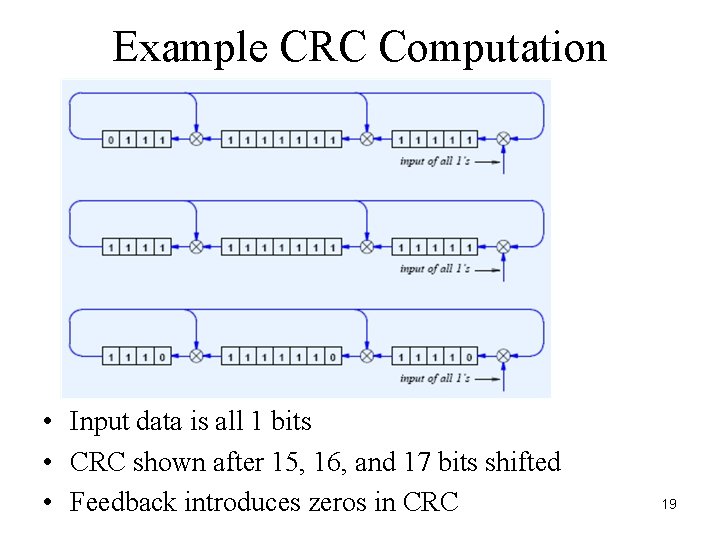
Example CRC Computation • Input data is all 1 bits • CRC shown after 15, 16, and 17 bits shifted • Feedback introduces zeros in CRC 19
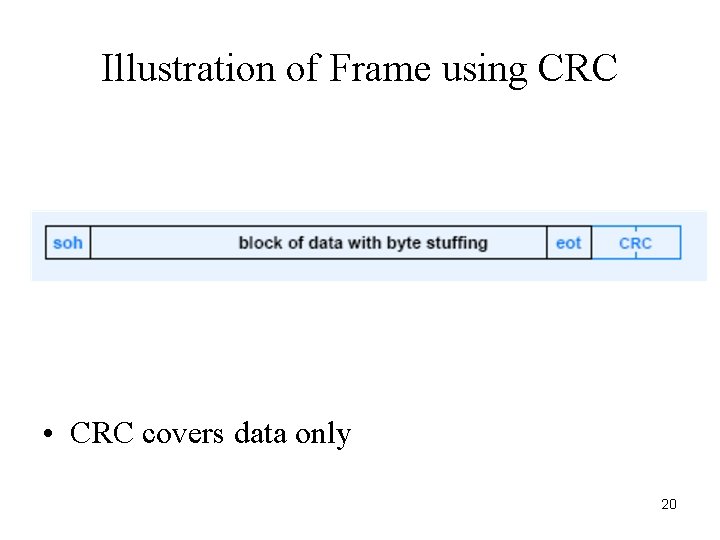
Illustration of Frame using CRC • CRC covers data only 20
Summary • Packet technology – Invented to provide fair access in shared network – Sender divides data into small packets • Hardware packets called frames • Can use packet-switching with RS-232 – Special characters delimit beginning and end of frame – Byte-stuffing needed when special characters appear in data 21
Summary – Con’t • To detect data corruption – Sender adds information to packet – Receiver checks • Techniques – Parity bit – Checksum – Cyclic Redundancy Check (CRC) – Provide statistical guarantees 22
- Slides: 22