
PACKER UPDATE 5 2 Pain and Pain Management




- Slides: 41
PACKER UPDATE 5 -2
Pain and Pain Management
What is pain? • 5 th vital sign • “Pain is whatever the patient says it is” • International Association of the Study of Pain defines pain as an “unpleasant sensory and emotional experience associated with actual or potential tissue damage” • It originates from the central or peripheral nervous system, or both
Structure and Function • Pain originates in nociceptors, specialized nerve endings designed to detect painful stimuli • Nocicepters are located in the skin, connective tissue, muscle, and thoracic, abdominal, and pelvic viscera
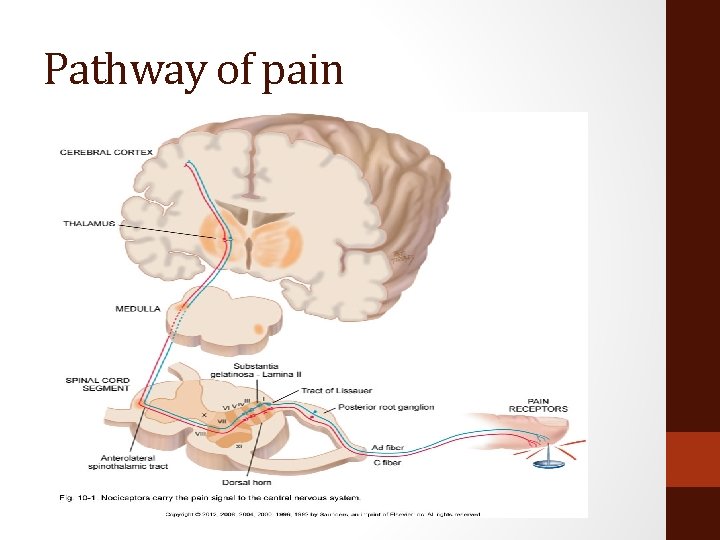
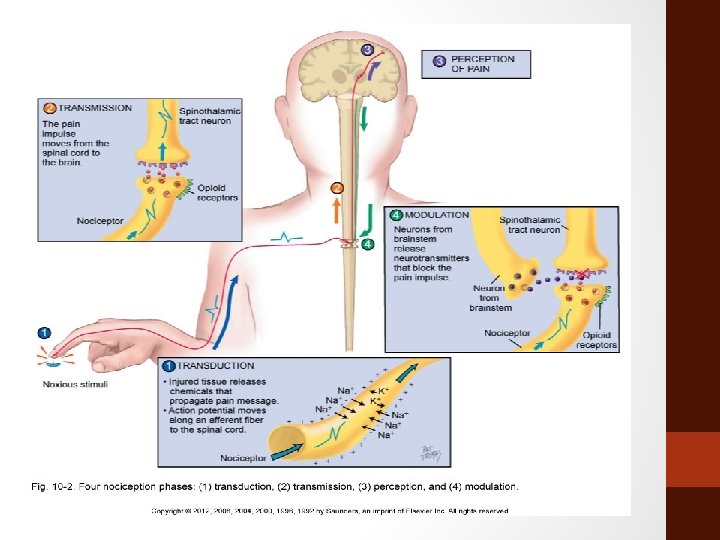
Pathway of pain
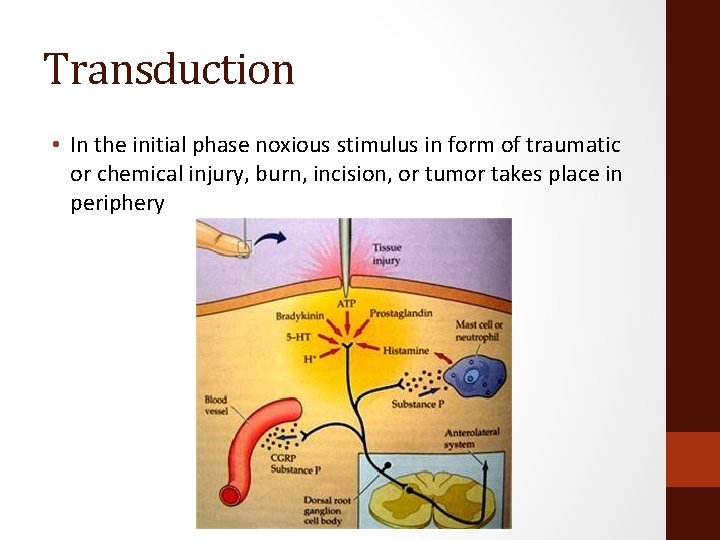
Transduction • In the initial phase noxious stimulus in form of traumatic or chemical injury, burn, incision, or tumor takes place in periphery
Transmission • Pain impulses move from the spinal cord to the brain • Opioid receptors are found at the synaptic cleft
Perception • Conscious awareness of painful sensation • Levels of pain perception depend on several factors: • • Personal experiences Knowledge Environment (Cognitive) Socio-cultural influences (emotions)
Modulation • When the brain perceives pain, inhibitory neurotransmitters are released down the descending pathways from brain stem to spinal cord • Inhibitory transmitters slow down or impede pain impulse, producing an analgesic effect
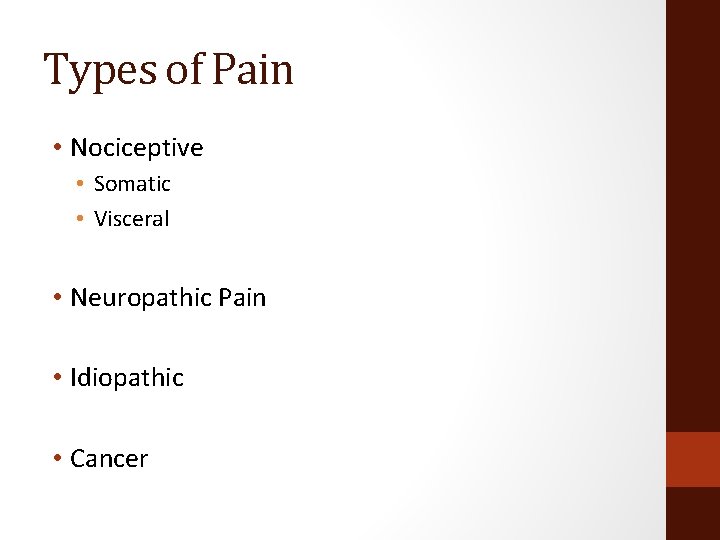
Types of Pain • Nociceptive • Somatic • Visceral • Neuropathic Pain • Idiopathic • Cancer
Types of Pain • Nociceptive Pain • Somatic • Superficial (cutaneous) pain comes from skin and soft tissue • Deep somatic pain comes from sources such as blood vessels, joints, tendons, muscles, and bone • Easily localized’ • Described as “sharp, aching, throbbing” • Visceral pain originates from larger interior organs, i. e. , kidney, stomach, intestine, gallbladder, pancreas • Difficult to describe and localize • Described as “diffuse, cramping, or dull” and can be associated with referred pain
Types of Pain • Neuropathic Pain • Does not adhere to the typical phases of pain • Most difficult to assess and treat • May be perceived long after site of injury is healed, chronic • Can be peripheral or central • Peripheral neuropathic pain can be described as “burning, tingling, electrical, stabbing, pins and needles pain”
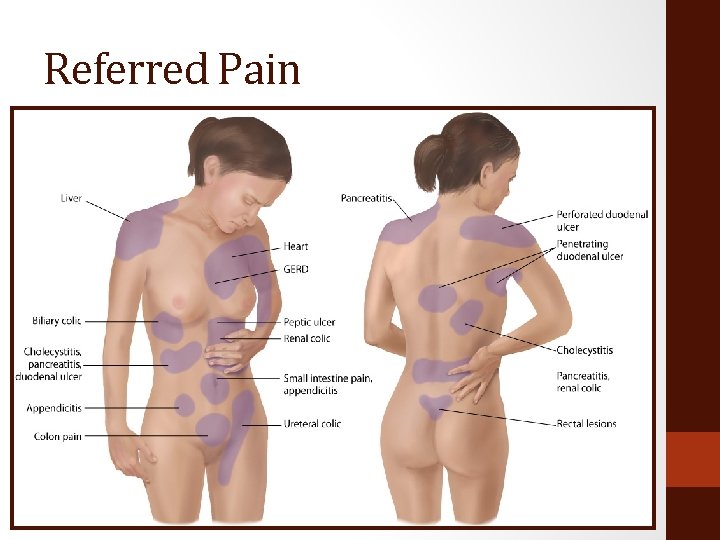
Referred Pain
Types of Pain • Idiopathic • No clear cause • Chronic • Cancer • Can be nociceptive or neuropathic • Chronic or acute
Pain Characterized by Duration • Acute pain- short-term, protective • i. e. surgery or trauma • Chronic pain- pain lasting >6 months • Malignant • Non-malignant
TRUE OR FALSE Chronic pain is only psychological.
TRUE OR FALSE Treating pain with analgesics leads to addiction.
Factors Influencing Pain • Infants • • Have the same capacity for feeling pain as adults Capable of feeling pain by 20 weeks gestation Preterm infants are more susceptible to pain Long term consequences
Factors Influencing Pain • Aging adults • No evidence suggests that older adults feel less pain or that sensitivity is diminished • Pain is not a normal process of aging • Older adults may be fearful of becoming dependent, invasive procedures, taking pain medications, and financial burden • Alzheimer’s disease • Pain medication dosing • Adjusted per age • Consider renal and liver impairments • Other physiologic factors
Gender Differences • Differences are influenced by hormones, societal expectations, and genetic makeup • Hormonal changes have a stronger influence on pain for women • Women are two to three times more likely to experience migraines during childbearing years, are more sensitive to pain during premenstrual period, and are six times more likely to have fibromyalgia • Human Genome Project
Factors Influencing Pain • Cultural • Meaning of pain • Ethnicity • Social • Distraction • Support • Spiritual beliefs • Psychological • Anxiety • Coping style
Pain Assessment • Always subjective • Pain is highly individualized • Pain threshold- the point at which a person feels pain • Pain tolerance- the level of pain a person is willing to accept
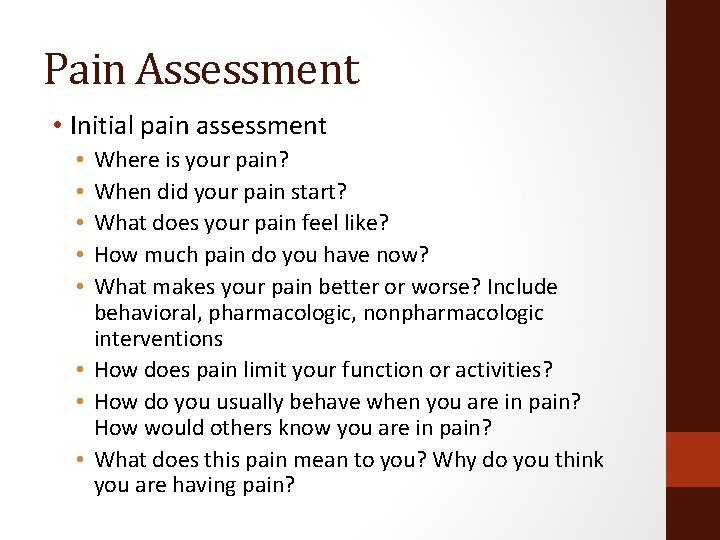
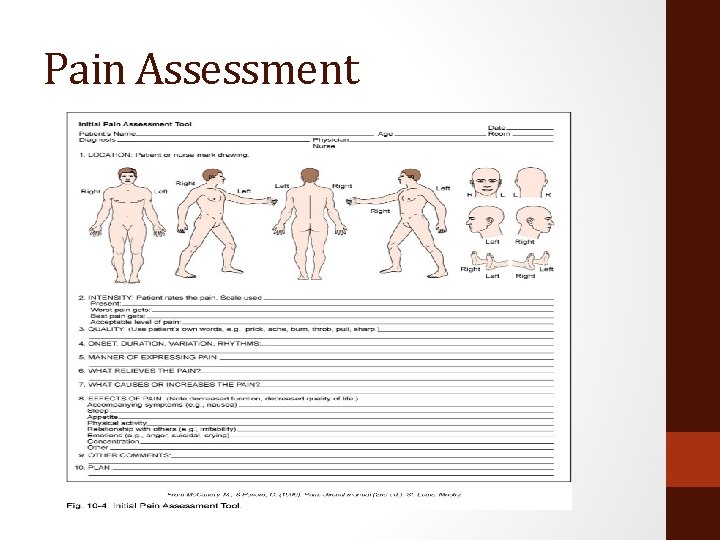
Pain Assessment • Initial pain assessment Where is your pain? When did your pain start? What does your pain feel like? How much pain do you have now? What makes your pain better or worse? Include behavioral, pharmacologic, nonpharmacologic interventions • How does pain limit your function or activities? • How do you usually behave when you are in pain? How would others know you are in pain? • What does this pain mean to you? Why do you think you are having pain? • • •
Pain Assessment
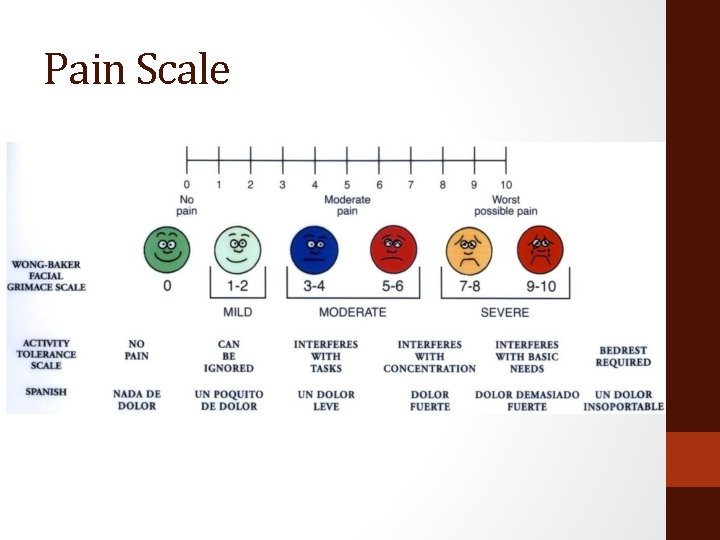
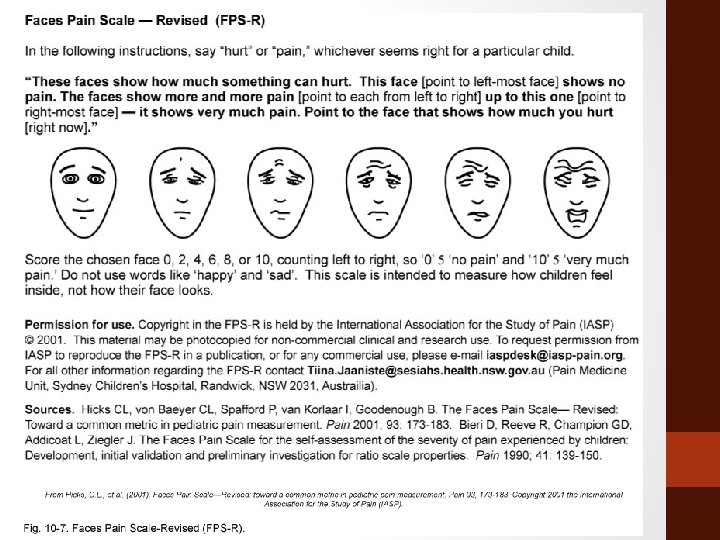
Pain Scale
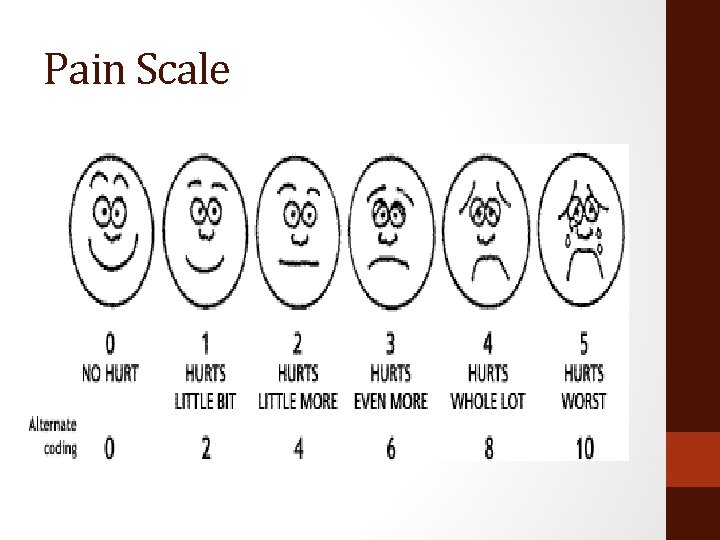
Pain Scale
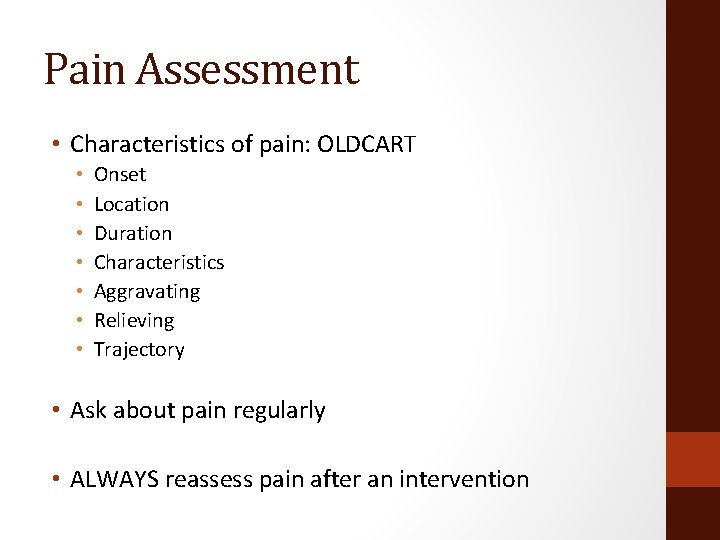
Pain Assessment • Characteristics of pain: OLDCART • • Onset Location Duration Characteristics Aggravating Relieving Trajectory • Ask about pain regularly • ALWAYS reassess pain after an intervention
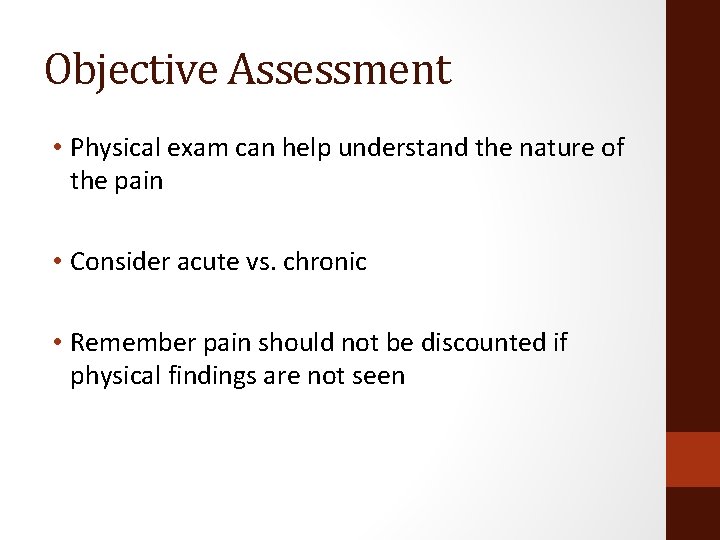
Objective Assessment • Physical exam can help understand the nature of the pain • Consider acute vs. chronic • Remember pain should not be discounted if physical findings are not seen
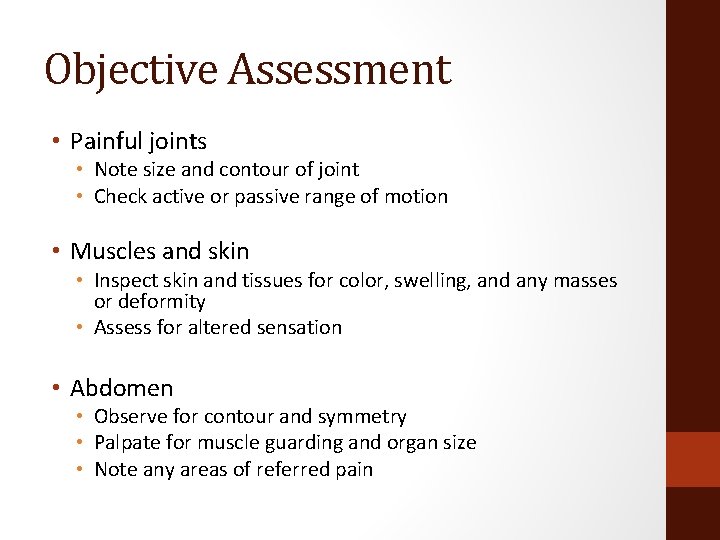
Objective Assessment • Painful joints • Note size and contour of joint • Check active or passive range of motion • Muscles and skin • Inspect skin and tissues for color, swelling, and any masses or deformity • Assess for altered sensation • Abdomen • Observe for contour and symmetry • Palpate for muscle guarding and organ size • Note any areas of referred pain
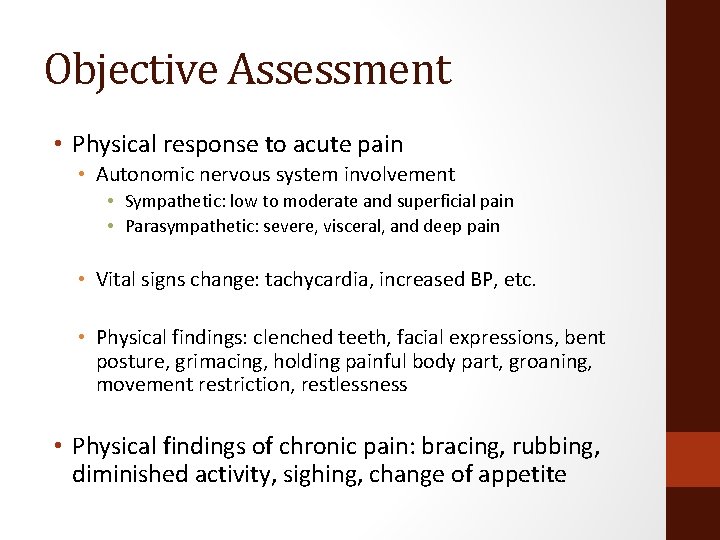
Objective Assessment • Physical response to acute pain • Autonomic nervous system involvement • Sympathetic: low to moderate and superficial pain • Parasympathetic: severe, visceral, and deep pain • Vital signs change: tachycardia, increased BP, etc. • Physical findings: clenched teeth, facial expressions, bent posture, grimacing, holding painful body part, groaning, movement restriction, restlessness • Physical findings of chronic pain: bracing, rubbing, diminished activity, sighing, change of appetite
Response to Pain • Psychological response • Cognitive- thoughts and beliefs about pain • Emotional- feelings • Psychological factors are more pronounced in chronic pain
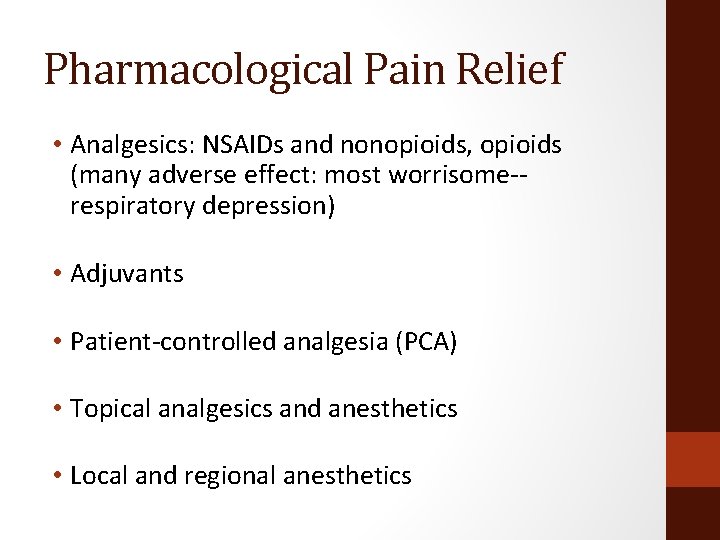
Pharmacological Pain Relief • Analgesics: NSAIDs and nonopioids, opioids (many adverse effect: most worrisome-respiratory depression) • Adjuvants • Patient-controlled analgesia (PCA) • Topical analgesics and anesthetics • Local and regional anesthetics
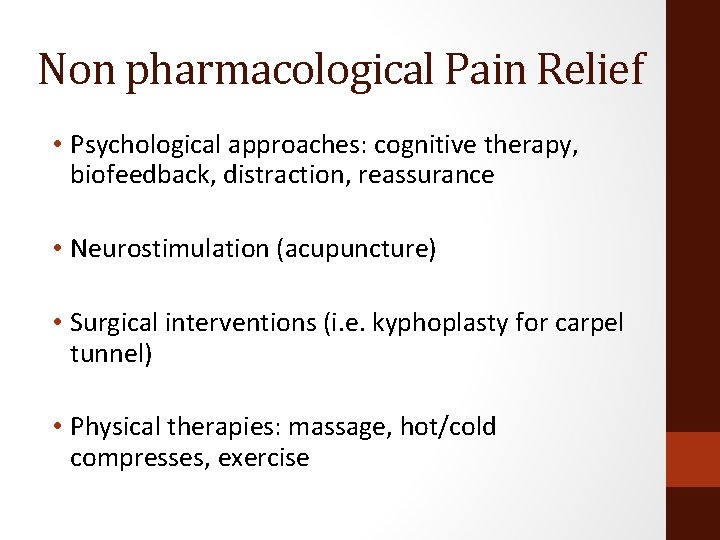
Non pharmacological Pain Relief • Psychological approaches: cognitive therapy, biofeedback, distraction, reassurance • Neurostimulation (acupuncture) • Surgical interventions (i. e. kyphoplasty for carpel tunnel) • Physical therapies: massage, hot/cold compresses, exercise
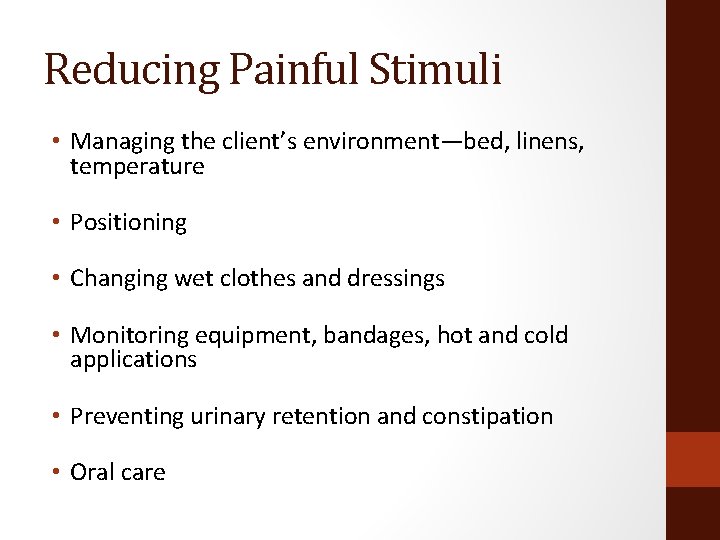
Reducing Painful Stimuli • Managing the client’s environment—bed, linens, temperature • Positioning • Changing wet clothes and dressings • Monitoring equipment, bandages, hot and cold applications • Preventing urinary retention and constipation • Oral care
Pain services • Pain clinics • Palliative care • Hospice
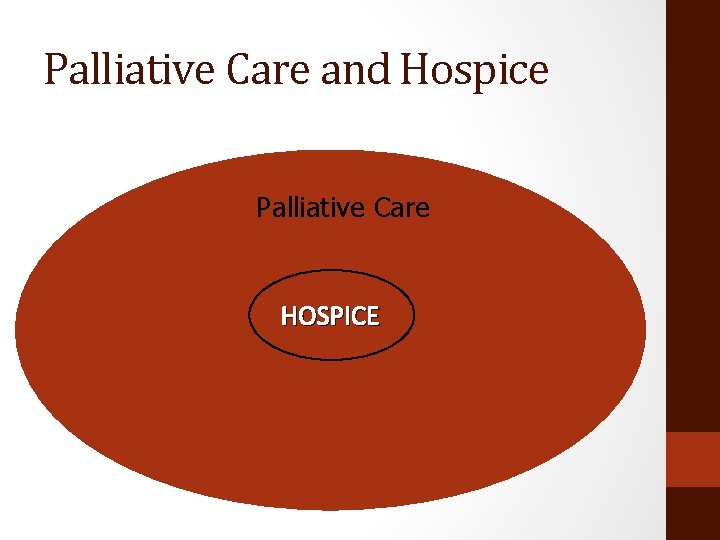
Palliative Care and Hospice Palliative Care HOSPICE
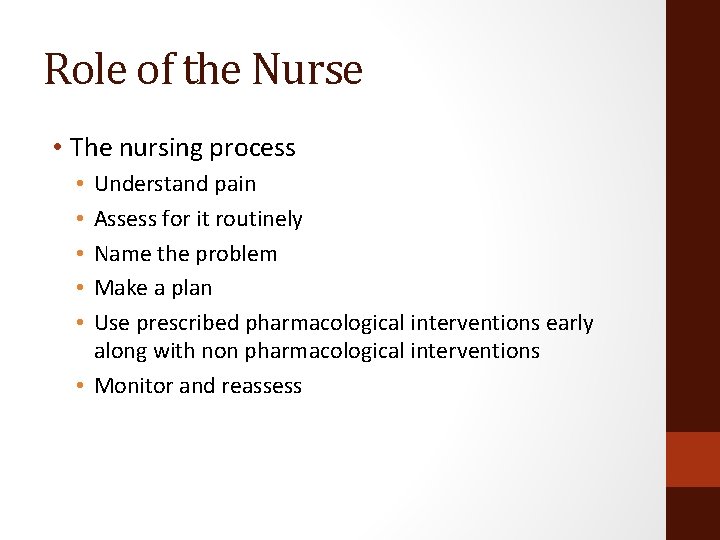
Role of the Nurse • The nursing process Understand pain Assess for it routinely Name the problem Make a plan Use prescribed pharmacological interventions early along with non pharmacological interventions • Monitor and reassess • • •
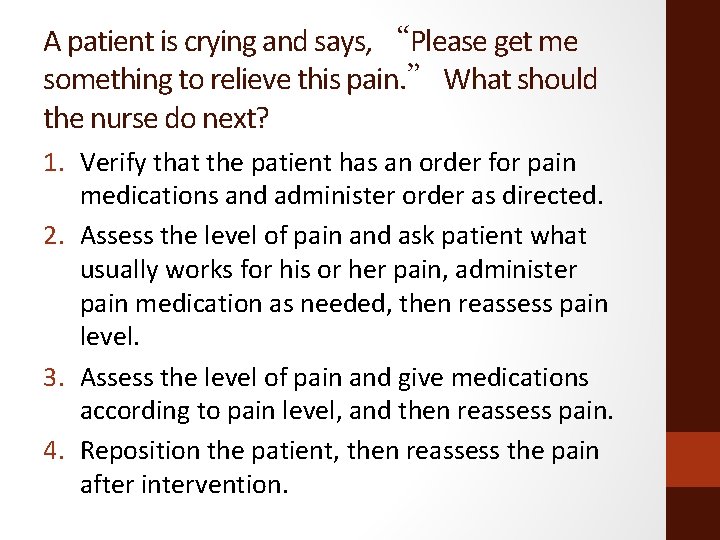
A patient is crying and says, “Please get me something to relieve this pain. ” What should the nurse do next? 1. Verify that the patient has an order for pain medications and administer order as directed. 2. Assess the level of pain and ask patient what usually works for his or her pain, administer pain medication as needed, then reassess pain level. 3. Assess the level of pain and give medications according to pain level, and then reassess pain. 4. Reposition the patient, then reassess the pain after intervention.