
Packaging and Labelling Slide 1 Packaging Purposes Slide

Packaging and Labelling Slide 1
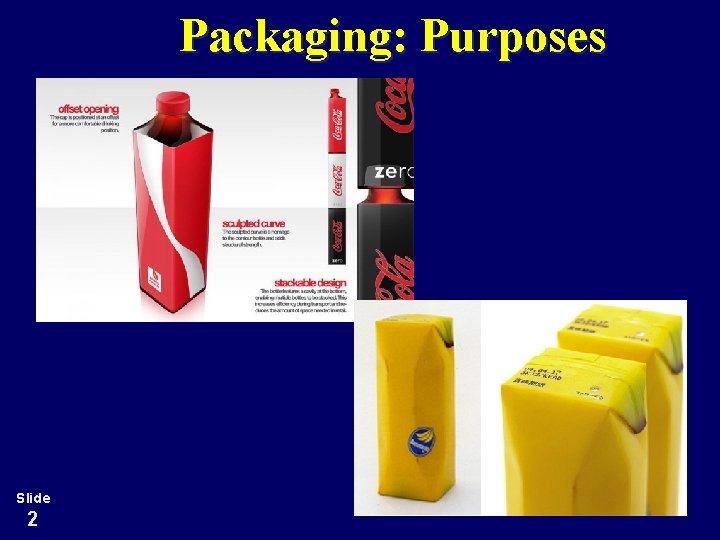
Packaging: Purposes Slide 2
Packaging is done at every level of marketing: • raw materials: crates, drums • manufactures: boxes, shrink wrap • retailers: boxes, bags • Even “Services” are packaged: ie product “bundling” (Bell, Rogers) Slide 3
Packaging CONSOLIDATION • to keep product together • liquids are put in bottles, cans, jars to keep from spilling • many boxes of a product are shrink wrapped • easier to ship, store, display Slide 4
Packaging PROTECTION • protect products from breaking: bubble wrap, styrofoam, plastic • protect from sunlight, air, germs • safety seals, tamper-proof packaging Slide 5
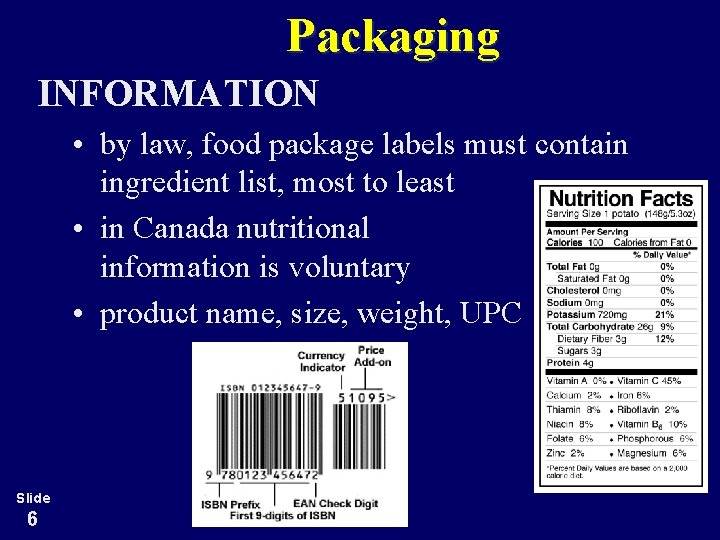
Packaging INFORMATION • by law, food package labels must contain ingredient list, most to least • in Canada nutritional information is voluntary • product name, size, weight, UPC Slide 6
Packaging BRAND IDENTIFICATION • used to sell product based on brand/manufacturer • mainly on packaged goods • not really used for electronics, appliances, furniture (customer relies on seeing/trying product) Slide 7
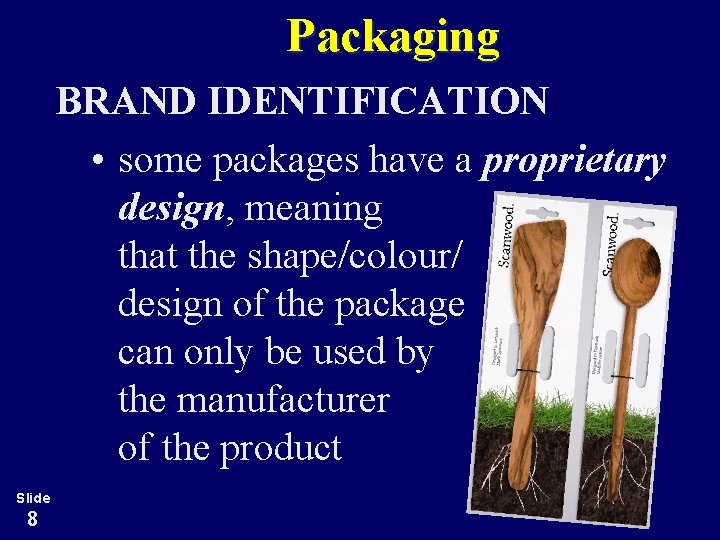
Packaging BRAND IDENTIFICATION • some packages have a proprietary design, meaning that the shape/colour/ design of the package can only be used by the manufacturer of the product Slide 8
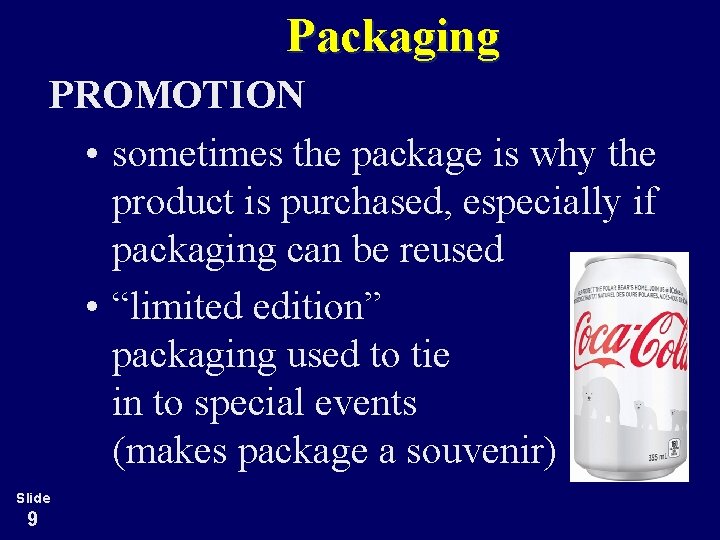
Packaging PROMOTION • sometimes the package is why the product is purchased, especially if packaging can be reused • “limited edition” packaging used to tie in to special events (makes package a souvenir) Slide 9
Contemporary Packaging Issues Aseptic Packaging – Incorporates a technology that keeps foods fresh without refrigeration for extended periods. Milk package 6 months no refrigeration Slide 10
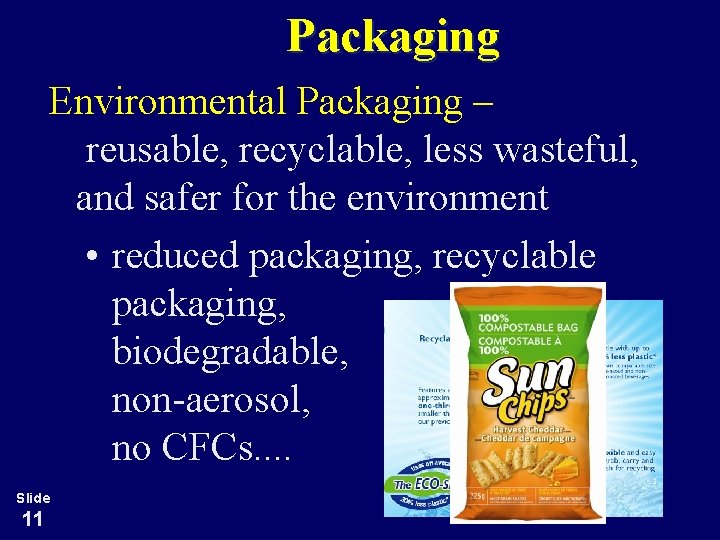
Packaging Environmental Packaging – reusable, recyclable, less wasteful, and safer for the environment • reduced packaging, recyclable packaging, biodegradable, non-aerosol, no CFCs. . Slide 11
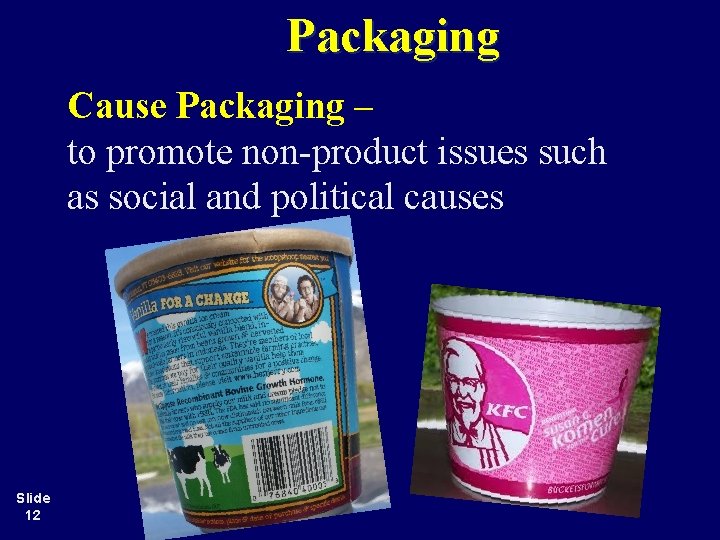
Packaging Cause Packaging – to promote non-product issues such as social and political causes Slide 12

BMI 3 C Unit 6 Slide 13
- Slides: 13