
PACEMAKER NEED FOR CARDIAC PACEMAKER Rhythmic beating of
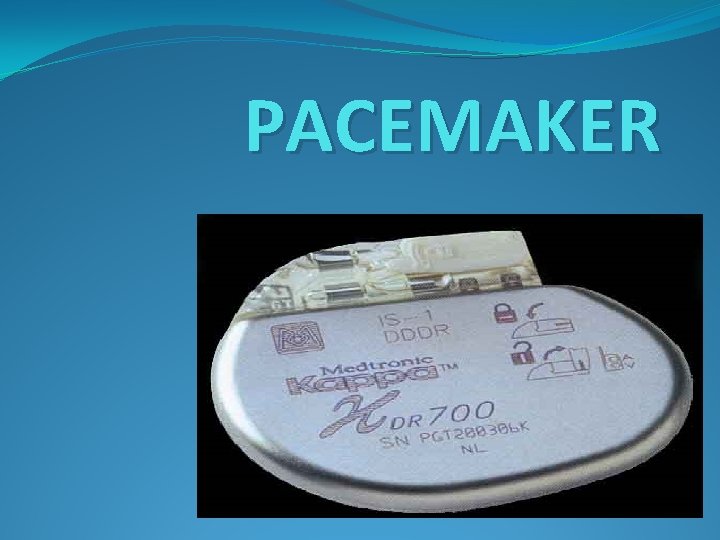
PACEMAKER
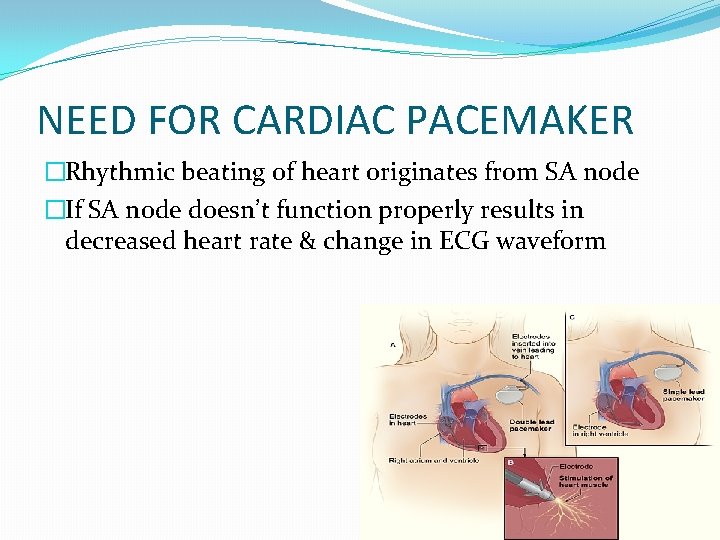
NEED FOR CARDIAC PACEMAKER �Rhythmic beating of heart originates from SA node �If SA node doesn’t function properly results in decreased heart rate & change in ECG waveform
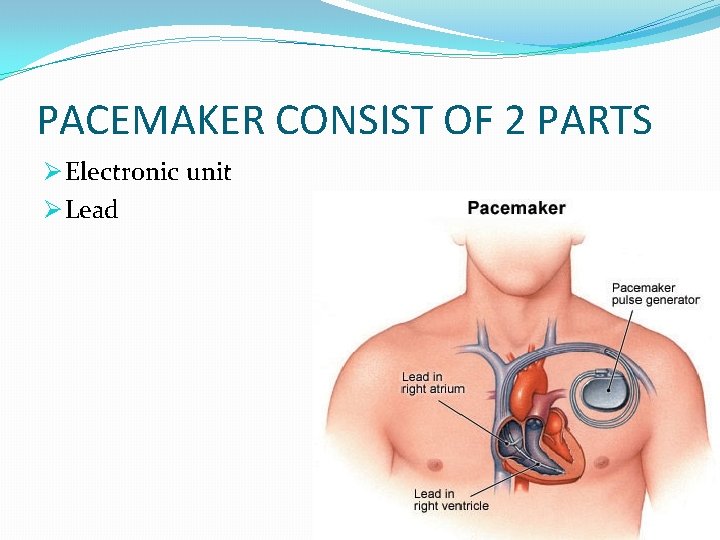
PACEMAKER CONSIST OF 2 PARTS Ø Electronic unit Ø Lead
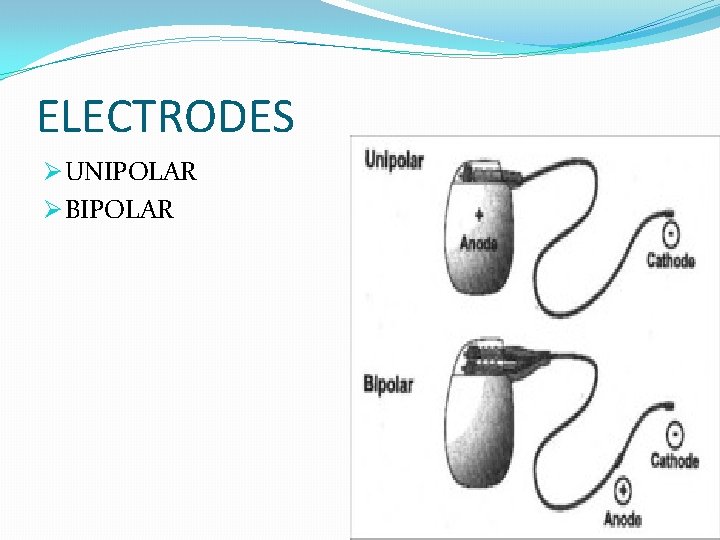
ELECTRODES Ø UNIPOLAR Ø BIPOLAR
TYPES OF PACEMAKER �EXTERNAL PACEMAKER Ø Used in cases of cardiac standstill Ø Applied through metal electrode placed on surface of body Ø It applies upto 80 m. A of pulses through 50 sq. cm electrode on chest q DISADVANTAGE Ø Requires maximum of 150 V pulses Ø Electrodes tend to burn skin Ø Electric pulses become painful Ø Each impulse causes uncomfortable contraction of thoracic muscles around the area under electrodes

�INTERNAL PACEMAKER Ø Stimulating pulses can be applied to a heart through a catheter passing through a vein & connected to heart q. ADVANTAGES Ø Pacing current required is less Ø Voltage o/p of internal PM is about 0 -15 V
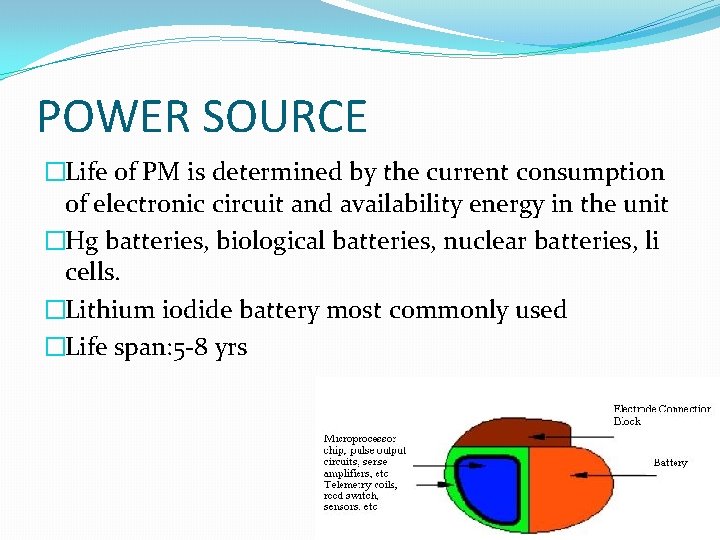
POWER SOURCE �Life of PM is determined by the current consumption of electronic circuit and availability energy in the unit �Hg batteries, biological batteries, nuclear batteries, li cells. �Lithium iodide battery most commonly used �Life span: 5 -8 yrs
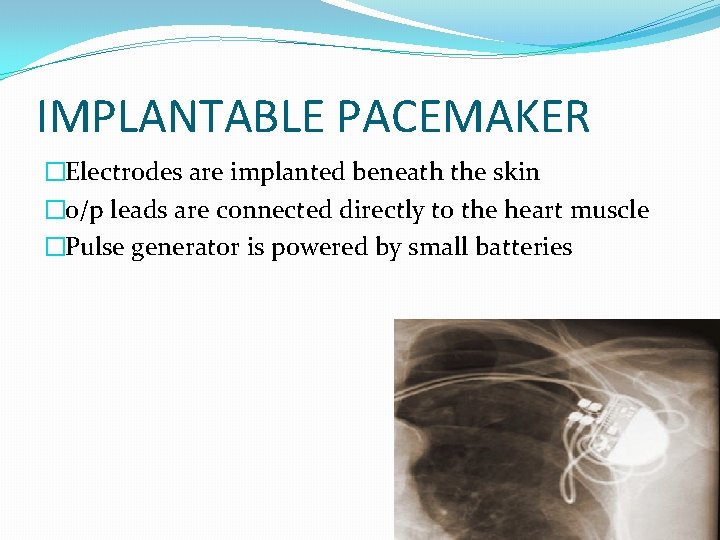
IMPLANTABLE PACEMAKER �Electrodes are implanted beneath the skin �o/p leads are connected directly to the heart muscle �Pulse generator is powered by small batteries
PACEMAKER �ASYNCHRONOUS Ø Fixed rate Ø Impulse produced at a set rate Ø No relation to patients intrinsic cardiac activity
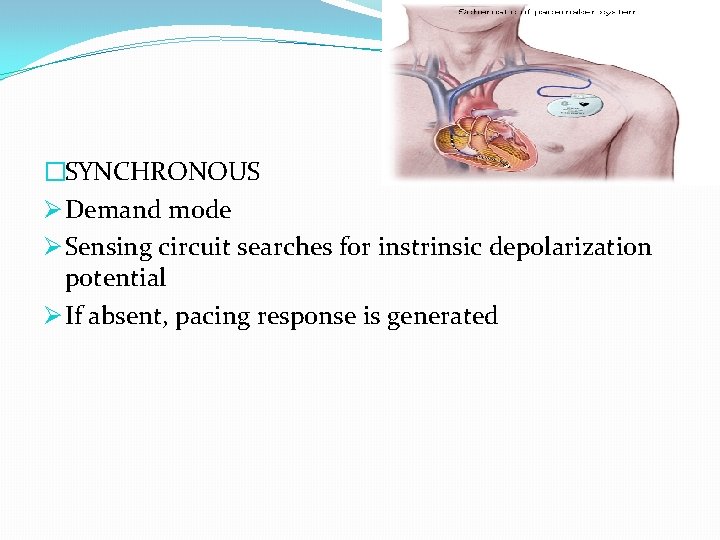
�SYNCHRONOUS Ø Demand mode Ø Sensing circuit searches for instrinsic depolarization potential Ø If absent, pacing response is generated
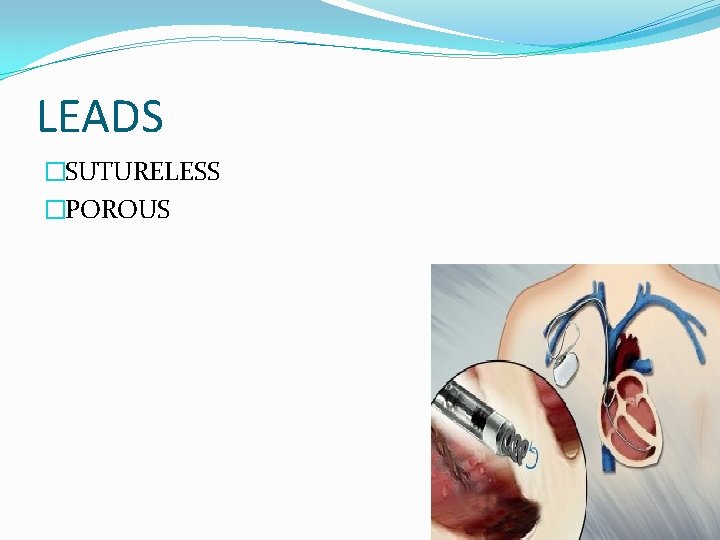
LEADS �SUTURELESS �POROUS

REFERENCES �www. google. com �Wikipedia

THANK YOU
- Slides: 13