
PACE A Foundation for Serving People with Intellectual


- Slides: 24
PACE: A Foundation for Serving People with Intellectual Disabilities? Peter Fitzgerald National PACE Association Alexandria, VA Peterf@NPAonline. org
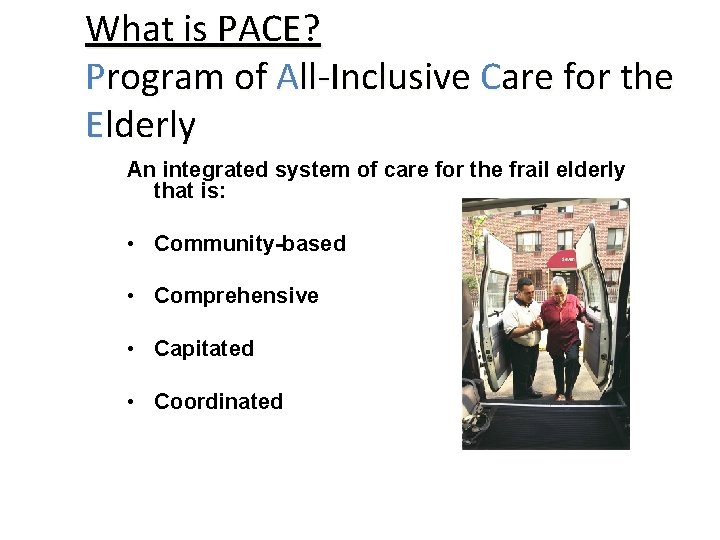
What is PACE? Program of All-Inclusive Care for the Elderly An integrated system of care for the frail elderly that is: • Community-based • Comprehensive • Capitated • Coordinated
The PACE Model: Who Does It Serve? • 55 years of age or older • Living in a PACE service area • Certified as needing nursing home level of care • Able to live safely in the community with the services of the PACE program at the time of enrollment
PACE Demographics • • Average at enrollment: 78 75 percent of enrollees are women Average length in the program 2. 5 years Most common reason for disenrollment: death
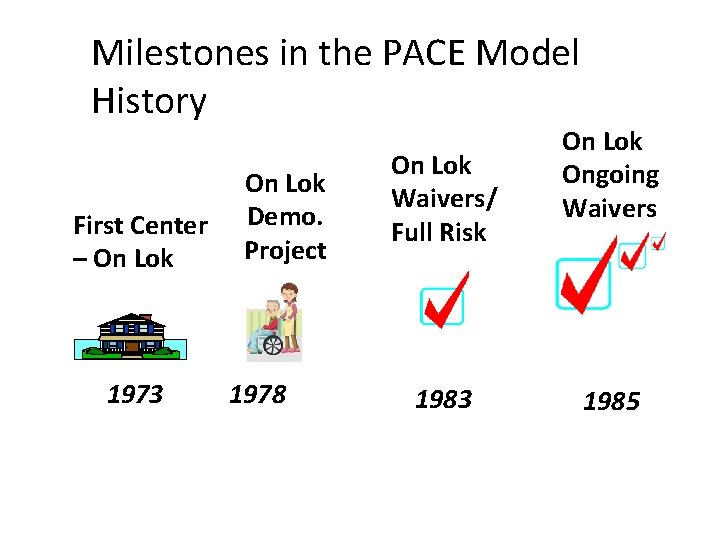
Milestones in the PACE Model History First Center – On Lok 1973 On Lok Demo. Project 1978 On Lok Waivers/ Full Risk 1983 On Lok Ongoing Waivers 1985
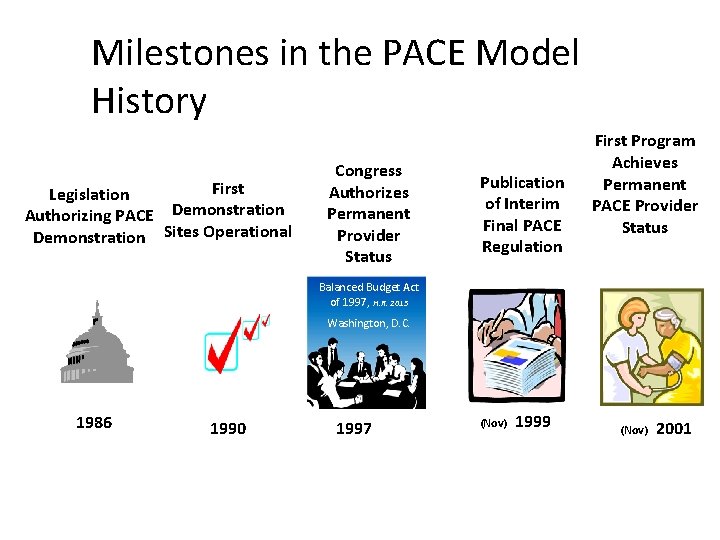
Milestones in the PACE Model History First Legislation Authorizing PACE Demonstration Sites Operational Congress Authorizes Permanent Provider Status Publication of Interim Final PACE Regulation First Program Achieves Permanent PACE Provider Status Balanced Budget Act of 1997, H. R. 2015 Washington, D. C. 1986 1990 1997 (Nov) 1999 (Nov) 2001
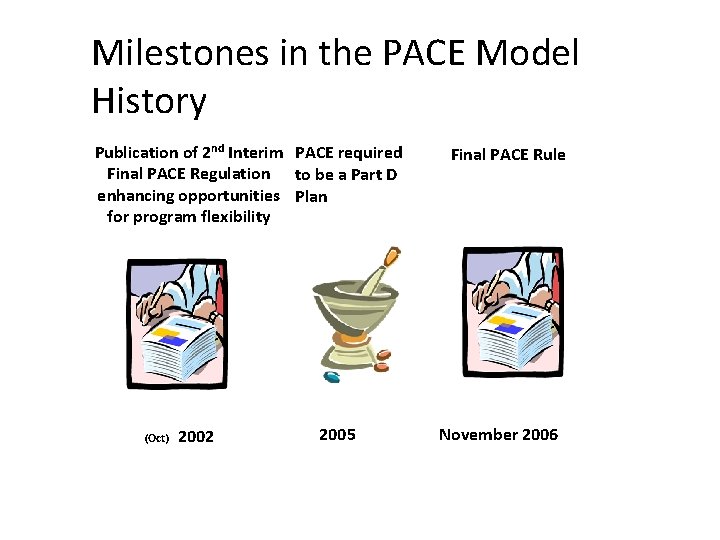
Milestones in the PACE Model History Publication of 2 nd Interim PACE required Final PACE Regulation to be a Part D enhancing opportunities Plan for program flexibility (Oct) 2002 2005 Final PACE Rule November 2006
The PACE Model Philosophy Honors what elders want • To stay in familiar surroundings • To maintain autonomy • To maintain a maximum level of physical, social, and cognitive function
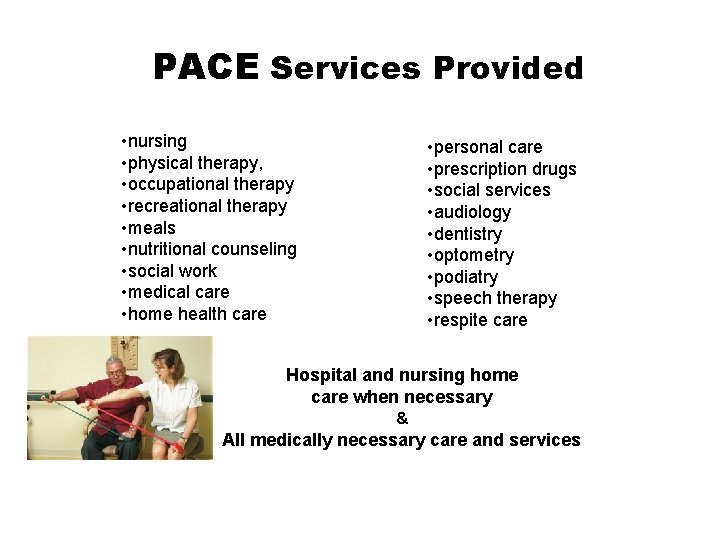
PACE Services Provided • nursing • physical therapy, • occupational therapy • recreational therapy • meals • nutritional counseling • social work • medical care • home health care • personal care • prescription drugs • social services • audiology • dentistry • optometry • podiatry • speech therapy • respite care Hospital and nursing home care when necessary & All medically necessary care and services
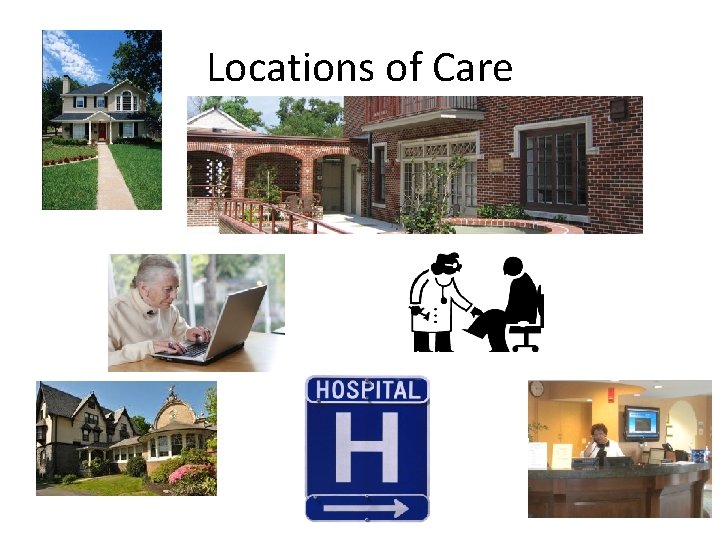
Locations of Care
PACE Provides Transportation
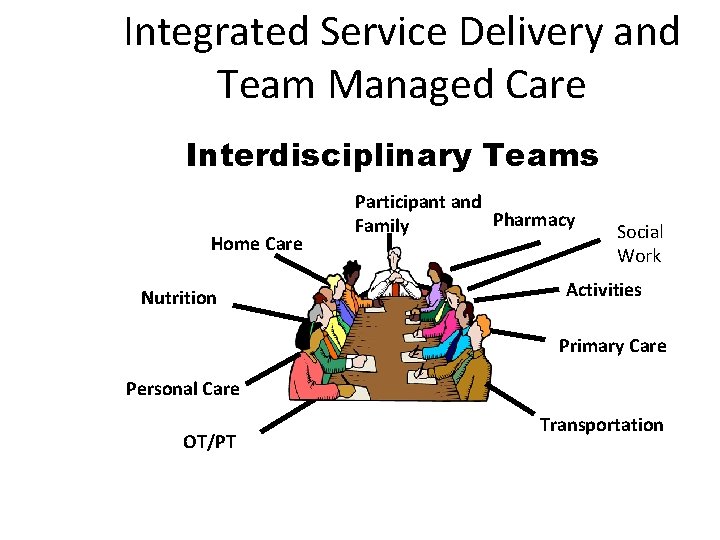
Integrated Service Delivery and Team Managed Care Interdisciplinary Teams Home Care Nutrition Participant and Pharmacy Family Social Work Activities Primary Care Personal Care OT/PT Transportation
Integrated, Team Managed Care • An interdisciplinary team of professionals with a direct care relationship to the participant • Team managed care vs. individual case manager • Continuous process of assessment, treatment planning, service provision and monitoring • Focus on prevention • Aligned quality and payment incentives – More of the right care means – Less high cost care long term needs, vs. short-term savings – Look at – No cost shifting
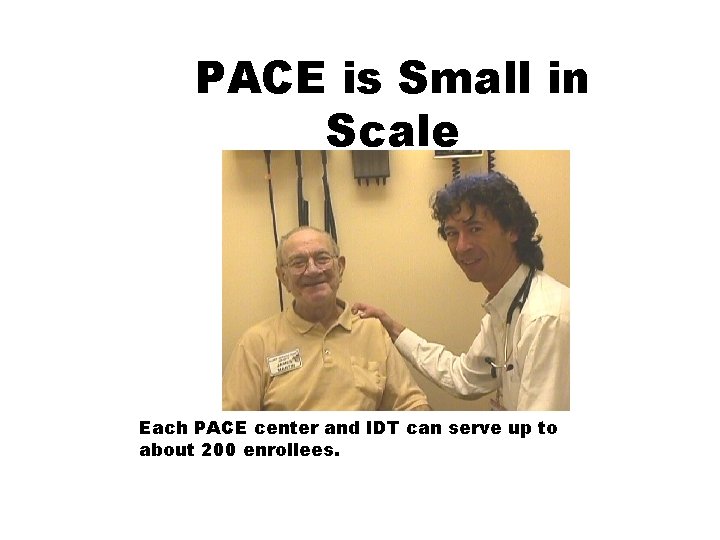
PACE is Small in Scale Each PACE center and IDT can serve up to about 200 enrollees.
Capitated, Pooled Financing • Medicare capitation rate adjusted for the diagnoses and frailty of the PACE enrollees • Integration of Medicare, Medicaid and private payments
Source of Service Revenue For Dual Eligible individuals • 2010 Mean Medicare PMPM Rate: $2063 • 2010 Median Medicaid PMPM Rate: $3258 • PACE also the Part D prescription drug plan for Medicare beneficiaries
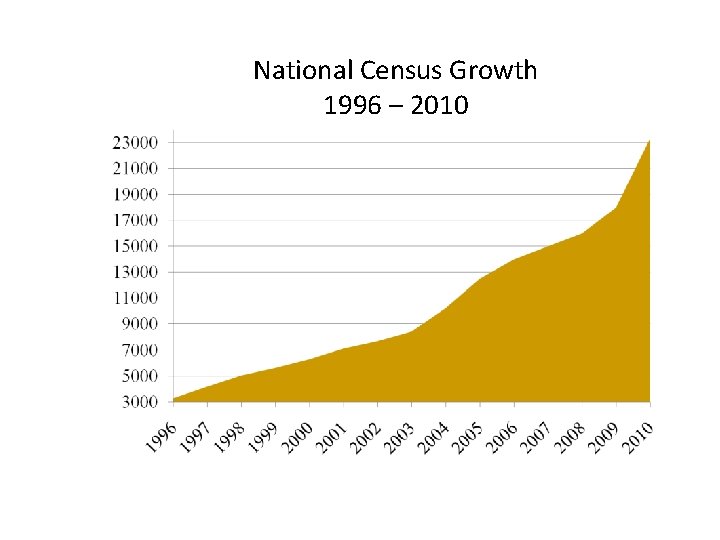
Status of PACE Development (as of October 2011) • 172 PACE centers, operated by 80 organizations, in 28 states, serving 23, 000+ • Between 2005 -2010, number doubled • Enrollment grew 20% in 2008, 13% in 2009 • 15 new programs in development “pipeline”
National Census Growth 1996 – 2010
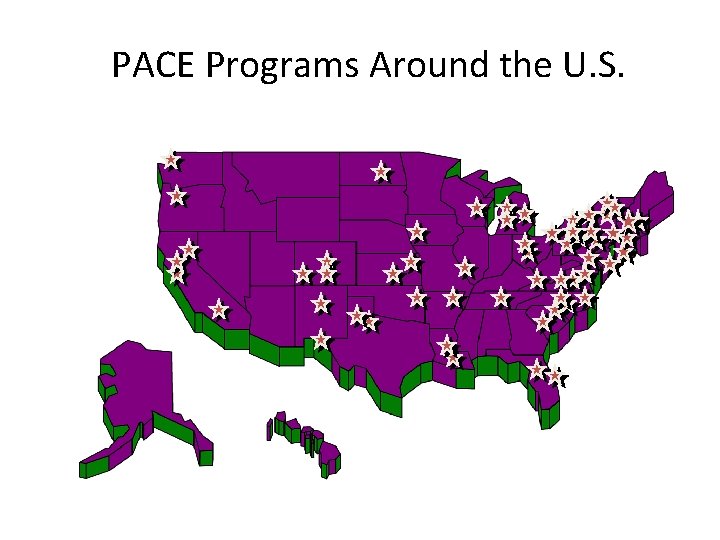
PACE Programs Around the U. S.
PACE Core Competencies ¨ Provider-based model ¨ Serves a nursing home eligible population in the community (90% +) ¨ Good care outcomes, high enrollee satisfaction and low disenrollment rates ¨ Because PACE is still unfamiliar, a well known, trusted provider has an advantage
Challenge for Providers • Begin to think in terms of People vs. Sentinel Events. • Abandon the assumption that more is better. • Understand that not all aspects of care clinically based, some require simple creativity. • Embrace the importance of a consistent care delivery system over time.
Benefits for Stakeholders Providers: Flexibility to provide the right care and services for each individual. Gov’t Payors: Predictable, lower costs. Shifts financial risk to providers. Family Caregivers: A model of care that supports their efforts. Participant: A model of care focused around their goal to live independently, in the community.
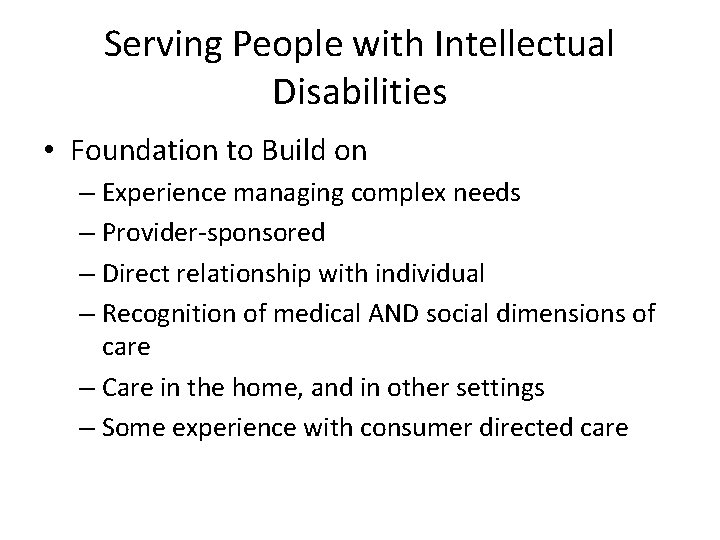
Serving People with Intellectual Disabilities • Foundation to Build on – Experience managing complex needs – Provider-sponsored – Direct relationship with individual – Recognition of medical AND social dimensions of care – Care in the home, and in other settings – Some experience with consumer directed care
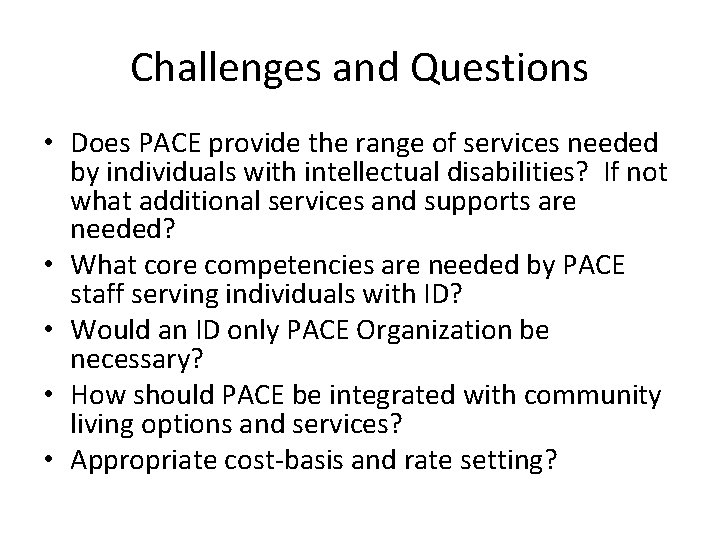
Challenges and Questions • Does PACE provide the range of services needed by individuals with intellectual disabilities? If not what additional services and supports are needed? • What core competencies are needed by PACE staff serving individuals with ID? • Would an ID only PACE Organization be necessary? • How should PACE be integrated with community living options and services? • Appropriate cost-basis and rate setting?