
Paballong The Place of Care The Kingdom of
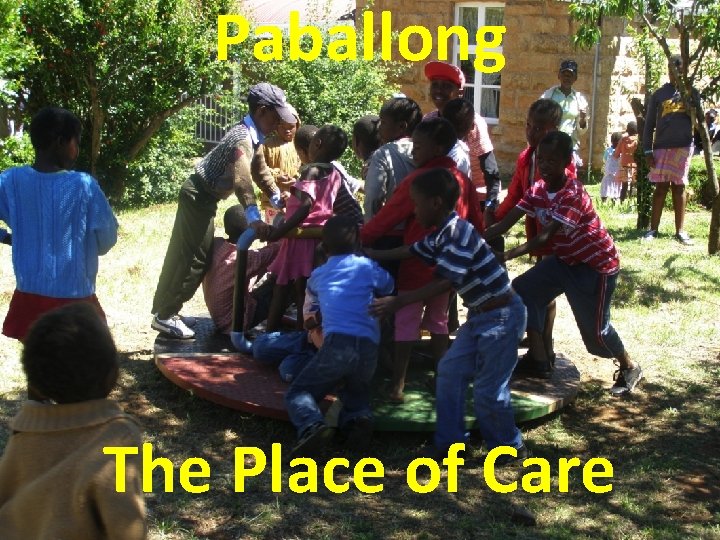
Paballong The Place of Care
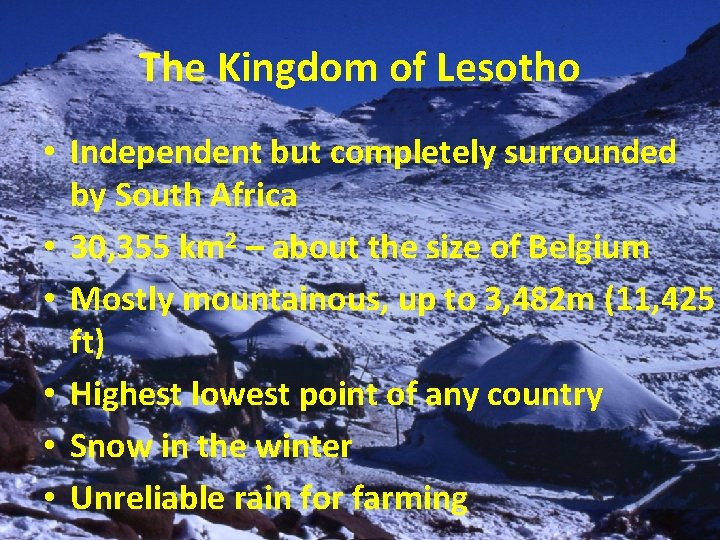
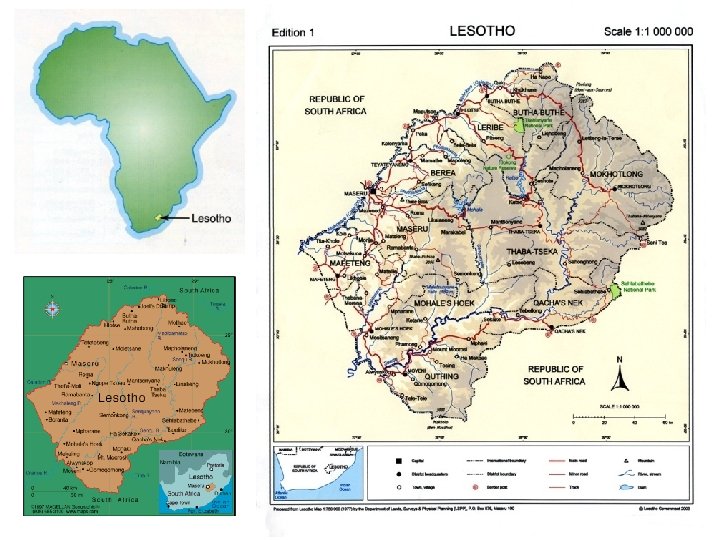
The Kingdom of Lesotho • Independent but completely surrounded by South Africa • 30, 355 km 2 – about the size of Belgium • Mostly mountainous, up to 3, 482 m (11, 425 ft) • Highest lowest point of any country • Snow in the winter • Unreliable rain for farming
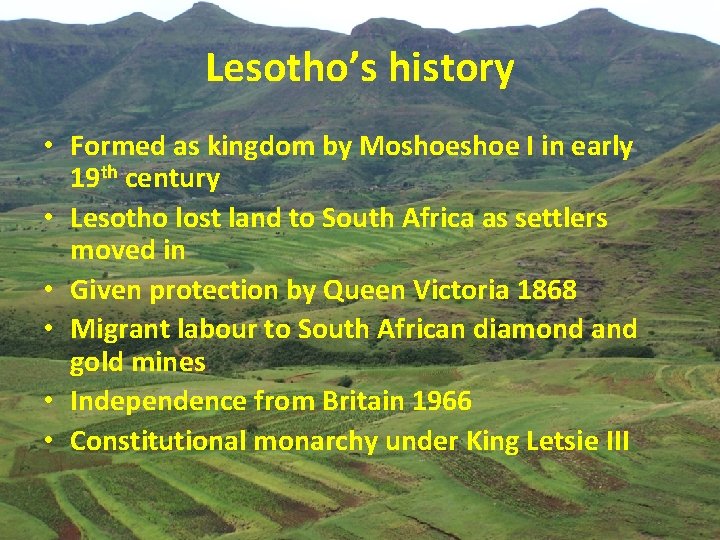
Lesotho’s history • Formed as kingdom by Moshoe I in early 19 th century • Lesotho lost land to South Africa as settlers moved in • Given protection by Queen Victoria 1868 • Migrant labour to South African diamond and gold mines • Independence from Britain 1966 • Constitutional monarchy under King Letsie III
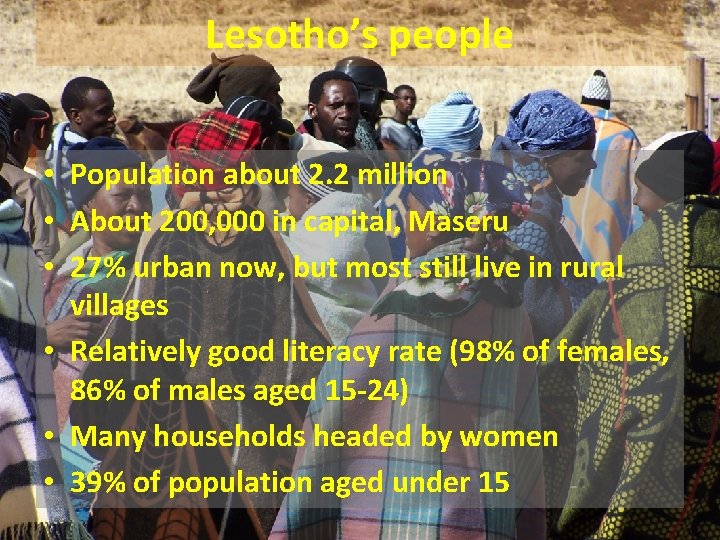
Lesotho’s people • Population about 2. 2 million • About 200, 000 in capital, Maseru • 27% urban now, but most still live in rural villages • Relatively good literacy rate (98% of females, 86% of males aged 15 -24) • Many households headed by women • 39% of population aged under 15
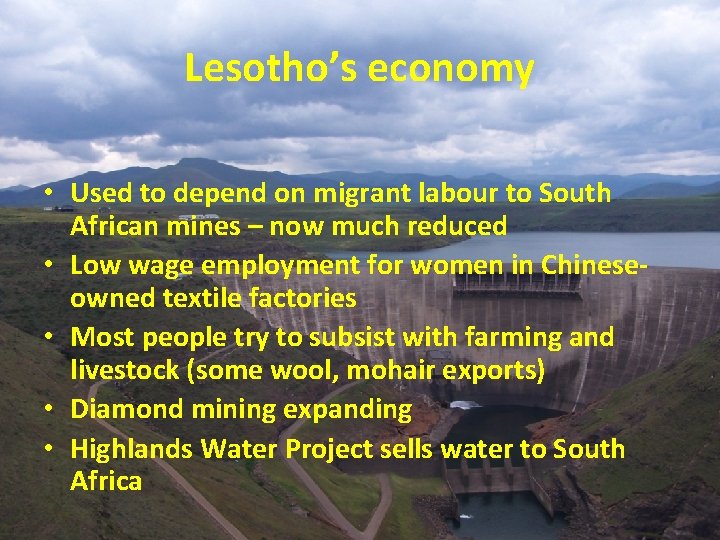
Lesotho’s economy • Used to depend on migrant labour to South African mines – now much reduced • Low wage employment for women in Chineseowned textile factories • Most people try to subsist with farming and livestock (some wool, mohair exports) • Diamond mining expanding • Highlands Water Project sells water to South Africa
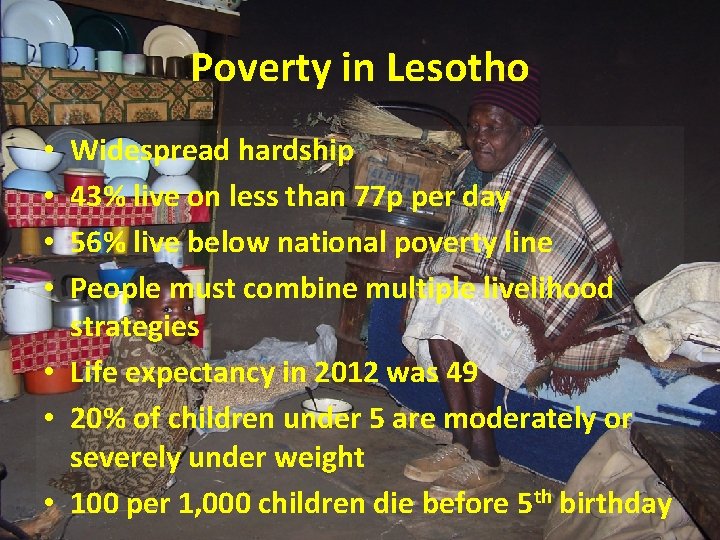
Poverty in Lesotho Widespread hardship 43% live on less than 77 p per day 56% live below national poverty line People must combine multiple livelihood strategies • Life expectancy in 2012 was 49 • 20% of children under 5 are moderately or severely under weight • 100 per 1, 000 children die before 5 th birthday • •
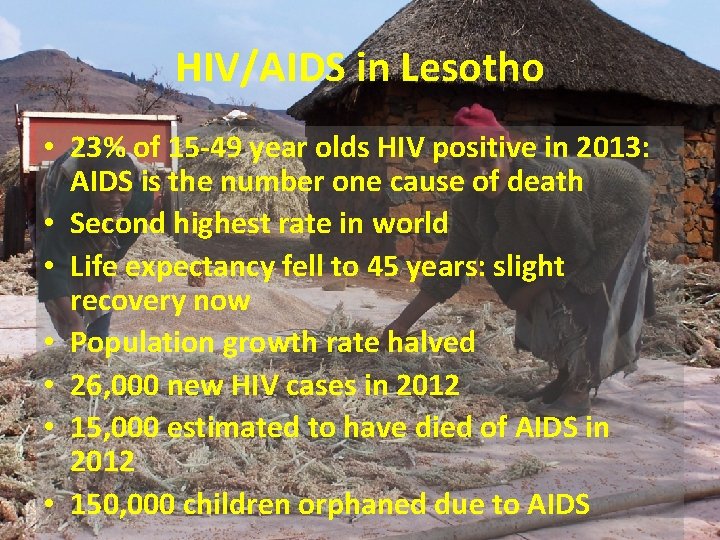
HIV/AIDS in Lesotho • 23% of 15 -49 year olds HIV positive in 2013: AIDS is the number one cause of death • Second highest rate in world • Life expectancy fell to 45 years: slight recovery now • Population growth rate halved • 26, 000 new HIV cases in 2012 • 15, 000 estimated to have died of AIDS in 2012 • 150, 000 children orphaned due to AIDS
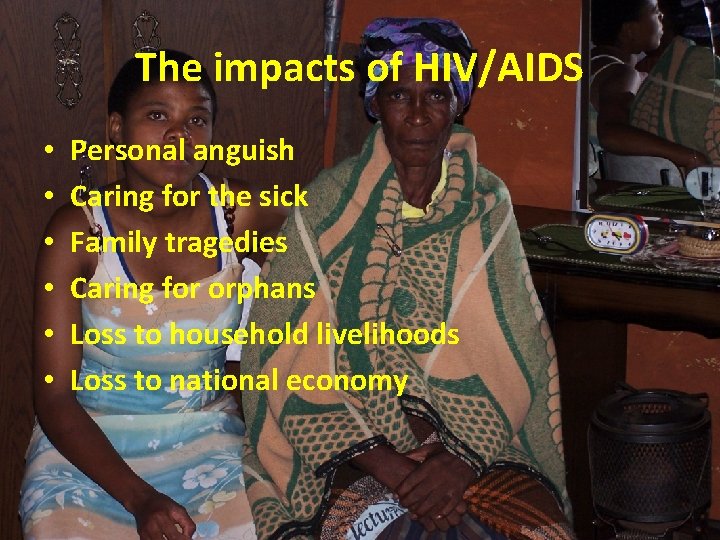
The impacts of HIV/AIDS • • • Personal anguish Caring for the sick Family tragedies Caring for orphans Loss to household livelihoods Loss to national economy
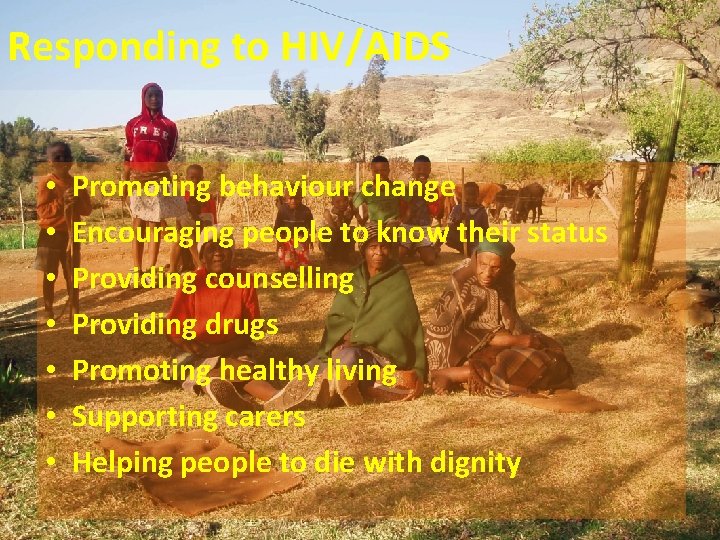
Responding to HIV/AIDS • • Promoting behaviour change Encouraging people to know their status Providing counselling Providing drugs Promoting healthy living Supporting carers Helping people to die with dignity
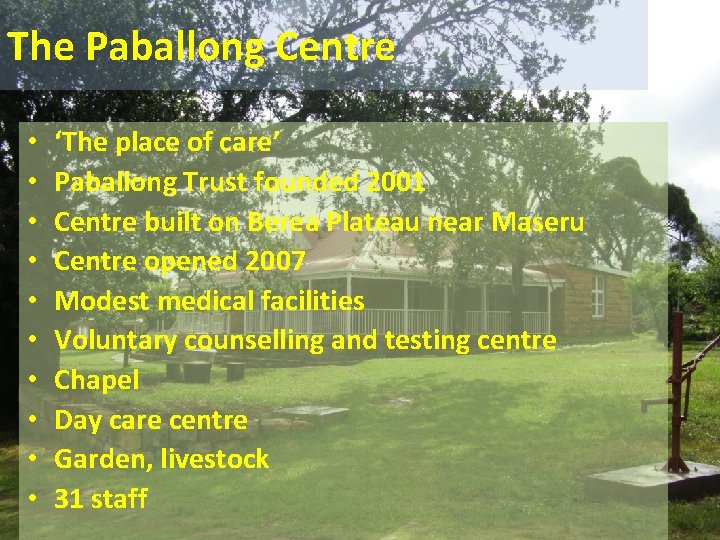
The Paballong Centre • • • ‘The place of care’ Paballong Trust founded 2001 Centre built on Berea Plateau near Maseru Centre opened 2007 Modest medical facilities Voluntary counselling and testing centre Chapel Day care centre Garden, livestock 31 staff
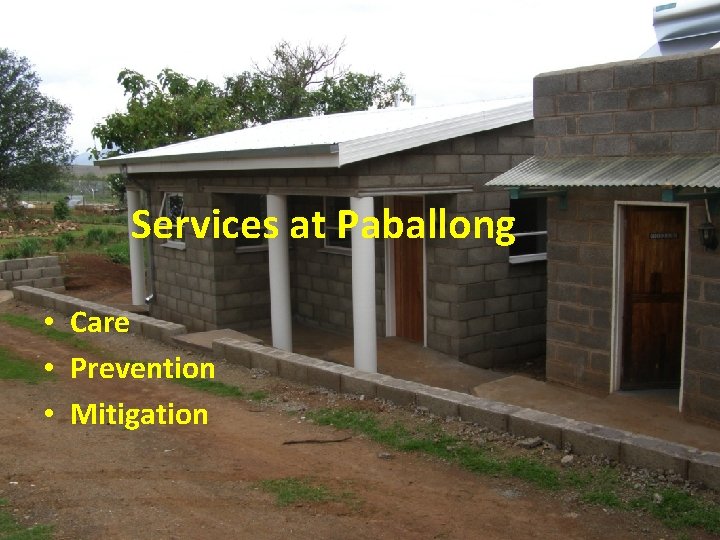
Services at Paballong • Care • Prevention • Mitigation
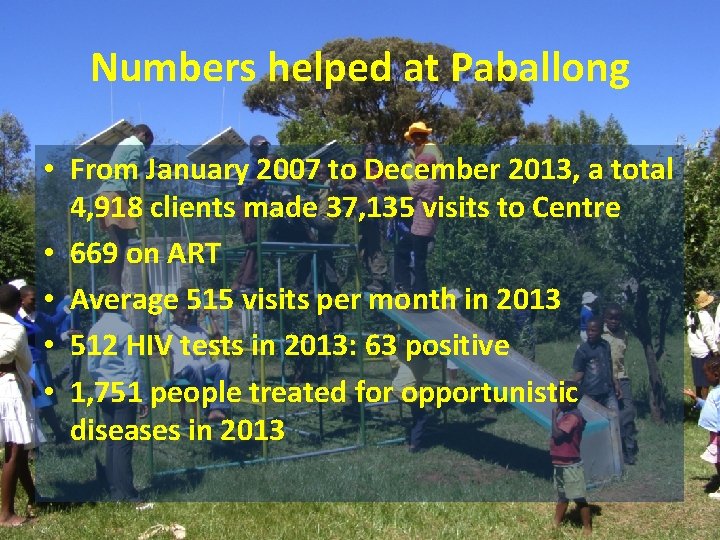
Numbers helped at Paballong • From January 2007 to December 2013, a total 4, 918 clients made 37, 135 visits to Centre • 669 on ART • Average 515 visits per month in 2013 • 512 HIV tests in 2013: 63 positive • 1, 751 people treated for opportunistic diseases in 2013
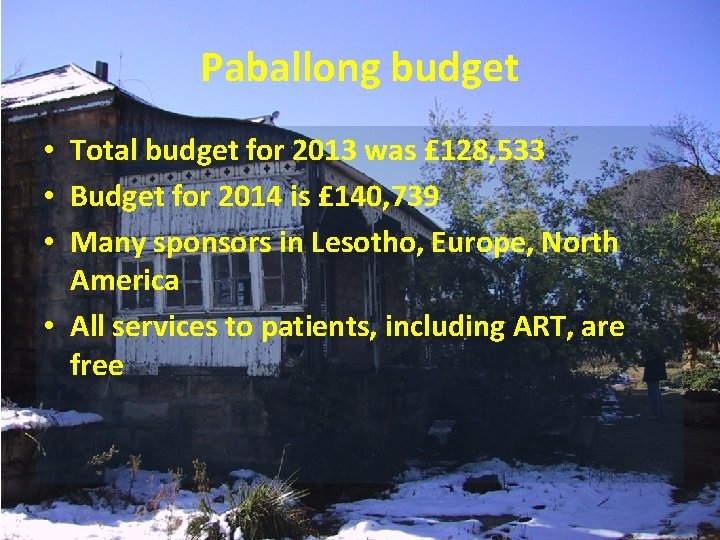
Paballong budget • Total budget for 2013 was £ 128, 533 • Budget for 2014 is £ 140, 739 • Many sponsors in Lesotho, Europe, North America • All services to patients, including ART, are free
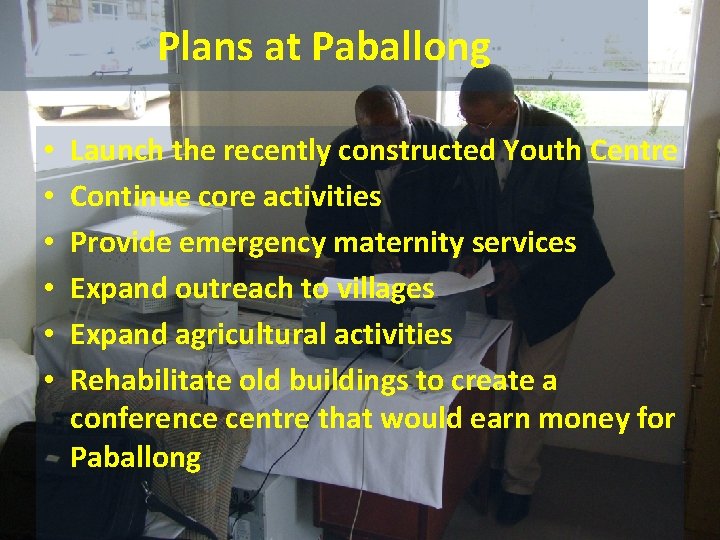
Plans at Paballong • • • Launch the recently constructed Youth Centre Continue core activities Provide emergency maternity services Expand outreach to villages Expand agricultural activities Rehabilitate old buildings to create a conference centre that would earn money for Paballong
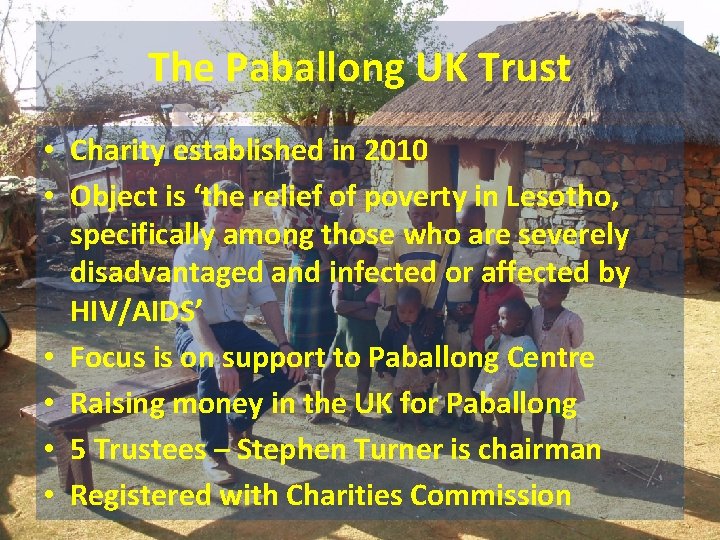
The Paballong UK Trust • Charity established in 2010 • Object is ‘the relief of poverty in Lesotho, specifically among those who are severely disadvantaged and infected or affected by HIV/AIDS’ • Focus is on support to Paballong Centre • Raising money in the UK for Paballong • 5 Trustees – Stephen Turner is chairman • Registered with Charities Commission
For more information • • www. paballong. org. uk www. paballong. roxer. com paballonguk@gmail. com 0771 311 3934
Thank you!
- Slides: 18