
PA Dutch 101 Video 25 The Dative Case
- Slides: 13
PA Dutch 101 Video 25: The Dative Case. Dativ.
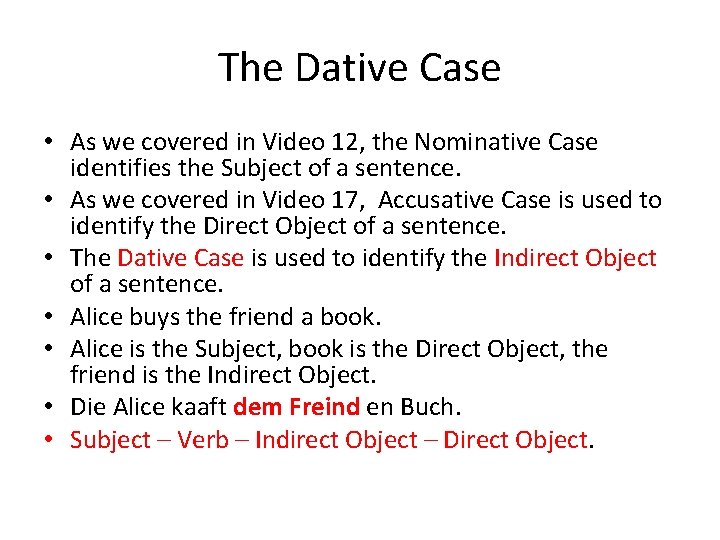
The Dative Case • As we covered in Video 12, the Nominative Case identifies the Subject of a sentence. • As we covered in Video 17, Accusative Case is used to identify the Direct Object of a sentence. • The Dative Case is used to identify the Indirect Object of a sentence. • Alice buys the friend a book. • Alice is the Subject, book is the Direct Object, the friend is the Indirect Object. • Die Alice kaaft dem Freind en Buch. • Subject – Verb – Indirect Object – Direct Object.
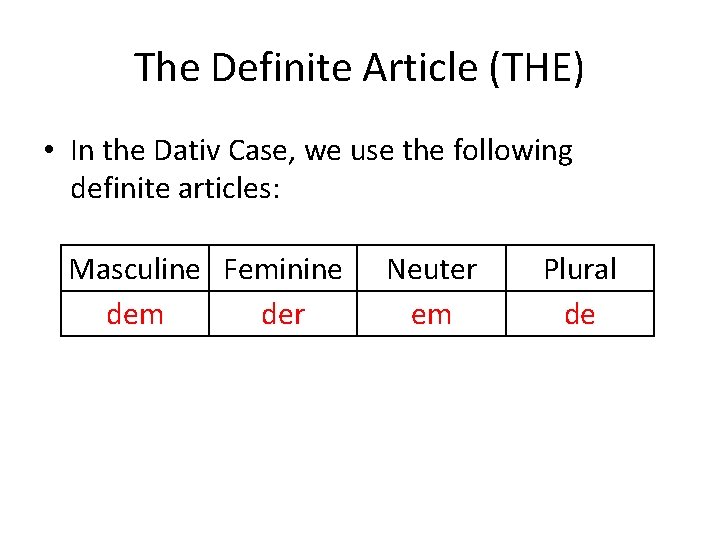
The Definite Article (THE) • In the Dativ Case, we use the following definite articles: Masculine Feminine dem der Neuter em Plural de
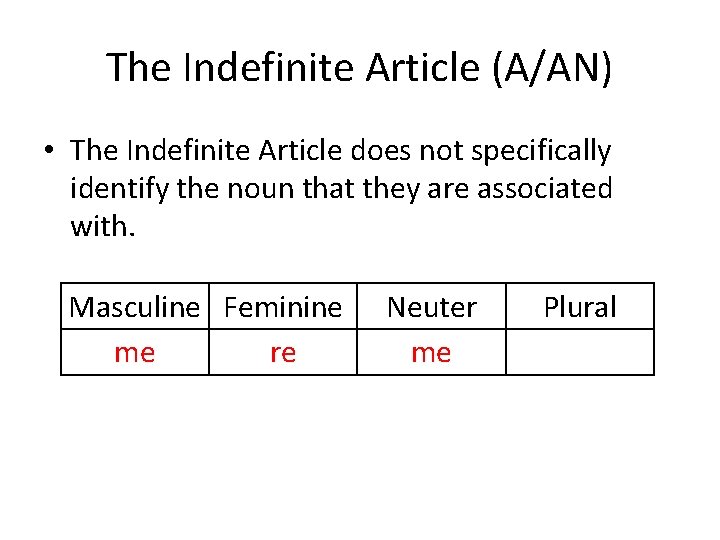
The Indefinite Article (A/AN) • The Indefinite Article does not specifically identify the noun that they are associated with. Masculine Feminine me re Neuter me Plural
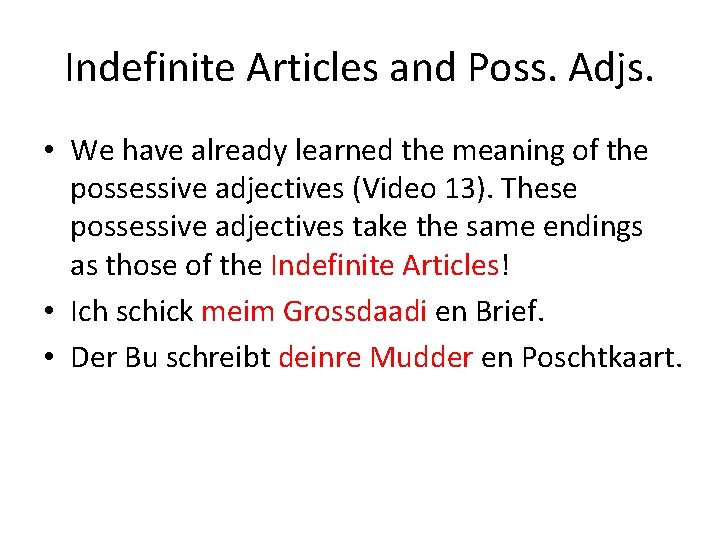
Indefinite Articles and Poss. Adjs. • We have already learned the meaning of the possessive adjectives (Video 13). These possessive adjectives take the same endings as those of the Indefinite Articles! • Ich schick meim Grossdaadi en Brief. • Der Bu schreibt deinre Mudder en Poschtkaart.
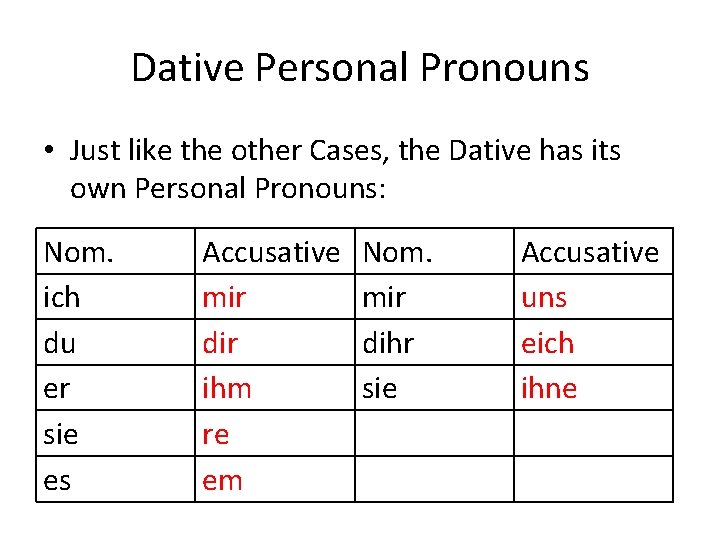
Dative Personal Pronouns • Just like the other Cases, the Dative has its own Personal Pronouns: Nom. ich du er sie es Accusative mir dir ihm re em Nom. mir dihr sie Accusative uns eich ihne
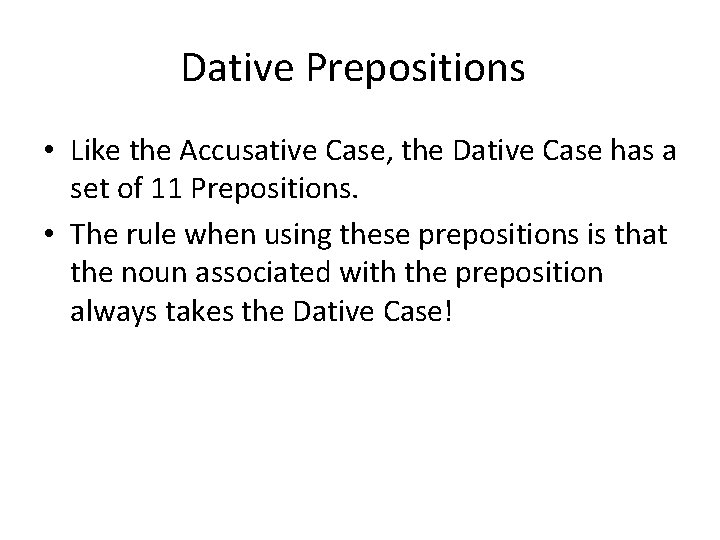
Dative Prepositions • Like the Accusative Case, the Dative Case has a set of 11 Prepositions. • The rule when using these prepositions is that the noun associated with the preposition always takes the Dative Case!
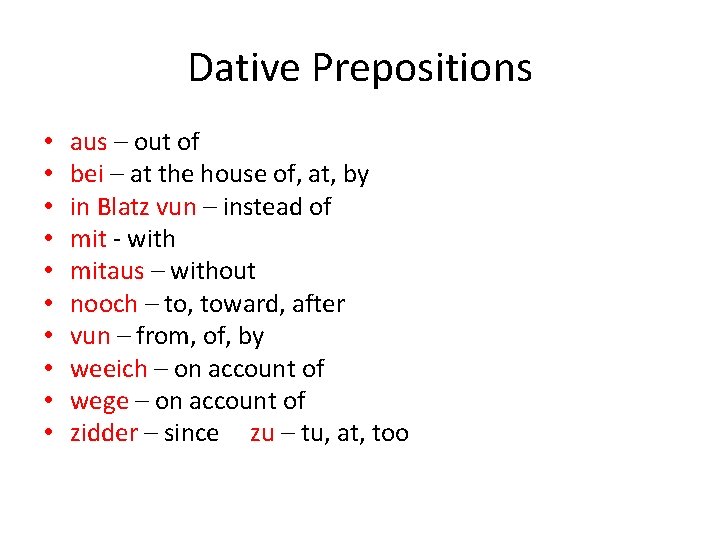
Dative Prepositions • • • aus – out of bei – at the house of, at, by in Blatz vun – instead of mit - with mitaus – without nooch – to, toward, after vun – from, of, by weeich – on account of wege – on account of zidder – since zu – tu, at, too
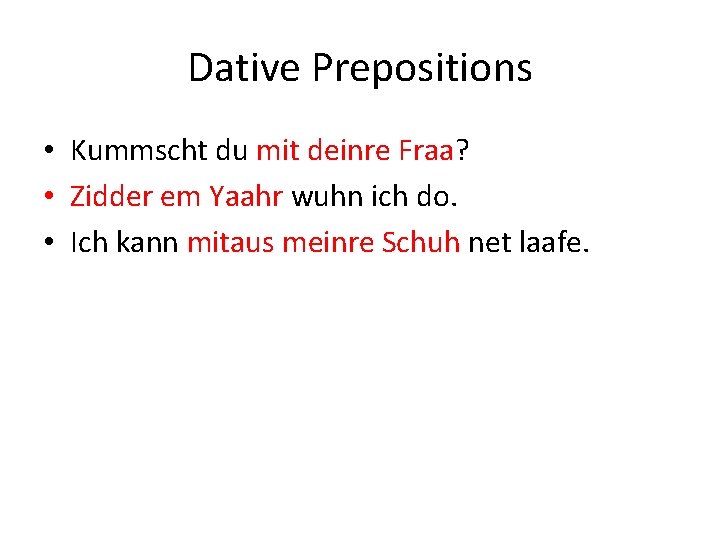
Dative Prepositions • Kummscht du mit deinre Fraa? • Zidder em Yaahr wuhn ich do. • Ich kann mitaus meinre Schuh net laafe.
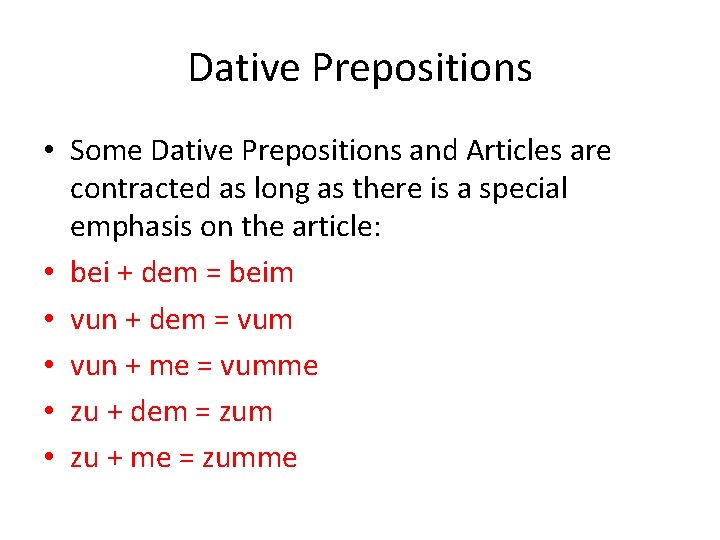
Dative Prepositions • Some Dative Prepositions and Articles are contracted as long as there is a special emphasis on the article: • bei + dem = beim • vun + dem = vum • vun + me = vumme • zu + dem = zum • zu + me = zumme
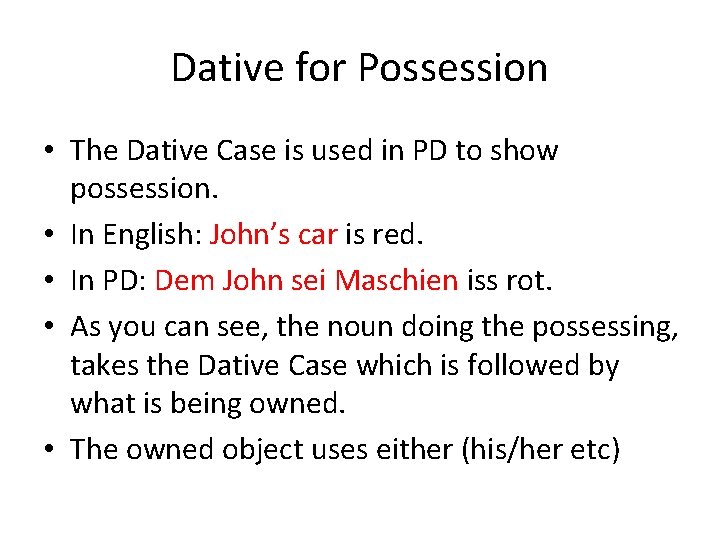
Dative for Possession • The Dative Case is used in PD to show possession. • In English: John’s car is red. • In PD: Dem John sei Maschien iss rot. • As you can see, the noun doing the possessing, takes the Dative Case which is followed by what is being owned. • The owned object uses either (his/her etc)
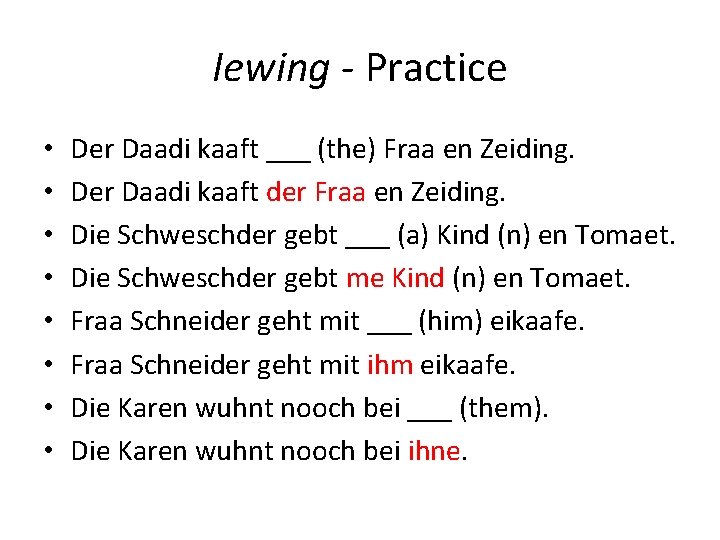
Iewing - Practice • • Der Daadi kaaft ___ (the) Fraa en Zeiding. Der Daadi kaaft der Fraa en Zeiding. Die Schweschder gebt ___ (a) Kind (n) en Tomaet. Die Schweschder gebt me Kind (n) en Tomaet. Fraa Schneider geht mit ___ (him) eikaafe. Fraa Schneider geht mit ihm eikaafe. Die Karen wuhnt nooch bei ___ (them). Die Karen wuhnt nooch bei ihne.
Bis die naegschde Video, Macht’s gut un schwetzt Deitsch! E-Poscht schreiwe: busterpa@yahoo. com