
P Sci Unit 1 Introduction Chapter 1 What
- Slides: 25
P. Sci. Unit 1 Introduction Chapter 1
What is Science? n. Generally scientists believe that the universe can be described by basic rules and these rules can be discovered by careful, methodical study.
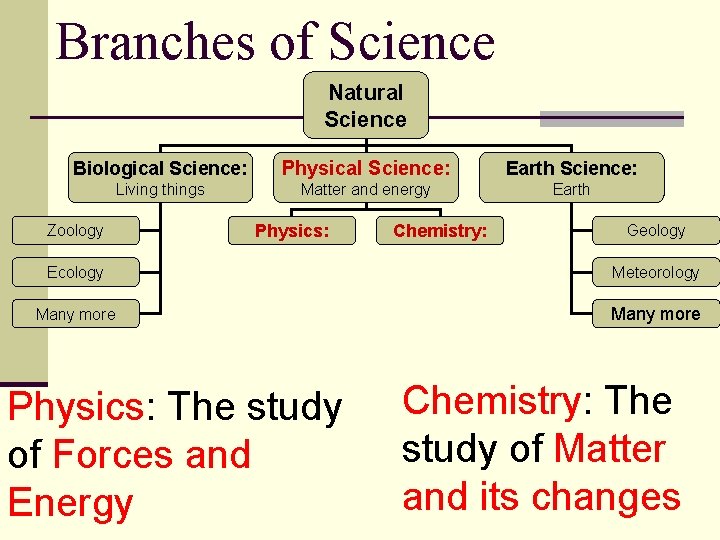
Branches of Science Natural Science Biological Science: Physical Science: Earth Science: Living things Matter and energy Earth Zoology Physics: Chemistry: Geology Ecology Meteorology Many more Physics: The study of Forces and Energy Chemistry: The study of Matter and its changes
Pure Science vs Technology n. Pure Science - Scientists who do experiments to learn more about the world. n. Technology – the application of science (usually by engineers who look for ways to use the science)
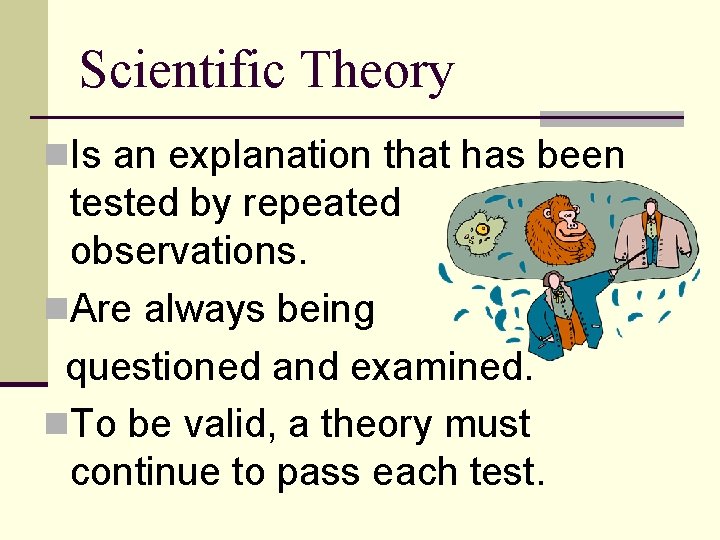
Scientific Theory n. Is an explanation that has been tested by repeated observations. n. Are always being questioned and examined. n. To be valid, a theory must continue to pass each test.
Scientific Theory (cont. ) n. A theory must explain observations simply and clearly. n. Experiments that illustrate theory must be repeatable. n. You must be able to predict from theory
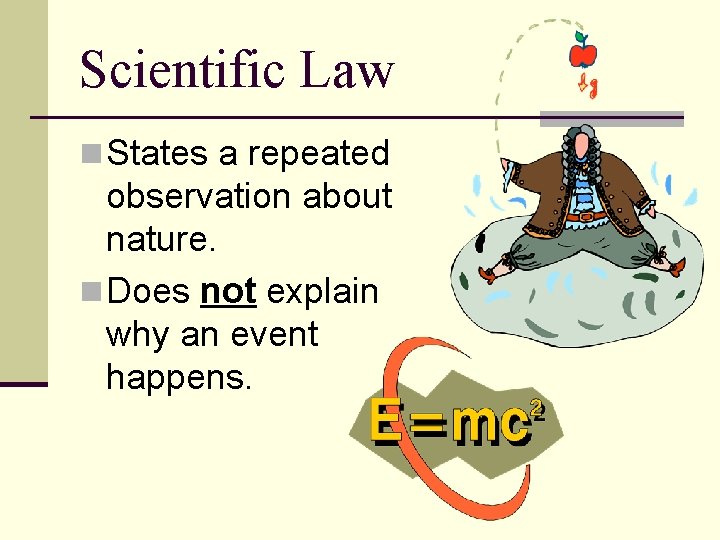
Scientific Law n States a repeated observation about nature. n Does not explain why an event happens.
Theories and Laws are not absolute n. Sometimes theories or Laws have to be changed or replaced completely when new discoveries are made.
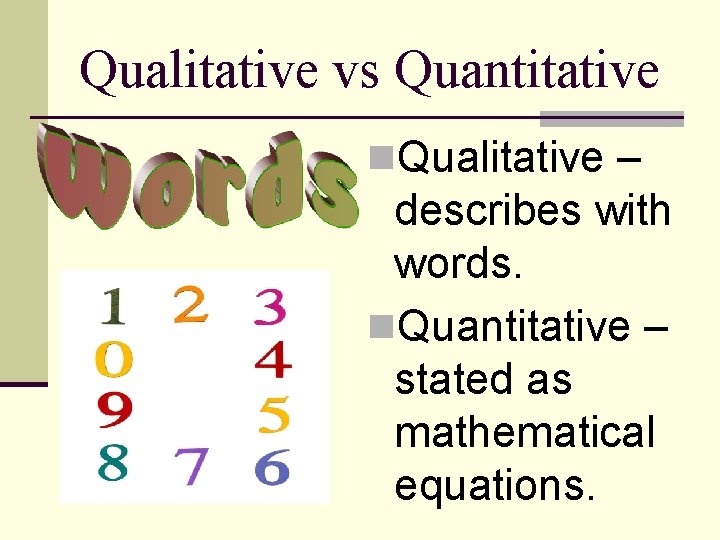
Qualitative vs Quantitative n. Qualitative – describes with words. n. Quantitative – stated as mathematical equations.
Science Skills n. Planning Experiments n. Critical thinking (logical) n. Recording Observations n. Reporting Data
Scientific Method a way to organize your thinking about questions n. Begins with an observation that leads to a question. n. Form a hypothesis – a possible answer that you can test.
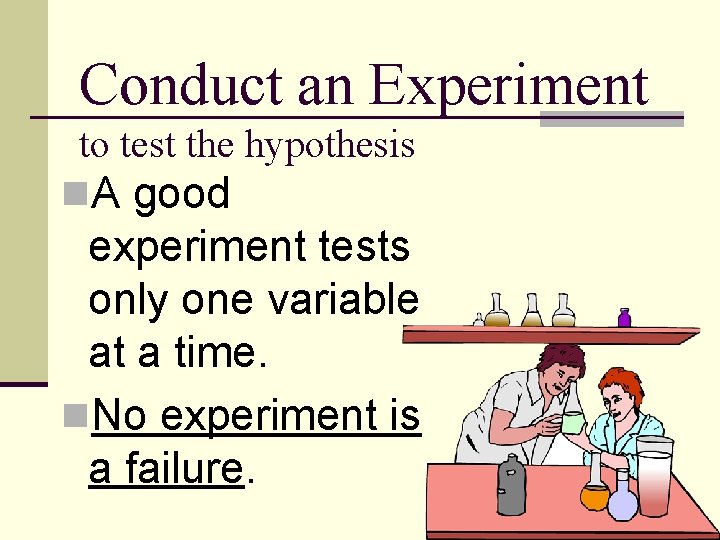
Conduct an Experiment to test the hypothesis n. A good experiment tests only one variable at a time. n. No experiment is a failure.
Variables Variable – anything that can change in an experiment n. Independent variable – what you change. (manipulated) n. Dependent variable – what changes because of the independent variable. (responding)
Graphs n. A way of organizing and presenting data. n. Makes relationships more evident.
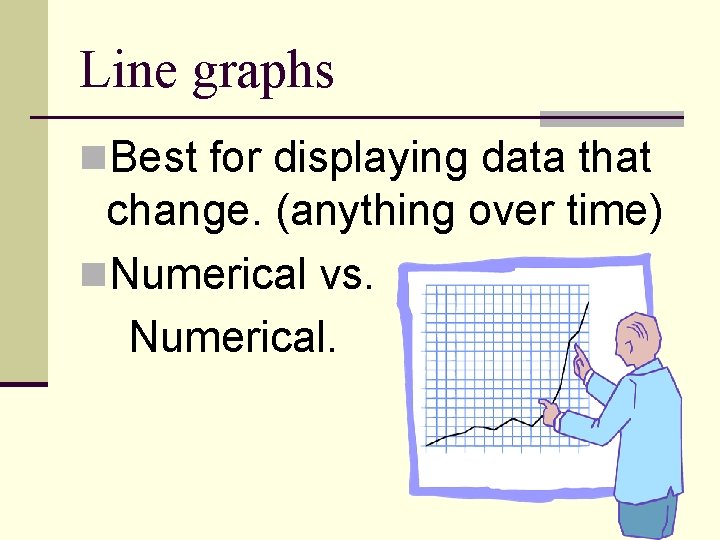
Line graphs n. Best for displaying data that change. (anything over time) n. Numerical vs. Numerical.
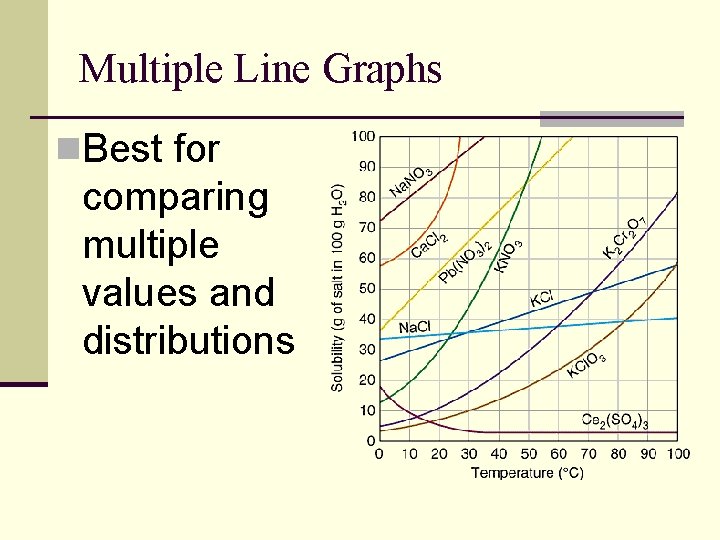
Multiple Line Graphs n. Best for comparing multiple values and distributions
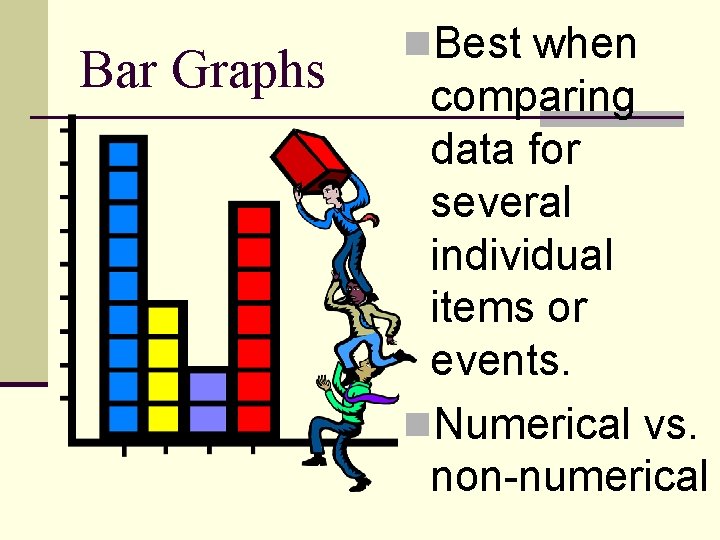
Bar Graphs n. Best when comparing data for several individual items or events. n. Numerical vs. non-numerical
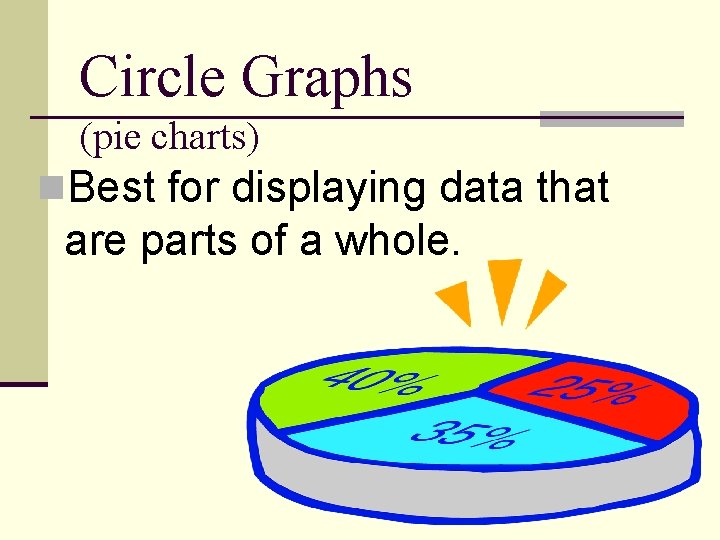
Circle Graphs (pie charts) n. Best for displaying data that are parts of a whole.
Units of Measurement n. Scientists use the International System of Units (SI units) for measurements. n. When everyone uses the same units, sharing data and results is easier – less mistakes.
Base Units n. The official SI units to measure: n. Length = meter n. Volume = liter n. Mass = gram n. Time = seconds n. Temperature = Kelvin
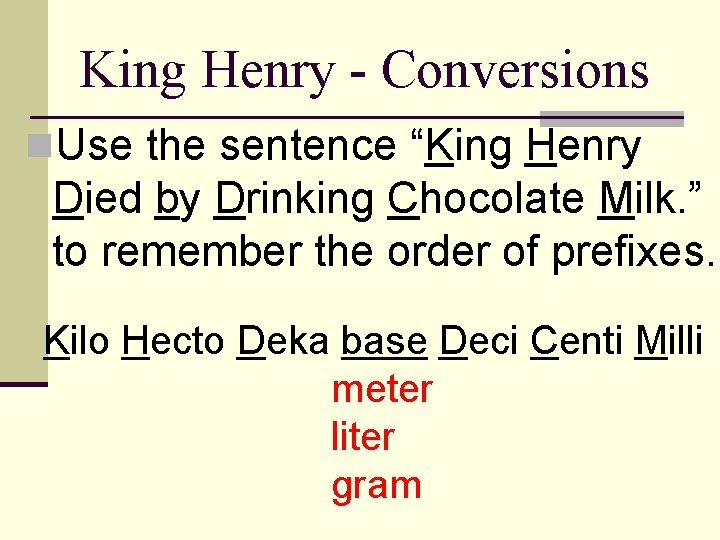
King Henry - Conversions n. Use the sentence “King Henry Died by Drinking Chocolate Milk. ” to remember the order of prefixes. Kilo Hecto Deka base Deci Centi Milli meter liter gram
Scientific Notation n. When writing very large or very small numbers, scientists use a kind of shorthand called scientific notation. n. This is a way of writing a number without so many zeros.
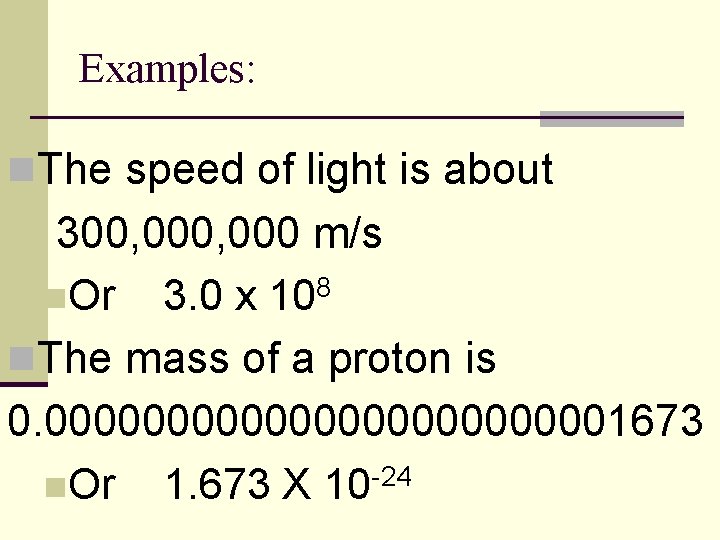
Examples: n. The speed of light is about 300, 000 m/s n. Or 3. 0 x 108 n. The mass of a proton is 0. 0000000000001673 n. Or 1. 673 X 10 -24
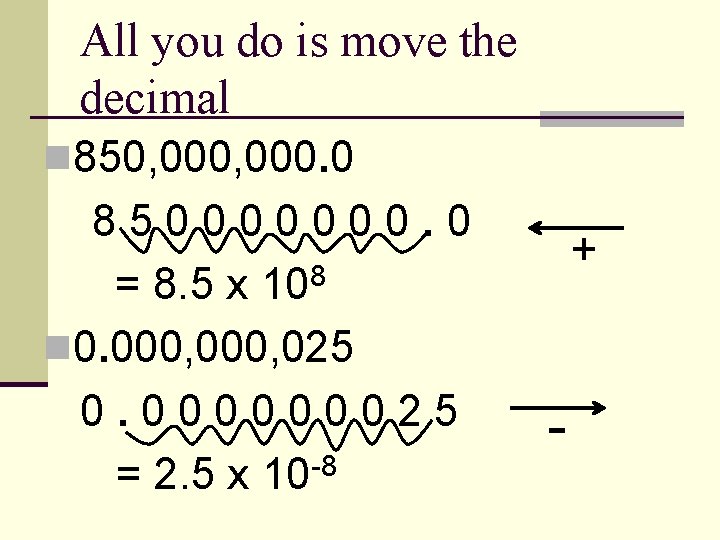
All you do is move the decimal n 850, 000. 0 850000000. 0 = 8. 5 x 10⁸ n 0. 000, 025 0. 000000025 -8 = 2. 5 x 10 + -