
Ozone Generation with a Flexible SolidState Marx Generator
Ozone Generation with a Flexible Solid-State Marx Generator J. J. van Oorschot 1 T. Huiskamp 1 M. Pereira 2 L. M. Redondo 3 1 Eindhoven University of Technology 2 Energy Pulse Systems 3 Instituto Superior de Engenharia de Lisboa
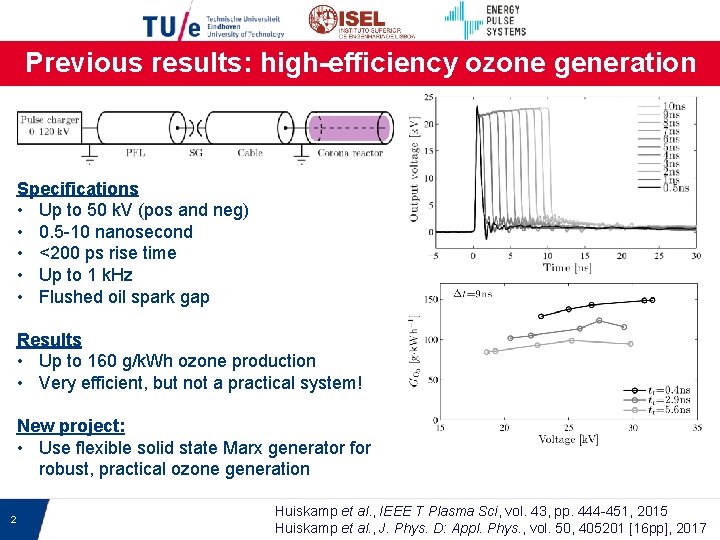
Previous results: high-efficiency ozone generation Specifications • Up to 50 k. V (pos and neg) • 0. 5 -10 nanosecond • <200 ps rise time • Up to 1 k. Hz • Flushed oil spark gap Results • Up to 160 g/k. Wh ozone production • Very efficient, but not a practical system! New project: • Use flexible solid state Marx generator for robust, practical ozone generation 2 Huiskamp et al. , IEEE T Plasma Sci, vol. 43, pp. 444 -451, 2015 Huiskamp et al. , J. Phys. D: Appl. Phys. , vol. 50, 405201 [16 pp], 2017
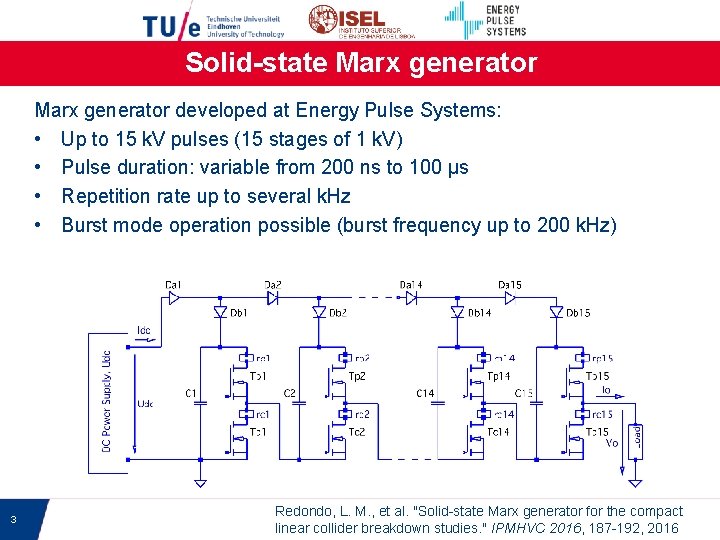
Solid-state Marx generator developed at Energy Pulse Systems: • Up to 15 k. V pulses (15 stages of 1 k. V) • Pulse duration: variable from 200 ns to 100 µs • Repetition rate up to several k. Hz • Burst mode operation possible (burst frequency up to 200 k. Hz) 3 Redondo, L. M. , et al. "Solid-state Marx generator for the compact linear collider breakdown studies. " IPMHVC 2016, 187 -192, 2016
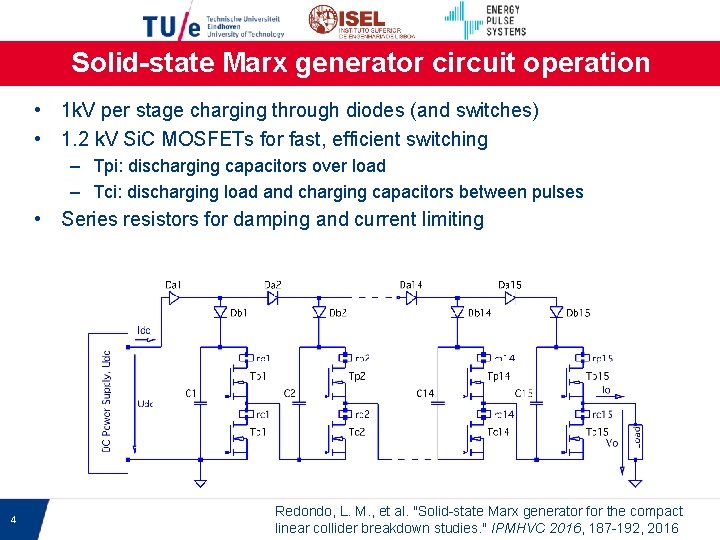
Solid-state Marx generator circuit operation • 1 k. V per stage charging through diodes (and switches) • 1. 2 k. V Si. C MOSFETs for fast, efficient switching – Tpi: discharging capacitors over load – Tci: discharging load and charging capacitors between pulses • Series resistors for damping and current limiting 4 Redondo, L. M. , et al. "Solid-state Marx generator for the compact linear collider breakdown studies. " IPMHVC 2016, 187 -192, 2016
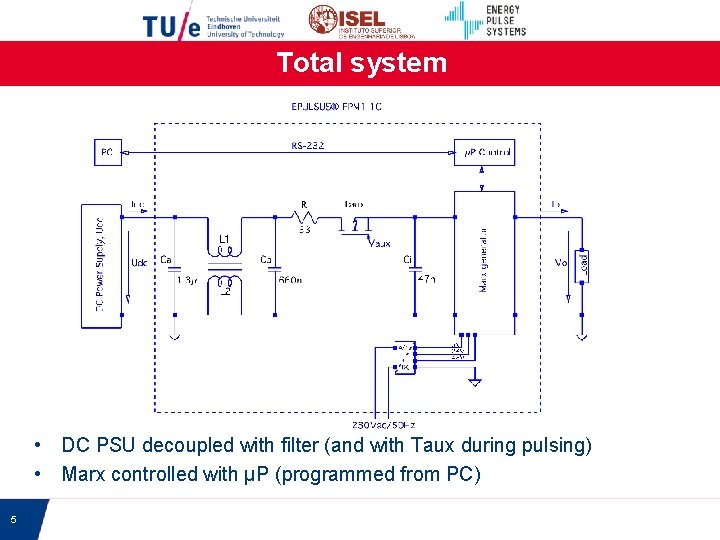
Total system • DC PSU decoupled with filter (and with Taux during pulsing) • Marx controlled with µP (programmed from PC) 5
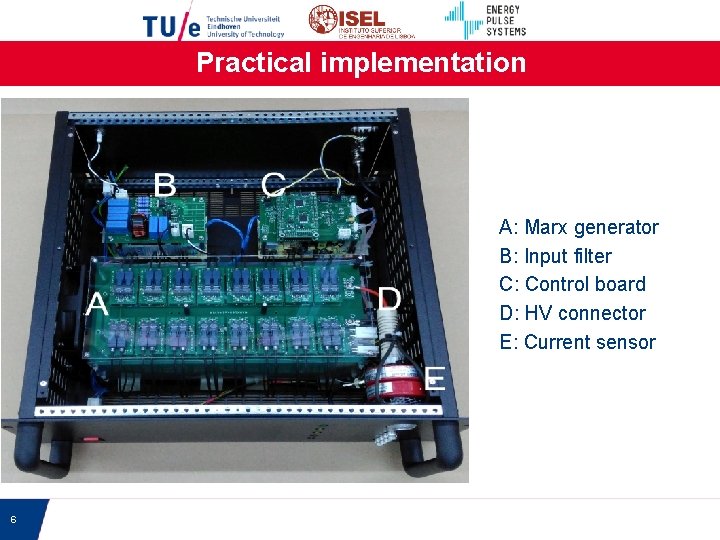
Practical implementation A: Marx generator B: Input filter C: Control board D: HV connector E: Current sensor 6
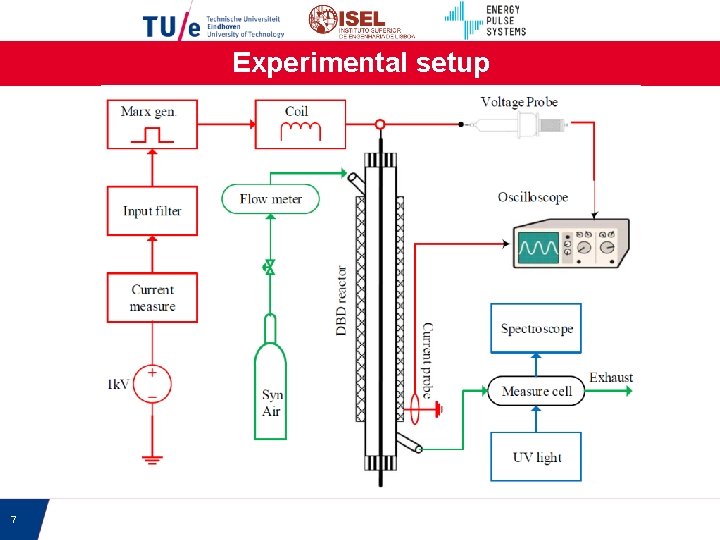
Experimental setup 7
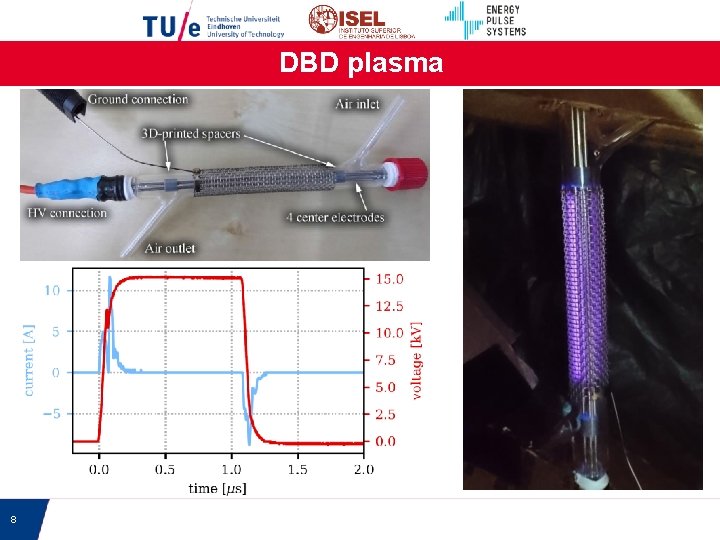
DBD plasma 8
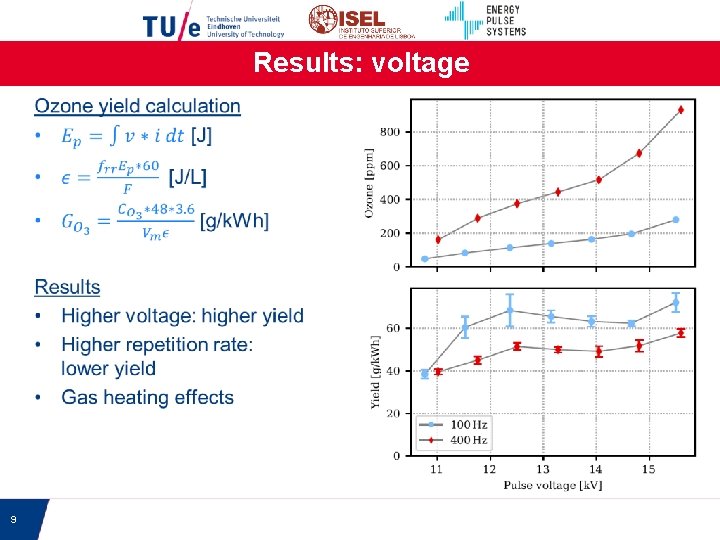
Results: voltage • 9
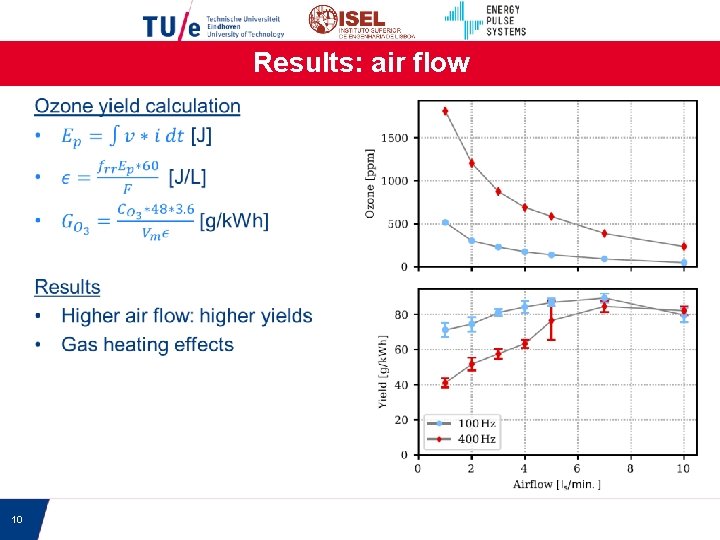
Results: air flow • 10
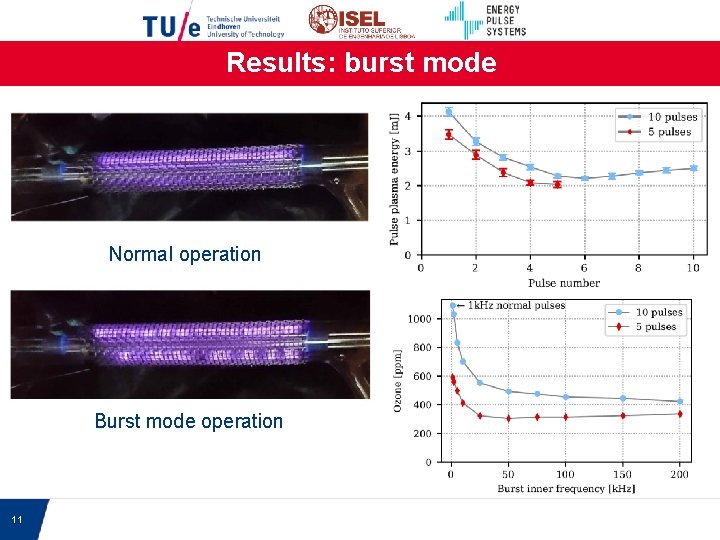
Results: burst mode Normal operation Burst mode operation 11
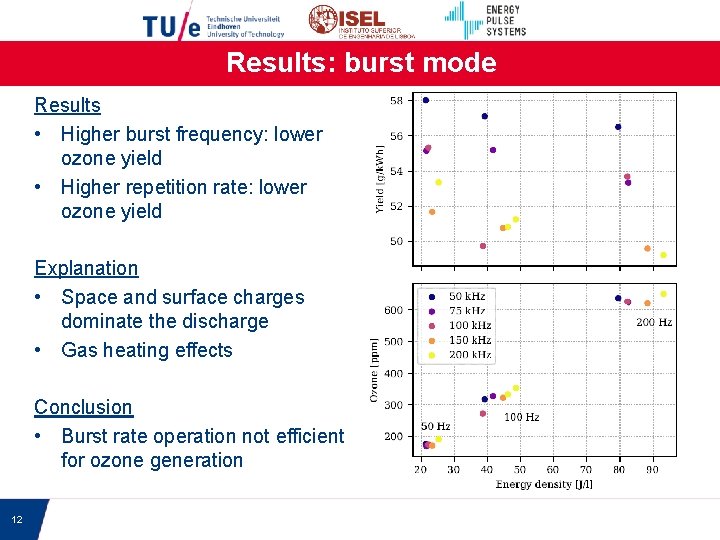
Results: burst mode Results • Higher burst frequency: lower ozone yield • Higher repetition rate: lower ozone yield Explanation • Space and surface charges dominate the discharge • Gas heating effects Conclusion • Burst rate operation not efficient for ozone generation 12
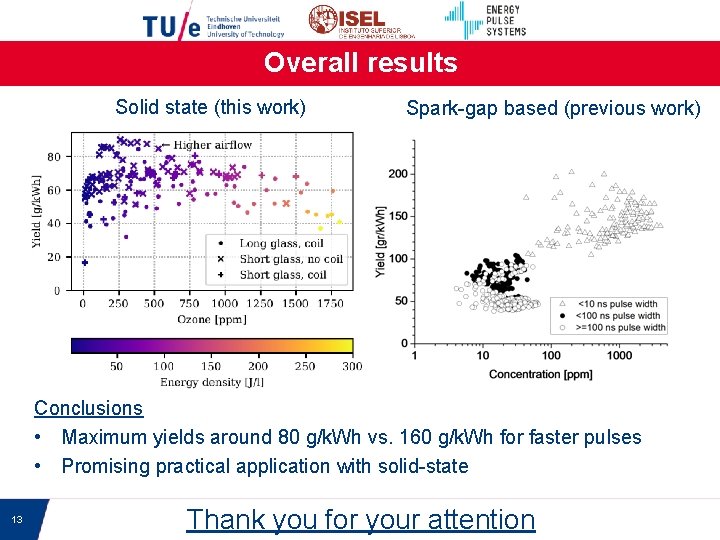
Overall results Solid state (this work) Spark-gap based (previous work) Conclusions • Maximum yields around 80 g/k. Wh vs. 160 g/k. Wh for faster pulses • Promising practical application with solid-state 13 Thank you for your attention
- Slides: 13