
OXYGEN THERAPY Study session Aims and objectives Indications
OXYGEN THERAPY Study session
Aims and objectives Indications for use of O 2 therapy Potential complications of O 2 therapy. Identify the signs and symptoms of O 2 toxicity Identify the various methods of O 2 delivery Humidification Patient positioning Expectoration/Deep breathing/effective cough
Oxygen is widely available, commonly prescribed and when administered correctly can be life saving
Indications for use Oxygen therapy is a treatment for hypoxaemia not breathlessness. Aim is to achieve normal or near normal oxygen saturations for all acutely ill patients. Oxygen should be prescribed to achieve a target saturation of 94– 98% for most acutely ill patients or 88– 92% for those at risk of hyper‐capnic respiratory failure
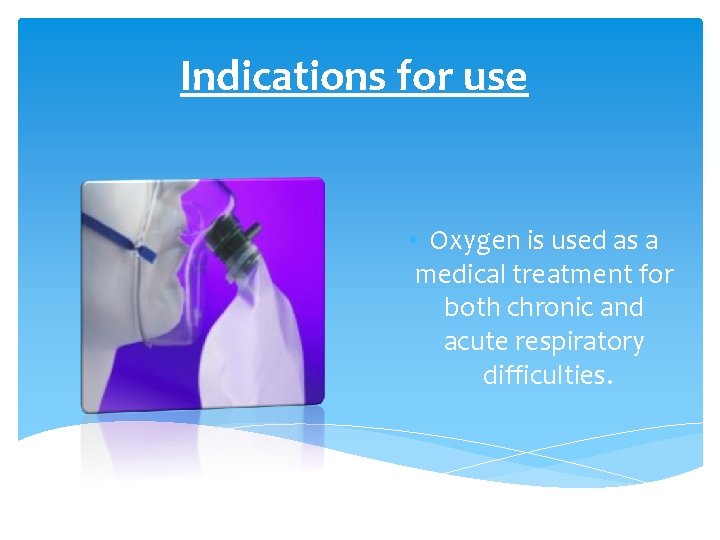
Indications for use • Oxygen is used as a medical treatment for both chronic and acute respiratory difficulties.
Chronic Patient It can be used in chronic conditions for those who require additional oxygen therapy. It can be used therapeutically for those in cardiac/respiratory or neuro‐degenerative diseases
Acute patient Indications Oxygen forms an important part of medical treatment in resuscitation, trauma, massive haemorrhage, active convulsion and hypothermia. It can also be used as cautious care in post anaesthesia. In the critically ill where oxygen requirements increase or gas exchange becomes compromised due to the nature of their illness.
Acute Hypoxaemia Acute hypoxaemia is considered dangerous to healthy subjects, with a Pao 2 of <6 kpa or with oxygen saturations of around 80%. In acute illness, chronic organ disease and/or ischaemia, they are likely to be at risk with Pao>6 kpa.
NEWS Scores A track and trigger such as a NEWS score may be high with little or no change in oxygen saturation levels. Equally critical illness may present with only a small fall in saturation levels Be aware that compensation mechanisms may mask the patients true oxygen requirements.
BTS Guidelines 2008 The lower end of the target saturation limit is 94%, this is to ensure that saturations stay above 90%, most of all the time The upper end of the target saturation limit is 98%.
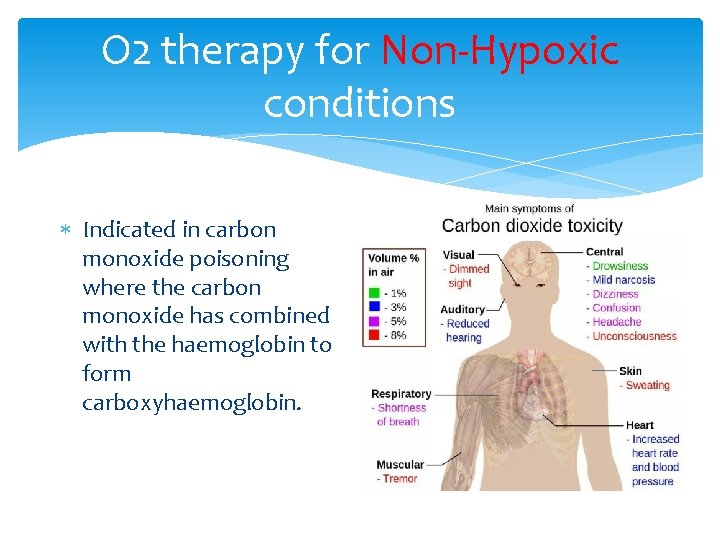
O 2 therapy for Non‐Hypoxic conditions Indicated in carbon monoxide poisoning where the carbon monoxide has combined with the haemoglobin to form carboxyhaemoglobin.
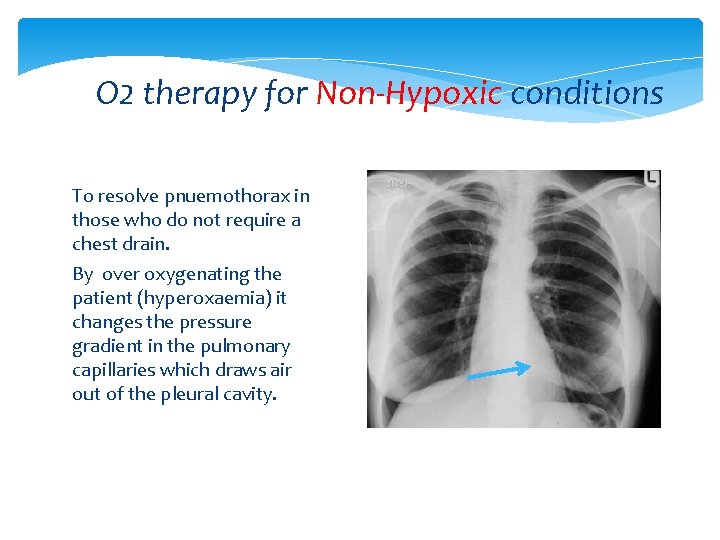
O 2 therapy for Non-Hypoxic conditions To resolve pnuemothorax in those who do not require a chest drain. By over oxygenating the patient (hyperoxaemia) it changes the pressure gradient in the pulmonary capillaries which draws air out of the pleural cavity.
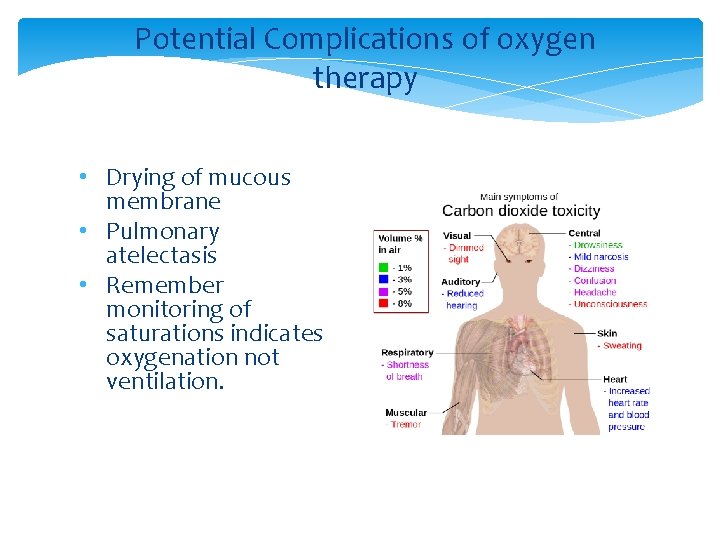
Potential Complications of oxygen therapy • Drying of mucous membrane • Pulmonary atelectasis • Remember monitoring of saturations indicates oxygenation not ventilation.

Signs and symptoms of oxygen toxicity • Oxygen toxicity affects the human body in different ways depending on the type of exposure. • Short exposures to high partial pressures at greater than atmospheric pressure can lead to central nervous system toxicity. • Occular and pulmonary toxicity results from longer exposure at normal atmospheric pressure. Thomson & Paton 2014
CNS Toxicity Visual disturbance Nausea Irritability Anxiety Mood Changes Confusion
Pulmonary/Occular Exposure tunnel vision, Ringing in ears Nausea Dizziness Twitching Seizures

Oxygen Therapy
OXYGEN THERAPY Simple face mask Venturi system Nasal cannulae Reservoir mask High flow oxygen
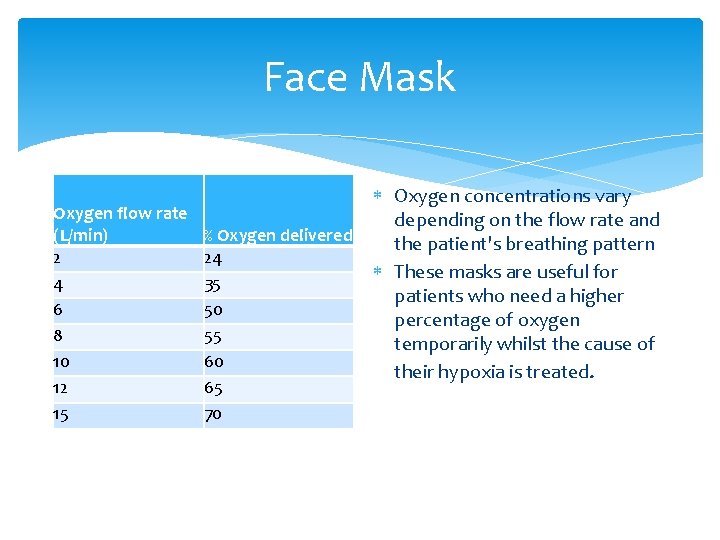
Face Mask Oxygen concentrations vary Oxygen flow rate depending on the flow rate and (L/min) % Oxygen delivered the patient's breathing pattern 2 24 These masks are useful for 4 35 patients who need a higher 6 50 percentage of oxygen 8 55 temporarily whilst the cause of 10 60 their hypoxia is treated. 12 15 65 70
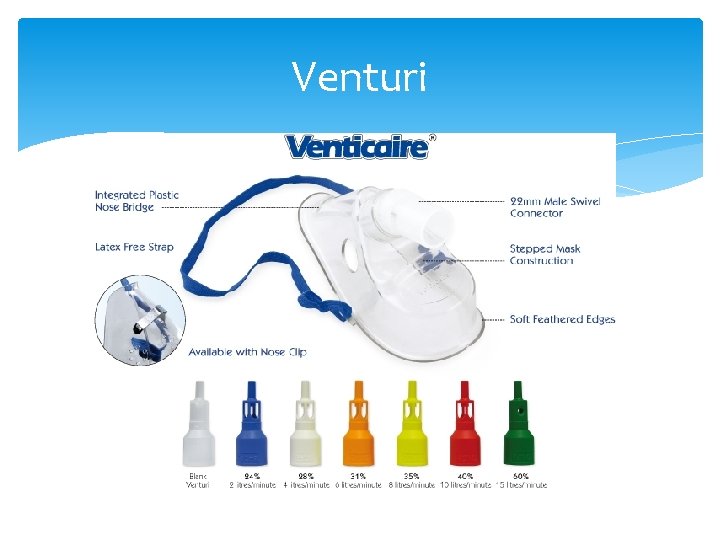
Venturi
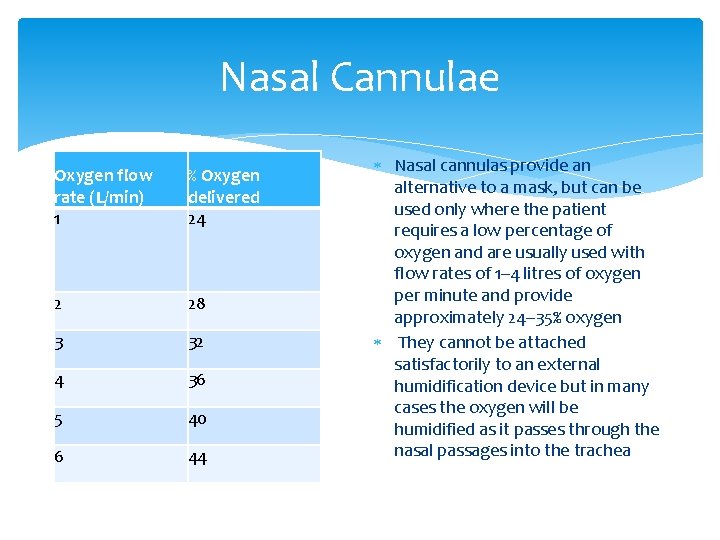
Nasal Cannulae Oxygen flow rate (L/min) 1 % Oxygen delivered 24 2 28 3 32 4 36 5 40 6 44 Nasal cannulas provide an alternative to a mask, but can be used only where the patient requires a low percentage of oxygen and are usually used with flow rates of 1– 4 litres of oxygen per minute and provide approximately 24– 35% oxygen They cannot be attached satisfactorily to an external humidification device but in many cases the oxygen will be humidified as it passes through the nasal passages into the trachea
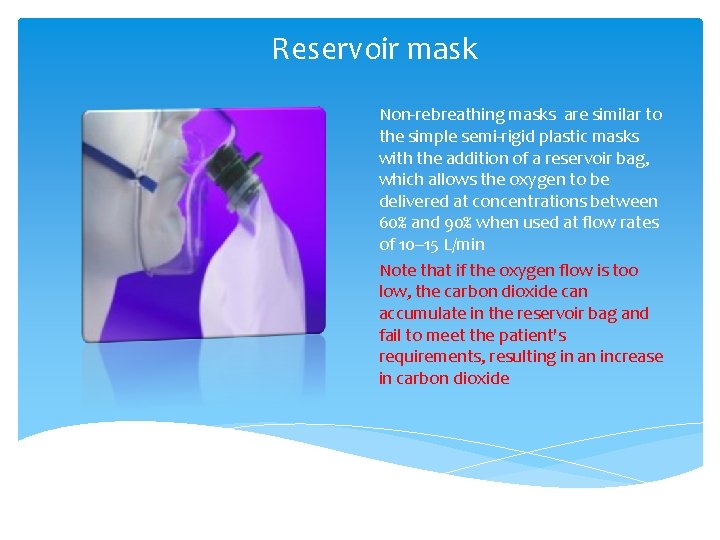
Reservoir mask Non‐rebreathing masks are similar to the simple semi‐rigid plastic masks with the addition of a reservoir bag, which allows the oxygen to be delivered at concentrations between 60% and 90% when used at flow rates of 10– 15 L/min Note that if the oxygen flow is too low, the carbon dioxide can accumulate in the reservoir bag and fail to meet the patient's requirements, resulting in an increase in carbon dioxide
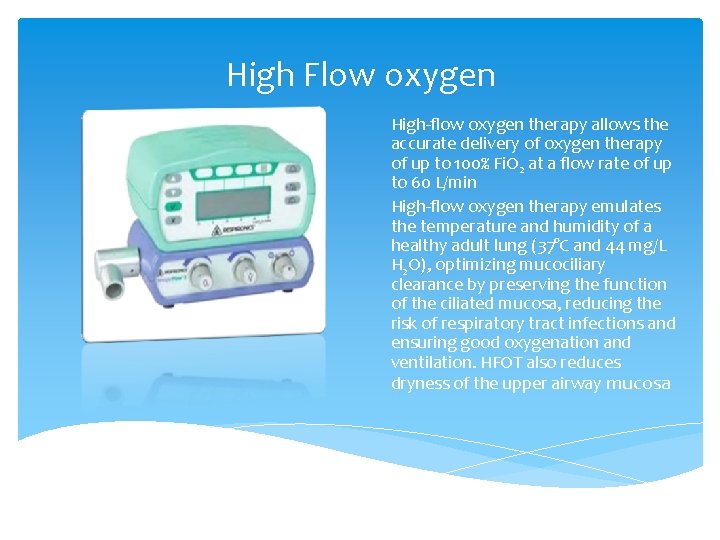
High Flow oxygen High‐flow oxygen therapy allows the accurate delivery of oxygen therapy of up to 100% Fi. O 2 at a flow rate of up to 60 L/min High‐flow oxygen therapy emulates the temperature and humidity of a healthy adult lung (37°C and 44 mg/L H 2 O), optimizing mucociliary clearance by preserving the function of the ciliated mucosa, reducing the risk of respiratory tract infections and ensuring good oxygenation and ventilation. HFOT also reduces dryness of the upper airway mucosa
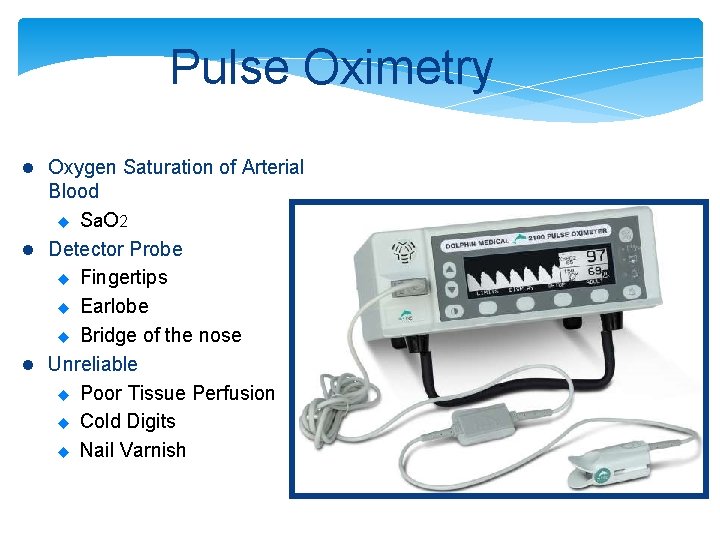
Pulse Oximetry l Oxygen Saturation of Arterial Blood u S a. O 2 l Detector Probe u Fingertips u Earlobe u Bridge of the nose l Unreliable u Poor Tissue Perfusion u Cold Digits u Nail Varnish
Humidification
Humidification BTS emergency oxygen guidelines (2008) state that humidification is not required for the delivery of low flow oxygen (4 L/minute and under) or short term use of high flow oxygen for short periods.
Normal Breathing The normal lung warms and humidifies INSPIRED air Recovers heat and moisture from EXPIRED air Defending the lung from contaminants.
Inspired Air The upper airway warms the inspired gas to core body temp and achieves 100% relative humidity just below the Carina. Cleans inspired air by filtering and clearing foreign matter, e. g. sneezing, gagging, coughing and the mucociliary transport system. This optimises gas exchange and protects the delicate lung tissue.
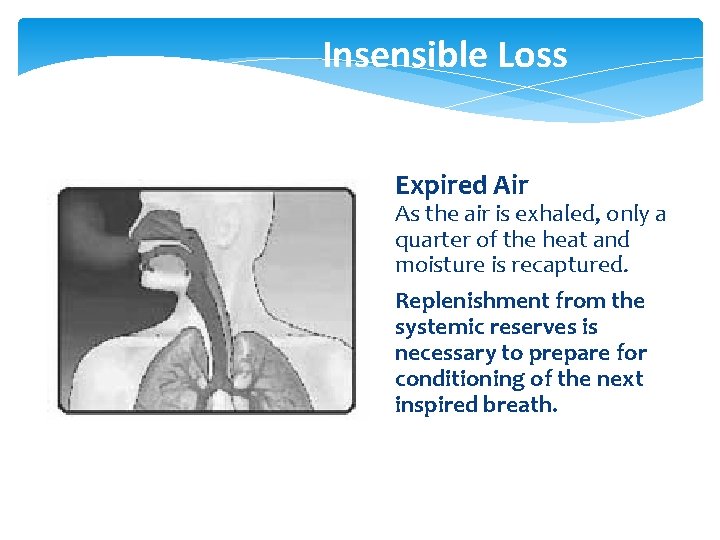
Insensible Loss Expired Air As the air is exhaled, only a quarter of the heat and moisture is recaptured. Replenishment from the systemic reserves is necessary to prepare for conditioning of the next inspired breath.
Defence Of The Lung Ø The lung is defended by a Mucociliary Transport System (respiratory escalator). Ø Extends from the nasopharynx towards the respiratory bronchioles. Ø Traps and neutralises inhaled contaminants and transports them up the airway to be swallowed.
Mucocillary Transport The warmer the gas, the more vapour it can hold but if the temperature of the gas falls, water held as vapour will condense out of the gas into the surrounding atmosphere (Khan and O'Driscoll, O'Driscoll et al. )
When to Humidify? Patients with Tracheostomy‐ As inspired gases enter directly into the lower airway and bypasses the moistening and filtering effects of the upper airway. Oxygen delivery over 35% via a Venturi or > 4 L/min nasal cannulae as this will dry the Mucosa halting the Mucociliary Transport System
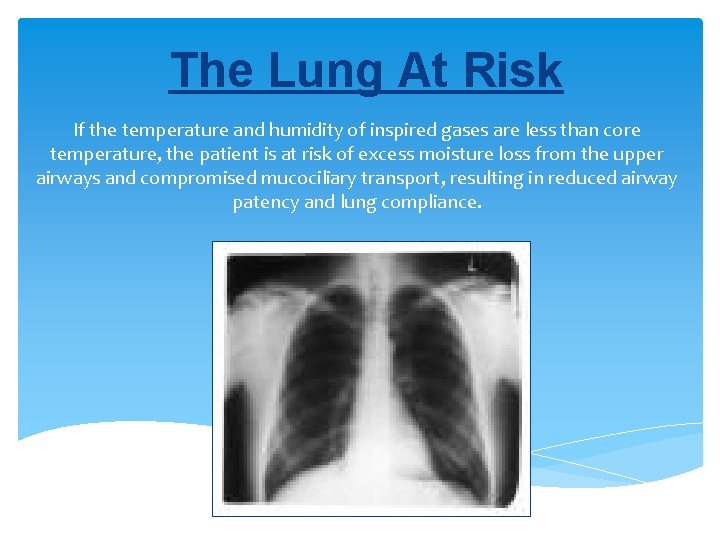
The Lung At Risk If the temperature and humidity of inspired gases are less than core temperature, the patient is at risk of excess moisture loss from the upper airways and compromised mucociliary transport, resulting in reduced airway patency and lung compliance.
Mucociliary Transport System • Function depends on thickness of Mucus • Depth of the Sol Layer (lubrication layer) • Cilia beat frequency
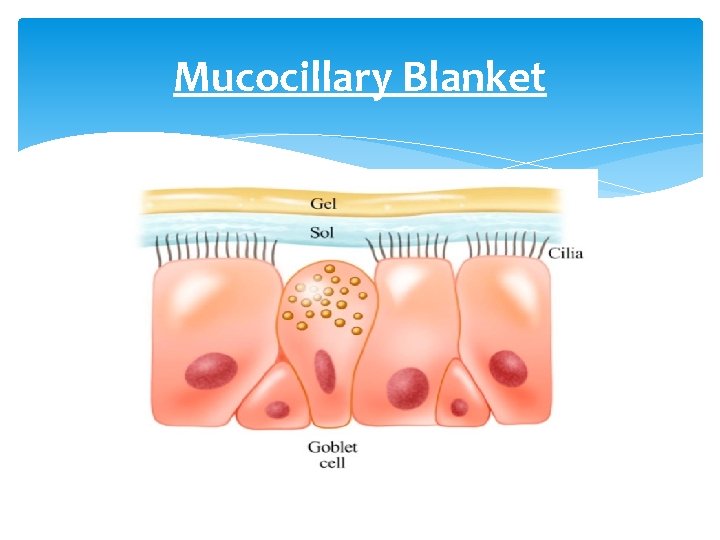
Mucocillary Blanket
Pathogens v. External Sources ‐ introduced by opening the breathing circuit for procedures such as suctioning. v. Internal Sources – aspiration from the gut and upper airway from endogenous pathogens. v. Intubated - The secretions leak continuously around the ET cuff and a bolus may be delivered when PEEP is lost. v. Endogenous pathogens - are the predominant cause of nosocomial pneumonia
Getting Humification Right! • Increasing clearance = decrease pathogens • Limiting replication - preventing pools of mucus How is this done in practice? .
Types of Humidifiers Used in ICU Heat Moisture Exchange (HME) Filter Hot water Humidifier Heated Wire Humidifier Nebulization
Patient positioning
Patient positioning
- Slides: 40