
OXYGEN THERAPY Module 5 Learning objectives At the
OXYGEN THERAPY Module 5
Learning objectives At the end of this lecture, you will be able to: ● Describe importance of oxygen therapy. ● Recognize indications for oxygen therapy in Managing Acute Respiratory Infections Including those due to COVID-19. ● Describe how to initiate oxygen therapy. ● Describe two different methods to measure blood oxygen levels. ● Explain how to titrate oxygen therapy.

Oxygen: indications 1/2 ● In the hospital setting, give oxygen immediately to patients (adults and children) with SARI who have signs of severe illness: – – severe respiratory distress sepsis with hypoperfusion or shock alteration of mental status (decreased consciousness or agitation) or hypoxaemia • Sp. O 2 < 90% (if patient is haemodynamically normal) • Sp. O 2 < 94% (if patient with any emergency signs of airway, breathing or circulation) • Sp. O 2< 92– 95% (if pregnant woman). Do NOT delay oxygen administration.

Oxygen: indications 2/2 • In children, clinical signs that should trigger oxygen therapy include (when pulse oximeter not available): – – – central cyanosis nasal flaring inability to drink or feed (when due to respiratory distress) grunting with every breath depressed mental state (i. e. drowsy, lethargic) and in certain conditions (severe lower chest indrawing, RR ≥ 70 bpm, head nodding). Do NOT delay oxygen administration.
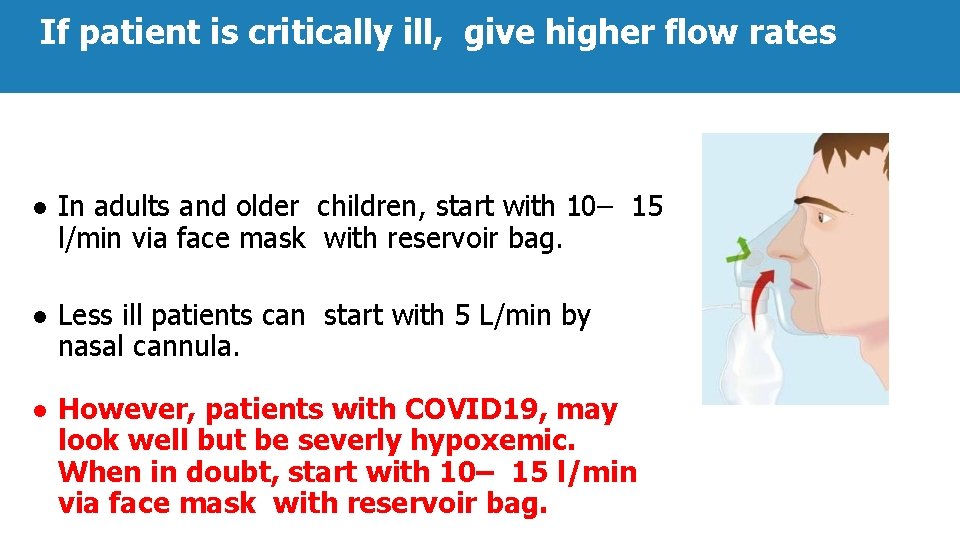
If patient is critically ill, give higher flow rates ● In adults and older children, start with 10– 15 l/min via face mask with reservoir bag. ● Less ill patients can start with 5 L/min by nasal cannula. ● However, patients with COVID 19, may look well but be severly hypoxemic. When in doubt, start with 10– 15 l/min via face mask with reservoir bag.
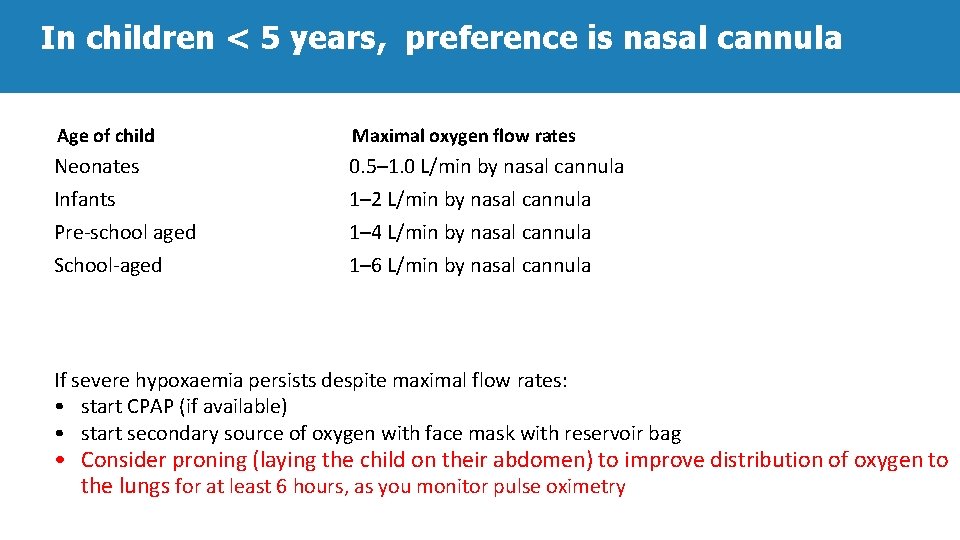
In children < 5 years, preference is nasal cannula Age of child Maximal oxygen flow rates Neonates 0. 5– 1. 0 L/min by nasal cannula Infants 1– 2 L/min by nasal cannula Pre-school aged 1– 4 L/min by nasal cannula School-aged 1– 6 L/min by nasal cannula If severe hypoxaemia persists despite maximal flow rates: • start CPAP (if available) • start secondary source of oxygen with face mask with reservoir bag • Consider proning (laying the child on their abdomen) to improve distribution of oxygen to the lungs for at least 6 hours, as you monitor pulse oximetry
Oxygen therapy in children ● Compliance may require assistance from nursing staff and family members. ● Humidification is not required when using standard flow rates, as natural nasal mechanisms heat and humidify. ● Fi. O 2 is determined by flow rate, nasal diameter and body weight: – in infants up to 10 kg: 0. 5 L/min (35%); 1 L/min (45%); 2 L/min (55%).

Monitor oxygen levels ● Clinical signs are not reliable indicators of hypoxaemia. ● Pulse oximeters should be available in all settings caring for patients with SARI and used to measure the Sp. O 2 - pre-hospital, emergency area, ward, and ICU. ● A Blood gas analyser should be available in the ICU: – measures p. H, PO 2, and PCO 2 for patients on mechanical ventilation, with severe hypoxaemia, risk of hypercapnea and shock states.
Oxygen titration to reach target • Titrate oxygen to target: – Sp. O 2 ≥ 90% in adults and children – Sp. O 2 ≥ 92– 95% in pregnant patients – Sp. O 2 ≥ 94% if child or adult with signs of multi-organ failure, including shock, alteration of mental status, severe anaemia until resuscitation has stabilized patients, then resume target ≥ 90%. • Titrate oxygen up and down to achieve target. • Wean oxygen when patient is stable.

Titrate oxygen: use appropriate dose and delivery device Medical Illustration, Leicester Royal Infirmary, Leicester, UK Make sure bag is full O 2 dose 1– 5 L/min O 2 dose 6– 10 L/min Fi. O 2 estimate 0. 25– 0. 40 Fi. O 2 estimate 0. 40– 0. 60 Fi. O 2 estimate 0. 60– 0. 95 Nasal cannula Simple face mask Face mask with reservoir bag O 2 dose 10– 15 L/min
IPC and oxygen therapy • Ensure single patient use of nasal prongs, simple face masks and face masks with reservoir bag to prevent nosocomial infection. • Humidification is not necessary when delivering low flow rates. The oropharynx and nasopharynx provide sufficient humidity. - In children, flow rates are considered high when > 2 L/kg/min. • Avoid bubble bottles because of risk of infection.
Recognize acute hypoxaemic respiratory failure Patients not responding to increasing oxygen therapy are developing acute hypoxaemic respiratory failure: – signs of severe respiratory distress – hypoxaemia (Sp. O 2 < 90%) despite escalating oxygen therapy – Sp. O 2/Fi. O 2 < 300 while on at least 10 L/min oxygen therapy – Cardiogenic pulmonary oedema not primary cause.
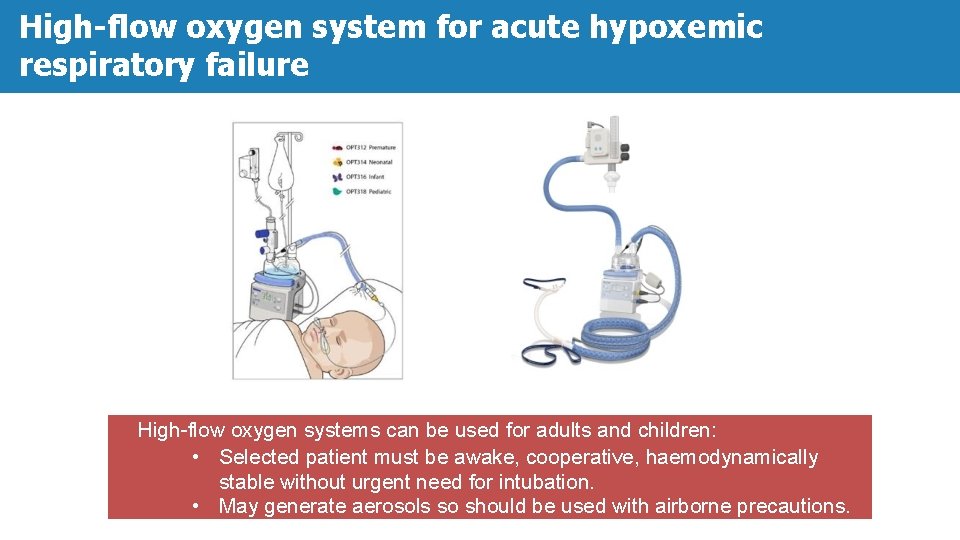
High-flow oxygen system for acute hypoxemic respiratory failure High-flow oxygen systems can be used for adults and children: • Selected patient must be awake, cooperative, haemodynamically stable without urgent need for intubation. • May generate aerosols so should be used with airborne precautions.
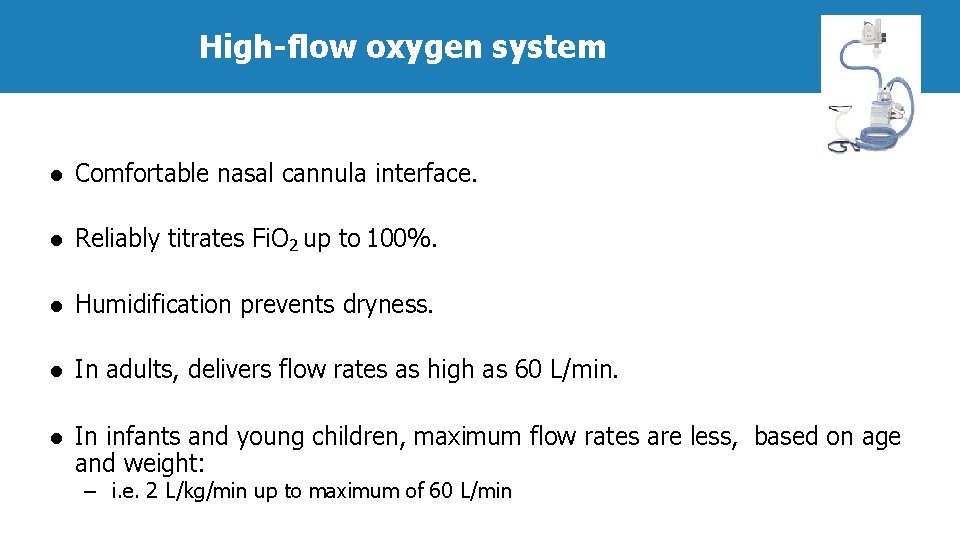
High-flow oxygen system ● Comfortable nasal cannula interface. ● Reliably titrates Fi. O 2 up to 100%. ● Humidification prevents dryness. ● In adults, delivers flow rates as high as 60 L/min. ● In infants and young children, maximum flow rates are less, based on age and weight: – i. e. 2 L/kg/min up to maximum of 60 L/min
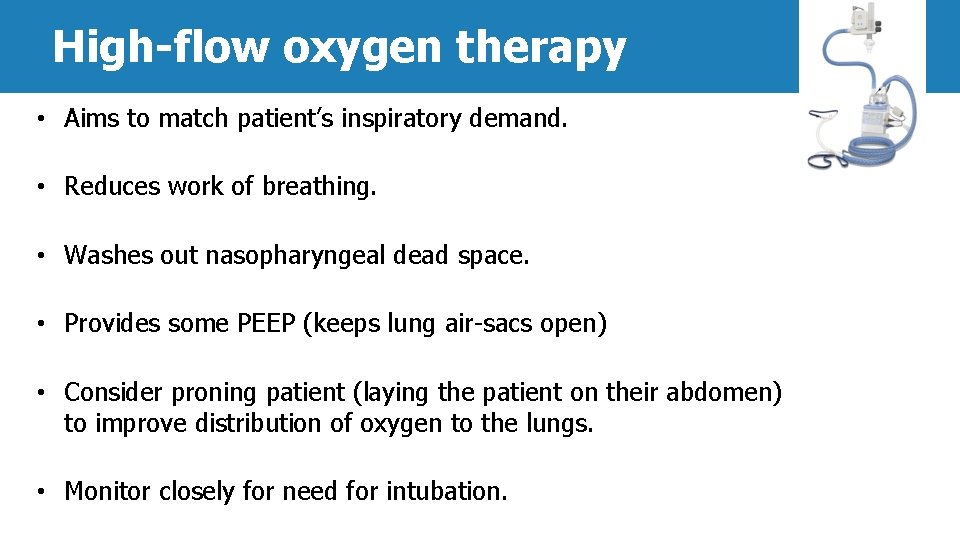
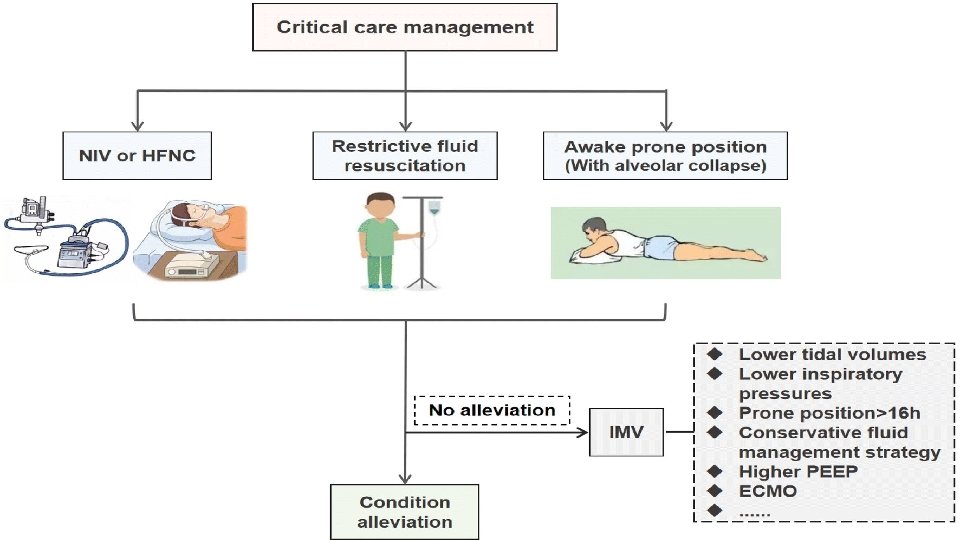
High-flow oxygen therapy • Aims to match patient’s inspiratory demand. • Reduces work of breathing. • Washes out nasopharyngeal dead space. • Provides some PEEP (keeps lung air-sacs open) • Consider proning patient (laying the patient on their abdomen) to improve distribution of oxygen to the lungs. • Monitor closely for need for intubation.
Tips: About oxygen use ▪ Appropriate use of oxygen will optimize quality care and minimizes waste. ▪ When using traditional nasal cannula and face mask, increasing flow rates does not reliably deliver higher oxygen concentrations (Fi. O 2), because patients also breathes in room air, which dilutes oxygen making exact Fi. O 2 variable.
Summary • Give oxygen immediately to patients with SARI with severe respiratory distress, sepsis with hypoperfusion/shock or hypoxaemia, Sp. O 2 <90%. • In critically ill adults and children start with highest flow rate available and appropriate for age. • Consider proning to improve oxygen distribution in the lungs • Pulse oximeters should be available in all areas where emergency oxygen is delivered. Blood gas analyzer should be available in the ICU to also measure ventilatory parameters (p. H, Pa. Co 2) • Titrate oxygen to target Sp. O 2 ≥ 90% in adults and children, > 92 -95% in pregnant females, or ≥ 94% during resuscitation of patient with multi-organ failure using the appropriate dose (flow rate) and delivery device. • Newer high flow oxygen systems can be used in select cases of non- hypercapneic, hypoxemic respiratory failure.
- Slides: 18