
Oxygen Foreshock of Mars M Yamauchi 1 R

- Slides: 28
Oxygen Foreshock of Mars M. Yamauchi 1; R. Lundin 1; R. A. Frahm 2; J. -A. Sauvaud 3, M. Holmstrom 1; S. Barabash 1 1. IRF, Kiruna, Sweden 2. Sw. RI, San Antonio, USA 3. IRAP, France Tuesday, 19 April 2016, EGU 2016 -3480, PS 2. 3 session
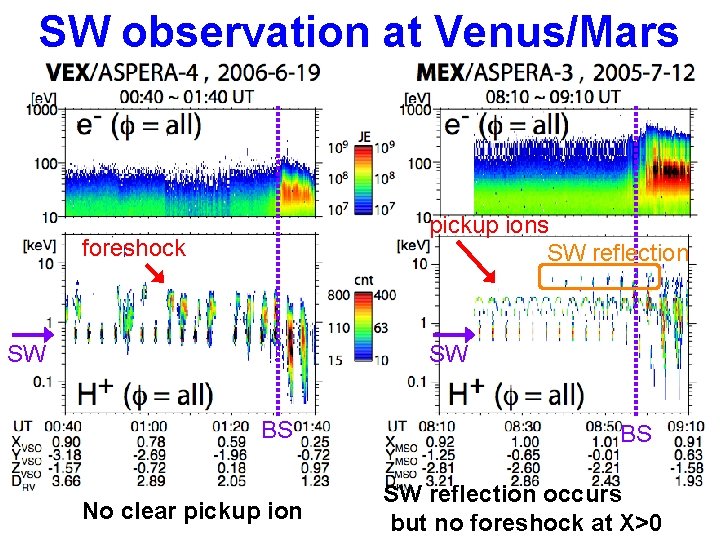
SW observation at Venus/Mars pickup ions SW reflection foreshock SW SW BS No clear pickup ion BS SW reflection occurs but no foreshock at X>0
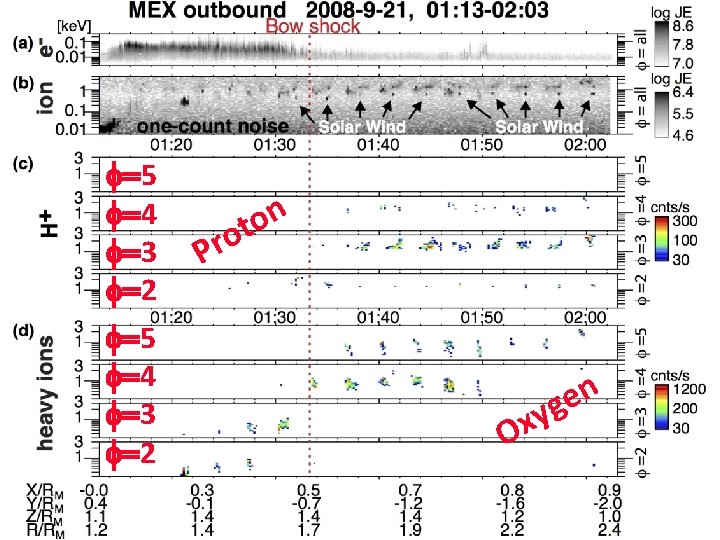
f=5 f=4 f=3 f=2 Pr n o ot O n e g y x
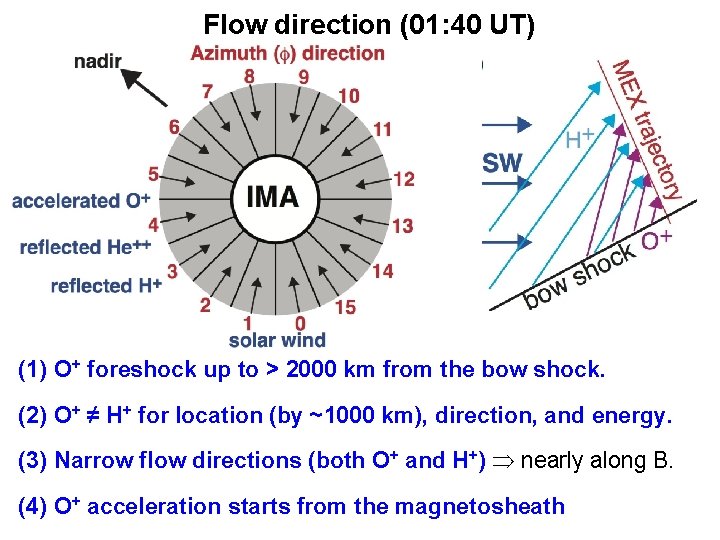
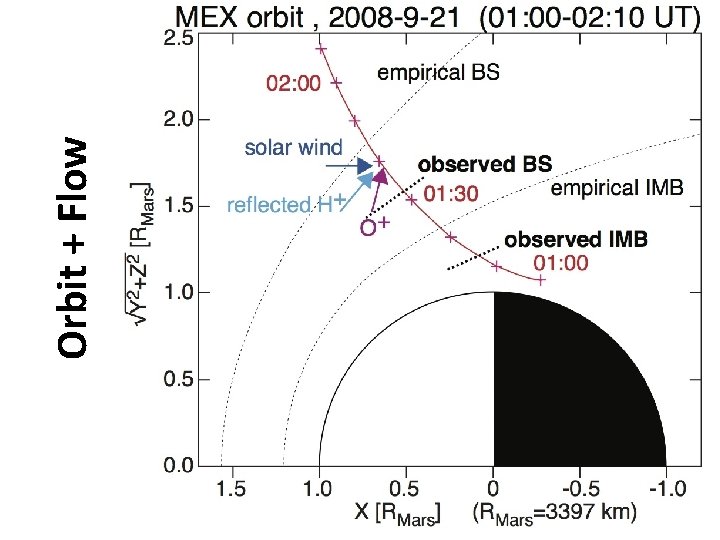
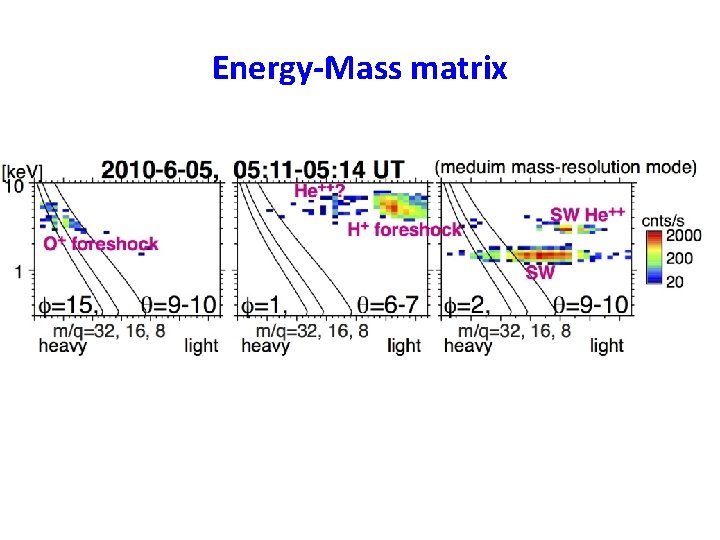
Flow direction (01: 40 UT) (1) O+ foreshock up to > 2000 km from the bow shock. (2) O+ ≠ H+ for location (by ~1000 km), direction, and energy. (3) Narrow flow directions (both O+ and H+) nearly along B. (4) O+ acceleration starts from the magnetosheath
Orbit + Flow
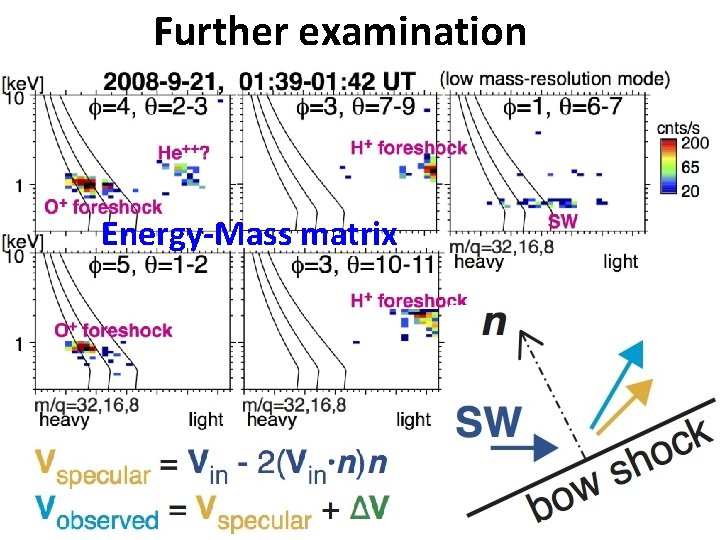
Further examination Energy-Mass matrix
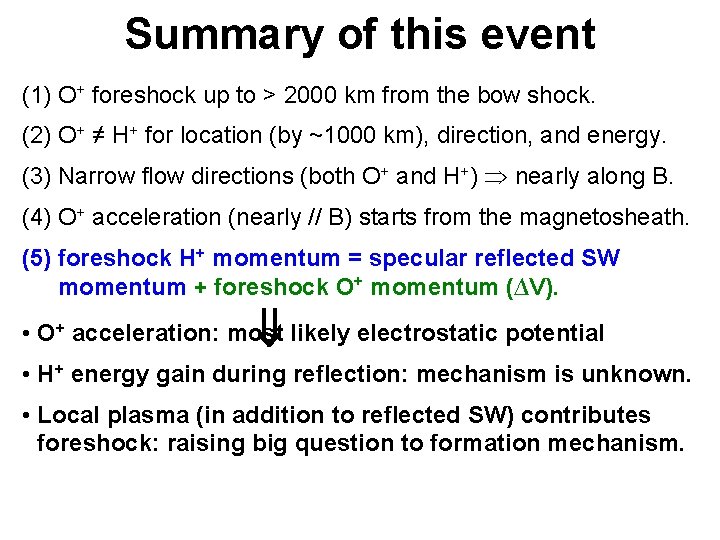
Summary of this event (1) O+ foreshock up to > 2000 km from the bow shock. (2) O+ ≠ H+ for location (by ~1000 km), direction, and energy. (3) Narrow flow directions (both O+ and H+) nearly along B. (4) O+ acceleration (nearly // B) starts from the magnetosheath. (5) foreshock H+ momentum = specular reflected SW momentum + foreshock O+ momentum (∆V). • O+ acceleration: most likely electrostatic potential • H+ energy gain during reflection: mechanism is unknown. • Local plasma (in addition to reflected SW) contributes foreshock: raising big question to formation mechanism.
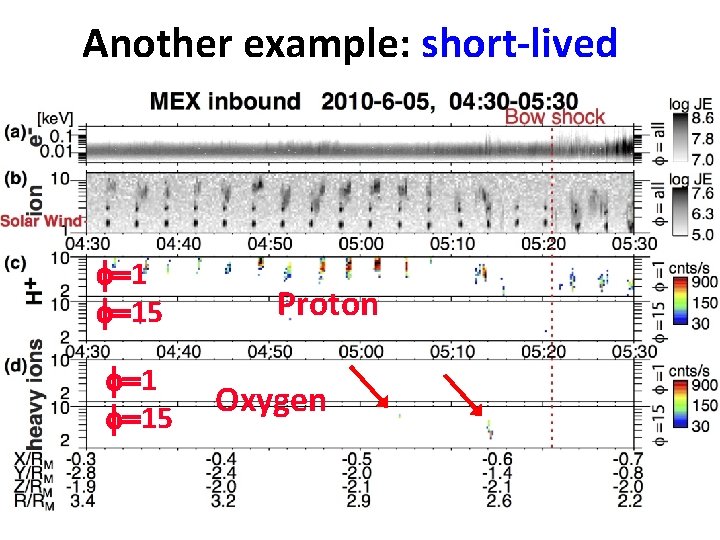
Another example: short-lived f=1 f=15 Proton Oxygen
Energy-Mass matrix
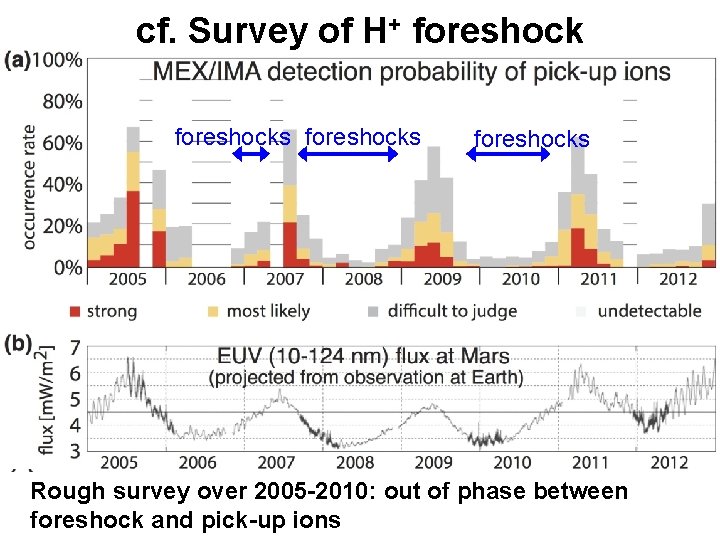
cf. Survey of H+ foreshocks Rough survey over 2005 -2010: out of phase between foreshock and pick-up ions
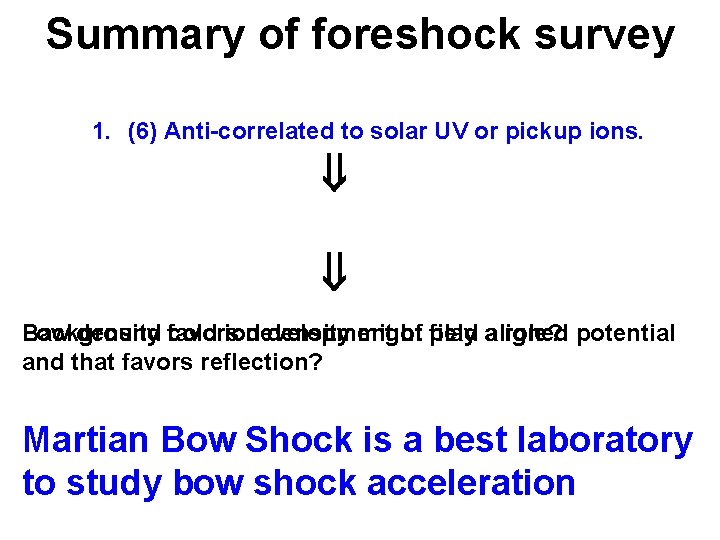
Summary of foreshock survey 1. (6) Anti-correlated to solar UV or pickup ions. Low density favors Background cold ion development density might of play field aaligned role? potential and that favors reflection? Martian Bow Shock is a best laboratory to study bow shock acceleration
Thank you
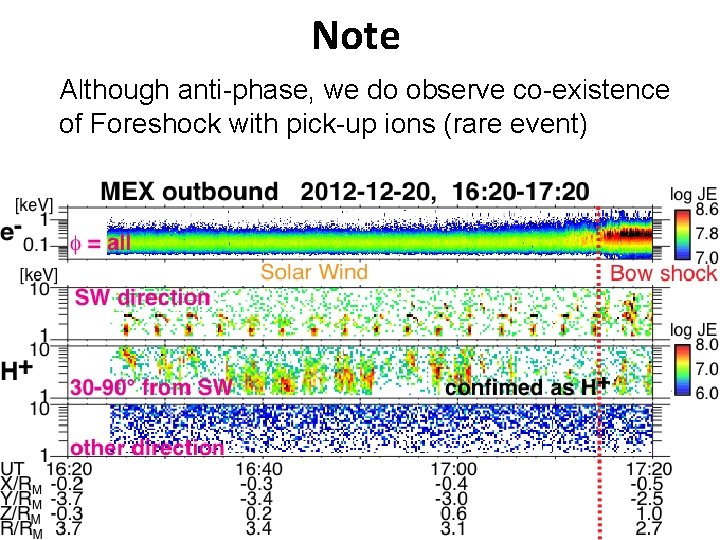
Note Although anti-phase, we do observe co-existence of Foreshock with pick-up ions (rare event)
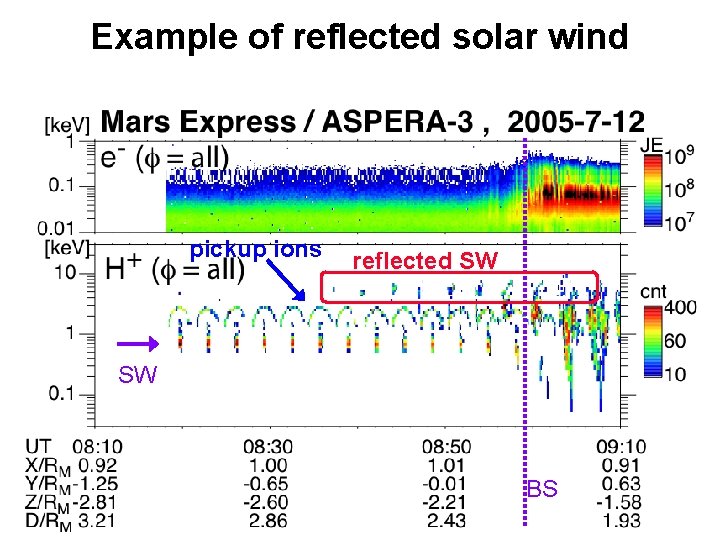
Example of reflected solar wind pickup ions reflected SW SW BS
(1) Seasonal Variation of Martian Pick-up Ions: Evidence of Breathing Exosphere M. Yamauchi 1; T. Hara 2; R. Lundin 1; E. Dubinin 3; A. Fedorov 4; J. -A. Sauvaud 4, R. A. Frahm 5; R. Ramstad 1; Y. Futaana 1; M. Holmstrom 1; S. Barabash 1 (1) IRF, Kiruna, Sweden; (2) UCB/SSL, Berkeley, USA; (3) MPS, Gögttingen Germany; (4) IRAP, France; (5) Sw. RI, San Antonio, USA
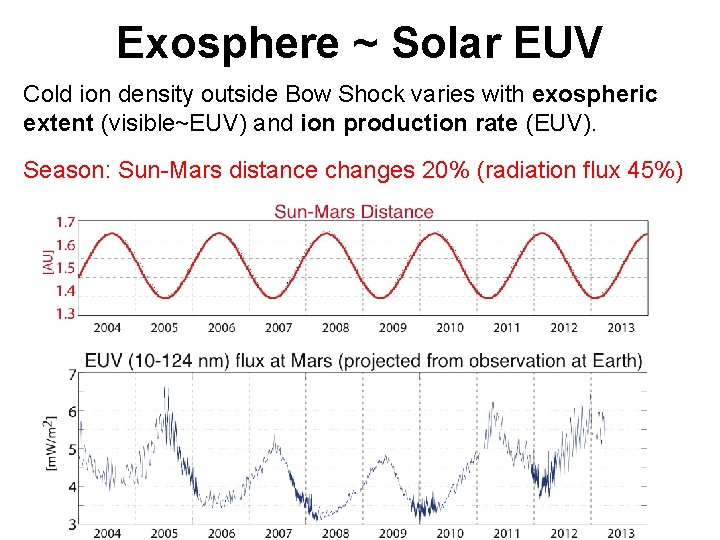
Exosphere ~ Solar EUV Cold ion density outside Bow Shock varies with exospheric extent (visible~EUV) and ion production rate (EUV). Season: Sun-Mars distance changes 20% (radiation flux 45%)
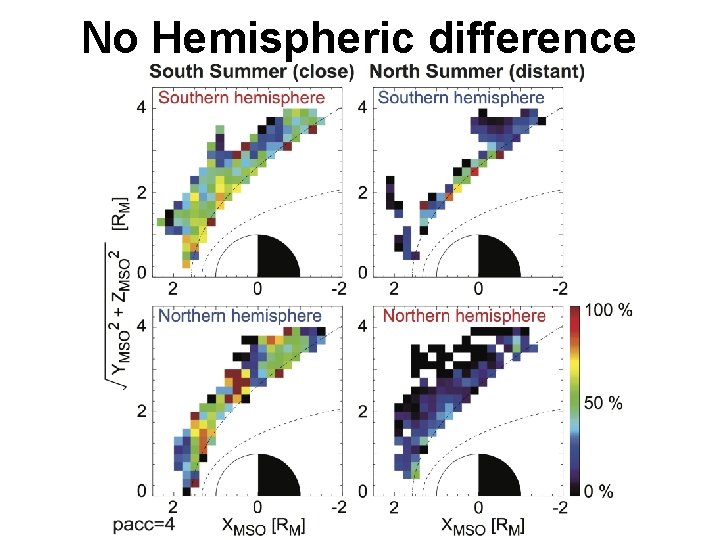
Automated method Probability of detecting “ring distribution” note: automated method is far from perfect (e. g. , including reflected ions near bow shock), but statistics is clear
No Hemispheric difference
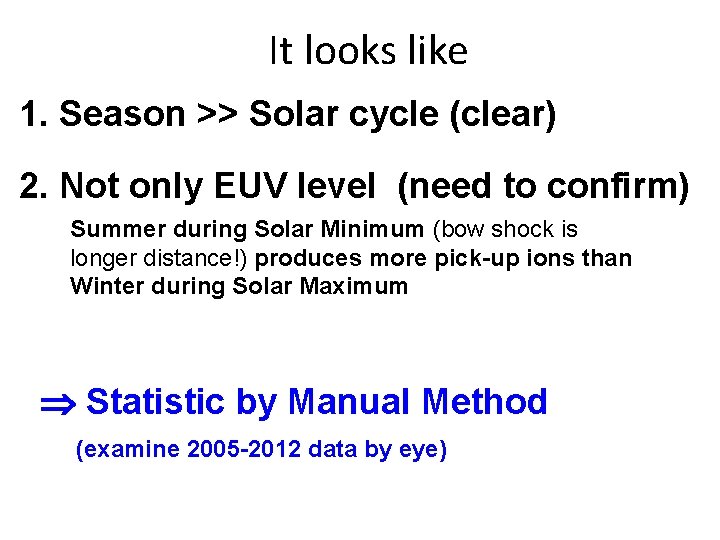
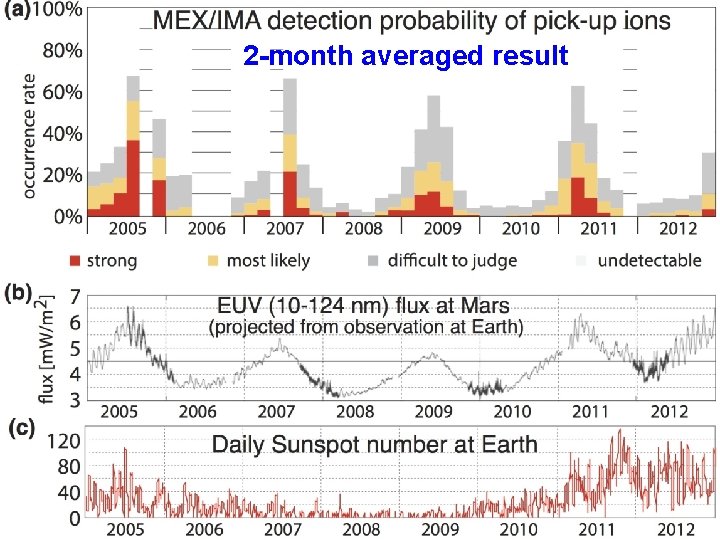
It looks like 1. Season >> Solar cycle (clear) 2. Not only EUV level (need to confirm) Summer during Solar Minimum (bow shock is longer distance!) produces more pick-up ions than Winter during Solar Maximum Statistic by Manual Method (examine 2005 -2012 data by eye)
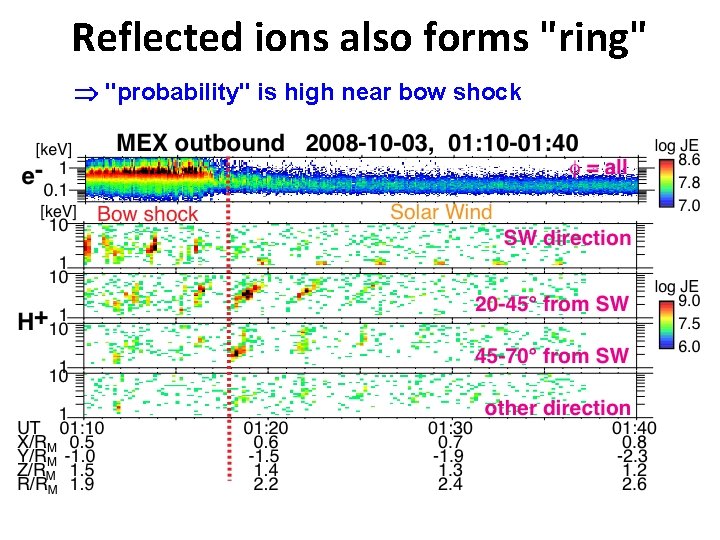
Reflected ions also forms "ring" "probability" is high near bow shock
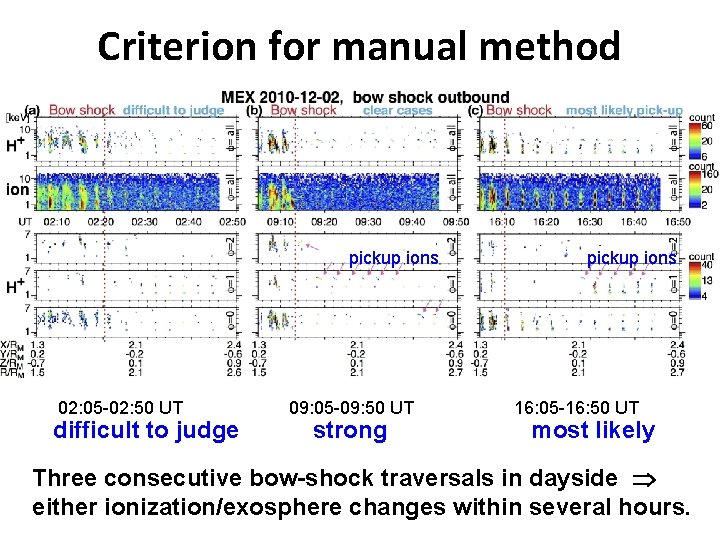
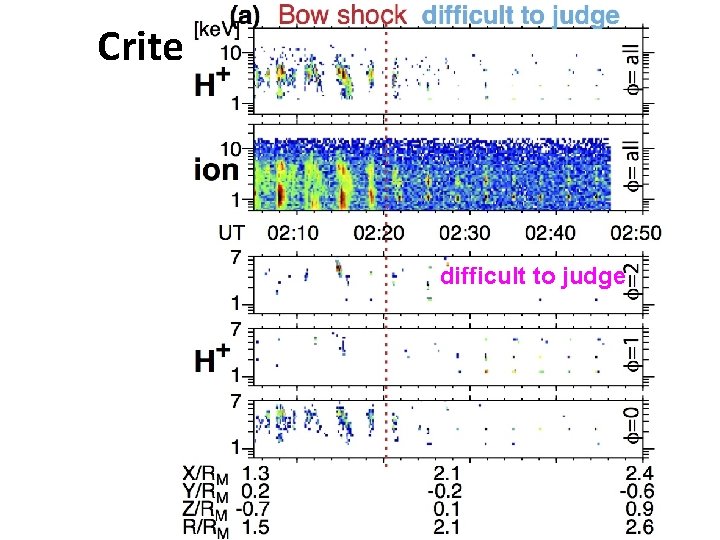
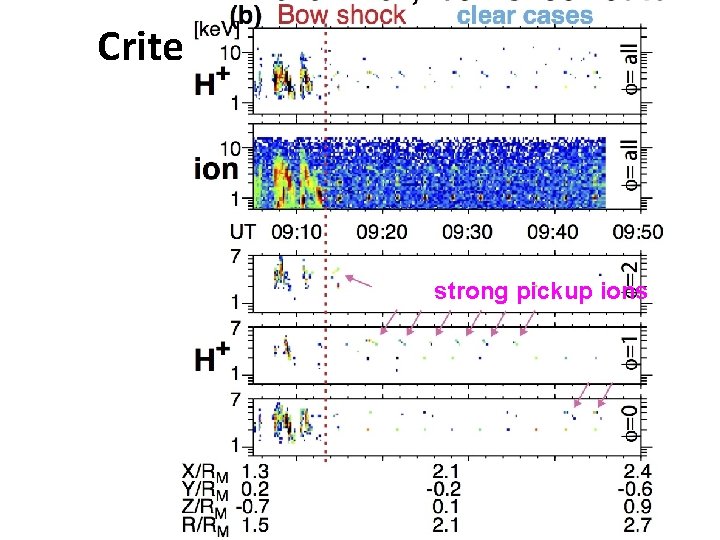
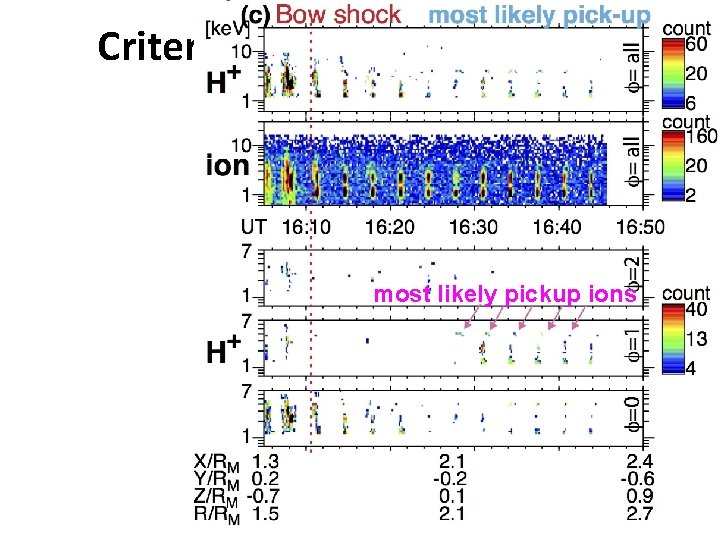
Criterion for manual method pickup ions 02: 05 -02: 50 UT difficult to judge 09: 05 -09: 50 UT strong pickup ions 16: 05 -16: 50 UT most likely Three consecutive bow-shock traversals in dayside either ionization/exosphere changes within several hours.
Criterion for manual method difficult to judge
Criterion for manual method strong pickup ions
Criterion for manual method most likely pickup ions
2 -month averaged result
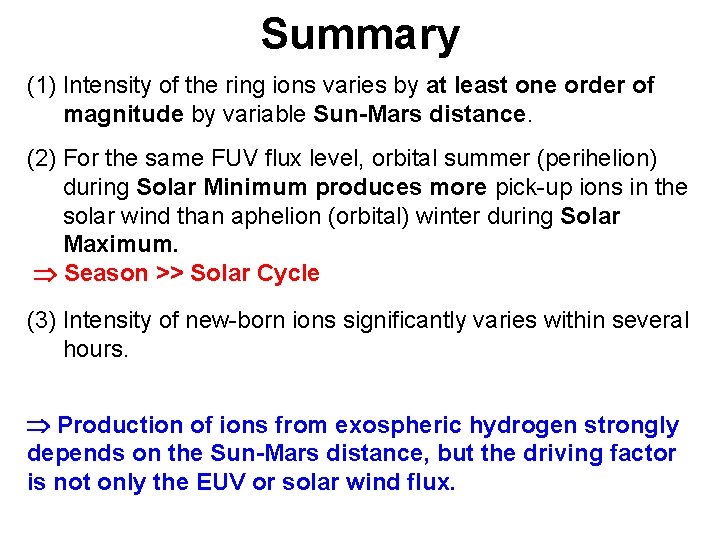
Summary (1) Intensity of the ring ions varies by at least one order of magnitude by variable Sun-Mars distance. (2) For the same FUV flux level, orbital summer (perihelion) during Solar Minimum produces more pick-up ions in the solar wind than aphelion (orbital) winter during Solar Maximum. Season >> Solar Cycle (3) Intensity of new-born ions significantly varies within several hours. Production of ions from exospheric hydrogen strongly depends on the Sun-Mars distance, but the driving factor is not only the EUV or solar wind flux.
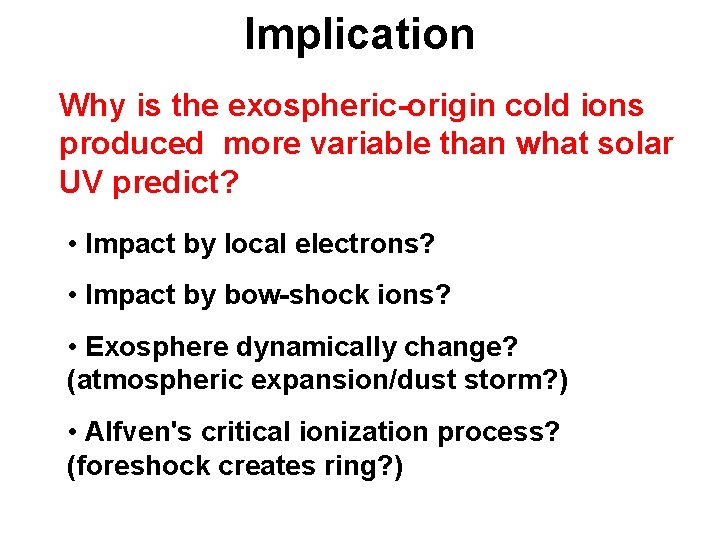
Implication Why is the exospheric-origin cold ions produced more variable than what solar UV predict? • Impact by local electrons? • Impact by bow-shock ions? • Exosphere dynamically change? (atmospheric expansion/dust storm? ) • Alfven's critical ionization process? (foreshock creates ring? )
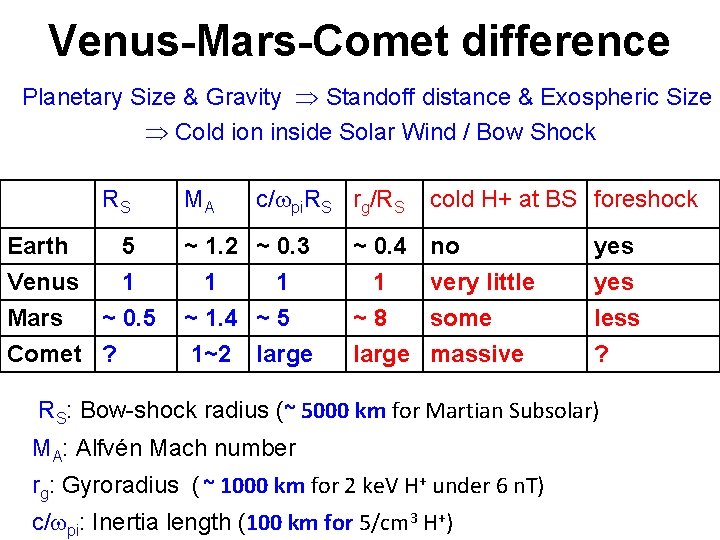
Venus-Mars-Comet difference Planetary Size & Gravity Standoff distance & Exospheric Size Cold ion inside Solar Wind / Bow Shock RS MA c/ pi. RS rg/RS cold H+ at BS foreshock Earth 5 Venus 1 Mars ~ 0. 5 ~ 1. 2 ~ 0. 3 1 1 ~ 1. 4 ~ 5 ~ 0. 4 no 1 very little ~8 some yes less Comet ? 1~2 large massive ? large RS: Bow-shock radius (~ 5000 km for Martian Subsolar) MA: Alfvén Mach number rg: Gyroradius (~ 1000 km for 2 ke. V H+ under 6 n. T) c/ pi: Inertia length (100 km for 5/cm 3 H+)