
Oxygen Basic Concepts Dr N Chandra Kumar Consultant
Oxygen: Basic Concepts Dr N Chandra Kumar Consultant Neonatologist Cloud Nine Hospital Chennai
Objectives • What is oxygen? What is its role in body function? • How is oxygen transported in the body? • What is hypoxia and hyperoxia? • What are the harms / potential toxicities of hypoxia and hyperoxia?
Oxygen • Oxygen, expressed as O 2, is a colorless, odorless gas • Oxygen is available to us from atmospheric air • Normal concentration in air- 21% • O 2 is absorbed in to our body from the air we breathe in

Oxygen- its role in normal body function • Essential for functioning of each and every cell of the body • Energy synthesis (ATP)- cellular respiration • This energy is required for normal functioning of the cell • Synthesis of structural proteins • Synthesis of functional proteins • Other metabolic reactions • Lack of oxygen- depletion of energy- CELL DEATH
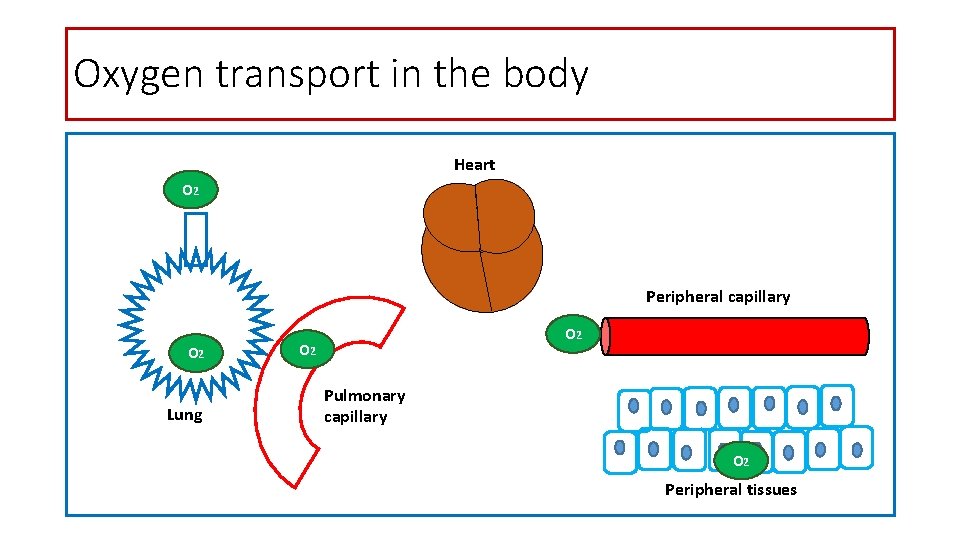
Oxygen transport in the body Heart O 2 Peripheral capillary O 2 Lung O 2 Pulmonary capillary O 2 Peripheral tissues
Oxygenation- How to measure? • Oxygen delivered is expressed as Fi. O 2 • Oxygen is transported • Bound to Hemoglobin • As dissolved oxygen • Oxygenation can be expressed as • Pa. O 2 (partial pressure of oxygen)- Pressure exerted by dissolved oxygen • Sp. O 2 (% saturation of oxygen)-% of Hb totally bound to oxygen
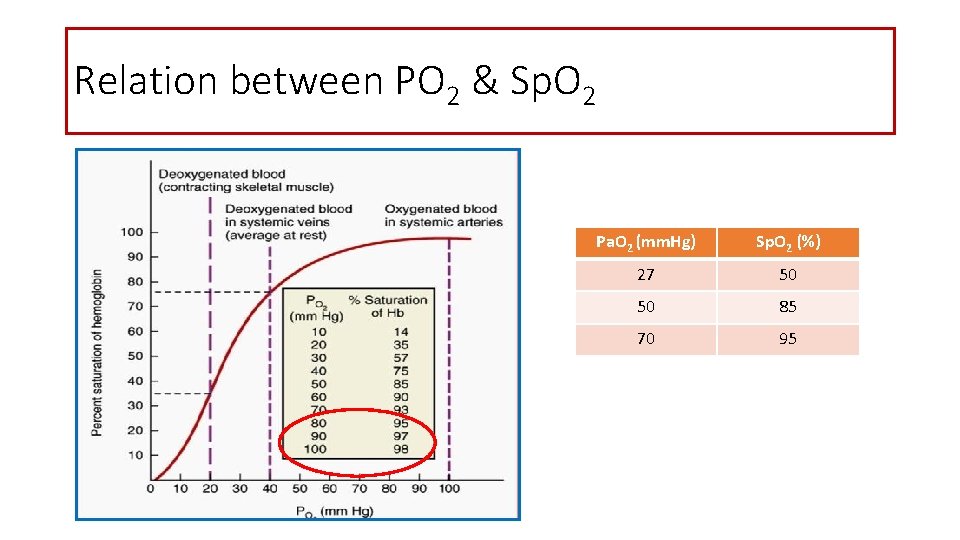
Relation between PO 2 & Sp. O 2 Pa. O 2 (mm. Hg) Sp. O 2 (%) 27 50 50 85 70 95
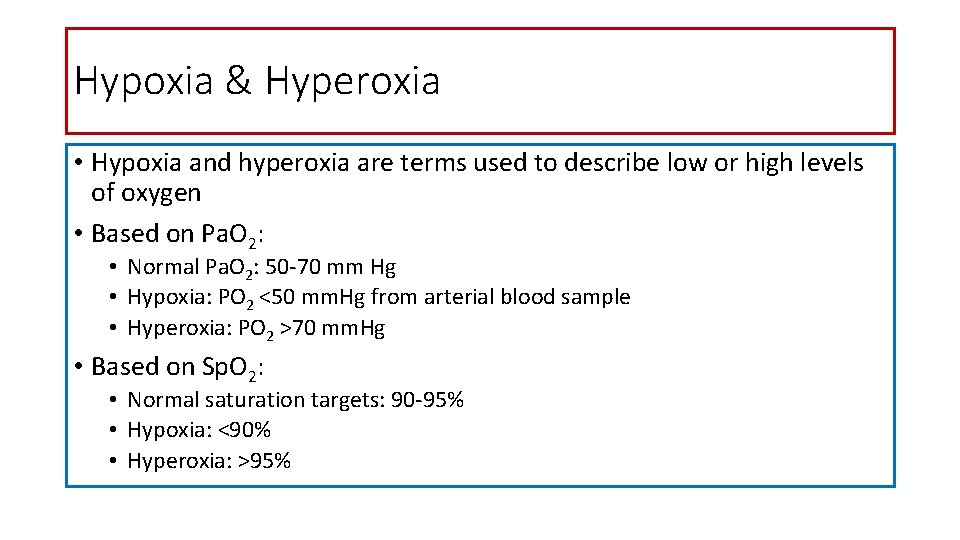
Hypoxia & Hyperoxia • Hypoxia and hyperoxia are terms used to describe low or high levels of oxygen • Based on Pa. O 2: • Normal Pa. O 2: 50 -70 mm Hg • Hypoxia: PO 2 <50 mm. Hg from arterial blood sample • Hyperoxia: PO 2 >70 mm. Hg • Based on Sp. O 2: • Normal saturation targets: 90 -95% • Hypoxia: <90% • Hyperoxia: >95%
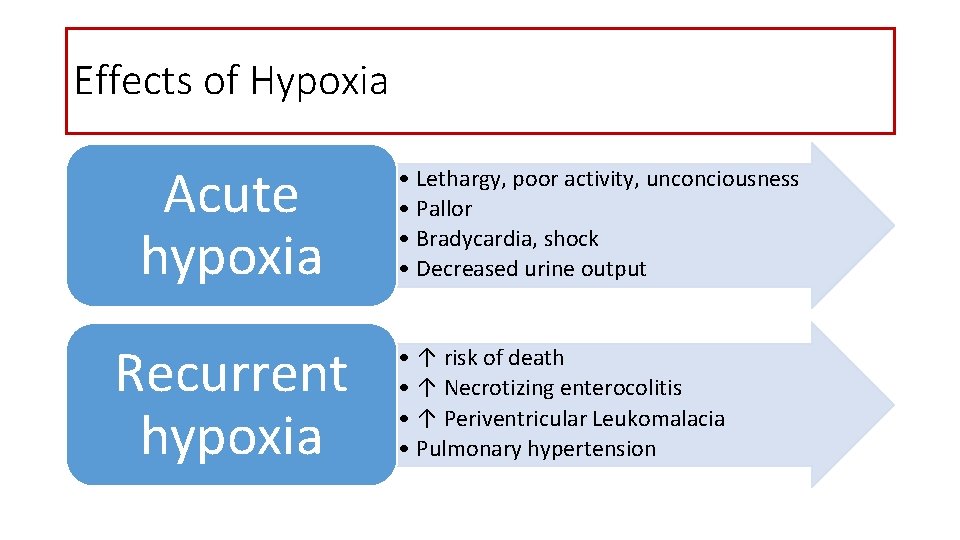
Effects of Hypoxia Acute hypoxia Recurrent hypoxia • Lethargy, poor activity, unconciousness • Pallor • Bradycardia, shock • Decreased urine output • ↑ risk of death • ↑ Necrotizing enterocolitis • ↑ Periventricular Leukomalacia • Pulmonary hypertension
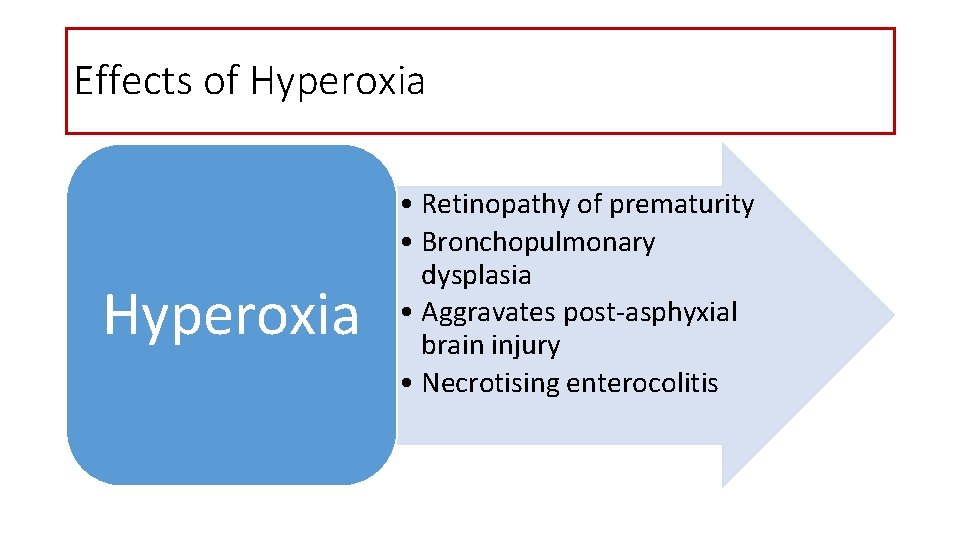
Effects of Hyperoxia • Retinopathy of prematurity • Bronchopulmonary dysplasia • Aggravates post-asphyxial brain injury • Necrotising enterocolitis
Monitoring oxygen status • Clinical identification- Not possible • Continuous monitoring with pulse-oximeter is essential • At higher oxygen saturation ranges Sp. O 2 is not reliable – fails to detect hyperoxia • Desired oxygen saturation target is 90 -95%
Key messages… • Oxygen is essential for normal function of the body • Both hypoxia and hyperoxia are harmful to preterm babies • Monitoring by pulseoximetry is essential • Maintaining optimal oxygen saturation targets is essential to prevent harmful effects of hypoxia or hyperoxia

Thank You
- Slides: 13