
OxyAcetylene Torches PPE n Shade 5 minumum goggles
- Slides: 15
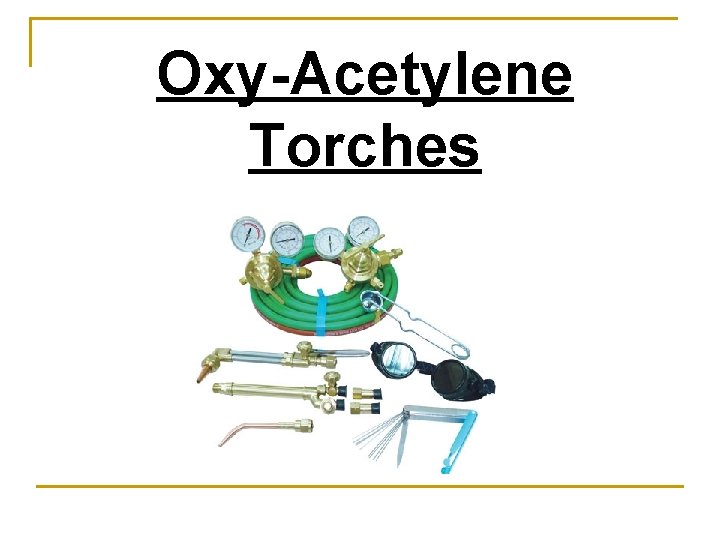
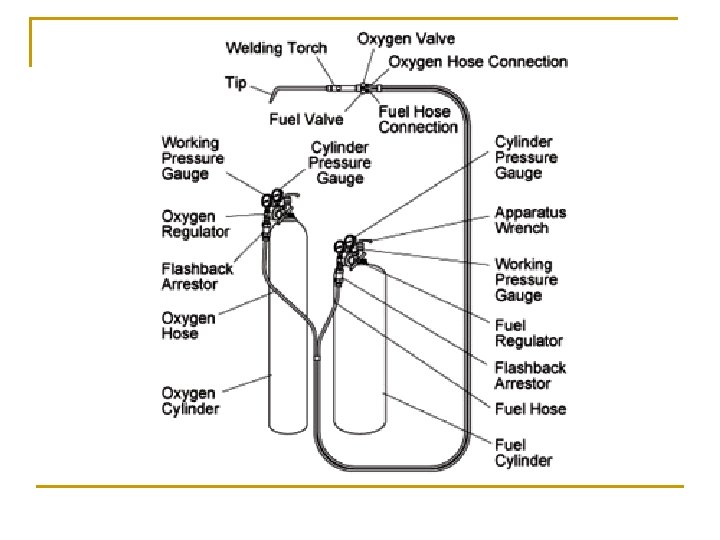
Oxy-Acetylene Torches
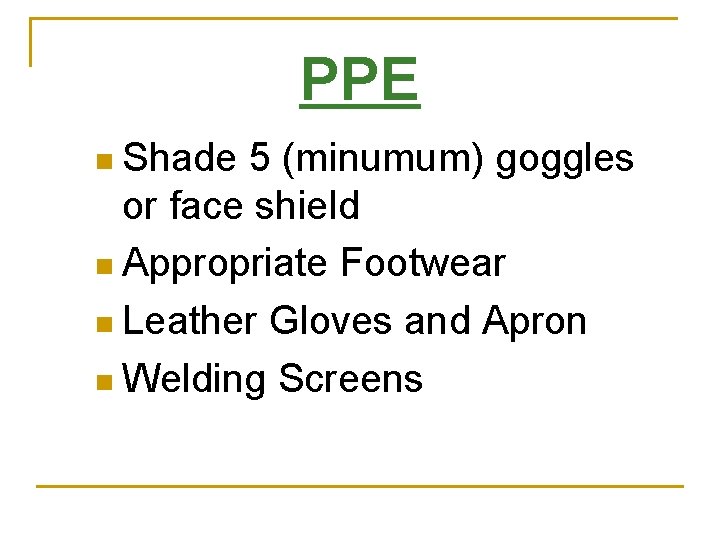
PPE n Shade 5 (minumum) goggles or face shield n Appropriate Footwear n Leather Gloves and Apron n Welding Screens
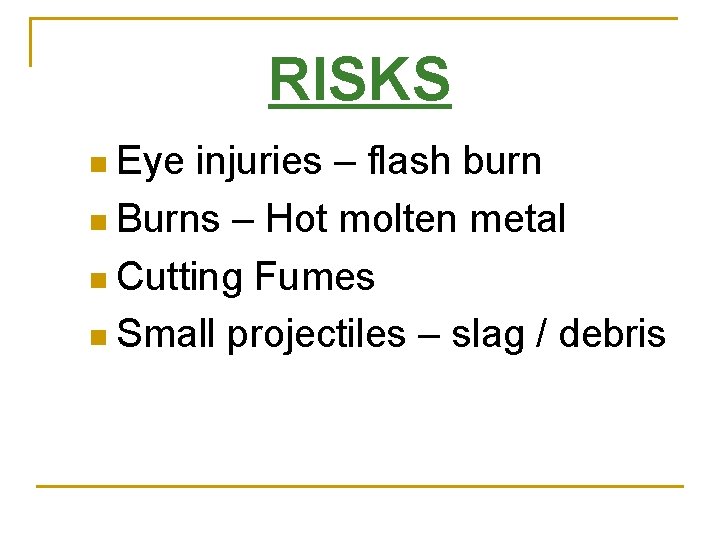
RISKS n Eye injuries – flash burn n Burns – Hot molten metal n Cutting Fumes n Small projectiles – slag / debris
GENERAL RULES n n Secure cylinders properly Cylinder caps must be in place when being stored (in a well ventilated area) or when being moved
GENERAL RULES n n n Keep welding equipment free of oil and grease Report any leaking hoses or connections immediately Leak test after changing a cylinder
GENERAL RULES n Do not carry a butane lighter or other flammables in your pocket
BEFORE STARTING n n n Advise and protect observers Ensure ventilation system is turned on Check for flammable substances
BEFORE STARTING n n Check the condition of the hoses and fittings Ensure all connectors are fastened securely
TO SAFELY USE: n Take a balanced stance n Plan your cuts n Hold torch to within 1/16” of work piece n Take breaks to relieve arm fatigue
TO SAFELY USE: n n n Use a flint lighter (striker) to ignite torch Use a fence for straight cuts Always pick up freshly cut pieces with tongs or pliers
TO SAFELY USE n n Ensure safety glasses are in place when chipping slag from cut edges Keep sparks and flames away from cylinders
TO SAFELY USE n n n Point lighted torch away from yourself and others Follow industry approved procedures at all times In case of backfire, turn off acetylene valve first
WHEN FINISHED n Shut down torches using industry approved procedure n Clean up cuttings from table and floor with a bench brush and broom after they cool n Remove all scraps for disposal
BEWARE FRESHLY CUT OR WELDED MATERIAL MAY BE HOT TO TOUCH AND HAVE SHARP EDGES