
Oxidative Gelation Its Influence on Processing and EndUse

- Slides: 24
Oxidative Gelation – Its Influence on Processing and End-Use in Soft Wheat Flour A. D. Bettge USDA-ARS Western Wheat Quality Laboratory Pullman, WA USA
Quality, Variation and Control • Controlling, or understanding variation in quality is important, scientifically and economically. • Defining the biochemical influence(s) on quality and developing reliable and informative testing methods allows this control or understanding • Allows development of new wheat varieties that require reduced processing input to obtain desired quality. Also shortens product label. • Viscosity is a little-studied quality attribute.
Viscosity and End-Use Quality Variation • Viscosity is an important consideration in batter-based processes, i. e. cakes, batter coatings, donuts, pancake mixes, etc • Some biochemical components may contribute both to viscosity and to endproduct quality • Substantial unexplained variation exists
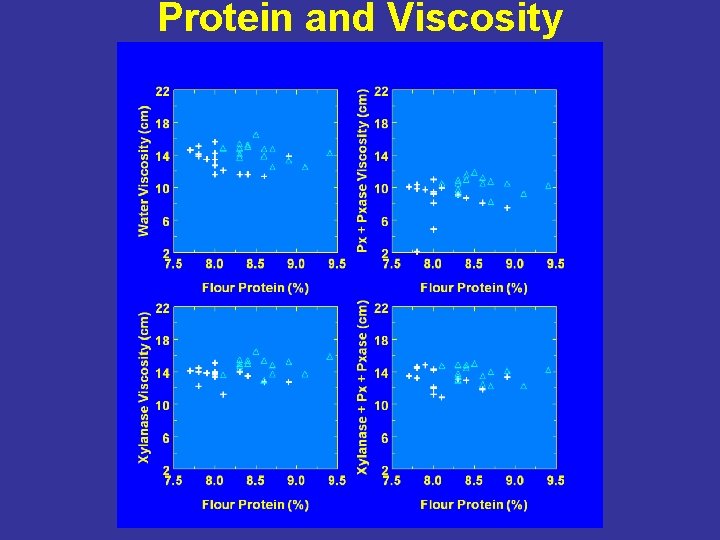
Variation in Viscosity • Protein, especially HMW glutenins, can influence viscosity. Lactic acid SRC or SDSsedimentation are tests • Other water-absorbing compounds also contribute: arabinoxylans (aka pentosans, hemicellulose, non-starch carbohydrate). Sucrose SRC is the test • Leavening gas (bubbles) affect viscosity • Focus here is arabinoxylans and protein
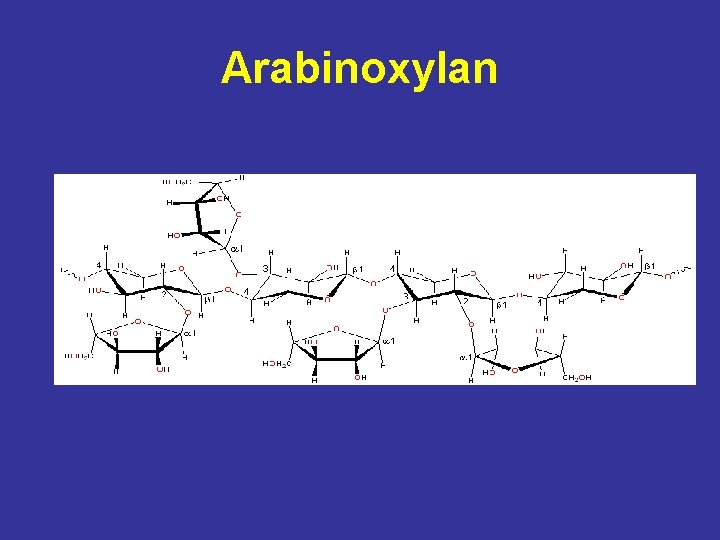
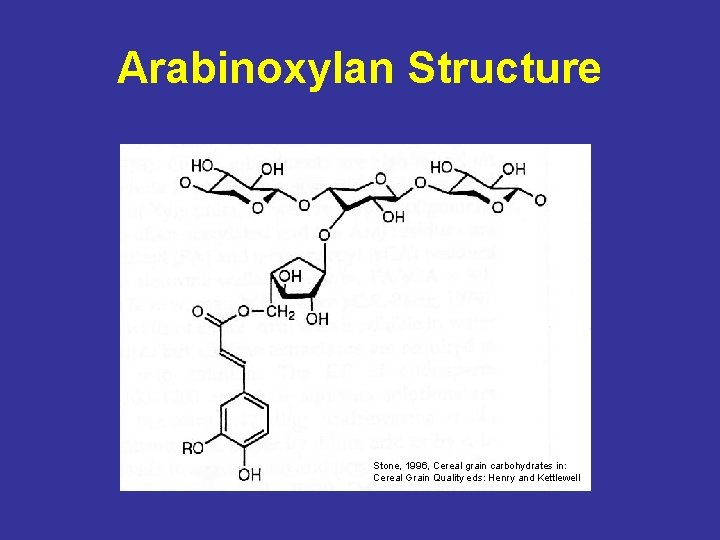
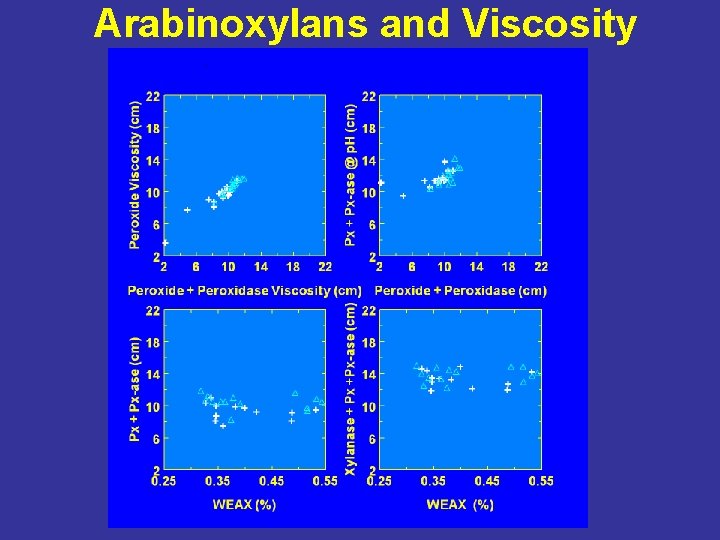
Arabinoxylans and Viscosity • Xylose backbone, variously substituted with Arabinose • Degree of substitution and pattern of substitution determines water solubility • Broadly, functionally categorized as water soluble or water insoluble • Water soluble arabinoxylans also have ferulic acid moieties attached to arabinose sidechains (insolubles already have ferulic acid cross-linked as part of cell walls)
Arabinoxylan
Arabinoxylan Structure Stone, 1996, Cereal grain carbohydrates in: Cereal Grain Quality eds: Henry and Kettlewell
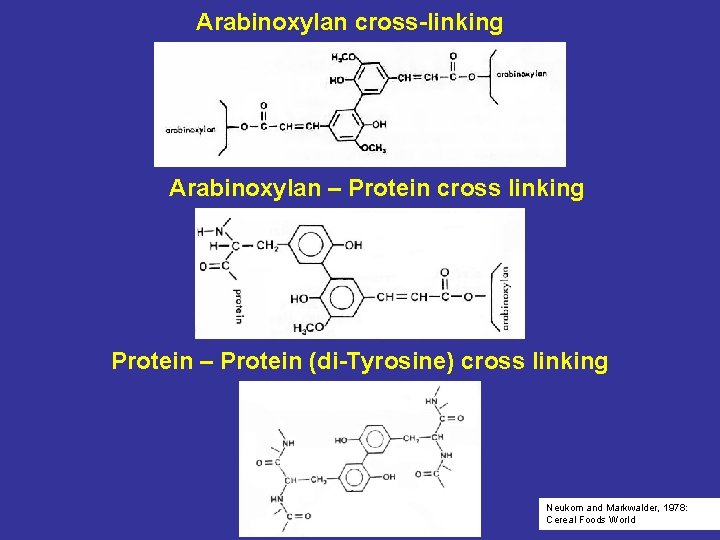
Arabinoxylans and Oxidative Gelation • Under appropriate conditions, ferulic acid moieties can cross link with other ferulic acid moieties or protein side chains forming a large polymeric oxidative gel that sequesters water and creates viscosity • Water soluble arabinoxylans form oxidative gels; insoluble arabinoxylans do not appear to do so (already cross-linked) • Insoluble arabinoxylans adsorb water (not sequester) and affect Aw
Arabinoxylan cross-linking Arabinoxylan – Protein cross linking Protein – Protein (di-Tyrosine) cross linking Neukom and Markwalder, 1978: Cereal Foods World
Modifiers of Arabinoxylan Concentration and Activity • Endogenous (sometimes exogenous or added) enzymes • Inhibited by TAXI (Triticum aestivum xylanase inhibitor) or XIP (xylanase inhibitor protein) – Courtin and Delcour. • p. H – elevated p. H solubilizes esterified arabinoxylans
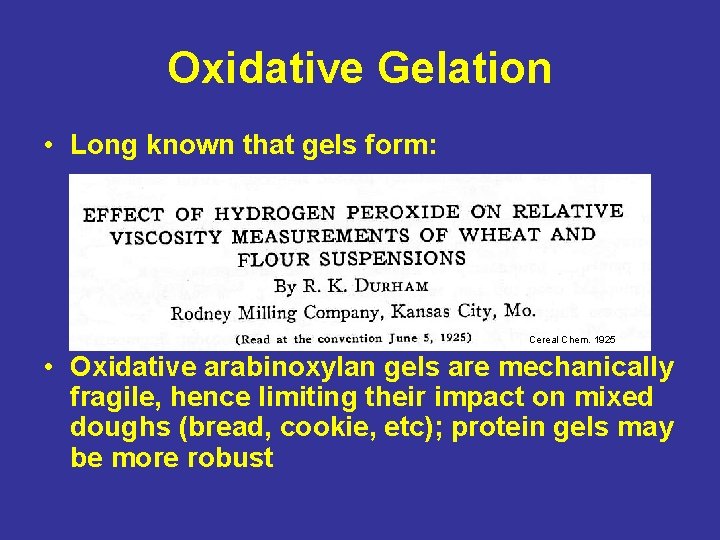
Oxidative Gelation • Long known that gels form: Cereal Chem. 1925 • Oxidative arabinoxylan gels are mechanically fragile, hence limiting their impact on mixed doughs (bread, cookie, etc); protein gels may be more robust
Oxidative Gel Impact on Quality • Viscosity can retain leavening gas in lowgluten products, allowing greater volume • Potential detrimental effect on low-moisture products such as cookies or crackers through sequestered water, low spread or high volume and “stickiness” • Potential beneficial effect on cakes, batters and batter coatings where viscosity prevents the “settling” that causes separation of flour suspensions and loss of leavening gasses
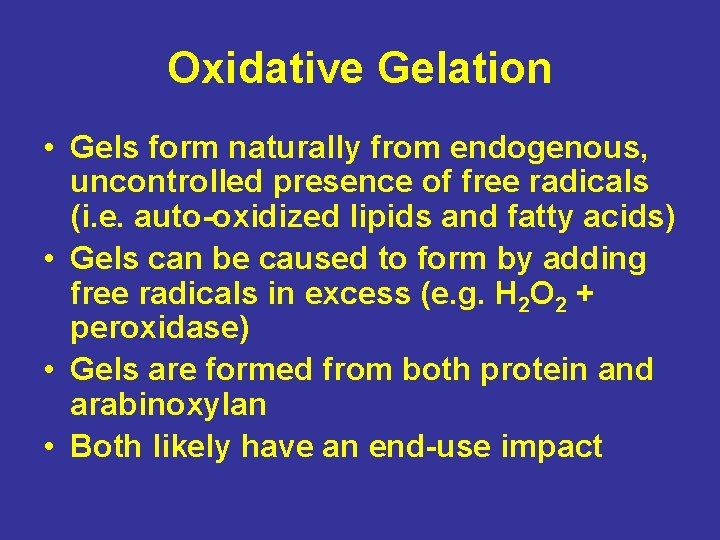
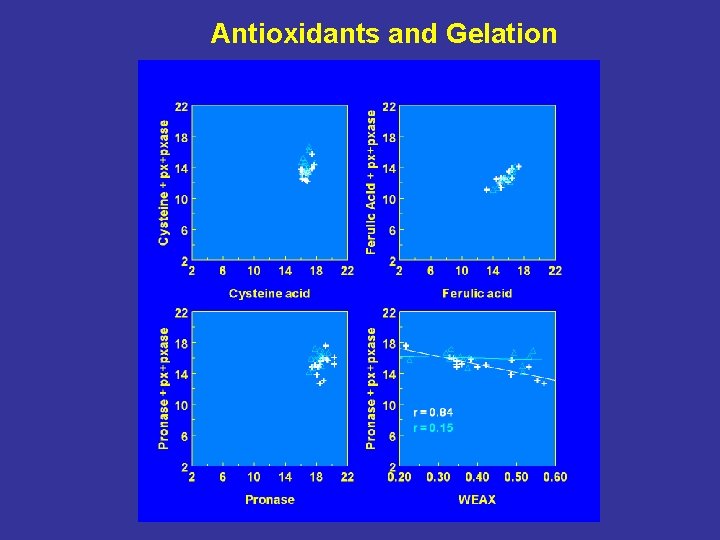
Oxidative Gelation • Gels form naturally from endogenous, uncontrolled presence of free radicals (i. e. auto-oxidized lipids and fatty acids) • Gels can be caused to form by adding free radicals in excess (e. g. H 2 O 2 + peroxidase) • Gels are formed from both protein and arabinoxylan • Both likely have an end-use impact
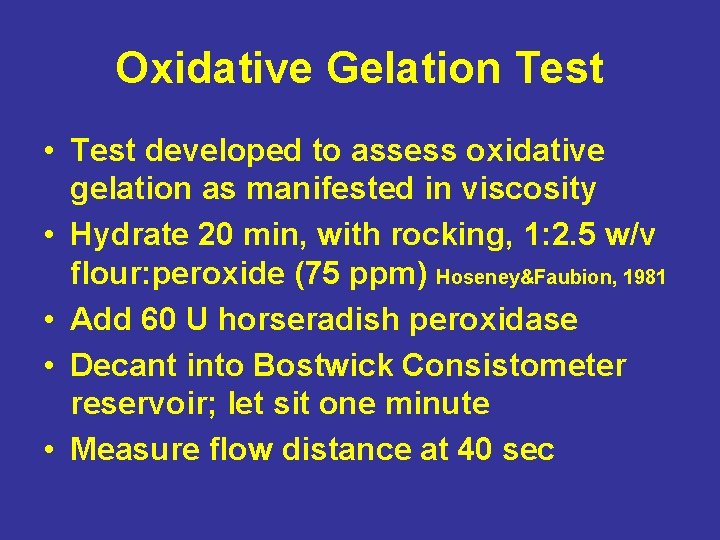
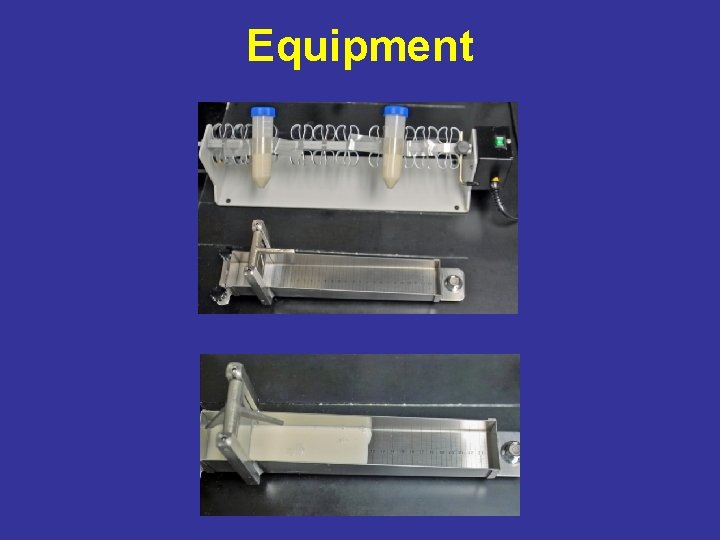
Oxidative Gelation Test • Test developed to assess oxidative gelation as manifested in viscosity • Hydrate 20 min, with rocking, 1: 2. 5 w/v flour: peroxide (75 ppm) Hoseney&Faubion, 1981 • Add 60 U horseradish peroxidase • Decant into Bostwick Consistometer reservoir; let sit one minute • Measure flow distance at 40 sec
Equipment
Protein and Viscosity
Arabinoxylans and Viscosity
Antioxidants and Gelation
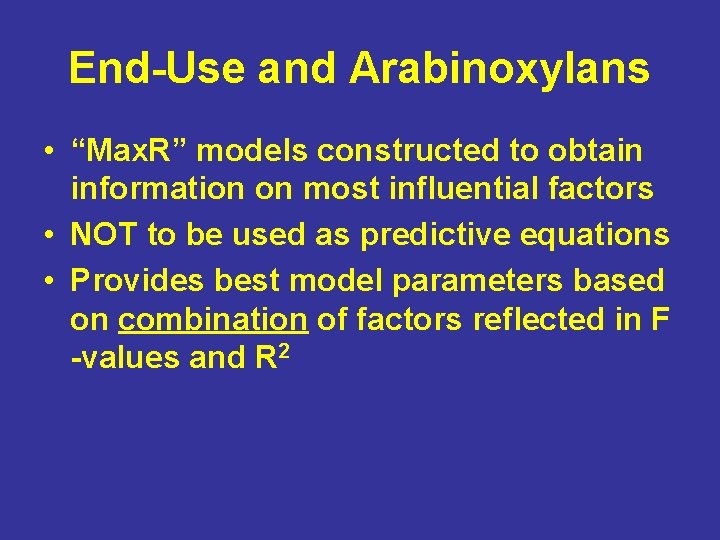
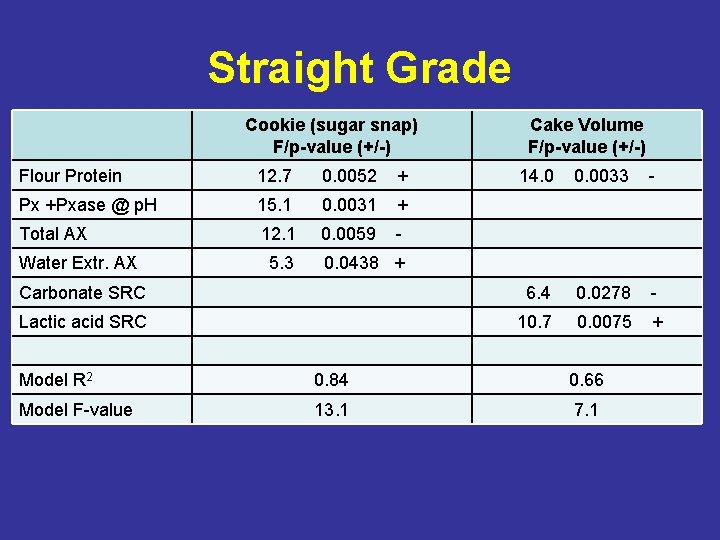
End-Use and Arabinoxylans • “Max. R” models constructed to obtain information on most influential factors • NOT to be used as predictive equations • Provides best model parameters based on combination of factors reflected in F -values and R 2
Straight Grade Cookie (sugar snap) F/p-value (+/-) Flour Protein 12. 7 0. 0052 + Px +Pxase @ p. H 15. 1 0. 0031 + Total AX 12. 1 0. 0059 - Cake Volume F/p-value (+/-) 14. 0 0. 0033 - Carbonate SRC 6. 4 0. 0278 - Lactic acid SRC 10. 7 0. 0075 + Water Extr. AX 5. 3 0. 0438 + Model R 2 0. 84 0. 66 Model F-value 13. 1 7. 1
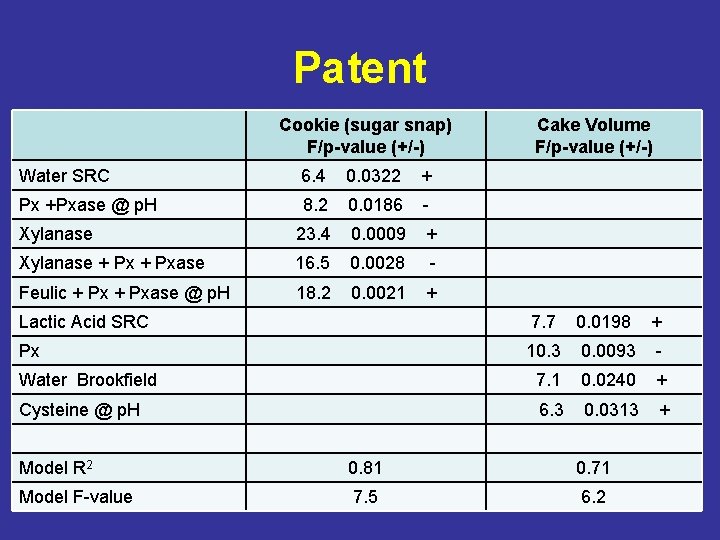
Patent Cookie (sugar snap) F/p-value (+/-) Water SRC 6. 4 0. 0322 + Px +Pxase @ p. H 8. 2 0. 0186 - Xylanase 23. 4 0. 0009 + Xylanase + Pxase 16. 5 0. 0028 - Feulic + Pxase @ p. H 18. 2 0. 0021 + Cake Volume F/p-value (+/-) Lactic Acid SRC 7. 7 0. 0198 + Px 10. 3 0. 0093 - Water Brookfield 7. 1 0. 0240 + Cysteine @ p. H 6. 3 0. 0313 + Model R 2 0. 81 0. 71 Model F-value 7. 5 6. 2
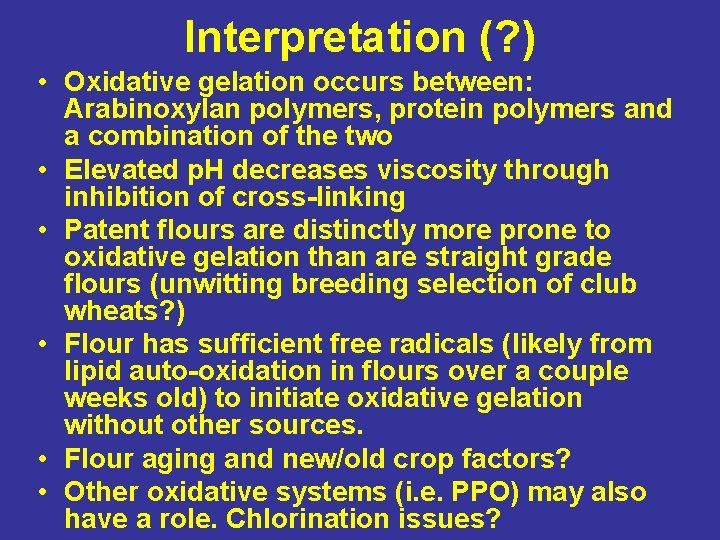
Interpretation (? ) • Oxidative gelation occurs between: Arabinoxylan polymers, protein polymers and a combination of the two • Elevated p. H decreases viscosity through inhibition of cross-linking • Patent flours are distinctly more prone to oxidative gelation than are straight grade flours (unwitting breeding selection of club wheats? ) • Flour has sufficient free radicals (likely from lipid auto-oxidation in flours over a couple weeks old) to initiate oxidative gelation without other sources. • Flour aging and new/old crop factors? • Other oxidative systems (i. e. PPO) may also have a role. Chlorination issues?
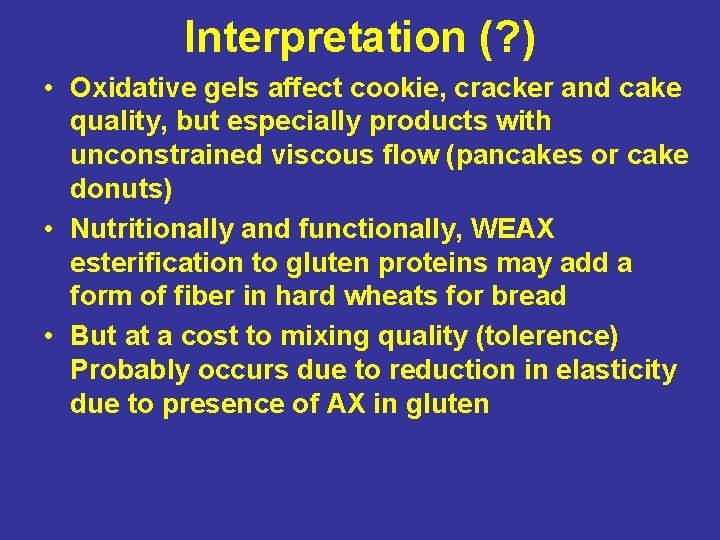
Interpretation (? ) • Oxidative gels affect cookie, cracker and cake quality, but especially products with unconstrained viscous flow (pancakes or cake donuts) • Nutritionally and functionally, WEAX esterification to gluten proteins may add a form of fiber in hard wheats for bread • But at a cost to mixing quality (tolerence) Probably occurs due to reduction in elasticity due to presence of AX in gluten
Thanks! Visit us: http: //ars. usda. gov/Services/docs. htm? docid=10917 http: //www. wsu. edu/~wwql