
OxidationReduction Reactions Part 1 Notes 11 Beginning Unit
Oxidation-Reduction Reactions Part 1 Notes 11 Beginning Unit 4
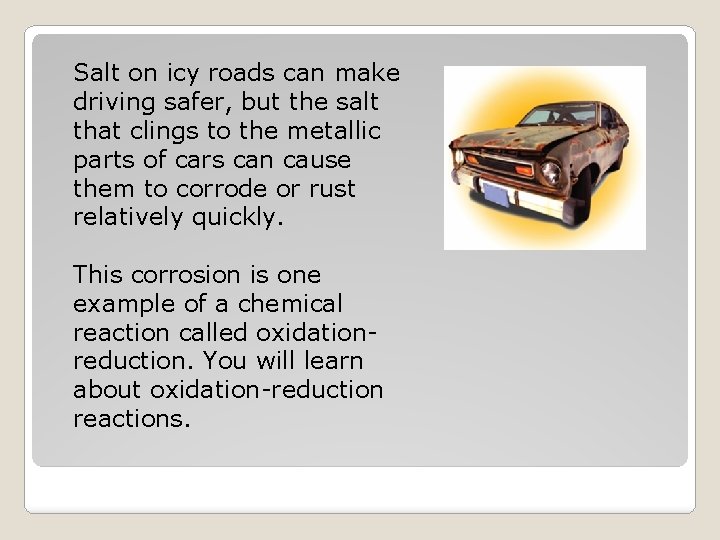
Salt on icy roads can make driving safer, but the salt that clings to the metallic parts of cars can cause them to corrode or rust relatively quickly. This corrosion is one example of a chemical reaction called oxidationreduction. You will learn about oxidation-reduction reactions.
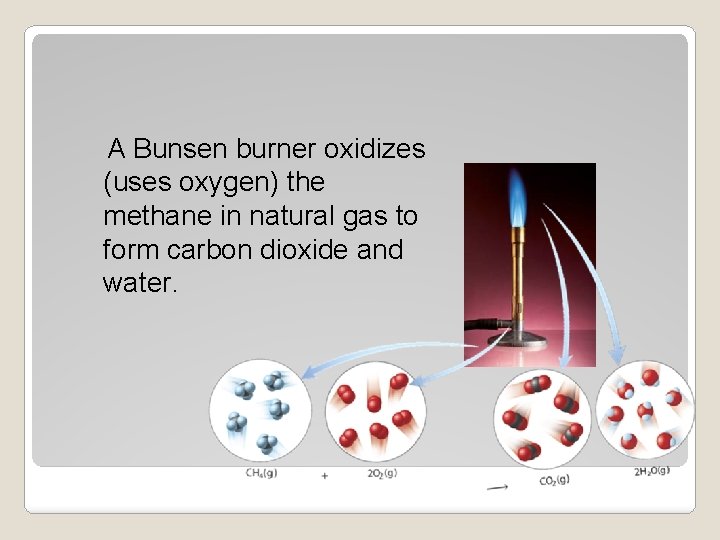
A Bunsen burner oxidizes (uses oxygen) the methane in natural gas to form carbon dioxide and water.
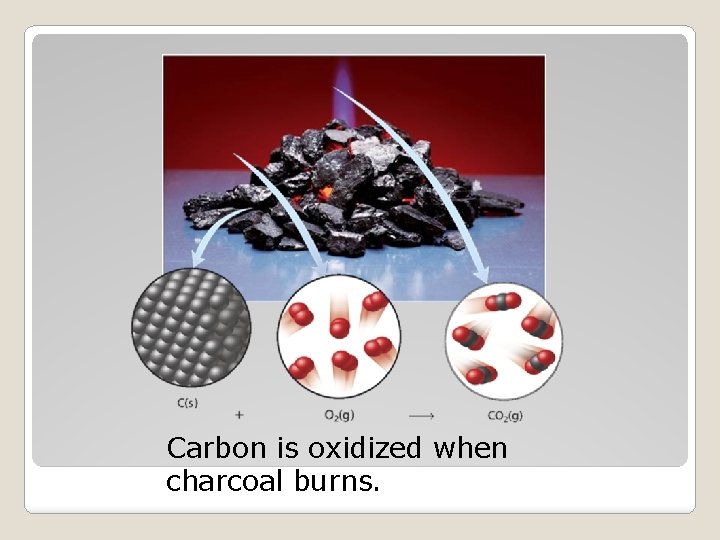
Carbon is oxidized when charcoal burns.

Not all substances that are oxidized involve burning. Iron is oxidized when it rusts.

�The substance gaining oxygen is oxidized, while the substance losing oxygen is reduced. �These reactions are called oxidationreduction reactions and are also known as redox reactions. �Not all redox reactions involve oxygen… The definition NOW has been extended… Oxidation-Reduction
�Losing electrons is oxidation. Gaining electrons is reduction. �Oxidation is now defined to mean complete or partial loss of electrons or gain of oxygen. �Reduction is now defined to mean complete or partial gain of electrons or loss of oxygen. Redox Definitions
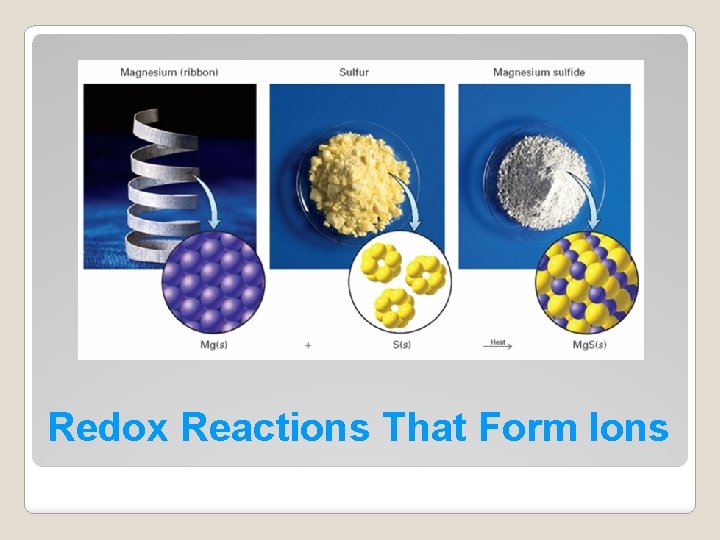
Redox Reactions That Form Ions
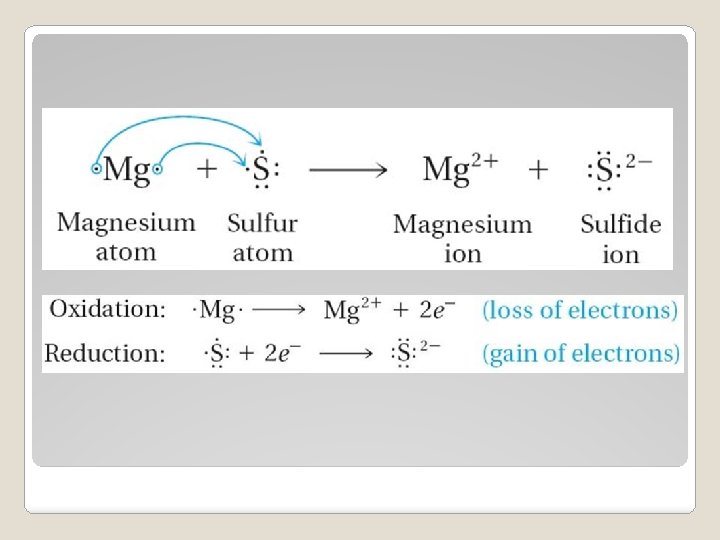
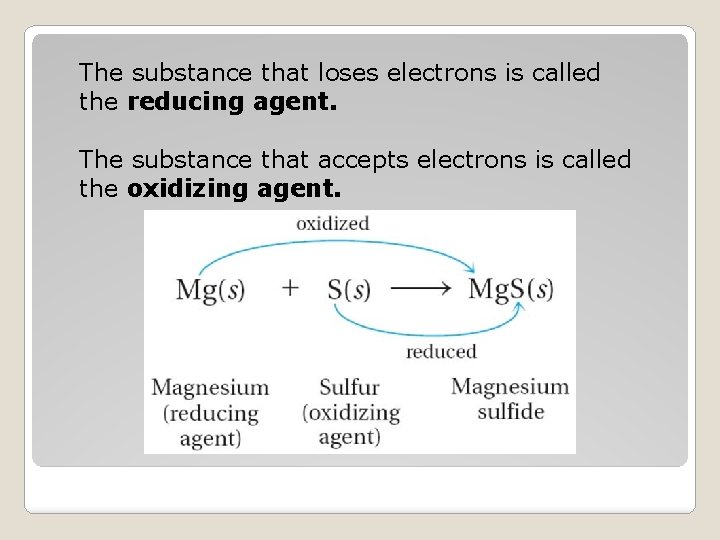
The substance that loses electrons is called the reducing agent. The substance that accepts electrons is called the oxidizing agent.
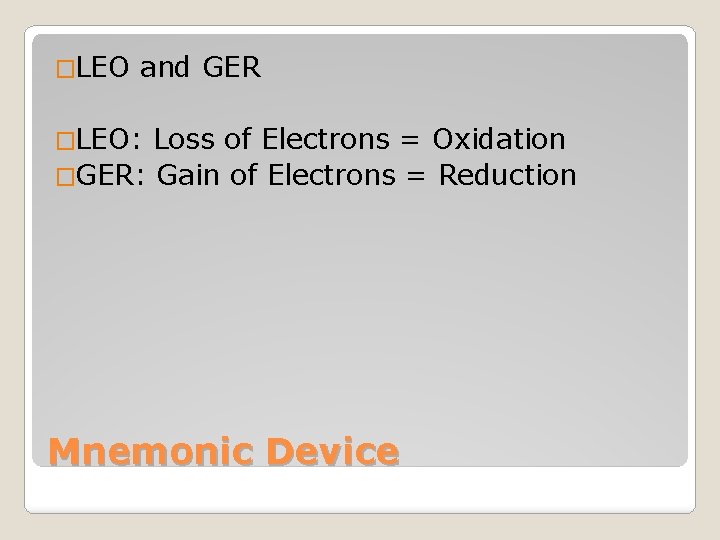
�LEO and GER �LEO: Loss of Electrons = Oxidation �GER: Gain of Electrons = Reduction Mnemonic Device
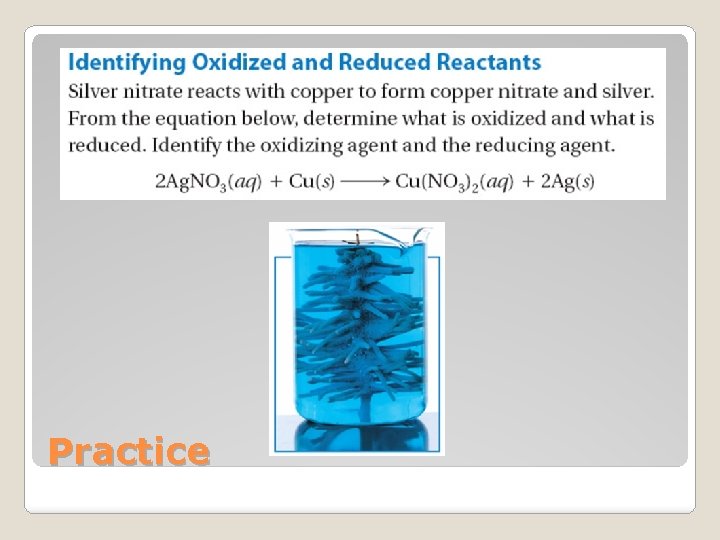
Practice
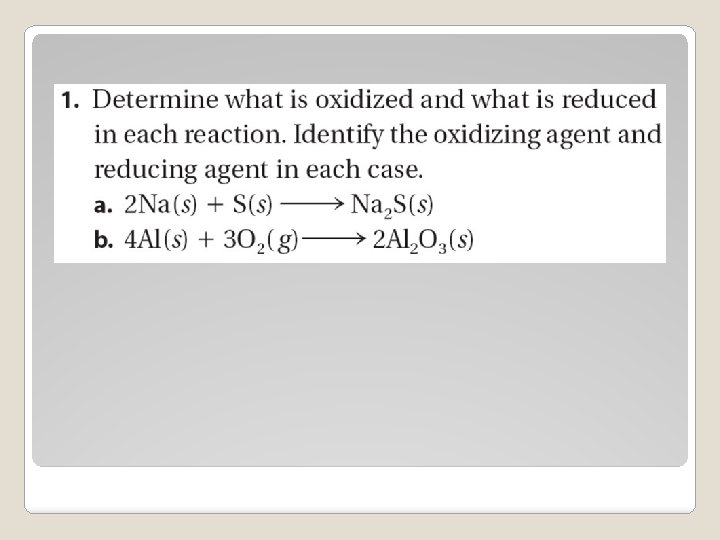
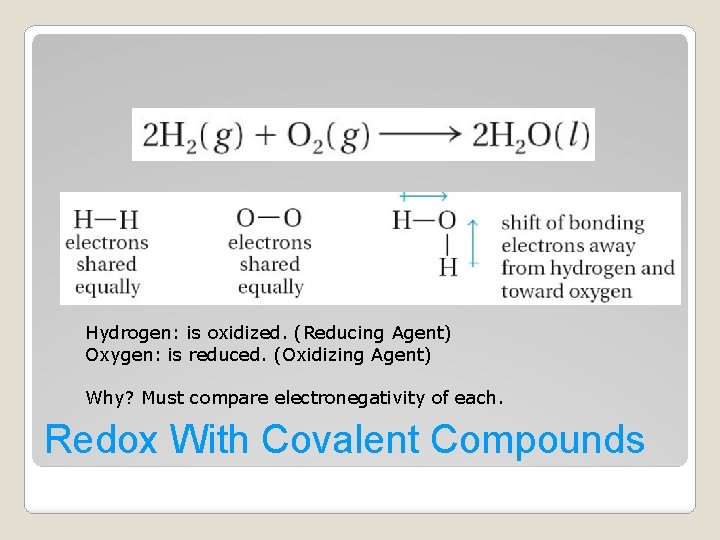
Hydrogen: is oxidized. (Reducing Agent) Oxygen: is reduced. (Oxidizing Agent) Why? Must compare electronegativity of each. Redox With Covalent Compounds
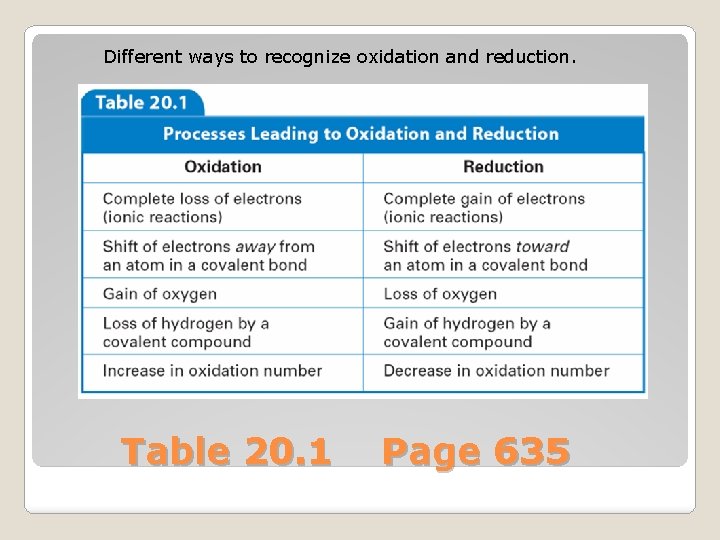
Different ways to recognize oxidation and reduction. Table 20. 1 Page 635
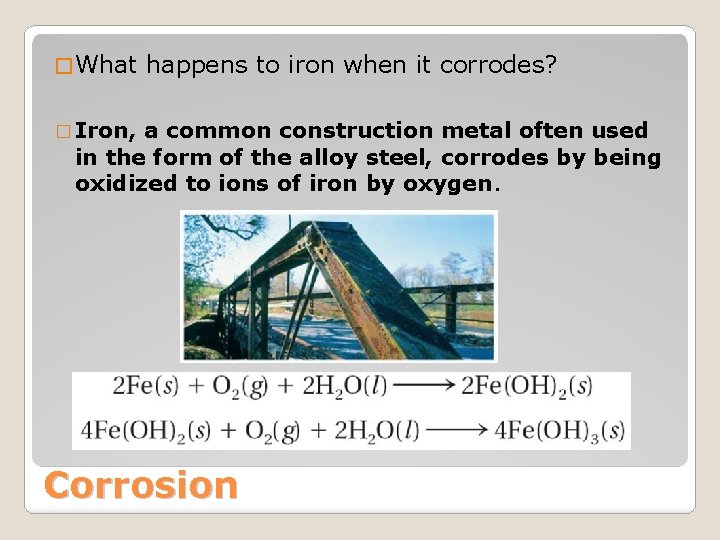
� What happens to iron when it corrodes? � Iron, a common construction metal often used in the form of the alloy steel, corrodes by being oxidized to ions of iron by oxygen. Corrosion
�Water in the environment accelerates corrosion. �The presence of salts and acids accelerates corrosion. Billions of Dollars spent every year trying to repair damage by corrosion…
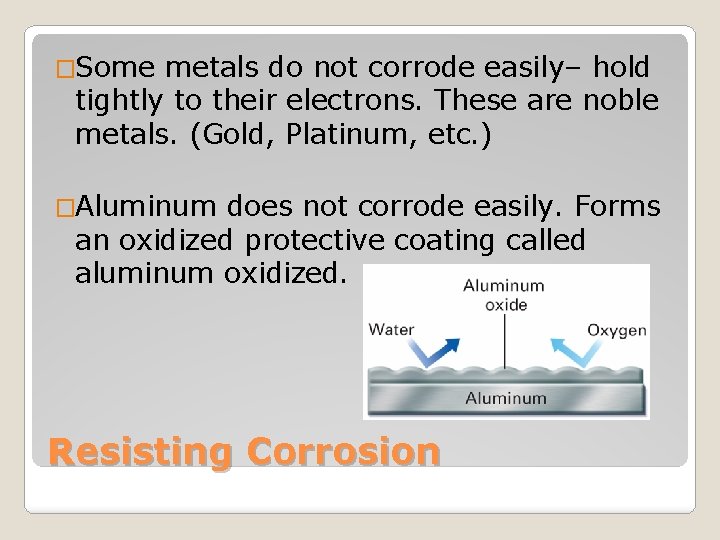
�Some metals do not corrode easily– hold tightly to their electrons. These are noble metals. (Gold, Platinum, etc. ) �Aluminum does not corrode easily. Forms an oxidized protective coating called aluminum oxidized. Resisting Corrosion
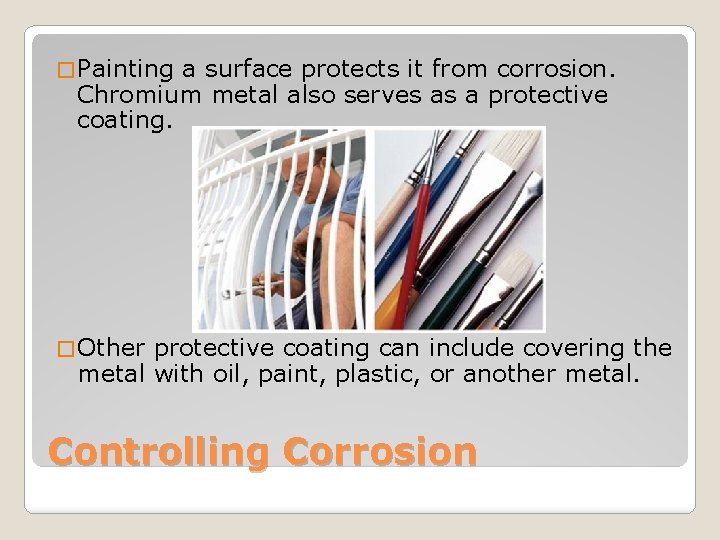
� Painting a surface protects it from corrosion. Chromium metal also serves as a protective coating. � Other protective coating can include covering the metal with oil, paint, plastic, or another metal. Controlling Corrosion
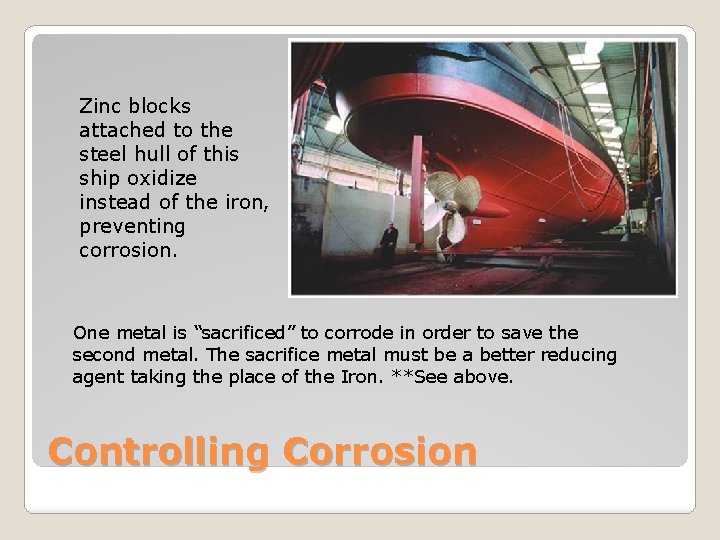
Zinc blocks attached to the steel hull of this ship oxidize instead of the iron, preventing corrosion. One metal is “sacrificed” to corrode in order to save the second metal. The sacrifice metal must be a better reducing agent taking the place of the Iron. **See above. Controlling Corrosion
◦ 1. Choose the correct words for the spaces. During oxidation, an element _______ electrons. During reduction, an element ____ electrons. �gains, loses �loses, gains �gains, donates �gains, accepts
◦ 2. Choose the correct words for the spaces. During reduction, a substance may _______ oxygen or ____ hydrogen. �gain, lose �lose, gain �gain, gain �lose, lose
◦ 3. The element that donates electrons in a redox reaction is called the reducing agent. This means the reducing agent is always �the more active element. �the less active element. �oxidized. �reduced.
◦ 4. Which substance is the reducing agent in the following chemical reaction? ◦ Fe 2 O 3 + 3 CO 2 Fe + 3 CO 2 �Fe 2 O 3 �CO �Fe �CO 2
◦ 5. The following equations describe the corrosion of iron to iron hydroxides in moist conditions. ◦ 2 Fe(s) + O 2(g) + 2 H 2 O(l) 2 Fe(OH)2(s) ◦ 4 Fe(OH)2(s) + O 2(g) + 2 H 2 O(l) 4 Fe(OH)3(s) ◦ What substances in the equations are being oxidized? �Fe(s) and Fe(OH)2(s) �the O 2(g) in both reactions �the O 2(g) and H 2 O(l) in both reactions �Fe(OH)2(s) and Fe(OH)3(s)
�Unit 4 Homework �Due Tuesday November 25. �If absent, turn it in BEFORE break. �Sections Assessments for ◦ Page 638, 643, and 654 Unit 4 Ch. 20
- Slides: 26