
OxidationReduction in Organic Chemistry Oxidation of a carbon
Oxidation-Reduction in Organic Chemistry Oxidation of a carbon atom corresponds to an increase in the number of oxygen atoms, and/or bonds to the carbon atom; and/or a decrease in the total number of hydrogen atoms bonded to the carbon atom.
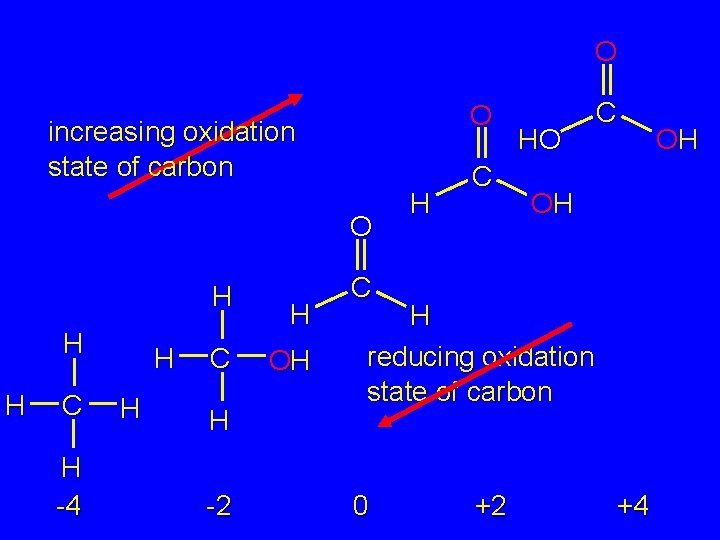
O O increasing oxidation state of carbon O H H H C H -4 H H C H -2 H OH H C HO C OH C H reducing oxidation state of carbon 0 +2 +4 OH
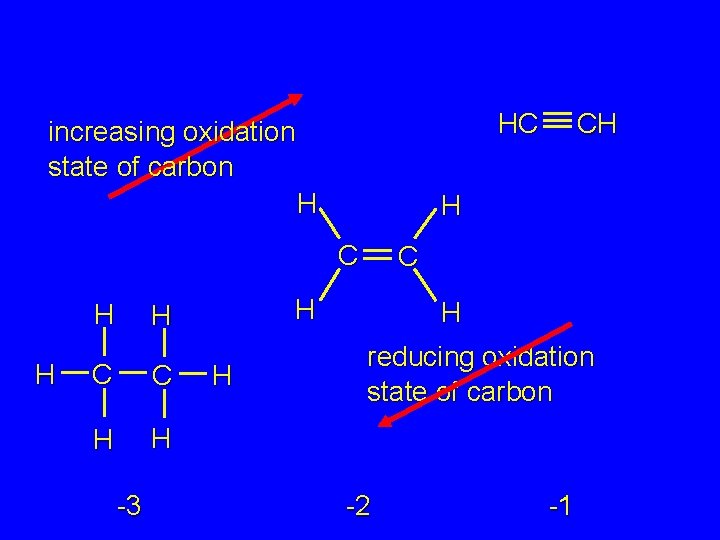
HC increasing oxidation state of carbon H H C C H H -3 C H H H CH H reducing oxidation state of carbon -2 -1
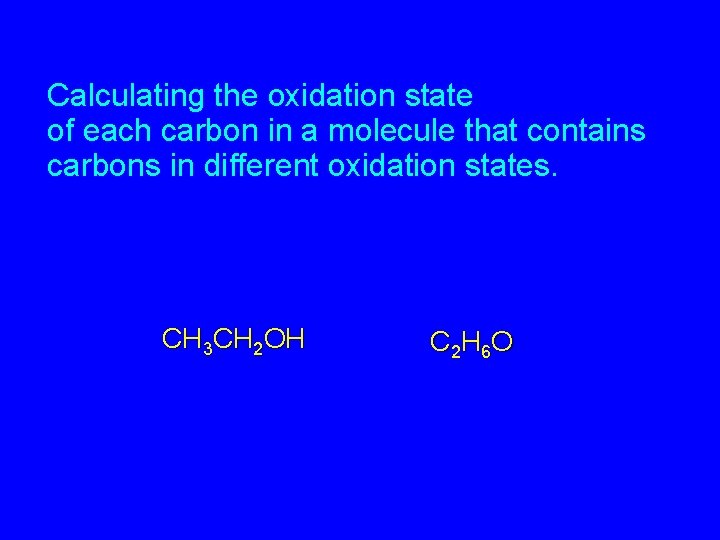
Calculating the oxidation state of each carbon in a molecule that contains carbons in different oxidation states. CH 3 CH 2 OH C 2 H 6 O

Calculating Oxidation Numbers • 1. Write the Lewis structure and include unshared electron pairs. H H H C C H H • • O • • H
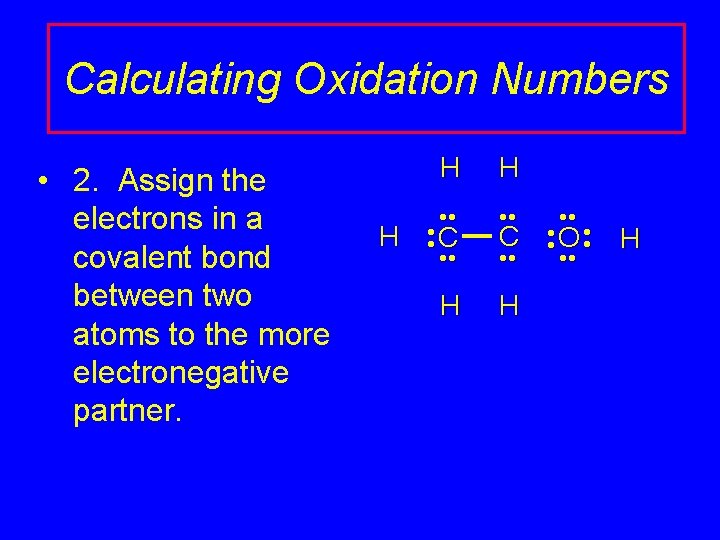
Calculating Oxidation Numbers • 2. Assign the electrons in a covalent bond between two atoms to the more electronegative partner. H H • • C • • O • • H • • H H H • • C
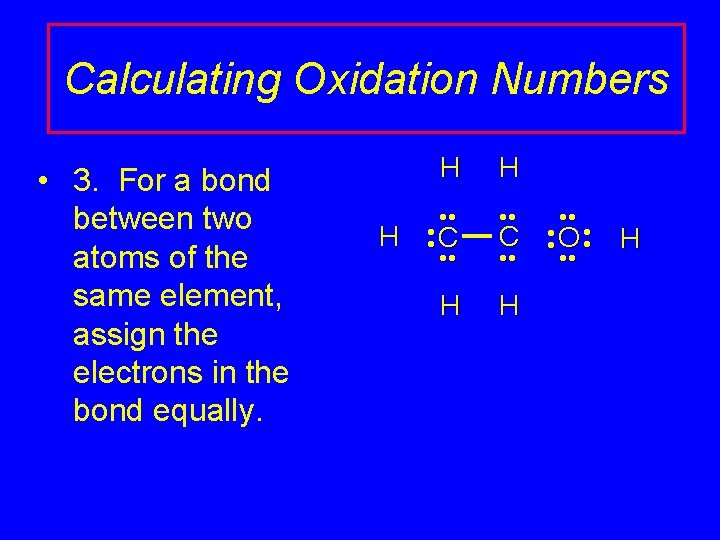
Calculating Oxidation Numbers • 3. For a bond between two atoms of the same element, assign the electrons in the bond equally. H H • • C • • O • • H • • H H H • • C
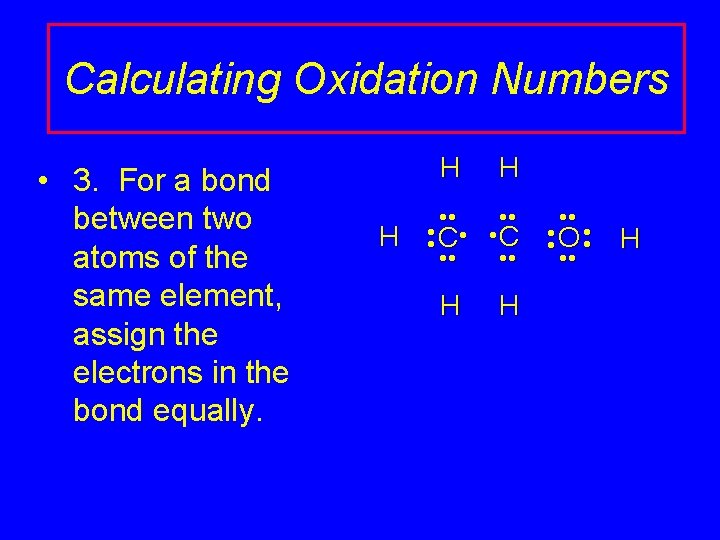
Calculating Oxidation Numbers • 3. For a bond between two atoms of the same element, assign the electrons in the bond equally. H H • • H • • C • • O • • H • •
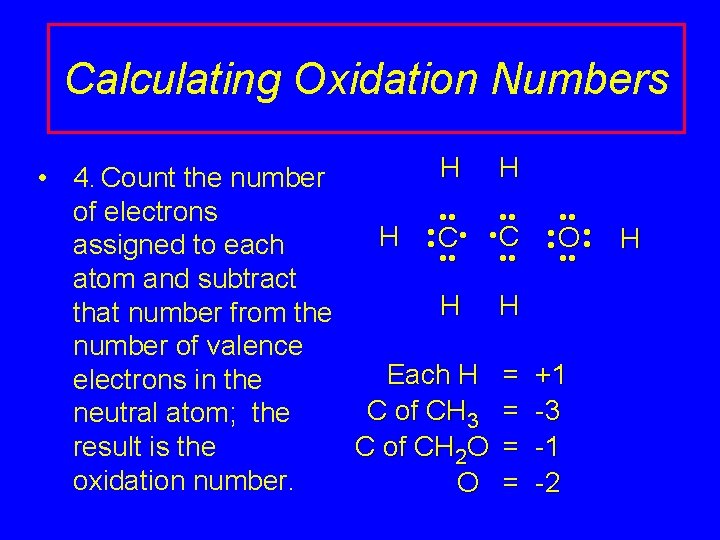
Calculating Oxidation Numbers H H • 4. Count the number of electrons • • H • • C • • C assigned to each • • atom and subtract H H that number from the number of valence Each H = electrons in the C of CH 3 = neutral atom; the result is the C of CH 2 O = oxidation number. O = • • O • • +1 -3 -1 -2 H
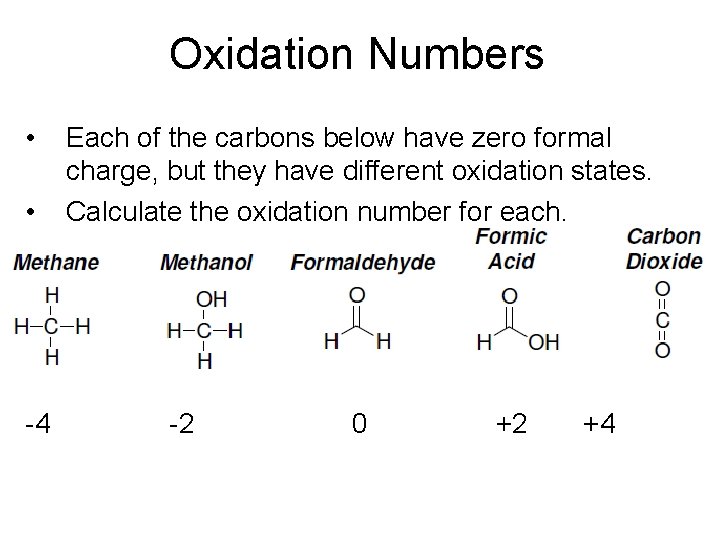
Oxidation Numbers • • -4 Each of the carbons below have zero formal charge, but they have different oxidation states. Calculate the oxidation number for each. -2 0 +2 +4
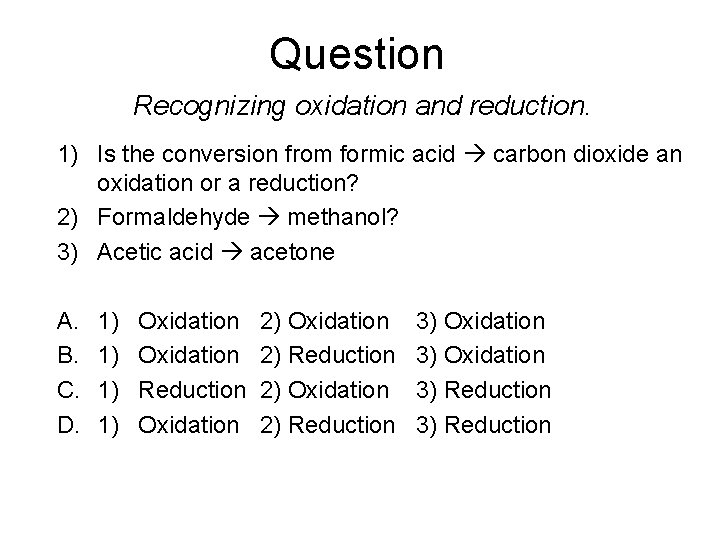
Question Recognizing oxidation and reduction. 1) Is the conversion from formic acid carbon dioxide an oxidation or a reduction? 2) Formaldehyde methanol? 3) Acetic acid acetone A. B. C. D. 1) 1) Oxidation Reduction Oxidation 2) Reduction 2) Oxidation 2) Reduction 3) Oxidation 3) Reduction
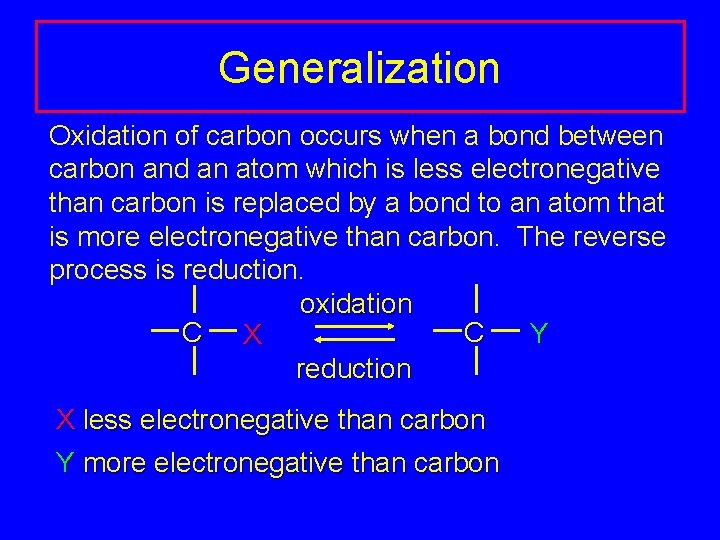
Generalization Oxidation of carbon occurs when a bond between carbon and an atom which is less electronegative than carbon is replaced by a bond to an atom that is more electronegative than carbon. The reverse process is reduction. oxidation C C X Y reduction X less electronegative than carbon Y more electronegative than carbon

Examples Oxidation CH 4 + Cl 2 CH 3 Cl + HCl Reduction CH 3 Cl + 2 Li CH 3 Li + Li. Cl
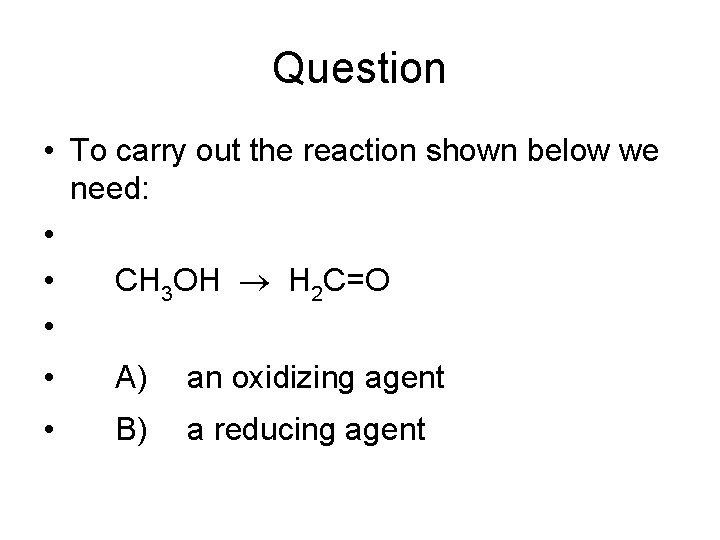
Question • To carry out the reaction shown below we need: • • CH 3 OH ® H 2 C=O • • A) an oxidizing agent • B) a reducing agent

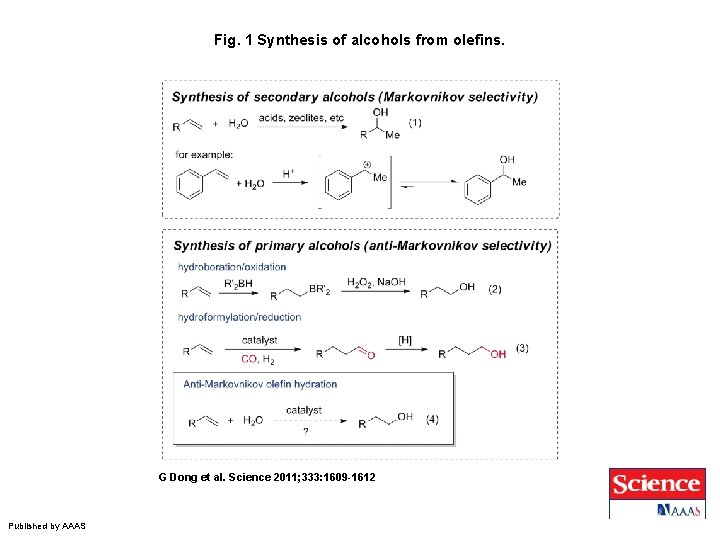
Fig. 1 Synthesis of alcohols from olefins. G Dong et al. Science 2011; 333: 1609 -1612 Published by AAAS
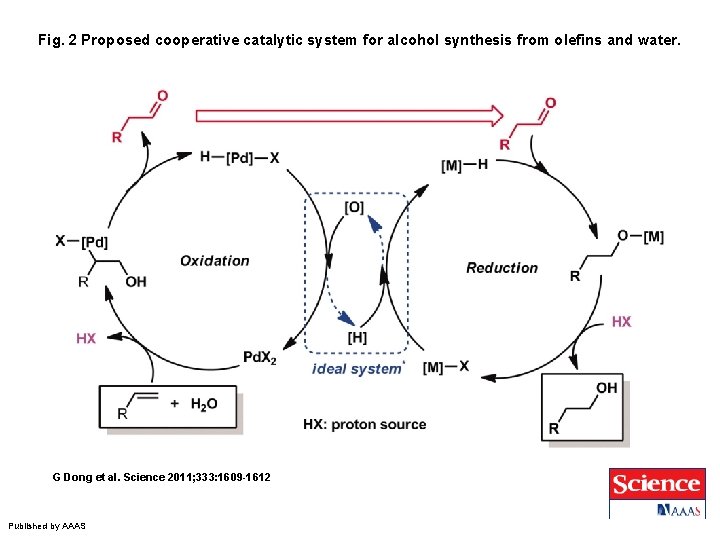
Fig. 2 Proposed cooperative catalytic system for alcohol synthesis from olefins and water. G Dong et al. Science 2011; 333: 1609 -1612 Published by AAAS
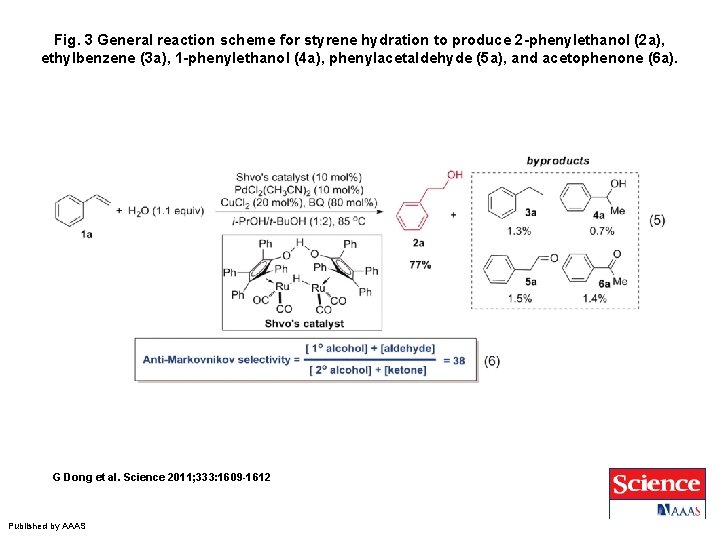
Fig. 3 General reaction scheme for styrene hydration to produce 2 -phenylethanol (2 a), ethylbenzene (3 a), 1 -phenylethanol (4 a), phenylacetaldehyde (5 a), and acetophenone (6 a). G Dong et al. Science 2011; 333: 1609 -1612 Published by AAAS
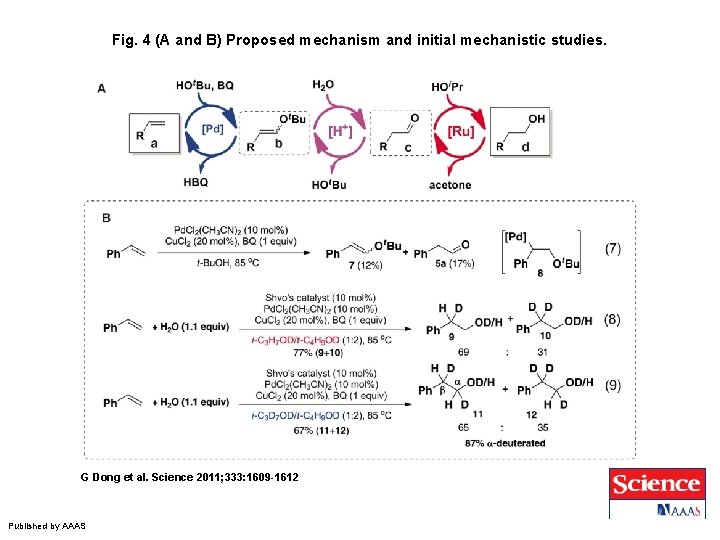
Fig. 4 (A and B) Proposed mechanism and initial mechanistic studies. G Dong et al. Science 2011; 333: 1609 -1612 Published by AAAS
- Slides: 19