
OXIDATION POND These are used by farmers and
OXIDATION POND
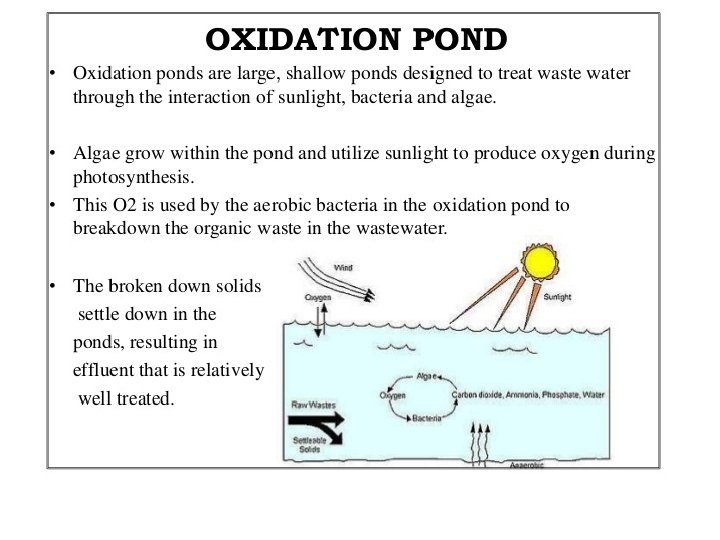
These are used by farmers and ranchers to treat animal wastes from livestock raised in feed lots. Oxidation lagoons accomplish the equivalent of primary and secondary treatment. They make use of microorganisms like bacteria, algae and light energy (sunlight) to stabilize the wastewater.
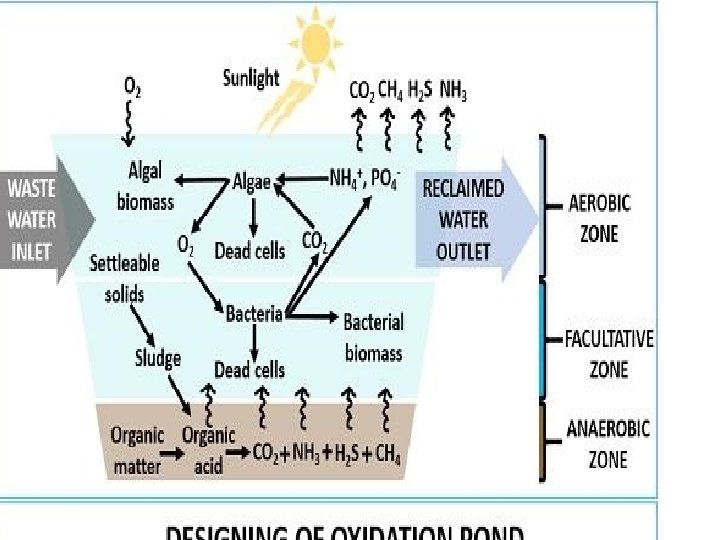
The Process 1. Sewage influents are allowed into the deep lagoons through the inlets. 2. Bacteria such as Achromobacter, Proteus, Alcaligenes, Pseudomonas etc. convert the biodegradable organics to inorganic compounds, releasing CO 2. 3. The predominant algae in the pond utilize the inorganic compounds in the presence of sunlight and CO 2 released (in 2 above). The algae include the genera Chlorella, Euglena, Scenedermus and Microcystis etc. 4. The remaining non-biodegradable organic wastes settle down in the bottom of stabilization pond as sludge. Anaerobic bacteria convert the insoluble organic waste to soluble acids, and then H 2 S, NH 3, CH 4, CO 2 etc. are released. 5. Through the outlet system, the treated waste are released out; the sludge removed by dredging, while the algal and bacterial biomass can separate out by filtration or by combining chemical treatment and settling process.
Advantages of oxidation pond • Simple to operate and does not require sophisticated equipment. • It reduces BOD up to 90% naturally. • It does not require much labour-power. • Highly economical. • A practical and effective method.
Disadvantages of oxidation pond • Oxidation ponds are open and can be dangerous if flood waters inundate them spreading the untreated wastes over a wide area. • The construction requires more land areas. • The maintenance is quite intricate. • It gives foul smell and mosquito menace especially if it is not properly maintained. • There is a chance of effluent seepage into the ground water causing water pollution.
- Slides: 7