
OXIDATION OF LDL AND ROLE OF OXIDIZED LDL

- Slides: 32
“OXIDATION” OF LDL AND ROLE OF “OXIDIZED LDL” IN ATHEROSCLEROSIS
Question? How is LDL “oxidized”?
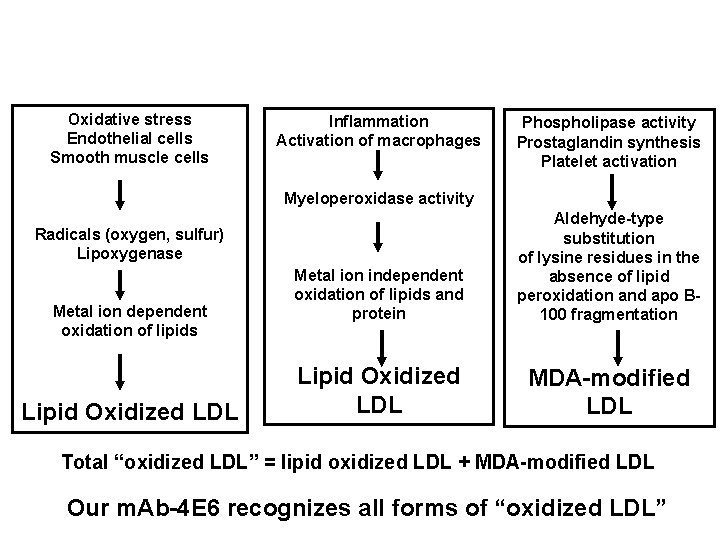
Oxidative stress Endothelial cells Smooth muscle cells Inflammation Activation of macrophages Phospholipase activity Prostaglandin synthesis Platelet activation Myeloperoxidase activity Metal ion independent oxidation of lipids and protein Aldehyde-type substitution of lysine residues in the absence of lipid peroxidation and apo B 100 fragmentation Lipid Oxidized LDL MDA-modified LDL Radicals (oxygen, sulfur) Lipoxygenase Metal ion dependent oxidation of lipids Lipid Oxidized LDL Total “oxidized LDL” = lipid oxidized LDL + MDA-modified LDL Our m. Ab-4 E 6 recognizes all forms of “oxidized LDL”
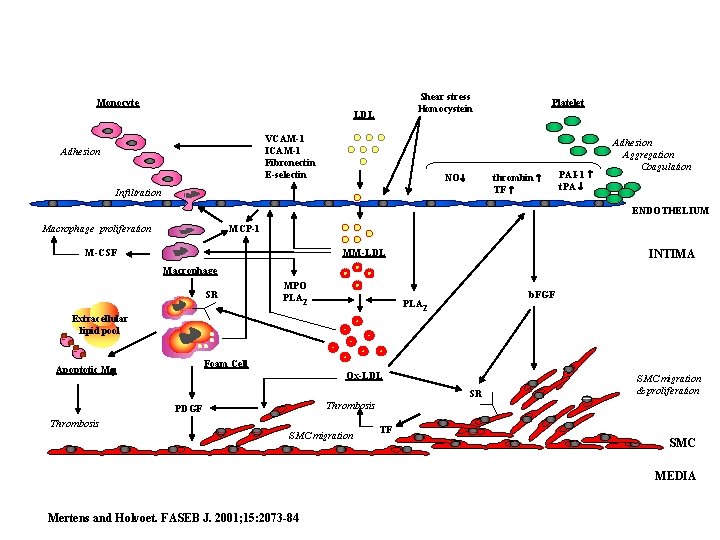
Question? How could “oxidized LDL” contribute to atherothrombosis?
Shear stress Homocystein Monocyte LDL VCAM-1 ICAM-1 Fibronectin E-selectin Adhesion NO Platelet thrombin TF Infiltration PAI-1 t. PA Adhesion Aggregation Coagulation ENDOTHELIUM Macrophage proliferation MCP-1 M-CSF MM-LDL INTIMA Macrophage SR MPO PLA 2 b. FGF PLA 2 Extracellular lipid pool Foam Cell Apoptotic M Ox-LDL SR SMC migration & proliferation Thrombosis PDGF Thrombosis SMC migration TF SMC MEDIA Mertens and Holvoet. FASEB J. 2001; 15: 2073 -84
ASSOCIATION OF CARDIOVASCULAR RISK AND DISEASE WITH OXIDIZED LDL
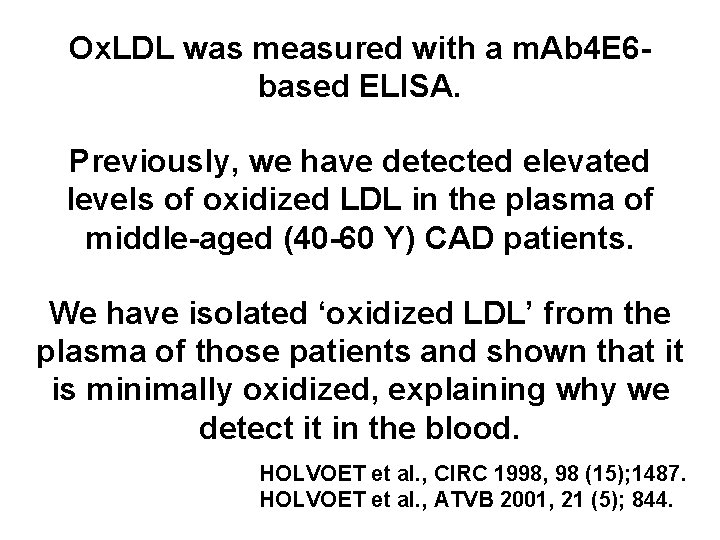
Ox. LDL was measured with a m. Ab 4 E 6 based ELISA. Previously, we have detected elevated levels of oxidized LDL in the plasma of middle-aged (40 -60 Y) CAD patients. We have isolated ‘oxidized LDL’ from the plasma of those patients and shown that it is minimally oxidized, explaining why we detect it in the blood. HOLVOET et al. , CIRC 1998, 98 (15); 1487. HOLVOET et al. , ATVB 2001, 21 (5); 844.
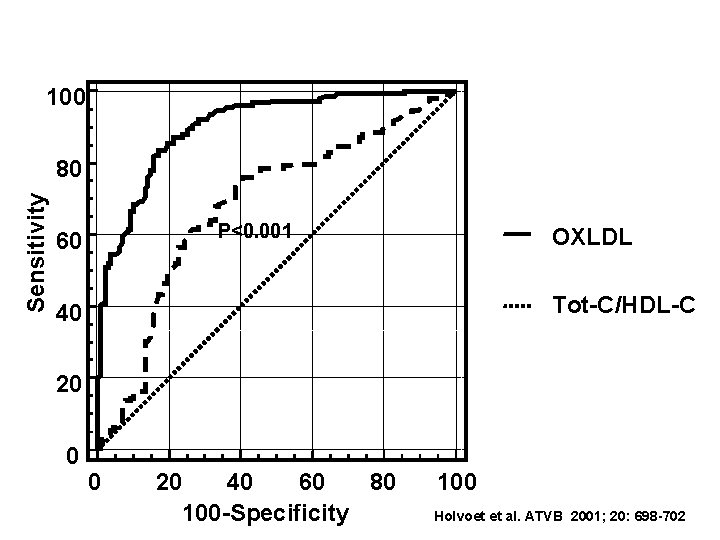
100 Sensitivity 80 P<0. 001 60 OXLDL Tot-C/HDL-C 40 20 0 0 20 40 60 80 100 -Specificity 100 Holvoet et al. ATVB 2001; 20: 698 -702
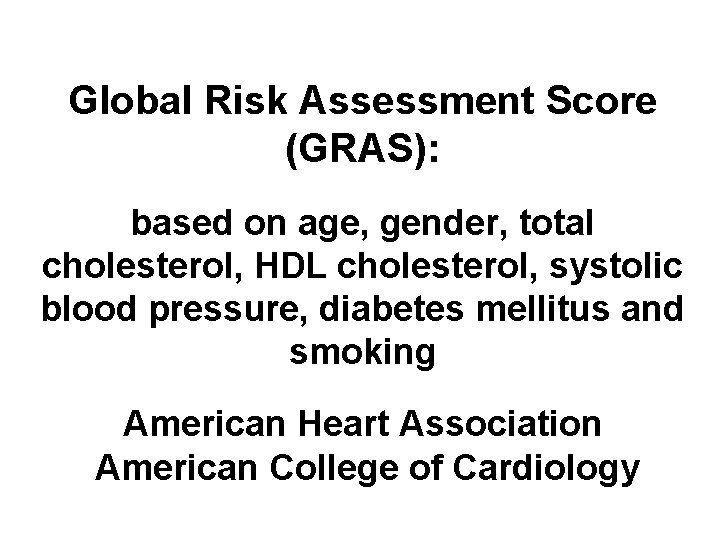
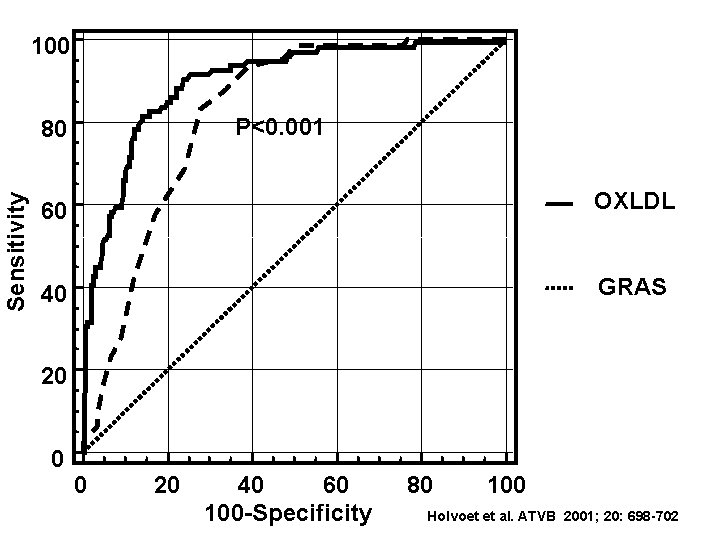
Global Risk Assessment Score (GRAS): based on age, gender, total cholesterol, HDL cholesterol, systolic blood pressure, diabetes mellitus and smoking American Heart Association American College of Cardiology
100 P<0. 001 Sensitivity 80 60 OXLDL 40 GRAS 20 0 0 20 40 60 100 -Specificity 80 100 Holvoet et al. ATVB 2001; 20: 698 -702
Is circulating ox. LDL elevated in persons with high CHD risk prior to events?
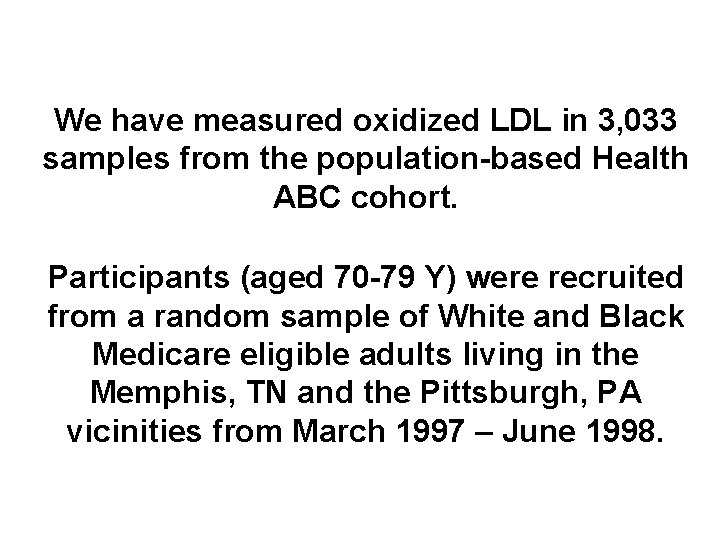
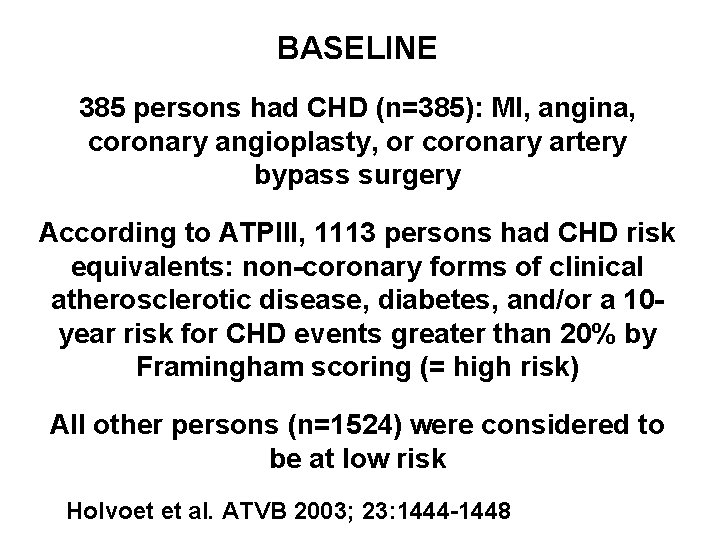
We have measured oxidized LDL in 3, 033 samples from the population-based Health ABC cohort. Participants (aged 70 -79 Y) were recruited from a random sample of White and Black Medicare eligible adults living in the Memphis, TN and the Pittsburgh, PA vicinities from March 1997 – June 1998.
BASELINE 385 persons had CHD (n=385): MI, angina, coronary angioplasty, or coronary artery bypass surgery According to ATPIII, 1113 persons had CHD risk equivalents: non-coronary forms of clinical atherosclerotic disease, diabetes, and/or a 10 year risk for CHD events greater than 20% by Framingham scoring (= high risk) All other persons (n=1524) were considered to be at low risk Holvoet et al. ATVB 2003; 23: 1444 -1448
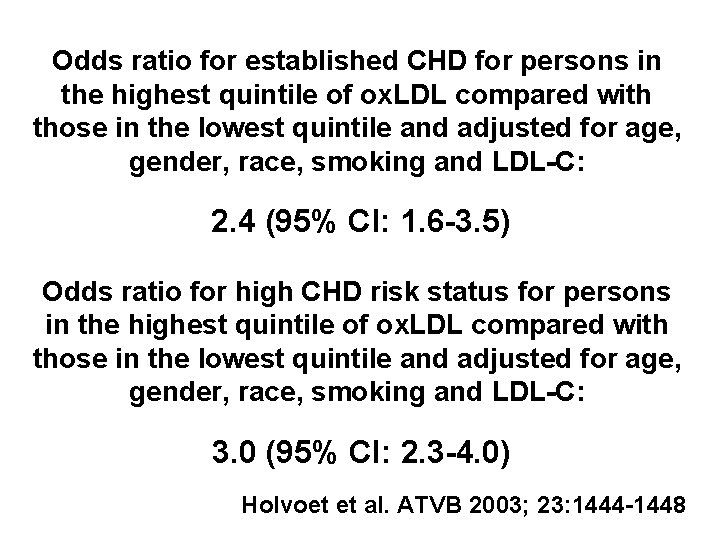
Odds ratio for established CHD for persons in the highest quintile of ox. LDL compared with those in the lowest quintile and adjusted for age, gender, race, smoking and LDL-C: 2. 4 (95% CI: 1. 6 -3. 5) Odds ratio for high CHD risk status for persons in the highest quintile of ox. LDL compared with those in the lowest quintile and adjusted for age, gender, race, smoking and LDL-C: 3. 0 (95% CI: 2. 3 -4. 0) Holvoet et al. ATVB 2003; 23: 1444 -1448
THE METABOLIC SYNDROME, OXIDIZED LDL AND CARDIOVASCULAR RISK
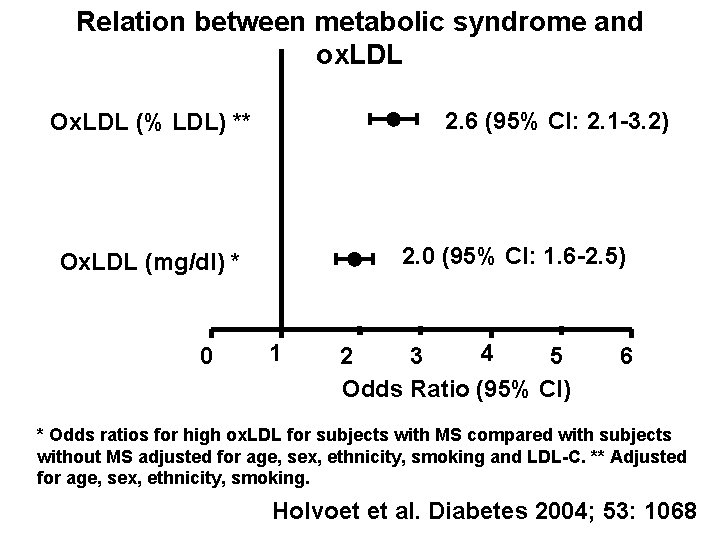
Relation between metabolic syndrome and ox. LDL 2. 6 (95% CI: 2. 1 -3. 2) Ox. LDL (% LDL) ** 2. 0 (95% CI: 1. 6 -2. 5) Ox. LDL (mg/dl) * 0 1 4 2 3 5 Odds Ratio (95% CI) 6 * Odds ratios for high ox. LDL for subjects with MS compared with subjects without MS adjusted for age, sex, ethnicity, smoking and LDL-C. ** Adjusted for age, sex, ethnicity, smoking. Holvoet et al. Diabetes 2004; 53: 1068
Question: Does oxidized LDL predict risk for myocardial infarction in the Health ABC cohort?
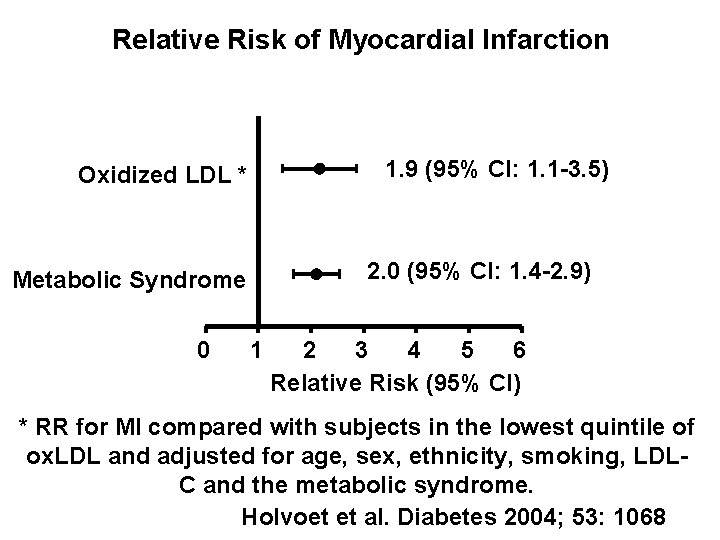
Relative Risk of Myocardial Infarction 1. 9 (95% CI: 1. 1 -3. 5) Oxidized LDL * 2. 0 (95% CI: 1. 4 -2. 9) Metabolic Syndrome 0 1 2 3 4 5 6 Relative Risk (95% CI) * RR for MI compared with subjects in the lowest quintile of ox. LDL and adjusted for age, sex, ethnicity, smoking, LDLC and the metabolic syndrome. Holvoet et al. Diabetes 2004; 53: 1068
Is circulating ox. LDL associated with subclinical CVD?
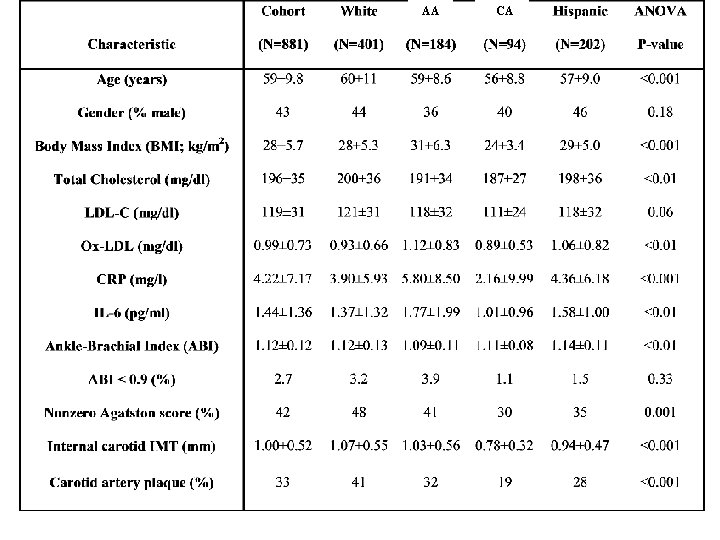
Ox-LDL in MESA Paul Holvoet, Nancy Jenny, Pam Schreiner, Russ Tracy, David Jacobs for the Multi-Ethnic Study of Atherosclerosis Study Group
AA CA
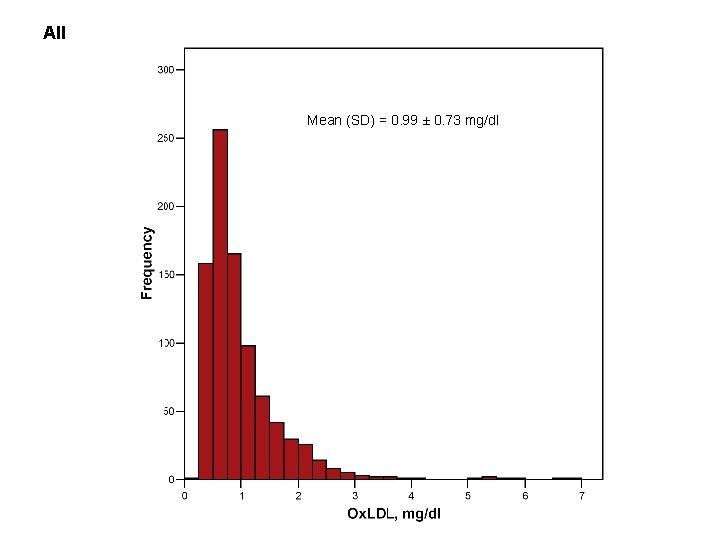
All Mean (SD) = 0. 99 ± 0. 73 mg/dl
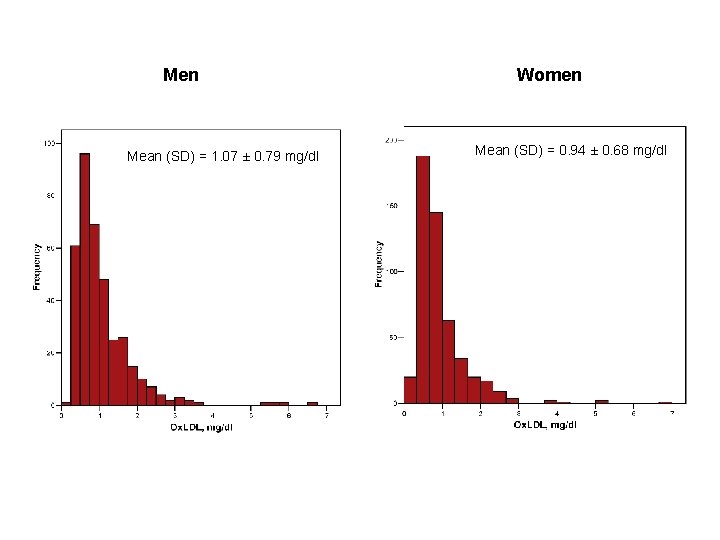
Men Mean (SD) = 1. 07 ± 0. 79 mg/dl Women Mean (SD) = 0. 94 ± 0. 68 mg/dl
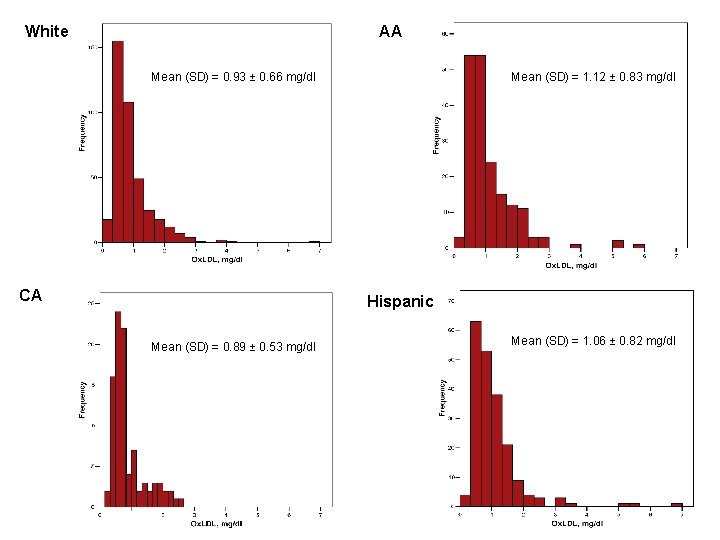
White AA Mean (SD) = 0. 93 ± 0. 66 mg/dl CA Mean (SD) = 1. 12 ± 0. 83 mg/dl Hispanic Mean (SD) = 0. 89 ± 0. 53 mg/dl Mean (SD) = 1. 06 ± 0. 82 mg/dl
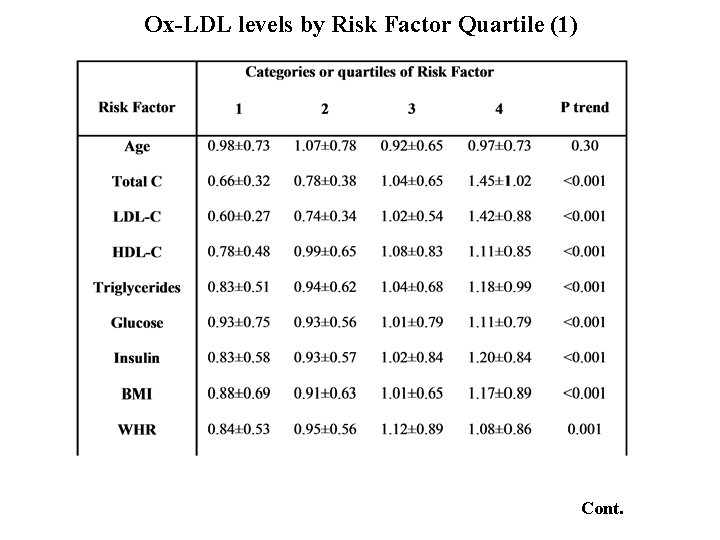
Ox-LDL levels by Risk Factor Quartile (1) Cont.
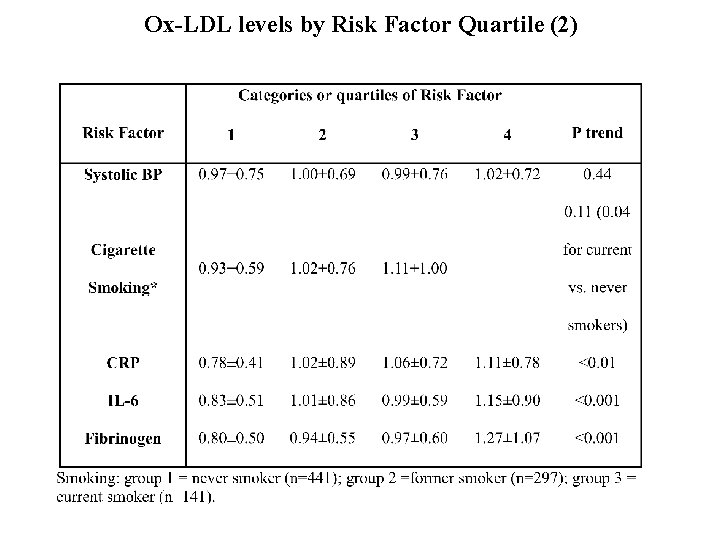
Ox-LDL levels by Risk Factor Quartile (2)
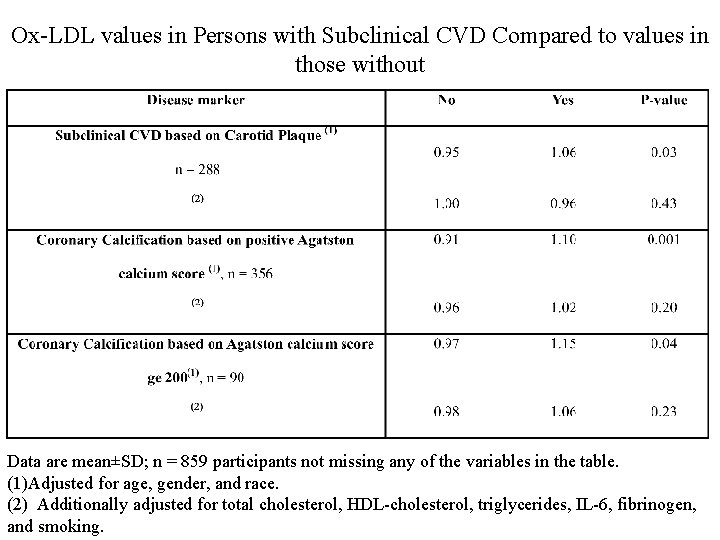
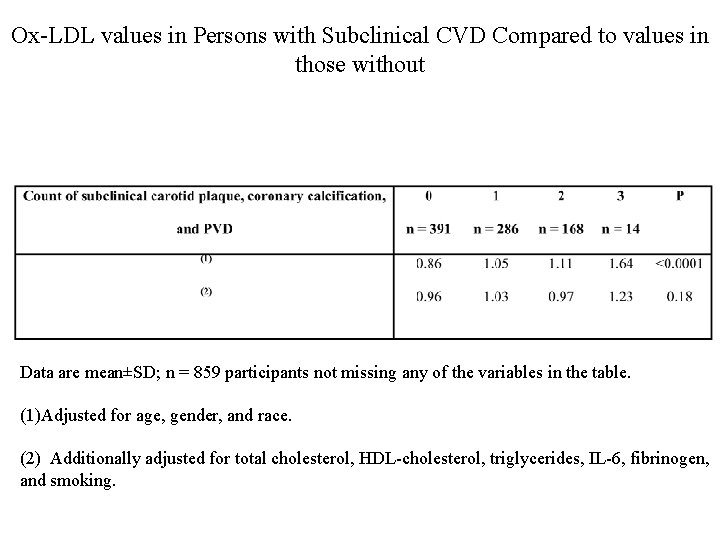
Ox-LDL values in Persons with Subclinical CVD Compared to values in those without Data are mean±SD; n = 859 participants not missing any of the variables in the table. (1)Adjusted for age, gender, and race. (2) Additionally adjusted for total cholesterol, HDL-cholesterol, triglycerides, IL-6, fibrinogen, and smoking.
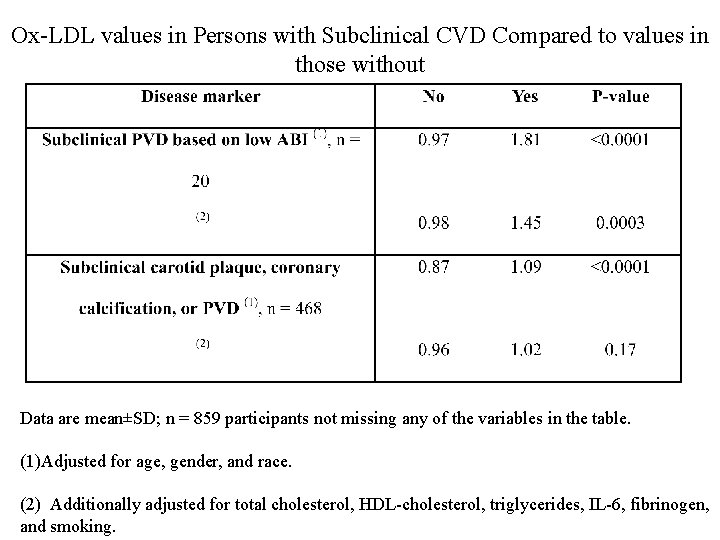
Ox-LDL values in Persons with Subclinical CVD Compared to values in those without Data are mean±SD; n = 859 participants not missing any of the variables in the table. (1)Adjusted for age, gender, and race. (2) Additionally adjusted for total cholesterol, HDL-cholesterol, triglycerides, IL-6, fibrinogen, and smoking.
Ox-LDL values in Persons with Subclinical CVD Compared to values in those without Data are mean±SD; n = 859 participants not missing any of the variables in the table. (1)Adjusted for age, gender, and race. (2) Additionally adjusted for total cholesterol, HDL-cholesterol, triglycerides, IL-6, fibrinogen, and smoking.
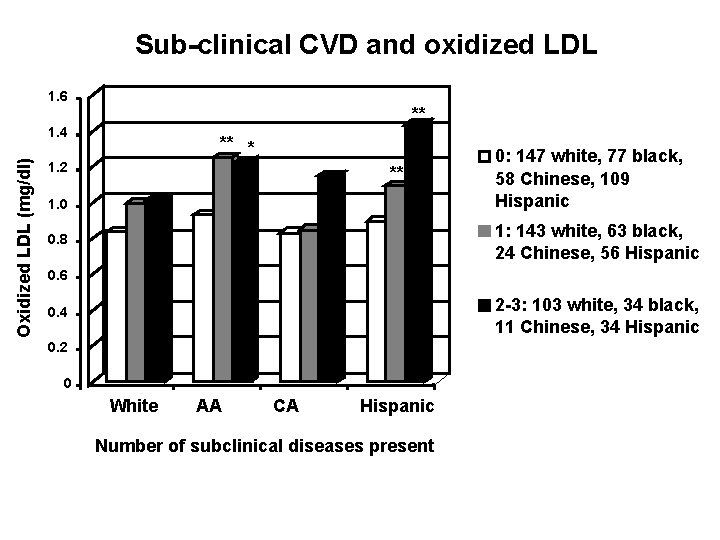
Sub-clinical CVD and oxidized LDL 1. 6 ** Oxidized LDL (mg/dl) 1. 4 ** * 1. 2 ** 1. 0 0: 147 white, 77 black, 58 Chinese, 109 Hispanic 1: 143 white, 63 black, 24 Chinese, 56 Hispanic 0. 8 0. 6 2 -3: 103 white, 34 black, 11 Chinese, 34 Hispanic 0. 4 0. 2 0 White AA CA Hispanic Number of subclinical diseases present
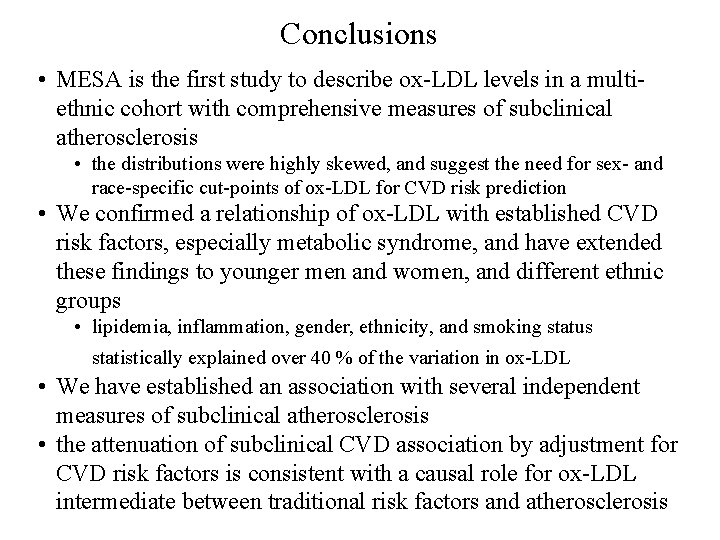
Conclusions • MESA is the first study to describe ox-LDL levels in a multiethnic cohort with comprehensive measures of subclinical atherosclerosis • the distributions were highly skewed, and suggest the need for sex- and race-specific cut-points of ox-LDL for CVD risk prediction • We confirmed a relationship of ox-LDL with established CVD risk factors, especially metabolic syndrome, and have extended these findings to younger men and women, and different ethnic groups • lipidemia, inflammation, gender, ethnicity, and smoking status statistically explained over 40 % of the variation in ox-LDL • We have established an association with several independent measures of subclinical atherosclerosis • the attenuation of subclinical CVD association by adjustment for CVD risk factors is consistent with a causal role for ox-LDL intermediate between traditional risk factors and atherosclerosis
Acknowledgement Dieuwke De Keyzer Rozenn Quarck Gregor Theilmeier Peter Verhamme Wim Verreth Hilde Bernar Els Deridder Michèle Landeloos