
Overview The Importance of Cells All organisms are
- Slides: 34
Overview: The Importance of Cells • All organisms are made of cells • The cell is the simplest collection of matter that can live • Cell structure is correlated to cellular function Copyright © 2005 Pearson Education, Inc. publishing as Benjamin Cummings
Isolating Organelles by Cell Fractionation • Cell fractionation – Takes cells apart and separates the major organelles from one another • The centrifuge – Is used to fractionate cells into their component parts Copyright © 2005 Pearson Education, Inc. publishing as Benjamin Cummings
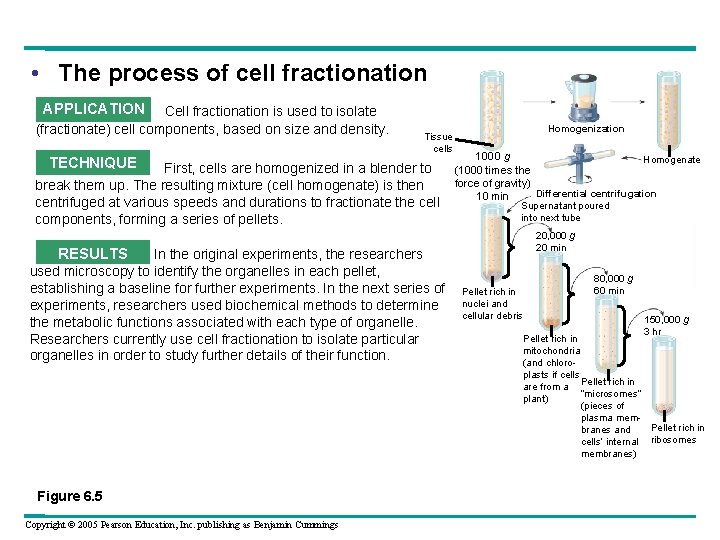
• The process of cell fractionation APPLICATION Cell fractionation is used to isolate (fractionate) cell components, based on size and density. Tissue cells TECHNIQUE First, cells are homogenized in a blender to break them up. The resulting mixture (cell homogenate) is then centrifuged at various speeds and durations to fractionate the cell components, forming a series of pellets. Homogenization 1000 g Homogenate (1000 times the force of gravity) Differential centrifugation 10 min Supernatant poured into next tube 20, 000 g 20 min RESULTS In the original experiments, the researchers used microscopy to identify the organelles in each pellet, establishing a baseline for further experiments. In the next series of experiments, researchers used biochemical methods to determine the metabolic functions associated with each type of organelle. Researchers currently use cell fractionation to isolate particular organelles in order to study further details of their function. Figure 6. 5 Copyright © 2005 Pearson Education, Inc. publishing as Benjamin Cummings Pellet rich in nuclei and cellular debris 80, 000 g 60 min 150, 000 g 3 hr Pellet rich in mitochondria (and chloroplasts if cells are from a Pellet rich in “microsomes” plant) (pieces of plasma mem. Pellet rich in branes and cells’ internal ribosomes membranes)
Concept 6. 2: Eukaryotic cells have internal membranes that compartmentalize their functions • Two types of cells make up every organism – Prokaryotic – Eukaryotic Copyright © 2005 Pearson Education, Inc. publishing as Benjamin Cummings
Comparing Prokaryotic and Eukaryotic Cells • All cells have several basic features in common – They are bounded by a plasma membrane – They contain a semifluid substance called the cytosol – They contain chromosomes – They all have ribosomes Copyright © 2005 Pearson Education, Inc. publishing as Benjamin Cummings
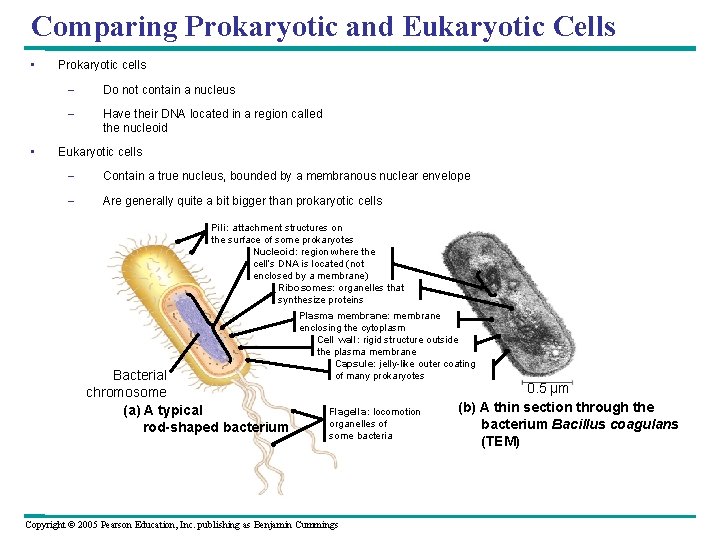
Comparing Prokaryotic and Eukaryotic Cells • • Prokaryotic cells – Do not contain a nucleus – Have their DNA located in a region called the nucleoid Eukaryotic cells – Contain a true nucleus, bounded by a membranous nuclear envelope – Are generally quite a bit bigger than prokaryotic cells Pili: attachment structures on the surface of some prokaryotes Nucleoid: region where the cell’s DNA is located (not enclosed by a membrane) Ribosomes: organelles that synthesize proteins Bacterial chromosome (a) A typical rod-shaped bacterium Plasma membrane: membrane enclosing the cytoplasm Cell wall: rigid structure outside the plasma membrane Capsule: jelly-like outer coating of many prokaryotes Flagella: locomotion organelles of some bacteria Copyright © 2005 Pearson Education, Inc. publishing as Benjamin Cummings 0. 5 µm (b) A thin section through the bacterium Bacillus coagulans (TEM)
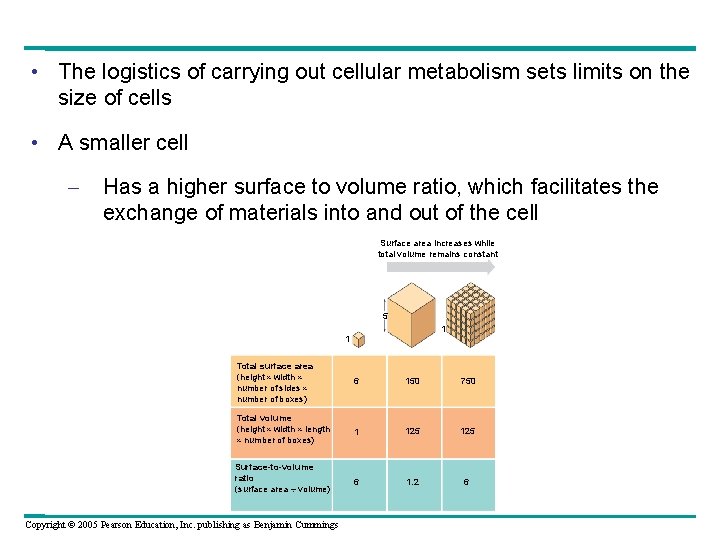
• The logistics of carrying out cellular metabolism sets limits on the size of cells • A smaller cell – Has a higher surface to volume ratio, which facilitates the exchange of materials into and out of the cell Surface area increases while total volume remains constant 5 1 1 Total surface area (height width number of sides number of boxes) 6 150 750 Total volume (height width length number of boxes) 1 125 Surface-to-volume ratio (surface area volume) 6 1. 2 6 Copyright © 2005 Pearson Education, Inc. publishing as Benjamin Cummings
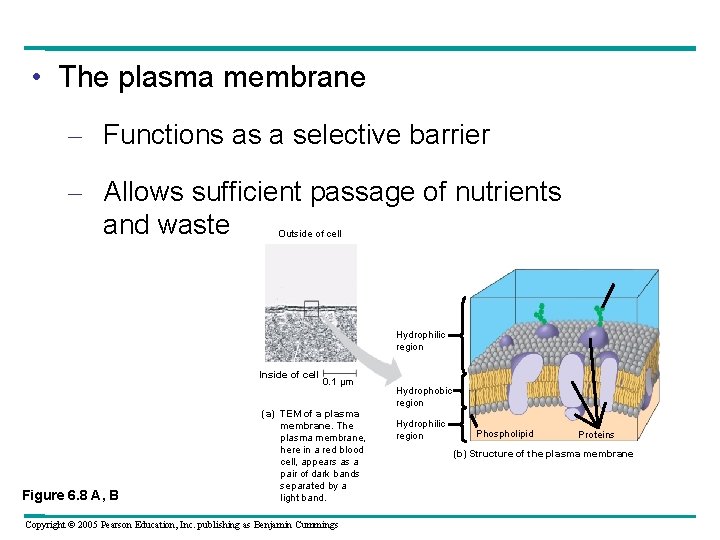
• The plasma membrane – Functions as a selective barrier – Allows sufficient passage of nutrients and waste Outside of cell Carbohydrate side chain Hydrophilic region Inside of cell Figure 6. 8 A, B 0. 1 µm (a) TEM of a plasma membrane. The plasma membrane, here in a red blood cell, appears as a pair of dark bands separated by a light band. Copyright © 2005 Pearson Education, Inc. publishing as Benjamin Cummings Hydrophobic region Hydrophilic region Phospholipid Proteins (b) Structure of the plasma membrane
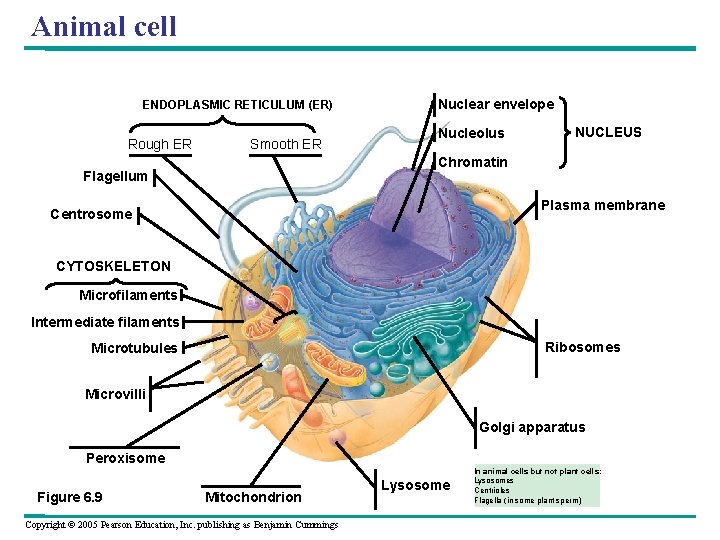
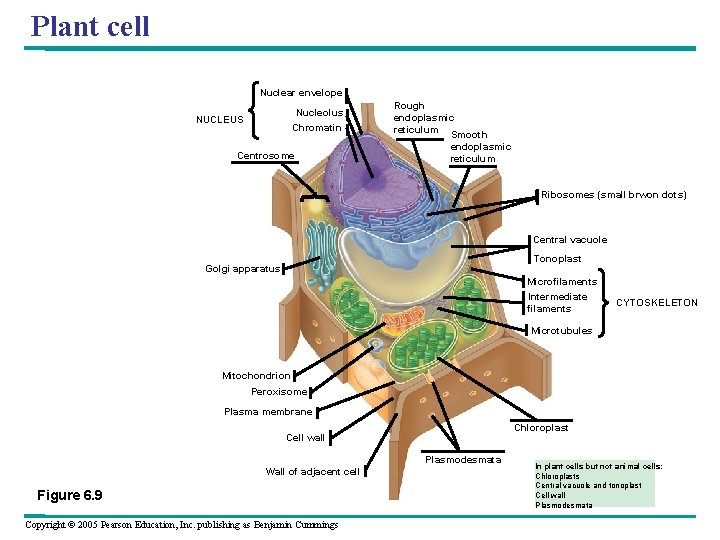
A Panoramic View of the Eukaryotic Cell • Eukaryotic cells – Have extensive and elaborately arranged internal membranes, which form organelles • Plant and animal cells – Have most of the same organelles Copyright © 2005 Pearson Education, Inc. publishing as Benjamin Cummings
Animal cell ENDOPLASMIC RETICULUM (ER) Rough ER Smooth ER Nuclear envelope Nucleolus NUCLEUS Chromatin Flagellum Plasma membrane Centrosome CYTOSKELETON Microfilaments Intermediate filaments Ribosomes Microtubules Microvilli Golgi apparatus Peroxisome Figure 6. 9 Mitochondrion Copyright © 2005 Pearson Education, Inc. publishing as Benjamin Cummings Lysosome In animal cells but not plant cells: Lysosomes Centrioles Flagella (in some plant sperm)
Plant cell Nuclear envelope Nucleolus Chromatin NUCLEUS Centrosome Rough endoplasmic reticulum Smooth endoplasmic reticulum Ribosomes (small brwon dots) Central vacuole Tonoplast Golgi apparatus Microfilaments Intermediate filaments CYTOSKELETON Microtubules Mitochondrion Peroxisome Plasma membrane Chloroplast Cell wall Plasmodesmata Wall of adjacent cell Figure 6. 9 Copyright © 2005 Pearson Education, Inc. publishing as Benjamin Cummings In plant cells but not animal cells: Chloroplasts Central vacuole and tonoplast Cell wall Plasmodesmata
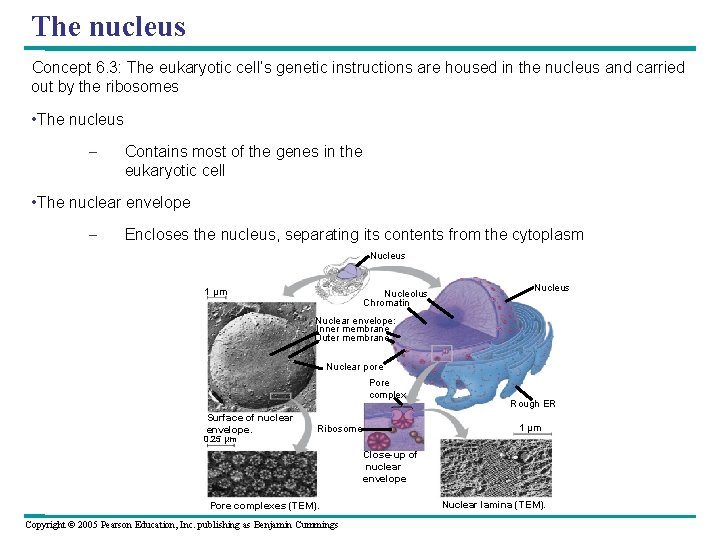
The nucleus Concept 6. 3: The eukaryotic cell’s genetic instructions are housed in the nucleus and carried out by the ribosomes • The nucleus – Contains most of the genes in the eukaryotic cell • The nuclear envelope – Encloses the nucleus, separating its contents from the cytoplasm Nucleus 1 µm Nucleolus Chromatin Nucleus Nuclear envelope: Inner membrane Outer membrane Nuclear pore Pore complex Surface of nuclear envelope. Rough ER 1 µm Ribosome 0. 25 µm Close-up of nuclear envelope Pore complexes (TEM). Copyright © 2005 Pearson Education, Inc. publishing as Benjamin Cummings Nuclear lamina (TEM).
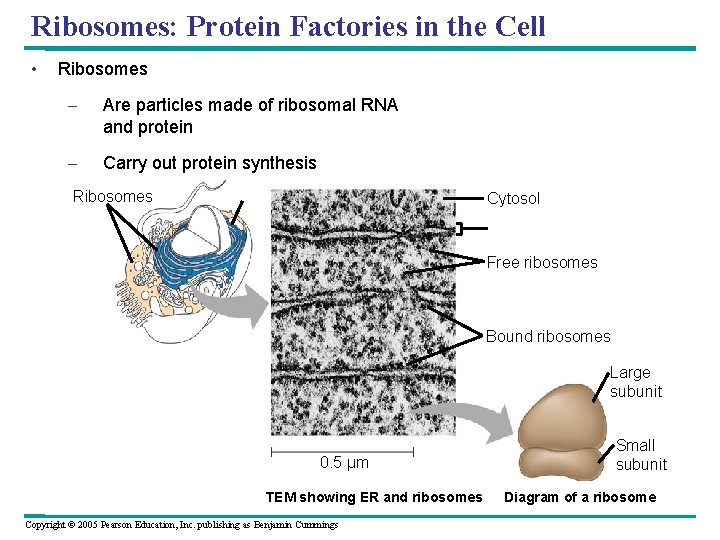
Ribosomes: Protein Factories in the Cell • Ribosomes – Are particles made of ribosomal RNA and protein – Carry out protein synthesis Ribosomes Cytosol Free ribosomes Bound ribosomes Large subunit 0. 5 µm TEM showing ER and ribosomes Copyright © 2005 Pearson Education, Inc. publishing as Benjamin Cummings Small subunit Diagram of a ribosome
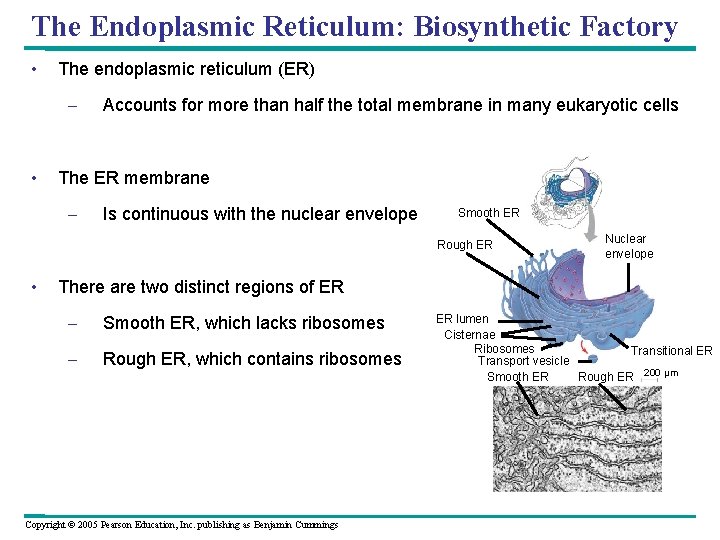
The Endoplasmic Reticulum: Biosynthetic Factory • The endoplasmic reticulum (ER) – • Accounts for more than half the total membrane in many eukaryotic cells The ER membrane – Is continuous with the nuclear envelope Smooth ER Rough ER • Nuclear envelope There are two distinct regions of ER – Smooth ER, which lacks ribosomes – Rough ER, which contains ribosomes Copyright © 2005 Pearson Education, Inc. publishing as Benjamin Cummings ER lumen Cisternae Ribosomes Transitional ER Transport vesicle Smooth ER Rough ER 200 µm
Functions of Smooth and Rough ER • The smooth ER – Synthesizes lipids – Metabolizes carbohydrates – Stores calcium – Detoxifies poison • The rough ER – Has bound ribosomes – Produces proteins and membranes, which are distributed by transport vesicles Copyright © 2005 Pearson Education, Inc. publishing as Benjamin Cummings
The Golgi Apparatus: Shipping and Receiving Center • The Golgi apparatus – Receives many of the transport vesicles produced in the rough ER – Consists of flattened membranous sacs called cisternae • Functions of the Golgi apparatus include – Modification of the products of the rough ER – Manufacture of certain macromolecules Copyright © 2005 Pearson Education, Inc. publishing as Benjamin Cummings
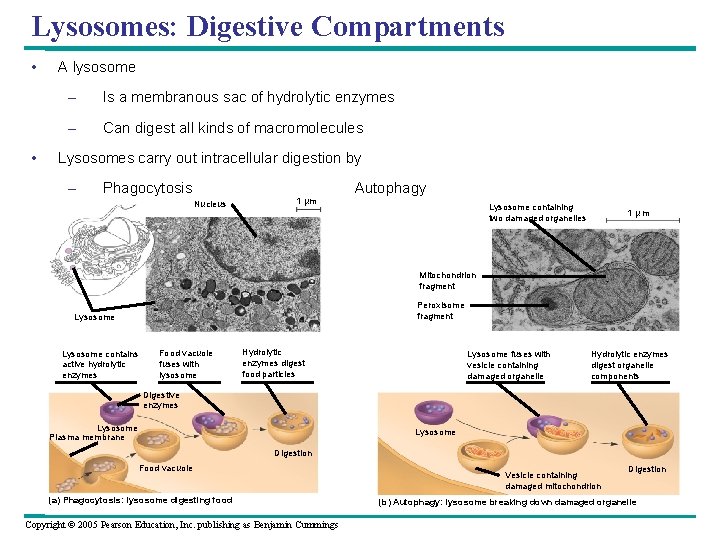
Lysosomes: Digestive Compartments • • A lysosome – Is a membranous sac of hydrolytic enzymes – Can digest all kinds of macromolecules Lysosomes carry out intracellular digestion by – Phagocytosis Autophagy Nucleus 1 µm Lysosome containing two damaged organelles 1µm Mitochondrion fragment Peroxisome fragment Lysosome contains active hydrolytic enzymes Food vacuole fuses with lysosome Hydrolytic enzymes digest food particles Lysosome fuses with vesicle containing damaged organelle Hydrolytic enzymes digest organelle components Digestive enzymes Lysosome Plasma membrane Lysosome Digestion Food vacuole (a) Phagocytosis: lysosome digesting food Copyright © 2005 Pearson Education, Inc. publishing as Benjamin Cummings Vesicle containing damaged mitochondrion Digestion (b) Autophagy: lysosome breaking down damaged organelle
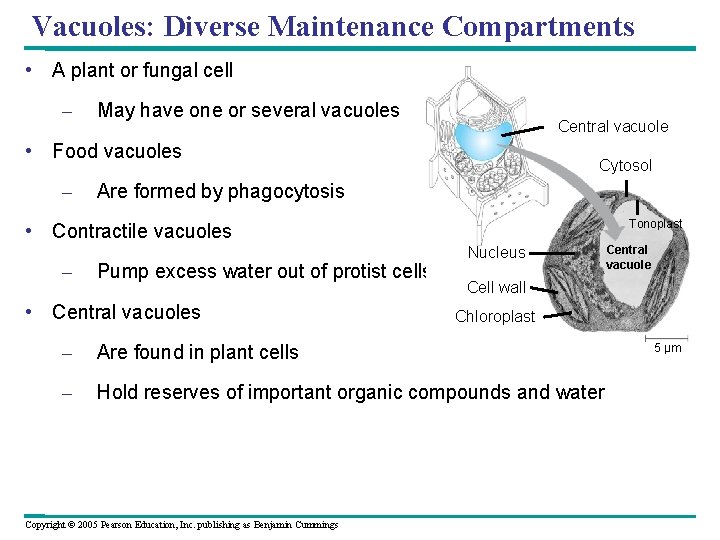
Vacuoles: Diverse Maintenance Compartments • A plant or fungal cell – May have one or several vacuoles Central vacuole • Food vacuoles – Cytosol Are formed by phagocytosis Tonoplast • Contractile vacuoles – Pump excess water out of protist cells • Central vacuoles Nucleus Cell wall Chloroplast – Are found in plant cells – Hold reserves of important organic compounds and water Copyright © 2005 Pearson Education, Inc. publishing as Benjamin Cummings Central vacuole 5 µm
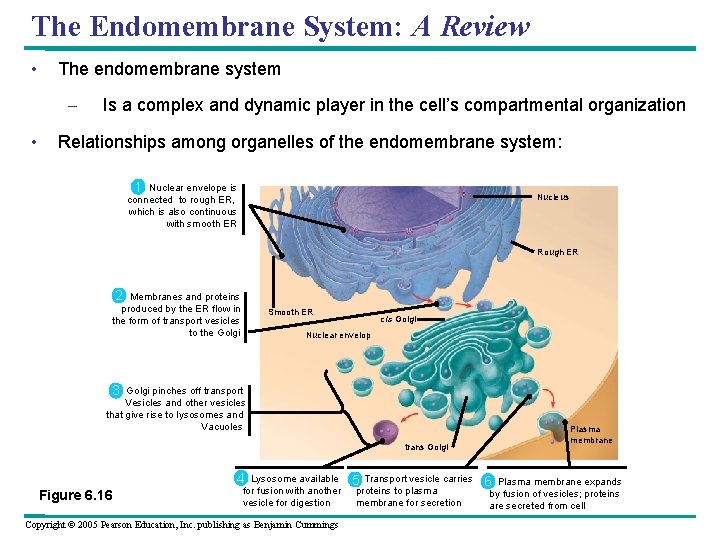
The Endomembrane System: A Review • The endomembrane system – • Is a complex and dynamic player in the cell’s compartmental organization Relationships among organelles of the endomembrane system: 1 Nuclear envelope is connected to rough ER, which is also continuous with smooth ER Nucleus Rough ER 2 Membranes and proteins produced by the ER flow in the form of transport vesicles to the Golgi Smooth ER cis Golgi Nuclear envelop 3 Golgi pinches off transport Vesicles and other vesicles that give rise to lysosomes and Vacuoles Plasma membrane trans Golgi 4 Figure 6. 16 Lysosome available for fusion with another vesicle for digestion Copyright © 2005 Pearson Education, Inc. publishing as Benjamin Cummings 5 Transport vesicle carries 6 proteins to plasma membrane for secretion Plasma membrane expands by fusion of vesicles; proteins are secreted from cell
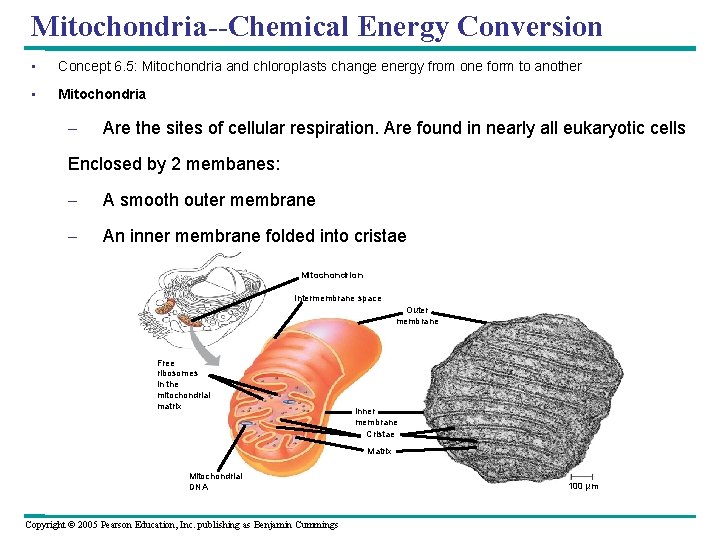
Mitochondria--Chemical Energy Conversion • Concept 6. 5: Mitochondria and chloroplasts change energy from one form to another • Mitochondria – Are the sites of cellular respiration. Are found in nearly all eukaryotic cells Enclosed by 2 membanes: – A smooth outer membrane – An inner membrane folded into cristae Mitochondrion Intermembrane space Outer membrane Free ribosomes in the mitochondrial matrix Inner membrane Cristae Matrix Mitochondrial DNA Copyright © 2005 Pearson Education, Inc. publishing as Benjamin Cummings 100 µm
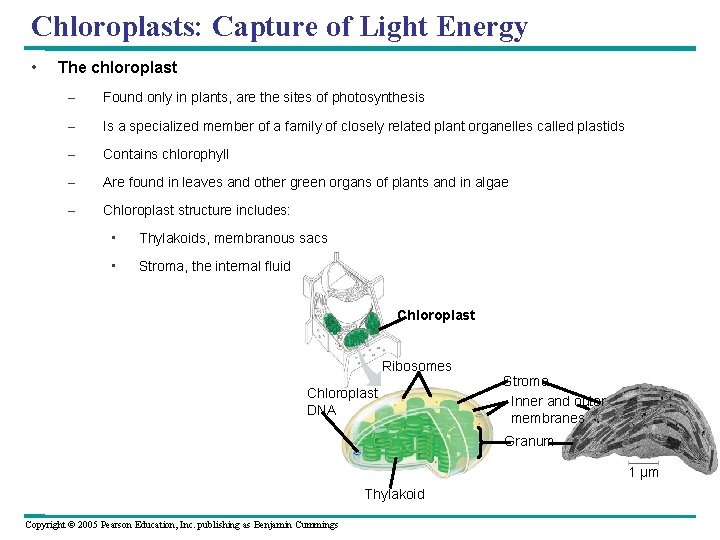
Chloroplasts: Capture of Light Energy • The chloroplast – Found only in plants, are the sites of photosynthesis – Is a specialized member of a family of closely related plant organelles called plastids – Contains chlorophyll – Are found in leaves and other green organs of plants and in algae – Chloroplast structure includes: • Thylakoids, membranous sacs • Stroma, the internal fluid Chloroplast Ribosomes Chloroplast DNA Stroma Inner and outer membranes Granum 1 µm Thylakoid Copyright © 2005 Pearson Education, Inc. publishing as Benjamin Cummings
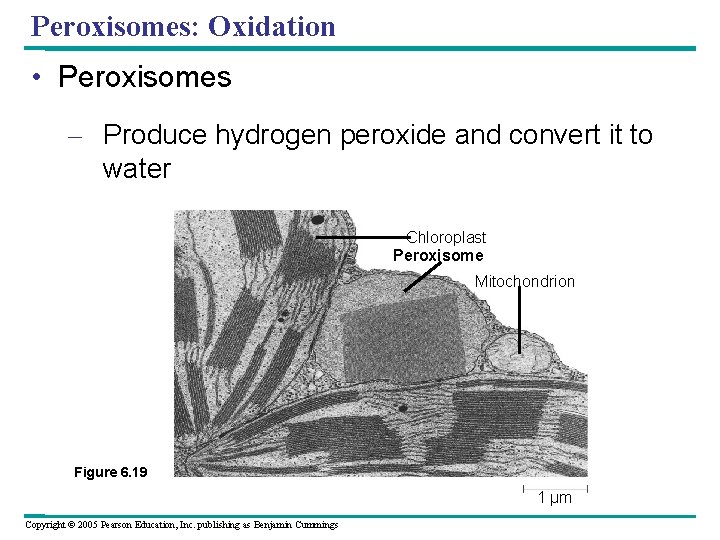
Peroxisomes: Oxidation • Peroxisomes – Produce hydrogen peroxide and convert it to water Chloroplast Peroxisome Mitochondrion Figure 6. 19 1 µm Copyright © 2005 Pearson Education, Inc. publishing as Benjamin Cummings
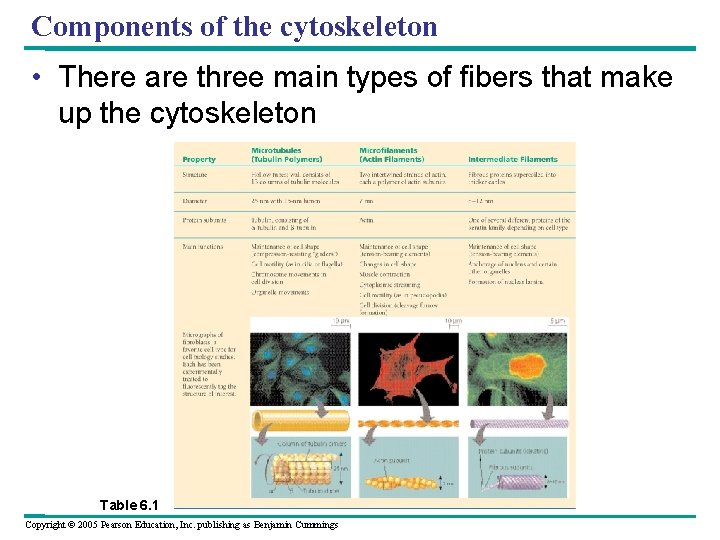
Components of the cytoskeleton • There are three main types of fibers that make up the cytoskeleton Table 6. 1 Copyright © 2005 Pearson Education, Inc. publishing as Benjamin Cummings
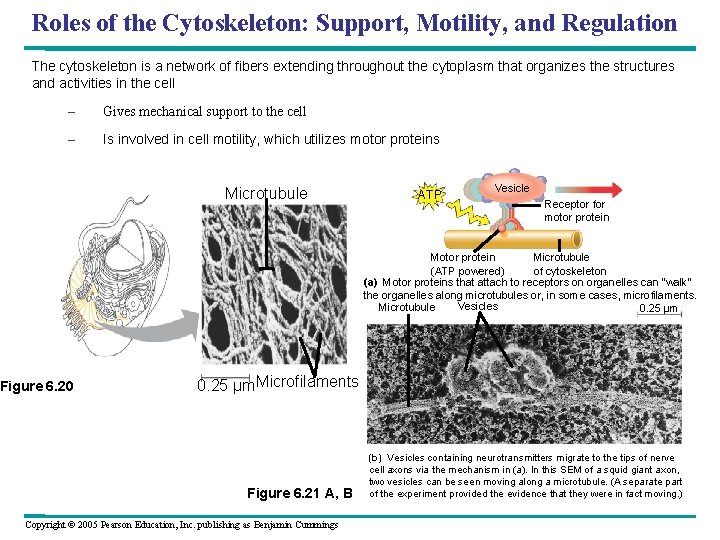
Roles of the Cytoskeleton: Support, Motility, and Regulation The cytoskeleton is a network of fibers extending throughout the cytoplasm that organizes the structures and activities in the cell – Gives mechanical support to the cell – Is involved in cell motility, which utilizes motor proteins Microtubule ATP Vesicle Receptor for motor protein Microtubule (ATP powered) of cytoskeleton (a) Motor proteins that attach to receptors on organelles can “walk” the organelles along microtubules or, in some cases, microfilaments. Vesicles Microtubule 0. 25 µm Figure 6. 20 0. 25 µm Microfilaments Figure 6. 21 A, B Copyright © 2005 Pearson Education, Inc. publishing as Benjamin Cummings (b) Vesicles containing neurotransmitters migrate to the tips of nerve cell axons via the mechanism in (a). In this SEM of a squid giant axon, two vesicles can be seen moving along a microtubule. (A separate part of the experiment provided the evidence that they were in fact moving. )
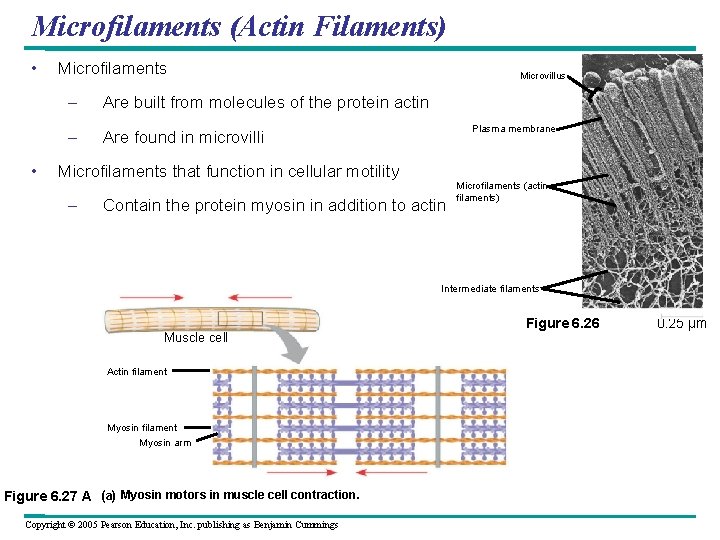
Microfilaments (Actin Filaments) • • Microfilaments – Are built from molecules of the protein actin – Are found in microvilli Microvillus Plasma membrane Microfilaments that function in cellular motility – Contain the protein myosin in addition to actin Microfilaments (actin filaments) Intermediate filaments Muscle cell Actin filament Myosin arm Figure 6. 27 A (a) Myosin motors in muscle cell contraction. Copyright © 2005 Pearson Education, Inc. publishing as Benjamin Cummings Figure 6. 26 0. 25 µm
Intermediate Filaments • Intermediate filaments – Support cell shape – Fix organelles in place Copyright © 2005 Pearson Education, Inc. publishing as Benjamin Cummings
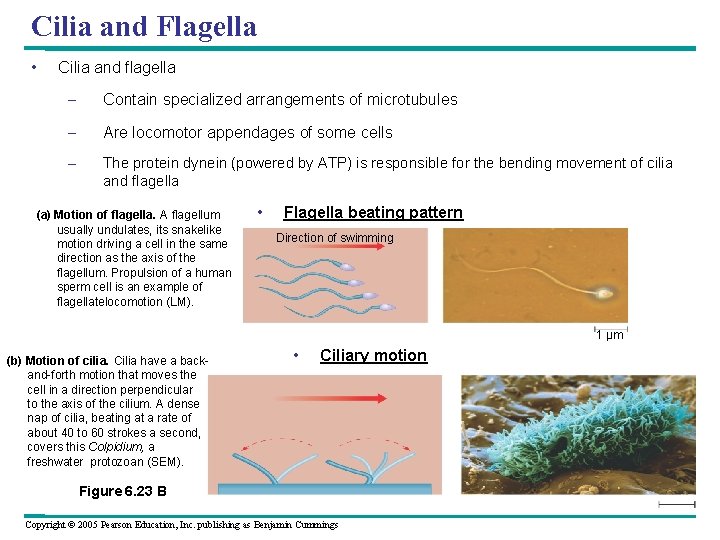
Cilia and Flagella • Cilia and flagella – Contain specialized arrangements of microtubules – Are locomotor appendages of some cells – The protein dynein (powered by ATP) is responsible for the bending movement of cilia and flagella (a) Motion of flagella. A flagellum usually undulates, its snakelike motion driving a cell in the same direction as the axis of the flagellum. Propulsion of a human sperm cell is an example of flagellatelocomotion (LM). • Flagella beating pattern Direction of swimming 1 µm (b) Motion of cilia. Cilia have a backand-forth motion that moves the cell in a direction perpendicular to the axis of the cilium. A dense nap of cilia, beating at a rate of about 40 to 60 strokes a second, covers this Colpidium, a freshwater protozoan (SEM). • Ciliary motion Figure 6. 23 B Copyright © 2005 Pearson Education, Inc. publishing as Benjamin Cummings
Concept 6. 7: Extracellular components and connections between cells help coordinate cellular activities Copyright © 2005 Pearson Education, Inc. publishing as Benjamin Cummings
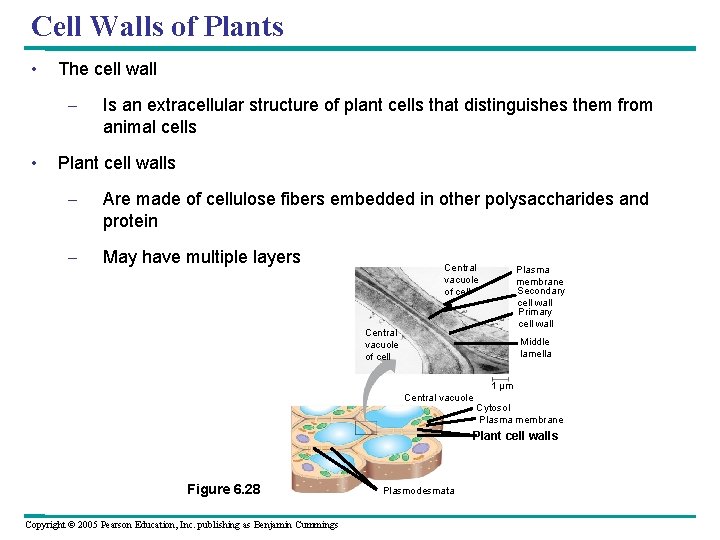
Cell Walls of Plants • The cell wall – • Is an extracellular structure of plant cells that distinguishes them from animal cells Plant cell walls – Are made of cellulose fibers embedded in other polysaccharides and protein – May have multiple layers Central vacuole of cell Plasma membrane Secondary cell wall Primary cell wall Central vacuole of cell Middle lamella Central vacuole 1 µm Cytosol Plasma membrane Plant cell walls Figure 6. 28 Copyright © 2005 Pearson Education, Inc. publishing as Benjamin Cummings Plasmodesmata
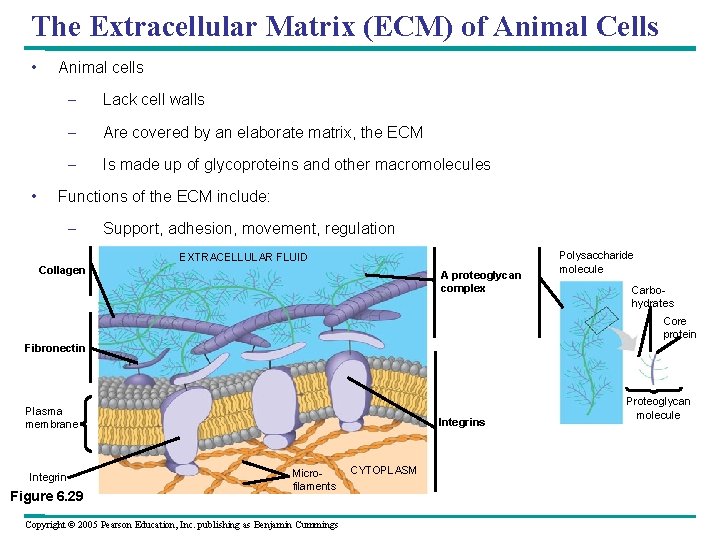
The Extracellular Matrix (ECM) of Animal Cells • • Animal cells – Lack cell walls – Are covered by an elaborate matrix, the ECM – Is made up of glycoproteins and other macromolecules Functions of the ECM include: – Collagen Support, adhesion, movement, regulation EXTRACELLULAR FLUID A proteoglycan complex Polysaccharide molecule Carbohydrates Core protein Fibronectin Plasma membrane Integrin Figure 6. 29 Integrins Microfilaments Copyright © 2005 Pearson Education, Inc. publishing as Benjamin Cummings CYTOPLASM Proteoglycan molecule
Intercellular Junctions Copyright © 2005 Pearson Education, Inc. publishing as Benjamin Cummings
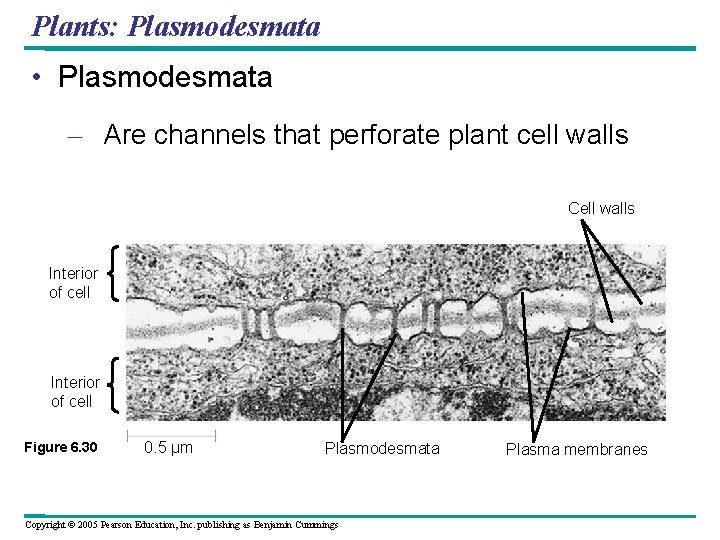
Plants: Plasmodesmata • Plasmodesmata – Are channels that perforate plant cell walls Cell walls Interior of cell Figure 6. 30 0. 5 µm Plasmodesmata Copyright © 2005 Pearson Education, Inc. publishing as Benjamin Cummings Plasma membranes
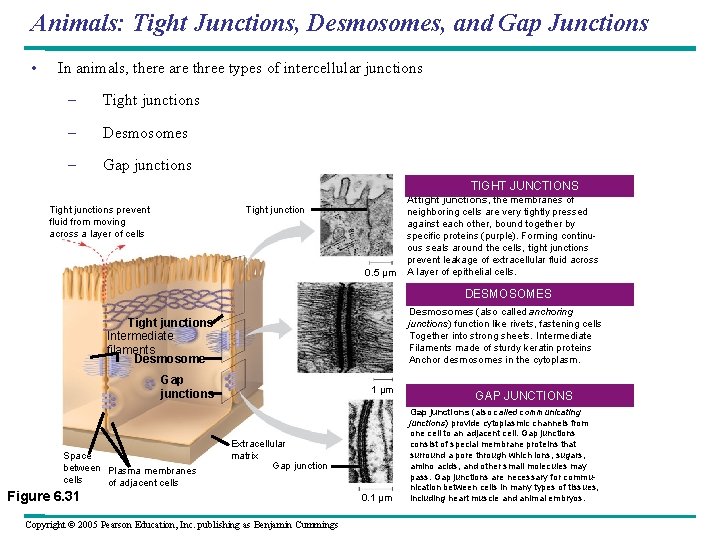
Animals: Tight Junctions, Desmosomes, and Gap Junctions • In animals, there are three types of intercellular junctions – Tight junctions – Desmosomes – Gap junctions TIGHT JUNCTIONS Tight junctions prevent fluid from moving across a layer of cells 0. 5 µm At tight junctions, the membranes of neighboring cells are very tightly pressed against each other, bound together by specific proteins (purple). Forming continuous seals around the cells, tight junctions prevent leakage of extracellular fluid across A layer of epithelial cells. DESMOSOMES Desmosomes (also called anchoring junctions) function like rivets, fastening cells Together into strong sheets. Intermediate Filaments made of sturdy keratin proteins Anchor desmosomes in the cytoplasm. Tight junctions Intermediate filaments Desmosome Gap junctions Space between Plasma membranes cells of adjacent cells 1 µm Extracellular matrix Gap junction Figure 6. 31 Copyright © 2005 Pearson Education, Inc. publishing as Benjamin Cummings 0. 1 µm GAP JUNCTIONS Gap junctions (also called communicating junctions) provide cytoplasmic channels from one cell to an adjacent cell. Gap junctions consist of special membrane proteins that surround a pore through which ions, sugars, amino acids, and other small molecules may pass. Gap junctions are necessary for communication between cells in many types of tissues, including heart muscle and animal embryos.
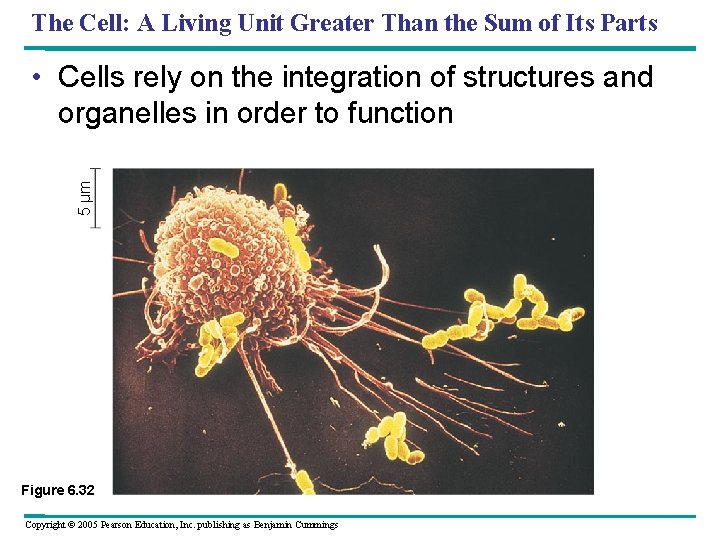
The Cell: A Living Unit Greater Than the Sum of Its Parts 5 µm • Cells rely on the integration of structures and organelles in order to function Figure 6. 32 Copyright © 2005 Pearson Education, Inc. publishing as Benjamin Cummings