
OVERVIEW Set Context Process Concepts Conducting an Interview
- Slides: 23
OVERVIEW • • Set Context Process Concepts Conducting an Interview & Initial Analysis Exercise • Initial Analysis • Interview Preparation for CADB Interview 1
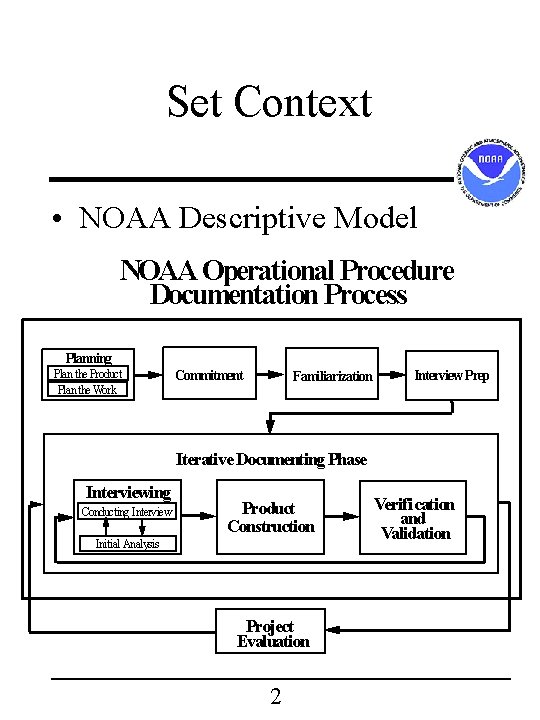
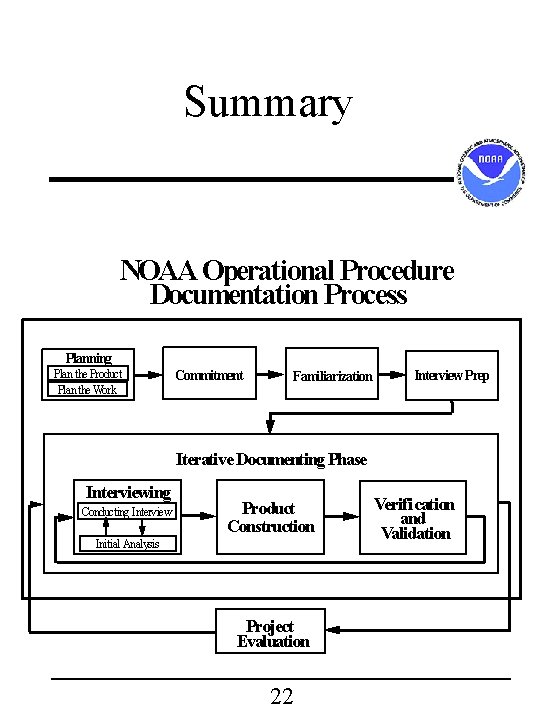
Set Context • NOAA Descriptive Model NOAA Operational Procedure Documentation Process Planning Plan the Product Plan the Work Commitment Familiarization Interview Prep Iterative Documenting Phase Interviewing Conducting Interview Product Construction Initial Analysis Project Evaluation 2 Verification and Validation
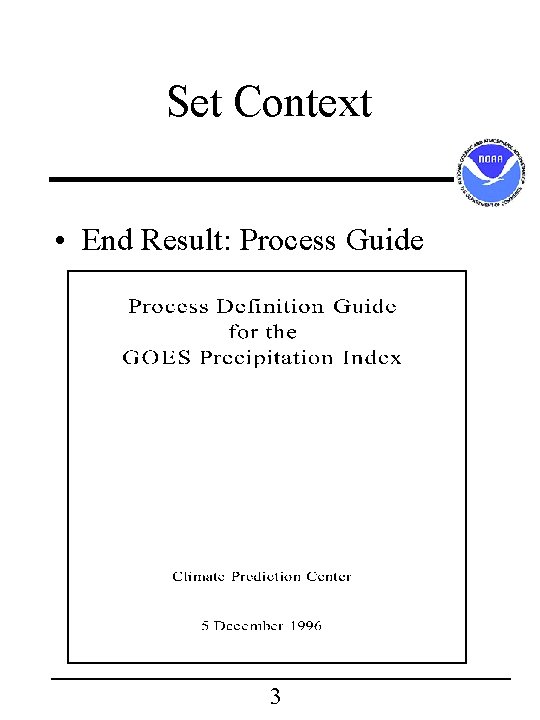
Set Context • End Result: Process Guide 3
Process Concepts • Process Fidelity • Process Elements • Models, Guides, Templates, Checklists 4
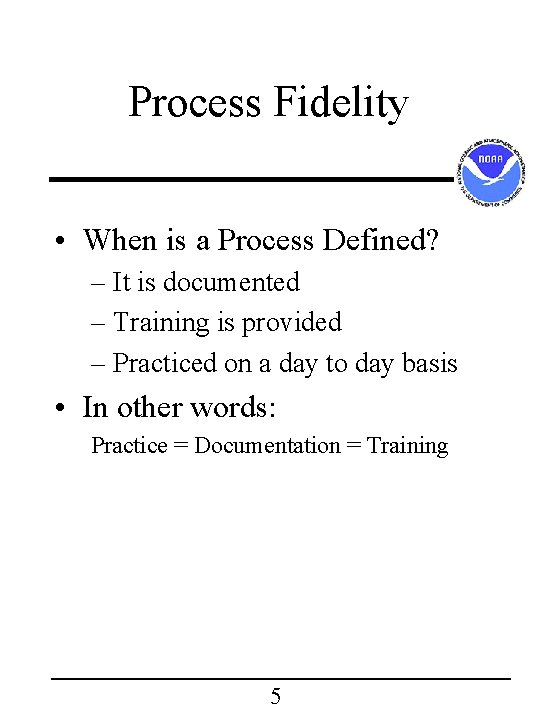
Process Fidelity • When is a Process Defined? – It is documented – Training is provided – Practiced on a day to day basis • In other words: Practice = Documentation = Training 5
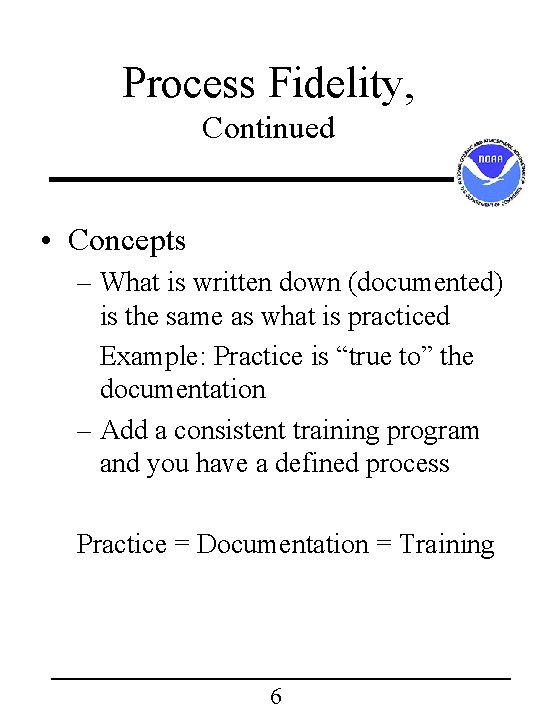
Process Fidelity, Continued • Concepts – What is written down (documented) is the same as what is practiced Example: Practice is “true to” the documentation – Add a consistent training program and you have a defined process Practice = Documentation = Training 6
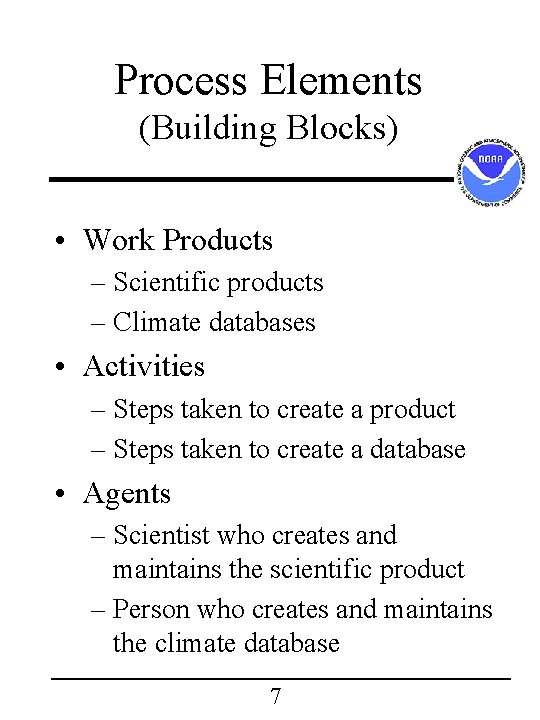
Process Elements (Building Blocks) • Work Products – Scientific products – Climate databases • Activities – Steps taken to create a product – Steps taken to create a database • Agents – Scientist who creates and maintains the scientific product – Person who creates and maintains the climate database 7
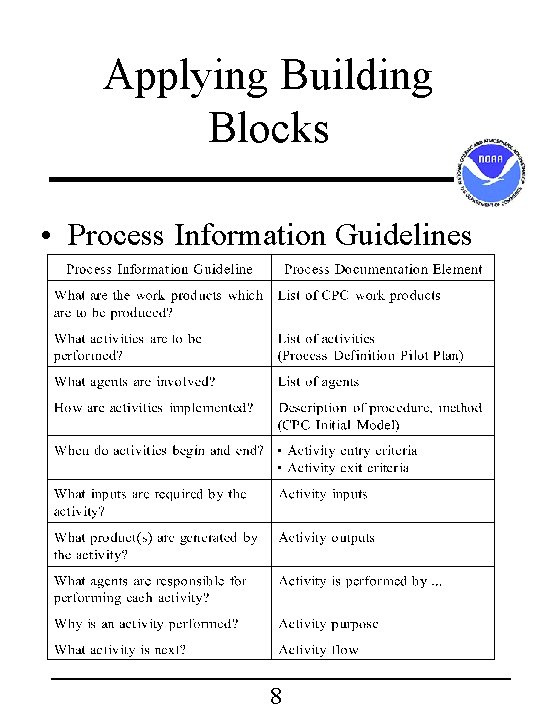
Applying Building Blocks • Process Information Guidelines 8
Applying Building Blocks, Continued • Activity Entry Criteria – When can this activity begin? Example: • Management approval • Process Definition Plan completed • Activity Exit Criteria – when is this activity complete? Example: • Process guide ready for review • Scientist satisfied with process guide 9
Applying Building Blocks, Continued • Activity Input – What products (data) are used by this activity? Example: • GTS data, Satellite data, etc… • Activity Output – What products are produced by this activity? Example: • Daily Climate data 10
Model, Guides, Templates, Checklists • Process Representation Need to: – Standard way to express process definitions – Present process definitions in a format that facilitates communication • Benefit – A well-defined and formally represented process can be used to: • Communicate steps to be taken to achieve product development • Capture software process knowledge for reuse 11
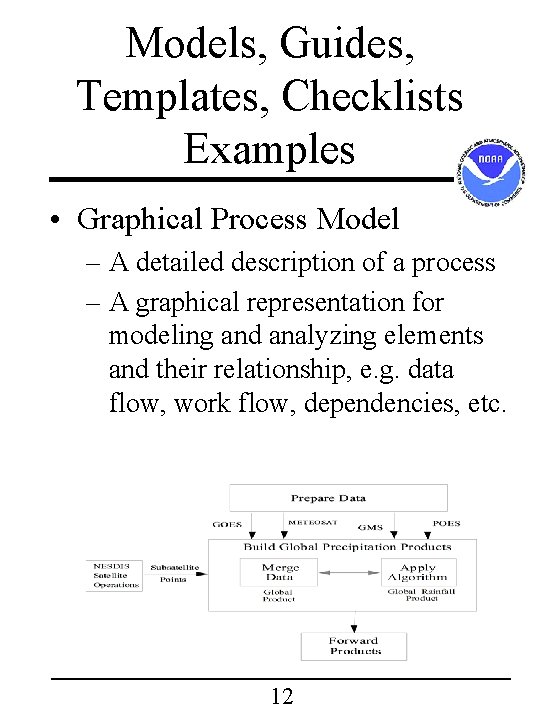
Models, Guides, Templates, Checklists Examples • Graphical Process Model – A detailed description of a process – A graphical representation for modeling and analyzing elements and their relationship, e. g. data flow, work flow, dependencies, etc. 12
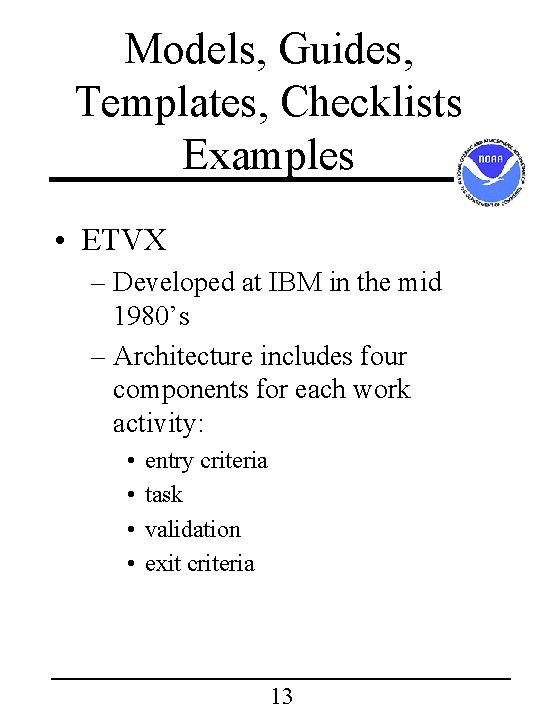
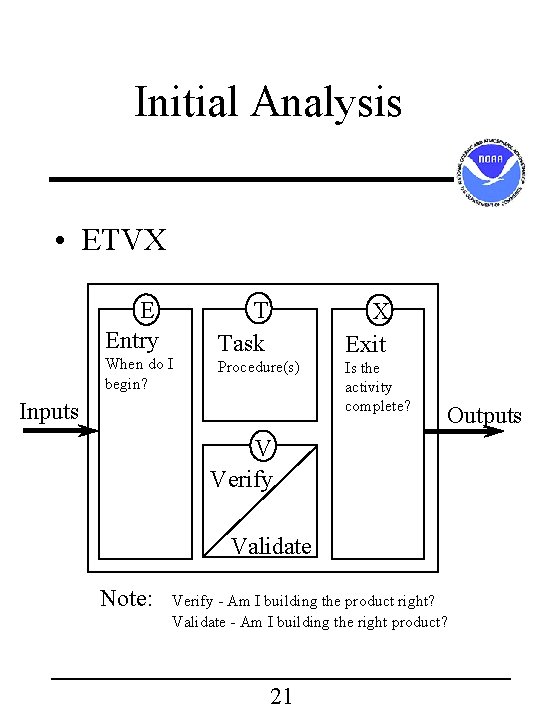
Models, Guides, Templates, Checklists Examples • ETVX – Developed at IBM in the mid 1980’s – Architecture includes four components for each work activity: • • entry criteria task validation exit criteria 13
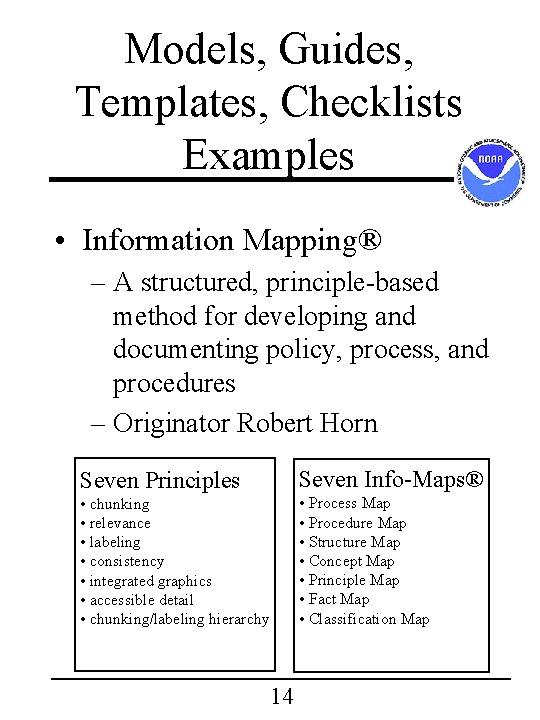
Models, Guides, Templates, Checklists Examples • Information Mapping® – A structured, principle-based method for developing and documenting policy, process, and procedures – Originator Robert Horn Seven Principles Seven Info-Maps® • chunking • relevance • labeling • consistency • integrated graphics • accessible detail • chunking/labeling hierarchy • Process Map • Procedure Map • Structure Map • Concept Map • Principle Map • Fact Map • Classification Map 14
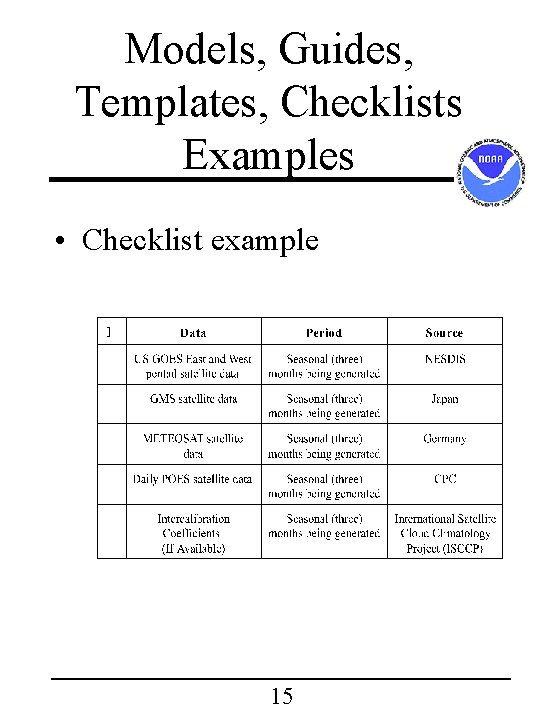
Models, Guides, Templates, Checklists Examples • Checklist example 15
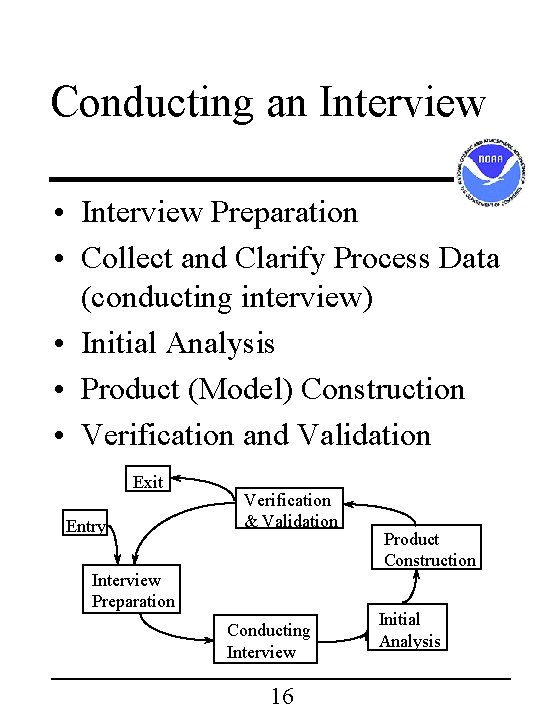
Conducting an Interview • Interview Preparation • Collect and Clarify Process Data (conducting interview) • Initial Analysis • Product (Model) Construction • Verification and Validation Exit Entry Verification & Validation Interview Preparation Conducting Interview 16 Product Construction Initial Analysis
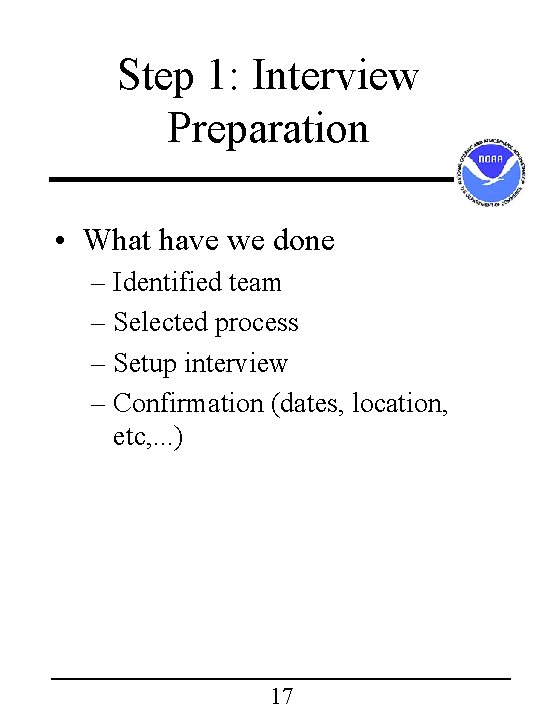
Step 1: Interview Preparation • What have we done – Identified team – Selected process – Setup interview – Confirmation (dates, location, etc, . . . ) 17
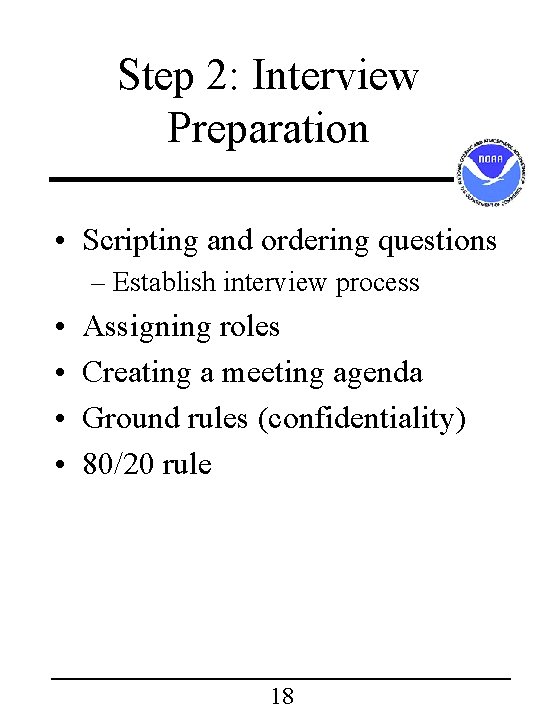
Step 2: Interview Preparation • Scripting and ordering questions – Establish interview process • • Assigning roles Creating a meeting agenda Ground rules (confidentiality) 80/20 rule 18
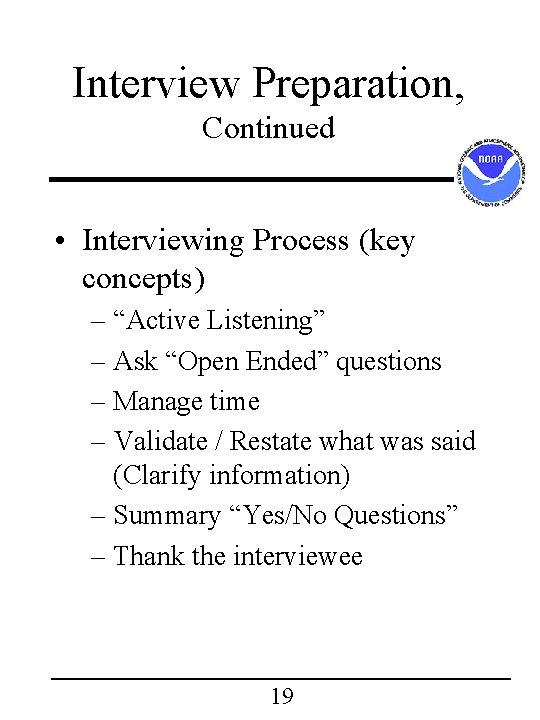
Interview Preparation, Continued • Interviewing Process (key concepts) – “Active Listening” – Ask “Open Ended” questions – Manage time – Validate / Restate what was said (Clarify information) – Summary “Yes/No Questions” – Thank the interviewee 19
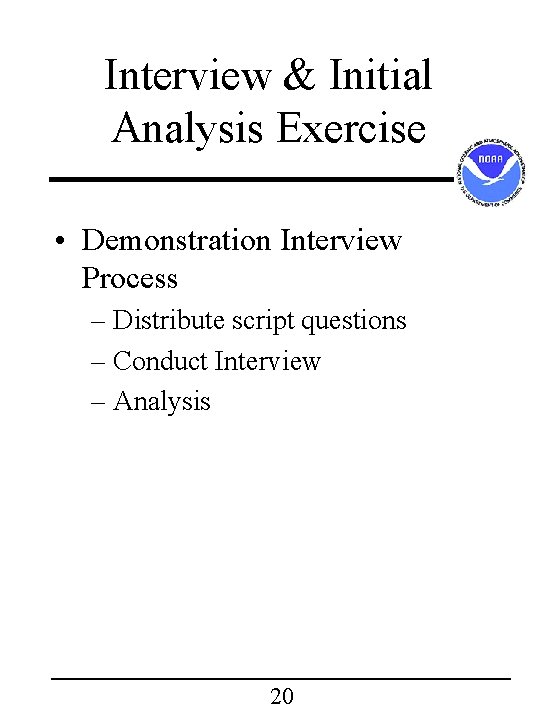
Interview & Initial Analysis Exercise • Demonstration Interview Process – Distribute script questions – Conduct Interview – Analysis 20
Initial Analysis • ETVX E Entry When do I begin? T Task X Exit Procedure(s) Is the activity complete? Inputs Outputs V Verify Validate Note: Verify - Am I building the product right? Validate - Am I building the right product? 21
Summary NOAA Operational Procedure Documentation Process Planning Plan the Product Plan the Work Commitment Familiarization Interview Prep Iterative Documenting Phase Interviewing Conducting Interview Product Construction Initial Analysis Project Evaluation 22 Verification and Validation
Interview Preparation for CADB Interview 23