
Overview Project Management Body of Knowledge PMBOK Guide

Overview Project Management Body of Knowledge (PMBOK © Guide 2008 Edition) Project Integration Management

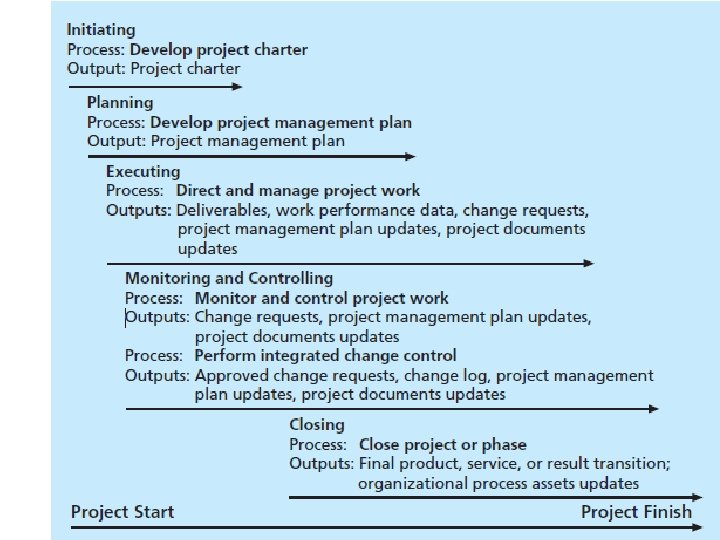
Project Integration Management Monitoring & Controlling Processes Planning Processes Enter phase/ Start project Initiating Processes Closing Processes Exit phase/ End project Executing Processes Knowledge Area Integration Process Initiating • Develop Project Charter Planning • Develop Project Management Plan Executing • Direct and Manage Project Execution Monitoring & Contol • Monitor and Control Project Work • Perform Integrated Change Control Closing • Close Project
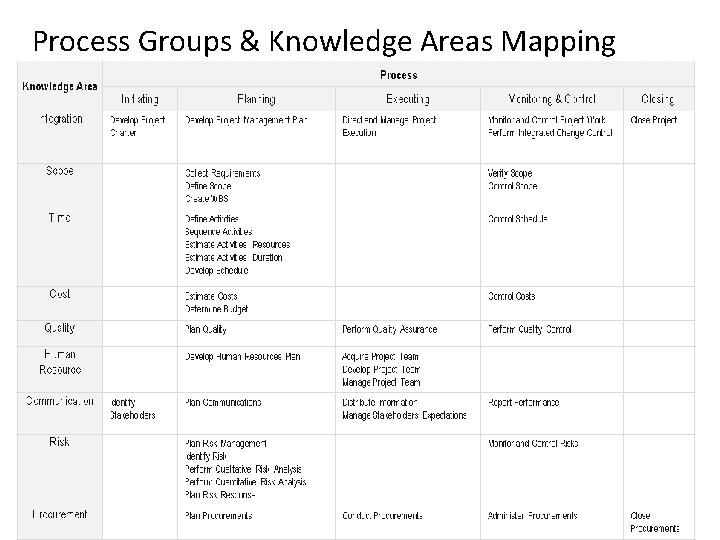
Process Groups & Knowledge Areas Mapping
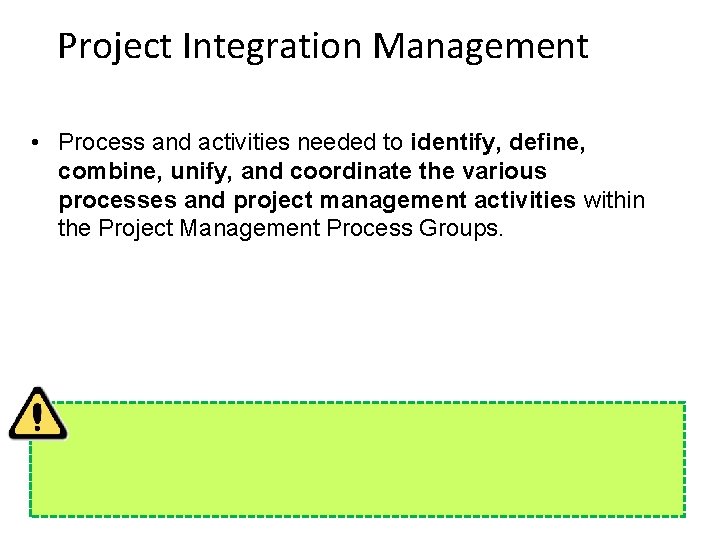
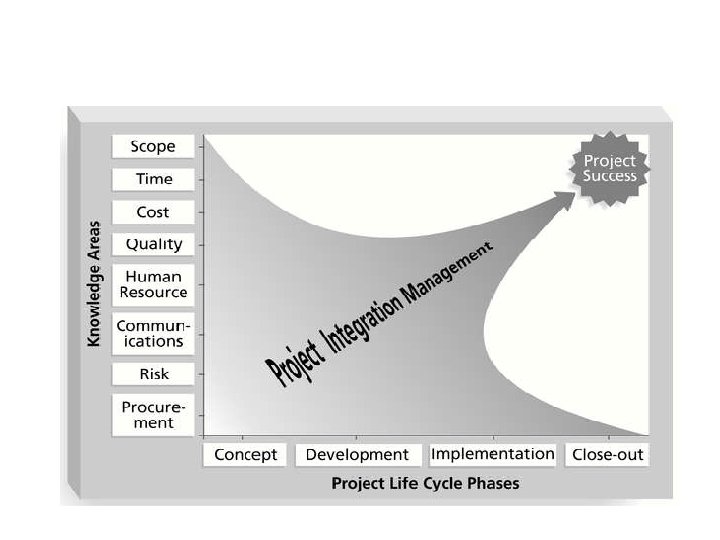
Project Integration Management • Process and activities needed to identify, define, combine, unify, and coordinate the various processes and project management activities within the Project Management Process Groups.
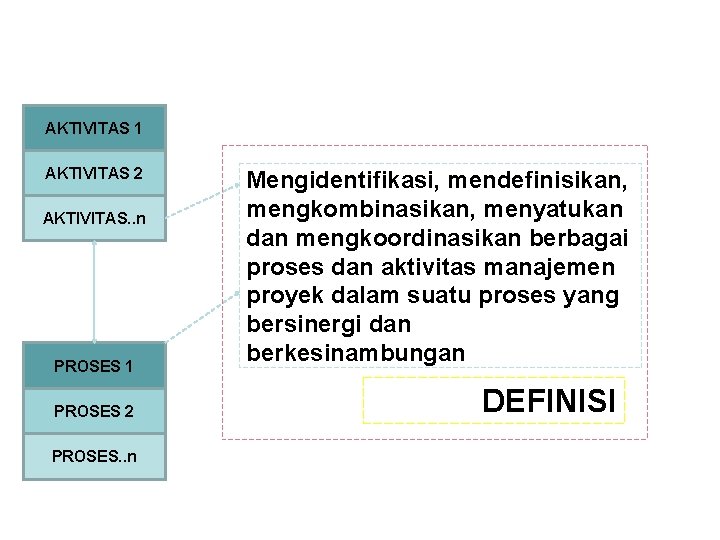
AKTIVITAS 1 AKTIVITAS 2 AKTIVITAS. . n PROSES 1 PROSES 2 PROSES. . n Mengidentifikasi, mendefinisikan, mengkombinasikan, menyatukan dan mengkoordinasikan berbagai proses dan aktivitas manajemen proyek dalam suatu proses yang bersinergi dan berkesinambungan DEFINISI
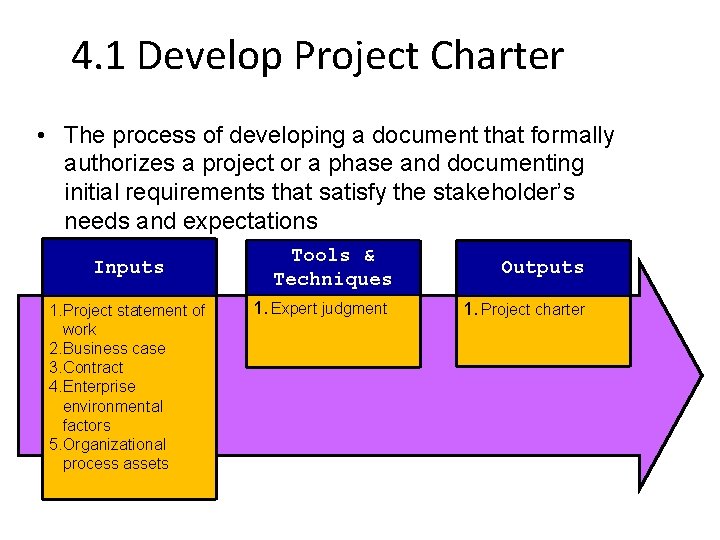
4. 1 Develop Project Charter • The process of developing a document that formally authorizes a project or a phase and documenting initial requirements that satisfy the stakeholder’s needs and expectations Inputs 1. Project statement of work 2. Business case 3. Contract 4. Enterprise environmental factors 5. Organizational process assets Tools & Techniques 1. Expert judgment Outputs 1. Project charter
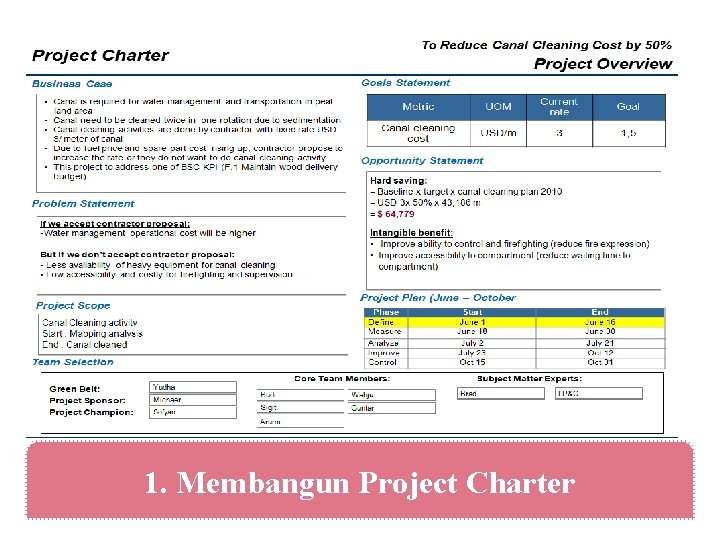
1. Membangun Project Charter
Develop Project Charter (Input) • Project are authorized by someone external to the project such as sponsor, PMO, portfolio steering committee. • Project charter can be created by them or delegated to Project Manager. • Statement of Work (SOW) – A narrative description of products or services to be delivered by the project. – The SOW references: • Business need • Product scope description
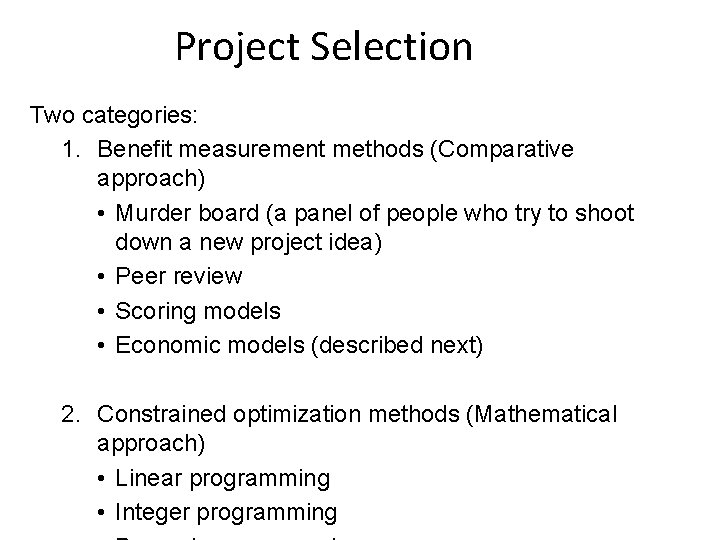
Project Selection Two categories: 1. Benefit measurement methods (Comparative approach) • Murder board (a panel of people who try to shoot down a new project idea) • Peer review • Scoring models • Economic models (described next) 2. Constrained optimization methods (Mathematical approach) • Linear programming • Integer programming
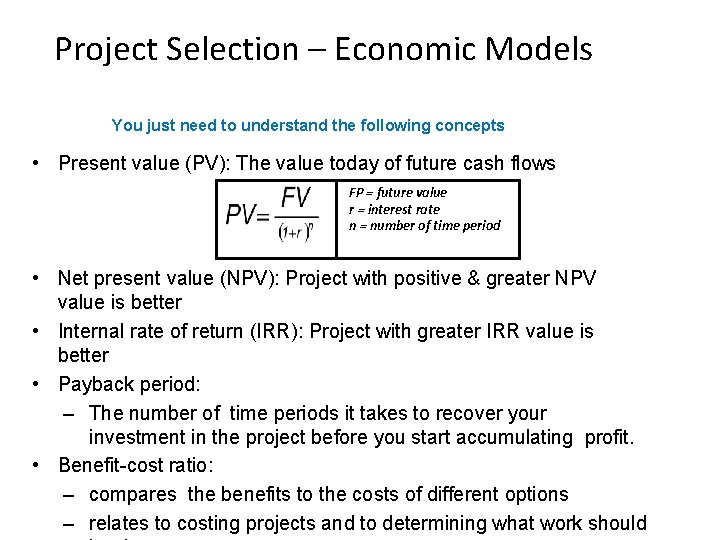
Project Selection – Economic Models You just need to understand the following concepts • Present value (PV): The value today of future cash flows FP = future value r = interest rate n = number of time period • Net present value (NPV): Project with positive & greater NPV value is better • Internal rate of return (IRR): Project with greater IRR value is better • Payback period: – The number of time periods it takes to recover your investment in the project before you start accumulating profit. • Benefit-cost ratio: – compares the benefits to the costs of different options – relates to costing projects and to determining what work should
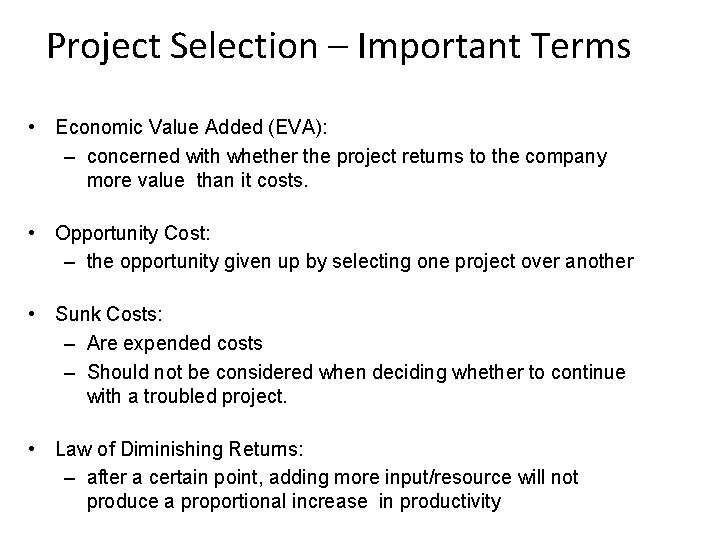
Project Selection – Important Terms • Economic Value Added (EVA): – concerned with whether the project returns to the company more value than it costs. • Opportunity Cost: – the opportunity given up by selecting one project over another • Sunk Costs: – Are expended costs – Should not be considered when deciding whether to continue with a troubled project. • Law of Diminishing Returns: – after a certain point, adding more input/resource will not produce a proportional increase in productivity
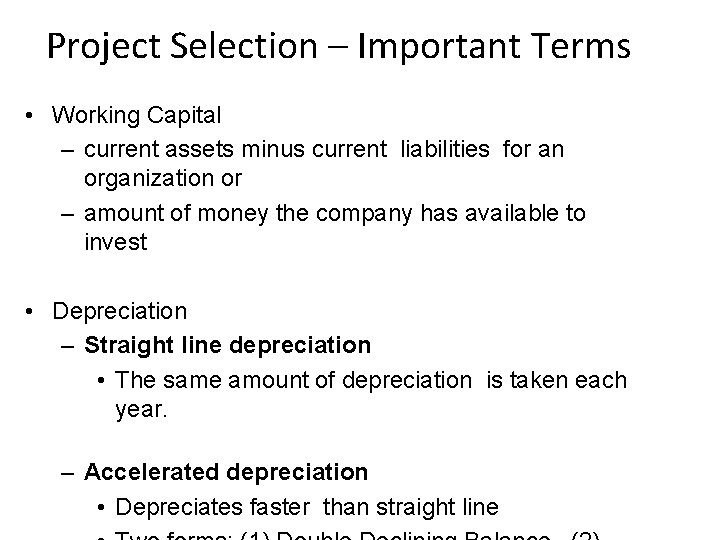
Project Selection – Important Terms • Working Capital – current assets minus current liabilities for an organization or – amount of money the company has available to invest • Depreciation – Straight line depreciation • The same amount of depreciation is taken each year. – Accelerated depreciation • Depreciates faster than straight line
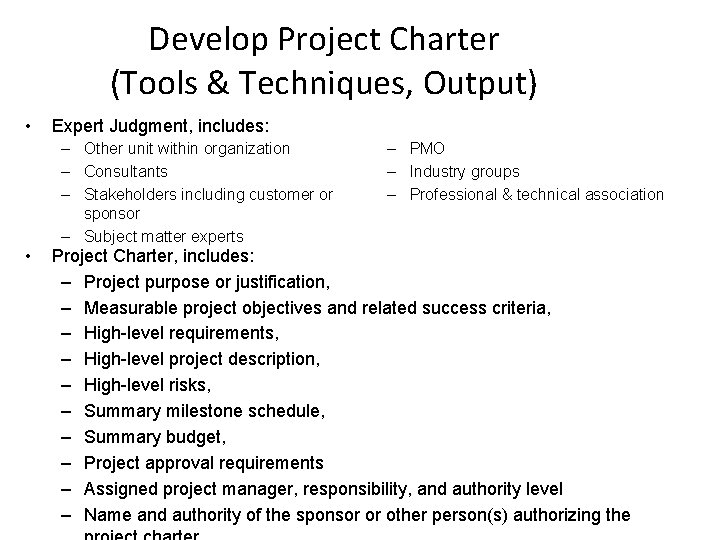
Develop Project Charter (Tools & Techniques, Output) • • Expert Judgment, includes: – Other unit within organization – Consultants – Stakeholders including customer or sponsor – Subject matter experts – PMO – Industry groups – Professional & technical association Project Charter, includes: – Project purpose or justification, – Measurable project objectives and related success criteria, – High-level requirements, – High-level project description, – High-level risks, – Summary milestone schedule, – Summary budget, – Project approval requirements – Assigned project manager, responsibility, and authority level – Name and authority of the sponsor or other person(s) authorizing the
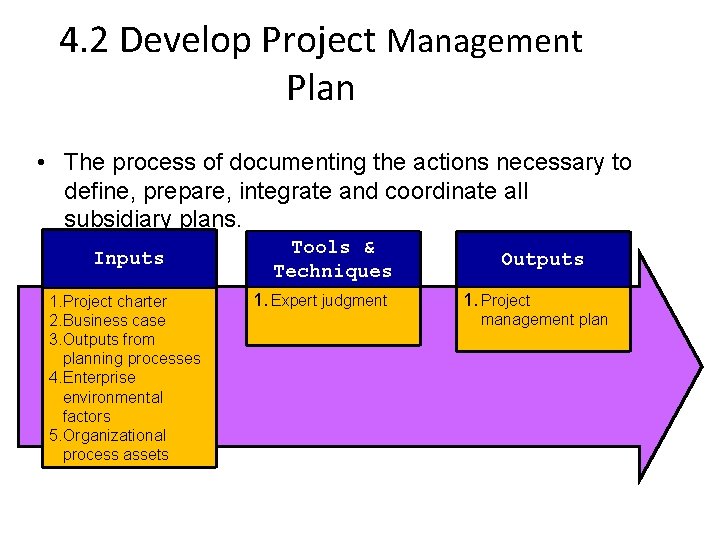
4. 2 Develop Project Management Plan • The process of documenting the actions necessary to define, prepare, integrate and coordinate all subsidiary plans. Inputs 1. Project charter 2. Business case 3. Outputs from planning processes 4. Enterprise environmental factors 5. Organizational process assets Tools & Techniques 1. Expert judgment Outputs 1. Project management plan
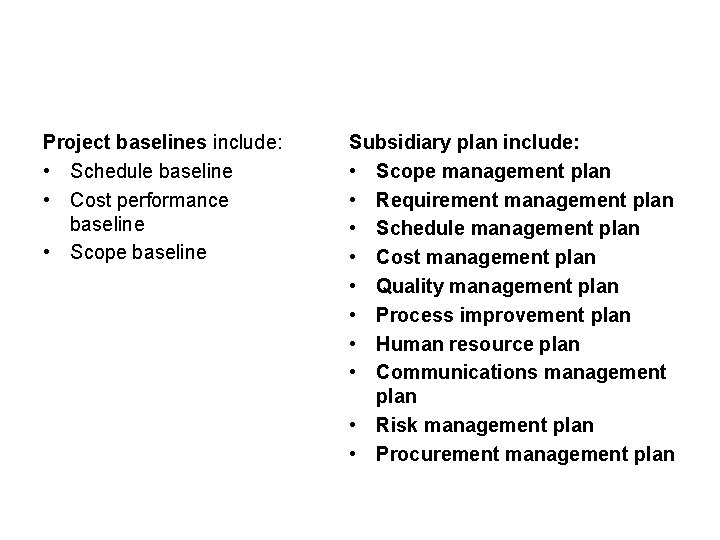
Project baselines include: • Schedule baseline • Cost performance baseline • Scope baseline Subsidiary plan include: • Scope management plan • Requirement management plan • Schedule management plan • Cost management plan • Quality management plan • Process improvement plan • Human resource plan • Communications management plan • Risk management plan • Procurement management plan
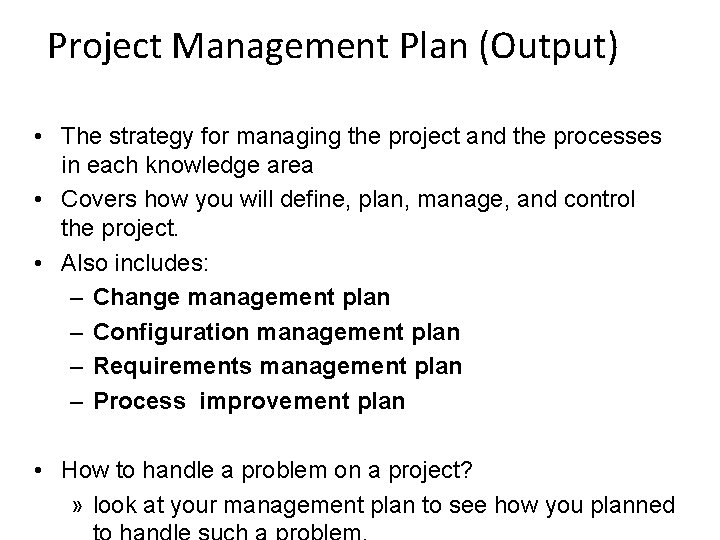
Project Management Plan (Output) • The strategy for managing the project and the processes in each knowledge area • Covers how you will define, plan, manage, and control the project. • Also includes: – Change management plan – Configuration management plan – Requirements management plan – Process improvement plan • How to handle a problem on a project? » look at your management plan to see how you planned
Baseline (Performance measurement baseline) • The project management plan contains scope, schedule, and cost baselines, against which the project manager will need to report project performance. • Baseline created during planning. – Scope baseline The project scope statement, work breakdown structure (WBS), and WBS dictionary – Schedule baseline The agreed-upon schedule, including the start and stop times – Cost baseline The time-phased cost budget • Deviations from baselines are often due to incomplete risk identification and risk management.
Change Management Plan • Describes how changes will be managed and controlled. • Covers for the project as whole • May includes: – – Change control procedures (how and who) The approval levels for authorizing changes The creation of a change control board to approve changes A plan outlining how changes will be managed and controlled – Who should attend meetings regarding changes – Tools to use to track and control changes • Each knowledge area are described in the individual
Configuration Management Plan • Defines how you will manage changes to the deliverables and the resulting documentation, including which organizational tools you will use
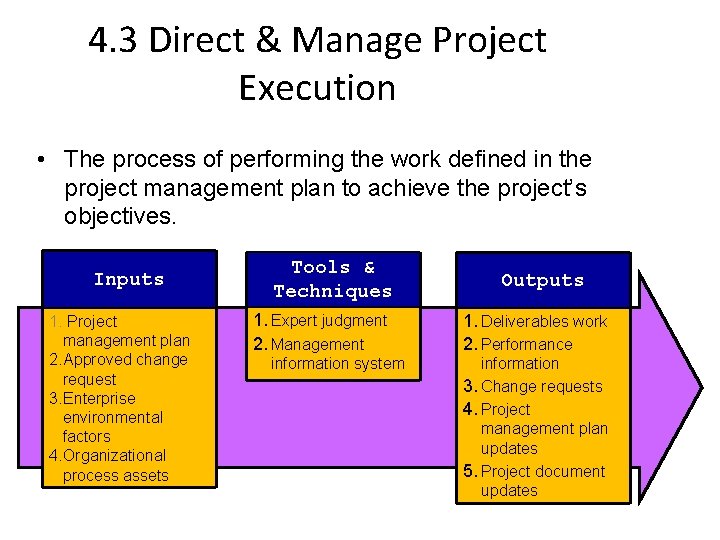
4. 3 Direct & Manage Project Execution • The process of performing the work defined in the project management plan to achieve the project’s objectives. Inputs 1. Project management plan 2. Approved change request 3. Enterprise environmental factors 4. Organizational process assets Tools & Techniques 1. Expert judgment 2. Management information system Outputs 1. Deliverables work 2. Performance information 3. Change requests 4. Project management plan updates 5. Project document updates
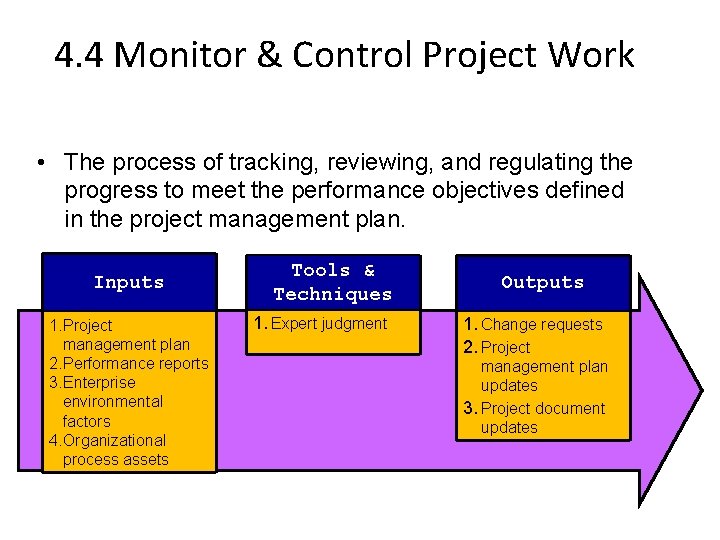
4. 4 Monitor & Control Project Work • The process of tracking, reviewing, and regulating the progress to meet the performance objectives defined in the project management plan. Inputs 1. Project management plan 2. Performance reports 3. Enterprise environmental factors 4. Organizational process assets Tools & Techniques 1. Expert judgment Outputs 1. Change requests 2. Project management plan updates 3. Project document updates
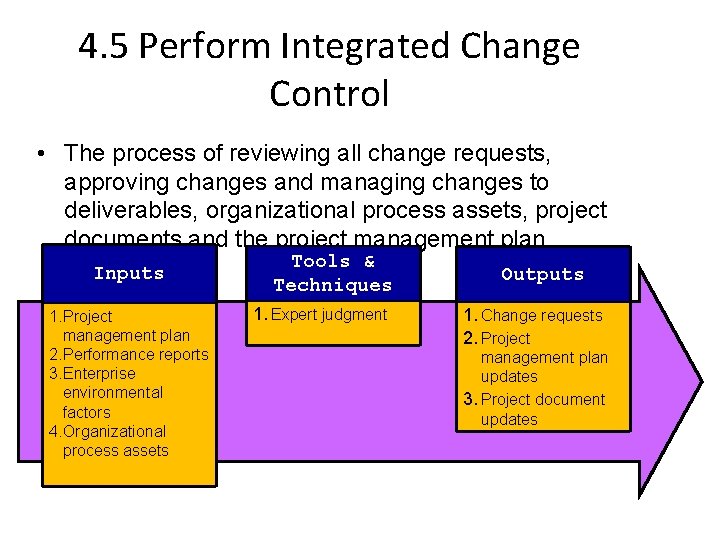
4. 5 Perform Integrated Change Control • The process of reviewing all change requests, approving changes and managing changes to deliverables, organizational process assets, project documents and the project management plan. Inputs 1. Project management plan 2. Performance reports 3. Enterprise environmental factors 4. Organizational process assets Tools & Techniques 1. Expert judgment Outputs 1. Change requests 2. Project management plan updates 3. Project document updates
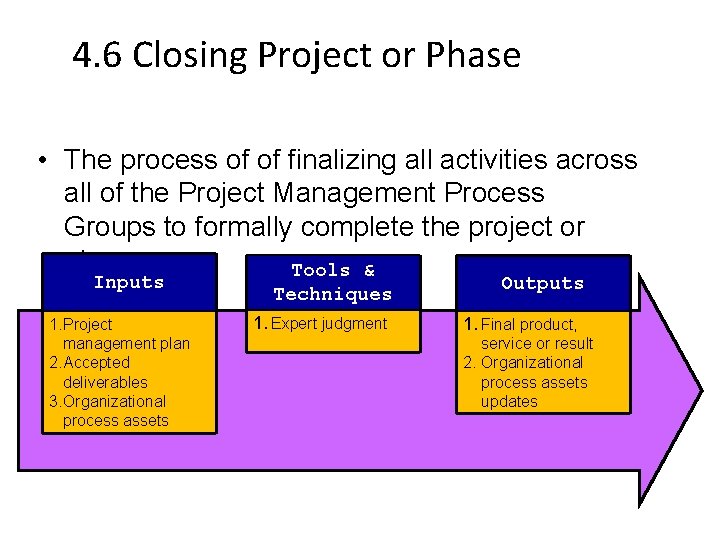
4. 6 Closing Project or Phase • The process of of finalizing all activities across all of the Project Management Process Groups to formally complete the project or phase. Tools & Inputs 1. Project management plan 2. Accepted deliverables 3. Organizational process assets Techniques 1. Expert judgment Outputs 1. Final product, service or result 2. Organizational process assets updates
Next topic: Project Scope Management Thank You
- Slides: 26